

International
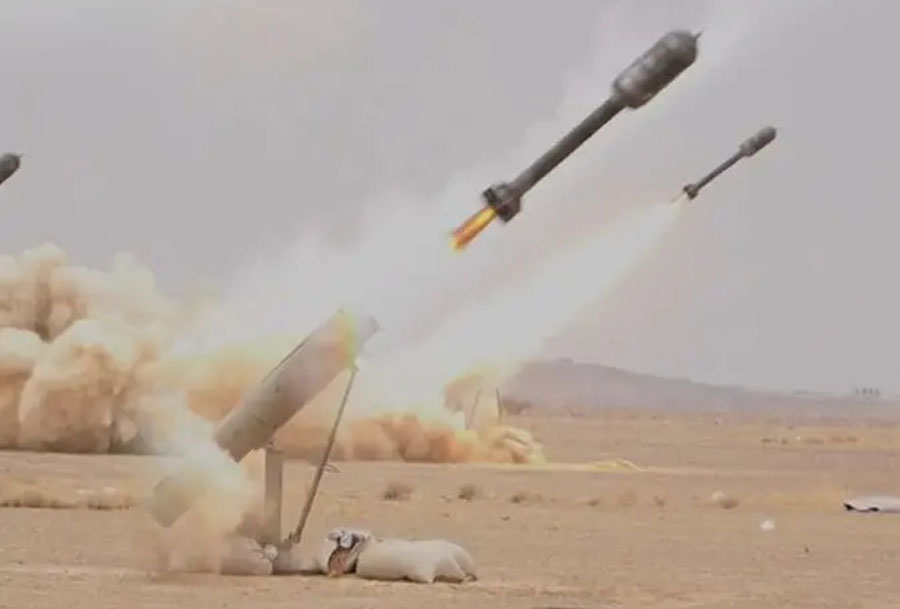
Houthis Launch Fresh Missile, Drone Strikes on Saudi Arabia
Houthis Launch Fresh Missile, Drone Strikes on Saudi Arabia
Yemen’s Iran-aligned Houthi movement has launched a fresh missile and drone attack on Saudi Arabia, further escalating tensions as the group expands its military presence along Yemen’s Red Sea coast and moves closer to the strategically important Bab el-Mandeb Strait.
The Houthis said on Sunday that they had fired ballistic missiles and drones at the Sharurah military base in southern Saudi Arabia, claiming the attack targeted weapons depots and command-and-control facilities.
Houthi military spokesman Yahya Saree said the group used a large barrage of missiles and drones in the operation and claimed that the weapons struck their intended targets.
He described the attack as a response to continuing Saudi military operations against Houthi-controlled areas of Yemen and warned that further strikes deeper inside Saudi Arabia could follow if those operations continued. Saudi authorities had not immediately confirmed the Houthi claim concerning the Sharurah military base. (Anadolu Ajansı)
The latest claim came shortly after Saudi authorities reported that a projectile had landed in Al-Tuwal governorate in the Jazan region, injuring two people and damaging a mosque and other property.
Saudi Civil Defence said emergency teams responded to the incident and dealt with the damage caused by the projectile. The Jazan attack adds to a series of recent strikes on southern Saudi Arabia as the confrontation between the kingdom and the Houthis intensifies. (Al Jazeera)
The renewed attacks follow a much larger wave of Houthi missile and drone strikes on Saudi territory earlier in the week.
Saudi authorities said at least 73 people were injured in those attacks, which affected cities and economic facilities in the kingdom’s south, including Abha, Khamis Mushait, Jazan and Najran.
The attacks also disrupted operations at some Saudi energy facilities, with fires reported at several sites. The developments have raised fresh concerns about the security of the world’s largest oil exporter at a time when regional energy supplies are already under severe pressure. (Reuters)
READ ALSO:
- Why I Gave Peter Obi My Vehicle During Benue Visit — Ortom
- Sanders Urges Trump, Xi to Halt AI Race, Ban Superintelligence
- DSS warns Osun churches, mosques, markets over alleged terrorist attack plot ahead of 2027
The latest escalation is occurring against the backdrop of a major Houthi offensive inside Yemen.
Houthi forces have rapidly advanced along the country’s Red Sea coast, capturing the strategically important port city of Mocha and moving towards the Bab el-Mandeb Strait.
Reuters reported that Houthi forces had also reached Perim Island, also known as Mayyun, in the Bab el-Mandeb, after Saudi-backed Yemeni government forces withdrew from the island. Houthi forces were also reported to have taken the mainland coastal town of Dhubab, which faces Perim. (Reuters)
The development is strategically significant because the Bab el-Mandeb Strait is one of the world’s most important maritime chokepoints.
The waterway connects the Red Sea with the Gulf of Aden and provides a major route for commercial vessels travelling between Asia, Europe and the Middle East.
Any sustained Houthi control or disruption of the waterway could therefore affect international shipping, energy supplies and global trade.
The threat is particularly serious because the Strait of Hormuz, on the opposite side of the Arabian Peninsula, is already severely disrupted by the wider conflict involving Iran and the United States.
The simultaneous pressure on both maritime corridors could create major challenges for global energy markets.
Reuters reported that the Houthi advance has already increased concerns over Saudi oil exports, while oil prices have risen sharply amid fears that the conflict could disrupt additional supply routes. (Reuters)
Saudi Arabia has increasingly relied on routes through the Red Sea to export crude after disruption around the Strait of Hormuz.
That makes the Houthi advance towards the Bab el-Mandeb particularly sensitive for Riyadh.
The Houthis have indicated that their maritime restrictions are focused on vessels linked to Saudi Arabia, while the group’s growing military presence around the strait has raised wider concerns about freedom of navigation.
The United Nations has warned that the developments in Yemen represent a potentially more dangerous phase of the conflict.
UN Special Envoy for Yemen Hans Grundberg told the Security Council that the Houthi advance towards the Bab el-Mandeb was creating serious concerns over navigation and the broader security situation.
READ ALSO:
- ‘Tinubu Will Win Again in 2027’ — Charismatic Bishops’ Secretary
- Fake miracles, bogus grants: How clerics allegedly fleece Nigerians of millions
- ‘Unacceptable’ — Arteta Furious Over Sunderland Penalty in Arsenal Win
The Houthi movement has defended its operations as acts of self-defence and said its attacks would stop if attacks against Yemen ended.
Saudi Arabia, however, has accused the Houthis of deliberately targeting civilian and economic infrastructure and has vowed to protect its territory and vital national assets.
The current escalation is particularly significant because Saudi Arabia and the Houthis had largely avoided direct large-scale cross-border attacks following the 2022 UN-brokered truce.
That period of relative calm helped reduce violence along the Saudi-Yemeni border, although a comprehensive political settlement to Yemen’s war was never reached.
The latest fighting threatens to undo that progress.
The conflict also has a wider regional dimension because the Houthis are closely aligned with Iran, while Saudi Arabia remains a key US partner in the Gulf.
The United States has accused the Houthis of acting as an Iranian proxy, while Tehran has called for dialogue and rejected the idea that the Yemen conflict can be resolved through military action.
US President Donald Trump has meanwhile said the Houthis had contacted his administration and indicated that they wanted to avoid direct US involvement in Yemen. Trump has also spoken with Saudi Crown Prince Mohammed bin Salman amid the worsening regional crisis. (Reuters)
The latest Houthi advances have placed Washington in a difficult strategic position.
According to Reuters, the group’s growing presence around the Bab el-Mandeb could threaten another major international shipping route while US military resources are already stretched by the wider conflict with Iran. (Reuters)
For Saudi Arabia, the immediate challenge is preventing further missile and drone attacks on populated areas, military installations and energy infrastructure.
The kingdom has increased security measures around vulnerable locations and has repeatedly warned that it will defend its territory and strategic assets.
For international markets, however, the biggest concern is the possible impact on oil supplies and global shipping.
The Bab el-Mandeb is a crucial route for ships travelling through the Red Sea towards the Suez Canal. A prolonged disruption could force vessels to take longer routes around Africa, increasing fuel consumption, freight costs, insurance premiums and delivery times.
The latest developments are therefore being closely watched by shipping companies, energy traders and governments around the world.
The Houthi military advance along Yemen’s Red Sea coast has also displaced civilians and deepened concerns over the country’s already severe humanitarian crisis.
The renewed fighting threatens to create further displacement and make the delivery of humanitarian assistance more difficult.
For Saudi Arabia, the attacks represent the most serious direct Houthi threat in years.
For the wider region, the combination of Houthi attacks on Saudi Arabia, the group’s advance towards the Bab el-Mandeb, and continuing instability around the Strait of Hormuz could create a new and more dangerous phase of the Middle East conflict.
The immediate situation remains fluid, with the Houthis threatening further attacks while Saudi Arabia maintains its right to respond.
The latest missile and drone strikes therefore mark more than another exchange between Saudi Arabia and the Houthis. They are part of a rapidly expanding regional crisis with potential consequences for Middle East security, oil prices, maritime trade and global energy supplies.
Houthis Launch Fresh Missile, Drone Strikes on Saudi Arabia











International
US Extradites Nigerian Over Alleged $100m Tax Refund Fraud

The United States has extradited a Nigerian man, Akinade Adedeji Raheem, from the Republic of Benin to face federal charges over an alleged $100 million tax refund fraud scheme involving stolen identities and more than 300 fraudulent tax returns.
Raheem, 43, was arraigned in a federal court in Atlanta, Georgia, on Monday, October 26, 2026, following his extradition to the United States. He was detained in the custody of the US Marshals Service pending further court proceedings.
According to US prosecutors, Raheem allegedly conspired with Abayomi Quadri Eletu and other accomplices between 2018 and 2023 to obtain fraudulent refunds from the Internal Revenue Service (IRS), the US tax authority, by using the identities of American taxpayers and tax professionals.
The alleged scheme involved more than 300 fraudulent tax returns seeking over $100 million in refunds. However, the amount represents the value of the claims allegedly submitted and does not necessarily mean the full sum was paid out.
Investigators alleged that the group obtained confidential personal information, including names, addresses and Social Security numbers, by creating online accounts with the IRS and requesting private taxpayer records.
The suspects allegedly used the stolen information to file false tax returns and direct refund payments to prepaid debit cards under their control. They also allegedly changed taxpayers’ registered addresses and arranged for mail to be forwarded to locations where they could intercept correspondence from the tax authority.
In some cases, prosecutors alleged, members of the group impersonated legitimate taxpayers to verify their identities and facilitate the release of refunds.
READ ALSO:
- Panic as Gunmen Storm Kaduna Estate at Midnight, Abduct Residents
- AutoFast By CFAO Assures Former Moove Drivers of Continued After-Sales Support, Free Diagnostics
- NSCDC Evidence Scandal: Tunji-Ojo Says Officers Tampered With Evidence in Miners’ Deaths
The alleged proceeds were subsequently moved through transactions designed to conceal their origins. Prosecutors said the suspects purchased money orders in amounts intended to avoid reporting thresholds and used them to buy used vehicles through auction platforms. Some of the vehicles were allegedly shipped to Nigeria, while other proceeds were spent on designer clothing and personal items.
US Attorney Theodore S. Hertzberg said the alleged scheme involved hundreds of stolen identities and affected individual taxpayers as well as the US Treasury.
The investigation was conducted by the IRS Criminal Investigation division and the Treasury Inspector General for Tax Administration, with assistance from other American and international law enforcement agencies.
Raheem’s extradition followed an international search. Federal agents reportedly attempted to arrest him at his residence in April 2026 but were unable to take him into custody.
Investigators later discovered that he had booked a flight from Mexico City to Benin. He arrived in Benin on April 15, 2026, and was arrested by local authorities pursuant to an INTERPOL Red Notice, an international request to locate and provisionally arrest a person pending extradition or similar legal proceedings.
Beninese authorities subsequently extradited him to the United States. US prosecutors described the transfer as the second extradition from Benin to the United States.
A federal grand jury in the Northern District of Georgia indicted Raheem on February 24, 2026, on charges including conspiracy to commit mail and wire fraud, conspiracy to commit money laundering, 14 counts of access device fraud and 14 counts of aggravated identity theft.
In plain language, the fraud conspiracy charge alleges that he worked with others to cheat victims through postal services or electronic communications. The money laundering charge alleges that the group agreed to conceal or disguise money believed to have come from criminal activity.
The access device fraud counts concern the alleged illegal use of payment cards or other devices and account details to obtain money or access funds. The aggravated identity theft counts allege the unauthorised use of other people’s identifying information in connection with certain serious crimes.
If convicted, Raheem faces substantial prison terms. The fraud conspiracy and money laundering charges each carry maximum penalties of up to 20 years, while the access device fraud charges carry up to 10 years. Each aggravated identity theft conviction carries a mandatory two-year prison term under applicable federal law, generally imposed consecutively to the sentence for the underlying offence. Actual sentences would depend on the convictions and applicable sentencing rules.
His alleged co-conspirator, Eletu, was separately indicted in the Western District of Texas on February 17, 2026. He was arrested in the United Kingdom, where extradition proceedings remain pending.
The case is being prosecuted by attorneys from the US Attorney’s Office for the Northern District of Georgia and the Justice Department’s Tax Section.
Raheem has not been convicted of the allegations. He is presumed innocent unless and until prosecutors prove his guilt beyond a reasonable doubt in court.
US Extradites Nigerian Over Alleged $100m Tax Refund Fraud
International
Operation Blackout: FBI Arrests Nine in Nigeria, Seizes 53 Devices

Operation Blackout: FBI Arrests Nine in Nigeria, Seizes 53 Devices
The United States Federal Bureau of Investigation (FBI) has arrested nine suspects in Nigeria and seized 53 electronic devices in an international operation targeting cybercrime networks accused of defrauding victims, particularly in the United States.
The operation, code-named Operation Blackout, also led to the identification of approximately $11 million in funds across multiple countries that could potentially be frozen, according to FBI Director Kash Patel.
Patel disclosed the development in a statement published on his official X account on Sunday, October 25, describing the operation as part of efforts to dismantle international criminal networks accused of stealing billions of dollars from unsuspecting victims.
“Operation Blackout is taking the fight directly to the international cybercriminal networks stealing billions from Americans,” Patel said.
He added that the networks operated across national borders, exploiting victims and depriving them of their life savings.
“These scam centres exploit innocent victims, steal life savings, and operate across international borders believing they are beyond the reach of law enforcement. They’re wrong,” the FBI director stated.
Patel commended Nigerian law enforcement agencies and their partners in London for their cooperation, warning that suspects operating from overseas would not escape prosecution simply because they were outside the United States.
READ ALSO:
- Osimhen Brace Sinks Fenerbahce as Galatasaray Win Istanbul Derby
- Certificate Scandal: UNN, NYSC Disown Uche Nnaji’s Certificates, ICPC Witness Tells Court
- Man, Teenage Girl Found Dead in Toyota Corolla as Police Begin Investigation
The FBI has not publicly identified the nine suspects arrested in Nigeria or disclosed the specific locations where they were apprehended. Details of the individual allegations against them have also not been made public.
The arrests formed part of a broader international law enforcement campaign targeting online fraud networks operating across West Africa.
According to the US Department of Justice, the coordinated enforcement exercise involved agencies from Nigeria, Ghana, the United States, the United Kingdom and other countries, alongside private-sector technology and financial companies.
The wider operation resulted in 28 arrests, comprising nine in Nigeria and 19 in Ghana. Authorities in Ghana also seized 303 electronic devices, while the Nigerian operation accounted for the 53 devices seized.
Investigators and participating companies additionally helped identify more than 3.7 million fraudulent online accounts, pages and groups, which were subsequently removed or disrupted.
The US Department of Justice said the targeted schemes included law enforcement impersonation scams, digital arrest extortion, cryptocurrency investment fraud, commonly known as “pig butchering”, and other online fraud operations targeting victims across different countries.
The operation also uncovered human trafficking linked to scam activities in Ghana. Authorities there identified 117 people described as victims of trafficking who were awaiting repatriation to Nigeria.
Officials also identified 89 fraud victims in Ghana who suffered estimated losses of approximately $8.3 million, according to the US Justice Department.
The trafficking victims and fraud victims were identified as separate groups in the department’s account of the operation.
Although the FBI director announced that $11 million in potentially freezable funds had been identified across several countries, authorities have not confirmed that the entire amount has been frozen, seized or returned to victims.
The distinction is important because identifying funds that may be frozen does not mean that the money has already been recovered.
The crackdown highlights growing international cooperation against cyber-enabled fraud, with investigators increasingly working with technology companies and financial institutions to identify suspicious accounts, trace funds and disrupt the digital infrastructure used by criminal networks.
Nigeria’s law enforcement agencies have participated in several international investigations involving alleged online fraud. The latest operation adds to efforts to pursue suspects accused of targeting victims across national borders.
The FBI has not disclosed when the nine suspects arrested in Nigeria will appear in court or whether formal charges have been filed against each of them.
The allegations against the suspects remain subject to investigation and due process.
Operation Blackout: FBI Arrests Nine in Nigeria, Seizes 53 Devices
International
France Deploys 70,000 Police as Cost-of-Living Protests Intensify
France Deploys 70,000 Police as Cost-of-Living Protests Intensify
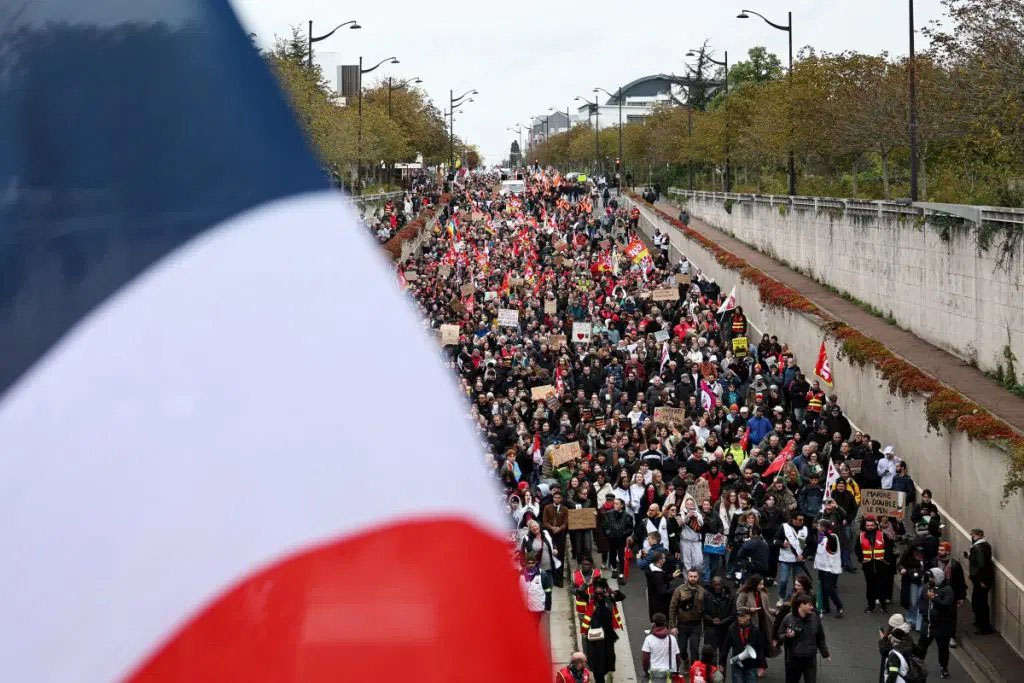
France has deployed 70,000 police officers and gendarmes across the country to prevent further looting, vandalism and violent clashes as nationwide protests over rising living costs, school conditions and public services continue to challenge President Emmanuel Macron’s government.
The security deployment took place on Saturday, October 24, 2026, following some of the worst street violence France has witnessed in years during demonstrations the previous weekend.
Interior Minister Laurent Nuñez announced the mobilisation, warning that authorities would take a firm approach against individuals involved in violence, looting and attacks on public buildings.
The deployment included an additional 10,000 security personnel compared with the previous week. Specialised police units, helicopters, drones, armoured vehicles, mounted officers and water cannon were also deployed to monitor demonstrations and respond to outbreaks of violence.
The heightened security measures came as hundreds of thousands of demonstrators returned to the streets in Paris, Marseille, Lyon and other cities to protest against economic hardship, government spending decisions and deteriorating public services.
According to France’s Interior Ministry, approximately 410,000 people participated in demonstrations nationwide on Saturday. However, the CGT trade union estimated the turnout at nearly 800,000, highlighting the difference between official figures and those provided by organisers.
In Paris, about 110,000 people took part in demonstrations, according to official estimates.
Although many marches proceeded peacefully, confrontations broke out in several locations as police attempted to contain disturbances. Officers used tear gas in Paris and other cities, while water cannon were deployed in some areas to disperse protesters.
Clashes were also reported in Marseille and Lyon, where groups of hooded youths confronted security personnel.
READ ALSO:
- Bill Clinton condemns anti-Muslim prejudice, cites Qur’an’s message of coexistence
- MURIC Applauds Army as Mogadishu Cantonment Mosque Reopens After Week-Long Closure
- Atiku Condemns Attack on Edo Comedian Over Refusal to Support Tinubu
Authorities reported nearly 1,000 arrests in connection with Saturday’s demonstrations, although the figure was still being updated as operations continued.
The latest protests followed widespread disorder on October 17, when demonstrations escalated into violence, leaving shops damaged or looted, vehicles burned and public property vandalised.
Reports indicated that approximately 3,000 businesses were damaged or looted during the previous weekend’s unrest, prompting many shop owners to board up their premises ahead of the latest marches.
Several cultural institutions in Paris, including the Louvre and Musée d’Orsay, closed on Saturday as a precaution against possible disturbances. Some cities also imposed restrictions on demonstrations, while authorities adjusted protest routes to reduce the risk of confrontations in central areas.
The protest movement initially gathered momentum over complaints about conditions in schools, including staff shortages, overcrowded classrooms and demands for improved educational facilities.
It has since expanded into a broader expression of public frustration over the rising cost of living, inflation, inequality and concerns about the quality of public services.
Students and trade unions have called for better funding for schools, improved working conditions, higher wages and stronger measures to ease pressure on household budgets.
The demonstrations have placed additional pressure on Macron’s government, which is facing growing criticism over its handling of economic and social concerns.
Macron met representatives of secondary school students on Friday in an attempt to address some of their grievances. However, student representatives said they remained dissatisfied and wanted concrete proposals from the government before considering an end to the protests.
They subsequently urged students to continue mobilising while awaiting further discussions with Prime Minister Sébastien Lecornu’s administration.
The security situation has also heightened political tensions ahead of France’s next presidential election, expected in 2027.
The far-right National Rally party, led by Marine Le Pen, has sought to capitalise on public dissatisfaction, while opposition groups and trade unions have criticised the government’s handling of the demonstrations.
Authorities were also concerned about possible clashes in Orléans, where the National Rally held its party congress alongside planned counter-demonstrations.
The government’s response has attracted criticism from some unions and student groups, which argue that restrictions on protests could deepen public frustration rather than address the underlying causes of the unrest.
Despite the heavy police presence, the demonstrations continued across the country, reflecting the persistence of economic and social grievances.
The CGT union has also called for a nationwide strike on November 5 to protest against the cost of living and planned budget cuts, raising the prospect of further industrial action.
With public anger continuing and security agencies maintaining heightened vigilance, the coming weeks are expected to test the government’s ability to restore calm while responding to demands for improvements in education, living standards and public services.
France Deploys 70,000 Police as Cost-of-Living Protests Intensify
-

 metro1 day ago
Cancelled Wedding: Man Sues Ex-Fiancée’s Father Over Unpaid ₦70,000 Dowry
-

 Auto1 day ago
Car of the Year, other top honours up for grabs as NAJA Awards race begins
-

 metro2 days ago
School Bus Driver Turns Kidnapper, Collects ₦503,000 Ransom, Rapes 14-Year-Old Delta Student
-

 metro2 days ago
IKEDC Blames National Grid for Two-Week Power Crisis in Ishaga, Oke-Ayo
-

 Sports2 days ago
KANE ENDS 25-YEAR WAIT! England Captain Wins 2026 Ballon d’Or After Stunning 73-Goal Season
-

 metro1 day ago
Nigerian Navy Recruitment 2026: October 31 Deadline, Full Requirements and How to Apply
-

 metro1 day ago
EFCC Busts Four Illegal Lithium Plants in Ogun, Arrests 14 Chinese Nationals
-

 metro1 day ago
Man, Teenage Girl Found Dead in Toyota Corolla as Police Begin Investigation