

Business
NNPC presents N3tn petrol subsidy bill to FEC for 2022
The Nigerian National Petroleum Corporation (NNPC) has presented to the Federal Executive Council N3 trillion petrol subsidy bill for payment in 2022.
This is coming after the Federal Government proposed an 18-month extension for the implementation of the petroleum industry law to cater for subsidy shortfall.
Minister of Finance, Budget and National Planning, Zainab Ahmed, told state house correspondents on Wednesday at the end of the FEC meeting presided over by President Muhammadu Buhari.
Petrol subsidy payments gulped N1.43 trillion in 2021.
According to Ahmed, a request was presented to provide additional funding to meet the incremental petrol subsidy request in the 2022 budget.
She said this is because the sum of N443 billion was presently allocated for fuel subsidy in 2022 from January till June.
She added that with the realities on the ground, including the present hardship faced by Nigerians and the lack of structures to support subsidy removal, the NNPC made a request for N3 trillion.
“What this means is that we have to make incremental provision of N2.557 trillion to be able to meet subsidy requirement which is averaging about N270 billion per month,” she said.
According to her, the subsidy payment for 2022 is estimated at N270 billion per month due to soaring oil prices.
“We also presented to Council today a request for Council’s consideration to make additional funding provisions to enable us to meet incremental fuel subsidy request in the 2022 Budget,” she said.
“You’ll recall that in the 2022 Budget, as appropriated, we have made a provision of N443 billion for a subsidy for January to June.
“Having taken into account the current realities; increased hardship in the population, heightened inflation, and also that the measures that needed to be taken to enable a smoother exit from the fuel subsidy are not yet in place, it was agreed by Council that it is desirable to exit fuel subsidy.
“The Nigerian National Petroleum Company (NNPC) has presented to the ministry a request for N3 trillion as fuel subsidy for 2022. What this means is that we have to make an incremental provision of N2.557 trillion to be able to meet the subsidy requirement, which is averaging about N270 billion per month.
“In 2021, the actual under-recovery that has been charged to the Federation was N1.2 trillion, which means an average of N100 billion, but in 2022, because of the increased crude oil price per barrel in the global market, now at $80 per barrel, and also because an NNPC’s assessment is that the country is consuming 65.7 million litres per day, now we’ll end up with the incremental cost of N3 trillion in 2022.
“So, this has been considered by Council and we’ve also been asked to approach the National Assembly for an amendment to the fiscal framework as well as the Budget, to also further discuss with NNPC on how to make provisions for this and also how to rationalize this expenditure.
“The PIA had required that all petroleum products should be deregulated within six months of signing the PIB into law. And the six months would have meant from August to February.
“But when we were doing the budget we stretched that to June. So it means technically that from September, there will be a new fuel subsidy.
“But having to step back and take into account the realities of today, what it means is we have to go back and amend the PIA, so the ministry of petroleum resources will be leading on that. “They had indicated that they will be asking for an amendment to extend it to 18 months from six months. And then it means we can now also amend the budget. So the two processes will go side by side.
“In the case of the budget, we’re looking at extending to December in the first instance, because this budget year is January to December and we’re going to engage NNPC to further interrogate the request that they presented with a view of trying to see how we can scale it down so that the country is not incurring N3 trillion for a fuel subsidy.”









Business
Nigerians Pay N44 Extra Per Litre as Retailers Defy Falling Depot Prices – Full Report

Auto
Abuja Roars to Life as Jetour X50 Headlines Three-Day Motoring Experience
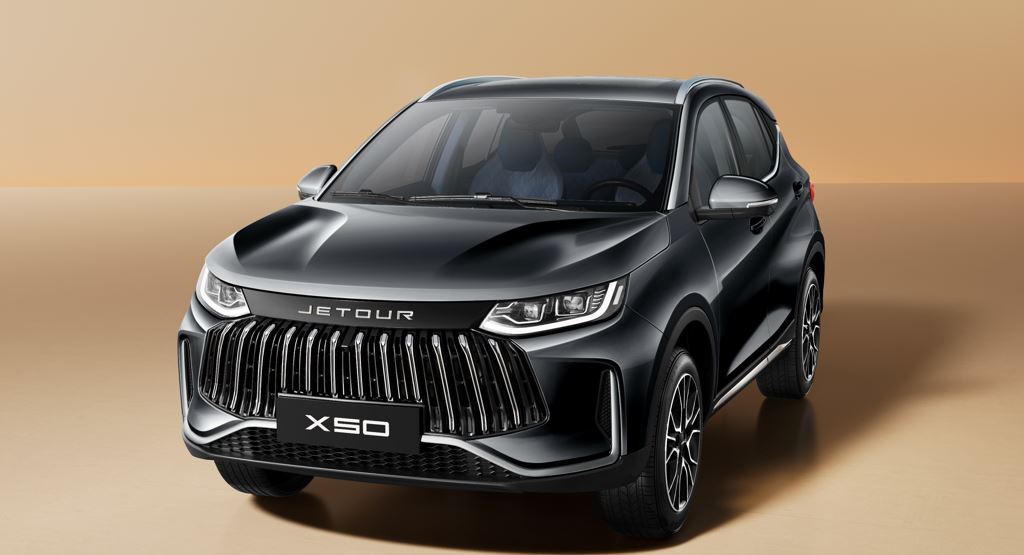
Abuja Roars to Life as Jetour X50 Headlines Three-Day Motoring Experience
Abuja is gearing up for a major motoring spectacle as Jetour Nigeria brings its fast-growing brand experience to the Federal Capital Territory, with the stylish Jetour X50 set to take centre stage in a three-day showcase of performance, technology and automotive innovation.
Scheduled for September 22 to 24, 2026, the Jetour Experience Abuja will move beyond the conventional vehicle exhibition, giving motorists and prospective buyers the opportunity to test-drive the X50, interact with automotive specialists and experience a range of entertainment and interactive activities.
The Abuja activation follows the strong reception recorded during Jetour Nigeria’s recent Lagos experience and forms part of the automaker’s strategy to deepen customer engagement while expanding its footprint across Nigeria.
Backed by an expanding authorised dealer network comprising Elizade Nigeria Limited, Mandilas Autos, Germaine Auto Centre, Kojo Motors, R.T. Briscoe, Tab Autos and New Era AutoVehicle Services, Jetour is also strengthening access to vehicle sales, after-sales support, genuine spare parts and certified technical services nationwide.
At the heart of the Abuja experience will be the Jetour X50, a compact SUV designed to combine contemporary styling, performance and a technology-rich driving environment.
Powered by a 1.5-litre turbocharged engine paired with a dual-clutch transmission, the X50 has positioned itself as a strong contender in Nigeria’s competitive compact SUV segment.
Jetour has equipped the model with a range of premium features, including a 360-degree camera, Blind Spot Detection, 10.5-inch infotainment system with Apple CarPlay and Android Auto, wireless charging and leather upholstery.
The combination of technology, comfort and performance is part of Jetour’s strategy of offering premium motoring features at competitive price points.
The Abuja event also highlights Jetour’s aggressive expansion strategy in Nigeria, following the brand’s recognition with industry accolades including Fastest Growing Auto Brand and Auto Brand of the Year.
With its expanding dealer network providing nationwide sales and after-sales support, Jetour is seeking to deepen customer engagement while making its vehicles and ownership services more accessible to motorists across the country.
As Abuja prepares to welcome the Jetour Experience, the three-day activation is expected to provide motorists with an opportunity to see, feel and drive the X50 while experiencing first-hand what is driving the brand’s growing appeal in Nigeria.
Business
Dangote Refinery Sets ₦525 Per Share for Landmark IPO
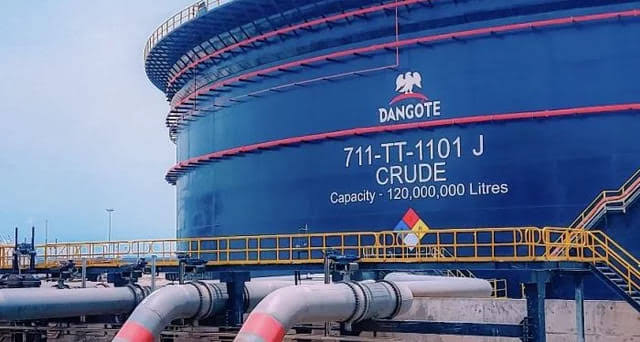
For ₦5,250, Nigerians could soon own a piece of the refinery that has reshaped the country’s fuel market.
-

 metro2 days ago
El-Rufai Demands ₦10bn from Defence Minister Over Southern Kaduna Killings Allegation
-
 metro2 days ago
Catholic priest leaves priesthood, weds Kenyan woman after 12 years in Kenya
-
 Politics2 days ago
Why Did Peter Obi Attend Seyi Makinde’s Campaign Launch? Here’s What He Said
-

 News2 days ago
Lagos Moves to Slash Agency Fees, Curb Rent Hikes With New Tenancy Bill
-
 metro3 days ago
Oyoland Grand Chief Imam Celebrates Dr Sharafudeen Raji for Service to Islam
-
 metro3 days ago
Three Women Killed, 10 Injured in Multiple Crash on Lagos-Ibadan Expressway Bridge
-
 metro2 days ago
No US Case Against Tinubu, Family Enjoy Unimpeded Transit for UNGA — Ambassador Ibrahim
-
 metro2 days ago
Osun Police Arrest Woman After Vigilante Member Dies During Sexual Encounter in Ile-Ife