
News
‘No Christian, Muslim is persecuted in Nigeria’, FG replies 5 US senators
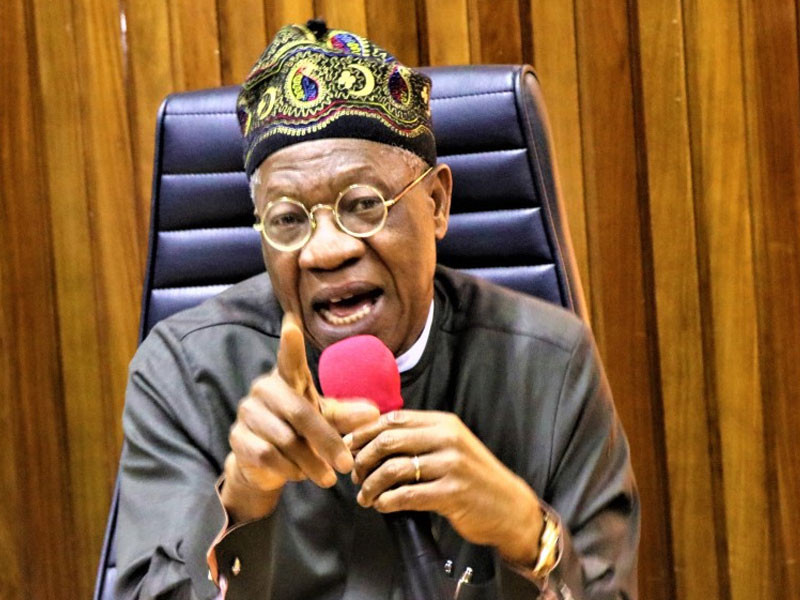
The Federal Government on Monday condemned the call by five US Republican Senators asking for the redesignation of Nigeria as a country of particular concern because of alleged persecution of Christians.
The Senators who made the call in a letter to the US Secretary of State, Antony Blinken also alleged violation of freedom of Christians’ rights to practice their religion.
Responding to the allegation in an interview with the News Agency of Nigeria (NAN) in London, the Minister of Information and Culture, Alhaji Lai Mohammed said the call was based on false premise and misunderstanding of what was going on in the country.
NAN reports the minister is in London for engagements with international media as well as some relevant Non-Governmental-Organisations.
“You will recall that only few months ago Nigeria was taken out of the list of countries of particular concern because it was proven that there is no iota of truth in the allegation that Christians or any religion was being persecuted or people were not allowed to practice religion of their choice,
READ ALSO:
- INEC laments as arsonists burn Enugu office
- We’ll stay with our pastors and be raptured, say children rescued from Ondo church cell
- Lagos shuts Redeemers School over death of five-year-old boy
‘We want to say once again that Nigeria does not have a policy that denies people the freedom to practice their religion
“The country also does not have a policy of violation freedom of religion and it is not true that Nigeria persecutes anybody on account of his or her faith,” he said.
Mohammed noted that the Constitution of Nigeria guarantees the right of anybody to practice his or her own faith without molestation and the government has always safeguarded the constitutional provision jealously.
He said most commentators who were not well versed in the politics and happenings in Nigeria took criminalities and communal clashes as issues of religious persecution.
“Nobody in Nigeria is being persecuted But we have issues of criminality going on and the criminals really do not make distinction of any religion.
“They kidnap for money, they hold people for ransom irrespective of their religion and there are some issues pf communal matters dating back to many years.
“If statistic is to be taken, I can say confidently that as many Muslims as Christians have been victims of these criminals,” he said.
According to the minister, the only known group that targeted Christians was the Islamic State’s West Africa Province (SWAP)
He, however, said that the federal government had mounted large-scale military operations to wipe out the criminals and it is yielding results.
“What ISWAP is doing is that because of their dwindling influence, they are now attacking Churches and Christians in order to create crisis between various religious groups.
“But as a government, we are after them,” he said.
The minister said some NGOs were also feeding the international community with wrong information to get funds from donors.
Mohammed reiterated that the two major religions in Nigeria, Islam and Christianity are also collaborating to find solution to the crisis and bring peace and calm
He gave the example of the Nigeria Inter-Religious Council (NIREC) which is working to foster unity and better understanding between the Christian and Islamic faiths.
The minister solicited support from multilateral organisations and foreign countries in tackling the challenges of insecurity.
VANGUARD












News
Mother, Six Children Kidnapped in Fresh Kaduna Bandit Attack
Mother, Six Children Kidnapped in Fresh Kaduna Bandit Attack
In a fresh wave of banditry in Kaduna State, a mother and six children were abducted from their home in Kurmin‑Uwa near Janjala community in Kagarko Local Government Area on Friday night. The attack comes less than 24 hours after suspected bandits kidnapped ten residents, including seven members of a single family, in Unguwar Sabon‑Titi, Katari.
According to residents, the raid occurred around 10:23 p.m., with the assailants going directly to the targeted house before whisking away the victims, identified as Ladi Malachy, Patience Malachy, Promise Malachy, Inama Malachy, Peter Malachy, and Aboyi Malachy. Witnesses said the attackers fled into surrounding forests, leaving the community in fear.
READ ALSO:
A local resident, Ibrahim Shehu, confirmed the abduction, while a community leader, speaking on condition of anonymity, revealed he alerted security operatives immediately after learning about the raid. However, it remains unclear whether authorities responded promptly. Kurmin‑Uwa is located about two kilometres from Kagarko town, an area that has seen repeated bandit attacks on households.
Security sources indicate that search and rescue operations have been launched, as authorities work to locate the kidnappers and secure the release of the abducted family. Meanwhile, the Kaduna State Police Command has yet to issue an official statement regarding the incident.
The back‑to‑back kidnappings have heightened tension in rural Kaduna communities, with residents calling for intensified patrols, improved security presence, and faster emergency response to prevent further abductions. Analysts warn that without swift action, such violent raids may continue to terrorise villages across the state.
Mother, Six Children Kidnapped in Fresh Kaduna Bandit Attack
News
INEC Warns ADC Against Holding Convention Without Supervision
INEC Warns ADC Against Holding Convention Without Supervision
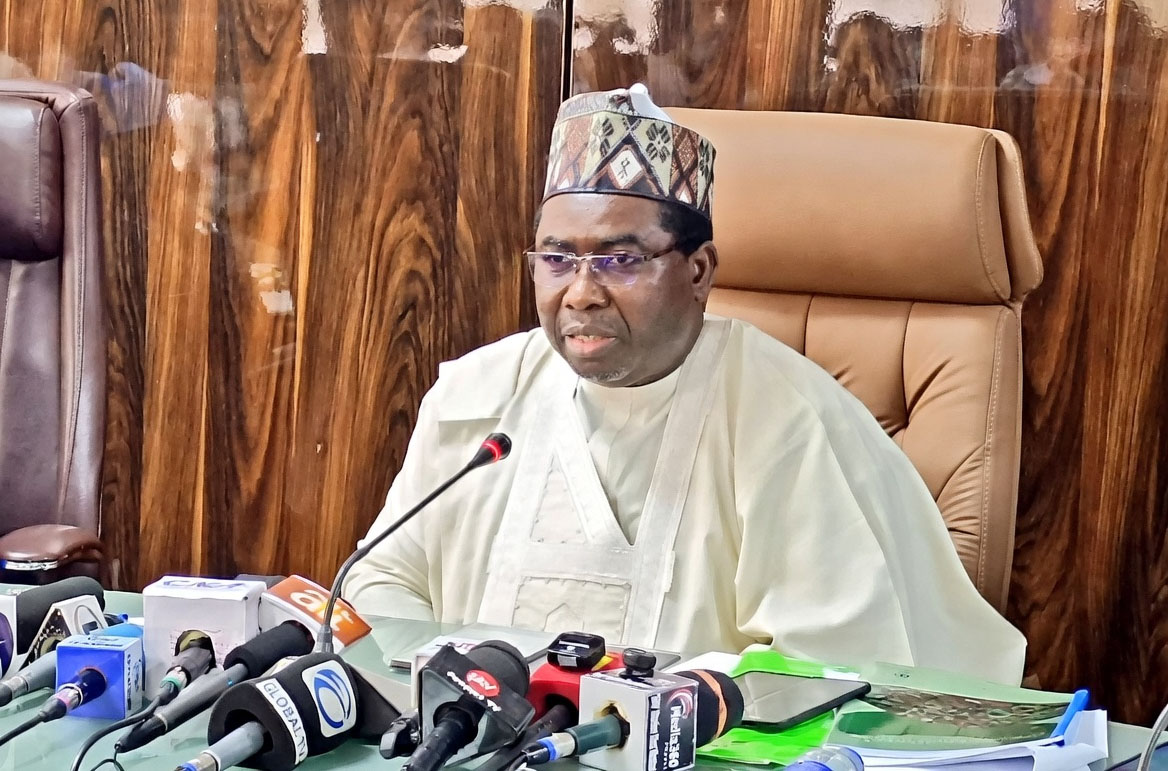
The Independent National Electoral Commission (INEC) has cautioned the African Democratic Congress (ADC) against proceeding with its planned congresses and national convention without proper supervision and in defiance of an existing court order.
Chairman Joash Amupitan issued the warning during an interview on Arise TV on Friday, after the ADC insisted on going ahead with its convention despite INEC’s derecognition of the leadership faction linked to David Mark and Rauf Aregbesola.
Amupitan stressed that INEC’s actions were guided by legal considerations, particularly a subsisting court order restraining the ADC from taking steps that could undermine ongoing legal proceedings. “Don’t do anything. Don’t take any step that will render any proceeding before the court nugatory,” he said.
READ ALSO:
- APC Rejects ADC Claims, Says Tinubu Not Responsible for Party’s Legal Troubles
- Fani‑Kayode Fires Back at Peter Obi, Defends NADECO’s Legacy
- Presidency Clarifies Why Tinubu Met Plateau Victims Only at Airport
He explained that the ADC’s plan to conduct congresses and a national convention is already part of a pending legal process, with motions related to the activities yet to be determined by the court. Ignoring the court’s directive, he warned, could result in invalidated elections or nullified internal party decisions, citing precedents in Zamfara and Plateau states where failure to comply with court orders affected electoral outcomes.
Amupitan highlighted the risks of repeating past mistakes, stressing that while the ADC is free to act as it chooses, INEC would not risk supervising illegal or unauthorized party activities. He reinforced the importance of adhering to the Electoral Act and judicial directives to ensure that party events are legally recognised and free from future challenges.
The INEC Chairman’s warning comes amid heightened tension within the ADC, with the faction led by David Mark facing derecognition and ongoing litigation over the party’s legitimate leadership. Analysts note that the statement underscores INEC’s commitment to rule of law, legal compliance, and internal party democracy, especially as Nigeria approaches the 2027 general elections.
INEC Warns ADC Against Holding Convention Without Supervision
News
Presidency Clarifies Why Tinubu Met Plateau Victims Only at Airport

Presidency Clarifies Why Tinubu Met Plateau Victims Only at Airport
The Presidency has clarified why President Bola Tinubu did not leave the airport during his recent visit to Jos, amid public criticism. Officials said the decision was driven by tight scheduling, logistical constraints, and aviation safety concerns.
President Tinubu visited Jos North Local Government Area, where he met with families of victims killed in the Angwan Rukuba attack. Speaking to the bereaved, he said, “You have no light at the airport, and I have to fly back within the next 10 minutes. To the victims, there’s nothing I can give you, whether it’s money in millions, but console you and promise you that this experience will not repeat itself.”
The visit was attended by political supporters, traditional rulers, security operatives, and other stakeholders. However, Tinubu’s airport-only engagement drew criticism, with some accusing him of insensitivity toward grieving families.
In response, the President’s Special Adviser on Information and Strategy, Bayo Onanuga, explained that Tinubu’s schedule on Thursday included receiving Chadian President Mahamat Idriss Déby Itno at the Presidential Villa before traveling to Iperu in Ogun State. Following a security briefing by Plateau Governor Caleb Mutfwang, the Ogun trip was canceled, and an emergency visit to Jos was arranged overnight.
READ ALSO:
- Iran’s IRGC Threatens Google, Microsoft, Apple as ‘Legitimate Military Targets’
- Nigeria Apologises Over ‘Igbo King’ Controversy in South Africa as Protests Turn Violent
- Plateau Killings: Ezekwesili Blasts Tinubu, APC Over ‘Failure to Act’
Officials said logistical challenges made a town visit impractical. The airport runway does not support night flights, and the road distance from the airport to Jos township is about 40 minutes. These factors made it unfeasible for the President to visit the conflict site, meet victims in town, and return to the airport safely before dusk.
To ensure engagement, representatives of affected communities were brought to a hall adjoining the airport, allowing Tinubu to meet directly with victims, local leaders, and security officials. Among attendees were the Minister of Defence, the Chief of Army Staff, and the Inspector General of Police, who had visited Rukuba to assess security operations.
During the meeting, the President consoled victims, listened to their concerns, and assured justice would be delivered. He also promised the deployment of 5,000 AI-enabled surveillance cameras to monitor the city and enhance the identification and arrest of troublemakers. Furthermore, he invited community leaders to Abuja for additional talks on long-term solutions to recurring violence in Plateau State.
The Presidency described the visit as a strategic, high-level engagement aimed at addressing the root causes of conflict, rather than a symbolic gesture. Officials emphasized that Tinubu’s approach prioritized safety, efficiency, and direct interaction with key stakeholders while adhering to flight and logistical constraints.
Despite the criticisms, the televised meeting was seen as reassuring by residents, signaling the President’s commitment to peace, security, and community-driven solutions in Plateau State.
Presidency Clarifies Why Tinubu Met Plateau Victims Only at Airport

-

 metro3 days ago
VeryDarkMan Dares Sowore Over Blord’s Kuje Prison Remand
-

 metro3 days ago
Nigerians to Enjoy Four-Day Break as FG Declares Easter Holidays
-

 metro2 days ago
Tinubu Approves 1,000 Forest Guards, Orders 5,000 CCTV Cameras to Boost Security in Plateau
-
 metro19 hours ago
Pastor Found Dead in Guest House After Night Out With Married Female Church Member
-

 Business3 days ago
NNPC Boosts Crude Supply to Dangote Refinery to Address Rising Fuel Prices
-

 International2 days ago
Iran Announces ‘Bounty’ on US Pilots After Claiming Downing of Fighter Jet
-
 International3 days ago
Iran Fires Missiles at Israel After Trump Threatens Weeks of ‘Extremely Hard’ Strikes
-

 Politics20 hours ago
Wike: PDP Not Financially Ready for 2027 Presidential Election