

International
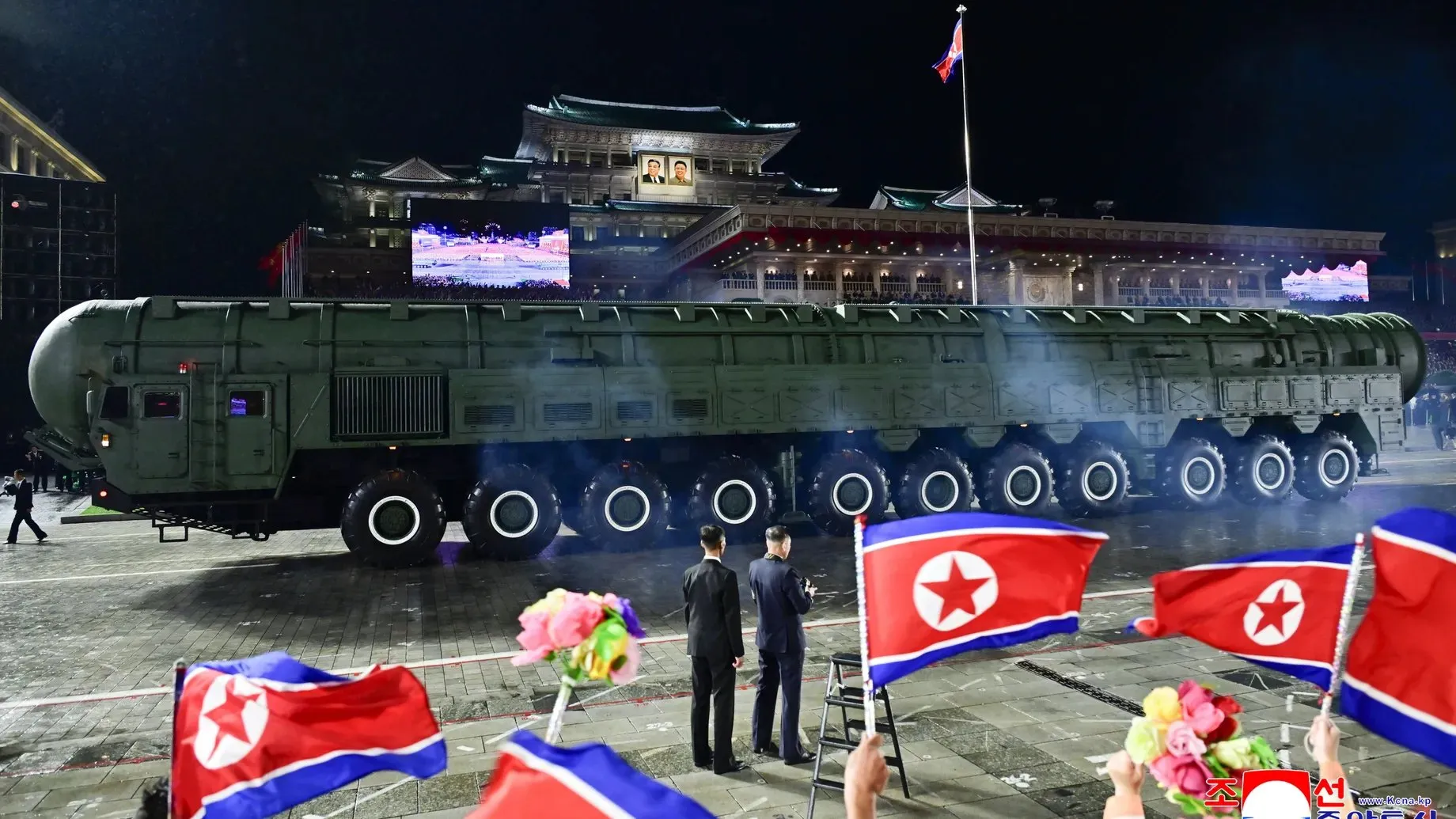
North Korea Fires 10+ Missiles Hours After Trump Signals Fresh Kim Summit







International
Over 70 Killed as Fighting Intensifies Around Yemen’s Taiz

Over 70 Killed as Fighting Intensifies Around Yemen’s Taiz
More than 70 people have been killed in fighting in and around Yemen’s southwestern Taiz province over the past 24 hours, as clashes between Houthi fighters and forces aligned with the internationally recognised government intensify.
Sources from both sides cited by AFP reported that 34 government troops were killed, including 20 in neighbouring Lahj province, while Houthi military sources said 39 of their fighters were killed in clashes across Taiz and areas bordering Lahj. The figures could not be independently verified.
The escalation comes after Houthi forces reportedly cut a key supply route linking Taiz with Aden, the interim seat of Yemen’s internationally recognised government. Security and military sources said the Houthis took control of the Al-Safiya area and a police station there, bringing traffic along the route to a halt and effectively tightening their encirclement of Taiz city.
Taiz city itself remains under the control of government-aligned forces, but the city has been surrounded from several directions by Houthi forces for years. The latest advances have increased pressure on the city’s remaining supply lines and raised concerns about access to food, medicine and other essential goods.
The renewed fighting has also focused attention on the strategic importance of Taiz. The city sits between Yemen’s northern and southern regions and provides important links to the Red Sea coast, making control of the area significant for military movements and supply routes.
READ ALSO:
- Nine Zamfara Lawmakers Dump APC for ADC Ahead of 2027
- Temi Nkem Wins N160m BBNaija Season 11 Grand Prize
- Nigeria — My Country of Destiny
The escalation comes as Yemen’s internationally recognised government launches a broader military offensive against the Houthis.
President of the Presidential Leadership Council Rashad al-Alimi announced the start of military operations aimed at retaking territory held by the Houthis and extending government authority across the country.
The announcement followed recent Houthi gains along Yemen’s Red Sea coast and around the Bab el-Mandeb Strait, a strategically important maritime passage connecting the Red Sea with the Gulf of Aden.
The latest escalation marks a major deterioration after several years of relative calm. Yemen’s conflict began in its current form after the Houthis seized the capital, Sanaa, in 2014, prompting a Saudi-led military intervention the following year.
The renewed fighting has already worsened the country’s humanitarian crisis. More than 145,000 people have reportedly been displaced amid the latest escalation, while food insecurity and limited access to healthcare remain major concerns. The World Food Programme has also warned of severe food needs in Taiz, with a large proportion of households in accessible areas struggling to meet basic food requirements.
The conflict has also taken on a wider regional dimension, with Saudi Arabia backing Yemen’s internationally recognised government and the Houthis aligned with Iran.
The latest battlefield developments around Taiz could therefore have wider implications for Yemen’s civil war, humanitarian access and security around the Bab el-Mandeb shipping corridor.
For now, Taiz remains a major flashpoint as government forces seek to reopen supply routes and push back the Houthi advance, while the Houthis attempt to consolidate their positions around the strategically important city.
Over 70 Killed as Fighting Intensifies Around Yemen’s Taiz

International
Trump launches ‘Super Intelligence Force’ to keep US ahead in AI race
Trump launches ‘Super Intelligence Force’ to keep US ahead in AI race
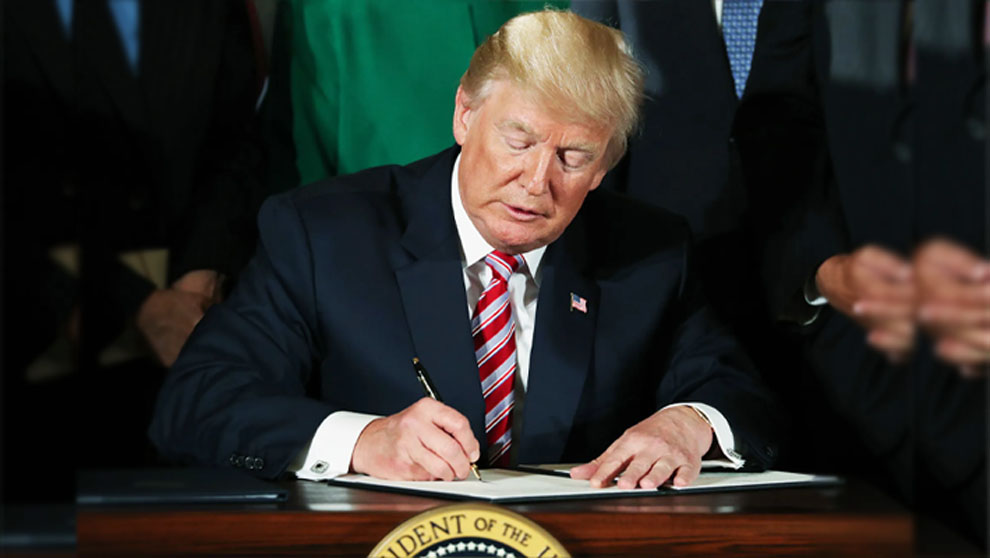
US President Donald Trump has announced the creation of a new Super Intelligence Force (SIF) to coordinate the federal government’s efforts to strengthen the country’s position in the global artificial intelligence (AI) race.
Trump appointed Director of National Intelligence Jay Clayton to lead the new force, making him the administration’s central figure for coordinating its AI strategy and efforts to maintain US technological leadership.
The announcement followed a meeting between Trump and executives from some of the world’s leading technology companies as his administration seeks to accelerate the development of advanced AI while addressing growing concerns about its potential risks.
The Super Intelligence Force will bring together senior government officials and engage AI companies, consumers, public-interest groups, religious organisations and critical-infrastructure providers as the United States develops its approach to increasingly powerful AI systems.
Other senior officials named in connection with the initiative include Federal Trade Commission Chairman Andrew Ferguson, Pentagon Chief Technology Officer Emil Michael and Office of Personnel Management Director Scott Kupor.
READ ALSO:
- Madonna University expels final-year nursing student, suspends 14 over dance video
- JUST IN: WAEC appoints Suleiman Kum as new Nigeria National Office head
- Ojudu Reveals How Tinubu, He Narrowly Escaped Death In Third Mainland Bridge Crash
The force will report to President Trump and White House Chief of Staff Susie Wiles.
One of its immediate tasks will be to assess the risks and opportunities associated with advanced AI, including the role the federal government should play in the sector. The group is expected to submit a comprehensive report to the president within 120 days.
The review is also expected to examine the US government’s ability to respond to potential AI security breaches and other threats linked to rapidly advancing technology, as well as identify areas where federal capabilities may need to be strengthened.
Trump’s latest initiative comes shortly after he signed an executive order directing federal agencies, where legally permissible, to use “Super Intelligence” and “SI” instead of “Artificial Intelligence” and “AI” in official communications, websites, reports and policy documents.
The September 29 executive order also directed the administration to develop a proposed federal definition of Super Intelligence within 60 days and consider changes that could establish the terminology in federal law.
The administration has increasingly presented advanced AI as a strategic issue involving national security, economic competitiveness and technological leadership, particularly as the US competes with China for dominance in the sector.
Trump has repeatedly warned against excessive regulation of AI, arguing that burdensome rules could slow American innovation and give rival countries an advantage.
At the same time, concerns about the technology’s potential impact have intensified, including risks involving cybersecurity, privacy, employment, misinformation, misuse and AI safety.
The White House has therefore sought greater cooperation with the technology industry. Major AI companies recently agreed to voluntary safety measures following discussions with the administration, reflecting Trump’s preference for industry-led safeguards alongside government coordination.
The new Super Intelligence Force is a federal task force and does not represent the creation of a new military branch. It also differs from an earlier proposal by Trump for an “AI Force” modelled on the US Space Force.
With Clayton at its helm, the initiative places AI development, national security and US technological competitiveness at the centre of Trump’s latest technology policy push.
Its 120-day review could provide the administration with a framework for determining how Washington will manage the opportunities and risks created by increasingly advanced AI while seeking to keep the United States ahead in the global technology race.
Trump launches ‘Super Intelligence Force’ to keep US ahead in AI race
International
US Marine arrested in Japan over suspected murder of woman in Okinawa

US Marine arrested in Japan over suspected murder of woman in Okinawa
A 20-year-old US Marine has been arrested in Japan on suspicion of murdering and robbing a 39-year-old Japanese woman at a hotel in Okinawa, in a case that has prompted a strong protest from the Japanese government.
The suspect, identified as Lance Corporal Devin Jacob Ballard, is stationed at Marine Corps Air Station Futenma in Okinawa. Japanese police allege that Ballard killed Anna Yagi, 39, at a hotel in Naha and took some of her belongings.
Police said Yagi entered the hotel with Ballard in the early hours of Saturday. She was later found unresponsive in the room after hotel staff became concerned. She was pronounced dead at the scene.
Japanese investigators believe the woman was killed, with reports indicating that she appeared to have been strangled. The precise cause and circumstances of her death remain under investigation.
Police reportedly reviewed security-camera footage from the hotel, which showed a man believed to be Ballard entering the building with Yagi and later leaving alone with her belongings.
Investigators subsequently located Ballard in Naha and arrested him on suspicion of murder and robbery.
READ ALSO:
- JUST IN: WAEC appoints Suleiman Kum as new Nigeria National Office head
- Ojudu Reveals How Tinubu, He Narrowly Escaped Death In Third Mainland Bridge Crash
- ‘I Thought I Was Dead’ — Hairstylist’s Daring Escape From Kidnappers After Benin-Ore Ambush
Ballard has denied the allegations, according to Japanese authorities, and reportedly told investigators that he did not know anything about the incident.
The case has triggered a diplomatic response because of the longstanding sensitivity surrounding the large US military presence in Okinawa.
Japanese Prime Minister Sanae Takaichi described the alleged incident as extremely serious and said Tokyo had lodged a strong protest with Washington.
She called for full US cooperation with the Japanese investigation and urged measures to prevent similar incidents involving US military personnel from happening again.
Foreign Minister Toshimitsu Motegi also summoned US Ambassador to Japan George Glass and expressed Japan’s strong concern over the case. Japanese officials have demanded that the United States cooperate fully with the investigation.
Japan’s Defence Minister Shinjiro Koizumi and Okinawa Governor Genta Koja also expressed concern over the incident.
The US Marine Corps said it was cooperating with Japanese authorities. The US Embassy in Tokyo also expressed condolences to the victim’s family and said American officials were working with Japanese and local authorities as the investigation continues.
The arrest is likely to renew concerns among residents about the impact of the US military bases in Okinawa, where a large concentration of American military personnel and facilities is located.
Okinawa has for decades been at the centre of debate over the US military presence in Japan, with residents raising concerns about crime, noise, accidents and other incidents involving service members.
The latest case comes against the backdrop of the close security relationship between Japan and the United States, with Okinawa playing a major strategic role in the two countries’ defence arrangements.
Japanese authorities are continuing to investigate the circumstances surrounding Yagi’s death and the alleged robbery.
Ballard remains presumed innocent unless proven guilty in court.
US Marine arrested in Japan over suspected murder of woman in Okinawa
-

 metro2 days ago
NYSC Kidnap: Abductors Demand N950m for 19 Prospective Corps Members in Imo
-

 Politics2 days ago
2027: Oshiomhole Dares Opposition Over ₦500 Petrol Promise, Says APC Will Take Argument to Nigerians
-

 Entertainment3 days ago
Olu Jacobs Laid to Rest in Lagos as Dignitaries, Nollywood Stars Honour Screen Icon
-

 metro3 days ago
Nigeria Launches 11-Character Digital Postcode System for Every Addressable Building
-

 Entertainment2 days ago
Less Than Four Months After Wedding, Jarvis Threatens Peller With Lawsuit Over Second-Wife Plan
-

 metro2 days ago
N500 Petrol, Wage Award: Public Sector Workers Begin Warning Strike
-

 metro2 days ago
Amaechi: Tinubu’s Policies Made My Mother’s Drugs Unaffordable
-

 metro1 day ago
‘I Thought I Was Dead’ — Hairstylist’s Daring Escape From Kidnappers After Benin-Ore Ambush