

Politics
Obi vs Soludo: ₦86.67bn Handover Figure Meets ₦127.37bn Debt Claim
Obi vs Soludo: ₦86.67bn Handover Figure Meets ₦127.37bn Debt Claim
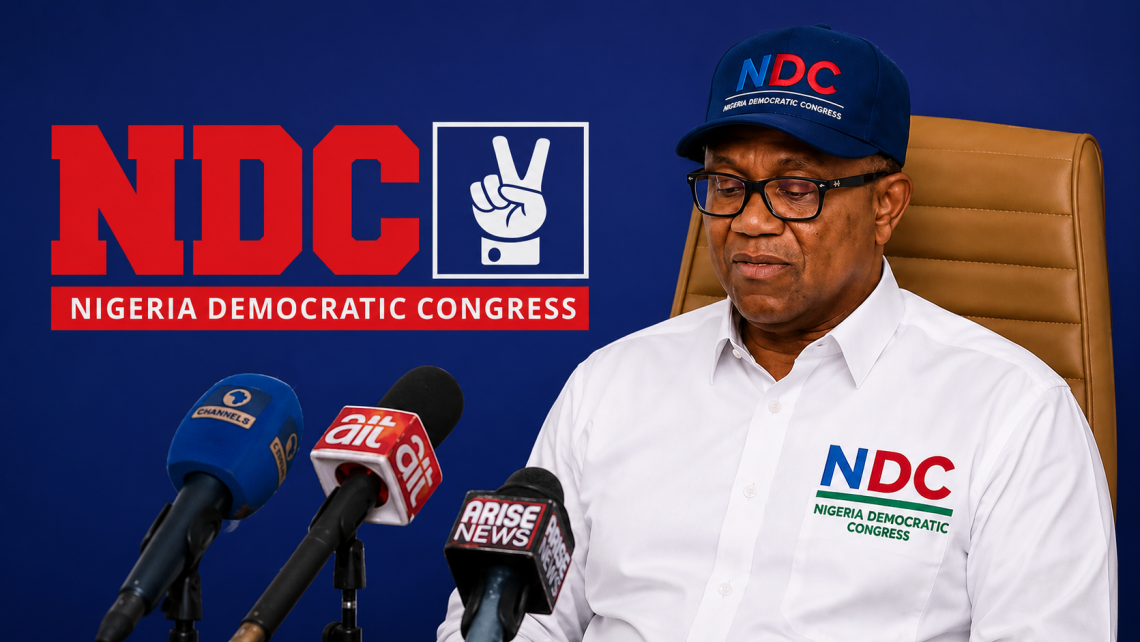
The renewed Anambra debt dispute has intensified after former Governor Peter Obi released his 2014 handover document to counter claims by the state government that his administration left behind substantial outstanding loans and other financial liabilities.
The controversy centres on competing accounts of Anambra State’s finances when Obi handed over power to Willie Obiano on March 17, 2014.
Obi’s handover document shows a positive financial position of about ₦86.67 billion after provisions for certain liabilities, while the current Anambra State Government says eight external financing facilities associated with projects undertaken during Obi’s tenure had an outstanding balance of $92.35 million, equivalent to about ₦127.37 billion, as of June 30, 2026.
However, the two figures describe different things and should not be treated as if they were direct measurements of the same debt position.
The ₦86.67 billion figure comes from the financial position presented in the 2014 handover report. The ₦127.37 billion figure is the value the state government assigns in 2026 to the outstanding balance on eight external financing facilities whose original amounts totalled about $123.77 million.
The central unresolved question is therefore how much of those facilities was actually outstanding when Obi left office in March 2014, how much had been disbursed by then, what was subsequently disbursed, how much was repaid by succeeding administrations and what remains outstanding today.
The dispute was reignited after Anambra State officials said the administration of Governor Chukwuma Soludo was still servicing loans and other obligations incurred by previous administrations, including that of Obi.
Obi rejected the claim, insisting that he did not leave Anambra owing salaries, pensions, gratuities or contractors who had completed certified work.
He subsequently challenged the state government to substantiate its claims and released the 2014 Anambra State Handover Report as part of his response.
The document, dated March 17, 2014, was addressed to Obiano and contained a summary of the state’s financial position as of the close of business on March 14, 2014, described as the final working day of Obi’s administration.
According to the document, Anambra had about ₦27 billion committed to local investments.
It also listed approximately $156 million in foreign-currency investments, which was valued at about ₦25.6 billion at the exchange rate used at the time.
The report further listed approximately ₦28.27 billion in balances relating to certified state ministries, departments and agencies, alongside ₦10 billion refunded to the state by the Federal Government.
Those figures produced a combined financial position of about ₦91.67 billion.
The outgoing administration, however, made provision for about ₦5 billion in liabilities, including March 2014 salaries, pensions, gratuities and certified payments relating to projects that had already been executed.
After that provision, the report placed the net financial position at approximately ₦86.67 billion.
Former Secretary to the Anambra State Government Oseloka Obaze, who served under Obi, has defended the document and said he was involved in the handover process.
Obaze has maintained that the financial records were presented to Obiano during the transition and that the incoming governor acknowledged receipt of the documents.
READ ALSO:
- UK Student Visa: 63 Countries Exempt From Proof of Funds, Nigeria Excluded
- Lagos Intensifies Surveillance as Adulterated Palm Oil Raises Food Safety Concerns
- Saudi Arabia Rejects Nigeria’s Request for More 2027 Hajj Slots
However, acknowledgement of a handover document does not necessarily mean that every figure in it was independently audited or certified by the incoming administration.
There is also historical evidence that some elements of Obi’s financial account were subsequently acknowledged by Obiano.
During a television appearance ahead of the 2017 Anambra governorship election, Obiano reportedly confirmed that he inherited about ₦9 billion in cash and approximately ₦25.6 billion in investment-related assets.
That does not, however, resolve the wider question of the state’s liabilities and outstanding borrowing at the time of the transition.
The Anambra State Government has released a separate set of records to support its claim that loans connected with the period of Obi’s administration remain obligations of the state.
According to the government, eight external financing facilities associated with projects approved or implemented between 2007 and 2013 had a combined original value of about $123.77 million.
The state said the outstanding balance on those facilities stood at approximately $92.35 million as of June 30, 2026, which it valued at ₦127.37 billion using the exchange rate applied in its calculation.
The facilities identified by the state government relate to development programmes covering areas such as healthcare, agriculture, education, malaria control and erosion management.
Among the projects listed are the Malaria Control Booster Project, Third FADAMA Development Project, Health System Development Project II, State Education Programme Investment Project and the Nigeria Erosion and Watershed Management Project.
The government has said successive administrations have continued to service the facilities.
It has also maintained that its criticism is not directed at borrowing as a financing tool, arguing that loans can be justified when used for viable development projects and human-capital investment.
Obi, however, has rejected the description of his administration as having left Anambra with the debt burden now being cited.
He has maintained that his administration paid what was due before leaving office and did not owe workers, pensioners or contractors whose claims had been properly processed.
He has also said his administration saved substantial funds for the incoming government.
The most important issue arising from the competing accounts is that a loan contracted during an administration is not necessarily the same as the debt outstanding at the moment that administration leaves office.
A financing agreement can have an approved or contracted value, but the amount actually drawn down at a particular point in time may be lower.
Similarly, repayments may reduce the principal balance, while subsequent disbursements can increase the amount outstanding.
READ ALSO:
- MURIC Warns FG: Any Move Against Atiku Now Lacks Tact
- Jetour T1 Storms Abuja as Automaker Accelerates Nigeria Expansion
- Kidnapped Female Police Officer Found Dead in Ebonyi as Suspect Leads Police to Remains
The timing of those transactions therefore matters in determining what a government actually inherited.
This is particularly significant in the current Anambra controversy because the $123.77 million cited by the state represents the original amounts associated with the eight facilities, while the $92.35 million figure represents the balance the state says remains outstanding in June 2026.
Neither figure, by itself, establishes the exact debt stock on March 17, 2014.
Official debt records have also been cited in the debate, showing Anambra’s external debt stock at about $30.32 million as of December 31, 2013, alongside domestic debt of approximately ₦3.03 billion at the same period.
Those figures are much closer to the date of Obi’s departure, although they do not by themselves establish the precise financial position on March 17, 2014.
They nevertheless add another layer to the debate because they show why the original value of all financing facilities cannot automatically be equated with the state’s debt stock at the time of handover.
The question of how much had actually been disbursed by March 2014 is therefore central.
So is the question of how much remained unpaid at that date.
The subsequent repayment history is equally important.
If part of a facility was repaid after Obi left office, that repayment would reduce the outstanding balance. Conversely, if additional funds under an existing financing agreement were drawn after the change of administration, those later transactions would need to be reflected in any assessment of the debt inherited by the incoming government.
The current state government’s publication gives a picture of the 2026 outstanding balance, but a complete reconstruction of the financial position at the 2014 handover would require the loan-by-loan balances at that date, disbursement records, repayment schedules and subsequent transactions.
This distinction has become central to the public debate.
The Anambra Government argues that loans associated with projects undertaken during Obi’s administration remain outstanding and are still being serviced.
Obi’s position is that the state had substantial funds and investments when he left office and that he did not leave behind the unpaid obligations being alleged.
Both positions can be examined without treating the ₦86.67 billion handover figure and the ₦127.37 billion current outstanding-loan figure as contradictory measurements of the same financial item.
The handover report primarily addresses the assets, balances and estimated liabilities presented by the outgoing administration.
The state’s latest debt statement addresses the current balance of specific external financing facilities.
The broader financial picture therefore requires the two sets of records to be reconciled rather than simply placed against each other.
The dispute also extends beyond external loans.
The Anambra Government has alleged that some salary, pension and gratuity obligations remained outstanding after Obi left office.
The state has cited arrears involving workers and retirees and said the Soludo administration has continued to settle inherited liabilities.
Obi and his supporters have disputed the characterisation of those obligations and maintained that the outgoing administration had settled the liabilities it was responsible for at the time of handover.
Another contested issue is an alleged ₦2.1 billion ecological fund.
The state government has disputed Obi’s account of the fund and said its examination of the relevant bank records did not support the claim that the amount existed in the account in the manner described.
Obi’s camp has maintained its position regarding the funds.
The dispute over the ecological fund is separate from the question of the eight external loans and should not be conflated with the figures contained in the 2014 handover report.
There is also a broader political dimension to the controversy because Obi is now the NDC presidential candidate for the 2027 election, making his record as Anambra governor a subject of renewed public scrutiny.
However, the financial questions themselves concern historical state records and can be examined independently of the political arguments surrounding the former governor.
At the centre of the matter is a relatively straightforward accounting question: what exactly was Anambra State’s financial position when Obi handed over power in March 2014?
Answering that question requires more than the total amount originally attached to loans contracted between 2007 and 2013.
It requires a loan-by-loan reconciliation showing the original facility, the amount disbursed before March 17, 2014, the amount repaid before and after the handover, subsequent drawdowns and the outstanding principal at each stage.
It also requires reconciliation of the cash balances, investments and liabilities listed in the 2014 handover document with the state’s audited accounts and official debt records.
The current controversy has therefore moved beyond a simple argument over whether Obi left money in Anambra’s coffers.
The available records show that the 2014 handover report recorded substantial assets and financial balances, while the current state government has produced records showing that external financing facilities associated with the period of Obi’s administration still have outstanding balances.
What remains contested is the precise amount of debt Anambra inherited on the day Obi left office and how that figure relates to the loans now being serviced.
Until those figures are reconciled, the Anambra debt dispute remains a matter of competing interpretations of financial records spanning more than 12 years.
For taxpayers and residents, the most useful resolution would be a transparent reconciliation of the state’s finances from the March 2014 handover to the present, showing the assets inherited, liabilities outstanding, loans drawn, repayments made and balances remaining.
Such a record would provide a clearer basis for understanding how Anambra’s current debt position developed and which obligations were inherited, serviced or incurred by successive administrations.
Obi vs Soludo: ₦86.67bn Handover Figure Meets ₦127.37bn Debt Claim






Politics
ADC Raises Alarm as Court Delays Release of Lifu’s Judgment Despite Payment
ADC Raises Alarm as Court Delays Release of Lifu’s Judgment Despite Payment
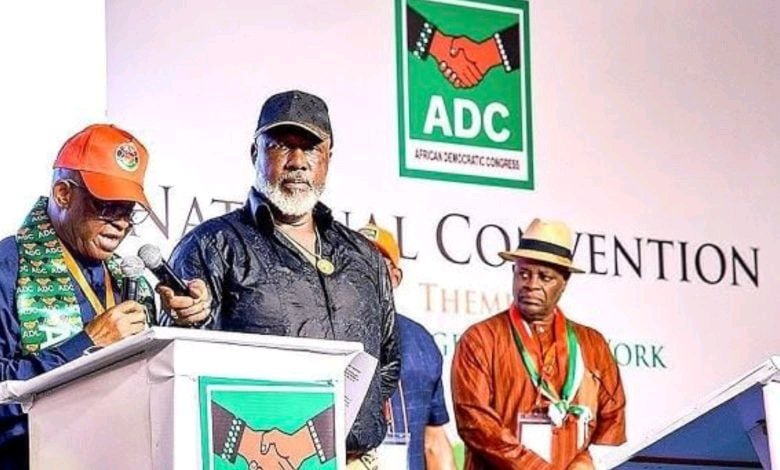
The African Democratic Congress (ADC) has raised fresh concerns over the handling of its leadership crisis, accusing the Federal High Court in Abuja of delaying the release of the Certified True Copy (CTC) of a judgment that nullified the Senator David Mark-led leadership of the party.
The party’s Presidential Campaign Council said the continued delay had denied affected parties access to the full details of the judgment, despite the payment of the prescribed fees for obtaining certified copies.
In a statement issued on Monday, November 9, 2026, the Director of Strategic Communication of the ADC Presidential Campaign Council, Phrank Shaibu, said lawyers representing some of the defendants had formally applied for the certified judgment but were yet to receive the document.
According to the council, counsel to the third defendant submitted an application on November 5, the day Justice Peter Lifu delivered the judgment, while counsel to the first defendant filed another application on November 6.
The council maintained that both applications carried the Federal High Court’s official ‘PAID’ stamp, indicating that the required fees had been settled.
Shaibu questioned why the certified judgment had remained inaccessible despite the judge’s reported declaration in open court that copies were ready.
He argued that the delay was particularly troubling because the judgment directly affected the leadership and future of the opposition party, as well as the political interests of its members.
The ADC campaign council maintained that without the certified copy, affected parties could not properly establish the precise orders made by the court or fully determine the appropriate legal steps to challenge them.
It described the situation as a denial of access to justice, insisting that litigants should not be subjected to unnecessary difficulties in obtaining official copies of judicial decisions affecting their rights.
The council also recalled its earlier objection to Justice Lifu presiding over the case, saying its National Secretary, Ogbeni Rauf Aregbesola, had previously raised concerns about the judge’s impartiality.
It further questioned the timing of the judgment, which was delivered days after the ADC’s campaign activities in Sokoto, alleging that the circumstances surrounding the ruling and the subsequent delay in releasing the certified copy had heightened suspicions among party members.
The ADC had earlier rejected the November 5 judgment and announced plans to challenge it through the appropriate judicial channels.
In the controversial ruling, Justice Lifu nullified the Senator David Mark-led leadership structure and invalidated actions taken by the disputed executive, including decisions connected to the party’s 2027 presidential nomination.
The ruling also recognised the position of Nafiu Bala Gombe in the leadership dispute.
The ADC has vowed to pursue every lawful avenue to challenge the judgment, while demanding an immediate explanation for the delay in releasing its certified copy.
As of Monday, November 9, there was no reported official response from the Federal High Court addressing the campaign council’s latest allegation.
ADC Raises Alarm as Court Delays Release of Lifu’s Judgment Despite Payment
Politics
Tension in Delta as Task Force Members Protest Over Colleague’s Killing at NDC Rally
Tension in Delta as Task Force Members Protest Over Colleague’s Killing at NDC Rally
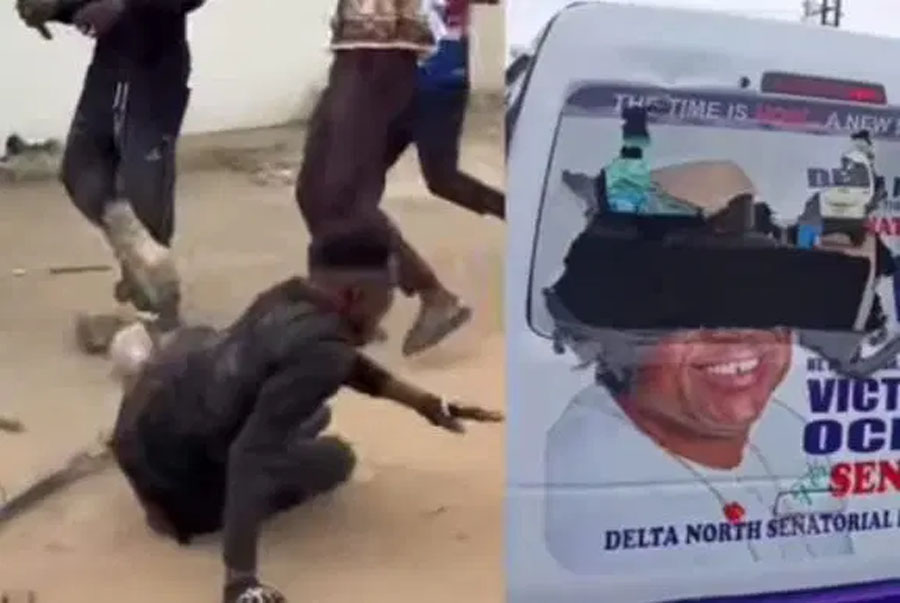
ASABA, DELTA STATE – Tension has heightened in Asaba, Delta State, following a protest by members of a task force over the killing of their colleague during Saturday’s violent political clash involving supporters of the Nigeria Democratic Congress (NDC).
The protest reportedly took place on Monday, November 9, 2026, two days after violence erupted during a political procession organised by the Obedient/OK Movement in support of the party’s presidential candidate, Peter Obi.
According to reports, the task force members took to the streets to express their anger over the death of their colleague, who was reportedly among those affected by Saturday’s violence.
The protest came amid growing tension over the circumstances surrounding the deadly confrontation, which left one person dead and several others injured.
The incident occurred along Nnebisi Road, Asaba, at about 12:15 p.m. on Saturday, November 7, during the political procession.
The Delta State Police Command confirmed the death and disclosed that five other people sustained varying degrees of injuries.
The police said they had received intelligence suggesting a possibility of violence before the procession and subsequently invited the organisers to a security meeting.
According to the command, the organisers were advised against holding an open-road procession and encouraged to conduct their political activities at a designated venue where adequate security could be provided.
However, the police alleged that the organisers ignored the advice and proceeded with the procession.
Following the violence, the command announced that it had commenced a full-scale investigation to establish the circumstances surrounding the clash and identify those responsible.
The Delta State Government also condemned the incident, describing the loss of life as unacceptable and calling on the police to ensure that anyone found culpable was brought to justice.
The development has further heightened concerns over political violence and public safety in Delta State as political activities gather momentum ahead of the 2027 general elections.
The circumstances surrounding Monday’s protest, including the full identity of the deceased task force member and the extent of the protesters’ demands, were not immediately clear.
Tension in Delta as Task Force Members Protest Over Colleague’s Killing at NDC Rally
Politics
Hamzat, GRV Clash Over Housing, Transport, Governance at Lagos Debate
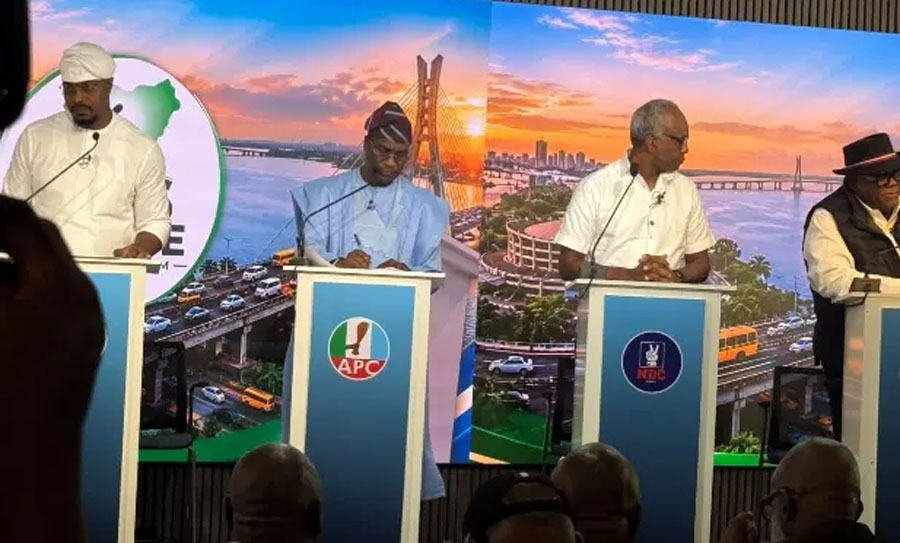
The Lagos State Deputy Governor and All Progressives Congress (APC) governorship candidate, Obafemi Hamzat, and his African Democratic Congress (ADC) counterpart, Gbadebo Rhodes-Vivour, have presented contrasting development plans for Lagos State ahead of the 2027 governorship election.
The two candidates outlined their policy priorities during the 2026 Lagos State Governorship Debate held in Lekki on Sunday, November 8, with particular attention to housing, transportation, infrastructure, security, healthcare, waste management and accountable governance.
Hamzat, who described the debate as a job interview, relied heavily on his experience in public service, arguing that his professional background and previous appointments had prepared him for the responsibility of governing Lagos.
He said his experience as a teacher, case manager in New York and systems manager, alongside his years in the Lagos State Government, had equipped him with the knowledge required to manage the state’s affairs.
The APC candidate recalled his time as Commissioner for Science and Technology, during which he said he led the development of the state’s residents and structural database.
He also highlighted his tenure as Commissioner for Works and Infrastructure, citing his involvement in the delivery of major infrastructure projects, including a cable bridge described as the first of its kind in West Africa and the second in Africa.
Hamzat said effective governance required a leader who understood the people, the state and the responsibilities attached to public office.
Presenting his development blueprint, tagged Jacob’s Promise, he said it was structured around seven pillars, seven broad areas of action and 100 pledges.
He identified respect for citizens, hard work and truthfulness as the principles that would guide his administration, adding that government should prioritise actual delivery over public announcements.
READ ALSO:
- ‘My History Is Traceable’: Atiku Fires Back at Tinubu Over University Funding
- Job Seeker Steals Bugatti CEO’s £2m Car After Finding Keys Inside
- Netanyahu Faces Political Setback as Israeli President Picks Rival to Form Government
According to him, residents should evaluate candidates based on their experience, the substance of their programmes and their ability to translate promises into tangible results.
In contrast, Rhodes-Vivour argued that Lagos needed a different approach to governance, accusing successive administrations of prioritising the interests of wealthy residents and privileged communities over those of ordinary people.
The ADC candidate said his political activities and manifesto had consistently focused on improving the living conditions of ordinary Lagos residents.
He maintained that the state needed an integrated development strategy capable of addressing interconnected challenges in housing, transportation, healthcare, education, waste management and urban planning.
On housing, Rhodes-Vivour promised to deliver 100,000 housing units within his first four years if elected.
He proposed funding social housing through luxury taxation, developing the eastern foreshore and intergenerational areas, and decentralising housing development across the state.
He also promised to expand Lagos’ railway network, saying his administration would connect the state’s rail lines within two and a half years through a private-sector-driven arrangement.
He said the proposed approach would be transparent, equitable and cost-effective, with the objective of improving connectivity and opening up more communities for development.
Rhodes-Vivour further argued that the state’s high internally generated revenue should translate into improved living conditions and better public services for residents.
He cited communities such as Makoko while criticising what he described as development policies that displaced ordinary residents in favour of elite interests.
The ADC candidate also pledged to address traffic congestion, flooding, waste management and the activities of street touts, popularly known as agberos.
OTHER CANDIDATES PRESENT THEIR VISIONS
The debate also featured governorship candidates of other political parties, including Funso Doherty of the Nigeria Democratic Congress (NDC) and Deji Doherty of the Peoples Democratic Party (PDP).
Funso Doherty criticised the state’s revenue and taxation system, arguing that Lagos residents continued to face multiple levies without receiving public services commensurate with the revenue generated by the government.
READ ALSO:
- 2027: Tinubu Challenges Atiku to Explain How He Financed University
- Afenifere Crisis: ‘There Is Only One Afenifere’, Secretary Insists Amid Breakup Allegations
- Illicit Donations: Adeboye Orders RCCG to Refund Billions Traced to Church Projects
He maintained that Lagos was operating below its potential despite its substantial internally generated revenue.
The NDC candidate, who said he had spent about 30 years in the private sector, promised a new direction for the state, particularly in healthcare and essential public services.
He urged residents to hold his party accountable if elected.
Deji Doherty, on his part, highlighted the need to improve electricity supply and create more economic opportunities for residents.
He said his experience as a technocrat and industrialist had informed his decision to seek the governorship position.
On housing, the PDP candidate cautioned against making unrealistic promises, arguing that the cost of land and building materials must be considered before setting ambitious construction targets.
He also raised concerns about gaps in primary healthcare delivery, particularly in some island communities.
DEBATE AHEAD OF 2027 ELECTION
The Lagos governorship debate was organised by the Nigeria Debate Consortium, a coalition of media organisations comprising Channels Television, TVC News, The PUNCH, TheCable and Vanguard.
The exercise is part of a series of debates scheduled ahead of the 2027 general elections, aimed at giving candidates a platform to explain their programmes and respond to questions on issues affecting Nigerians.
The organisers said the debate was designed to promote issue-based political engagement, democratic accountability and informed electoral choices.
The participating candidates were expected to address major concerns affecting Lagos residents, including the economy and cost of living, transportation and infrastructure, flooding and the environment, healthcare and social welfare, security and accountability.
The February 6, 2027 governorship election will determine who succeeds Governor Babajide Sanwo-Olu as the next governor of Lagos State.
Hamzat, GRV Clash Over Housing, Transport, Governance at Lagos Debate
-

 Sports3 days ago
BREAKING: Flamingos Make History, Defeat Japan 2–1 to Win First FIFA U-17 Women’s World Cup
-
 News3 days ago
Power Outage: Tegbe Gives Nigerians 72-Hour Timeline as FG Moves to Restore Electricity
-

 News2 days ago
One Killed, Five Injured as Violence Disrupts Obi-Kwankwaso Rally in Delta
-

 Sports2 days ago
Messi Breaks MLS Record, Becomes First Player To Win Back-to-Back Golden Boots
-
 Politics2 days ago
‘My History Is Traceable’: Atiku Fires Back at Tinubu Over University Funding
-

 metro2 days ago
[ICYMI] Lagos Summons DisCos, Regulators Over Persistent Power Outages, Seeks 24-Hour Electricity
-

 metro2 days ago
Zamfara: Bandits Allegedly Burn 13 Family Members Alive After Locking Them Inside Room
-

 Auto1 day ago
Four-day Abuja International Motor Fair begins tomorrow Nov 10