
metro
Ogun union officers chase motorcycle rider to death over N600

A motorcycle rider, Nura Kazeem, has been crushed to death at the Aseese, Ogun State end of the Lagos-Ibadan Expressway.
PUNCH Metro learnt that some officials of the motorcycle riders’ union in the community were chasing the 22-year-old over a N600 ticket when he rammed into a commercial bus and died.
It was gathered that Kazeem was preparing to travel to his hometown in the North with his brothers when he was approached by one of the union members, identified simply as Ayomo, about the purchase of the daily ticket.
The victim was said to have refused to buy the ticket on the grounds that he was not working and was preparing to travel.
Ayomo and some other officials of the union were allegedly pursuing him when he rammed into a white Mazda bus.
An eyewitness, Khalid Abdullahi, said the officials immediately fled the scene.
He said, “I was coming from Oshodi to Asese in a public bus when I saw two motorcycles coming at top speed.
“A white Mazda bus in our front wanted to drop off passengers at the ASCON Bus-stop, while the bus I was in also wanted to drop off passengers at the same bus stop. But as the white bus wanted to park, one of the speeding motorcycles rammed into it.
READ ALSO:
- Ukraine Crisis: Evacuation Of Stranded Nigerians Postponed
- Extradition: Put Security Ring Around Abba Kyari, Ex-AIG Tells FG
- Buhari Donates $1m To Afghanistan
- Europe’s largest nuclear power plant on fire after shelling
“When I saw the accident, I came down from the bus to help the victim when I saw that he was one of our brothers. We dragged him to a side of the road, but he was already dead. As the motorcycle union officials saw what happened, they turned back and fled.”
Another eyewitness, Mohammed Abdullahi, urged the government to curb the excesses of the union.
He said, “The problem is that the government gave a job to people who don’t value human lives. I thank God that there was no violence when this incident happened. We lost our brother because of N600. He came to the bus stop because he wanted to travel to the North today. The union official asked him if he wanted to buy a ticket and he said no, that he wanted to travel.
“Someone that had been buying tickets for over five months at least; if he said he was not buying a ticket today, they should have left him, but they pursued him to death because of N600.”
The Seriki of the Hausa community in Ibafo, Alhaji Shehu Usman, who noted that the incident could have caused a tribal war in the state, urged the state government to educate the union on how to go about their work.
He said, “The government should bear this in mind and warn these people. There are ways to go about this type of issue without harassing people.”
The Asese branch Chairman of the union, Agboola Afolabi, said he was working with the Arewa community to resolve the matter.
He said, “I was on my way to Abeokuta when someone called me that something was happening in my unit and that someone had died. I turned back to come and resolve the issue. When I got there, I was shocked when I saw the scene.
“But I am grateful to the Arewa community here that they are peaceful people and they helped us to create peace in this situation.”
The state Police Public Relations Officer, Abimbola Oyeyemi, promised to call back our correspondent on the incident.
He had yet to do so as of the time of filing this report.
Punch









metro
MURIC Backs Egba Imams’ Call for Inclusive Leadership in Ogun 2027 Governorship Race
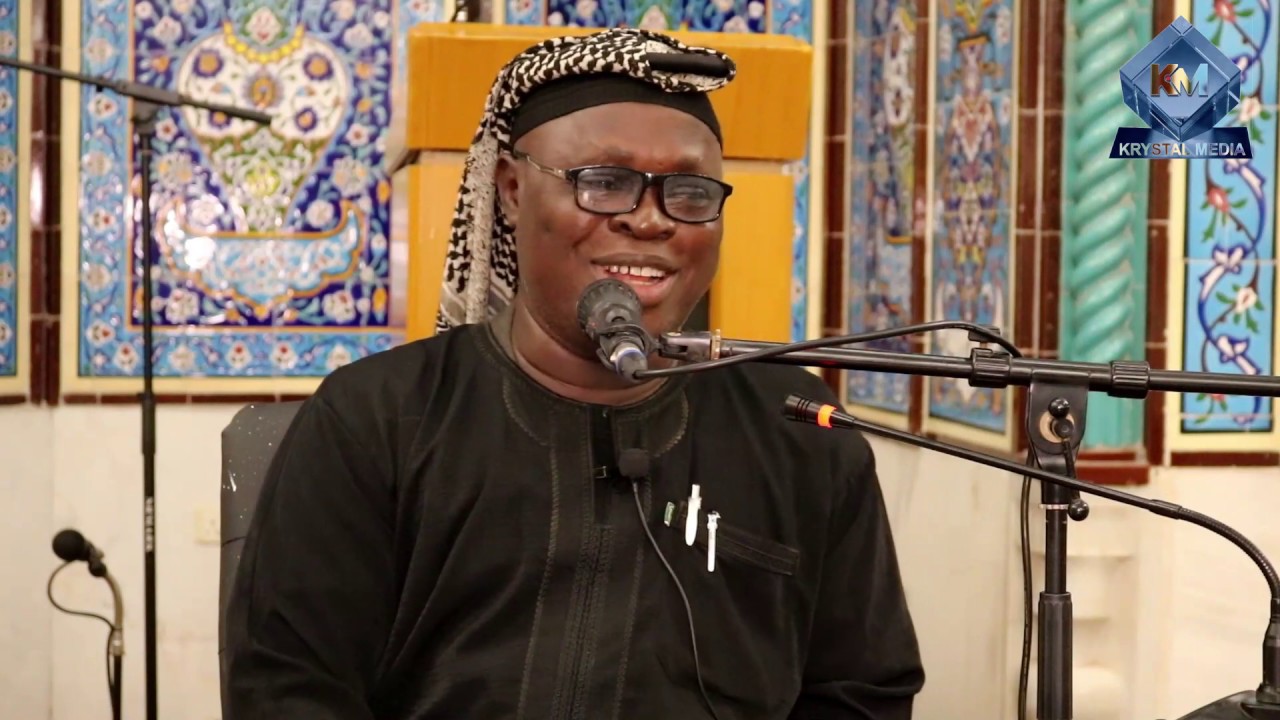
MURIC Backs Egba Imams’ Call for Inclusive Leadership in Ogun 2027 Governorship Race
The Muslim Rights Concern (MURIC), Ogun State Chapter, has commended the Egba Muslim clerics under the umbrella of Raabitotul Aimmata Wal-Ulamaa of Nigeria for what it described as a courageous and principled stance against the perceived political marginalisation of Muslims in the state.
In a statement issued on Monday by the State Chairman, Ustaadh Tajudeen Jimoh Alao, and made public by the State Secretary, Ambassador Olaleye Rasheed Damilare, the group praised the intervention of the Egba Chief Imams, noting that their position represents “a historic awakening and a moral compass for justice, equity, and inclusive governance.”
MURIC aligned itself with the communiqué released by the Egba Imams led by the Grand Chief Imam of Egbaland, Sheikh Saadallah Bamigbola, which raised concerns over what it described as an imbalance in political leadership in Ogun State since its creation.
The Islamic advocacy group noted that for over five decades, Muslims in the state, despite their population and contributions, have largely been excluded from occupying the highest executive office.
According to the statement, “this reality calls not for division, but for deliberate correction anchored on fairness, justice, and mutual respect.”
MURIC therefore threw its weight behind calls for equity in the 2027 governorship election, urging political parties to consider competent Muslim candidates across party lines. It also advocated for a peaceful and inclusive political structure that reflects the state’s diversity.
The group further applauded the decision of the Egba Imams to embark on grassroots mobilisation and civic sensitisation, describing it as a vital democratic process aimed at ensuring fairness and justice.
MURIC paid tribute to prominent Islamic scholars in Egbaland, including Sheikh Bamigbola and other chief imams across the region, for their commitment to truth and refusal to compromise their values.
It stressed that the advocacy for balanced representation should not be misconstrued as a call for religious conflict, but rather a genuine appeal for justice, unity, and inclusiveness among all religious and ethnic groups in Ogun State.
“As Ogun State approaches another electoral cycle, all stakeholders must rise above bias and embrace fairness as the foundation for sustainable peace and development,” the statement added.
The development comes amid growing political conversations ahead of the 2027 governorship election in Ogun State, with increasing calls from various groups for broader representation in leadership.
MURIC Backs Egba Imams’ Call for Inclusive Leadership in Ogun 2027 Governorship Race
metro
Nigerian Army Neutralises 65 Bandits in Major Zamfara Offensive

Nigerian Army Neutralises 65 Bandits in Major Zamfara Offensive
The Nigerian Army has announced the killing of no fewer than 65 armed bandits during a major military operation in Zamfara State, as security forces intensify efforts to curb persistent violence in the country’s troubled northwest.
According to military authorities, the operation targeted several bandit enclaves in remote parts of the state, long considered safe havens for criminal groups responsible for kidnappings, cattle rustling, and deadly attacks on rural communities. The offensive, carried out by ground troops with support from aerial surveillance, was described as one of the most decisive strikes against bandit networks in recent months.
A statement from the Army indicated that the troops engaged the criminals in a fierce gun battle, overpowering them and inflicting heavy casualties. The military said the operation forms part of ongoing coordinated campaigns aimed at dismantling bandit strongholds and restoring peace to affected areas.
Security analysts say the northwest region of Nigeria has, in recent years, witnessed a surge in armed violence driven by loosely organised criminal gangs commonly referred to as bandits. Unlike insurgent groups with ideological motives, these gangs are primarily motivated by profit, often targeting villages, schools, and highways for ransom operations.
Residents in parts of Zamfara State have repeatedly borne the brunt of such attacks, with many communities displaced and livelihoods disrupted. The latest military success is expected to bring some relief, although concerns remain about the ability of security forces to sustain long-term stability in the region.
The Nigerian military has in recent months stepped up offensives across the northwest, combining intelligence-led operations with aerial bombardments of suspected hideouts. Officials maintain that these efforts are yielding positive results, pointing to increased neutralisation of criminal elements and the rescue of kidnapped victims in separate operations.
However, experts caution that while military action is crucial, a lasting solution will require a broader approach, including improved policing, community engagement, and addressing underlying socio-economic challenges that fuel insecurity.
The Army reaffirmed its commitment to continuing operations until all criminal groups are dismantled, urging residents to support security agencies with timely and credible information.
Nigerian Army Neutralises 65 Bandits in Major Zamfara Offensive
metro
Oyebamiji Offers Scholarships to Children of Osogbo Rainstorm Victim

Oyebamiji Offers Scholarships to Children of Osogbo Rainstorm Victim
Osogbo, Osun State — The governorship candidate of the All Progressives Congress (APC) in Osun State, Munirudeen Bola Oyebamiji, has announced full educational scholarships up to university level for the four children of a woman who died during a recent rainstorm in Osogbo.
Oyebamiji, popularly known as AMBO, made the declaration on Sunday during a condolence visit to the family of the late Jemilat Ganiyu, who lost her life in the devastating storm that struck the Osun State capital last week.
The APC candidate also directed the immediate opening of a special bank account for the children, through which he pledged to provide consistent financial support for their education from primary school through tertiary level.
The beneficiaries include Tijani Faruk, a Junior Secondary School 2 student; Tijani Mariam, a Senior Secondary School 2 student; Tijani Fatimah, currently in SS3; and Tijani Haliah, a Primary 6 pupil.
Speaking during the visit, Oyebamiji expressed sadness over the tragic incident, noting that death remains an inevitable end for all mortals. He extended his condolences to the bereaved family, particularly the parents of the deceased, and prayed for strength to bear the loss.
In addition to the condolence visit, Oyebamiji also visited victims of the rainstorm receiving treatment at the Osun State University Teaching Hospital. He offered prayers for their quick recovery and made financial donations to support their treatment.
He further instructed his aides to document the details of a critically ill patient whose parents sought his assistance during the hospital visit.
Members of the deceased’s family commended Oyebamiji for his gesture, offering prayers for his success in the forthcoming governorship election.
The APC candidate was accompanied by several party leaders and associates, including former and serving public office holders, during the visits.
Oyebamiji Offers Scholarships to Children of Osogbo Rainstorm Victim

-
 metro3 days ago
Pastor Found Dead in Guest House After Night Out With Married Female Church Member
-

 Health2 days ago
Men Encouraged to Ejaculate More to Reduce Prostate Cancer Risk
-
 Politics2 days ago
Adeleke’s Aide Anisu Resigns, Defects to APC
-

 Politics3 days ago
Wike: PDP Not Financially Ready for 2027 Presidential Election
-

 International2 days ago
Netanyahu Condemns ‘Christian Persecution’ in Nigeria in Easter Message
-

 Entertainment2 days ago
Nollywood Actress Laide Bakare Sets Strict Dating Rules: No Men in Her Home
-

 Education3 days ago
JAMB Debunks 2026 UTME Postponement Rumour, Issues Fraud Warning
-

 metro2 days ago
Autopsy Confirms Destiny Boy Died from Toxic Substances