
Business
OPEC cuts Nigeria’s oil quota by 4.6% to 1.742mb/d
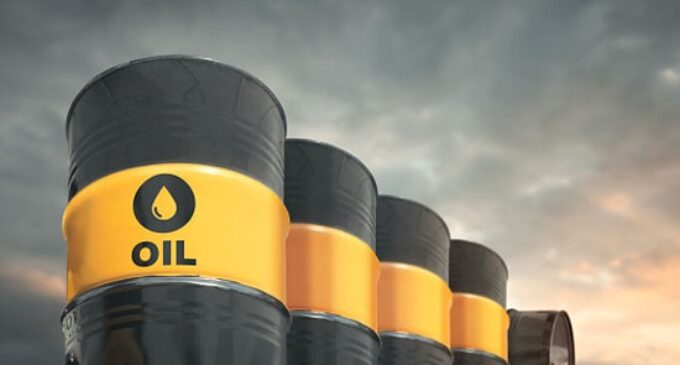
Organisation of Petroleum Exporting Countries and its allies, OPEC+, have cut Nigeria’s oil output by 4.6 per cent to 1.742 million barrels per day, mb/d, minus condensate, for November 2022 market, from 1.826 mb/d in August 2022.
It was part of measures adopted on Wednesday to achieve market stability following increased volatility, which witnessed the prices of many crude oil grades, including Nigeria’s Bonny Light, dropping below $90 per barrel last week, from about $100.
The ‘November 2022-December 2023’ data showed that amongst African producers, Nigeria’s 1.742 mb/d was the highest, while Sudan’s 72,000 bp/d was the lowest.
In its review of the market, Wednesday, OPEC+ maintained that the market situation was still clouded by some uncertainties, adding that it remained committed to achieving stability.
The price of Nigeria’s Bonny Light rose to $93.36 per barrel, from $90 per barrel recorded the previous day.
This showed $28 per barrel in excess of the nation’s $62 per barrel 2022 budget benchmark, even though losses associated with oil theft and fuel subsidy still impact negatively on the ability of the oil revenue to deliver desired budgetary estimates.
Vanguard reports that Nigeria might not be able to meet the new target because of increased pipeline vandalism, oil theft, and illegal refining in the Niger Delta.
In its latest report, “Crude Oil and Condensate Production 2022” obtained by Vanguard, the Nigerian Upstream Petroleum Regulatory Commission, NUPRC, disclosed that Nigeria produced 972,394 barrels, excluding condensate in August 2022, showing more than 700,000 bpd less than its 1.826 mb/d, during the period.
Meanwhile, OPEC+ has extended the duration of the Declaration of Cooperation, which involves the commitment of all members, initially scheduled to end in 2022, until the 31st of December 2023.
In a statement, OPEC+ said, “In light of the uncertainty that surrounds the global economy and oil market outlooks, the Participating Countries decided to reaffirm the decision of the 10th OPEC and non-OPEC Ministerial Meeting on 12 April 2020.
“Extend the duration of the Declaration of Cooperation until the 31st of December 2023. Adjust downward the overall production by 2 mb/d, from the August 2022 required production levels, starting November 2022 for OPEC and Non-OPEC Participating Countries.”






Insurance
Lasaco Assurance Launches N18.47bn Rights Issue to Strengthen Capital Base
Lasaco Assurance Launches N18.47bn Rights Issue to Strengthen Capital Base
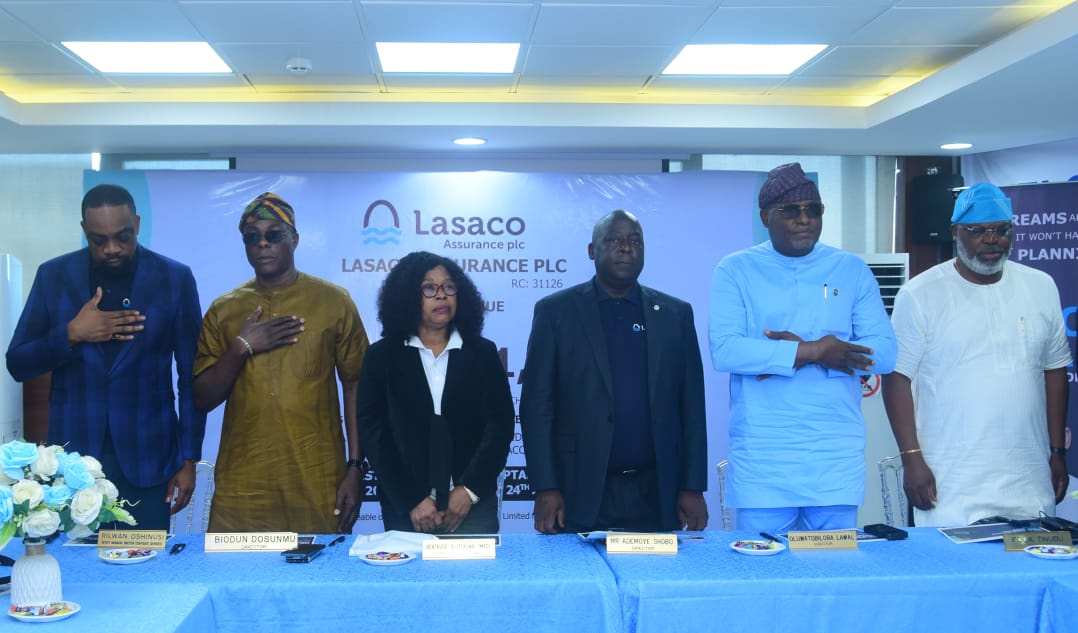
Lasaco Assurance Plc has unveiled a ₦18.47 billion rights issue, announcing plans to offer 9,236,321,546 ordinary shares as part of efforts to reinforce its capital base and drive future growth.
The announcement was made during a signing ceremony held at the company’s head office in Lagos, following approvals from the Nigerian Exchange Group (NGX) and the Securities and Exchange Commission (SEC).

Lasaco Assurance Plc
Prior to this development, the company had secured shareholder backing at an extra general meeting, where investors approved the move to raise fresh capital through a rights issue.
Under the terms of the offer, shares are priced at ₦2.00 per share, with each share having a nominal value of 50 kobo. The rights issue is structured on the basis of five new shares for every six existing shares held by shareholders.
According to details released by the insurer, eligibility is limited to shareholders whose names appeared on the company’s register as of the close of business on February 20, 2026. The acceptance list opened on April 2, 2026, and will close on April 24, 2026.
READ ALSO:
- ADC Crisis Deepens as Bala Denies Resignation, Insists on Chairmanship
- Ghana Sweeps Top Three Positions in 2025 WASSCE, Outshining Nigeria, Others
- Tinubu Approves 1,000 Forest Guards, Orders 5,000 CCTV Cameras to Boost Security in Plateau
The capital raise is expected to generate approximately ₦18.47 billion, which will be used to strengthen the company’s underwriting capacity and position it for expansion within Nigeria’s highly competitive insurance industry.
In addition, the rights offered will be tradable on the floor of the Nigerian Exchange Limited, allowing shareholders the flexibility to either subscribe to their allotted shares or sell their rights during the offer period.
Financial advisers to the transaction include Meristem Capital Limited as the Lead Issuing House and PAC Capital as Joint Issuing House.
The move aligns with broader efforts across the insurance sector to meet regulatory capital requirements, enhance balance sheets, and improve capacity to underwrite large-ticket risks across various sectors of the economy.
Speaking on the development, the Managing Director of Lasaco Assurance Plc, Mr. Ademoye Shobo, stated:
“At Lasaco, we will continue to ensure that our capital is always robust, so that we’re able to deliver on the mandates to the general public.”
Lasaco Assurance Launches N18.47bn Rights Issue to Strengthen Capital Base
Auto
Soaring Fuel Prices Drive Nigerians Toward Electric Vehicles
Soaring Fuel Prices Drive Nigerians Toward Electric Vehicles
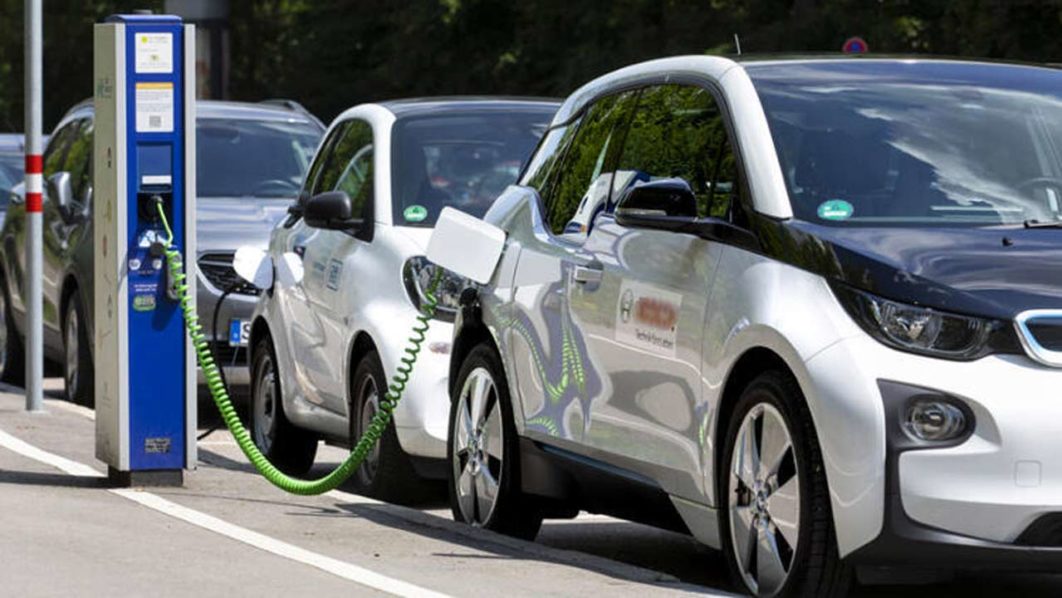
Rising fuel prices in Nigeria are accelerating interest in electric vehicles (EVs) as households, transport operators, and businesses seek cost-effective alternatives to petrol- and diesel-powered cars. Experts say the spike in petrol costs is no longer just an economic concern but a turning point, pushing electric mobility from a futuristic idea into a practical solution for everyday commuting and commercial use.
At the Abuja Compact on Electric Mobility Roundtable, stakeholders highlighted how increasing transport expenses are reshaping decisions, especially among commercial drivers and small business owners. Rising fuel costs are prompting many Nigerians to see EVs as a survival strategy rather than a luxury option.
Chairman of the Presidential Initiative on Compressed Natural Gas and Electric Vehicles (Pi-CNG & EV), Ismaeel Ahmed, explained that the removal of fuel subsidies has widened the cost gap between petrol-powered vehicles and EVs. Charging an EV for a 200-kilometre journey costs around ₦4,500, compared to roughly ₦22,500 for petrol vehicles — a difference that offers a “strong economic incentive” influencing consumer choices. Ahmed added that the federal government is pursuing a balanced transition strategy supporting both compressed natural gas (CNG) and electric vehicles to encourage sustainable energy alternatives.
Financial solutions are helping Nigerians overcome the high upfront costs of EVs. Mohammed Abdul, Divisional Head at Alternative Bank, noted that lease-to-own, pay-as-you-go, and partnership schemes are making EVs accessible to drivers in the informal transport sector. These financing models allow gradual adoption while easing financial burdens.
READ ALSO:
- Ogun Partners with NAHCON, Names Key Hajj Leadership Team
- Timi Frank: INEC Actions Threaten Democracy, Calls on Trump to Support Nigeria
- ADC Defies INEC, Moves Ahead with Congresses, Convention
Industry leaders also see wider economic benefits from EV adoption. Yusuf Suleiman, CEO of Bankrol Camel EV and Blue Camel Energy Ltd, said EV investments could improve energy access, boost industrial growth, and reduce Nigeria’s reliance on imported fossil fuels. Ahmed Garba Ahmed, COO of Bankrol Camel EV, added that EVs can cut energy costs per kilometre by up to 60%, benefiting ride-hailing drivers, logistics companies, and fleet operators.
Dapo Adesina, President of the Electric Mobility Promoters Association of Nigeria (EMPAN), explained that EV adoption can strengthen Nigeria’s power sector. Solar-powered charging hubs can simultaneously power vehicles and supply electricity to nearby communities, particularly in underserved areas. Private sector initiatives are also supporting Nigeria’s EV transition. Companies like SolarCity Gas are deploying superfast EV charging stations across key urban hubs and petrol stations, expanding the country’s charging infrastructure to meet growing demand.
Despite growing adoption, electric mobility in Nigeria faces challenges such as limited electricity infrastructure and inconsistent power supply. Analysts warn that significant investments in charging networks and supportive policies are necessary for sustainable EV growth. Nevertheless, with fuel prices remaining high, EVs are increasingly viewed as economically smart and environmentally friendly alternatives, offering Nigerians a viable solution to rising transport costs.
Soaring Fuel Prices Drive Nigerians Toward Electric Vehicles
Business
Rite Foods, BJAN champion consumer safety at Ososa factory tour

Rite Foods, BJAN champion consumer safety at Ososa factory tour
By Daphne Uduneje
To commemorate World Consumer Rights Day 2026, the Brand Journalists’ Association of Nigeria (BJAN) partnered with Rite Foods Limited to host a high-level stakeholder engagement at the company’s ultra-modern manufacturing plant in Ososa, Ogun State.
Under the theme “Safe Products, Confident Consumers,” the event combined rigorous policy discourse with a firsthand look at the cutting-edge technology behind one of Nigeria’s leading indigenous brands.
The journey began at Rite Foods’ Lagos office, transitioning from the city’s urban bustle to the expansive, scenic greenery of the Ososa facility. For the journalists in attendance, the factory’s exterior—a sprawling, sophisticated complex—signalled a facility capable of competing on a global scale.
Inside, the hum of precision machinery served as the backdrop for the day’s discussions. Olufemi Ajileye, General Manager for Operations at Rite Foods, welcomed guests by emphasizing that safety is the bedrock of their market strategy.
Since breaking into the carbonated soft drink sector, Rite Foods has leveraged advanced technology and stringent quality controls—including international laboratory testing for water purity—to earn and maintain public trust.
Despite improvements in legislation, speakers noted a persistent gap in consumer awareness. Sola Salako-Ajulo, founder of the Consumer Advocacy Foundation of Nigeria (CAFON), described consumer confidence as the “oxygen of any market.”
To empower the public, she unveiled the CAFON Consumers Companion (3C), an AI-powered platform designed to educate Nigerians on their rights and provide a roadmap for dispute resolution.
“Consumers often feel powerless,” she noted, “but technology can bridge the gap between grievance and redress.”
The Regulatory Stance
The Federal Competition and Consumer Protection Commission (FCCPC) and NAFDAC reaffirmed their commitment to enforcement:
FCCPC: Executive Vice Chairman Tunji Bello (represented by Olubunmi Dorcas Otti) urged businesses to maintain transparency, noting that economic participation thrives only when safety is guaranteed.
NAFDAC: Director-General Mojisola Adeyeye (represented by Tinuola Akinnubi) reminded attendees that consumer rights are legally enforceable obligations, highlighting the importance of “technological traceability” in the modern market.
BJAN Chairman Daniel Obi emphasized that the association had sustained this initiative for over a decade because consumer protection is a collective burden.
“It is not the responsibility of regulators alone,” Obi stated. “Businesses, media, and civil society must work in harmony.”
The event concluded with a guided tour of the production floor. Journalists observed a seamless, automated “dance” of technology where drinks were corked, labeled, and packaged with surgical precision.
As the delegation departed Ososa, the takeaway was clear: building a “confident consumer” requires more than just marketing—it requires the transparency of the factory floor and the accountability of the boardroom.



-

 metro2 days ago
VeryDarkMan Dares Sowore Over Blord’s Kuje Prison Remand
-

 metro3 days ago
Nigerians to Enjoy Four-Day Break as FG Declares Easter Holidays
-
 metro2 days ago
Tinubu Approves 1,000 Forest Guards, Orders 5,000 CCTV Cameras to Boost Security in Plateau
-

 metro19 hours ago
Pastor Found Dead in Guest House After Night Out With Married Female Church Member
-
 Business3 days ago
NNPC Boosts Crude Supply to Dangote Refinery to Address Rising Fuel Prices
-
 International2 days ago
Iran Announces ‘Bounty’ on US Pilots After Claiming Downing of Fighter Jet
-
 International3 days ago
Iran Fires Missiles at Israel After Trump Threatens Weeks of ‘Extremely Hard’ Strikes
-

 Politics19 hours ago
Wike: PDP Not Financially Ready for 2027 Presidential Election