
International
Pakistan orders thousands to evacuate near flood-swollen rivers

Thousands of people living near flood-swollen rivers in Pakistan’s north were ordered to evacuate Saturday as the death toll from devastating monsoon rains neared 1,000 with no end in sight.
Many rivers in Khyber Pakhtunkhwa — a picturesque province of rugged mountains and valleys — have burst their banks, demolishing scores of buildings including a 150-room hotel that crumbled into a raging torrent.
“The house which we built with years of hard work started sinking in front of our eyes,” said Junaid Khan, 23, the owner of two fish farms in Chrasadda.
“We sat on the side of the road and watched our dream house sinking.”
The annual monsoon is essential for irrigating crops and replenishing lakes and dams across the Indian subcontinent, but each year it also brings a wave of destruction.
Officials say this year’s monsoon flooding has affected more than 33 million people — one in seven Pakistanis — destroying or badly damaging nearly a million homes.
READ ALSO:
- Ukraine warns of ‘hydrogen leak’ risk at nuclear plant after Russian shelling
- Parents of 17-Year-Old Lagos Girl Found in Bauchi Located
- Ogun resumes work on Sango-Ijoko-Akute road project 1
On Saturday, authorities ordered thousands of residents in threatened areas to evacuate their homes as rivers had still not reached maximum capacity.
“Initially some people refused to leave, but when the water level increased they agreed,” Bilal Faizi, spokesman for the Rescue 1122 emergency service, told AFP.
Officials say this year’s floods are comparable to 2010 — the worst on record — when over 2,000 people died and nearly a fifth of the country was under water.
Farmer Shah Faisal, camped by the side of a road in Chrasadda with his wife and two daughters, described how he saw his riverside home swallowed by a river as the powerful current eroded the bank.
The Jindi, Swat and Kabul rivers flow through the town before joining the mighty Indus, which is also flooding downstream.
“We escaped with our lives,” Faisal told AFP.
– Climate change –
Officials blame the devastation on man-made climate change, saying Pakistan is unfairly bearing the consequences of irresponsible environmental practices elsewhere in the world.
Pakistan is eighth on the Global Climate Risk Index, a list compiled by the environmental NGO Germanwatch of countries deemed most vulnerable to extreme weather caused by climate change.
Still, local authorities must shoulder some of the blame for the devastation.
Corruption, poor planning and the flouting of local regulations mean thousands of buildings have been erected in areas prone to seasonal flooding — albeit not as bad as this year.
The government has declared an emergency and mobilised the military to deal with what Climate Change Minister Sherry Rehman on Wednesday called “a catastrophe of epic scale”.
According to the National Disaster Management Authority, since the monsoon started in June more than two million acres of cultivated crops have been wiped out, 3,100 kilometres (1,900 miles) of roads have been destroyed and 149 bridges have been washed away.
In Sukkur, more than 1,000 kilometres south of Swat, farmlands irrigated by the Indus were under water, and tens of thousands of people were seeking shelter on elevated roads and highways as they waited for fresh torrents from the north.
“We have opened the gates fully,” dam supervisor Aziz Soomro told AFP, adding the main rush of water was expected Sunday.
The flooding could not come at a worse time for Pakistan, whose economy is in free fall and whose politics are gripped by crisis following the ousting of former prime minister Imran Khan by a parliamentary vote of no confidence in April.
AFP








International
Hajj 2026: US Warns Citizens Over Travel Risks to Saudi Arabia
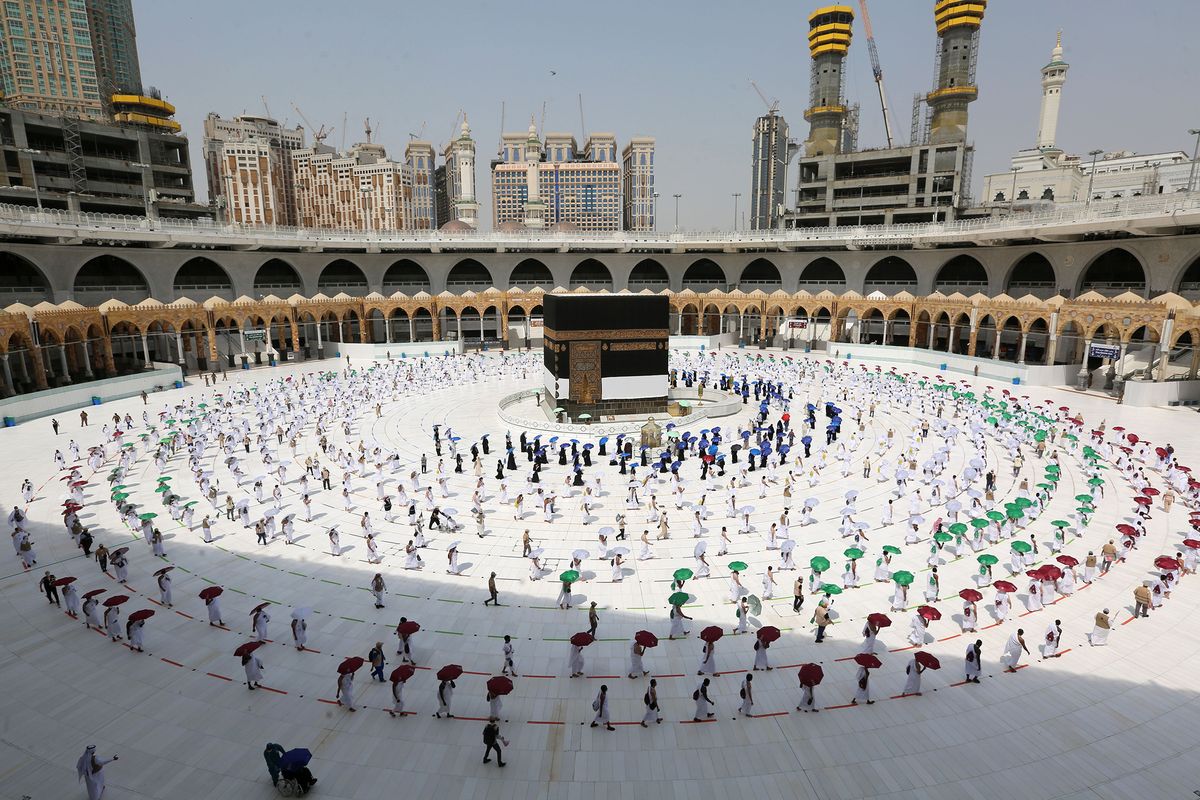
Hajj 2026: US Warns Citizens Over Travel Risks to Saudi Arabia
The United States Embassy in Saudi Arabia has advised American citizens to reconsider participating in the Hajj pilgrimage this year, citing ongoing regional security concerns and intermittent travel disruptions across parts of the Middle East.
In a statement issued on Tuesday, the embassy referenced the Saudi Arabia travel advisory, warning that the current security environment remains unstable and could affect movement and access to holy sites during the pilgrimage season.
“Per the Saudi Arabia Travel Advisory, and due to the ongoing security situation and intermittent travel disruptions, we advise reconsidering participation in Hajj this year,” the embassy said.
It also announced new entry regulations for Mecca ahead of the pilgrimage period, stating that from April 18, only individuals with valid permits will be allowed access. These include a Hajj permit, a Mecca-issued residency ID, or a valid work permit linked to Mecca. The embassy further warned that individuals on other visa categories should leave Mecca before the enforcement date to avoid penalties.
READ ALSO:
- Trump Slams Iran Over Strait of Hormuz as Middle East Ceasefire Talks Stall
- Thousands Return to Al-Aqsa Mosque After 40-Day Closure
- Man Admits Stabbing Wife 22 Times in Front of Four Children
The Hajj pilgrimage, one of the five pillars of Islam, is a mandatory religious duty for Muslims who are physically and financially able to undertake it at least once in their lifetime. Each year, millions of pilgrims travel to Saudi Arabia for the rites performed in and around Mecca.
The advisory comes amid heightened tensions across the Middle East, with ongoing conflicts and security incidents affecting several countries in the region. The U.S. has previously warned that instability could disrupt air travel routes, border crossings, and emergency response capacity in affected areas.
Regional tensions have escalated in recent months following intensified military exchanges involving Israel and Iran, along with related spillover effects across neighbouring countries. These developments have raised concerns over aviation safety, infrastructure security, and crowd management during major international gatherings such as Hajj.
The embassy also urged American citizens already in the Kingdom or planning to travel to remain vigilant and closely monitor official travel updates issued by both U.S. and Saudi authorities.
While no evacuation order has been issued, officials stressed that travellers should carefully reconsider non-essential trips depending on their personal risk assessment.
Hajj 2026: US Warns Citizens Over Travel Risks to Saudi Arabia
International
Thousands Return to Al-Aqsa Mosque After 40-Day Closure
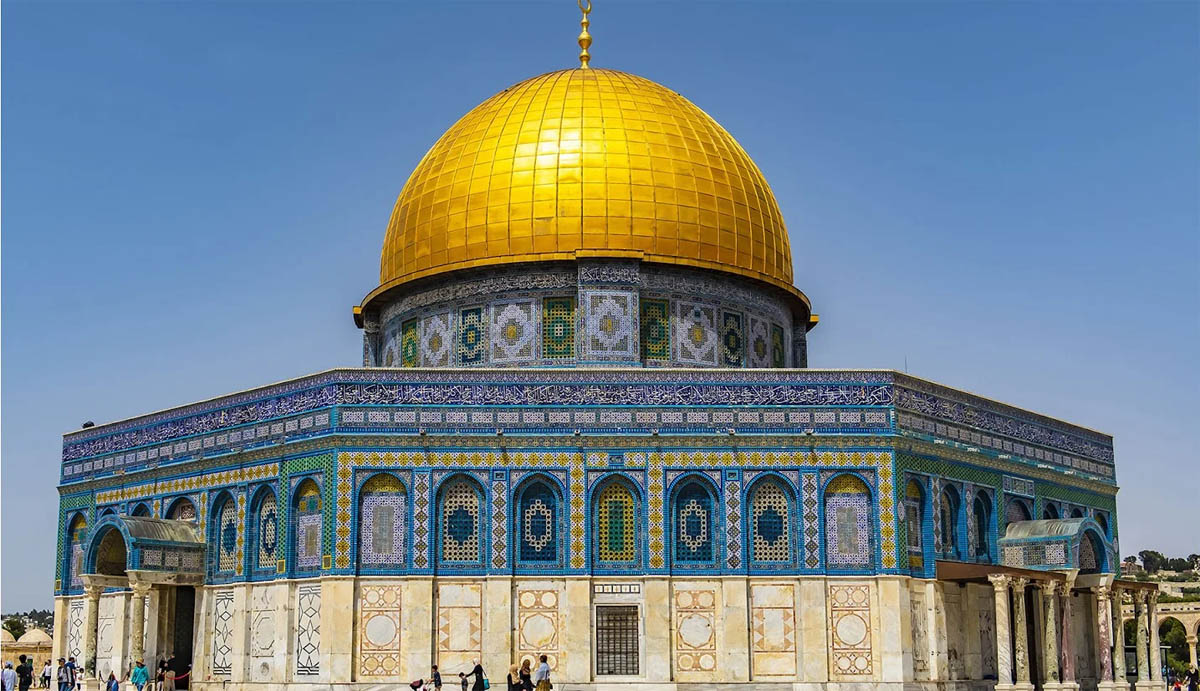
Thousands Return to Al-Aqsa Mosque After 40-Day Closure
Thousands of Muslim worshippers gathered at the Al-Aqsa Mosque compound in occupied East Jerusalem on Thursday morning for dawn prayers after Israeli authorities lifted a 40-day closure imposed amid heightened regional security tensions.
The closure, which began on February 28, restricted access to the holy site during a period of intensified conflict involving Israel and Iran-backed groups across the wider Middle East. Worshippers were once again allowed entry, with at least 3,000 people reportedly performing the fajr (dawn) prayer inside the compound.
Israeli police deployed large numbers of officers across Jerusalem’s Old City and surrounding roads leading to the mosque complex, carrying out identity checks and restricting entry for some worshippers. According to Palestinian reports, security personnel also blocked several individuals from accessing the site and forcibly removed some from the compound’s courtyards.
The Palestinian news agency WAFA reported incidents in which worshippers were assaulted at the gates, while the Jerusalem Governorate said Israeli forces detained at least one individual inside the mosque compound and denied entry to a well-known activist, Munta Amara, who regularly prays at the site.
READ ALSO:
- Man Admits Stabbing Wife 22 Times in Front of Four Children
- Melania Trump Denies Epstein Links, Calls for Public Hearings for Survivors
- CAF President Denies Corruption Claims Over AFCON Senegal–Morocco Controversy
Despite the heavy security presence, worshippers gradually filled the compound for morning prayers. Sheikh Omar al-Kiswani, director of the Al-Aqsa Mosque, described the site as “longing for visitors” and urged that it remain open to worshippers “at all times,” reflecting frustration over repeated restrictions.
One worshipper, Ibrahim Abu Rmaileh, said the 40-day closure had taken a “heavy toll,” adding that the mosque holds deep religious significance as the place from which Prophet Muhammad is believed to have ascended to heaven during the Isra and Mi’raj.
Israeli authorities have frequently imposed temporary closures or restricted access to the compound during periods of tension, a practice Palestinians describe as punitive. In previous incidents, similar restrictions have forced worshippers to pray in nearby mosques across Jerusalem instead.
The Al-Aqsa closure also coincided with restrictions on other major religious sites in Jerusalem, including the Church of the Holy Sepulchre, one of Christianity’s holiest locations, which was also shut during the same period according to local reports.
This year’s restrictions reportedly prevented Eid al-Fitr prayers from taking place at Al-Aqsa, marking one of the most significant disruptions to religious worship at the site in recent years since Israel’s occupation of East Jerusalem in 1967.
The Al-Aqsa Mosque compound remains one of the most sensitive religious and political flashpoints in the region, with access frequently affected by broader security developments in Israel-Palestinian relations and wider Middle East tensions.
Thousands Return to Al-Aqsa Mosque After 40-Day Closure
International
Trump Slams Iran Over Strait of Hormuz as Middle East Ceasefire Talks Stall

Trump Slams Iran Over Strait of Hormuz as Middle East Ceasefire Talks Stall
US President Donald Trump has accused Iran of doing a “very poor job” in its handling of oil shipments through the strategic Strait of Hormuz, insisting that Tehran’s actions “are not the agreement we have” amid rising uncertainty over regional ceasefire arrangements.
The Strait of Hormuz, a critical global energy corridor through which about a fifth of the world’s oil and liquefied natural gas (LNG) passes, has become a renewed flashpoint as competing claims emerge over maritime control, tanker fees, and compliance with ceasefire-linked understandings involving Iran, Israel, and Western mediators.
Trump’s remarks, made in a recent interview and reinforced through his Truth Social posts, came as reports suggested Iran may be imposing new conditions on shipping traffic through the waterway. He warned that any unilateral changes or restrictions could threaten global energy stability.
His comments also reflect broader tensions surrounding a fragile and uneven ceasefire framework in the Middle East, where overlapping conflicts involving Israel, Lebanon, and Iran-backed groups continue to complicate diplomacy.
Meanwhile, Israeli Prime Minister Benjamin Netanyahu said Israel is preparing to begin direct talks with Lebanon, with discussions expected to focus on disarming Hezbollah and exploring long-term arrangements aimed at stabilising the border region.
READ ALSO:
- Man Admits Stabbing Wife 22 Times in Front of Four Children
- Melania Trump Denies Epstein Links, Calls for Public Hearings for Survivors
- CAF President Denies Corruption Claims Over AFCON Senegal–Morocco Controversy
A U.S. State Department official confirmed that Washington will host a meeting next week to advance ceasefire discussions involving Israel and Lebanon, signalling renewed diplomatic efforts to contain escalating violence.
However, contradictions remain over the scope of any ceasefire agreement. Netanyahu has insisted that “there is no ceasefire in Lebanon,” even as diplomatic channels continue to operate. Israeli airstrikes reportedly continued across southern Lebanon, targeting what the military described as Hezbollah rocket launch sites, though some operations appeared to slow overnight.
Trump, referencing a call with Netanyahu, told NBC News that Israel would “scale back” military operations in Lebanon to support ongoing peace efforts. “He’s going to low-key it,” Trump said, urging restraint to allow negotiations to progress.
The conflict has had severe humanitarian consequences. The World Health Organization (WHO) reported that evacuation orders in Beirut’s southern districts, including Jnah, have placed major hospitals at risk, with hundreds of patients—including intensive care cases—unable to be safely moved.
Lebanon’s Health Ministry has said more than 1,100 people were wounded and at least 300 killed during recent waves of Israeli strikes, intensifying pressure on medical facilities already operating beyond capacity.
Confusion also persists over earlier ceasefire arrangements, with conflicting interpretations from Iran, Israel, the United States, and mediators regarding whether Lebanon was included in the agreement. This ambiguity has contributed to renewed strikes and diplomatic friction.
Iran, meanwhile, has accused Israel of violating ceasefire terms and previously signalled potential retaliatory measures, including disruptions in the Strait of Hormuz, further heightening global concern over energy security.
Analysts warn that continued instability in both Lebanon and the Persian Gulf could have far-reaching implications for global oil prices, shipping routes, and broader regional security, especially if diplomatic talks fail to produce a unified enforcement mechanism.
Diplomatic meetings are expected to continue in Washington and through regional channels in the coming days as mediators attempt to clarify ceasefire terms and prevent further escalation across multiple fronts.
Trump Slams Iran Over Strait of Hormuz as Middle East Ceasefire Talks Stall

-

 metro3 days ago
FG Deports US Missionary Alex Barbir Over Alleged Role in Nigeria Insecurity
-

 Entertainment3 days ago
Veteran Nollywood Actor Davis Ofor ‘Clarus’ of New Masquerade Dies at 85
-
 Africa21 hours ago
ECOWAS Recruitment 2026: Over 30 Job Vacancies Open for Nigerians (How to Apply)
-

 metro2 days ago
2026 NYSC Batch A Stream II: Registration, Swearing-In Dates Announced
-
 metro3 days ago
Lagos Announces Partial Road Closures for Project Commissioning
-

 Entertainment2 days ago
Saheed Osupa Defends Juju Use Amid Backlash From Islamic Clerics
-

 Politics1 day ago
Court Stops ADC Congress, Orders Status Quo in Leadership Row
-
 News3 days ago
Iran Lists Tough Conditions for Peace Talks with US