
International
Patients flee Gaza hospital after latest evacuation order from Israel
Patients flee Gaza hospital after latest evacuation order from Israel
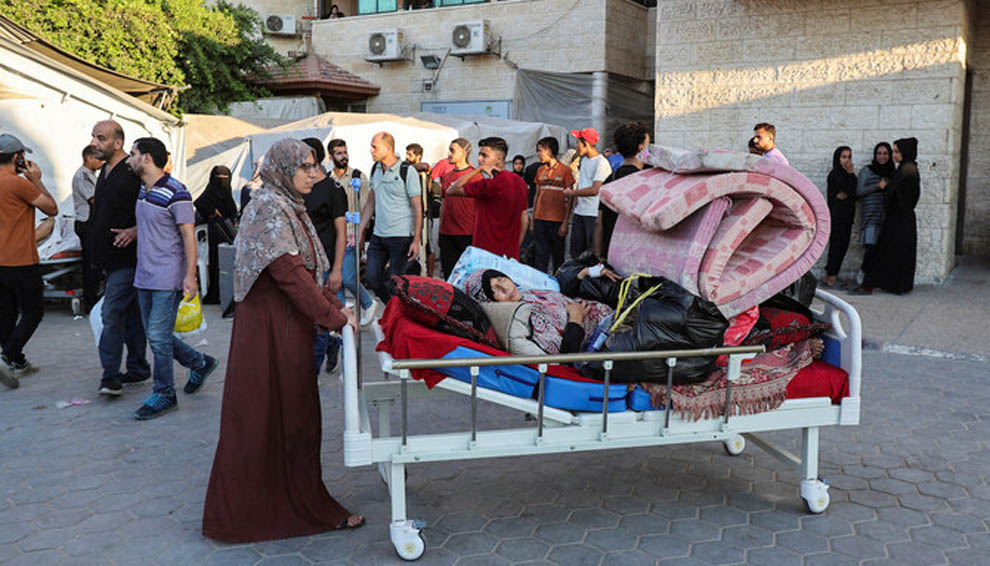
DEIR EL-BALAH: War-weary Palestinians on Monday pushed wheelchair-bound and bed-ridden patients through the streets of central Gaza, evacuating a hospital in a frantic bid to stay ahead of feared Israeli bombardment.
The Israeli military had told people the day before to “evacuate immediately” a part of Deir el-Balah city because it planned to “act with force against Hamas and terrorist groups” there.
Al-Aqsa Martyrs hospital sits in the middle of the area described in the warning, setting in motion a rapid exodus even though the Israeli military said medical facilities would not be affected by its operations.
Speaking to AFP on Sunday from her hospital bed outside the facility, Tamam Al-Raei said she did not know where to seek safety.
“I have a war injury. I have broken bones and have had an amputation, and I have been receiving treatment for that,” she said.
“But now they’re telling us to evacuate Al-Aqsa. Where do we go? Where do I get treatment?“
All around her, families tried to flee, the wealthiest among them hiring donkey-drawn carts to transport their belongings.
Others carried patients in their arms, including one teenager who had lost the use of his legs and was clutching a bag of intravenous fluid.
The Israeli military said on Monday it was targeting “terror operatives” in Deir el-Balah and working to dismantle the “remaining terrorist infrastructure” of Hamas, whose October 7 attack on southern Israel triggered the ongoing war in the Gaza Strip.
“As part of these efforts, a temporary local evacuation of the population in eastern Deir el-Balah… was carried out, for their protection,” the military said in a statement.
READ ALSO:
- Egypt rejects Israeli force on its Gaza border
- Osun confirms 2 cases of Monkeypox in Ilesa West
- 21 state govts solicit N1.65tn loans to fund 2024 budgets – Report
“It should be emphasized that the evacuation efforts did not include the evacuation of hospitals and medical facilities in the area.”
Gaza’s hospitals have been raided by Israeli forces numerous times during their campaign to destroy Hamas.
Israel has accused Hamas of using hospitals in Gaza as a cover for military operations, claims the militants have rejected.
Memories of past violence in and around hospitals made it difficult to reassure patients and medical workers that Al-Aqsa Martyrs hospital would be safe, said Gaza health ministry spokesman Khalil Al-Daqran.
“The citizens, patients and some of the medical crews were struck with panic and fear as a result of the announcement that the areas surrounding the hospital are operational areas,” Daqran said.
“Therefore, a large number of patients left the hospital.”
Hamas’s October 7 attack on Israel resulted in the deaths of 1,199 people, most of them civilians, according to an AFP tally based on Israeli official figures.
Israel’s retaliatory military campaign has killed at least 40,435 people in Gaza, according to the Hamas-run territory’s health ministry, which does not break down civilian and militant deaths.
The UN rights office says most of the dead are women and children.
Throughout Gaza, hospitals including Al-Aqsa Martyrs have faced crippling shortages of the fuel they need to function after the territory’s only power plant went out of service and Israel cut the electricity supply in the early days of the war.
Gaza’s 2.4 million people, nearly all of whom have been displaced at least once, have only 16 hospitals still functioning, all of them partially.
The health situation became even more dire after authorities this month announced Gaza’s first polio case in 25 years.
Families fleeing Al-Aqsa Martyrs hospital on Sunday were concerned primarily for their physical safety as they tried to adhere to repeated evacuation orders.
“We have nowhere to go, we have no refuge,” Maha Al-Sarsak told AFP, describing how her family had already fled multiple cities before reaching the hospital, only to leave yet again.
Iyad Al-Jabri, medical director of the hospital, said his teams were not going anywhere.
“We are staying,” he said.
“We will continue to treat patients and the wounded.”
Patients flee Gaza hospital after latest evacuation order from Israel
ARAB NEWS








International
Iran Accuses US of Ceasefire Breach as Strait of Hormuz Tensions Escalate
Iran Accuses US of Ceasefire Breach as Strait of Hormuz Tensions Escalate
Iran has accused the United States of violating a fragile ceasefire agreement, raising alarm over escalating tensions in the Middle East and uncertainty around the strategic Strait of Hormuz, a vital corridor for global oil shipments. The accusations come amid conflicting reports about the status of the strait and ongoing regional attacks.
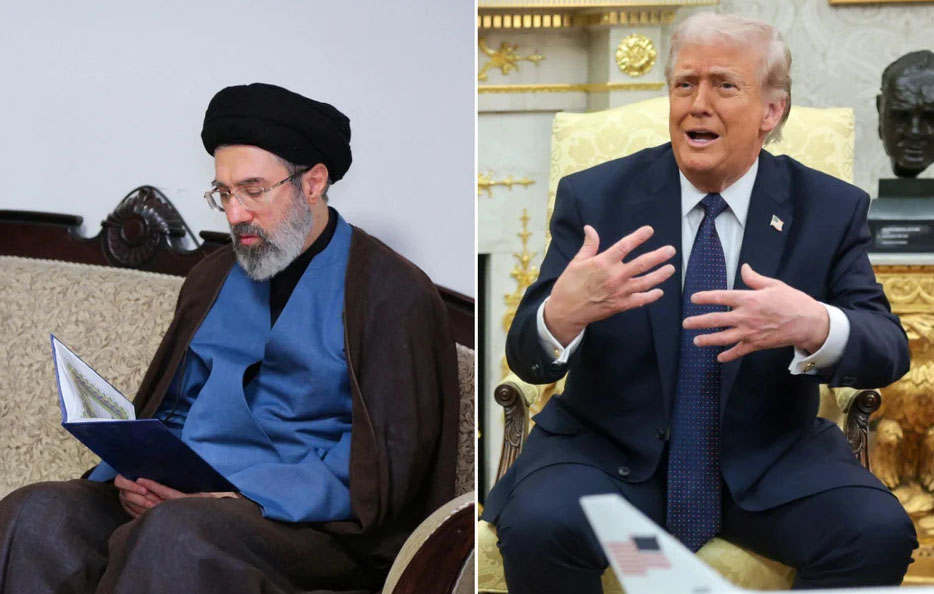
Iran’s parliamentary speaker, Mohammad‑Bagher Ghalibaf, claimed that Washington had breached multiple aspects of the temporary truce, citing Israeli strikes in Lebanon, drone incursions into Iranian airspace, and U.S. demands on Iran’s uranium enrichment as violations. Ghalibaf stressed that these actions undermined the “workable basis” for negotiations, calling a bilateral ceasefire “unreasonable.”
The White House, however, rejected Iran’s allegations. Press secretary Karoline Leavitt insisted that the U.S. had not agreed to allow Iran to continue uranium enrichment and confirmed that Lebanon was not part of the ceasefire agreement. She also claimed that the Strait of Hormuz remained open, despite Tehran’s conflicting reports suggesting closure.
READ ALSO:
- EFCC Arrests Maiduguri Woman for Cleaning Nose With N500 Note
- Court Stops ADC Congress, Orders Status Quo in Leadership Row
- US Evacuates Embassy Staff in Nigeria, Lists 23 States as ‘Do Not Travel’
Adding to the confusion, Iran’s semi-official Fars news agency reported that while a few tankers had transited the strait early Wednesday, passage was later suspended, with Tehran warning that vessels attempting transit without permission could face attacks and heavy tolls.
Regional instability intensified as Saudi Arabia’s East-West oil pipeline came under drone attack, and Kuwait intercepted 28 drones targeting critical infrastructure, including oil facilities and power plants. Explosions were also reported in Tehran, though U.S. officials declined to comment on these incidents.
Analysts warn that the ceasefire could collapse quickly as disagreements over its interpretation persist. The U.S. and allies maintain the ceasefire is a temporary halt in hostilities, while Iran seeks broader regional concessions, complicating its implementation. Maritime traffic through the Strait of Hormuz remains limited, with many vessels awaiting clearer conditions before resuming operations.
The situation underscores the fragility of regional security and the risk of escalation, with experts cautioning that without a clear, enforceable agreement, tensions may spill over into a wider Middle East conflict.
Iran Accuses US of Ceasefire Breach as Strait of Hormuz Tensions Escalate
International
Strait of Hormuz Reopens as US, Iran Confirm Two‑Week Ceasefire
Strait of Hormuz Reopens as US, Iran Confirm Two‑Week Ceasefire
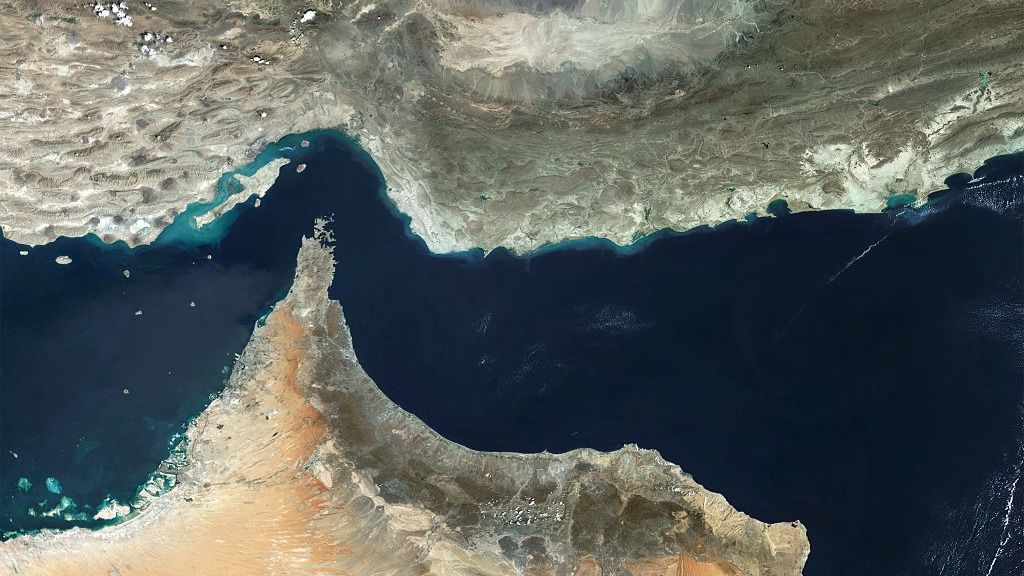
The Strait of Hormuz, a critical global oil transit route, has reopened following a two‑week conditional ceasefire between the United States and Iran, confirmed by both countries on Wednesday. The temporary truce comes after escalating tensions in the region and is expected to ease pressure on global energy markets.
Iranian Foreign Minister Abbas Araghchi stated that safe passage through the strait will be allowed for the next 14 days, coordinated with Iran’s armed forces and subject to technical considerations. The reopening follows US President Donald Trump’s warning that Iran’s energy infrastructure, including bridges, would face attacks if Tehran failed to comply.
The ceasefire agreement, described by Trump as a “double-sided ceasefire”, also involves Israel, which has agreed to suspend related military operations during the two-week period. Pakistan, which mediated talks between Washington and Tehran, confirmed that an immediate ceasefire is in effect and invited delegations from both countries to Islamabad for further negotiations toward a comprehensive settlement.
READ ALSO:
- Fuel Relief: Dangote Reverses Petrol Price Hike, Drops PMS to ₦1,200
- Trump Accuses CNN of ‘Fake News’ Over Iran Ceasefire Victory Report
- Police Debunk Viral Claim of 488 Boko Haram Arrests in Abia
Trump emphasized that Iran’s 10-point proposal provides a workable basis for negotiations, with reports indicating that it includes provisions for lifting sanctions. He hailed the temporary truce as a diplomatic victory for the United States, while Iranian officials portrayed the deal as a major step toward stabilizing the region.
The reopening of the Strait of Hormuz is a significant relief for the global oil market, which had been affected by disruptions due to earlier attacks in the region. The strait handles around 20% of global petroleum trade, and its closure had caused spikes in crude prices. Following the ceasefire announcement, Brent crude and US West Texas Intermediate benchmarks fell sharply.
Despite the truce, experts caution that underlying conflicts, including nuclear and regional security issues, remain unresolved. The ceasefire offers a window for diplomatic engagement, though long-term stability will depend on successful negotiations and continued adherence to the agreement by all parties.
Strait of Hormuz Reopens as US, Iran Confirm Two‑Week Ceasefire
International
Trump Accuses CNN of ‘Fake News’ Over Iran Ceasefire Victory Report

Trump Accuses CNN of ‘Fake News’ Over Iran Ceasefire Victory Report
US President Donald Trump has sparked a major controversy after disputing CNN’s report that Iran claimed victory following a recent temporary ceasefire agreement with the United States. Trump labeled the report “fraudulent” and accused the network of sourcing its information from a “fake news site from Nigeria.”
The dispute unfolded shortly after Trump announced a two-week ceasefire with Iran, aimed at halting hostilities, reopening the Strait of Hormuz, and creating room for diplomatic negotiations. Trump insisted that the ceasefire represented a “total and complete victory” for the United States.
CNN had published a report quoting Iran’s Supreme National Security Council, claiming Tehran had achieved a “historic and crushing defeat” of the United States and forced Washington to accept portions of its proposed discussion framework. Trump rejected the report, stating that it did not reflect Iran’s official position. He demanded that CNN retract the article and issue a full apology.
READ ALSO:
- Police Debunk Viral Claim of 488 Boko Haram Arrests in Abia
- Trump Threatens 50% Tariffs on Countries Supplying Weapons to Iran
- 2026 NYSC Batch A Stream II: Registration, Swearing-In Dates Announced
In posts on his Truth Social platform, Trump asserted that CNN republished a false statement originally linked to a “trouble-making site from Nigeria”. He described the network’s coverage as dangerous and potentially inflammatory given the sensitive national security context. Trump added that authorities were investigating whether a crime had been committed in issuing the disputed report.
Brendan Carr, Chairman of the United States Federal Communications Commission, publicly defended Trump’s position, criticizing CNN for allegedly spreading a hoax headline at a critical moment. “Fake news is bad enough for the country, but pushing out a hoax headline in such a sensitive national security moment requires accountability,” Carr said.
CNN, however, has refused to retract or apologise, maintaining that its report relied on credible Iranian officials and multiple state-backed media sources. A spokesperson emphasized that the network followed standard journalistic verification procedures and accurately reported the statements made by Iranian authorities at the time.
Analysts note that the feud highlights a broader battle over narrative control in the aftermath of the US-Iran ceasefire. While Trump portrays the agreement as a strategic success for the United States, Iranian authorities and international observers point to a more complex and contested outcome.
The ceasefire, which temporarily reopened the Strait of Hormuz, has been recognized globally as a step toward de-escalation in the region, though questions remain over the long-term impact of the deal. Iranian Foreign Minister Abbas Araghchi confirmed the truce includes a two-week promise of safe transit through the strategic waterway, critical to global petroleum supply.
The dispute underscores ongoing tensions over media credibility, misinformation, and the portrayal of international conflicts, with both sides standing firm: Trump demanding corrections and accountability, and CNN defending its reporting based on official sources.
Trump Accuses CNN of ‘Fake News’ Over Iran Ceasefire Victory Report

-

 metro2 days ago
FG Deports US Missionary Alex Barbir Over Alleged Role in Nigeria Insecurity
-

 Entertainment2 days ago
Veteran Nollywood Actor Davis Ofor ‘Clarus’ of New Masquerade Dies at 85
-

 metro3 days ago
MURIC Backs Egba Imams’ Call for Inclusive Leadership in Ogun 2027 Governorship Race
-

 metro2 days ago
Lagos Announces Partial Road Closures for Project Commissioning
-

 metro22 hours ago
2026 NYSC Batch A Stream II: Registration, Swearing-In Dates Announced
-
 News2 days ago
Iran Lists Tough Conditions for Peace Talks with US
-

 International3 days ago
Trump Claims US Sent Weapons to Iranian Protesters but Diverted
-

 Entertainment21 hours ago
Saheed Osupa Defends Juju Use Amid Backlash From Islamic Clerics