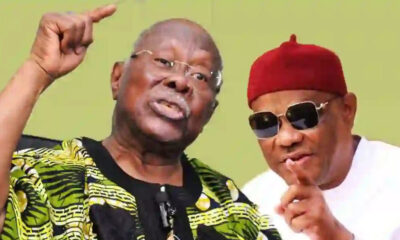
He said they had returned with the assurance that APC was dead, and were determined to deliver 90 per cent of the votes because they believe in the leadership of Governor Wike.
Sun


Rivers State governor, Nyesom Wike, has mocked the ousted National Chairman of the Peoples Democratic Party (PDP), Prince Uche Secondus, who was said to have danced when the National Executive Council (NEC) of the party passed vote of confidence on Senator Iyorchia Ayu, the embattled PDP national chairman.
Governor Wike said that decision by NEC would not dissuade him and others from insisting that the prevailing structural imbalance within the party must be addressed.
The governor spoke at the eleventh hour homecoming and reception organised for decampees from the various political parties who joined the PDP in Rivers State, which held at the Isaac Boro Park in Port Harcourt yesterday.
He said: “I was listening and watching, they said there is one man they call Secondus. They said he was dancing, celebrating that NEC gave their person vote of confidence. He forgets history. Ask him, the same NEC through Aliyu Babangida moved a motion of vote of confidence supported by the same person, Ndudi Elumelu. They gave you (Secondus) a vote of confidence. What happened? You left office.
“We don’t fight and go back. If you like, you can have as many 20 votes of confidence, it’s not my business. My business is to make sure the right thing is done, and the right thing must be done. Whether today or tomorrow.”
READ ALSO:
He said that despite the heightening political aligning and negotiations that were going on, his administration has not abandoned governance in Rivers.
The governor explained that it was the love that he has for the state that has made him to remain devoted to providing good governance until the last day of his tenure.
“I’m not going to play party with the interest of my people. Rivers State is paramount to me first before any other person or group.
“So, the eyes can see what we have done. Up till today, we have never abandoned governance. So many people are already rounding up, taking the last they have. But, yet, we are still committed in commissioning, and flagging off projects.
“Because of the love we have for our people, we will continue to serve you till May 29, when by the grace of God, Siminialaye Fubara will be inaugurated the governor of Rivers State,” he said.
Wike commended the decampees for their courage to rejoin their political family, saying that it was true that there is no other political party that can win election in Rivers except the PDP.
“PDP is a household name in Rivers State. Let me assure you that we will all work with you. Nothing like somebody who has been there since and somebody who has just come back. The more the merrier,” he said.
The governor dismissed efforts by other political candidates as mere attempt to appear on the ballot because there is no hope of winning for them.
Wike disclosed that a new strategy would be adopted for the coming political season in which political ‘bigmen’ would be replaced with people who are domiciled among their people in various communities.
According to him, those who are domiciled with their people would be utilised to deliver their units and wards during the general elections.
Speaking, Rivers State PDP chairman, Desmond Akawor, said that the party was presenting a certificate to acknowledge the excellent performance of Governor Wike because he has surpassed their expectations.
Akawor stated that the decampees from the other political parties had witnessed unequal transformational performance of the governor in office.
Speaking on behalf of decampees from Rivers South East Senatorial District, a former member of the All Progressives Congress, APC, Board of Trustees, Sam Sam Jaja, said that they had a regrettable unsuccessful political expedition while in their former parties, but had retraced their steps back to the PDP on self volition.
Jaja described Governor Wike as a compassionate, loving and graceful leader who was created to do good for the people.
Speaking on behalf of decampees from Rivers West Senatorial District, former Commissioner for Transportation in the Chibuike Amaechi’s administration, George Tolofari, said that they were happy to be back home in the PDP.
Similarly, a former chairman of Akuku Toru Local Government, Theodore Georgewill, apologised that they left PDP when they were most needed.
He said they had returned with the assurance that APC was dead, and were determined to deliver 90 per cent of the votes because they believe in the leadership of Governor Wike.
Sun

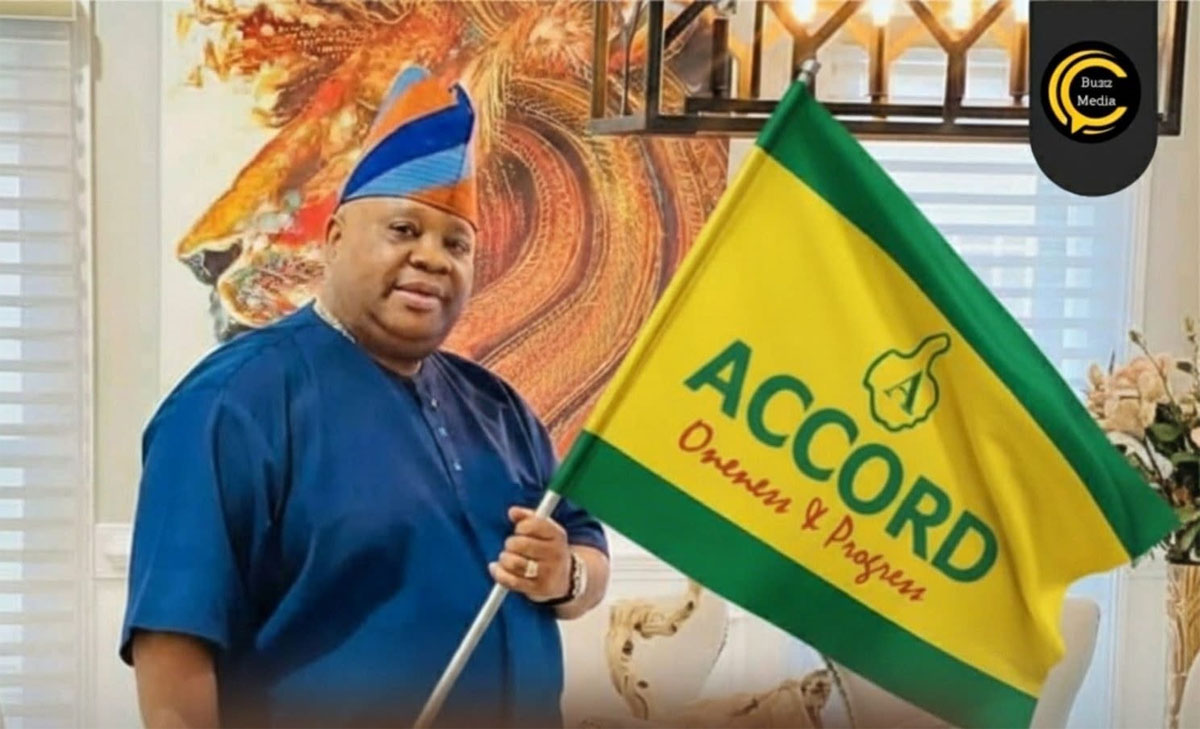
Adeleke’s re-election faces tribunal battle as APC, PDP file petitions
The re-election of Osun State Governor Ademola Adeleke has entered a fresh legal battle after the All Progressives Congress (APC) and the Peoples Democratic Party (PDP) filed separate petitions challenging the outcome of the August 15, 2026 Osun governorship election.
The development has shifted the post-election contest from the ballot box to the Osun State Governorship Election Petition Tribunal, where the two petitions were formally displayed at the tribunal secretariat in Osogbo on Monday, September 7.
The display of the petitions marks the formal commencement of the legal process challenging the election that returned Adeleke for a second term.
The tribunal’s Secretary, Pefe Belemore, confirmed that petitions challenging the election outcome had been received and that the required notices had been displayed to begin the legal process.
The APC petition, marked EPT/OS/GOV/01/2026, was filed by the party’s governorship candidate, Asiwaju Munirudeen Bola Oyebamiji.
Oyebamiji named Governor Ademola Adeleke, the Accord Party and the Independent National Electoral Commission (INEC) as respondents in the case.
The PDP also filed a separate petition, marked EPT/OS/GOV/02/2026. The petition was filed by Adebayo Olugbenga Adedamola against Adeleke, INEC and the Accord Party.
The specific grounds and reliefs being sought in the two petitions were not publicly available when the cases were displayed. The filing, however, means that the two political parties have formally taken their challenges to the election outcome before the tribunal.
Adeleke, who contested the election on the platform of the Accord Party, was declared winner after securing 511,067 votes, defeating Oyebamiji of the APC, who polled 444,815 votes.
READ ALSO:
The governor therefore won the election with a margin of 66,252 votes.
The 2026 Osun governorship election was closely watched because of the political importance of the state in the South-West and its significance ahead of the 2027 general elections.
Adeleke had previously won the governorship election in 2022 on the platform of the PDP. However, he contested the 2026 election under the Accord Party following his political realignment.
His victory gave him another term in office, but the latest petitions mean that the result will now be subjected to judicial scrutiny.
The tribunal development also follows conflicting reports over whether any petition had been filed within the statutory period for challenging the election.
Earlier reports had indicated that the 21-day window for filing an election petition had expired without a publicly confirmed challenge. The subsequent confirmation that both the APC and PDP had filed petitions has now opened a new legal chapter in the post-election dispute.
The APC petition is particularly significant because Oyebamiji had earlier congratulated Adeleke following the declaration of the result while indicating that any concerns arising from the election would be pursued through lawful and constitutional means.
With the filing of the petition, the APC candidate has now formally taken his challenge to the election tribunal.
The next stage of the process is expected to involve the service of the petitions and other court documents on Adeleke, INEC and the Accord Party.
The respondents will then have an opportunity to respond to the claims contained in the petitions before the matter progresses through the required pre-hearing procedures.
The tribunal will eventually consider the substantive issues raised by the petitioners and the responses presented by the respondents.
The filing of an election petition does not automatically cancel Adeleke’s victory or remove him from office. The governor remains the declared winner of the August 15 election unless a competent court eventually rules otherwise.
The tribunal will therefore determine the matter based on the evidence and legal arguments presented by the parties.
For the APC, the case provides an opportunity to challenge an election in which its candidate finished second with 444,815 votes.
For the PDP, the separate petition adds another dimension to the dispute, particularly because Adeleke previously represented the party before contesting his re-election on the Accord platform.
The legal proceedings could become a significant political development in Osun State as parties begin positioning themselves ahead of the 2027 elections.
However, the immediate focus will remain on the election tribunal and the legal arguments surrounding the August 15 poll.
The display of the petitions marks the beginning of a new phase in the Osun political contest, with the battle now moving from campaign grounds and polling units to the courtroom.
Until the tribunal or a higher court makes a final determination, Ademola Adeleke remains the duly declared governor-elect and winner of the August 15, 2026 Osun governorship election.
The coming proceedings will determine whether the APC and PDP can establish sufficient legal grounds to alter or overturn the result declared by INEC.
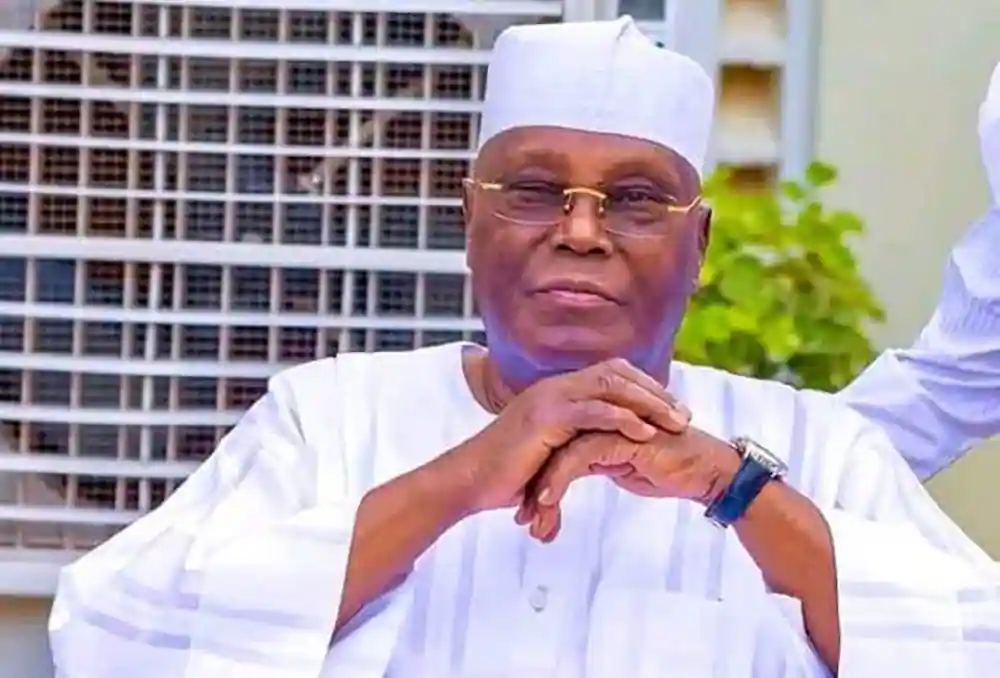
Atiku: Production subsidy will boost local oil production, put money back in Nigerians’ pockets
Former Vice President and African Democratic Congress (ADC) presidential candidate for 2027, Atiku Abubakar, has criticised President Bola Tinubu’s economic policies, accusing the administration of worsening the cost-of-living crisis and weakening the purchasing power of Nigerian households and businesses.
Atiku said Nigerians were facing rising costs of petrol, food, transportation and basic goods, while many businesses were struggling because consumers had less money to spend.
In a statement issued on September 6 by his Senior Special Assistant on Public Communication, Phrank Shaibu, the ADC presidential candidate said the Federal Government could not rely solely on economic statistics while Nigerians continued to experience financial hardship.
Atiku particularly criticised the removal of the petrol subsidy, arguing that the policy had contributed to higher transportation and living costs.
He also rejected criticism of his proposal for a production subsidy, saying the initiative was designed to support domestic production and refining rather than return to the previous system of subsidising imported petrol.
“This is why my Production Subsidy is about putting money back into people’s pockets. Support what we produce and refine here, increase supply, monitor the price and make sure Nigerians feel the benefit at the pump,” Atiku said.
According to the former vice president, the proposed intervention would focus government support on Nigerian oil production and domestic refineries, with the broader objective of increasing supply, strengthening the petroleum industry and reducing pressure on consumers.
READ ALSO:
Atiku said the position of the Crude Oil Refinery Owners Association of Nigeria (CORAN) in support of stronger domestic refining further reinforces his argument for targeted government intervention.
He also cited the policies of US President Donald Trump as an example of how government support could be used to strengthen strategic domestic energy production.
Atiku argued that Nigeria should similarly support its local refining industry instead of relying heavily on imported petroleum products.
However, his reference to Trump was a comparison between the two approaches and should not be interpreted as a direct endorsement by the US president of Atiku’s Nigerian policy.
Atiku said the cost-of-living crisis had become increasingly difficult for Nigerians, accusing the Tinubu administration of making essential goods and services significantly more expensive.
“Tinubu did not inherit this cost-of-living crisis from Nigerians. His policies created and deepened it,” Atiku said.
He cited increases in the prices of fertiliser, petrol and cement, as well as changes in the naira-to-dollar exchange rate, as examples of the economic pressures facing Nigerians.
Atiku said fertiliser had risen from about N9,000 to N50,000, while petrol had increased from approximately N199 to around N1,400 per litre. He also cited an increase in cement prices from roughly N4,000 to about N13,500.
He further pointed to the depreciation of the Nigerian naira against the US dollar as another factor affecting businesses and household purchasing power.
Atiku argued that the consequences of these increases extended beyond individual consumers, affecting small businesses that must cope with higher transportation, electricity and restocking expenses.
He illustrated his argument with the example of a frozen-food seller in Kubwa, Abuja, who, according to him, now spends more to transport goods, power freezers and purchase new stock while customers increasingly struggle to afford the products.
The situation, Atiku said, could eventually affect the entire supply chain as retailers struggle to restock, suppliers wait for payments and customers reduce their purchases.
The ADC candidate also referred to reports indicating that significant amounts of short-term assets belonging to some major Nigerian companies were tied up in unpaid customer bills.
He said the development reflected the weakening purchasing power of consumers, arguing that businesses could make sales on paper but still face financial difficulties when customers were unable to pay.
READ ALSO:
Atiku therefore challenged the Federal Government to look beyond headline economic indicators and assess whether Nigerians were actually experiencing improvements in their daily lives.
“Nigerians know the prices they meet every day,” he said, arguing that households were more concerned about the cost of food, fuel, transport and other necessities than official economic statistics.
He also questioned the availability of meaningful relief for Nigerians amid rising living costs, citing concerns over electricity, security, food prices and transportation.
Atiku said his production subsidy proposal was intended to change the way government intervention operates in Nigeria’s petroleum sector.
Rather than subsidising imported petrol, he said the policy would support domestic oil production and refining, with intervention linked to measurable production and supply.
The objective, he said, would be to increase domestic petroleum output, strengthen local refineries, create jobs and reduce the cost of petroleum products for consumers.
Atiku also questioned why government intervention should be considered poor economic policy when the intended beneficiaries were Nigerian consumers and producers.
“Why does intervention suddenly become bad economics when ordinary Nigerians are meant to benefit?” he asked.
The former vice president argued that Nigeria should adopt policies that support strategic domestic industries while ensuring that the benefits reach ordinary citizens.
He said increased local refining would reduce dependence on imported petroleum products and help Nigeria retain more value from its oil resources.
The renewed debate over fuel subsidy, domestic refining and the cost of living is likely to become an important issue ahead of the 2027 presidential election.
Atiku is seeking to distinguish his production-focused proposal from the petrol subsidy regime that was removed by the Tinubu administration.
He said his economic approach would prioritise domestic production, local refining, job creation and lower living costs, rather than policies that place additional pressure on household incomes.
“The choice before Nigeria is therefore clear: continue with an economy that takes more from the people, or build one that puts money back in their pockets,” Atiku said.
He urged Nigerians to support policies that would increase domestic production and make essential goods and services more affordable.
“Support production. Refine in Nigeria. Create Nigerian jobs. Lower the cost of living,” he said.
Atiku maintained that Nigeria must produce more locally while ensuring that ordinary Nigerians pay less for essential goods and have enough income left to support their families.
The statement comes as political parties and presidential aspirants begin shaping their economic messages ahead of the 2027 general election, with fuel prices, purchasing power, domestic refining and the broader cost of living expected to remain central issues.
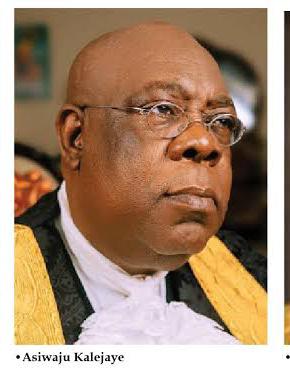
Demystifying the Political Monolith: Wike’s ‘See Finish’ Doctrine and Nigeria’s New Political Calculus
Within the arena of modern Nigerian politics, the street phrase _“see finish”_ has grown from everyday slang into a cynical, weaponized strategy of realpolitik, functioning in practice as a doctrine of radical, adversarial exposure. In everyday language, _see finish_ happens when you become so familiar with a person or institution that you lose all respect for them, exposing their flaws and breaking their spell of authority. Historically, Nigeria’s political elite survived on an unwritten gentlemen’s agreement to protect one another:a sort of mutual indemnity pact keeping their bitterest rivalries behind closed doors while showing the public a united, dignified front.
The usual retort is that a political disagreement is a _”family affair”._ An internal matter: a private problem, argument, or decision that outsiders should not interfere with or join. This unspoken covenant ensured that no matter how deep the betrayals ran, the ruling class always maintained an appearance of institutional respectability.
However, the current political landscape has been completely redesigned and formatted by the Minister of the Federal Capital Territory (FCT), Nyesom Wike, who has turned this concept into a strategy for political survival and relevance. The _wikerealpolitik_ style flatly rejects the polite, diplomatic language that has shielded Nigerian politicians for decades, choosing instead to strip away their political immunity and appearance thus openly exposing the transactional motives of both sides of the aisle.
This open _casting_ replace elite politeness with a brutal, confrontational style of public truth-telling. _Wikerealpolitik_ has rewritten the rules of Nigerian power, shifting the burden of proof from moral oratory to physical, verifiable evidence of governance.
Yet, this approach raises serious concerns about the degradation of democratic institutions, as public governance is reduced to personal warfare.
A major goal of the strategy is to tear down national political giants, stripping them of their moral high ground and showing them as ordinary, typically biased litigants in the court of power.
For years, major opposition leaders were treated by their followers as untouchable,apotheosised patriotic figures who were above regular politics. The _Wike realpolitik_ shattered this illusion during his latest media broadcast. He dragged heavyweight leaders like Atiku Abubakar and Peter Obi directly into the political trenches.
By bluntly declaring that these opposition figures would “hunt” him down if President Bola Tinubu loses the 2027 election, he reframed the opposition’s goals not as a noble rescue mission for Nigeria, but as a personal, vindictive grudge match.
Through this clever use of _see finish,_ he denies his rivals the ability to claim the moral high ground, presenting them to voters as politicians simply looking to settle old scores. By arguing that everyone in the political arena is playing the exact same transactional game, he establishes a parity of motive, leveling the playing field and forcing the public to view the upcoming 2027 election with absolute, clear-eyed realism. However, this strategy is inherently reductionist; by insisting that all political motives are base and transactional, he actively poisons public trust in leadership and delegitimizes the very concept of principled political opposition.
Furthermore, playing the game of _see finish_ carries a massive risk, because teaching the public to look at politicians with deep cynicism means they will eventually look at you with that same critical eye. To protect himself from the very cynicism he creates, _Wikerealpolitik_ relies on a strong defense built on concrete, visible performance;treating infrastructure as the ultimate exculpatory evidence. He appears to be on terra firma in this regard. Nigerians have _seen finish_ with empty promises, political manifestos, and flowery speeches, so he anchors his political life in physical and verifiable projects. His style of governance works on a very simple premise: a cynical voter can easily question a politician’s integrity, but they cannot ignore a brand-new highway, a modern school,a brand new hospital,comfortable transit hubs or a flyover that eases traffic and considerably shortens transit time . By constantly reminding everyone of his track record like building 12 flyovers as Governor of Rivers State or completing 76 infrastructure projects in the FCT;he shifts the case from a trial of moral intentions to a verdict based on physical reality. The counter-argument, however, point out that this “brick-and-mortar” jurisprudence ignores the deeper, systemic components of governance, such as human capital development, institutional integrity, and the rule of law. A city cannot be paved over its broken democratic processes, and the transactional focus on infrastructure serves as a convenient distraction from the lack of a cohesive, long-term policy vision for structural reform.
Importantly, _Wikerealpolitik_ does not just use this weapon against the opposition; he turns it with equal force on his own allies within the ruling All Progressives Congress (APC), breaching the implied contract of intra-party solidarity. In traditional Nigerian politics, disagreements within the ruling party are settled quietly through backchannel arbitration to keep up the appearance of a unified front. This tradition is totally broken by airing party’s dirty laundry in public, openly naming powerful figures like Kwara State Governor AbdulRahman AbdulRazaq and Imo State Governor Hope Uzodinma as people working against him under the radar. By exposing these elite cracks, he shows that the ruling party is not a united family driven by a single vision, but a loose alliance of competing interests. This style creates a state of permanent leverage for the FCT Minister, ensuring his position in the cabinet remains safe because his colleagues know that any attempt to sideline him will result in immediate, public exposure of the party’s _holy of holies._ This survival mechanism, while effective reveals a chaotic and unstable governing style that prioritizes self-preservation over administrative stability and team cohesion.
Ultimately, _Wikerealpolitik_ of _see finish_ has permanently changed how power is negotiated and held in modern Nigeria, but at a profound cost to the political ecosystem. By destroying the old illusions of elite unity, he has ushered in an era of aggressive transparency where power is fought for out in the open through leverage and infrastructure rather than quiet consensus. While this style wins Wike a fiercely loyal base of everyday supporters who love his “talk-and-do” reputation, it also creates a massive, dangerous coalition of powerful enemies across all political parties. By stripping away the traditional respect and protection that politicians usually give one another, _Wikerealpolitik_ has ensured that if he ever loses political footing, his adversaries will show him absolutely no mercy and come for his jugular. As the country moves closer to the 2027 elections, _Wikerealpolitik_ as a political strategy will serve as the ultimate testcase for Nigerian realpolitik, proving whether concrete performance is enough to save a politician from the collective anger of a demystified political elite, or if a divisive, scorched-earth methodology will lead to an ultimate political isolation.
As the different political calculus changes and new jurisprudential formats emerge,it is hoped that a genuine Nigerian formatted political ecosystem will emerge.This will place emphasis on infrastructural optics mixed with human capital development, institutional integrity,advancemebt of the democratic processes and the rule of law.Surely there is enough for students and academics to chew. Indeed these are interesting times.
Asiwaju Kunle Kalejaye SAN Eagle102.5 FM Ilese-Ijebu

BREAKING: OPay Warns Customers Against Viral Shutdown Message, Threatens Legal Action

Osinbajo raises alarm over chemicals in fruits, recalls wife’s orange juice experience

NSCDC Rescues 15 Trafficked Minors Sold for ₦2m Each by Fake NGO Official


APC rally: Suspected thugs attack journalists, smash Radio Nigeria vehicle in Kano


NAJA 19th Auto Awards: Industry’s best to battle for honours December 3

15 northern states may collapse if fuel subsidy returns, OAU professor warns Atiku


JAMB Releases Underage UTME Results, Sets Strict Conditions for Admission
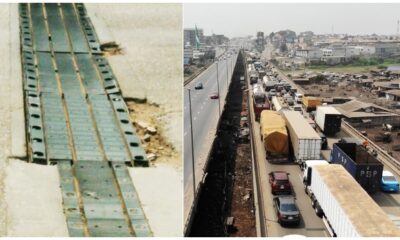

Lagos-Ibadan Expressway: FG begins Kara Bridge repairs Tuesday, deploys traffic agencies