PDP slams Tinubu’s new loan request, warns of economic consequences - Newstrends
Connect with us

News

PDP slams Tinubu’s new loan request, warns of economic consequences
Published

on

"I Was Sitting on a Hot Burner" — Tinubu Defends Fuel Subsidy Removal
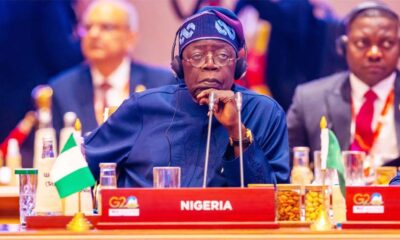
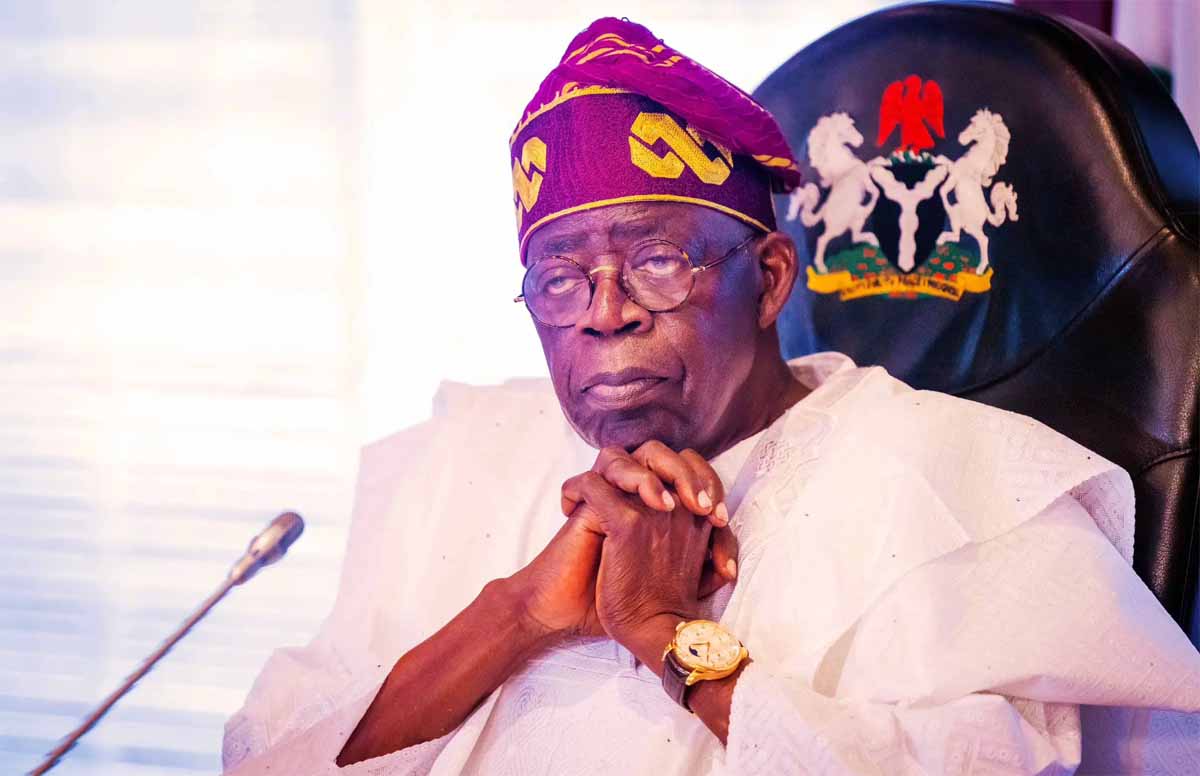
President Bola Ahmed Tinubu

PDP slams Tinubu’s new loan request, warns of economic consequences

The Peoples Democratic Party (PDP) has strongly criticized President Bola Ahmed Tinubu’s latest request to borrow $21.5 million and ¥15 billion, along with a €65 million grant from international financial institutions.

The opposition party described the move as both contradictory and dangerous to Nigeria’s economic stability.

The loan request, which was transmitted to the National Assembly last Tuesday, seeks legislative approval as part of the Medium-Term Expenditure Framework (MTEF) for the 2025–2026 fiscal period.

However, many Nigerians have criticised the loan request.

Some critics, including economists and civic advocates, have questioned the necessity of external borrowing in the aftermath of the fuel subsidy removal, a policy that was expected to free up resources for domestic development.

They argue that the subsidy removal should have created fiscal space to meet the nation’s financial needs without resorting to additional borrowing. Some others are concerned about Nigeria’s rising debt profile and the long-term implications for future generations.

At a press conference on Wednesday, the PDP National Publicity Secretary, Debo Ologunagba, questioned both the rationale for fresh borrowing and the earlier removal of fuel subsidy, which the government had claimed would ease fiscal pressure and reduce reliance on loans.

“Only last week, the president had just asked for and requested for a $24.5 billion loan. What they said that is actually very annoying was that they’re going to use that money to cushion the effect of subsidy removal. We were here when they said to us, ‘we’re going remove subsidies, therefore, we will not borrow anymore. We’re not going to put subsidy on petrol, and therefore, there’ll be more money to provide cushioning policies and programmes, to take away the pain of the subsidy.” So the question is – where is the money if indeed you’re going to borrow money to cushion the effect of subsidy, two years after?” he said.

READ ALSO:

Mr Ologunagba added that the policy inconsistency has left many Nigerians suffering under worsening economic conditions.

“Many people have died on account of the irresponsibility of this government, because of their impoverishment and that’s why we’re here. So they said that part of that money will be used to take care of pensioners. Pension is a contributory scheme. So where’s the money?” he said.

The PDP spokesperson also criticised the National Assembly, accusing it of failing in its oversight duties.

He insisted that the opposition is not merely criticising for political gain but seeking better governance.

“The National Assembly should interrogate, which they’re not doing, of course, they have declared that whatever the president says, is okay by them, and we have seen it. These are the things that Nigerians are going to challenge in 2027.

“One thing is clear, and Nigerians should recognise that, we’re not in opposition to just criticise. It is better for this country to do well, so that all of us can benefit from it. It is not in our interest that the government fails, but the government must be ready to listen to alternative views that could help us build a country that all of us can have what we call the pursuit of happiness,” Mr Ologunagba said.

According to Nigeria’s Debt Management Office (DMO), as of 31 December 2024, Nigeria’s total public debt stood at N144.7 trillion (approximately $94.2 billion). About 51.4 per cent of the total (N74.4 trillion) is domestic debt while 48.6 per cent (N70.3 trillion) is external debt.

READ ALSO:

The rising debt has resulted in increased debt servicing costs. In 2023, Nigeria spent N7.8 trillion on debt servicing, a 121 per cent increase when compared to N3.52 trillion in the previous year.

The amount spent on debt servicing rose to N13.12 trillion in 2024, a 68 per cent increase from the 2023 figure. These high debt servicing costs means less funds for important sectors such as infrastructure and social services, potentially hindering economic growth and development.

Government’s justification
The Federal Ministry of Finance defended the borrowing plan last Wednesday. The ministry’s Director of Information and Public Relations, Mohammed Manga, said the loans are part of a strategic, structured approach aligned with Nigeria’s economic priorities.

He said the funds are earmarked for the 2025–2026 fiscal period and are part of the Medium-Term Expenditure Framework (MTEF).

MTEF is a planning and budgeting tool that helps the government manage its finances over a medium-term period, typically three years.

Mr Manga explained that the funds will be sourced from reputable development partners like World Bank, African Development Bank, French Development Agency, European Investment Bank, Japan International Cooperation Agency (JICA), China EximBank and Islamic Development Bank.

He said the funds will be used to support several infrastructure and security initiatives of the government including expansion and upgrade of power grids and transmission lines, development of irrigation systems to boost food security, installation of a nationwide fibre optics network, procurement of fighter jets to strengthen national security and enhancement of rail and road infrastructure across geopolitical zones.

The director noted that the projects will span multiple states, including Abia, Bauchi, Borno, Gombe, Kaduna, Lagos, Niger, Oyo, Sokoto, and Yobe, reflecting a national development agenda.

Loading

News

Senior Lawyers Drag NYSC to Court Over Deployment of Corps Members to Insecure States

Published

on

NYSC Releases Call-Up Letters for 2026 Batch B Stream I (How to Print NYSC Call-Up Letter)

Senior Lawyers Drag NYSC to Court Over Deployment of Corps Members to Insecure States

WARRI — Two prominent legal practitioners, Olukunle Ogheneovo Edun (SAN) and John Aikpokpo-Martins, have instituted a Fundamental Rights Enforcement action before the High Court of Delta State, Warri Judicial Division, challenging the continued deployment of National Youth Service Corps (NYSC) members to states and communities affected by severe insecurity across Nigeria.

The suit seeks judicial intervention against what the applicants describe as the persistent posting of corps members to areas plagued by terrorism, banditry, kidnapping, armed attacks and other forms of violent criminality, despite widespread concerns over the safety of young graduates participating in the national service scheme.

According to the applicants, the deployment of corps members to locations where lives are constantly under threat amounts to a violation of their constitutionally guaranteed rights to life, dignity of the human person, personal liberty and security.

The legal action comes amid growing public anxiety over the security of NYSC members, following several incidents in recent years involving the abduction, harassment and killing of corps members in different parts of the country.

Edun, a Senior Advocate of Nigeria, and Aikpokpo-Martins contend that the authorities responsible for administering the NYSC scheme have a legal and constitutional duty to protect participants from foreseeable dangers. They argue that compelling or assigning corps members to regions with known security challenges exposes them to unnecessary risks and undermines the government’s obligation to safeguard citizens.

The applicants are asking the court to determine whether the continued deployment of corps members to areas designated as security flashpoints is compatible with the provisions of the 1999 Constitution (as amended) and Nigeria’s obligations under relevant human rights instruments.

READ ALSO:

They are also seeking orders that would compel the NYSC and other relevant government agencies to review and reform deployment policies in a manner that prioritises the safety and welfare of corps members.

Observers say the case could have far-reaching implications for the future of the NYSC scheme if the court rules in favour of the applicants. A favourable judgment may require the scheme to establish stricter security benchmarks before deploying corps members and could potentially limit postings to locations considered unsafe.

The lawsuit has already generated significant interest among stakeholders, including parents, civil society organisations and youth groups, many of whom have repeatedly raised concerns about the safety of participants in the mandatory one-year national service programme.

Security experts have also argued that the increasing wave of insecurity in parts of the country necessitates a review of policies affecting young Nigerians serving under the NYSC scheme.

As of the time of filing this report, neither the NYSC Directorate Headquarters nor relevant federal authorities had issued an official response to the suit.

The case is expected to test the extent of the government’s constitutional responsibility to protect corps members and may shape future policies regarding the deployment of young graduates under the nation’s compulsory service programme.

Senior Lawyers Drag NYSC to Court Over Deployment of Corps Members to Insecure States

Loading

Continue Reading

News

Obi Promises to Release Nnamdi Kanu if Elected, Says ‘He Has Done Nothing Wrong’

Published

on

Obi Promises to Release Nnamdi Kanu if Elected, Says ‘He Has Done Nothing Wrong’
Peter Obi

Obi Promises to Release Nnamdi Kanu if Elected, Says ‘He Has Done Nothing Wrong’

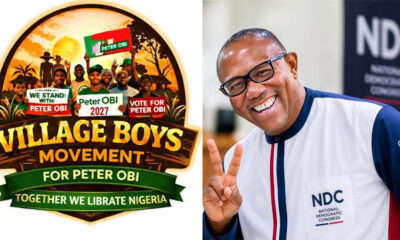
The 2027 presidential candidate of the Nigeria Democratic Congress (NDC), Peter Obi, has declared that he would release Nnamdi Kanu and engage separatist agitators in dialogue if elected president of Nigeria. Speaking during an interaction with Nigerians in Washington, the former Anambra State governor argued that Kanu should not be detained over comments he allegedly made on Radio Biafra, insisting that criticism of political leaders should not be criminalised.

“There’s no reason for keeping Nnamdi Kanu. I will free Nnamdi Kanu as President. He has done nothing wrong; the government has no reason to arrest him because he was speaking and calling people names on radio,” Obi said. The former Labour Party presidential candidate maintained that public officials are often subjected to criticism and insults, which, according to him, should not constitute an offence. “Anybody can tell you anything. I’m a politician and people call me all sorts of names and I don’t think calling me names is an offence,” he added. Obi also pledged to adopt dialogue as a strategy for addressing separatist agitations and other grievances across the country. “If I am in government today, I will discuss with all agitators because I believe that they have a reason for whatever they want to do and it’s only by engaging them that we would learn,” he said.

Obi reiterated his commitment to pursuing a political solution to the case involving the Indigenous People of Biafra (IPOB) leader, stating that dialogue remains the most effective path to resolving longstanding grievances and tensions. According to him, governments achieve more lasting results when they address the root causes of agitations through dialogue, justice, and inclusive governance rather than relying solely on coercive measures. The former governor maintained that national unity is better strengthened through reconciliation and mutual understanding, stressing that democratic societies should create avenues for citizens to express grievances while preserving law, order, and national stability.

READ ALSO:

This is not the first time Obi has spoken on the IPOB leader’s detention. In November 2025, following Kanu’s conviction and life imprisonment sentencing by a Federal High Court in Abuja, Obi described the development as a “failure of leadership” that risked aggravating national tension. At the time, Obi posted on his verified X handle: “I have always maintained that Mazi Kanu should never have been arrested. For years, I have consistently argued that dialogue, constructive engagement, and inclusive governance offer the path to lasting peace. Coercion becomes necessary only when reason has been exhausted.” He further argued that the government’s approach had only deepened mistrust, stating: “The handling of Kanu’s case mirrors the government as a man trapped in a hole but who, instead of looking for a way out, keeps digging deeper.” In July 2025, Obi had told Channels Television’s Sunday Politics that the continuous detention of Nnamdi Kanu “does not make sense” . Asked whether he would advocate for a political solution, Obi responded: “For every one of them, I mean, why is he still being held? It does not make sense to me.”

Nnamdi Kanu, the leader of IPOB, has remained in the custody of the Department of State Services since his controversial rendition from Kenya to Nigeria in June 2021. In November 2025, Justice James Omotosho of the Federal High Court in Abuja convicted him on seven terrorism-related charges and sentenced him to life imprisonment. Kanu has since filed an appeal at the Court of Appeal challenging both his conviction and sentence. According to his legal consultant, Alloy Ejimakor, the appeal process is already “live,” with multiple stages involved. Kanu has provided 22 grounds for his appeal, and the Court of Appeal has not yet fixed a date for hearing the matter. In a significant development, IPOB claimed in June 2026 that the Federal Government’s cross-appeal against Kanu’s sentencing amounts to an admission that the trial court lacked jurisdiction to impose life sentences. IPOB spokesperson Emma Powerful stated that the government’s filing declared that “the trial court acted without jurisdiction when it imposed life imprisonment on Counts 1, 2, 4, 5 and 6.” IPOB argued that if the court lacked jurisdiction at the sentencing phase, “the entire sentencing exercise is a nullity ab initio.”

READ ALSO:

International pressure continues to mount on the Nigerian government over Kanu’s conviction. A group of international legal experts under the banner of Pan African Forum Ltd & Associates, based in London, has issued a legal notice warning Nigeria that it would commence legal action in a UK Court if the government does not immediately and unconditionally release Kanu. The group bases its demand on Opinion No. 25/2022 issued on July 20, 2022, by the United Nations Working Group on Arbitrary Detention, which found that Kanu’s arrest and extraordinary rendition were unlawful and ruled that his continued detention is arbitrary. The Nigerian government has consistently maintained that Kanu is facing serious terrorism and security-related charges and that due judicial process must be allowed to run its course.

Meanwhile, the apex Igbo socio-cultural organization, Ohanaeze Ndigbo, has called on President Bola Tinubu to grant amnesty to Nnamdi Kanu on or before June 12, 2026, as part of efforts to promote national reconciliation and strengthen unity across the country. The group emphasized that Kanu’s release, preferably timed to coincide with Nigeria’s Democracy Day, would signal a bold commitment to justice, inclusion, and healing decades-old grievances in the Southeast. Ohanaeze also dismissed fears that Kanu’s release could destabilize the country, arguing that such a move would demonstrate leadership anchored on reconciliation.

Obi’s latest comments come amid his political realignment ahead of the 2027 presidential election. After the collapse of an earlier opposition coalition, Obi secured the presidential ticket of the Nigeria Democratic Congress (NDC) at a special convention in Abuja in May 2026. He was unanimously endorsed by delegates following a motion moved by Senator Victor Umeh and seconded by former Deputy Senate President Ovie Omo-Agege. Shortly after accepting the nomination, Obi announced former Kano State Governor Rabiu Musa Kwankwaso as his running mate. In his acceptance speech, Obi pledged a technology-driven and intelligence-led security framework, promising to address both immediate threats and root causes such as poverty and unemployment. He recently dismissed claims that he was avoiding former Vice-President Atiku Abubakar, stating: “There are very few human beings who are as close as I am to Atiku. So I can’t be running from him.”

As the 2027 election approaches, Obi’s campaign continues to gain momentum, particularly among young Nigerians and diaspora communities. His message of inclusive governance, dialogue over coercion, and political solutions to national crises resonates with voters frustrated by the status quo. His pledge to release Nnamdi Kanu and engage all agitators in dialogue represents a sharp departure from the current administration’s security approach. Whether this stance will translate into electoral success remains to be seen, but it has undoubtedly positioned Obi as a candidate willing to take bold, unconventional positions on Nigeria’s most contentious issues. The Nigerian government has consistently maintained that Kanu is facing serious terrorism and security-related charges and that due judicial process must be allowed to run its course. However, with international pressure mounting, an active appeal process, and major political figures like Obi calling for Kanu’s release, the case continues to be a defining issue in Nigeria’s political landscape.

Obi Promises to Release Nnamdi Kanu if Elected, Says ‘He Has Done Nothing Wrong’

Loading

Continue Reading

News

Uzodimma Approves N300m Support for Imo Law Students, South African Returnees

Published

on

Uzodimma Approves N300m Support for Imo Law Students, South African Returnees

Uzodimma Approves N300m Support for Imo Law Students, South African Returnees

Imo State Governor, Senator Hope Uzodimma, has approved a N300 million financial intervention for Imo indigenes studying at the Nigerian Law School and citizens of the state recently returned from South Africa.

The intervention is designed to provide relief to beneficiaries facing economic hardship, rising living costs, and reintegration challenges.

According to the Imo State Commissioner for Information, Public Orientation and Strategy, Hon. Declan Emelumba, the package will benefit two categories of people: law students and South African returnees.

Under the arrangement, 250 Imo indigenes who returned from South Africa will receive N1 million each as a reintegration fund to help them resettle and rebuild their lives after being forced to return to Nigeria.

In addition, 100 Imo students at the Nigerian Law School will receive N500,000 each to help cushion the impact of inflation and rising cost of living while pursuing their legal education.

READ ALSO:

Emelumba explained that the governor was moved to approve the intervention following appeals from the law students and concerns over the difficult circumstances facing the returnees.

“The law students made a passionate appeal to His Excellency to support them to cushion the global inflation as regards cost of living. As a caring father, he responded promptly,” he said.

He added that the support for the returnees was driven by empathy, noting that many of them went through difficult experiences that forced them to return to Nigeria.

“The governor felt that the traumatised returnees needed a helping hand from government. Hence, he approved what can be described as a re-integration fund to enable them settle down with minimal discomfort,” Emelumba stated.

The commissioner further noted that the initiative aligns with the administration’s Shared Prosperity Agenda, which focuses not only on infrastructure development but also on human capital development and social welfare.

He also recalled that this is not the first time the state government has supported law students, stating that many of them are already beneficiaries of government scholarship programmes and periodic financial assistance.

The latest intervention has been described as part of ongoing efforts by the Uzodimma administration to ease economic pressure on students and vulnerable citizens, especially in the face of national inflation and unemployment challenges.

Stakeholders say the initiative could help provide temporary relief to beneficiaries as they continue their education or reintegrate into society after returning from abroad.

Uzodimma Approves N300m Support for Imo Law Students, South African Returnees

Loading

Continue Reading

Trending