

News
Police get court order to remand #EndBadGovernance protesters for 60 days

Police get court order to remand #EndBadGovernance protesters for 60 days
A Federal High Court in Abuja has granted applications filed by the police to remand 124 arrested #EndBadGovernance protesters for 60 days pending the conclusion of investigation.
Justice Emeka Nwite, in separate rulings on ex-parte motions moved by Ibrahim Mohammed, counsel for the Inspector-General of Police (IGP), granted the interim order.
The judge also ordered that the suspects, who are minors in the applications, to be remanded in Borstal Home of the correctional centre.
In the first motion ex-parte marked: FHC/ABJ/CS/1154/2024, moved by Mohammed on August 14, but with a certified true copy (CTC) of the order obtained by NAN, the judge directed that the suspects be remanded for 60 days pending the conclusion of investigation and legal advice from the Attorney-General of the Federation (AGF).
The IGP, in the motion dated August 8 but filed August 9, sued 75 protesters with ages ranging between 14 and 34 years.
They are Abubakar Ibrahim (18), Abubakar Adam (19), Suleiman Ali (16), Mubarak Mas’ud (23), Umar Musa (19), Aminu Hussaini (20), Umar Kabir (23), Ibrahim Musa (24), Abba Usman (30), Umar Inusa (18), Tasi’u Lawan (17), Ibrahim Rabi’u (16), and Jamilu Haruna (16).
READ ALSO:
- Police arrest five suspected kidnappers in Imo
- Na juju I use marry her, Reuben Abati fires man curious about wife stunning beauty
- Police arrest woman with 124 rounds of anti-aircraft ammunition Nasarawa
Other suspects are Muktar Yahaya (17). Abdulbasit Abdulsalam (34), Salisu Adamu (16), Bilal Auwalu (15), Abdul’aziz Adam (15), Sadiq Sunusi (15), Muhd Musa (14), Usman Amiru (14), Abdulganiyu Musa (15), Muhd Yahaya (19), and Sunusi Nura (14), among others.
They were alleged to have committed acts of terrorism, treason, and treasonable felonies, including arson and terrorism.
The police said the offence was contrary to Sections 2(1) and (3), 24 and 26 of the Terrorism (Prevention and Prohibition) Act 2022; Sections 41 and 42 of the Criminal Code Act; Sections 410, 411, and 412 of the of the Penal Code Act; and Section 4 of the Miscellaneous Offences Act CAP M17 Laws of the Federation of Nigeria 2004 and other enabling statutes.
Miss Elizabeth Ogochukwu, a Litigation Secretary of Legal and Prosecution Section, Intelligence Response Team (IRT), Police Force Headquarters, Abuja, deposed to the affidavit in support of the motion.
She said the I-G’s office, through the office of the National Security Adviser (NSA), received a damningly credible intelligence report of a planned violent uprising against the government of the states and the Federal Republic of Nigeria.
Ogochukwu averred that “the planned violent insurrection was believed to have been orchestrated by terrorist groups both within and outside Nigeria to unleash terror against the sovereign states of Nigeria, scheduled to start from the 1st day of August, 2015.”
She said, “Despite serious security measures intensified by the various law enforcement agencies, the planned protest took place as scheduled and seriously intimidated the populace and seriously destabilised or destroyed the fundamental, political, constitutional, economic, or social structures of some parts of Nigeria.
“That the violent protest causes death and bodily harm to citizens of the country and led to arson and wanton destructions of government or public and private facilities, transport systems, and infrastructural facilities in Nigeria.
“That the suspects were arrested in the actual act of rampage and reasonably suspected to be complicit in the crime, which calls for district investigations.
READ ALSO:
- Kidnap suspect arrested inside Taraba mosque
- Upsetting video of another abducted traditional ruler released
- No South-East institutions responded to request students verification – NELFUND
*That the suspects/defendants herein were found to have been carrying Russian flags, banners, placards, and slogans agitating for sovereign invasion of Nigerian territory to destabilise or overthrow the sovereign state of Nigeria by the Russian government.”
Ogochukwu said the suspects were arrested in Abuja and various states in possession of many Russian flags and other incriminating exhibits, while others are still at large.
She said investigations into the matter had commenced, and the defendants made voluntary statements, mostly admitting the crime, which reasonably suspected them to be members of proscribed terrorist groups.
She said the investigators had to travel to various states to discover and apprehend the sponsors of this heinous crime for effective prosecution, and the same would not be completed within the time frame contemplated by the constitution, which necessitated the application.
She said that “time is required to complete investigation thoroughly and obtain legal advice from the office” of the AGF as most of the prime suspects are still at large.
Ogochukwu averred that the suspects admitted the commission of the offence.
According to her, the suspects/defendants are now in detention in police cells, which are congested and pose serious health challenges to the inmates, and possibility of attack or escape will be ruled out.
Also, in the second ex-parte motion marked: FHC/ABJ/CS/1223/2024, moved by Mohammed on Thursday, Justice Nwite ordered another set of 49 defendants to be remanded for 60 days pending the conclusion of the investigation.
“That an order of this Honourable Court is hereby made committing the defendants to a correctional centre pursuant to Section 299 of the Administration of Criminal Justice Act (ACJA), 2015,” he said in the CTC of the order sighted on Saturday in Abuja.
The judge, who directed that the underage defendants be remanded in Borstal Home of the correctional centre, adjourned the case until Oct. 23 for mention.
READ ALSO:
- IPOB warns Igbo youths against British Army recruitment, says its deceptive
- Sultan, Ogun dep gov to launch TMC cemetery tomorrow
- Child among 10 killed in Israeli airstrikes in southern Lebanon
The motion, dated Aug. 20, was filed on Aug. 21.
Giving four grounds why the application should be granted, the lawyer said that the defendants engaged in the offence of terrorism financing in order to overthrow a democratically elected government.
Mohammed alleged that the defendants were supporting some disgruntled elements that were flying the flag of another country in Nigeria.
He alleged that the defendants conspired with some foreign nationals to take over the sovereign nation, which is a treasonable felony.
A detective attached to the Force Criminal Investigation Department, Abuja, Gregory Woje, in the affidavit in support of the ex-parte motion, deposed that preliminary investigation revealed that some suspects arrested were being recruited by some financiers to cause mayhem and destroy life and property.
“That preliminary investigation further revealed that the financiers were sending money to recruit the indigents and other vulnerable individuals to carry banners and overthrow a democratically elected government.
“That preliminary investigation further reveals that some foreign nationals were the heads in the unscrupulous act of treasonable felony and promoting terrorism financing in Nigeria,” he averred.
Woje said the acts of the accused persons are akin to the offences of criminal conspiracy, terrorism financing, treasonable felony, cyberstalking, and cyberbullying.
He said it is the function of the police to stop the act by appending the offenders as offences to one, which is an offence to all.
Some of the defendants include Comrade Opaluwa Eleojo, Michael Adaramuye, Musiu Sadiq, Buhari Lawal, Love Angel Innocent, Suleiman Yakubu, Yunusa Aliyu, Ahmad Nasir, Muhammed Sani, Iliyasu Anas, Abdullahi Sani, and Gaddafi Muhammed.
They also include Jibrin Abdulhakim, Mahmud Umar, Kabiru Rabiu, Aminu Muhammed, Sagir Hassan, Lukman Abubakar, and Ahmed Isah.
Others are Abdullahi Abdulwahab, Hassan Muhammad, Abdullahi Salisu, Sabo Murtala, Fahad Ibrahim, Umar Yakubu, Zakari Yakubu, and Ahmed Haruna, among others. (NAN)








News
NBS: Nigeria’s Inflation Slips to 15.39% in August

NBS: Nigeria’s Inflation Slips to 15.39% in August
Nigeria’s inflation rate eased to 15.39 per cent in August 2026 as the pace of price increases slowed across the economy, the National Bureau of Statistics has reported.
The latest Consumer Price Index report shows a modest fall from the 15.43 per cent recorded in July.
A sharper improvement was recorded in monthly inflation. The rate dropped from 1.57 per cent in July to 0.71 per cent in August, meaning prices continued to rise but at a much slower pace.
Food inflation also slowed significantly.
The NBS put year-on-year food inflation at 19.57 per cent in August. This was below the 25.30 per cent recorded a year earlier. Monthly food inflation also fell sharply, moving from 5.56 per cent in July to 1.02 per cent in August.
The statistics agency attributed the monthly decline to lower average prices for a range of food products, including palm oil, pepper, onions, cassava flour, beef, yam flour, egusi, ginger, fresh fish, Irish potatoes, chicken and turkey.
The improvement, however, was not shared equally across the country.
Adamawa had the highest annual food inflation rate at 38.85 per cent. Zamfara followed with 37.96 per cent, while Bayelsa recorded 36.20 per cent.
At the other end, Borno recorded negative annual food inflation of -4.04 per cent. Jigawa recorded -0.23 per cent, while Kebbi stood at 3.47 per cent.
For monthly food inflation, Katsina recorded the highest rate at 9.48 per cent, followed by Rivers at 8.86 per cent and Osun at 8.32 per cent.
The latest figures suggest a broad slowdown in price growth, although the wide differences between states show that many households are still facing very different food price pressures depending on where they live.
NBS: Nigeria’s Inflation Slips to 15.39% in August
metro
Fatal NURTW Leadership Clash in Osun Leaves Two Dead; State Orders Park Shut Down
Fatal NURTW Leadership Clash in Osun Leaves Two Dead; State Orders Park Shut Down
As Olalekan Oyeyemi is buried in Osogbo, authorities transfer murder probe to the State Criminal Investigation Department.
News
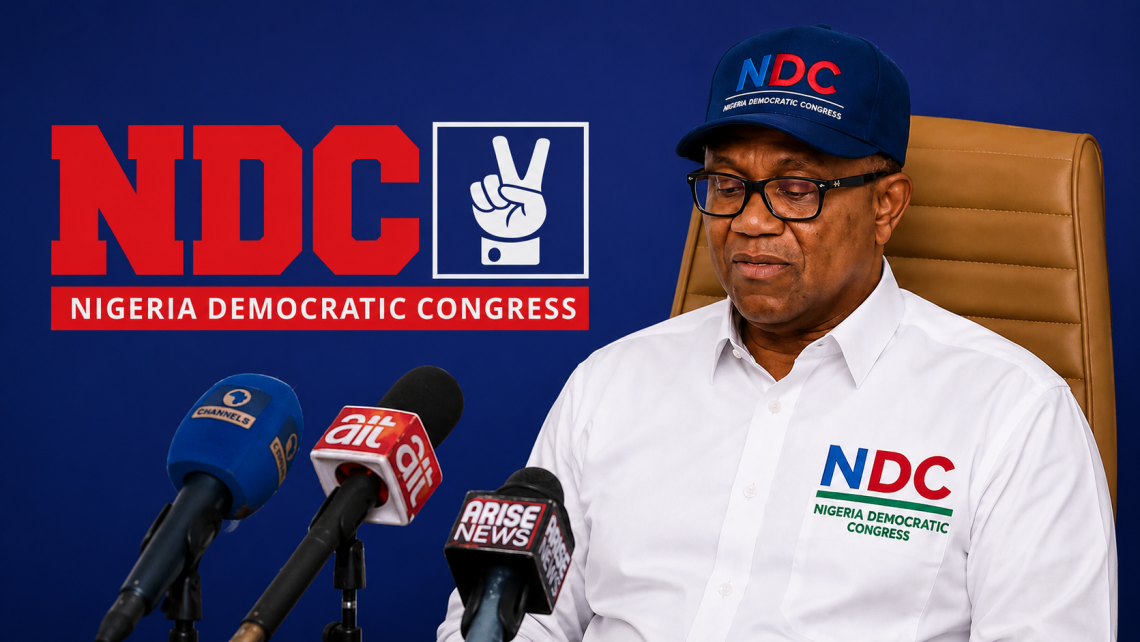
Peter Obi Rejects Anambra Debt Claims, Challenges Soludo Govt to Produce Evidence
Peter Obi Rejects Anambra Debt Claims, Challenges Soludo Government to Produce Evidence
Former Anambra State Governor and 2027 presidential candidate Peter Obi has rejected claims that he left the state with unpaid financial obligations when he handed over power in 2014, challenging the Anambra State Government to identify any contractor, supplier, worker or pensioner who was owed money by his administration at the time.
Obi made the statement in response to renewed claims by the administration of Governor Chukwuma Soludo that the state is still servicing loans and other financial obligations inherited from previous administrations.
The dispute has opened a fresh political debate over Anambra’s debt profile, the financial obligations inherited by successive governments and the management of the state’s resources before and after Obi left office.
Obi, who governed Anambra between 2006 and 2013 before handing over to his successor in 2014, said he paid what was due during his tenure and left the state in a financially stable position.
He challenged the Soludo administration to provide evidence of any unpaid obligation incurred by his government that remained outstanding when he left office.
According to Obi, if the state government can identify any contractor, supplier, employee, pensioner or other beneficiary who was owed money by his administration at the time of the handover, he would be prepared to address the matter.
The former governor also said his administration left funds in government accounts, including an alleged ₦2.14 billion ecological fund balance, when he handed over power.
However, the claim regarding the ecological fund is from Obi’s camp and would require confirmation from the relevant official financial records.
READ ALSO:
- Peter Obi: Release My UNN Academic Records, I Have Nothing to Hide
- A Son Wouldn’t Have Done Better — Dangote Speaks on Daughters, Succession
- 2027: APC Governors Reject Wike’s Rainbow Coalition, Insist on Party Loyalty
The response followed comments by the Anambra Commissioner for Finance, Izuchukwu Okafor, who said the state was still repaying loans inherited from previous administrations.
Okafor said the Soludo administration had not obtained any commercial bank loan since it came into office in 2022, arguing that the government’s focus had been on reducing the state’s inherited financial obligations.
He said the state’s debt burden had been substantially reduced under Soludo and that the administration had also cleared inherited liabilities relating to contracts, gratuities and pensions.
The commissioner said some loans taken by previous administrations remain subject to repayment and deductions from the state’s federal allocations.
This distinction is at the centre of the current disagreement.
The Soludo administration is not necessarily claiming that Obi personally left unpaid bills to contractors or workers. Rather, the government is pointing to loans and other financial commitments inherited from successive administrations, some of which continue to be serviced.
Obi, on the other hand, is arguing that his administration settled the obligations that were due and payable when he left office and should not be held responsible for liabilities incurred by subsequent governments.
The issue has therefore raised questions about the difference between a state’s overall outstanding debt and debts that were specifically incurred by an individual administration.
Available public debt records have shown that Anambra had outstanding formal obligations around the period Obi left office. However, the political dispute centres on when particular obligations were incurred, which administration contracted them, when repayment became due and whether they should be described as unpaid debts inherited from Obi’s administration.
The Soludo administration has maintained that it inherited financial commitments from previous governments and has been working to reduce them.
The finance commissioner reportedly said the state’s domestic debt was now close to zero and that the government had reduced its overall debt burden significantly.
He also said the Soludo administration had not resorted to commercial bank borrowing since assuming office, presenting the reduction in liabilities as evidence of improved fiscal management.
The government has simultaneously highlighted investments in infrastructure and other projects while maintaining that debt reduction remains an important part of its financial strategy.
READ ALSO:
- Sanwo-Olu Joins Dangote as Historic N2.15tn Refinery IPO Opens on Nigerian Exchange
- Shehu Buba Submits Himself To DSS Over Banditry Allegations
- No Lives Lost as Responders Contain Dual Fire Outbreaks Across Lagos
Obi’s camp, however, has questioned the basis for attributing current financial obligations to his administration.
The former governor has repeatedly presented his tenure as one characterised by fiscal discipline, savings and investment in infrastructure, education, healthcare and other sectors.
His supporters have pointed to the savings and financial reserves accumulated during his tenure as evidence that the state was handed over in relatively strong financial condition.
Critics of the former governor, however, argue that the financial position of a state cannot be assessed solely by looking at cash balances or the absence of unpaid bills because governments can inherit long-term obligations whose repayment extends beyond the tenure of the administration that contracted them.
That distinction is particularly relevant in Anambra, where governments have succeeded one another while continuing to service financial commitments made over several administrations.
The latest exchange has consequently shifted the political conversation from whether Anambra has debt to the more specific question of which administration incurred particular liabilities and whether those obligations were outstanding at the time of each handover.
The dispute also comes at a politically sensitive period, with Obi preparing for the 2027 presidential election under the Nigerian Democratic Congress (NDC).
Questions about his record as Anambra governor are likely to remain part of the political debate as the election approaches, particularly because his administration’s economic management has been a central part of his political narrative.
For Soludo, who is serving as Anambra governor, the emphasis has been on the state’s current fiscal position and the steps his administration says it has taken to reduce inherited liabilities while funding development projects.
For Obi, the priority is to establish that he did not leave unpaid obligations to contractors, workers, pensioners or other beneficiaries when he left office.
The former governor has therefore challenged the state government to publish specific records showing any outstanding obligation attributable to his administration at the point of handover.
The competing claims have yet to be resolved by an independent audit or judicial determination.
What remains clear is that Anambra’s debt debate involves more than a simple disagreement over whether the state owes money. It encompasses loans contracted by successive administrations, repayment schedules, inherited liabilities, outstanding contracts and the question of how political leaders should be held accountable for financial commitments made during their tenure.
As the exchange continues, official debt records, audited financial statements and handover documents could provide the clearest basis for determining the extent of liabilities inherited by each administration.
Until such records are independently reviewed, claims that Obi either left the state completely debt-free or was solely responsible for all of its inherited obligations should be treated with caution.
The latest dispute therefore leaves two competing narratives: Obi’s insistence that he paid what was due before leaving office, and the Soludo administration’s position that Anambra continues to service financial obligations inherited from previous governments, including loans dating back to earlier administrations.
With the 2027 election approaching, the controversy is likely to remain part of the wider political contest over Obi’s record in Anambra and his claims of fiscal discipline in government.
Peter Obi Rejects Anambra Debt Claims, Challenges Soludo Government to Produce Evidence
-
 News3 days ago
SERAP Threatens Legal Action Over ₦126bn INEC Electoral Funds
-
 Politics3 days ago
Five Islamic Clerics Abducted After Tinubu Re-Election Prayer At Yari’s Zamfara Residence
-
 Opinion3 days ago
‘Tinubu Will Win Again in 2027’ — Charismatic Bishops’ Secretary
-
 Politics1 day ago
2027: Northern Lecturers Back Tinubu, ASUU Disowns Endorsement
-

 metro3 days ago
Mother ‘sold daughter’s abuse videos for $300’: Nigeria child pornography case shocks nation
-

 Sports3 days ago
‘Unacceptable’ — Arteta Furious Over Sunderland Penalty in Arsenal Win
-

 News3 days ago
Petrol Subsidy: Presidency Rejects Atiku’s Plan, Says No Going Back
-
 News2 days ago
Nwifuru Dismisses Cubana Chief Priest as ‘Attention-Seeker’