
News
Postpone Olympics trial until after Sallah, MURIC tells AFN
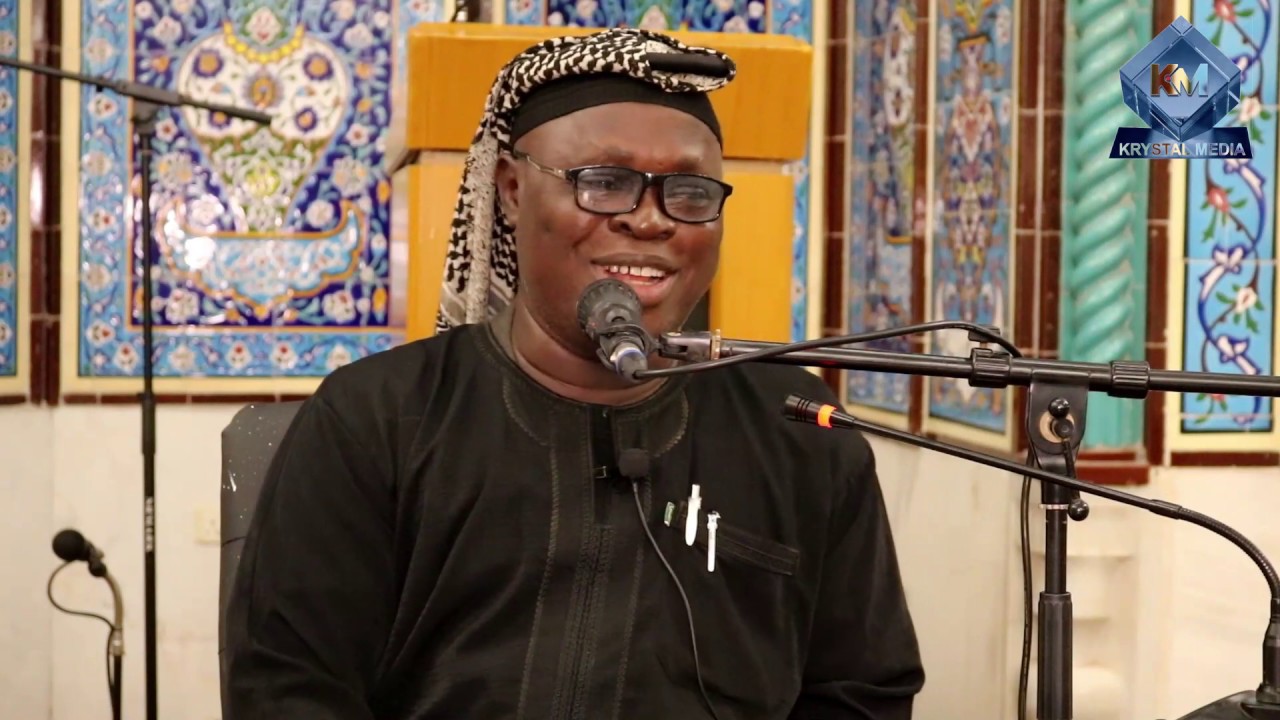
Postpone Olympics trial until after Sallah, MURIC tells AFN
The Athletics Federation of Nigeria has allegedly fixed the trial for the coming Olympics to start from 16th to 18th June, 2024. Meanwhile, the Muslim Rights Concern (MURIC) has rejected the chosen date for coinciding with Salah dates which is also 16th to 18th June, 2024.
MURIC described the development as an attempt to strangulate Muslim athletes and coaches and deny them the opportunity to compete with their Christian counterparts thereby opening the door wide open for an all-Christian Olympic team.
MURIC’s allegation came via a statement issued on Tuesday, 11th June 2024 by its Founder and Executive Director, Professor Ishaq Akintola.
The press release stated further:
“The Athletics Federation of Nigeria (AFN) has allegedly fixed the trial for the coming Olympics to start from 16th to 18th June, 2024. It is already public knowledge that the same 16th to 18th June, 2024 are the days of this year’s Salah.
“The Olympic trial entails test runs to pick the best athletes who will represent Nigeria at the Olympics. The 2024 Olympics will take place in Paris from Friday, 26th July to Sunday, 11th August, 2024.
“We reject the dates chosen by AFN for the trials because they coincide with Salah dates which are also 16th to 18th June, 2024. In actual fact, 17th and 18th are likely to be declared public holidays by the Federal Government in recognition of the Salah.
READ ALSO:
- Troops kill three terrorists in Zamfara, recover arms, rustled cattle
- Tinubu says new minimum ready for legislative action
- Appeal Court rejects Kanu’s move to challenge IPOB’s proscription
“This is an attempt to strangulate Muslim athletes and coaches and deny them the opportunity to compete with their Christian counterparts thereby opening the door wide open for an all-Christian Olympic team. It is christianisation of the sports sector.
“Instead of giving equal opportunities to all, our Christian neighbours always find one way or the other to edge out Muslims from various sectors. They are not ready to coexist peacefully. They are not prepared to share. They are not tolerant of people of other faiths, particularly Muslims.
“They prefer systematic elimination through the provision of alternative priority. They will deliberately fix examinations on Salah day or fix tests and important meetings during the Friday prayer (Jumu’ah) period, thereby daring Muslims in the system to choose between going for Salah or Jumu’ah prayer and failing the examination or test or missing the important meeting.
“Of course the average Muslim can only have one priority, not two and we all know what that priority will be. Who will choose to fail an examination that he has been preparing for over a long period of time and probably an examination that comes once in a life time?
“The average Christian has been conditioned to cause discomfort for Muslims wherever and whenever they have the ability to do so. This is the plague of Islamophobia sweeping all over Nigeria at present. Only the sober, liberal and God-fearing Christian is free of this virus called Islamophobia. We salute such saints.
“Already, Nigerian athletes have their eyes set on the Olympics. But their families are also putting pressure on them to celebrate Salah. In effect, they will not be able to concentrate fully on the trial if AFN holds the events during Salah. That means they will not be able to put in their best whereas their Christian counterparts will not have that challenge. AFN has succeeded in making the opportunities unequal. It is not fair. It is unjust. It is parochial.
“In the name of justice, fairness and equity, MURIC calls on the Athletics Federation of Nigeria to postpone the trial until after the Salah.”
#AthleticFederationOfNigeria
#NoToTrialInSalah
#MuslimFestivalsMatter
Professor Ishaq Akintola,
Founder/Executive Director,
Muslim Rights Concern (MURIC).






News
INEC: Chairman Joash Amupitan Has No X Account, Warns Against Fake Posts
INEC: Chairman Joash Amupitan Has No X Account, Warns Against Fake Posts
The Independent National Electoral Commission (INEC) has clarified that its Chairman, Joash Amupitan, does not operate any personal account on X (formerly Twitter), distancing him from controversial posts circulating online and allegedly linked to an impersonation account.
INEC’s clarification was reinforced by its ICT Director, Lawrence Bayode, during an appearance on Channels Television’s Morning Brief, where he confirmed that the commission had already issued an official statement addressing the issue.
Bayode stated that any content circulating under accounts claiming to represent the INEC chairman should be disregarded, stressing that such accounts are not recognised by the commission.
“Based on the official statement issued by the commission, the chairman does not maintain any personal X account. Any content attributed to such an account is not recognised by the commission as originating from him,” he said.
He explained that the controversy highlights a broader challenge of digital impersonation and misinformation, warning that false online identities can easily be used to mislead the public and damage trust in national institutions, particularly during sensitive political periods.
READ ALSO:
- Trump Claims 158 Iranian Ships Destroyed as US Enforces Naval Blockade in Gulf Region
- Wike Denies ADC Was Blocked From Using Eagle Square for Convention
- Judge Dismisses Trump’s $10bn Defamation Suit Against WSJ Over Epstein Report
According to him, INEC’s priority is to safeguard electoral integrity by ensuring that only verified and official communication channels are used for public information.
“And for me, this is not about an individual; this is about how digital impersonation and misinformation can target public institutions,” he added, emphasising the need for vigilance among citizens and media organisations.
INEC reiterated that the chairman’s official communications are released strictly through institutional platforms, including verified press statements, official briefings, and the commission’s corporate social media handles.
The clarification comes amid controversy over resurfaced posts attributed to a now-disputed X account allegedly linked to the INEC chairman. The commission insists the account is fake and should not be associated with its leadership.
INEC also urged Nigerians to verify information before sharing, warning that the spread of fake accounts and false statements could undermine public confidence in the electoral process.
The commission further called on social media platforms to strengthen measures against impersonation accounts, particularly those targeting high-ranking public officials and sensitive democratic institutions.
As political discussions intensify ahead of future elections, INEC said it remains committed to transparency, neutrality, and protecting the integrity of electoral communication in Nigeria.
INEC: Chairman Joash Amupitan Has No X Account, Warns Against Fake Posts
News
Tinubu Aide Defends Early INEC Statement Release on Amupitan Controversy
Tinubu Aide Defends Early INEC Statement Release on Amupitan Controversy
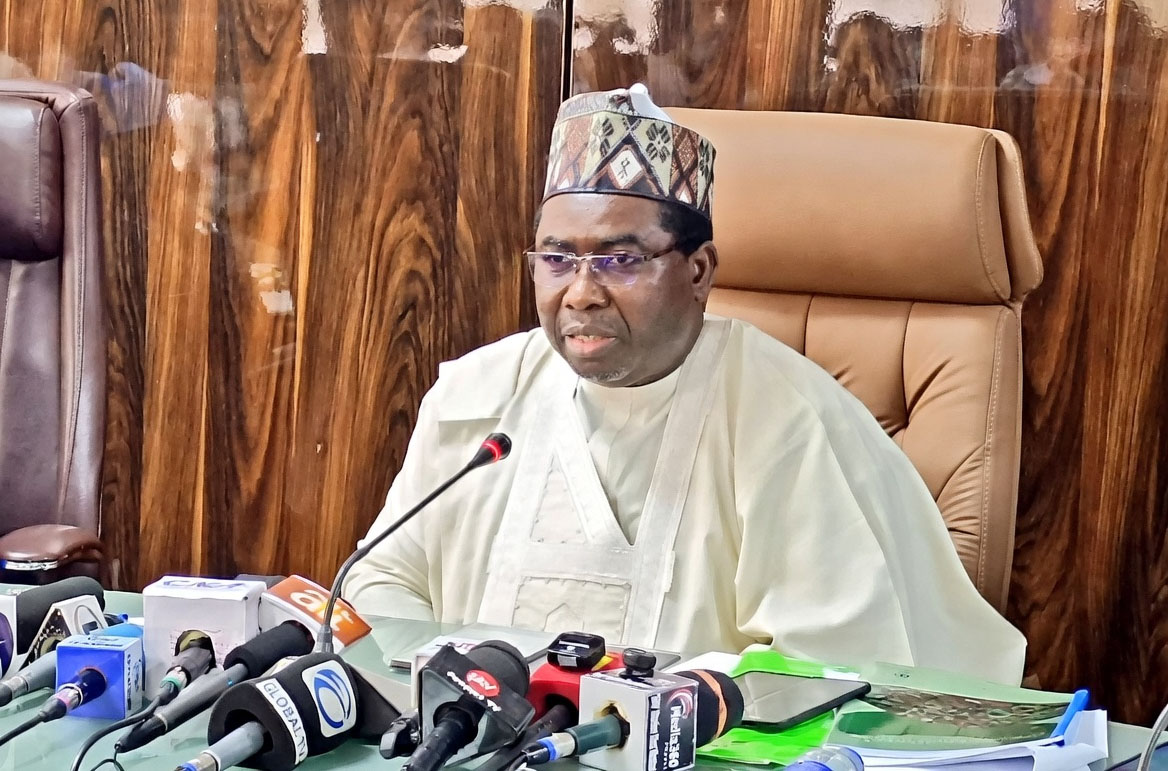
A presidential media aide, Dada Olusegun, has defended his decision to circulate a statement clearing the embattled Chairman of the Independent National Electoral Commission (INEC), Prof. Joash Amupitan, hours before it was officially released by the commission, saying his action falls within his responsibility to communicate government activities.
The controversy began after Olusegun posted on X (formerly Twitter) at about 8:12 pm on April 10, sharing a statement denying allegations that Amupitan had links to pro-government or pro-APC political activity during the 2023 general elections.
However, INEC reportedly published the same statement on its official platform the following day at about 6:16 pm on April 11, a timing gap that triggered public debate and questions about coordination between the presidency and the electoral body.
The development immediately sparked concerns online, with critics questioning why a presidential aide would publish a statement involving an independent institution before the commission itself, raising renewed discussions about the independence of INEC and institutional communication protocols.
Reacting to the backlash, Olusegun dismissed suggestions of wrongdoing, insisting that there was no conspiracy and that the similarity in messaging should not be misinterpreted.
READ ALSO:
- Nigeria-Kenya Comparison Won’t Solve Economic Crisis — Peter Obi Replies Tinubu
- Trump Sparks Global Outrage After Calling Pope Leo XIV “Weak, Terrible”
- INEC Chairman Under Pressure Over Alleged Pro-Tinubu X Account Link
“It is important to separate coincidence in messaging from conspiracy,” he wrote on X, adding that public institutions often respond to issues already in the public domain and that his post did not influence INEC’s official communication.
He further clarified that he did not author the statement and has no authority over INEC’s internal processes, stressing that his role is limited to communicating and defending the policies and image of President Bola Ahmed Tinubu’s administration.
“My role remains what it has always been: to communicate, clarify, and propagate the good works of President Tinubu’s administration responsibly,” he said.
Despite his explanation, the incident triggered widespread reactions on social media, with users questioning the timing of the publications and alleging possible coordination between the presidency and the electoral body.
Some commenters argued that the early release of the statement by a presidential aide could create public perception issues regarding electoral credibility in Nigeria, while others insisted it reflected deeper concerns about institutional independence.
The Independent National Electoral Commission has not issued any further clarification beyond its earlier denial of allegations linking its chairman to partisan political activity during the 2023 elections.
INEC has consistently maintained that its leadership remains neutral and that claims suggesting political bias are false and capable of undermining public trust in the electoral process.
The controversy has further fueled national debate over the boundaries between government communication, political messaging, and the independence of key democratic institutions in Nigeria, particularly ahead of future elections.
Observers say the incident highlights the increasing sensitivity of official communication in the digital era, where timing and perception can significantly shape public trust in institutions.
Tinubu Aide Defends Early INEC Statement Release on Amupitan Controversy
News
Nigeria-Kenya Comparison Won’t Solve Economic Crisis — Peter Obi Replies Tinubu
Nigeria-Kenya Comparison Won’t Solve Economic Crisis — Peter Obi Replies Tinubu
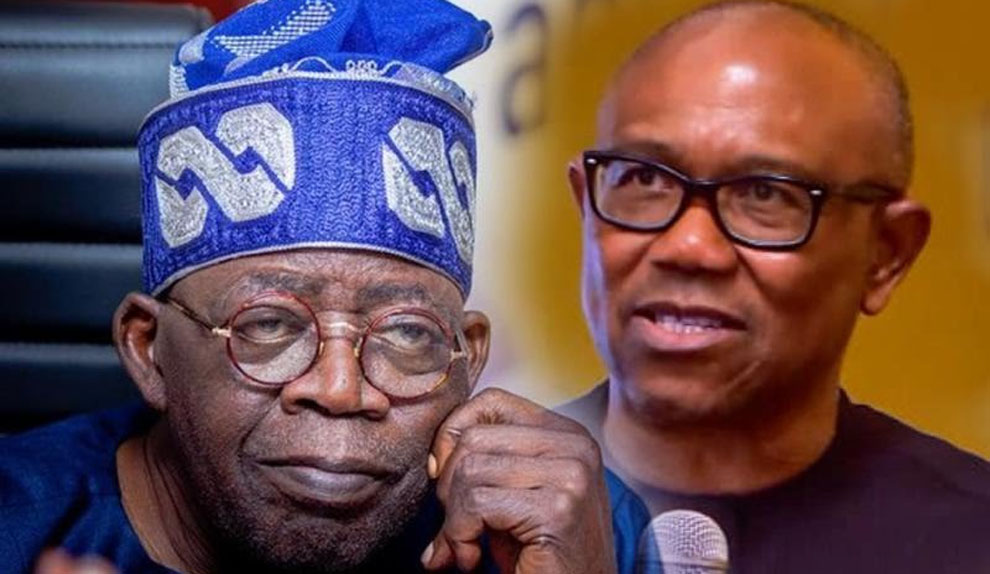
Former presidential candidate of the Labour Party, Peter Obi, has criticised President Bola Tinubu’s comments comparing Nigeria’s economic situation with Kenya and other African countries, insisting that such comparisons do not address Nigeria’s deepening economic challenges.
Obi said the focus should be on solving domestic problems rather than engaging in Nigeria-Kenya economic comparisons, especially at a time when Nigerians are grappling with rising inflation, unemployment, fuel costs, and declining living standards.
He made the remarks while reacting to President Tinubu’s statement in Yenagoa, where the President suggested that Nigeria remains relatively better positioned than some African countries despite its current economic difficulties.
According to Obi, what Nigeria urgently needs is economic reform driven by measurable data, not comparisons that attempt to offer comfort instead of solutions.
“Comparing Nigeria to Kenya or any other country will not fix our problems,” Obi said. “What Nigerians need are concrete solutions driven by measurable data, not statements that attempt to console rather than confront reality.”
Obi Cites Development Indicators to Support Position
Obi backed his argument with development statistics, claiming that Kenya performs better than Nigeria in several key human development indicators, including income levels, education, and healthcare outcomes.
READ ALSO:
- Trump Sparks Global Outrage After Calling Pope Leo XIV “Weak, Terrible”
- INEC Chairman Under Pressure Over Alleged Pro-Tinubu X Account Link
- 2027: Tinubu Knows Opposition Playbook, Always Ahead — Festus Keyamo
He stated that Kenya has a Human Development Index (HDI) score of about 0.630 compared to Nigeria’s 0.530, indicating a wider development gap between both countries.
He also noted that Kenya’s GDP per capita is estimated at about $2,200–$2,300, while Nigeria’s remains below $900, reflecting weaker income distribution and productivity levels.
On poverty levels, Obi said about 43% of Kenyans live below the poverty line, compared to around 63% of Nigerians, translating to a significantly larger number of people affected in Nigeria.
He further highlighted education challenges, stating that Nigeria has about 20 million out-of-school children compared to Kenya’s 3.5 million, alongside weaker infrastructure and electricity access.
In health outcomes, he added that life expectancy in Kenya stands at about 67 years, while Nigeria’s is approximately 54 years, showing significant gaps in healthcare delivery and social welfare systems.
“Statistics Are Not Optional in Governance” — Obi
Obi also criticised earlier remarks attributed to President Tinubu during the campaign trail, including the phrase “Na statistics we go shop?”, insisting that data-driven governance is essential for national development.
“Statistics are not optional; they are the language of development,” he said. “No country can plan effectively or measure progress without credible data and meaningful comparisons.”
He added that while international comparisons can be useful for policy evaluation, they must be applied honestly and not used to downplay domestic economic hardship.
Calls for Focus on Reform, Not Rhetoric
The former Anambra State governor urged the Federal Government to shift focus toward economic restructuring, job creation, productivity growth, and human capital development, rather than political narratives.
Obi said Nigeria must confront its realities with honesty and avoid what he described as “self-consolation politics,” warning that failure to do so would delay meaningful progress.
He maintained that while Kenya also faces its own challenges, Nigeria’s development indicators show deeper structural issues that require urgent policy attention.
“If we are serious about progress, we must face the truth and take responsibility,” he said.
Political analysts say Obi’s comments reflect growing public debate over Nigeria’s economic direction, governance performance, and the use of statistics in national policymaking amid rising cost-of-living pressures.
Nigeria-Kenya Comparison Won’t Solve Economic Crisis — Peter Obi Replies Tinubu

-
 metro2 days ago
JUST IN: FG Publishes List of 48 Individuals, Groups Linked to Terrorism Financing in Nigeria
-

 metro22 hours ago
BREAKING: Troops Arrest 15-Year-Old Linked to Killing of Gen Braimah in Borno
-
 metro2 days ago
42-Year-Old Married Woman Declared Missing Found in Hotel with Man
-
 Politics2 days ago
Did Faleke Just Reveal Lagos’ Next Governor? Party Moves Begin
-
 Politics2 days ago
2027: Oyo APC Governorship Aspirant Saheed Oladele Resigns From Party
-
 metro2 days ago
ADC Threatens Civil Disobedience To Force INEC Chairman To Resign
-

 Entertainment2 days ago
EFCC, Police Investigate Blessing CEO Over Alleged ₦300m Cancer Scam
-

 metro23 hours ago
Fayose Warns Makinde May Query Olubadan Over Absence at Ibadan Coronation Event