
Politics
Presidential system cannot work in Nigeria – Victor Attah

A former Governor of Akwa Ibom State, Obong Victor Attah, has said the presidential system of government cannot succeed in Nigeria.
He has therefore called for the scrapping of the system and the adoption of what will be suitable for the country.
He said Nigeria’s problem was beyond governance and that the country needed a rebirth.
Attah said this in an interview with journalists in Uyo on Wednesday while reacting to the issues around the nationwide #EndSARS protests.
He said Nigeria was better off when it operated a parliamentary system of government because the regions were autonomous, controlled their resources, police and only contributed to the central government.
Attah said the nation’s problem today was beyond governance, adding, “If you bring angels, (and I’m not blaspheming) to operate the system we have today, they would fail. The system is one that cannot succeed.”
He also said, “I call it rebirth. I want Nigeria to be reborn. Let’s give it a new birth, let it become what it was always supposed to be: a federal system and preferably, I say preferably because some people still feel enamoured with this Presidential system, I am not.
“The presidential system has become very oppressive. It seems it is in our nature to feel once you win an election, you are a conqueror, so you behave exactly as you please, nobody can talk to you, you don’t have to see anybody and that’s what is happening and we abuse it.
“That’s why I say we are not mentally prepared for this presidential system. We are not ready; that’s one of the reasons I say scrap it, go back to the parliamentary system. In the parliamentary system, if you have a good prime minister like Britain had Margaret Thatcher, you can come back four or five times if your people want you back.”











Politics
APC Rejects ADC Claims, Says Tinubu Not Responsible for Party’s Legal Troubles
APC Rejects ADC Claims, Says Tinubu Not Responsible for Party’s Legal Troubles
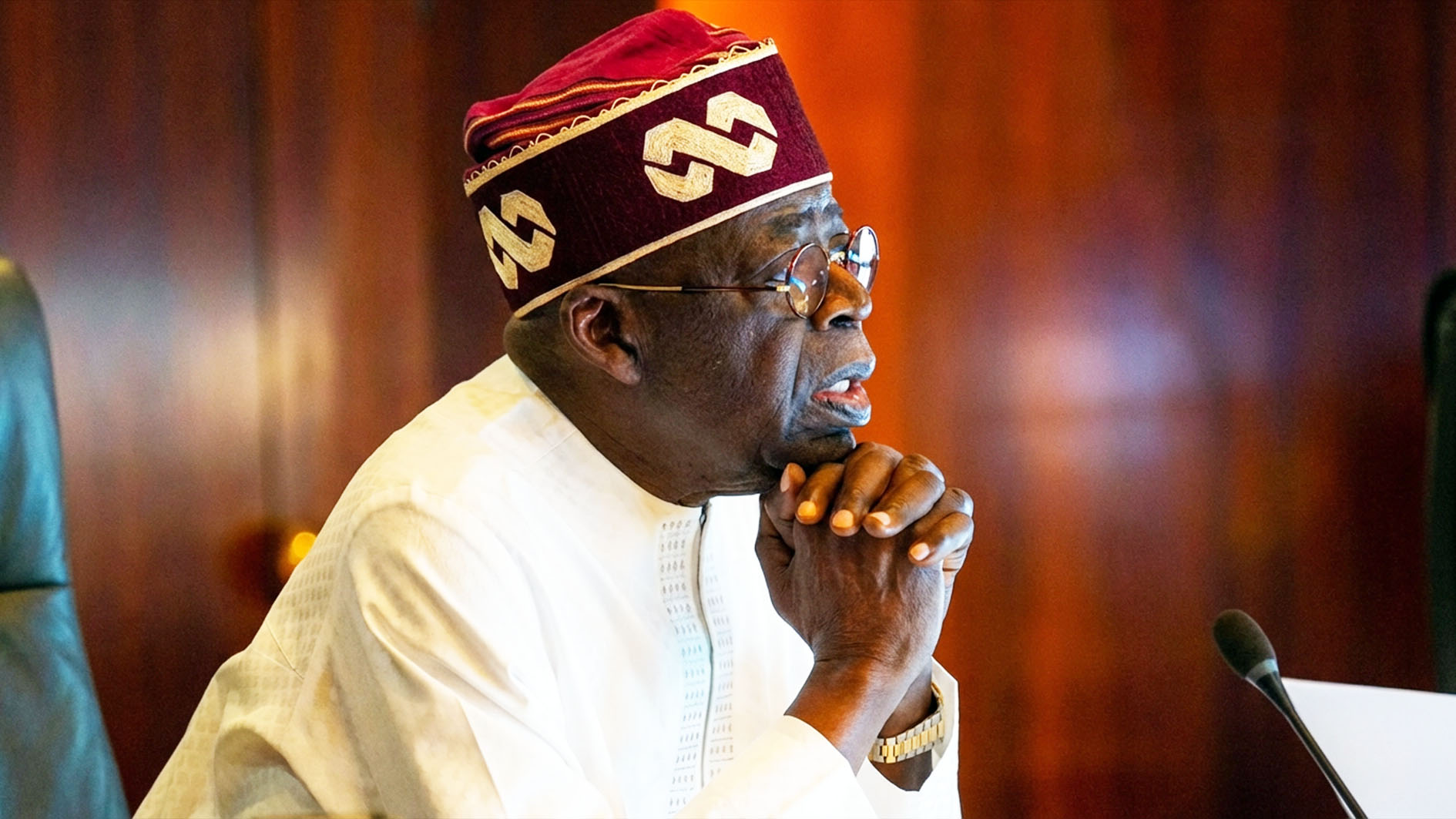
The ruling All Progressives Congress (APC) has fired back at the African Democratic Congress (ADC) faction led by David Mark, dismissing allegations that President Bola Ahmed Tinubu is working to weaken opposition parties ahead of the 2027 elections as “puerile propaganda” and “deliberate mischief.”
At a press conference in Abuja, APC’s National Working Committee (NWC), through National Secretary Surajudeen Ajibola Basiru and National Publicity Secretary Felix Morka, described the ADC’s criticisms as the desperate gasps of a party struggling with self-inflicted legal crises.
Addressing claims that the Presidency is stifling opposition, Basiru emphasised that President Tinubu is a democrat who respects the multi-party system. He noted that Nigeria currently has 19 registered political parties capable of contesting the 2027 elections, and stressed that Tinubu has no authority to deregister any party.
READ ALSO:
- Fani‑Kayode Fires Back at Peter Obi, Defends NADECO’s Legacy
- Presidency Clarifies Why Tinubu Met Plateau Victims Only at Airport
- Iran’s IRGC Threatens Google, Microsoft, Apple as ‘Legitimate Military Targets’
The APC explained that the ADC’s problems are the result of an internal leadership dispute. The Court of Appeal dismissed Mark’s appeal as “unmeritorious” and “procedurally flawed,” ordering all parties to maintain the status quo ante bellum regarding the leadership of the ADC. The APC said the Independent National Electoral Commission (INEC) was simply complying with the court order by withdrawing recognition of the Mark-led faction.
Basiru and Morka argued that blaming President Tinubu for the ADC’s challenges is fallacious and malicious propaganda. They also slammed the ADC’s call for the sacking of INEC Chairman Joash Amupitan and other commissioners, calling it preposterous and reckless.
The APC further warned that proceeding with congresses and national conventions while litigation is ongoing could encourage disorder. Basiru noted that internal party disputes have consequences, citing the APC’s own Zamfara State crisis, where the party lost previously won seats due to unresolved internal issues.
Describing the David Mark-led ADC as a “contraption of electoral unviability,” the ruling party reaffirmed its focus on governance and urged opposition parties to prioritise internal cohesion and legal compliance over public finger-pointing.
Political analysts say the clash reflects the broader struggle within Nigeria’s opposition parties and underscores the importance of internal democracy and legal compliance for political credibility ahead of the 2027 elections.
APC Rejects ADC Claims, Says Tinubu Not Responsible for Party’s Legal Troubles
Politics
ADC Crisis Deepens as Bala Denies Resignation, Insists on Chairmanship

ADC Crisis Deepens as Bala Denies Resignation, Insists on Chairmanship
The leadership crisis rocking the African Democratic Congress (ADC) has taken a fresh turn, as factional national chairman, Nafiu Bala, has firmly denied reports that he resigned from his position as deputy national chairman.
Bala’s reaction follows the recent decision of the Independent National Electoral Commission (INEC) concerning the protracted leadership tussle within the party.
In a viral video message delivered in Hausa, Bala dismissed as fake a document circulating online which purportedly showed that he resigned from his role as national vice-chairman on May 17, 2025.
“I wish to state that this paper did not come from me, and that is not my signature on it. The signature you see there was forged,” he said.
Bala, who identified himself as the acting national chairman of the party, maintained that his emergence followed the resignation of the party’s former leadership.
According to him, during a political event held on July 2, 2025, the then national chairman, Ralph Nwosu, alongside other members of the National Working Committee, stepped down and mandated him and others to oversee the party’s affairs pending the conduct of a national convention.
“On that same day, he told the world that I, along with other people, would continue running the party affairs until the national convention,” Bala stated.
He argued that, in line with the party’s constitution, he had since assumed leadership as acting national chairman, noting that a deputy is empowered to take over in the absence of a substantive leader.
Bala further insisted that any authentic resignation letter from him would have been issued on his official letterhead, stressing that the disputed document lacked such formal backing.
This is not the first time Bala has disowned the alleged resignation, having earlier, on August 1, 2025, described the document as “entirely false, deceptive, malicious and fake.”
Litigation Deepens Rift
The controversy over Bala’s status forms a critical aspect of the ongoing legal battle for the party’s leadership, involving former Senate President, David Mark.
Mark, who is leading a rival faction within the party, has maintained that Bala had indeed resigned from his position, stating that the resignation was officially communicated to INEC on August 12, 2025.
“It is on record that Gombe resigned this position on May 17, 2025,” Mark said, adding that Bala’s subsequent legal action came months after his alleged resignation.
The dispute escalated to the courts after Bala, on September 2, 2025, filed a suit at the Federal High Court in Abuja seeking to restrain Mark and his associates from parading themselves as leaders of the party.
He also requested the court to compel INEC to recognise him as the acting national chairman and to halt party activities, including meetings and conventions, pending the determination of the case.
The presiding judge, Emeka Nwite, subsequently directed that all respondents, including INEC, be put on notice.
Dissatisfied with interim proceedings, Mark approached the Court of Appeal to challenge the jurisdiction of the lower court.
However, in a ruling delivered on March 12, 2026, the appellate court dismissed Mark’s appeal in its entirety, describing it as incompetent and lacking merit.
INEC’s Position
The lingering crisis has significantly affected the party’s standing with INEC, which recently withdrew recognition of the ADC leadership and removed the names of the Mark-led executive from its official portal.
The development underscores the deepening factional divide within the party, raising concerns over its organisational stability ahead of future political engagements.
As both camps continue to assert legitimacy, the ADC remains embroiled in a protracted leadership battle, with legal and political uncertainties yet to be fully resolved.
ADC Crisis Deepens as Bala Denies Resignation, Insists on Chairmanship
Politics
Obi Criticises Former NADECO Figures, Compares Them to Abacha
Obi Criticises Former NADECO Figures, Compares Them to Abacha
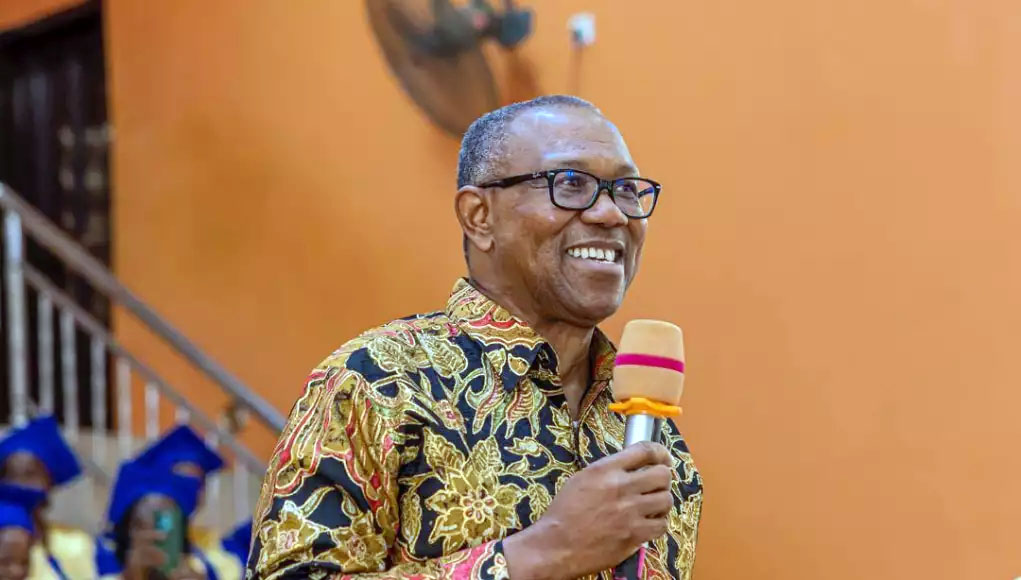
Former Anambra governor and opposition leader Peter Obi has sparked intense debate by asserting that Nigeria’s late military ruler, General Sani Abacha, demonstrated more democratic and respectful conduct than some individuals who once identified as pro-democracy activists during the NADECO era. The comments were made in a post shared on Obi’s X (formerly Twitter) account and come amid ongoing leadership disputes within the African Democratic Congress (ADC).
Obi, who ran as the Labour Party’s presidential candidate in 2023 and now plays a key role in the ADC, criticised what he described as the irony of history: “Yesterday defenders of democracy, today’s destroyers. What a shame.” He added that some former NADECO activists, once celebrated for their fight for human rights, have now become worse than the man they opposed.
He wrote: “Today, General Sani Abacha, once presumed face of oppression, will be remembered as seemingly more democratic and more respectful of human rights than the so-called champions of activism from the NADECO days. Power indeed reveals character.”
READ ALSO:
- 7‑Month‑Old Baby Killed in Brooklyn Stroller Shooting, Suspect in Custody
- Trump Leaves Key Questions Unanswered as Iran War Enters Second Month
- Police Detain Four Over Military Uniforms, Recover Arms
The remarks coincide with a major INEC intervention in ADC leadership, following a Court of Appeal ruling in Suit No. CA/ABJ/145/2026. INEC removed the names of Senator David Mark and former Osun State governor Rauf Aregbesola from its portal as national chairman and national secretary, respectively. The commission also declined to recognise Nafiu Bala Gombe, who is seeking court approval as national chairman. INEC said it would suspend recognition of affected officials and refrain from monitoring party conventions until the Federal High Court resolves the substantive case.
Obi’s comments have been met with mixed reactions. Supporters see them as a candid critique of political hypocrisy, highlighting how some former democracy champions have allegedly abandoned the principles they once defended. Critics, however, argue that comparing Abacha — whose regime was widely condemned for human rights abuses — to pro-democracy activists undermines Nigeria’s democratic legacy.
The National Democratic Coalition (NADECO) was formed in 1994 to demand a return to civilian rule after the annulment of the 1993 elections. Its members, including activists and politicians, played a pivotal role in opposing military dictatorship and advocating for democratic governance.
As the ADC navigates its internal leadership disputes and positions itself ahead of the 2027 general election, Obi’s remarks underscore ongoing debates about democratic accountability, political integrity, and the evolution of leadership in Nigeria.
Obi Criticises Former NADECO Figures, Compares Them to Abacha

-

 Railway2 days ago
Easter train: NRC increases Lagos-Ibadan trips, offers free Osun holiday transit
-

 Education3 days ago
JAMB Releases 2026 UTME Mock Results, Delists Over 20 CBT Centres
-

 Entertainment3 days ago
Iyabo Ojo Quits Mediation Between Funke Akindele, Toyin Abraham
-

 metro24 hours ago
VeryDarkMan Dares Sowore Over Blord’s Kuje Prison Remand
-

 metro1 day ago
Nigerians to Enjoy Four-Day Break as FG Declares Easter Holidays
-

 Politics3 days ago
Adebayo Adelabu Resigns as Power Minister to Run for Oyo State Governorship
-

 Business1 day ago
NNPC Boosts Crude Supply to Dangote Refinery to Address Rising Fuel Prices
-

 metro2 days ago
Power Crisis Looms as NLC Shuts AEDC, Protests Sack of 900 Workers
You must be logged in to post a comment Login