

metro
Protesters ground INEC headquarters, warn US, UK, others against promoting insurrection in Nigeria
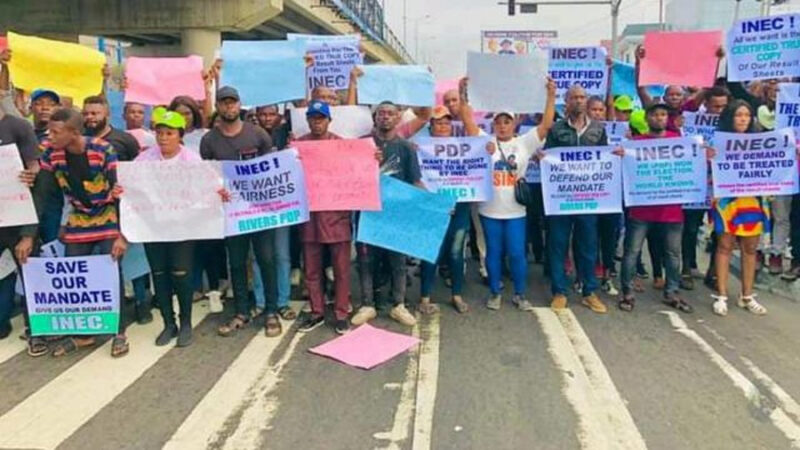
Protesters ground INEC headquarters, warn US, UK, others against promoting insurrection in Nigeria
Several Pro-Tinubu protesters, yesterday, grounded activities at the headquarters of the Independent National Electoral Commission (INEC) and passed a vote of confidence in the electoral umpire.
The protesters under the auspices of The Natives, also urged the United State of America, United Kingdom and the international community not to promote insurrection in Nigeria with their utterances on the already concluded February 25 presidential election.
The group warned that its 20 million members across the country would resist any form of intimidation and threat from supporters of the Labour Party (LP) and the Peoples Democratic Party (PDP) presidential candidates, Peter Obi and Atiku Abubakar respectively against the president-elect, Bola Tinubu.
Its Supreme Leader, Smart Edwards, who spoke during the presentation of their letter to INEC officials cautioned politicians to stop inciting Nigerians against each other and the democratic process. He said his group was at INEC to thank the commission for standing firm against intimidation, propaganda and all forms of blackmail by people he described as “bad losers.” He specifically cautioned LP vice presidential candidate, Yusuf Datti against making inflammatory statements.
READ ALSO:
- Father defiles 7-year-old daughter In Oyo
- Chinedu’s wife adds all husband’s side chicks to WhatsApp group chat + Audio
- Just in: Court grants Portable bail
“We want to particularly warn the LP vice president candidate, Datti-Ahmed to apply caution because Nigeria is a country not his Base University. We have come to INEC to affirm that elections were conducted and APC, PDP, NNPP, LP and other political parties went into the contest. Some people have been going round the country inciting other people, calling for a taboo, Interim National Government that will never happen, not in Nigeria, not in any African country that we support.
“America is currently handling insurrection against her own state, so we are certain that America, United Kingdom and other Nations will not promote insurrection in our Nation Nigeria.
“We want to tell INEC that people have their rights to protest, whosoever they are, they are citizens with such rights, but they do not have the rights to provoke the voters. It is a taboo for anybody under any influence of alcohol or any other substance to rise up and call for Interim Government in this Nation when we still have INEC intact. Elections were conducted by Nigerians, and these Nigerians include so many young people, citizens of Nigeria and not citizens of Russia, Dubai or any other country. It was conducted peacefully, some people won, while some lost.”
EDwards said the Tinubu and Kashim Shettima’s ticket scored the highest votes to win the poll and that results from the National Assembly elections also revealed LP, PDP and other parties won.
READ ALSO:
- Orji Kalu’s wife Ifeoma dies at 61
- Kia thrills with newest showstopper self-parking SUV, 2024 EV9
- BREAKING: El-Rufai imposes 24-hour curfew in Kaduna
- Half of US car shoppers to get EV this year – Report
“Tinubu has called for healing and because he has called for healing we as Natives, people who voted for him have listened to his message. That is why we are here waving our white handkerchiefs which signifies healing. Bola Tinubu is already preparing for May 29th handing over ceremony and because we are all brothers and sisters we know and believe that we can all work together to change our country.
“As far as we are concerned, we are asking the aggrieved people to leave INEC out of their frustration. They lost election and they should be good losers, or go to court if you cannot handle it and wait for the Supreme Court. Do not intimidate the CJN, don’t intimidate the security forces and stop threatening democracy,” he warned.
Responding while receiving a prepared letter addressed to the chairman, the commission’s Director of Security, Lebari Sam Nduh, assured that INEC would continue with its constitutional roles without bias of favour.
“We want to thank you for being very responsible in your protest. We want to thank you for bearing in mind that we have no other country to call our own than this country. We want to thank you for the civil manner you have conducted yourself.
“We want to assure you, on behalf of the management of INEC that your message will be delivered to the Chairman. It is not going to pass through any other source, the Director of Security himself will personally take it and deliver it to the Chairman who is my direct boss. I assure you that INEC will continue to do its optimum best all what the law ask it to do, that Nigeria will be greater,” Nduh said.
Protesters ground INEC headquarters, warn US, UK, others against promoting insurrection in Nigeria
Sun




metro
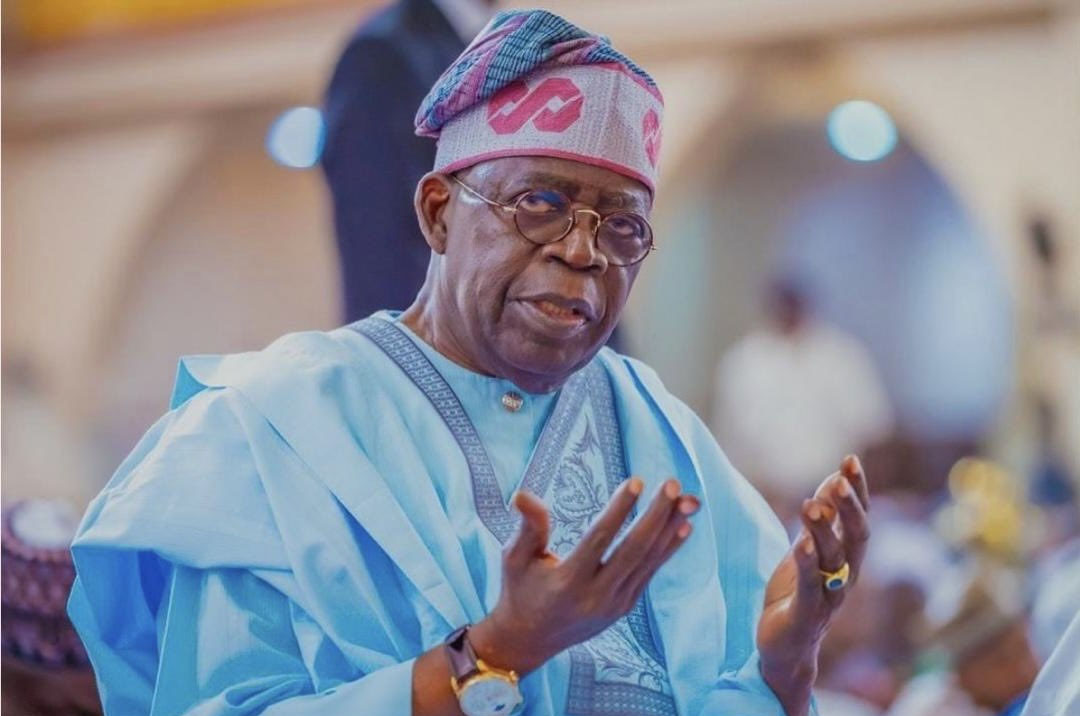
Tinubu Orders Full Probe Into 37 Miners’ Deaths in NSCDC Custody
Tinubu Orders Full Probe Into 37 Miners’ Deaths in NSCDC Custody
President Bola Ahmed Tinubu has ordered a full and transparent investigation into the deaths of 37 suspected illegal miners who died while in the custody of the Nigeria Security and Civil Defence Corps (NSCDC) in Minna, Niger State, saying the suspension of officers is only an administrative measure and will not replace criminal prosecution where evidence establishes wrongdoing.
The President’s directive followed growing public concern and protests over the deaths, which occurred after the victims were arrested during enforcement operations against suspected illegal mining in parts of Minna.
Tinubu said no Nigerian should lose their life in government custody as a result of negligence, abuse, inhumane treatment or dereliction of duty, stressing that people suspected of illegal mining retain their rights to life, dignity and humane treatment while in custody.
The victims were among scores of people arrested during operations conducted on September 15 and 16 around the M.I. Wushishi/Lukoto axis of Minna. The NSCDC said the operation was aimed at enforcing government measures against illegal mining and addressing concerns over mining activities affecting farmland and residential areas.
The NSCDC Niger State Command initially said some of the detainees were found dead in the early hours of September 17 following what it described as a suspected disease outbreak.
However, the corps has stressed that the actual cause of death has not been established and that medical and laboratory examinations are required before any conclusion can be reached.
The bodies were taken to the General Hospital in Minna for medical examination and autopsies, while the police and other authorities have commenced separate investigations.
Tinubu directed investigators to examine the circumstances surrounding the arrests, the condition of the detainees when they were taken into custody, the number of people held at the facility, the detention conditions, medical attention provided to them and the events leading to their deaths.
READ ALSO:
- BREAKING: Bloodbath at Pakistan Mosque as Suicide Blast Kills 21, Injures 103
- Xenophobia: FG Brings 33 More Nigerians Home From South Africa
- Falconets Thrash England 3-0, Face Colombia in U-20 World Cup Quarter-Finals
He also ordered the Ministry of Interior and NSCDC leadership to cooperate fully with all relevant investigative authorities and ensure that no officer interferes with the process.
The President specifically said the suspension of officers involved must not be regarded as a substitute for determining criminal responsibility.
Where investigations establish that an official contributed to the deaths through action, abuse or negligence, Tinubu directed that the person should be arrested and prosecuted in accordance with the law.
The Federal Government had already suspended the Niger State NSCDC Commandant, Suberu Siyaka Aniviye, following the incident.
Interior Minister Olubunmi Tunji-Ojo ordered the suspension and directed a comprehensive investigation into the circumstances surrounding the deaths.
The NSCDC Commandant-General, Professor Ahmed Audi, also constituted an investigative team headed by the Deputy Commandant-General in charge of intelligence and investigation.
The team is expected to examine the condition of the detainees when they were arrested, the period they spent in custody, the conditions under which they were detained and the medical attention they received.
The NSCDC has said it will refrain from speculating on the cause of death until the medical examination is completed.
The controversy has been heightened by accounts from survivors and relatives of the victims.
A survivor identified as Dauda Shehu told the Associated Press that about 65 detainees were packed into a poorly ventilated cell and that those inside struggled to breathe before several people died.
Another survivor alleged that a substance was sprayed inside the cell before people began collapsing.
Those accounts have not established the cause of death, and authorities have not confirmed the allegations. The medical and forensic investigations are expected to determine whether overcrowding, ventilation problems, illness, exposure to a hazardous substance or another factor contributed to the deaths.
The deaths have also prompted calls for an independent investigation from Amnesty International, which said the victims included minors and urged authorities to establish how the detention of the suspects resulted in the deaths.
The organisation called for a prompt, thorough, independent, impartial and transparent investigation and said anyone found responsible should face justice.
READ ALSO:
- Replace Fuel Subsidy With Vehicle Credit to Drive Mobility, Jobs,LCCI, Ilekuba tell FG
- Tinubu, Macron Hold Private Dinner in Paris, Reaffirm Nigeria-France Ties
- Federal Workers Urge Finance Ministry to Pay Delayed Allowances, Promotion Arrears
The incident has also triggered protests in Minna, with residents and relatives demanding answers over the deaths.
Security forces were deployed as protesters gathered around government and NSCDC facilities. Reports said police used tear gas to disperse demonstrators, while other reports indicated clashes and damage to property during the unrest.
The Niger State Government subsequently imposed a 24-hour curfew in Minna following the protests and reported destruction of public and private property.
Governor Mohammed Umaru Bago also suspended mining activities across the state as part of measures announced in response to the incident and wider security concerns.
The governor had earlier declared three days of mourning for the victims and constituted a committee of inquiry to investigate the circumstances surrounding the deaths.
Bago said the committee would work with medical and forensic experts to establish what happened, cautioning against reaching conclusions before the completion of the examinations.
The state government is also compiling information on the deceased to assist with identification and contact with their families.
The Nigeria Police Force has opened a separate investigation into the deaths.
Inspector-General of Police Olatunji Disu has visited Niger State as part of efforts to understand the circumstances surrounding the incident. The police have urged relatives of the deceased and members of the public with credible information to cooperate with investigators.
The Federal Government has also deployed a team to Niger State to assist with the investigation.
The tragedy has raised broader concerns about custodial conditions, detention procedures and accountability within security agencies, particularly where suspects are detained during enforcement operations.
The incident has also renewed debate about the enforcement of the government’s campaign against illegal mining.
Authorities have intensified operations against unlicensed mining in several parts of Nigeria, citing environmental degradation, destruction of farmland and concerns that illegal mining networks can provide financial support to armed criminal groups.
The Tinubu administration has maintained that the fight against illegal mining will continue, but the President has stressed that enforcement agencies must operate within the law.
He said the government must not allow the pursuit of one form of illegality to create another violation.
The President’s position is that suspected illegal miners must be subjected to due process and humane treatment regardless of the allegations against them.
Meanwhile, the exact circumstances surrounding the deaths remain unresolved.
The NSCDC’s initial reference to a suspected disease outbreak has not been established as the cause, while survivor accounts have raised questions about overcrowding and ventilation.
There have also been allegations of exposure to an unidentified substance, but these remain unverified.
The results of the autopsies, medical examinations and forensic investigations will therefore be crucial in establishing what happened to the detainees and determining whether any individual or institution bears responsibility.
The tragedy has also prompted calls for the identities and detention records of the victims to be made public and for families to receive appropriate support if wrongdoing is established.
President Tinubu has extended condolences to the families of the deceased and appealed for calm, assuring affected communities that the Federal Government will pursue the truth and take appropriate action based on credible evidence.
The President has made clear that the suspension of the NSCDC commandant is not the final step.
If the investigations establish criminal responsibility, those found culpable are expected to face prosecution, while the findings could also lead to further administrative or institutional measures concerning NSCDC detention practices and the treatment of suspects in custody.
Tinubu Orders Full Probe Into 37 Miners’ Deaths in NSCDC Custody
metro
Xenophobia: FG Brings 33 More Nigerians Home From South Africa
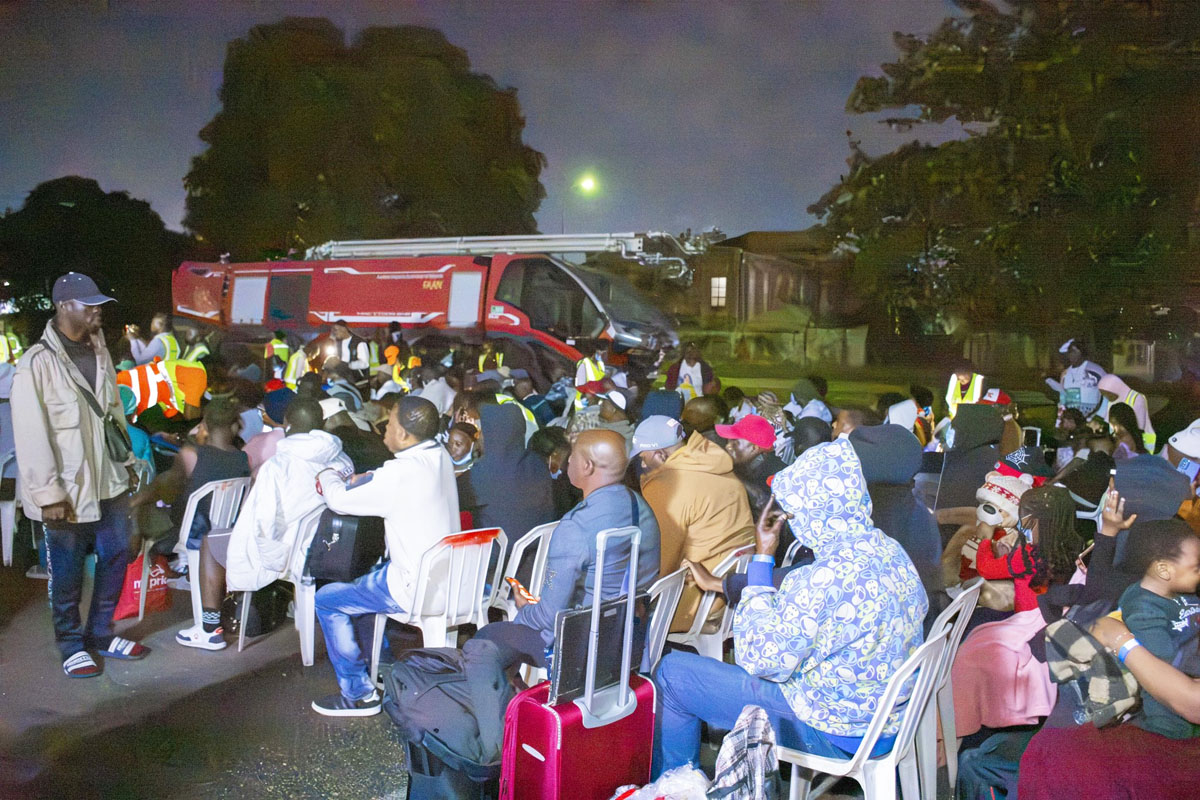
Xenophobia: FG Brings 33 More Nigerians Home From South Africa
The Federal Government has facilitated the return of another 33 distressed Nigerians from South Africa, bringing to 1,716 the number of Nigerians repatriated under the ongoing consular evacuation exercise since June 10, 2026.
The latest group, comprising 17 adults and 16 minors, arrived in Nigeria aboard South African Airways flight SA060 at about 8:30 p.m. on Wednesday, September 16.
Officials of the Federal Ministry of Foreign Affairs, the Nigerians in Diaspora Commission (NiDCOM), the National Agency for the Prohibition of Trafficking in Persons (NAPTIP) and other government agencies received the returnees upon arrival.
The latest operation is the 12th consular evacuation from South Africa since the exercise began in June, as the Nigerian government continues efforts to assist citizens who have become distressed or vulnerable in the country.
According to the government, it has fully funded the evacuation of 1,388 Nigerians, representing about 81 per cent of the total number repatriated so far.
The latest batch was supported through private funding initiatives involving Nigerian organisations and individuals.
The Private Nigerian Group of Business Friends (PNGBF) funded the return of 26 of the 33 Nigerians, while the Nigerian Lawyers Association in South Africa (NLASA) supported five others. A private citizen from Bayelsa State also funded the return of three Bayelsa indigenes.
Another 28 Nigerians were recently assisted to return home by the Igbo Lawyers Association South Africa.
The continued repatriation comes amid growing concerns over xenophobic and Afrophobic attacks involving Nigerians and other African nationals in South Africa.
READ ALSO:
- Falconets Thrash England 3-0, Face Colombia in U-20 World Cup Quarter-Finals
- Replace Fuel Subsidy With Vehicle Credit to Drive Mobility, Jobs,LCCI, Ilekuba tell FG
- Tinubu, Macron Hold Private Dinner in Paris, Reaffirm Nigeria-France Ties
The Federal Government has said it is concerned about the safety and security of Nigerians living in the country and has raised the issue at regional and continental levels, including with the ECOWAS Authority of Heads of State and Government and the African Union Assembly of Heads of State and Government.
The government has also indicated that it is considering further measures to secure stronger cooperation from South African authorities in addressing attacks and protecting the rights and dignity of Nigerians in the country.
The latest evacuation also follows reports of the deaths of two Nigerian nationals in South Africa earlier in September.
The Nigerian Foreign Ministry identified the victims as James Uchechukwu Nwankwo, who died in Cape Town on September 5 following what Nigerian authorities described as alleged abusive interrogation by South African police officers, and Bishop Taiwo Michael Fakunle, who was killed at his residence in Kensington, Johannesburg, on September 4.
The circumstances surrounding both deaths have generated concern in Nigeria, with authorities calling for appropriate investigations and accountability.
The incidents have further strained concerns surrounding Nigeria-South Africa relations, particularly over the safety of Nigerians living and doing business in South Africa.
Nigeria’s National Assembly has also suspended official visits to South Africa and boycotted legislative activities hosted by the South African Parliament amid concerns over the safety of Nigerians and other bilateral issues.
The Federal Government has meanwhile urged Nigerians still living in South Africa to remain vigilant, obey local laws and maintain contact with the Nigerian High Commission in Pretoria and the Nigerian Consulate General in Johannesburg whenever they require consular assistance.
The government has also appealed to state governments to complement its efforts by assisting their indigenes who want to return home.
Minister of State for Foreign Affairs Bianca Ojukwu said some Nigerians returning from South Africa had been forced to leave behind properties, businesses and other livelihoods because of the difficult circumstances they faced.
She has also commended state governments and private organisations supporting Nigerians returning to the country.
Among them is the Enugu State Government, which recently received 77 families comprising 112 indigenes returning from South Africa and provided financial assistance to help them rebuild their lives.
Nigeria’s Acting High Commissioner to South Africa, Temitope Ajayi, has also said that more than 1,600 Nigerians had returned through government sponsorship and various private interventions.
Ajayi noted that the challenges affecting Nigerians in South Africa extend beyond xenophobic attacks, explaining that some Nigerians who entered the country legally later encountered difficulties with residence documentation because of delays within the immigration system.
The Federal Government has continued diplomatic engagement with South African authorities while supporting Nigerians who voluntarily seek to return home.
The arrival of the latest 33 returnees brings the total number repatriated since June 10 to 1,716, highlighting the scale of the ongoing government and community response to concerns affecting Nigerians in South Africa.
The government is expected to continue monitoring the situation while pursuing diplomatic measures aimed at improving the safety and welfare of Nigerians who remain in the country.
Xenophobia: FG Brings 33 More Nigerians Home From South Africa
metro
Nigeria Wins $3.38bn Mambilla Arbitration Battle As ICC Rejects Sunrise Claims
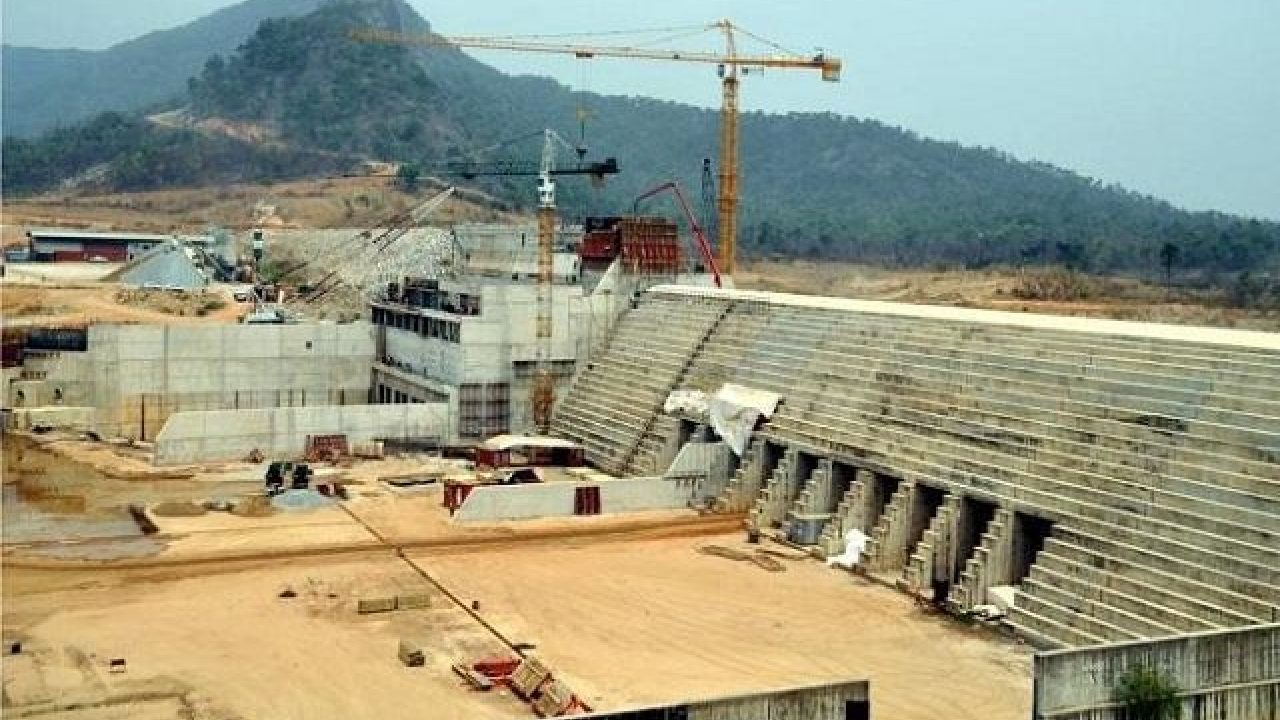
Nigeria Wins $3.38bn Mambilla Arbitration Battle As ICC Rejects Sunrise Claims
Nigeria has won a major international arbitration battle over the long-delayed Mambilla Hydroelectric Power Project, after an International Chamber of Commerce (ICC) tribunal in Paris rejected claims by Sunrise Power and Transmission Company Limited that had put the country’s potential financial exposure at more than $3.38 billion.
The ruling, issued on September 17, 2026, is a significant development for the proposed 1,500MW Mambilla power project in Taraba State, which has been stalled for years by a combination of legal, contractual, financing and implementation challenges.
President Bola Ahmed Tinubu welcomed the decision, describing it as the removal of what he called the biggest legal obstacle to the project’s progress.
The dispute dates back to a 2003 agreement concerning the development of the Mambilla project. Sunrise Power subsequently commenced arbitration proceedings against Nigeria at the ICC in October 2017, initially seeking about $2.35 billion over an alleged breach of contract.
The parties later entered into a settlement agreement in 2020 under which Nigeria was to pay Sunrise $200 million. A subsequent disagreement over the implementation of that agreement led to another arbitration.
In the latest proceedings, Sunrise sought about $680 million, including the settlement sum and interest. A separate claim connected to disputes over the development of the Mambilla project was valued at more than $2.7 billion in compensation and interest.
Together, the related claims created potential exposure of more than $3.38 billion for Nigeria.
The ICC tribunal rejected Sunrise’s claim that Nigeria had breached its obligations under the settlement agreement and its addendum. It also dismissed the company’s request for Nigeria to pay $400 million, comprising the $200 million settlement sum and an additional $200 million claimed as a default payment.
READ ALSO:
- 2027: Sowore Says He’d Rather Die Than Travel Abroad For Medical Treatment
- Toyin Abraham Rejects Lagos APC Campaign Council Inclusion
- FG Suspends Niger NSCDC Commandant As 37 Suspected Illegal Miners Die In Custody
The tribunal further held that Leno Adesanya, the promoter of Sunrise Power, was bound by the arbitration agreement under the settlement arrangement. It also confirmed its jurisdiction over Nigeria’s counterclaim against Adesanya and his firm.
Rather than ordering Nigeria to pay the amounts sought by Sunrise, the tribunal directed Sunrise and Adesanya to reimburse Nigeria for 75 per cent of its legal fees and expenses incurred in the arbitration.
The legal costs were assessed at approximately $11.82 million. About $2.5 million is expected to be recovered from funds held in escrow by the ICC, while Sunrise and Adesanya are required to pay the remaining $9.32 million, with interest at 10 per cent annually, compounded annually, from notification of the final award until payment.
The tribunal also fixed the arbitration costs at approximately $1.66 million, with Sunrise and Adesanya responsible for 75 per cent and Nigeria responsible for the remaining 25 per cent.
The three-member tribunal was chaired by Melaine van Leeuwen, with Stavros Brekoulakis and Simon Nesbitt serving as co-arbitrators. Nigeria’s external legal team was led by Elizabeth Oger-Gross and Tolu Obamuroh of Paul Hastings LLP.
The outcome ends a major phase of a dispute that has followed the Mambilla power project for nearly a decade in international arbitration and more than two decades from the original project agreement.
The original proposal envisaged a 3,050MW hydroelectric plant in Taraba State under a build-operate-transfer arrangement. The project was subsequently revised as the government sought to reduce its cost and improve its prospects of attracting financing.
In 2021, the Federal Government announced that the planned capacity would be reduced by about half, from 3,050MW to approximately 1,525MW. The scheme was subsequently rescoped to around 1,500MW to make it more financially viable and “bankable” for lenders.
The original project had been associated with an estimated cost of roughly $5 billion to $5.8 billion, while the rescoped project has been put at around $4 billion in previous government discussions.
The prolonged delay has meant that the Mambilla scheme has yet to become an operational source of electricity despite its potential to significantly increase Nigeria’s generation capacity.
President Tinubu, in his reaction to the ICC ruling, commended Attorney-General of the Federation and Minister of Justice, Lateef Fagbemi, officials of the Federal Ministry of Justice and Nigeria’s external legal team for their role in defending the country.
He also acknowledged former President Olusegun Obasanjo and the late former President Muhammadu Buhari, who testified during the arbitration proceedings, as well as former Ministers of Power Babatunde Fashola and Suleiman Adamu and other witnesses and experts.
Tinubu also credited the National Security Adviser and the Economic and Financial Crimes Commission (EFCC) for their roles in the broader matter.
The President said Nigeria remained committed to working with genuine investors and honouring its legal obligations while defending the country against claims it considers detrimental to the national interest.
The original 2003 contract has also been the subject of separate domestic legal proceedings and investigations. Tinubu said the contract was not authorised by the Federal Executive Council (FEC). Those domestic proceedings are distinct from the ICC arbitration, which has now been decided in Nigeria’s favour.
The arbitration victory, however, does not mean that the 1,500MW Mambilla project is immediately ready for construction or electricity generation.
The government still has to address major issues involving project financing, construction, engineering, transmission infrastructure and implementation arrangements. Previous plans have included financing discussions involving the Export-Import Bank of China, while the project’s restructuring was intended to improve its bankability.
With the arbitration dispute now resolved, the focus shifts to securing the funding and completing the arrangements required to move the Mambilla project from a long-delayed proposal to actual construction and, ultimately, electricity generation.
Nigeria Wins $3.38bn Mambilla Arbitration Battle As ICC Rejects Sunrise Claims
-

 International3 days ago
Islamic Council Condemns Attempted Attack on Holy City of Mecca
-
 News3 days ago
Keep Politics Out of My Office — Ogbomoso Grand Chief Imam Warns Politicians, Bloggers
-

 metro2 days ago
Niger Mosque Abductions: Terrorists Execute 30 of 500 Captive Muslim Worshippers
-
 Business2 days ago
Fuel Prices Climb to ₦1,500 per Litre Across Nigeria, Sparking Calls for Urgent Action
-

 News2 days ago
Blue Line Rail, Hospitals Get Boost as Lagos Approves ₦200bn Bond and Budget Reordering
-
 Entertainment3 days ago
BREAKING: Olu Jacobs Dies at 84, Atiku Mourns Cultural Icon
-
 News2 days ago
OAU Investigates Death of Final-Year Student as Police Begin Probe
-
 News17 hours ago
ECOWAS Biometric Card Expands as Seven Countries Begin Rollout