
Business
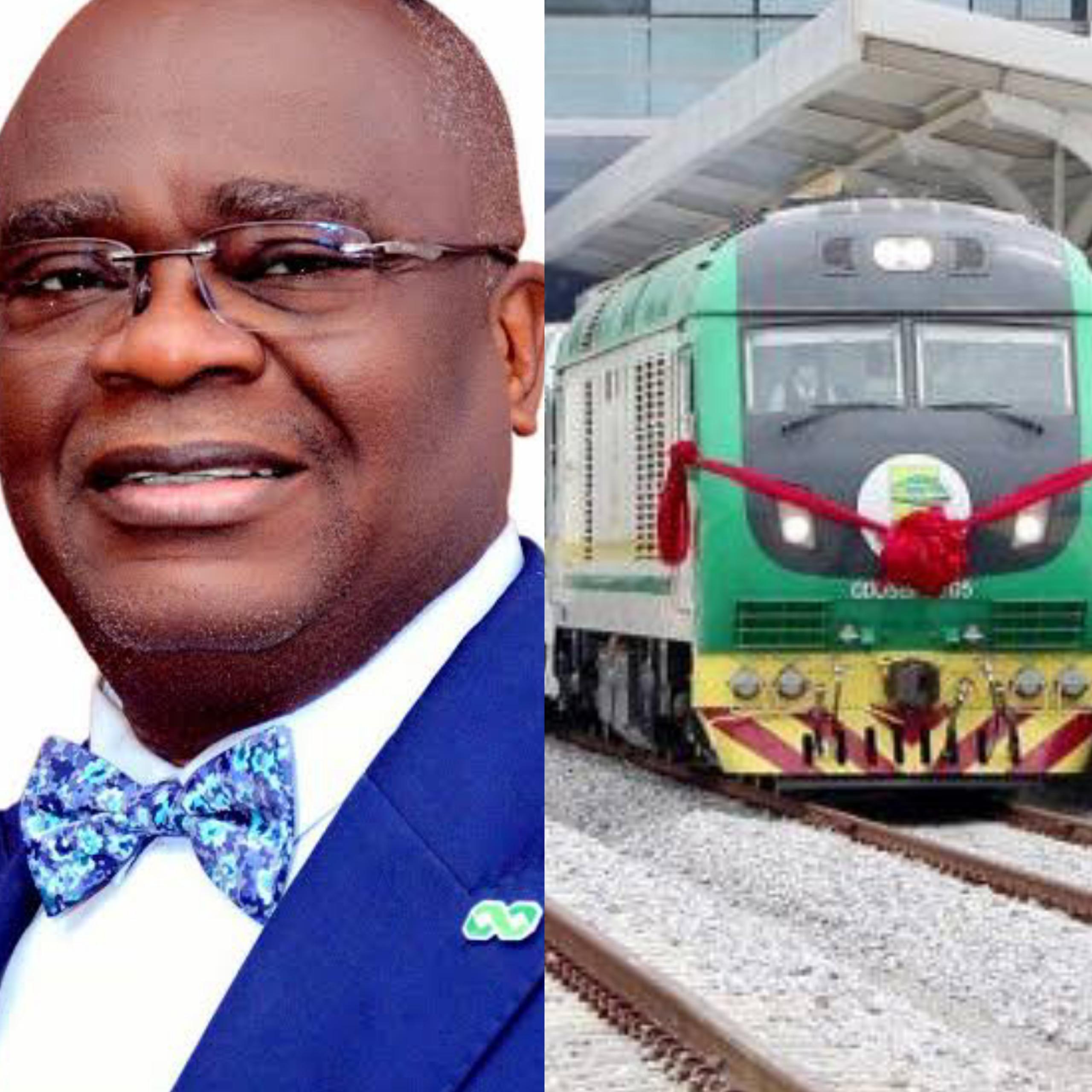
Report: Suspended NPA MD being probed over N165.3bn unremitted funds
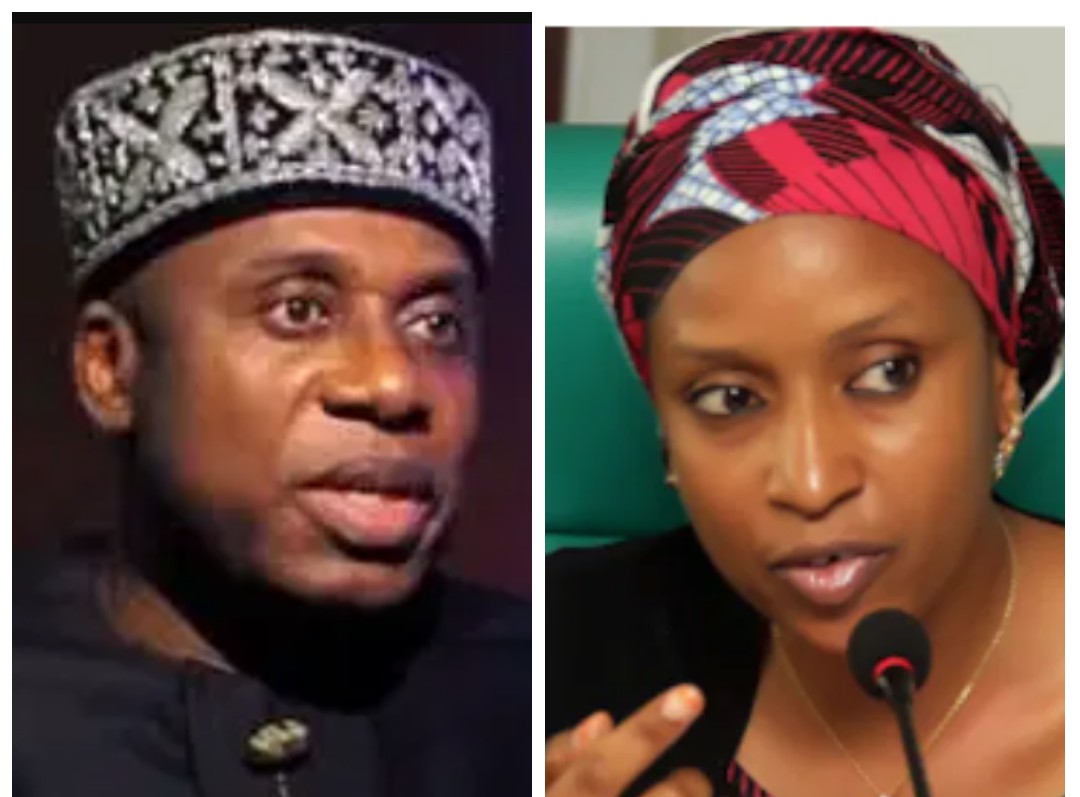
- Hadiza Bala-Usman insists NPA remitted all surplus funds
The suspended Managing Director of the Nigerian Ports Authority, Hadiza Bala-Usman, will early next week appear before a probe panel over N165.32bn she allegedly failed to remit to the Consolidated Revenue Fund.
The panel headed by a director in charge of maritime at the Federal Ministry of Transportation may also expand its probe to audit the accounts of the NPA, a Daily Trust report has stated.
Bala-Usman was suspended as NPA MD and was immediately replaced with an acting MD via a statement on Thursday by a presidential spokesman, Garba Shehu.
The travail of the suspended NPA boss is said to be a fall-out of a cold war between her and Minister of Transportation Rotimi Amaechi, who reportedly accused her of ‘bypassing’ him in key decisions of procurement and other major official matters.
Daily Trust reported that the latest quarrel was around the reappointment of the MD and constitution of the new board of the NPA without Amaechi’s input.
Amaechi, in a letter to President Muhammadu Buhari dated March 4, 2021, had called attention to the audit report of the NPA account, especially the unremitted operating surpluses between 2016 and 2020, as flagged by the Budget Office of the Federation.
The letter entitled ‘Remittances of operating surplus to the Consolidated Revenue Fund Account (CRF) by the Nigerian Ports Authority from 2015-date’, was signed by the minister.
It read in part, “It has been observed from the records submitted by the Budget Office of the Federation that the yearly remittance of operating surpluses by the Nigerian Ports Authority from year 2016 to 2020 has been far short of the amount due for actual remittance.
“In view of the above, I wish to suggest that the financial account of the activities of Nigerian Ports Authority be investigated for the period 2016 to 2020 to ascertain the true financial position and the outstanding unremitted balance of One hundred and sixty five billion, three hundred and twenty million, nine hundred and sixty two thousand, six hundred and ninety seven naira only (N165,320,962 697).”
The minister asked the President to approve the audit of the NPA accounts, adding, “approve that the account and remittance of the NPA in the period of 2016 – 2020 be audited to account for the gross shortfall of remitted public funds.”
The minister’s request, according to the minutes on the one-page document by the President, was approved on the 17th March, 2021.
According to the Audit Report for 2017 released by the Office of the Auditor General of the Federation (OAGF) in December 2019, the NPA was queried over alleged irregularities in contract awards and payments.
The report by the accountant- general office said in its findings that about N7.5bn in contract sum was not properly accounted for at the NPA under Bala-Usman.
The document said the NPA awarded the contract for Shore Erosion Control Work at Akipelai, Ayakoro and Otuoke towns in Bayelsa State for N7.5bn.
The audit report suggested that as of November 11, 2015, about N4.24bn was paid to contractors in four payments certificates. That represented about 56.61 per cent of the contract amount.
The audit report had indicated that a “review of documents and the Bill of Quantities under Bill No. 1 (General) attached to the payments revealed that mobilisation fee of N1.12bn paid to the contractor was supported by a conditional bank guarantee from Zenith Bank Plc with a validity period of 365 days.”
The report said the “guarantee, which expired on March 2, 2013, was contrary to the provisions of Section 35(1a) of the Public Procurement Act, 2007 and Financial Regulations 2933 ’i’ (2009) which provided for submission of an unconditional bank guarantee or insurance bond.”
It also stated, “The sum of N19.5m was paid for the purchase of three Toyota Hilux vehicles without any evidence that the vehicles were purchased.”
It found that the sum of “N13.5m was provided as an annual running cost for the project vehicles, out of which N6.75m was certified and paid to the contractor without evidence it was quoted for.”
The report added, “The sum of N11.25m certified for compensation of properties to be affected by a project and paid in certificate No.3 had no records on how the money was utilised nor the beneficiaries involved.
“The sum of N12.5m provided for community relations was certified and paid vide certificate No. 3 with no supporting documents to validate the payment.
“The sum of N128m provided for insurance of the work and insurance against damages to persons and properties was certified and paid through certificate No. 3 with no evidence that any insurance policy was undertaken.?
The auditor-general also found that while N3.9bn was the value of work executed for the contract based on the Principal Manager’s report on Interim Valuation Certificate No. 4 dated November 11, 2015, about N4.24bn was the amount paid.
“During the inspection of the project, it was revealed that the contractor had since abandoned the project site; and the duration of the project had since lapsed without approval for its extension,” the report added.
The audit report recommended that the managing director of the NPA should be sanctioned in line with extant regulations for these infractions.
Bala Usman: NPA remitted all surplus funds
But Hadiza Bala-Usman has denied any wrongdoing.
In a letter dated May 5, 2021 addressed to the Chief of Staff to the President, Prof Ibrahim Gambari, Bala-Usman said the purported failure of the NPA to remit an outstanding balance of N165.32 billion from 2017 to 2018 was a misrepresentation of facts.
She said contrary to the figures given by the budget office as outstanding operating surplus, the NPA had remitted all that was due to the CFR — as stipulated in the fiscal responsibility act of 2007.
She faulted the net profit as listed by the budget office, saying it was in excess of the actual amounts and that it was contrary to the template provided by the fiscal responsibility act.
She stated, “Accordingly, the figures so provided by the Budget Office of the Federation as the Operating Surplus for the respective years on which basis they arrived at the shortfall are derived from submission of budgetary provision not the actual amounts derived following the statutory audit of the Authorities financial statements,” she said.
The statement read in part, “The authority’s (NPA) computation of its remittances to the CFR are concluded arising from numbers from Audited Financial Statements using the template forwarded to the Authority from the Fiscal Responsibility Commission as herewith attached and not budgetary provision.
“The authority has remitted the full amount due to it to CFR for the periods of 2017 and 2018 arising from the Operating Surplus derived from the Audited Financial Statement for the period totalling N76.384 billion as evidenced in attached treasury receipts.
“The authority has remitted a total of N82.687 billion for the period 2019 and 2020 pending the audit of the financial statement at which point the amount so computed arising from the value of the Operating Surplus in the audited financial statement will be remitted to the CFR.”
We’ve not been indicted – NPA
The General Manager, Corporate and Strategic Communications of the authority, Jatto Adams, in a statement on Friday said the NPA was not indicted.
He said, “While audit queries are part of the standard operating procedures to entrench accountability in government Ministries, Departments and Agencies, the NPA has, at this moment, not received queries of the nature being circulated in the media.
“The management of the authority has answered audit queries to the satisfaction of the Office of the Auditor-General of the Federation in past years and is committed to providing evidence that all our operations have followed due process in the event of any queries in the future.”








Railway
FG pushes high-speed train, expands rail links to seaports
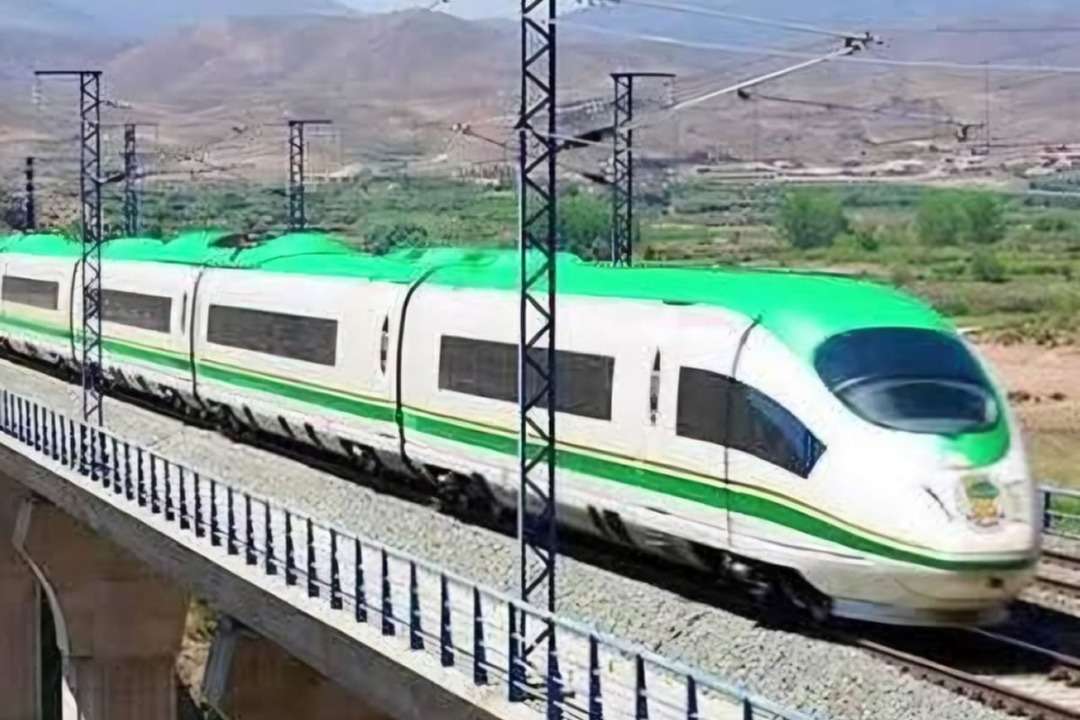
FG pushes high-speed train, expands rail links to seaports
The Federal Government has intensified efforts to modernise Nigeria’s rail system, setting up a high-speed rail committee and approving the expansion of rail connections to key seaports to boost cargo movement and ease logistics bottlenecks.
Managing Director of the Nigerian Railway Corporation (NRC), Kayode Opeifa, disclosed this at the quarterly stakeholders’ engagement of the Nigerian Ports Consultative Council.
In a statement by the NRC’s Chief Public Relations Officer, Callistus Unyimadu, Opeifa said the Office of the Secretary to the Government of the Federation had constituted a committee on high-speed rail development to drive initiative.
He disclosed that the Federal Government was seeking private sector participation in this regard.
The NRC boss also emphasised that seamless rail-port integration remained critical to unlocking the full benefits of ongoing maritime reforms.
Opeifa warned that investments in port infrastructure, including deep seaports, would continue to yield limited returns without efficient rail connectivity to move cargo inland.
He noted that while collaboration between the corporation and port authorities had improved—particularly under the administration of Bola Ahmed Tinubu—significant gaps remain in cargo evacuation from ports, especially in Lagos and along the eastern corridor.
He identified persistent bottlenecks in rail freight operations and called for targeted interventions to improve efficiency, stressing that a shift towards rail-based cargo movement is essential for a more reliable and cost-effective logistics system.
Highlighting ongoing and planned projects, Opeifa said the Federal Government has approved the extension of the Lagos–Ibadan standard gauge rail line to Apapa and Tin Can Island ports. He added that the Warri–Itakpe line would be linked to Warri Port, while the eastern narrow gauge is set to connect the Port Harcourt Port at Onne.
He further disclosed plans to link the Lagos–Kano western line to Baro Port, as part of a broader strategy to integrate all major ports into the national rail network.
On project updates, the NRC boss said the Kaduna–Kano rail corridor is nearing completion, while efforts are underway to connect existing rail lines directly to ports to reduce congestion and improve cargo evacuation.
He also revealed plans for a new rail line to the Lekki Deep Sea Port, expected to pass through Ijebu-Ode and Sagamu to Kajola, where it will link with the Lagos–Ibadan line. The project, he said, is likely to commence this year.
Describing rail connectivity to ports as a key driver of economic growth, Opeifa urged stakeholders, including truck operators, to support the initiative, noting that road transport would continue to play a complementary role in last-mile delivery.
He also called for the expansion of freight yards across both narrow and standard gauge lines to enhance cargo handling capacity and overall efficiency.
The stakeholders’ meeting brought together key players in the maritime and rail sectors to align strategies and strengthen collaboration towards building a more integrated and efficient national transport system.
Business
NNPC Remits N1.804 Trillion to Federation Account in February

NNPC Remits N1.804 Trillion to Federation Account in February
The Nigerian National Petroleum Company Limited (NNPC) has remitted N1.804 trillion to the Federation Account in February 2026, marking a significant jump from the N726 billion recorded in January, according to its latest Monthly Financial and Operational Report Summary.
The sharp increase highlights improved oil and gas revenue performance in Nigeria, stronger production output, and ongoing fiscal reforms aimed at boosting transparency and accountability in the petroleum sector.
NNPC Ltd reported that its total revenue increased to N2.68 trillion in February, up from N2.57 trillion in January, driven by higher crude oil sales, improved gas earnings, and operational efficiency gains across its assets. The company also recorded a profit after tax of N136 billion, reflecting improved financial performance despite fluctuations in global crude oil markets and domestic operational challenges.
According to the report, Nigeria’s crude oil and condensate production averaged 1.51 million barrels per day (bpd) in February 2026. NNPC attributed the output stability to improved asset reliability, faster resolution of evacuation constraints, and enhanced coordination with upstream operators across key oil fields.
READ ALSO:
- JUST IN: FG Publishes List of 48 Individuals, Groups Linked to Terrorism Financing in Nigeria
- 2027: Oyo APC Governorship Aspirant Saheed Oladele Resigns From Party
- 42-Year-Old Married Woman Declared Missing Found in Hotel with Man
The rise in remittances follows major fiscal policy changes introduced by President Bola Ahmed Tinubu in February 2026, including an Executive Order mandating full remittance of oil and gas revenues to the Federation Account. The directive also suspended the retention of management and frontier exploration fees previously deducted by NNPC Ltd and established an inter-agency committee led by the Minister of Finance to enforce compliance.
Officials say the reforms are designed to strengthen public revenue management in Nigeria, reduce leakages, and improve transparency in the oil sector.
The company said improved output was supported by infrastructure upgrades, better asset management, and stronger collaboration with industry stakeholders. It also highlighted progress on the Ajaokuta–Kaduna–Kano (AKK) gas pipeline project, noting that construction works are advancing toward early gas delivery to Abuja, a key milestone for Nigeria’s domestic gas expansion strategy.
The performance aligns with broader recovery trends in Nigeria’s oil industry, supported by efforts to curb crude theft, improve pipeline security, and enhance upstream efficiency. Data from the Nigerian Upstream Petroleum Regulatory Commission (Nigerian Upstream Petroleum Regulatory Commission) also indicates fluctuations but overall resilience in production levels, as the sector continues stabilisation reforms.
Analysts say sustained growth in NNPC remittances will depend on consistent crude production, stable global oil prices, and continued enforcement of fiscal transparency measures. As of the time of filing this report, NNPC Ltd has not provided additional breakdowns beyond its monthly financial summary.
NNPC Remits N1.804 Trillion to Federation Account in February
Auto
CFAO Mobility Open Day to offer special deals on new vehicles, parts, diagnostics

CFAO Mobility Open Day to offer special deals on new vehicles, parts, diagnostics

CFAO Mobility has announced plans to host the 2026 edition of its flagship CFAO Mobility Open Day, aimed at showcasing a wide range of innovative mobility solutions.
In a statement, the company said the event would take place on Thursday, April 30, 2026, at Harbour Point, Victoria Island, Lagos, from 9am to 6pm.
The Open Day is expected to bring together leading global automotive and equipment brands in a dynamic exhibition tailored to meet diverse mobility needs.
Participating brands are Toyota, BYD, Mitsubishi, Suzuki, Fuso, JCB, Howo, Sino Equipment, King Long, TechKing Tyres, Yamaha, Winpart and Auto Fast.
According to CFAO Mobility, attendees will experience an extensive display of products and services, ranging from brand-new vehicles and motorcycles to outboard engines, fleet management solutions, spare parts and aftermarket services.
The event, which is free and open to the public, will also feature test drives, professional vehicle diagnostics and exclusive spare-parts deals, offering participants a hands-on and engaging experience.
The company urged car enthusiasts, business owners and prospective buyers to take advantage of the Open Day to explore mobility solutions tailored to their personal and business needs.
With over 120 years of presence in Nigeria, CFAO Mobility remains a key player in the mobility and healthcare sectors.
It added that the Open Day reflects its continued commitment to delivering innovative, customer-focused mobility solutions.

-
 metro1 day ago
JUST IN: FG Publishes List of 48 Individuals, Groups Linked to Terrorism Financing in Nigeria
-

 metro1 day ago
42-Year-Old Married Woman Declared Missing Found in Hotel with Man
-
 Politics2 days ago
Did Faleke Just Reveal Lagos’ Next Governor? Party Moves Begin
-

 Education2 days ago
Germany Opens Fully Funded Scholarships for Nigerians, Africans
-

 Politics1 day ago
2027: Oyo APC Governorship Aspirant Saheed Oladele Resigns From Party
-
 metro1 day ago
ADC Threatens Civil Disobedience To Force INEC Chairman To Resign
-

 metro2 hours ago
BREAKING: Troops Arrest 15-Year-Old Linked to Killing of Gen Braimah in Borno
-
 Business3 days ago
Nigeria May Face ₦2,000 Petrol Price Without Intervention, TUC Warns FG