
News
Revenue agencies stealing huge funds meant to fix Nigeria – ICPC
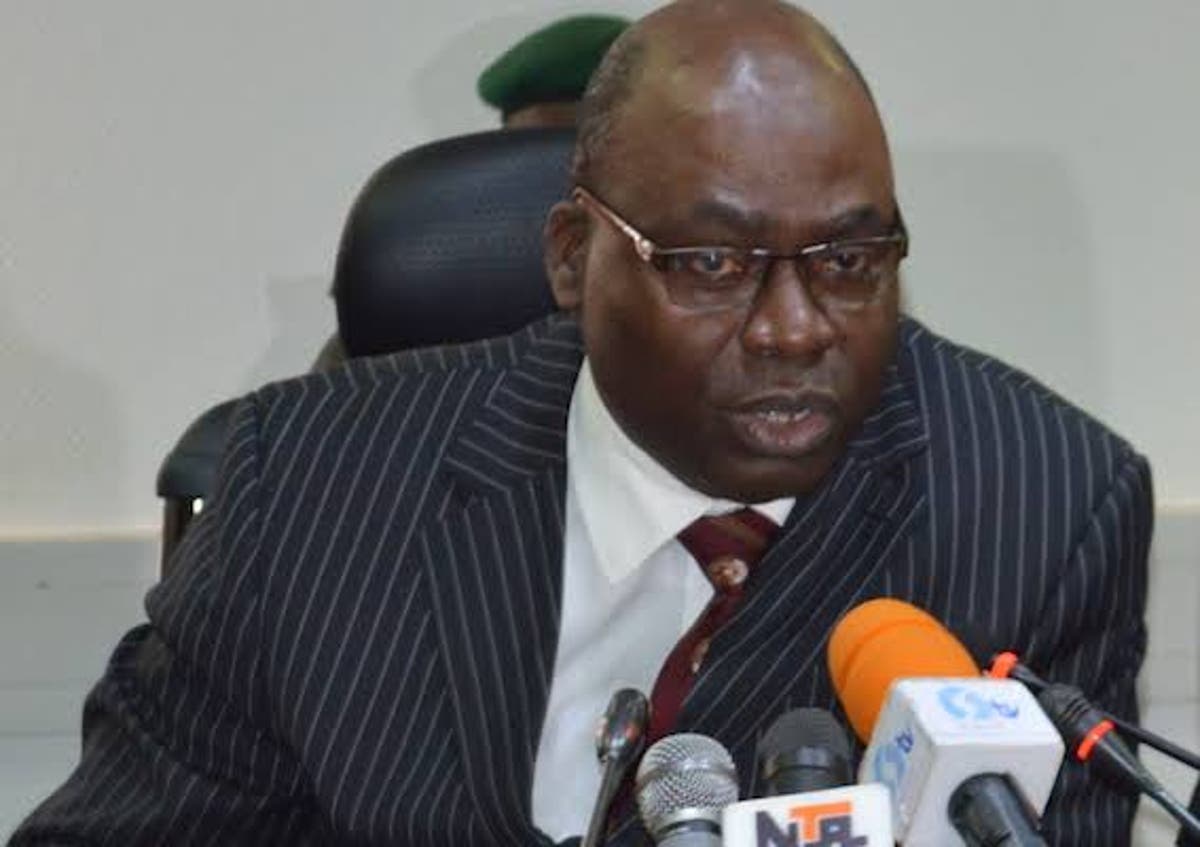
The Independent Corrupt Practices and other Related Offences Commission has raised the alarm that money to fix Nigeria is in the country, but being stolen on a daily basis.
The stealing, it stated, was made possible through pervasive corruption in the country, especially through money generating agencies of the government.
According to the ICPC, on electronic transactions alone, N24 trillion has been transacted between January to June this year, which is always about N50 trillion yearly, adding that corruption in Nigeria is highly systemic or malignant and being carried out in most of the government-owned agencies, particularly the revenue generating ones.
Speaking on Wednesday in Abuja as Guest Speaker at the 2 – day Capacity – Building Workshop organized for members of the House of Representatives Committee on Anti – Corruption and Military Officers by the National Institute for Legislative and Democratic Studies (NILDS) , Chairman of ICPC, Professor Bolaji Owasanoye declared that from 19 of such agencies, he disclosed, ICPC intercepted N181million attempted to be diverted or stolen by corrupt public officers between January and June this year, saying ” we are not in short supply of anti – corruption legislations but grossly in short supply of integrity.
“If not for lack of integrity from affected public officers , Nigeria has enough anti – corruption agencies or institutions to stem the tide of systemic corruption.
” Aside ICPC and the Economic and Financial Crimes Commission (EFCC) , public institutions like the Bureau for Public Procurement ( BPP), the Central Bank of Nigeria ( CBN) and 45 others are anti – corruption regulatory bodies.
“The CBN is an anticorruption gatekeeper, the Infrastructure Concession and Regulatory Commission, ICRC is an anticorruption gatekeeper…I could go on, many of them like that, if you aggregate them, you would get like about 50.
“Most regulatory bodies also play anticorruption role. Virtually, all professions are regulated…and every unethical practice that is carried out by these professionals is already prohibited by their rules, so we are not in short supply of anti corruption institutions but what we are in short supply of, is integrity. We have a generous supply of hypocrisy, and we also deceive ourselves.
“But despite the required legislations or laws to fight the cankerworm, lack of integrity and political will from those saddled with running of the agencies , make corruption to be so pervasive in the country.
“Unfortunately since corruption erodes capacity of state or government , to provide welfare for the people , is also fueling and aggravating insecurity in the land.
“If corruption is fought to standstill by all relevant agencies and public officers , it will be discovered that the money to fix Nigeria , is in Nigeria and not elsewhere because N24trillion was spent on monitored electronic transactions alone among Nigerians within Nigerians from January to June this year, which runs to about N50trillion yearly.
“Corruption is an existential issue for us as a country, and so, we need to have conversation around it.”
The ICPC boss who noted that factors like weak legislative oversights by relevant committees of the National Assembly , contracts variations and duplications by MDAs, tax avoidance , evasion and underserved waivers etc are the channels through which corrupt practices are carried out in Nigeria, however blamed his colleagues in the legal profession, who at times would be acting for clients against the Commission, who are serving public servants involved in corrupt practices of using public funds for execution of projects through companies they have interests in.
According to him, it is illegal for such clients to be involved in such businesses at that time, and also ethically wrong for them to award such contracts to companies where they have interests, adding that such ethical breaches ought to be dealt with properly.
In his remarks, Chairman of the House Committee on Corruption, Hon. Shehu Garba said corruption usually denies a nation of the needed development, and making good plans for the future, adding that fighting the menace cannot be effective without collaboration.
The Chief of Defence Staff, General Lucky Irabor, represented by Major – General A. A . Adesope said there is a serious link between corruption, insecurity and instability.
He said that the theme of the Workshop ” Corruption: A threat to Security in Nigeria ” , is very apt at this time that the country and in particular , the military and other security agencies are taking the fight to those perpetrating various crimes and criminalities across the country.
“Corruption engenders insecurity and instability in the country and must be fought by all and sundry.”
In his own remarks, the Director – General of NILDS, Professor Abubakar Sulaiman said the workshop was organized for members of the House Committee on Anti – Corruption and military officers as a way of bringing to the front burner , the need for required collaboration in the war against corruption by all relevant stakeholders.







News
Senate Explains Why Real-Time E-Transmission Cannot Be Mandatory in 2027 Elections
Senate Explains Why Real-Time E-Transmission Cannot Be Mandatory in 2027 Elections
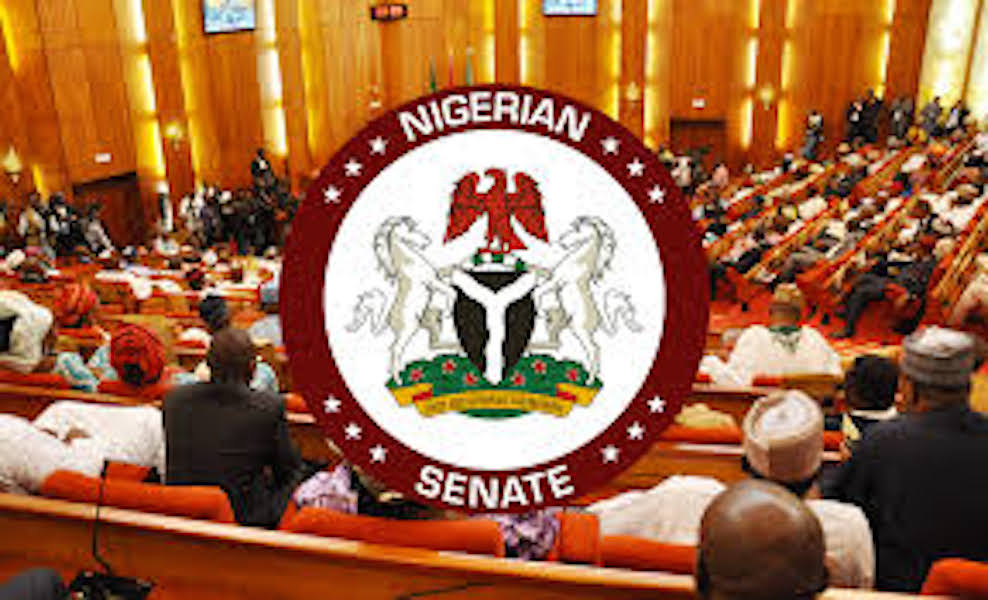
The Nigerian Senate has defended its decision to make electronic transmission of election results discretionary rather than mandatory in the ongoing amendment to the Electoral Bill 2026, insisting the move is grounded in data, infrastructure realities and legislative responsibility — not political sentiment.
The controversy centres on Clause 60(3) of the proposed amendment, which originally stated that a presiding officer “shall electronically transmit the results from each polling unit to the INEC Result Viewing Portal (IReV) in real time.”
After debate, lawmakers retained electronic transmission but removed the mandatory “real time” requirement, introducing a caveat that where internet connectivity fails, Form EC8A — the official manual result sheet — will serve as the primary basis for collation.
Senate: Decision Based on Empirical Data
Leader of the Senate, Opeyemi Bamidele, clarified the chamber’s position in a statement issued through his Directorate of Media and Public Affairs, stressing that lawmaking “comes with huge obligations globally” and cannot be driven by emotion.
According to Bamidele, the Senate consulted stakeholders in the telecommunications and energy sectors before revising the clause. He said the decision reflects the “stark realities” of Nigeria’s communications and power infrastructure.
READ ALSO:
- Osun PDP Lawmakers Endorse Tinubu for 2027, Back Adeleke Re-Election
- MACBAN Rejects Terrorism Allegations, Warns Against Stigmatisation
- Customs Seize Cocaine Worth N1bn Along Nigeria–Benin Corridor
Key Data Cited by the Senate
- Nigeria recorded about 70% broadband coverage in 2025, but actual internet penetration stood at roughly 44.53% of the population, according to figures from the Nigerian Communications Commission.
- The Speedtest Global Index ranked Nigeria 85th out of 105 countries in mobile network reliability and 129th out of 150 countries in fixed broadband reliability.
- In the power sector, approximately 85 million Nigerians lack access to grid electricity, representing about 43% of the population.
- Although generation capacity fluctuates between 12,000 and 13,500 megawatts, only around 4,500 megawatts are typically delivered nationwide.
Bamidele argued that making real-time electronic transmission mandatory under such conditions could create operational bottlenecks, trigger disputes and potentially destabilise the electoral process, particularly in rural communities with weak connectivity.
“By global standards, real-time electronic transmission of election results may not be practicable at this stage of our development,” he said.
What the Amendment Means
The revised clause does not abolish electronic transmission of results. Instead, it provides flexibility in implementation.
The Senate maintains that Section 62(2) of the Electoral Act 2022 already establishes a National Electronic Register of Election Results, and the amendment aims to reinforce the framework without creating a rigid mandate that may prove impractical nationwide.
Under the current system operated by the Independent National Electoral Commission (INEC):
- Results are entered into Form EC8A at the polling unit.
- The presiding officer uses the BVAS device to upload a scanned copy to the IReV portal.
- The portal allows public viewing of polling unit results for transparency.
READ ALSO:
- Security Row: El-Rufai Accuses Ribadu of Procuring Dangerous Chemicals
- Singer Market Fire: Tinubu Sends Shettima, FG Delegation to Kano
- Omokri Alleges Possible Hacking in Obi–Oyedepo Audio Leak, Mentions el-Rufai
The Senate’s revision would allow uploads to remain in place, but without invalidating results in areas where connectivity prevents immediate transmission.
Opposition and Public Backlash
The decision has sparked significant debate across Nigeria’s political landscape.
Former presidential candidate Peter Obi and former Rivers State governor Rotimi Amaechi have criticised the move, arguing that weakening mandatory real-time uploads could undermine electoral transparency and public trust ahead of the 2027 general elections.
Civil society groups and election observers warn that introducing a “network failure” clause may create loopholes that could be exploited during collation, particularly at ward and local government levels.
However, supporters of the Senate’s position argue that insisting on a strict real-time requirement without adequate infrastructure could lead to widespread technical failures, contested results and post-election instability.
House–Senate Differences and Next Steps
The House of Representatives is understood to favour retaining the mandatory real-time transmission language, setting the stage for a conference committee to harmonise both versions of the bill.
The final wording of Clause 60(3) will likely shape Nigeria’s electoral governance framework heading into 2027 and determine whether real-time electronic transmission becomes a statutory obligation or remains subject to operational discretion.
As debates intensify, the issue has become a defining test of Nigeria’s commitment to electoral reform — balancing technological ambition with infrastructural reality.
Senate Explains Why Real-Time E-Transmission Cannot Be Mandatory in 2027 Elections
News
Osogbo Sons and Daughters Mark 5th Anniversary with Awards, Political Undertones

Osogbo Sons and Daughters Mark 5th Anniversary with Awards, Political Undertones
The 5th anniversary celebration of Osogbo Sons and Daughters drew prominent indigenes, political office holders, traditional leaders and stakeholders to a colourful gathering focused on the development of Osogbo, the Osun State capital.
Members of the Osogbo United Youth Forum were also in attendance at the event, which featured the presentation of meritorious awards to distinguished sons and daughters of the town in recognition of their contributions to community growth.
Among the award recipients were the member representing Osogbo Federal Constituency in the House of Representatives, Alhaji Moruf Adewale Gangari; the Secretary to the Osun State Government, Alhaji Teslim Igbalaye; and the member representing Osogbo in the Osun State House of Assembly. Others honoured included the Chief Executive Officer of Mars Filling Station, Alhaji Eniafelamon, the Head Baale of Osogbo, as well as several other eminent indigenes.
The awards, according to the organisers, were aimed at appreciating individuals who have demonstrated dedication and service toward the advancement of Osogbo.
The Osun State Governor, Ademola Adeleke, who was represented at the event by the Commissioner for Information, Kolapo Alimi, used the occasion to stress the importance of collective support for the administration ahead of the August 8 governorship election.
READ ALSO:
- Check Your Name: UNILORIN Releases Updated NELFUND Refund List for 2024/2025 Students
- Troops Arrest Suspected Gunrunner, Recover Six Machine Guns in Taraba Operation
- Argungu Festival 2026 Highlights Peace, Stability, Economic Growth — Tinubu
In his address, the commissioner noted that Osogbo and Ile-Ife are strategically positioned in ongoing political discussions concerning succession politics toward 2030. He stated that the town which records the highest number of votes in the forthcoming election could stand a stronger chance of producing the governor’s successor in 2030.
He also highlighted developmental projects executed by the present administration in Osogbo and urged residents to remain united in order to attract more dividends of democracy to the town.
Speaking earlier, the Secretary to the State Government, Alhaji Teslim Igbalaye, outlined several initiatives he said he had facilitated for Osogbo through his office. According to him, over 100 indigenes of Osogbo have secured employment opportunities since the inception of the current administration.
He added that arrangements were at an advanced stage for more Osogbo indigenes to occupy principal officer positions across tertiary institutions in the state. Igbalaye promised to provide the leadership of Osogbo Sons and Daughters with the names and phone numbers of beneficiaries to ensure transparency and verification.
He also pledged to donate a bus to the association, following a request by its President, Saheed Akinyemi.
The programme further provided an avenue for elected representatives from Osogbo to present their scorecards before the audience, promoting accountability and engagement with constituents.
In his closing remarks, the President of Osogbo Sons and Daughters commended dignitaries and participants for their presence and reiterated the organisation’s commitment to the continued progress and unity of Osogbo.
Osogbo Sons and Daughters Mark 5th Anniversary with Awards, Political Undertones
News
Afenifere Calls for Immediate Take-Off of State Police as Terror Threats Rise in Yorubaland

Afenifere Calls for Immediate Take-Off of State Police as Terror Threats Rise in Yorubaland
The pan‑Yoruba socio-political group Afenifere has warned that escalating terrorist attacks in states bordering the South-West are heightening fears of a full-scale incursion into Yorubaland, calling on governors to urgently implement robust security measures and push for the take-off of state police.
In a statement by its National Publicity Secretary, Jare Ajayi, Afenifere expressed deep concern over repeated attacks in Kwara, Kogi, and Niger states, as well as kidnappings in Ondo, Ekiti, and Oyo states. The group cited the recent Woro and Nuku attacks in Kwara State, where nearly 200 people were reportedly killed and several others abducted, as a warning of the growing threat.
“This is a very disturbing development as cases of abduction seem to be on the increase in Yorubaland. Terror acts are no longer confined to rural areas; even cities like Ibadan have witnessed incidents,” the statement read. Afenifere highlighted the broad-daylight abduction of a schoolgirl in Ibadan’s Challenge area as a chilling example of the insecurity affecting urban centres.
Ajayi urged governors of the six South-West states — Oyo, Ogun, Osun, Ekiti, Ondo, and Lagos — as well as neighbouring states including Kwara, Kogi, Edo, and Delta, to implement practical security arrangements that will allow residents to “sleep with their two eyes closed.”
READ ALSO:
- CAF Confirms 2027 AFCON Dates, Reveals Host Cities, Stadiums Across East Africa
- Ronaldo Returns From Absence to Score in Al‑Nassr’s 2‑0 Win Over Al‑Fateh
- One Dead as Hausa, Benue Communities Clash at Port Harcourt Market
The group recalled that during a November 24, 2025, meeting in Ibadan, the South-West governors had agreed to strengthen regional security through measures such as the South-West Security Fund and the creation of monitoring centres to track potential terrorist activity. Afenifere noted that recent steps, such as Ogun State’s inauguration of CCTV monitoring centres, are commendable but insufficient.
Ajayi stressed that the persistence of banditry and terrorism is not due to a lack of intelligence, but rather the failure to effectively utilize available information. He insisted that state police should take off immediately, while communities must be empowered to develop local security arrangements, including support for the Amotekun Corps and other regional security initiatives.
“It is high time governors in Yorubaland went beyond sermonisation and swung into decisive actions that will make the region truly secure,” Ajayi said.
Afenifere’s warning comes amid growing concerns over security across southern Nigeria, where the spread of banditry, kidnappings, and terrorist attacks is increasingly threatening both rural and urban communities. The group’s call reinforces longstanding advocacy for state-level policing as a critical measure to combat rising insecurity.
Afenifere Calls for Immediate Take-Off of State Police as Terror Threats Rise in Yorubaland

-

 Education19 hours ago
Check Your Name: UNILORIN Releases Updated NELFUND Refund List for 2024/2025 Students
-

 News10 hours ago
Osogbo Sons and Daughters Mark 5th Anniversary with Awards, Political Undertones
-

 metro3 days ago
Lagos Police Launch Manhunt for Suspect in Brutal Ajah Murder
-

 News3 days ago
Aso Rock Goes Solar as Tinubu Orders National Grid Disconnection
-

 metro2 days ago
Woman Arrested Over Murder of Nigerian E-Hailing Driver in South Africa
-

 metro2 days ago
Boko Haram Terrorists Release Video of 176 Abducted Kwara Residents
-

 News21 hours ago
Afenifere Calls for Immediate Take-Off of State Police as Terror Threats Rise in Yorubaland
-

 Sports3 days ago
Lookman Shines as Atlético Madrid Hammer Barcelona 4-0