

metro
Argungu Festival 2026 Highlights Peace, Stability, Economic Growth — Tinubu
Argungu Festival 2026 Highlights Peace, Stability, Economic Growth — Tinubu
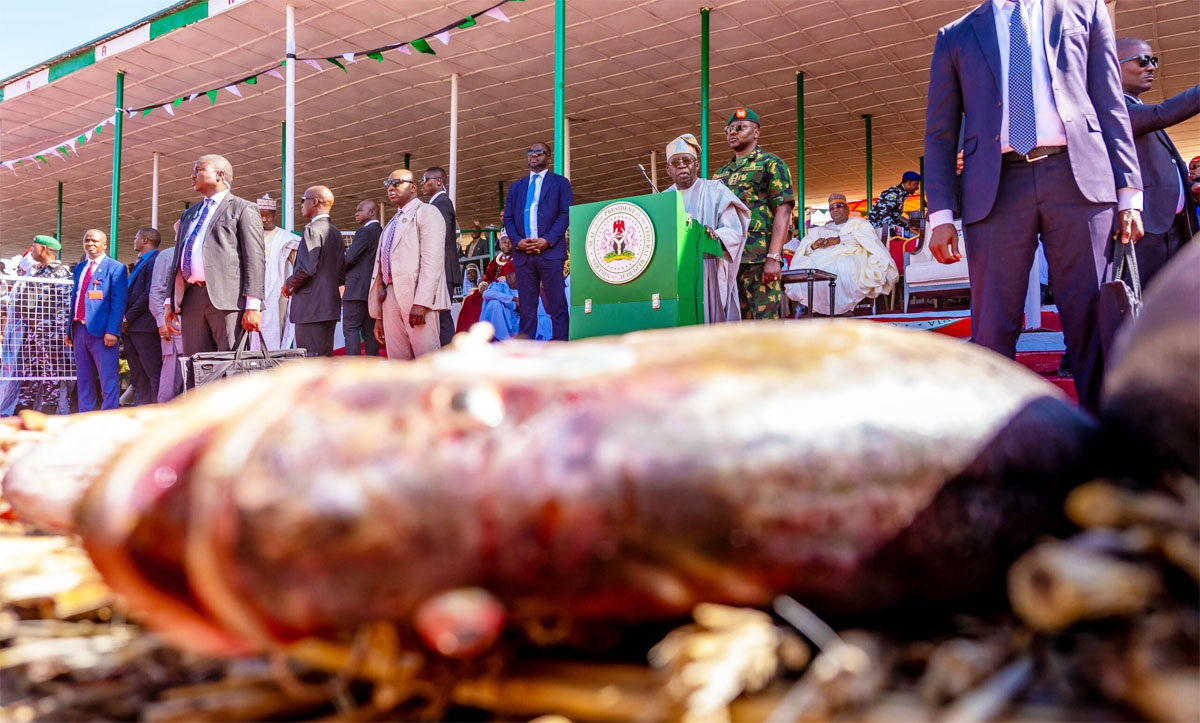
President Bola Ahmed Tinubu has hailed the 61st Argungu International Fishing and Cultural Festival as a milestone in Nigeria’s return to stability and normalcy, emphasizing its role in promoting tourism, agriculture, food security, and rural development in Kebbi State and the broader northwest region. Speaking at the grand finale of the four-day festival, Tinubu congratulated the Kebbi State Government for hosting the historic event, which drew over 50,000 fishermen and thousands of visitors from Nigeria and neighbouring countries. He described the festival as a “powerful symbol of unity, resilience and peaceful coexistence.”
The President lauded the robust security arrangements, noting that cultural events thrive only in a safe environment. He attributed the return of relative peace to sustained investments in security, intelligence gathering, and community engagement, promising that the fight against banditry and insurgency would continue until fully defeated. “Farmers, fishermen, traders, and families must be able to live and work without fear,” Tinubu said, stressing the Federal Government’s commitment to supporting agriculture and rural livelihoods, highlighting Kebbi State as a key contributor to Nigeria’s food security agenda.
READ ALSO:
- US Military Boosts Support for Nigeria’s Fight Against Insurgency With Ammunition, Troop
- Afenifere Calls for Immediate Take-Off of State Police as Terror Threats Rise in Yorubaland
- CAF Confirms 2027 AFCON Dates, Reveals Host Cities, Stadiums Across East Africa
Tinubu also underscored the festival’s unifying power, noting that it brings together people of different nations, backgrounds, and beliefs in the spirit of friendship and healthy competition, while projecting Nigeria’s rich cultural heritage to the world. The festival featured traditional fishing competition in the Matan Fada River, cultural performances, music and dance, canoe races, and wrestling competitions, giving participants and visitors a full showcase of the region’s culture. The Emir of Argungu, Alhaji Sama’ila Muhammad Mera, described the festival as a symbol of courage, reconciliation, peace, and friendship, linking it to President Tinubu’s Renewed Hope agenda.
At the competition’s climax, Abubakar Usman from Maiyama Local Government Area emerged the overall champion with a record 59‑kilogram catch, earning him N1 million and two vehicles. Runner-up Abdullahi Garba from Argungu caught a 40kg fish, while two contestants from Jigawa and Kogi states shared third place with 33kg catches each, also receiving prizes. All four winning fish were presented to President Tinubu as ceremonial souvenirs.
Before attending the festival, Tinubu inaugurated key infrastructure projects in Birnin Kebbi, including the Bola Ahmed Tinubu Secretariat Complex, a modern motor park, a three-lane dual carriageway, the Kauran Gwandu College of Nursing and Midwifery Sciences, and the newly dualised Old Argungu By-Pass Road. Governor Nasir Idris welcomed the President’s visit and reiterated his government’s resolve to sustain the festival as a platform for cultural preservation, tourism development, and economic empowerment. He highlighted the state government’s achievements, including road expansions, urban development, rehabilitation of 16 general hospitals and over 120 primary healthcare centres, and the distribution of fertilizers, improved seedlings, agrochemicals, and farm implements to local farmers.
The festival’s return after a multi-year hiatus due to insecurity is widely regarded as a turning point in the northwest’s socio-economic recovery. Local officials and stakeholders noted that the event has boosted trade, tourism, and cultural pride, attracting visitors and business activity across Argungu and surrounding areas, reflecting a renewed sense of peace, stability, and opportunity in Kebbi State.
Argungu Festival 2026 Highlights Peace, Stability, Economic Growth — Tinubu










metro
MURIC Accuses OAU International School of Restricting Hijab-Wearing Students

MURIC Accuses OAU International School of Restricting Hijab-Wearing Students
The Muslim Rights Concern (MURIC) has accused the management of the International School, Obafemi Awolowo University (OAU), Ile-Ife, Osun State, of restricting hijab-wearing Muslim students from accessing the school premises.
MURIC alleged that female Muslim students were locked out of the school for several days after authorities reportedly insisted that they remove their hijabs before being allowed into the compound.
The organisation condemned the alleged action and called for the immediate lifting of what it described as a restriction on the use of hijab by Muslim students.
In a statement issued on Monday, October 5, 2026, MURIC Executive Director, Professor Ishaq Akintola, said the affected students eventually returned to school without their hijabs after they were allegedly informed that the matter would not be considered until the next meeting of the university council in December.
Akintola described the development as discriminatory and argued that it raised concerns about religious freedom, girl-child education and the rights of Muslim students.
READ ALSO:
- Israeli Forces Reportedly Destroy School, Burn Homes in Southern Lebanon
- Nine Zamfara Lawmakers Dump APC for ADC Ahead of 2027
- Temi Nkem Wins N160m BBNaija Season 11 Grand Prize
He cited Section 38 of the Nigerian Constitution, which guarantees freedom of thought, conscience and religion, and argued that school regulations should not be applied in a manner that violates constitutionally protected religious rights.
“The argument that the use of hijab violates the school’s rules does not hold any water,” Akintola said, maintaining that Muslim students should be allowed to observe their faith while pursuing their education.
MURIC also questioned the reported circumstances surrounding the restriction and urged OAU and the International School authorities to clarify the policy governing religious attire at the institution.
The organisation further expressed concern about the effect of the dispute on the affected students, who it described as underage girls, and their parents.
According to MURIC, preventing students from attending school over their religious attire could undermine efforts to reduce the number of out-of-school children in Nigeria.
The group also rejected what it said could be the argument that the school’s internal rules supersede constitutional protections, insisting that institutional regulations must conform to the country’s laws.
MURIC called on the OAU authorities to address the dispute through dialogue and respect for religious diversity, warning that continued disagreement over the issue could create tension between the university community and residents of Ile-Ife.
The organisation alleged that the action could amount to discrimination against Muslim students, but those allegations have not been independently established.
MURIC therefore demanded that any restriction on hijab-wearing students at OAU International School be lifted immediately and that the affected students be allowed to attend classes without being required to abandon their religious attire.
The group said resolving the matter in a manner that protects the students’ rights would help preserve peaceful coexistence and OAU’s reputation as a major Nigerian educational institution.
MURIC Accuses OAU International School of Restricting Hijab-Wearing Students
metro
Ex-APC Women Leader Found Dead With Throat Slit in Bauchi

Ex-APC Women Leader Found Dead With Throat Slit in Bauchi
A former APC Women Leader in Bauchi South, Jemimah Dutse, has been found dead inside her residence in Bauchi State, with her throat allegedly slit by unidentified assailants.
Dutse was discovered in a pool of blood at her residence in Muazu New Layout, Yelwa, Bauchi, on Saturday, October 3, 2026.
The Bauchi State Police Command said the incident was reported at about 2:07pm by a 49-year-old man, following which detectives visited the residence and documented the scene.
Her body was subsequently evacuated to Abubakar Tafawa Balewa University Teaching Hospital (ATBUTH), Bauchi, for medical examination and autopsy.
The Commissioner of Police, Sani-Omolori Aliyu, directed that the case be transferred to the Homicide Section of the State Criminal Investigation Department (SCID) for a discreet and thorough investigation.
READ ALSO:
- Supreme Court Ruling: INEC Moves to Clarify Fate of 2027 Candidates
- Omokri Defends Tinubu Over Pension Record, Faults Linking President to 89-Year-Old’s Death
- Tantita Operations Push Oil Export Earnings to $9.39bn in Q2
The police said the investigation is focused on establishing the circumstances surrounding Dutse’s death and identifying the person or persons responsible.
The motive for the killing remains unknown, and authorities have not established any link between the death and Dutse’s previous political activities.
The command has appealed for calm and expressed condolences to Dutse’s family, friends and political associates, while assuring them that efforts are underway to unravel the circumstances surrounding her death.
The incident has also generated concern among residents and groups in Bauchi, with calls for a comprehensive investigation and improved security in the area.
The Take-It-Back Movement, Bauchi chapter, condemned the killing and called on security agencies to intensify efforts to identify and arrest those responsible.
The group also urged the authorities to conduct a high-powered investigation into the incident and strengthen security measures across Bauchi metropolis and surrounding communities.
Police said further developments would be communicated as the investigation progresses.
Ex-APC Women Leader Found Dead With Throat Slit in Bauchi
metro
Kidnappers torture abducted corps members, slash ransom to N100m
Kidnappers torture abducted corps members, slash ransom to N100m
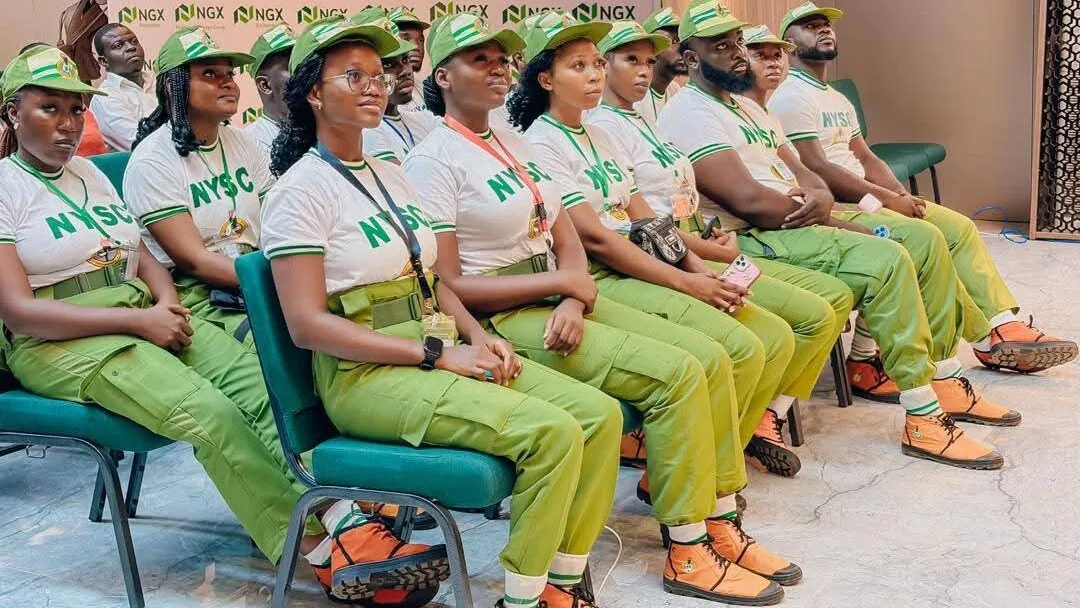
Relatives of 20 abducted corps members have raised fresh concerns over the safety of the victims, alleging that kidnappers have subjected them to physical torture while reducing their ransom demand to N100 million.
The prospective National Youth Service Corps (NYSC) members were reportedly travelling from Ibadan, Oyo State, to orientation camps in Abia and Akwa Ibom states when gunmen attacked two buses along the Owerri–Onitsha Road in Umunoha, Mbaitoli Local Government Area of Imo State, on October 1.
The abductors initially reportedly demanded N50 million from each victim, putting the total ransom at N1 billion.
However, relatives said the kidnappers have now reduced the demand to N5 million per victim, bringing the total to N100 million.
The families also alleged that the abducted corps members were being beaten in captivity, including female victims, raising fears over their physical condition as the rescue operation continues.
A relative of one of the victims, Alimot Akande, said the situation had become increasingly frightening, appealing to the authorities to intensify efforts to secure the victims’ safe release.
According to the relatives, the abductors have maintained contact with some families through the phones of the captives and have used the communication to demand ransom.
READ ALSO:
- Family seeks N10m to free kidnapped newlywed, other victims
- Trump launches ‘Super Intelligence Force’ to keep US ahead in AI race
- NDLEA intercepts N5bn worth of drugs at ports, arrests Milan-bound businessman
The families had earlier appealed to the Olubadan of Ibadanland, Oba Rashidi Ladoja, for intervention after the kidnappers reportedly demanded the initial N1 billion ransom.
Meanwhile, security agencies have intensified efforts to locate the kidnappers’ hideout and rescue the victims.
The Imo State Police Command said its operatives had traced the suspected kidnappers to a location in the bush. However, the operation has reportedly been complicated by intelligence that the area may have been planted with improvised explosive devices (IEDs).
The police said drone surveillance was used to identify the suspected location of the captives, with plans underway to deploy additional operational equipment to safely access the area.
The Inspector-General of Police, Olatunji Disu, has also deployed the Deputy Inspector-General of Police in charge of Operations, Shehu Umar Nadada, to Imo State to coordinate the rescue operation.
Nadada subsequently reviewed the security deployment and directed additional tactical resources towards efforts to rescue the abducted corps members.
Police authorities have assured the families that efforts are ongoing to locate the victims and bring them home safely.
There have also been varying reports over the exact number of people abducted and those already rescued. The police initially reported that some victims had been rescued after the attack, while relatives continued to maintain that 20 prospective corps members remained affected by the abduction.
The two buses involved in the incident have reportedly been recovered as security agencies continue operations around the area.
The Oyo State Government has also joined efforts to secure the release of the victims, maintaining contact with the Imo State Government and security agencies.
The incident has renewed concerns about the safety of prospective corps members travelling to NYSC orientation camps, particularly along major highways where kidnapping remains a persistent security challenge.
For the affected families, the immediate priority remains the safe return of their loved ones as security agencies work to overcome the reported explosives threat and reach the suspected kidnappers’ hideout.
Kidnappers torture abducted corps members, slash ransom to N100m
-

 metro2 days ago
NYSC Kidnap: Abductors Demand N950m for 19 Prospective Corps Members in Imo
-

 Politics2 days ago
2027: Oshiomhole Dares Opposition Over ₦500 Petrol Promise, Says APC Will Take Argument to Nigerians
-

 Entertainment3 days ago
Olu Jacobs Laid to Rest in Lagos as Dignitaries, Nollywood Stars Honour Screen Icon
-

 metro2 days ago
N500 Petrol, Wage Award: Public Sector Workers Begin Warning Strike
-

 metro2 days ago
Amaechi: Tinubu’s Policies Made My Mother’s Drugs Unaffordable
-

 metro1 day ago
‘I Thought I Was Dead’ — Hairstylist’s Daring Escape From Kidnappers After Benin-Ore Ambush
-

 metro2 days ago
Tension as Kidnappers Threaten to Kill Abducted Oyo Corps Members
-

 Entertainment2 days ago
Less Than Four Months After Wedding, Jarvis Threatens Peller With Lawsuit Over Second-Wife Plan