

News
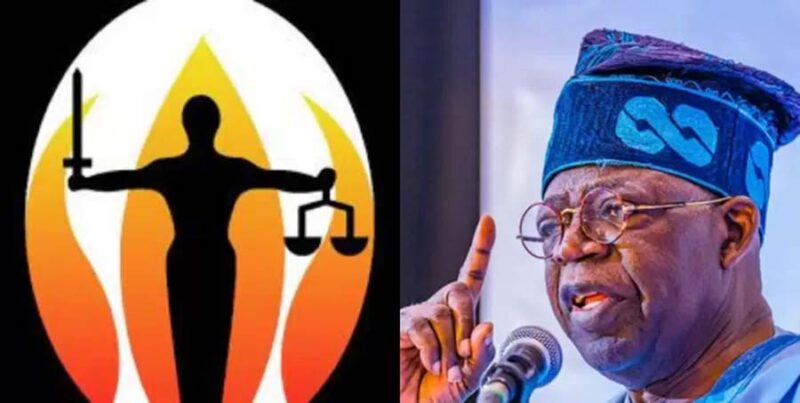
Reverse petrol price hike, probe NNPC, SERAP tells Tinubu
Reverse petrol price hike, probe NNPC, SERAP tells Tinubu
Socio-Economic Rights and Accountability Project (SERAP) has urged President Bola Tinubu to use his “leadership position and good offices to direct the Nigerian National Petroleum Company Limited (NNPCL) to immediately reverse the apparently illegal and unconstitutional increase in the pump price of premium motor spirit (PMS), also known as petrol, across its retail outlets.”
SERAP urged him to “direct the Attorney General of the Federation and Minister of Justice Mr Lateef Fagbemi, SAN, and appropriate anti-corruption agencies “to probe the allegations of corruption and mismanagement in the NNPC, including the spending of the reported $300 million ‘bailout funds’ collected from the Federal Government in August 2024, and the $6 billion debt it owes suppliers, despite allegedly failing to remit oil revenues to the treasury.”
SERAP said, “Suspected perpetrators of alleged corruption and mismanagement in the NNPC should face prosecution as appropriate, if there is sufficient admissible evidence, and any proceeds of corruption should be fully recovered.”
In the open letter dated 7 September 2024 and signed by SERAP deputy director Kolawole Oluwadare, the organisation said: “The increase in petrol price constitutes a fundamental breach of constitutional guarantees and the country’s international human rights obligations.”
SERAP said, “Nigerians have for far too long been denied justice and the opportunity to get to the bottom of why they continue to pay the price for corruption in the oil sector.”
The letter, read in part: “Rather than pursuing public policies to address the growing poverty and inequality in the country, and holding the NNPC to account for the alleged corruption and mismanagement in the oil sector, your government seems to be punishing the poor.
“The increase in petrol price has rendered already impoverished citizens incapable of satisfying their minimum needs for survival.”
“The increase is not inevitable, as it stems from the persistent failure of successive governments to address allegations of corruption and mismanagement in the oil sector and the impunity of suspected perpetrators.”
READ ALSO:
- U20 Women W’Cup: Falconets cruise past Venezuela, make last 16
- Nigeria’s daily petrol consumption rises from 30m litres to 60m – NMDPRA
- Lagos chiefs enforce monarch’s price reduction order in community market
“Corruption in the oil sector and the lack of transparency and accountability in the use of public funds to support the operations of the NNPC have resulted in persistent and unlawful hike in petrol prices.”
“Holding the NNPC to account for alleged corruption and mismanagement in the oil sector would serve legitimate public interests.”
“The increase is causing immense hardship to those less well-off. We are concerned that as the economic situation in Nigeria deteriorates, the increase in petrol price is pushing people further into poverty.”
“We would be grateful if the recommended measures are taken within 48 days of the receipt and/or publication of this letter. If we have not heard from you by then, SERAP shall consider appropriate legal actions to compel your government to comply with our request in the public interest.”
“Increasing petrol prices at a time when millions of Nigerians continue to face worsening economic conditions is entirely inconsistent with your government constitutional and international obligations to ensure the minimum living conditions compatible with human dignity.”
“The arbitrary increase has placed a disproportionate burden on the marginalized and most vulnerable sectors of society, particularly those disadvantaged by poverty.”
“The increase is seriously jeopardizing their living conditions, well as individuals’ physical, emotional, and individual development, and intensifying and worsening socioeconomic conditions in the country.”
“The increase constitutes a serious human rights problem because of the intensity with which it undermines the enjoyment and exercise by Nigerians of their human rights and renders their civic participation illusory.”
“The fundamental right to life includes not only the right of every Nigerian not to be deprived of his/her life arbitrarily, but also the right that he/she will not be prevented from having access to the conditions that guarantee a dignified existence.”
“The growing poverty and inequality in the country has continued to adversely affect the right of Nigerians to participatory democracy, and impede their ability to participate in their own government.”
READ ALSO:
- Another 196 soldiers reportedly quit Nigerian Army
- Opay, Moniepoint, others begin FG levy on transactions above N10,000 tomorrow
- Power belongs to God, Otti replies Deputy Speaker Kalu over 2027 Imo gov poll
“Persistent increase in petrol prices keep people in poverty which in turn perpetuates discriminatory attitudes and practices against them.”
“Your government has a legal obligation to mobilize the maximum of the country’s available resources to ensure people’s socio-economic rights and to protect the most vulnerable and disadvantaged Nigerians.”
“Your government also has the legal obligations to probe and prosecute allegations of corruption and mismanagement in the NNPC, and to ensure access to justice and effective remedies for victims of corruption.”
“Investigating and prosecuting allegations of corruption and mismanagement in the oil sector would be entirely consistent with the Nigerian Constitution, and the country’s international anti-corruption obligations.”
“Section 13 of the Nigerian Constitution 1999 [as amended] imposes clear responsibility on your government to conform to, observe and apply the provisions of Chapter 2 of the constitution. Section 15(5) imposes the responsibility on your government to ‘abolish all corrupt practices’ including in the NNPC.”
“Under Section 16(1) of the Constitution, your government has a responsibility to ‘secure the maximum welfare, freedom and happiness of every citizen on the basis of social justice and equality of status and opportunity.’”
“Section 16(2) further provides that, ‘the material resources of the nation are harnessed and distributed as best as possible to serve the common good.’”
“According to our information, the Nigerian National Petroleum Company (NNPC) Limited recently increased the price of premium motor spirit (PMS), also known as petrol, across its retail outlets.”
“The price of the product increased to N855 per litre, from about N600, and in some instances above N900 per litre. The apparently unlawful increase in petrol price followed a scarcity caused by the reported refusal by suppliers to import petroleum products for the NNPCL over a $6 billion debt.”
“The NNPC reportedly failed to remit USD$2.04 billion and N164 billion of oil revenues into the public treasury, as documented in the recently published 2020 annual report by the Auditor-General of the Federation.”
Reverse petrol price hike, probe NNPC, SERAP tells Tinubu






Community
Monarch Dies Shortly After Being Rescued From Kwara Kidnappers
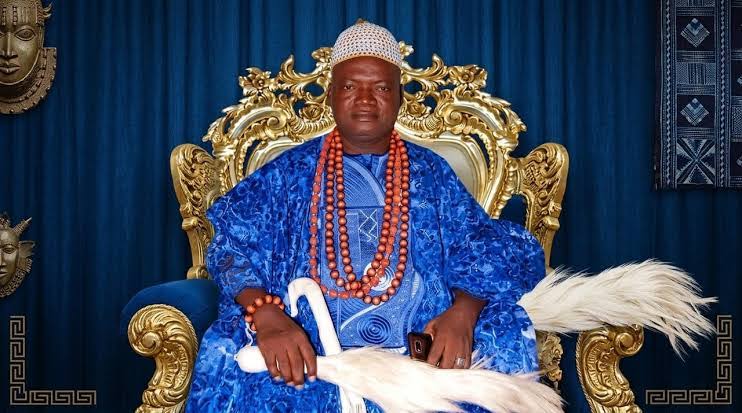
The Onigbesi of Igbesi Land in Kwara State, Oba Moses Oyinloye Iwedunmoye I, has died days after he was rescued from kidnappers.
The monarch passed away in the early hours of Saturday at a hospital, according to his son, Prince Olasunkanmi, who said his father had been receiving treatment following a brief illness.
“Yes, the news is true. He died after a brief illness following his release. We took him to the hospital, hoping he would survive, but he died there very early this morning,” Olasunkanmi said.
Oba Iwedunmoye was abducted on August 22 when armed men invaded Igbesi community in Isin Local Government Area.
He regained his freedom five days later after security forces launched an operation around the Elerin/Ijomu-Oro area, where three kidnapped victims were found.
The rescue followed a report received at the Oro Police Station from a vigilante member, who alerted authorities after one of his colleagues was shot while operating in the bush.
A combined team of police officers, soldiers and vigilantes was subsequently deployed to the area.
Police said the suspected kidnappers engaged the team in a gun battle after spotting the advancing operatives. One alleged kidnapper was killed during the exchange, while others escaped into the surrounding area.
The security team continued the search and eventually located the three victims, who were evacuated for medical treatment.
News of the monarch’s death was announced by Bisi Fakayode, National President of Omo Ibile Igbomina, who mourned the traditional ruler and prayed for the repose of his soul.
The circumstances surrounding the monarch’s illness and death have not been publicly disclosed beyond his family’s account that he fell ill after his release.
News
Police Arrest Woman Over Alleged Drug Trafficking in Delta
Police Arrest Woman Over Alleged Drug Trafficking in Delta
A 40-year-old woman, Joy Anthony, has been arrested by the Delta State Police Command over alleged involvement in the illegal drug trade.
Police said operatives attached to the Special Anti-Kidnapping Unit carried out the arrest in Agbor, Ika South Local Government Area, following intelligence received about suspected drug-related activities.
According to the command’s spokesperson, Bright Edafe, officers subsequently obtained and executed a search warrant at Anthony’s residence in Agbor-Obi.
READ ALSO:
- Dangote raises petrol price 6.7% to N1,350/litre
- Anambra Police Arrest Woman Over Alleged Sexual Abuse of Child, Rescue Four
- MURIC fires back at Peter Obi: Forget Sallah ceremony, free Nigerian Muslims
The search reportedly resulted in the recovery of several suspected illicit substances, including tramadol, codeine, swinol, Canadian loud and weeds suspected to be Indian hemp.
The suspect and the recovered exhibits have been taken into police custody as investigators continue to establish the circumstances surrounding the alleged offence.
Edafe said Anthony would be prosecuted after the investigation is completed.
Police have not disclosed the exact quantities of the substances recovered.
Police Arrest Woman Over Alleged Drug Trafficking in Delta
News
AI on the Roads: LASTMA Turns to China to Fix Lagos Traffic


AI on the Roads: LASTMA Turns to China to Fix Lagos Traffic
-

 metro1 day ago
Woman disguises as Muslim woman in Niqab to steal in Ado-Ekiti market, video sparks outrage
-

 metro3 days ago
Police Arrest Woman Over Fake OPay Shutdown Notice
-

 Politics3 days ago
Amaechi will be caged politically, Wike shouldn’t bother about Ikwerre votes — Wihioka
-
 metro3 days ago
Residents Cry Out Over Poorly Constructed Entrance of Ademola Abiola Street, Demand Urgent Intervention
-
 Politics3 days ago
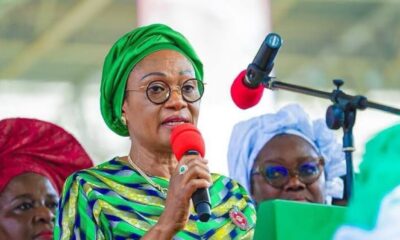
Remi Tinubu Appeals To South-East Voters, Says She Wants To ‘Enjoy Nigeria’ In Old Age
-
 Business19 hours ago
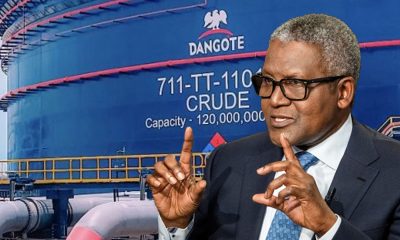
Dangote: ₦525 Refinery Shares Could Rise to ₦10,000
-

 Politics3 days ago
Breaking the Cycle of Collective Guilt: When a Ruling Party Voice Backs Peter Obi
-

 News2 days ago
AI on the Roads: LASTMA Turns to China to Fix Lagos Traffic