

metro
Ritual Killing: Two sentenced to death, one gets life in Ogun State

Ritual Killing: Two sentenced to death, one gets life in Ogun State
Ritual Killing: Two sentenced to death, one gets life in Ogun State











metro
Five Nigerians Face Up To 100 Years In US Over $6m Romance Scam
Five Nigerians Face Up To 100 Years In US Over $6m Romance Scam
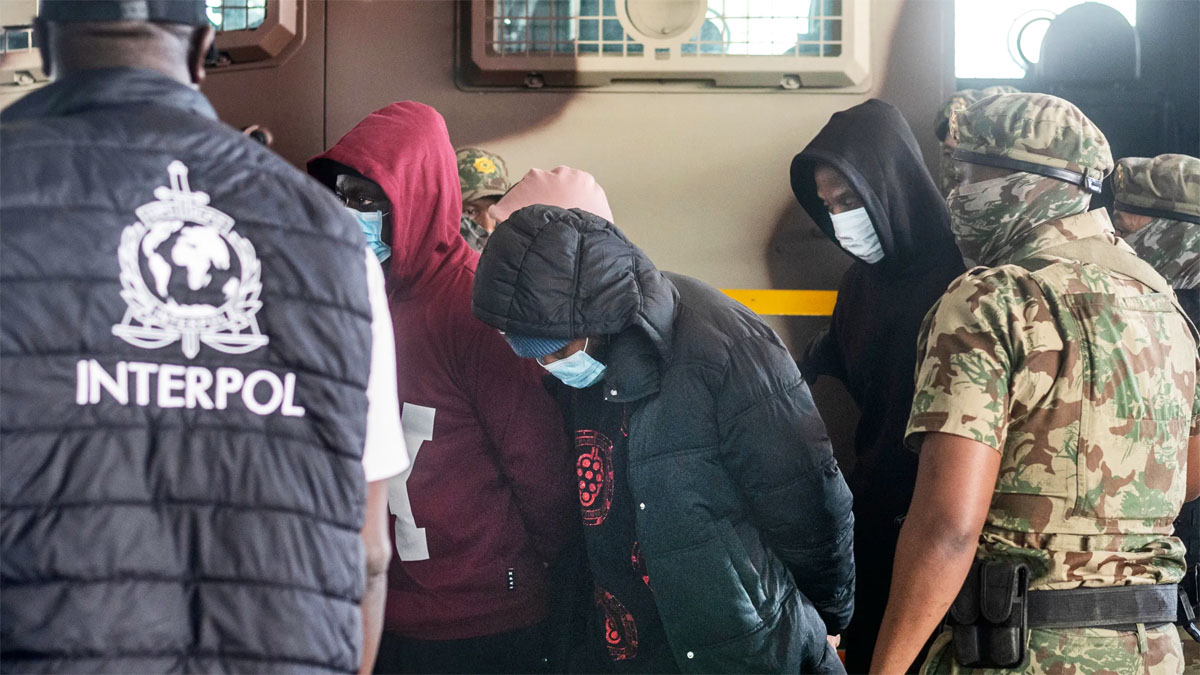
Five Nigerian nationals extradited from South Africa to the United States are facing federal fraud and money-laundering charges over an alleged $6 million online romance scam targeting more than 100 people in the United States.
The five men were among six Nigerian nationals extradited from South Africa on September 11, 2026, after being arrested in Cape Town in 2021 following a request from US authorities.
The five defendants named in the US federal case are Perry Osagiede, 57; Franklyn Edosa Osagiede, 42; Osariemen Eric Clement, 40; Collins Owhofasa Otughwor, 42; and Musa Mudashiru, 38.
US prosecutors allege that the men were prominent members of the Cape Town Zone of the Neo Black Movement of Africa, popularly known as Black Axe, and participated in an organised fraud operation that ran for years.
The sixth Nigerian extradited alongside them has been identified in South African reports as Prince Ibeabuchi Mark, but he is not among the five defendants named in the US federal indictment currently at the centre of the case.
The extradition followed a lengthy legal process after the suspects were arrested in Cape Town in 2021. They were eventually handed over to US authorities, including officials from the Federal Bureau of Investigation (FBI) and the US Secret Service, for prosecution.
The defendants were scheduled to appear before US District Judge Michael A. Shipp at the federal court in Trenton, New Jersey.
According to US prosecutors, the alleged operation was active between 2011 and 2021 and used online relationships, false identities and other deceptive methods to obtain money from victims.
The alleged romance scam involved the suspects presenting themselves online as potential romantic partners and developing relationships with victims before asking them for financial assistance.
READ ALSO:
- ‘I Was Never the Chosen One’ — Dembele Responds to Mbappe
- Plateau Attacks: Gunmen Kill Passengers, 13 Dead Across Three LGAs
- 2027: Northern Lecturers Back Tinubu, ASUU Disowns Endorsement
Prosecutors allege that the victims were often given elaborate explanations for why money was needed, including supposed business problems, construction projects, medical emergencies, accidents, taxes, inheritance difficulties and other financial crises.
In some instances, the alleged fraudsters reportedly persuaded victims to send not only cash but also electronic devices and other valuable items.
The alleged operation also involved advance-fee fraud and business email compromise, according to US authorities.
Investigators allege that money obtained from victims was moved through different bank accounts and business arrangements in an attempt to conceal the proceeds and transfer them to South Africa.
The victims reportedly included retirees, businesspeople and other individuals who were allegedly manipulated through prolonged online relationships.
South African authorities said more than 100 women were allegedly defrauded of more than 100 million South African rand, estimated at about $6.2 million.
The alleged scale of the scheme has drawn attention to the increasingly international nature of cyber-enabled financial crime, in which perpetrators, victims, financial accounts and criminal proceeds can be located in different countries.
US prosecutors have also alleged that members of the group used multiple aliases and online identities in communicating with victims.
Perry Osagiede, whom prosecutors describe as an alleged founder and leader of the Cape Town Zone, is accused of using several aliases, while other defendants are also alleged to have operated under assumed names.
The prosecution further alleges that the accused held leadership positions within the alleged Black Axe structure in South Africa while participating in the fraud schemes.
The charges against the five men include conspiracy to commit wire fraud and conspiracy to commit money laundering.
READ ALSO:
- Sanwo-Olu Joins Dangote as Historic N2.15tn Refinery IPO Opens on Nigerian Exchange
- Shehu Buba Submits Himself To DSS Over Banditry Allegations
- No Lives Lost as Responders Contain Dual Fire Outbreaks Across Lagos
Perry Osagiede, Franklyn Edosa Osagiede and Osariemen Eric Clement are additionally facing individual wire-fraud charges.
Perry Osagiede, Franklyn Edosa Osagiede and Collins Owhofasa Otughwor are also charged with aggravated identity theft.
The potential penalties are significant.
Each wire-fraud conspiracy or wire-fraud charge carries a maximum sentence of 20 years in prison under US law, while the money-laundering conspiracy charge also carries a maximum sentence of 20 years.
The aggravated identity-theft charges carry a mandatory additional two-year prison term, which must be served consecutively to any other sentence imposed.
This means that the defendants could collectively face a maximum exposure of up to 100 years in prison if convicted on the applicable charges.
However, the 100-year figure is a statutory maximum and does not mean the defendants have been sentenced to 100 years.
Any eventual sentence would depend on the outcome of the trial, the specific counts on which a defendant is convicted and the applicable US sentencing rules.
The case is part of a broader international effort to disrupt criminal networks accused of conducting online financial fraud across borders.
The Black Axe network has been identified by international law-enforcement agencies as a transnational organised crime network linked to cyber-enabled fraud and other criminal activities.
The extradition also highlights cooperation between South Africa, the United States, the FBI, the US Secret Service and international law-enforcement agencies in pursuing suspects accused of operating across national borders.
The men were arrested in South Africa in 2021, meaning the case has taken several years to reach the US courts.
Their extradition now allows the US judicial system to determine whether prosecutors can prove the allegations against them beyond the required legal standard.
The development comes as US and international authorities intensify efforts against romance scams, which have become a major form of online financial fraud.
Such scams typically involve perpetrators establishing emotional relationships with victims online before inventing emergencies or financial problems to persuade them to transfer money.
US authorities have repeatedly warned that victims can be targeted for extended periods before realising that the person with whom they have established an online relationship may not be who they claimed to be.
The prosecution of the five Nigerians therefore represents not only a major fraud case but also another example of how law-enforcement agencies are pursuing alleged cybercrime networks beyond the countries where their victims live.
Despite the seriousness of the allegations, the five defendants remain legally presumed innocent unless and until they are convicted by a US court.
The case will now proceed through the American federal justice system, where prosecutors are expected to present evidence supporting the allegations contained in the indictment.
Five Nigerians Face Up To 100 Years In US Over $6m Romance Scam
metro
Shehu Buba Submits Himself To DSS Over Banditry Allegations

Shehu Buba Submits Himself To DSS Over Banditry Allegations
Senator Shehu Buba Umar, representing Bauchi South Senatorial District, has submitted himself to the Department of State Services (DSS), the Nigeria Police Force and the Defence Intelligence Agency (DIA) for investigation following allegations linking him to banditry, kidnapping and terrorism financing.
Buba, who is the Peoples Redemption Party (PRP) governorship candidate in Bauchi State for the 2027 election, said he took the step to allow competent security agencies to investigate the allegations and establish the facts.
The senator made the disclosure in Bauchi on Monday, September 14, 2026, while addressing journalists on the allegations that have recently resurfaced on social media and other public platforms.
Buba strongly denied sponsoring, financing, arming, facilitating or supporting bandits, terrorists, kidnappers or any other criminal organisation.
He said his legal team, led by Senior Advocate of Nigeria and former Nigerian Bar Association President Yakubu Chonoko Maikyau, had formally written to the DSS, DIA and Police to make him available for questioning and investigation.
The senator also challenged anyone who claims to possess evidence linking him to criminal activities to submit such evidence to the appropriate security agencies instead of circulating allegations on social media.
He said he was ready to cooperate fully with investigators and would face prosecution if a competent investigation established a prima facie case against him.
The allegations against Buba resurfaced following claims made online by a man identified as Hassan Husseini, who alleged that the senator maintained relationships with suspected bandits and had hosted criminal elements at his residence.
READ ALSO:
- No Lives Lost as Responders Contain Dual Fire Outbreaks Across Lagos
- ‘I Was Never the Chosen One’ — Dembele Responds to Mbappe
- Plateau Attacks: Gunmen Kill Passengers, 13 Dead Across Three LGAs
Husseini further alleged that individuals linked to notorious bandit leader Dogo Gide were brought to Abuja for specialised training allegedly facilitated by one of Buba’s aides.
The claims have not been established as facts by any security agency or court, and Buba has rejected them as defamatory and politically motivated.
The senator also alleged that some of the photographs, videos and other materials being circulated against him had been manipulated or taken out of context.
Buba said the controversy was not entirely new, maintaining that similar allegations had surfaced as far back as 2024.
He recalled an earlier controversy involving people he sponsored for a religious pilgrimage to Saudi Arabia, saying the beneficiaries had been recommended by traditional rulers in his constituency.
According to Buba, some of those sponsored for the pilgrimage were later arrested after returning to Nigeria, leading to questions about their identities and alleged connections to criminal activities.
The senator said he had no knowledge of any criminal links involving the individuals when he approved the sponsorship.
He also disclosed that he petitioned the Nigeria Police Force in September 2025 over allegations and materials he said were being circulated to damage his reputation.
Buba said five suspects were subsequently arraigned before the Federal High Court in Abuja on allegations including criminal conspiracy, cyberstalking, criminal defamation, advance-fee fraud and extortion.
READ ALSO:
- 2027: Northern Lecturers Back Tinubu, ASUU Disowns Endorsement
- ‘I Was Never the Chosen One’ — Dembele Responds to Mbappe
- Police Arrest Mother Over Alleged Brutal Abuse of 7-Year-Old Girl in Anambra
He said the case remains before the court and that he would refrain from making comments that could interfere with the judicial process.
Buba also referred to a September 7, 2026 petition seeking Interpol intervention over one of the individuals his legal team believes is connected with the allegations.
He said copies of relevant submissions had been forwarded to the National Security Adviser, Chief of Defence Intelligence, Chief of Defence Staff and Minister of Defence.
The senator argued that his former role as chairman of the Senate Committee on National Security and Intelligence naturally brought him into regular contact with military, intelligence and other security officials.
He suggested that some of those legitimate interactions, particularly discussions concerning banditry, terrorism, kidnapping and other security threats, could have been misrepresented as evidence of relationships with criminal groups.
Buba was removed as chairman of the Senate Committee on National Security and Intelligence in November 2025 and subsequently became chairman of the Senate Committee on Livestock and Animal Husbandry.
The allegations have also taken on a political dimension because Buba is preparing to contest the 2027 Bauchi governorship election.
The senator was previously a member of the All Progressives Congress (APC) but left the party after withdrawing from its governorship primary process. He subsequently joined the Peoples Redemption Party (PRP) and emerged as the party’s governorship candidate in May 2026.
The PRP has defended Buba and rejected the allegations linking its candidate to banditry and kidnapping.
The party described the claims as an attempt to damage Buba’s reputation and undermine his political campaign ahead of the 2027 election.
It challenged anyone with credible evidence against the senator to submit it to law enforcement agencies for investigation and prosecution rather than rely on unverified allegations.
Buba has also appealed to his supporters to remain calm and avoid threats, insults or attacks against those making the allegations.
He said his decision to submit himself for investigation was not an attempt to secure preferential treatment but a demonstration of his willingness to allow the appropriate institutions to establish the truth.
For now, the allegations against Buba remain unproven. There has been no reported finding by the DSS, Police or DIA establishing that the senator sponsored or financed banditry, terrorism or kidnapping.
His decision to make himself available for investigation gives the security agencies an opportunity to independently examine the allegations, assess the authenticity and context of the materials being circulated and determine whether there is evidence of criminal conduct.
The outcome could have significant political implications as the 2027 Bauchi governorship election draws closer, particularly because Buba is seeking to lead the state on the PRP platform.
Shehu Buba Submits Himself To DSS Over Banditry Allegations
metro
No Lives Lost as Responders Contain Dual Fire Outbreaks Across Lagos
No Lives Lost as Responders Contain Dual Fire Outbreaks Across Lagos
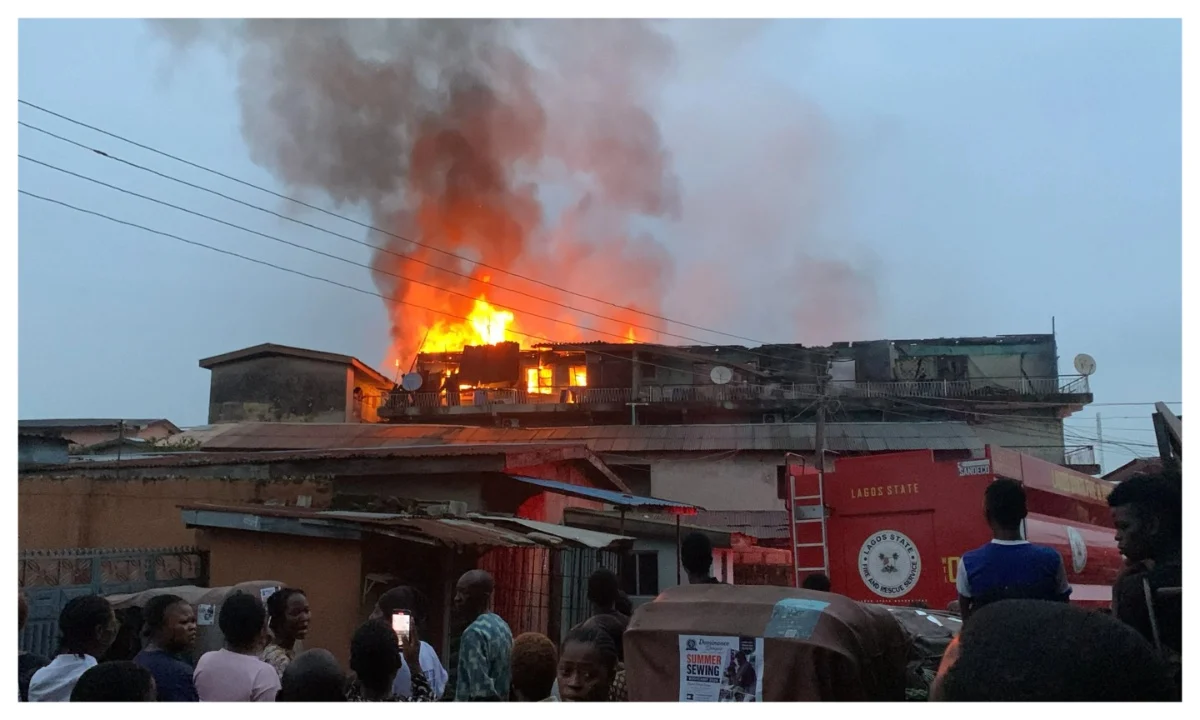
Firefighters control blazes in Ikorodu and Surulere while clearing major highway obstructions over a busy emergency weekend.
Two separate fires destroyed several shops in Ikorodu and Surulere on Monday, causing significant property loss for local traders. Official reports confirm that while merchandise and equipment worth millions of naira were lost, no one was injured or killed in either incident.
The first incident occurred early Monday morning at Adamo Bus Stop in Ikorodu. Investigators found that faulty electrical wiring sparked on the roof of a salon, allowing flames to spread to two nearby stores.
Emergency teams arrived promptly to extinguish the fire and cool the surrounding structures so the flames would not return. Later that morning, another fire broke out on Olatunde Onimole Street in Surulere, destroying two retail spaces that housed a furniture business and a grocery store.
READ ALSO:
- ‘I Was Never the Chosen One’ — Dembele Responds to Mbappe
- Plateau Attacks: Gunmen Kill Passengers, 13 Dead Across Three LGAs
- 2027: Northern Lecturers Back Tinubu, ASUU Disowns Endorsement
Emergency teams also assisted drivers dealing with transit disruptions across the city, including towing disabled trucks off busy roads and aiding passengers after a commercial bus overturned on the Third Mainland Bridge.
LASEMA leadership praised the teamwork of police officers, paramedics, and traffic managers who kept the public safe. State authorities continue to remind shop owners and residents to inspect their electrical systems regularly and keep equipment properly maintained to protect their workplaces.
No Lives Lost as Responders Contain Dual Fire Outbreaks Across Lagos
-

 Business3 days ago
Dangote: ₦525 Refinery Shares Could Rise to ₦10,000
-

 News2 days ago
SERAP Threatens Legal Action Over ₦126bn INEC Electoral Funds
-

 metro3 days ago
MURIC fires back at Peter Obi: Forget Sallah ceremony, free Nigerian Muslims
-

 metro3 days ago
Abia Police Arrest Father, Three Others Over Alleged Attempt to Sell 16-Month-Old Daughter
-
 International3 days ago
Trump Tells Supporters to ‘Cheat Like Hell’ Ahead of US Election
-
 Politics2 days ago
Five Islamic Clerics Abducted After Tinubu Re-Election Prayer At Yari’s Zamfara Residence
-

 metro3 days ago
FG Targets 2 Million Creative Jobs by 2030
-

 Auto3 days ago
Jetour Takes Award-Winning Dashing, Other SUVs to Abuja