
International
Russia ‘guilty’ over downed Azerbaijan plane – Azeri president
Russia ‘guilty’ over downed Azerbaijan plane – Azeri president
Azerbaijan president said on Monday that Russia was “guilty” over the downing of an airline last month that Baku says was shot by Russian air defences.
An Azerbaijan Airlines Embraer 190 jet crash-landed in Kazakhstan on December 25, killing 38 of the 67 people on board, after being diverted from a scheduled landing in the southern Russian city of Grozny.
Moscow has admitted its air defences were operational in the area at the time, which it said was under attack from Ukrainian drones.
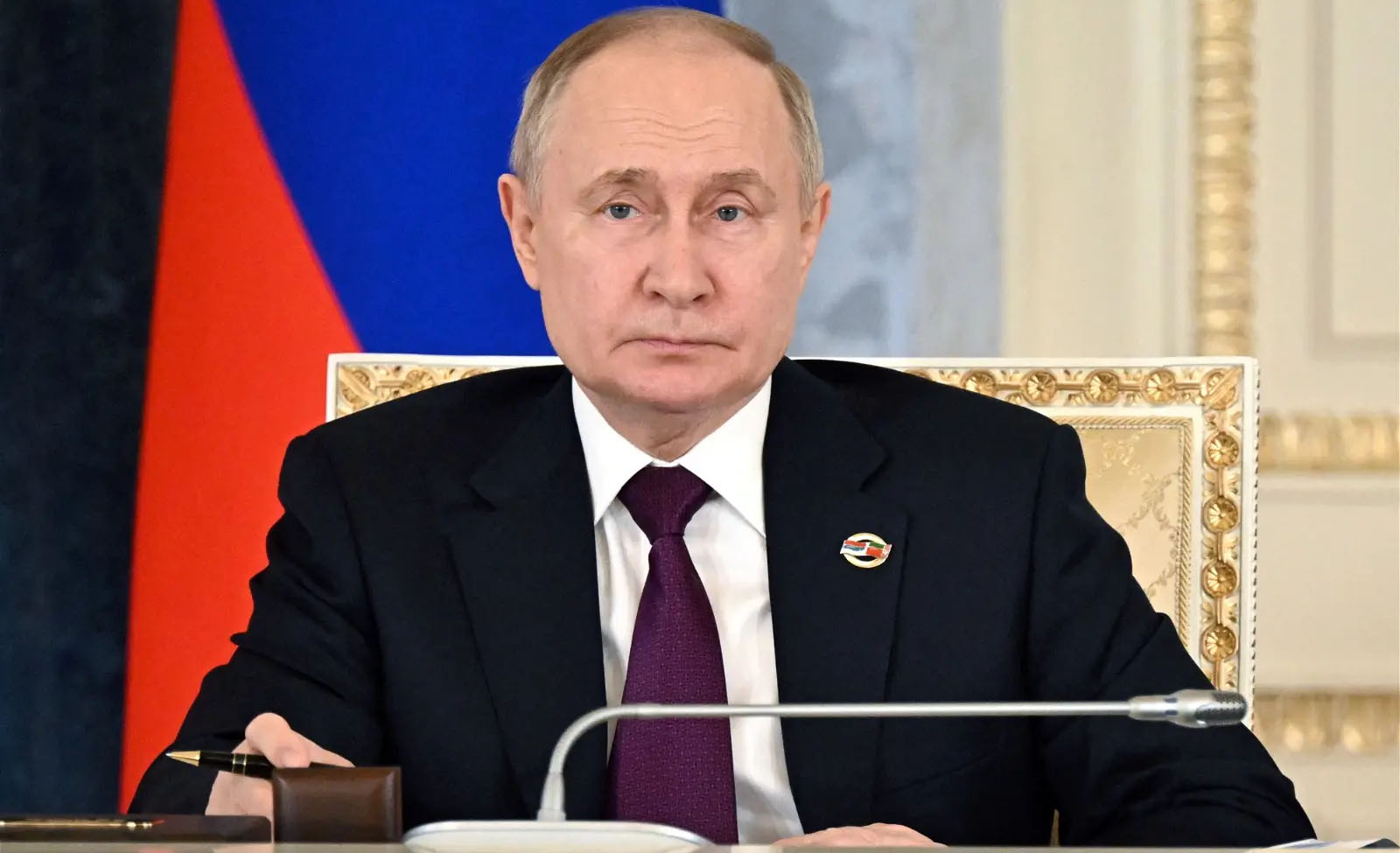
Russian President Vladimir Putin has apologised that the “incident” occurred in his country’s air space but has not responded to claims the plane was hit by Russian weapons.
“The guilt for the death of Azerbaijani citizens lies with representatives of the Russian Federation,” Azerbaijani President Ilham Aliyev said on Monday, according to a statement published by his office.
Aliyev was meeting surviving crew and family members of crew who died in the incident.
READ ALSO:
- Fire razes Sokoto SSG house, daughter, 3 grandchildren die
- Nigerians worry over Wike’s look over one year of poisoning alarm
- FG to quarantine passengers from China amid virus surge
The Azerbaijani leader, who is close to Putin, has issued rare fierce criticism of Moscow over the crash, demanding an apology, admission of guilt and the punishment of those found responsible for the “criminal” shooting of the plane.
On Monday he said Russia’s “concealment” of the causes and “delusional versions” being put forward “cause us justifiable anger”.
Initial statements by Russia’s air transport agency that the plane had been forced to divert after a bird strike have triggered fury in Baku.
Aliyev said air defence measures for Grozny — the capital of Russia’s southern Chechnya region, where the plane was set to land — were only announced after the plane had been “shot from the ground”.
“If there was a danger to Russian airspace, then the captain of the plane should have been informed straight away,” Aliyev said.
He also questioned why the plane was sent hundreds of kilometres (miles) across the Caspian Sea to the Kazakh city of Aktau for an emergency landing.
“Why it was directed to Aktau, we have no information,” Aliyev said.
Azerbaijan says preliminary results of its investigation show the plane was hit accidentally by a Russian air defence missile.
Russia has opened its own criminal probe but has not said whether it agrees with Baku’s assessment.
The plane’s black boxes have been sent to Brazil for analysis.
Russia ‘guilty’ over downed Azerbaijan plane – Azeri president









International
Qatar Petitions UN Over Iranian Missile Strikes on Maritime Assets

Qatar Petitions UN Over Iranian Missile Strikes on Maritime Assets
The government of Qatar has formally appealed to Antonio Guterres, strongly condemning what it described as Iranian drone and cruise missile attacks on its territory and maritime infrastructure, calling them clear violations of international law and national sovereignty.
In a detailed communication to the United Nations, Qatari authorities outlined a series of incidents that occurred between March 28 and April 1, 2026, describing them as “unlawful acts” that pose a serious threat to regional stability and global energy security. The letter is part of a broader diplomatic push, with Qatar submitting multiple complaints to the UN and Security Council in recent weeks over what it calls sustained aggression by Iran.
The most recent and severe incident took place on April 1, when three cruise missiles were launched from Iranian territory toward Qatari waters. According to officials, Qatari air defense systems intercepted two of the missiles, while a third struck the Aqua 1 fuel oil tanker operating within Qatar’s territorial waters. The vessel is leased to state-owned QatarEnergy.
QatarEnergy confirmed that all 21 crew members aboard the tanker were safely evacuated. Authorities reported no casualties and no environmental damage, but warned that the attack underscores growing risks to maritime safety and critical energy infrastructure in the Gulf.
READ ALSO:
- Macron Hits Back at Trump, Says Marriage Jibe “Not Worth a Response”
- Akwa Ibom Barber Jailed 14 Years for Defiling 12-Year-Old Girl
- Lagos Taskforce Launches Anti‑Crime Patrol Unit to Curb Rising Criminality
Qatar invoked Article 51 of the UN Charter, affirming its right to self-defense, and indicated that a full assessment of damages and losses is ongoing. The government also called for urgent international intervention, accountability, and enhanced protection of vital shipping lanes and offshore facilities.
Officials stressed that repeated attacks on commercial vessels and energy assets threaten not only Qatar but also the broader global economy, given the Gulf’s strategic role in oil and gas exports. The incidents have intensified concerns among Gulf states about the vulnerability of energy infrastructure, commercial shipping routes, and key maritime corridors.
The latest escalation comes amid heightened regional tensions involving Iran, the United States, and Israel, with fears growing that continued hostilities could spiral into a wider conflict. Maritime security bodies, including the United Kingdom Maritime Trade Operations, have continued to monitor the situation closely and warn of increased risks in the Gulf.
Despite the attacks, QatarEnergy stated that operations at affected facilities remain fully operational, signaling resilience in the country’s energy sector. However, analysts warn that sustained threats could disrupt supply chains and shake investor confidence if the situation deteriorates further.
Qatar has repeatedly emphasized that such actions are inconsistent with principles of good neighborliness and international norms, urging the global community to act decisively to prevent further escalation.
As of now, there has been no official response from Iran regarding the latest accusations.
Qatar Petitions UN Over Iranian Missile Strikes on Maritime Assets
International
Macron Hits Back at Trump, Says Marriage Jibe “Not Worth a Response”

Macron Hits Back at Trump, Says Marriage Jibe “Not Worth a Response”
French President Emmanuel Macron has dismissed mocking remarks by U.S. President Donald Trump about his marriage, saying the comments “do not merit a response” and are “neither elegant nor up to standard.” The diplomatic spat comes at a sensitive time, as global attention remains fixed on the escalating crisis in the Middle East and growing divisions within NATO.
Speaking during an official visit to Seoul, Macron—accompanied by his wife Brigitte Macron—refused to engage in a war of words with Trump, stressing that global leaders must focus on urgent priorities rather than personal insults. “So I am not going to respond to them — they do not merit a response,” he said, while emphasizing the need for calm diplomacy, peace efforts, and de-escalation in the Middle East. He warned against excessive rhetoric, adding: “There is too much talk, and it’s all over the place… We all need stability, calm, a return to peace — this isn’t a show.”
The controversy began after Trump mocked Macron and his wife during a private engagement, as he criticized NATO allies for not supporting U.S.-aligned military actions tied to Iran. According to reports, Trump imitated Macron with a French accent, claimed Brigitte Macron “treats him extremely badly,” and suggested Macron was still “recovering from the right to the jaw.” The remark referenced a 2025 viral video incident, which Macron previously dismissed as disinformation, insisting it was harmless joking. Trump also renewed criticism of NATO, describing the alliance as a “paper tiger” and questioning its reliability in future global conflicts.
READ ALSO:
- Akwa Ibom Barber Jailed 14 Years for Defiling 12-Year-Old Girl
- Lagos Taskforce Launches Anti‑Crime Patrol Unit to Curb Rising Criminality
- APC Governors, Lawmakers Clash Over Automatic Tickets Ahead of 2027 Elections
The exchange highlights widening cracks between the United States and European allies over strategy in the Middle East. Macron has consistently advocated for ceasefire negotiations, diplomatic engagement, and de-escalation of US-Israeli strikes on Iran, while Washington has pushed for stronger military backing from allies, increasing pressure within NATO. U.S. Secretary of State Marco Rubio further stirred debate by stating that the United States may “reexamine” its relationship with NATO after the Iran conflict.
Trump’s comments have drawn sharp criticism across France’s political spectrum. Yael Braun-Pivet described the remarks as inappropriate amid global instability, saying: “We are discussing the future of the world… and we have a president who is mocking others.” Opposition figure Manuel Bompard also defended Macron despite political differences, calling the comments “absolutely unacceptable.” The backlash underscores growing concern about diplomatic conduct at a time when international cooperation is critical.
While Macron publicly dismissed Trump’s personal jabs, his broader message reflects mounting frustration with Washington’s tone and policy direction. The dispute underscores rising US-Europe tensions, increasing uncertainty over NATO unity, and diverging approaches to the Iran conflict. As the geopolitical landscape grows more fragile, Macron’s warning remains clear: global leadership requires seriousness—not spectacle.
Macron Hits Back at Trump, Says Marriage Jibe “Not Worth a Response”
International
Iran Fires Missiles at Israel After Trump Threatens Weeks of ‘Extremely Hard’ Strikes
Iran Fires Missiles at Israel After Trump Threatens Weeks of ‘Extremely Hard’ Strikes
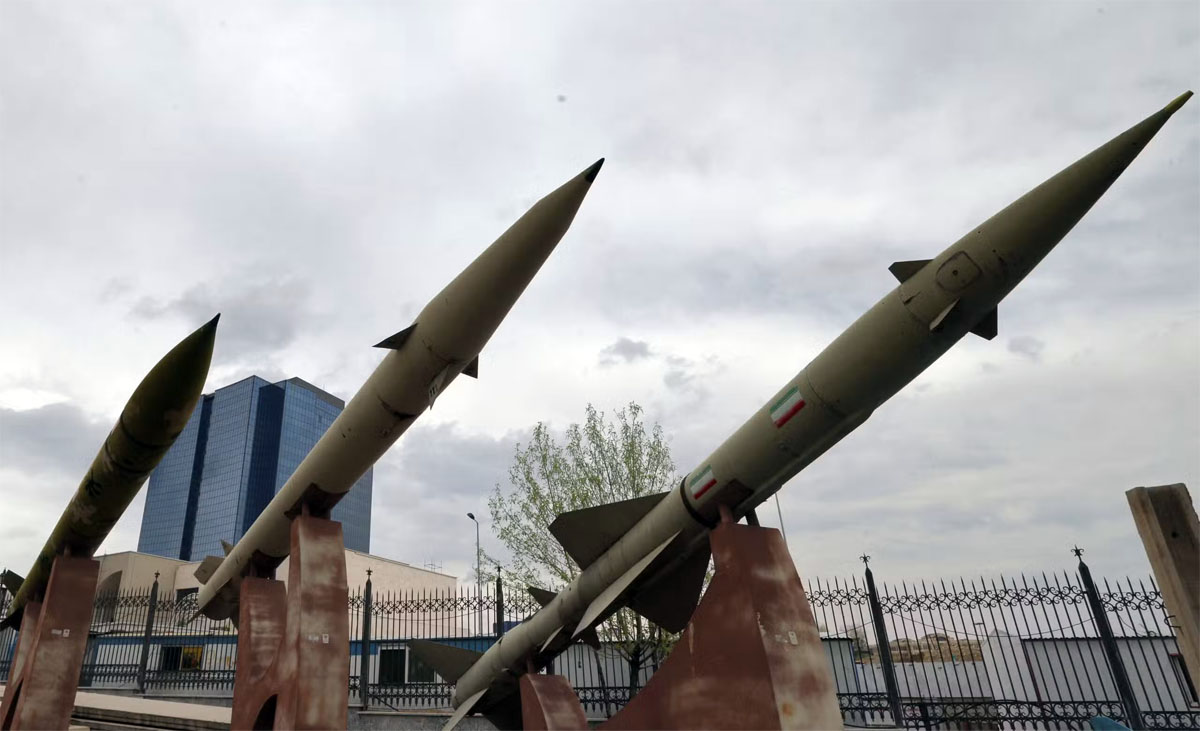
Israel came under missile fire from Iran on Thursday following a stern warning from US President Donald Trump, who said Washington could bomb Iran into the “Stone Ages” with heavy strikes over the next two to three weeks.
Speaking from the White House, Trump sought to reassure Americans that the military campaign launched on February 28, 2026, was nearing completion. He said, “Thanks to the progress we’ve made, we are on track to complete all of America’s military objectives shortly, very shortly.” He added that, over the coming weeks, U.S. forces would target key Iranian sites, including electric generating plants and critical infrastructure, unless Tehran agreed to his conditions.
Trump also indicated that negotiations might be possible with Iran’s new leadership, describing them as “less radical and much more reasonable” than their predecessor. Despite this, Iran rejected U.S. ceasefire overtures, calling the demands “maximalist and irrational,” with foreign ministry spokesman Esmaeil Baqaei confirming that no direct talks were taking place.
READ ALSO:
- NNPC Boosts Crude Supply to Dangote Refinery to Address Rising Fuel Prices
- Couple Jailed 15 Years for Selling Infant, Toddler in Calabar
- IGP Orders Massive Security Deployment in Plateau After Deadly Jos Killings
Following Trump’s address, the Israeli military reported four missile barrages within six hours, with air raid sirens sounding across northern and central Israel, including Tel Aviv and Haifa. Israeli defenses actively intercepted incoming missiles, while the Revolutionary Guards confirmed targeting an oil tanker in the Gulf, allegedly Israeli-owned, which sustained damage but caused no casualties.
The escalation also involved Iran-backed groups in the region. Hezbollah launched rockets and drones into northern Israel, while Israel struck back in Lebanon, killing several militants, including a top commander. Authorities say over 1,300 people have died in Lebanon since the war between Israel and Iran-backed forces erupted on March 2, 2026.
Meanwhile, energy markets reacted sharply, with Brent crude rising more than 4% to over $105 per barrel and West Texas Intermediate reaching around $103 per barrel, due to the de facto closure of the Strait of Hormuz, through which one-fifth of global oil normally passes. Britain hosted a virtual meeting of 35 countries to explore reopening the strait, with Prime Minister Keir Starmer emphasizing freedom of navigation.
In Tehran, Iranians expressed defiance amid the funeral of a Revolutionary Guards naval commander killed in Israeli strikes. Pro-government citizens vowed continued resistance. “This war has lasted a month. However long it takes, we will continue,” said Moussa Nowruzi, a 57-year-old pensioner.
Trump reassured regional allies — including Israel, Saudi Arabia, the UAE, Qatar, Kuwait, and Bahrain — that the U.S. would protect them from Iranian retaliatory fire. The conflict remains highly volatile, with analysts warning that further missile exchanges and regional flare-ups are likely if diplomatic solutions are not achieved soon.
Iran Fires Missiles at Israel After Trump Threatens Weeks of ‘Extremely Hard’ Strikes

-

 Entertainment3 days ago
Funke Akindele, Toyin Abraham Spark Reactions Over Alleged Snub at Iyabo Ojo’s Premiere
-

 Education2 days ago
WAEC Releases 2026 WASSCE Timetable for School Candidates
-

 Auto2 days ago
Lagos NURTW Chairman Sego Distributes Exotic Cars, Luxury Items to Cabinet Members (Video)
-

 metro2 days ago
Cars Torched as South Africans Protest Alleged Nigerian ‘Igbo King’ Coronation
-
 News3 days ago
UK Raises Visa Costs, Tightens Immigration Rules From April 8
-

 Railway1 day ago
Easter train: NRC increases Lagos-Ibadan trips, offers free Osun holiday transit
-

 Education2 days ago
JAMB Releases 2026 UTME Mock Results, Delists Over 20 CBT Centres
-

 Sports2 days ago
Osimhen Among Highest-Paid African Footballers in 2026 — See Full List