
International
Russian airstrike hits maternity hospital, as officials warn of fast-rising civilian toll+ Photos

MUKACHEVO, Ukraine — A Russian airstrike hit a Ukrainian maternity hospital in the besieged coastal city of Mariupol on Wednesday, injuring at least 17 staff members and patients as leaders warned of the fast-rising civilian toll of the two-week-old conflict, officials said.
The blast tore the front off one of the buildings in the hospital complex and damaged several others. One pregnant woman was evacuated on a stretcher; a long bleeding gash on her left hip was visible in images from the scene. Another pregnant woman, bleeding from her forehead, walked down a staircase, a faded rose-print blanket draped over her shoulders, her possessions in a purple plastic bag. A flaming car sat on a square that was punctuated with gnarled, burned trees.
“What kind of country is this, Russia, which is afraid of hospitals and maternity hospitals and destroys them?” Ukrainian President Volodymyr Zelensky said in a late-night video, appearing close to tears. “Were pregnant women going to fire at [the Russian city of] Rostov? Did someone in the maternity hospital abuse Russian-speakers? What was that? Was it the de-Nazification of the hospital?”
The bombing punctuated another devastating day in Ukraine, where leaders made increasingly desperate calls for more Western help, while U.S. officials warned that Russia seemed to be launching more indiscriminate attacks and making small but strategic gains on key cities. U.S. officials also warned that Russian rhetoric about chemical weapons could mean they were plotting a “false-flag” attack.
Officials feared that the coming days could be particularly grim for refugees and Ukrainians who have camped out in basements and subway stations to try to avoid Russian bombing. The United Nations said Wednesday it had recorded 516 civilian deaths, including 37 children, in the fighting so far, but it said in a statement that “the real figures are considerably higher.”

Evgeniy Maloletka/AP Ukrainian servicemen work inside of the damaged maternity hospital in Mariupol.
The governor of the region that includes Mariupol, Pavlo Kyrylenko, said in a video posted on Telegram that the 17 injured people in the Mariupol attack were mostly staff members and that no children were hurt. It was not immediately clear how full the hospital was when it was hit, with Mariupol encircled by Russian forces and city life largely having come to a halt. Patients appeared to have been using at least a portion of the aboveground maternity wards.
The attack drew immediate global condemnation, along with promises of more support for the embattled country.
“There are few things more depraved than targeting the vulnerable and defenceless,” British Prime Minister Boris Johnson wrote on Twitter.
The World Health Organization said earlier Wednesday it had so far verified 18 attacks on health facilities in Ukraine. The attacks inflicted 10 deaths and 16 injuries, the organization said.
READ ALSO:
- BREAKING: Bandits kill 13 soldiers, five policemen, vigilante in Kebbi
- Four policemen feared dead as Fashola, Ngige’s convoy crashes in Delta
- Bamise: Sanwo-Olu slams critics, BRT suspends operations, family demands justice
“These attacks deprive whole communities of health care,” said WHO Director General Tedros Adhanom Ghebreyesus.
The Russian military appears to be throwing inexperienced soldiers into combat, acknowledging Wednesday that at least some conscripted soldiers had been sent into battle despite Russian President Vladimir Putin’s orders to leave the fighting to professionals. Putin on Wednesday ordered military prosecutors to investigate who was responsible for disobeying the order, Kremlin spokesman Dmitry Peskov said.
Adding to worries about an escalation, White House press secretary Jen Psaki warned that Russia may be planning a “false-flag” chemical weapons attack, after Russian officials claimed to have evidence that the United States had supported a bioweapons program in Ukraine, and that “Ukrainian nationalists” were readying a chemical weapons “provocation” close to the Russian border near Kharkiv. U.S. officials dismissed the accusation.
“Now that Russia has made these false claims,” Psaki said on Twitter, “we should all be on the lookout for Russia to possibly use chemical or biological weapons in Ukraine, or to create a false flag operation using them.”
There were fears that the scale of the human suffering could grow even more if Ukraine’s nuclear facilities failed as a result of the fighting. Ukraine’s power grid operator, Ukrenergo, warned Wednesday that the closed Chernobyl nuclear power plant had been disconnected from the grid and that there were just 48 hours of fuel left for the diesel backup generators that keep the cooling and ventilation systems at the plant operational.
Ukrainian Foreign Minister Dmytro Kuleba demanded a cease-fire with Russia so repairs could be made, warning that after reserve diesel generators run out of fuel, “cooling systems of the storage facility for spent nuclear fuel will stop, making radiation leaks imminent.” The International Atomic Energy Agency was slightly less urgent, saying Wednesday on Twitter that the power loss “violates [a] key safety pillar on ensuring uninterrupted power supply” but adding that “in this case IAEA sees no critical impact on safety.”
Both Russia and Ukraine announced routes to allow people to leave hard-hit cities. But after accusing Putin’s forces of shelling the escape routes four days in a row, Ukrainian officials remained skeptical about the temporary cease-fire announcements.
Officials in Izyum, one of the cities set to be evacuated, alleged Wednesday that efforts to get civilians out were compromised by shelling from Russian forces. Other evacuations appeared to be proceeding. Local officials in the northeastern Sumy region, from which 5,000 people were able to evacuate a day earlier, said people were leaving in private cars and that they planned to load 22 buses, prioritizing pregnant women, women with children, older people and people with disabilities.

Evgeniy Maloletka/AP An injured pregnant woman walks downstairs in the damaged maternity hospital in Mariupol
By Friday morning, much of Ukraine could be hovering around 14 degrees Fahrenheit, with gusty winds from the east that make the air feel even more bitter. And parts of northeastern Ukraine could get up to four inches of snow through Friday. The bitter temperatures are expected to make the situation in the country more difficult — for soldiers and civilians alike.
A senior U.S. defense official, speaking on the condition of anonymity under rules set by the Pentagon, said Wednesday that Russia’s military campaign appears to be growing more indiscriminate as its troops make small but strategic gains on key cities.
There are “indications” the Russians are dropping “dumb munitions,” the official said, but added that it was “not totally clear whether that is by design” or because precision-guided munitions were somehow damaged.
“While we can’t prove a certain dumb bomb is hitting a certain target … what we see manifested is increasing damage to civilian infrastructure and civilian casualties,” the official said. Avoiding such casualties, the official added, “cannot be aided by the use of dumb bombs.”
The Biden administration has been adamant that it will not involve U.S. troops in the war and thus far has dismissed calls from Zelensky and others to impose a no-fly zone over Ukraine, saying enforcement could risk putting U.S. and NATO military personnel in direct conflict with Russian forces. But as the advance on major cities continues, the humanitarian situation is becoming more dire — particularly in places like Mariupol, which, according to the defense official, is now “isolated.”
Russia has launched more than 710 missiles, about half of which were fired from locations within Ukraine, according to the defense official. In the last 24 hours, Russian troops also made gains in their assault on Kharkiv, Ukraine’s second-largest population center, moving 20 kilometers closer to the center of the city in the country’s northeast. Russian forces also have moved about 15 kilometers to the north of Mykolaiv in southern Ukraine, according to a U.S. assessment, representing another territorial gain.
If the southern city falls, it could become a staging ground for a Russian assault on the large port city of Odessa, the defense official said.
The Pentagon believes Ukraine still has the bulk of its fixed-wing aircraft “available to them and operational,” the official said, but the Russians have surface-to-air missile systems that “virtually cover the whole country.”
“One has to assume they’re taking that into effect before they decide to fly manned aircraft,” the U.S. defense official said.

Evgeniy Maloletka/AP Ukrainian emergency personnel work at the side of the shell-damaged maternity hospital in Mariupol on March 9.
That posture appears to have been driving some skepticism in the United States about the logic of sending Ukraine more attack aircraft, as Poland has been pressing to do. On Tuesday night, the United States rejected a Polish proposal to move MiG-29 warplanes to a U.S. base in Germany so they could be deployed to aid Ukraine at the United States’ direction.
Psaki reiterated Wednesday that there “obvious concerns” with such a plan.
“It doesn’t require a military expert to understand why having planes fly from a U.S. air base into … a country where there is a war is not in our interests and not in NATO’s interests,” she said.
Psaki also cited problems with alternative suggestions for transporting those planes from Poland into Ukraine. “Carting them down the street,” she said, was not as easy as people might think.
“They have to be taken apart and put back together,” Psaki said. “You have to have people who are able to put those planes back together. You have to ensure that they can be safely moved through the course of a contested country.”
But U.S. officials also acknowledged that Ukrainian leaders may feel the need to press for whatever assistance they can get.
“If I were in President Zelensky’s position, I’m sure I would be asking for everything possible … to help the Ukrainian people,” Secretary of State Antony Blinken said at a news conference with visiting British Foreign Secretary Liz Truss.
Truss was more direct in her skepticism.
“The best way to defend” Ukraine, she said, is “with antitank weapons and anti-air weapons.”
Birnbaum, Demirjian and Firozi reported from Washington. Karly Domb Sadof, Elyse Samuels, Amy B Wang and Karen DeYoung in Washington and Karla Adam, Annabelle Timsit and Adela Suliman in London contributed to this report.
Washington Post












International
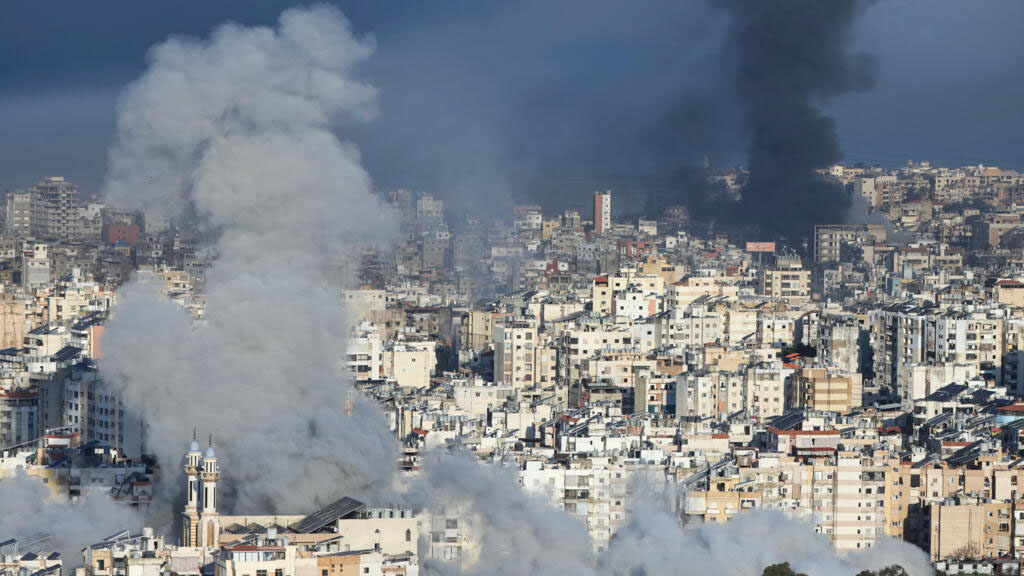
Civilian Deaths Rise to 18 as US-Israeli Strikes Hit Iran
Civilian Deaths Rise to 18 as US-Israeli Strikes Hit Iran
At least 18 people, including two children, have been killed in fresh strikes in Alborz Province, near the capital Tehran, as the conflict involving Iran, the United States, and Israel continues to escalate. The early morning attack also injured 24 others, according to local officials.
A deputy governor of Alborz Province confirmed the casualties, describing the strike as a direct hit on residential areas. Iranian authorities alleged that the strikes were carried out by US-Israeli forces, though independent verification remains limited due to restricted access to the affected locations.
The latest deaths come amid a growing humanitarian crisis in Iran. According to the US-based Human Rights Activists News Agency, at least 3,597 people have been killed since the conflict escalated, including 1,665 civilians—among them 248 children—as well as 1,221 military personnel and 711 others whose status is unconfirmed.
READ ALSO:
- FG Deports US Missionary Alex Barbir Over Alleged Role in Nigeria Insecurity
- Iran Lists Tough Conditions for Peace Talks with US
- BVN Enrolment Hits 68.6 Million as Growth Slows – NIBSS
Iranian officials have yet to release an updated comprehensive casualty figure, while international media face difficulties verifying reports due to access restrictions. Human rights organisations have raised concerns over the rising civilian toll, warning that continued strikes on populated areas could worsen the humanitarian situation.
The conflict, which has intensified in recent weeks with repeated air raids and missile attacks, has heightened fears of wider regional instability. Analysts say the escalation threatens both civilian safety and the broader Middle East security environment.
Despite international calls for restraint, attacks on residential areas in Alborz and other provinces highlight the vulnerability of civilians. Observers are urging urgent diplomatic efforts to de-escalate tensions and protect non-combatants in Iran.
Civilian Deaths Rise to 18 as US-Israeli Strikes Hit Iran
International
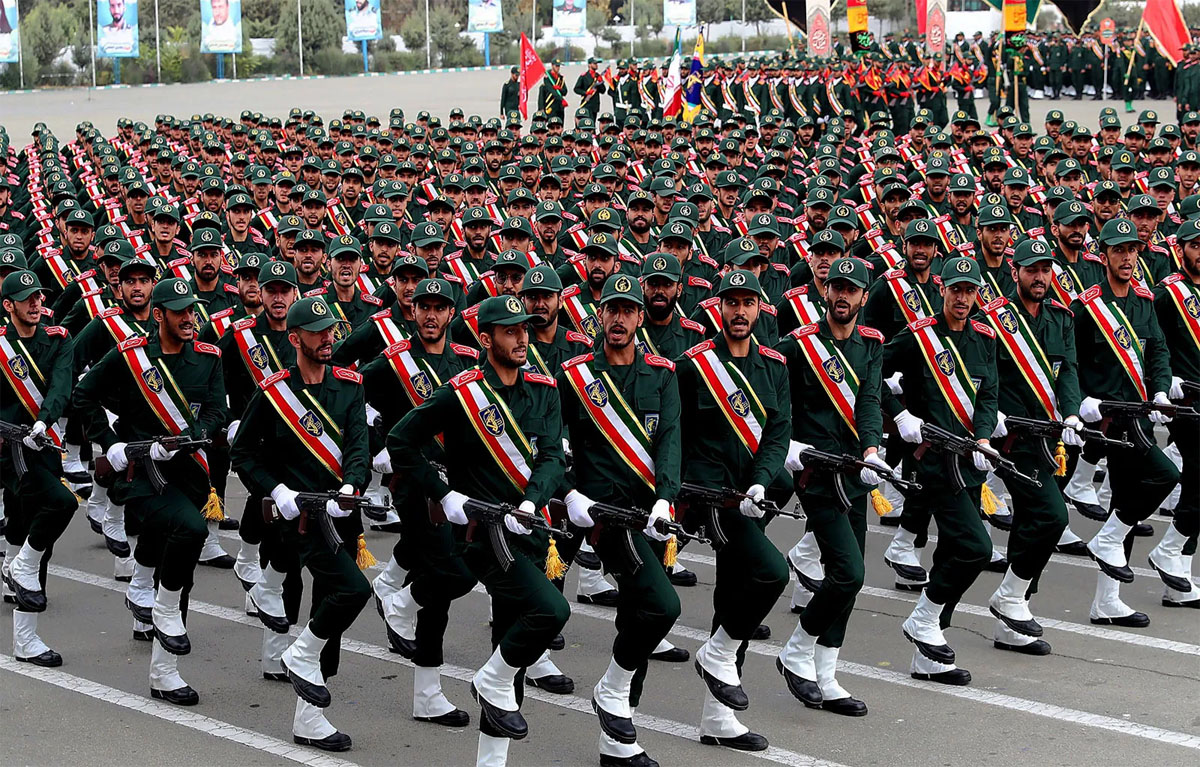
Iran Threatens Severe Retaliation After Israel Kills Quds Force Commander
Iran Threatens Severe Retaliation After Israel Kills Quds Force Commander
Israel has announced the killing of a senior Iranian military commander, Asghar Bagheri, in a targeted airstrike in Tehran, marking a significant escalation in the ongoing Israel-Iran conflict.
According to the Israeli military, the strike—carried out by its air force—eliminated Bagheri, who led the Quds Force special operations unit (Unit 840) since 2019. The military described him as a key figure involved in coordinating attacks against Israeli and American targets worldwide.
The Quds Force, a unit of Iran’s Islamic Revolutionary Guard Corps (IRGC), oversees the country’s overseas military and intelligence operations, including support for allied armed groups across the Middle East. Israeli officials said Bagheri had held several influential roles within the unit and was considered a high-value target.
Iran has yet to officially confirm the killing but has issued strong warnings of retaliation. A spokesperson for the Khatam al-Anbiya Central Headquarters cautioned that further escalation could have catastrophic consequences.
READ ALSO:
- Trump Claims US Sent Weapons to Iranian Protesters but They Were Diverted
- Trump threatens ‘hell’ for Iran over Hormuz Strait as deadline approaches
- Jigawa Arrests Seven Teachers for Cheating During Competency Test
The spokesperson warned that if hostilities continue to expand, the “entire region will turn into hell,” adding that attempts to defeat Iran have “turned into a swamp” that would ultimately trap its adversaries.
The development comes amid heightened tensions involving US President Donald Trump, who recently issued a 48-hour ultimatum to Iran to either strike a deal or reopen the Strait of Hormuz, a vital global oil shipping route. Trump warned that failure to comply would result in severe consequences, further intensifying fears of a wider regional conflict.
The crisis follows the reported killing of Iran’s Supreme Leader, Ali Khamenei, in a missile strike earlier this year—an event that triggered retaliatory attacks by Iran on Israeli and US positions.
Since then, the conflict has escalated into a broader confrontation, disrupting global trade after Iran blocked the Strait of Hormuz, a route responsible for transporting about 20 percent of the world’s oil supply.
Security analysts warn that Israel’s continued targeting of senior Iranian commanders, combined with escalating rhetoric from Tehran and Washington, could push the Middle East toward a full-scale war with serious global economic and security implications.
In summary, Israel’s killing of a top Quds Force commander in Tehran has intensified the already volatile Middle East crisis, raising concerns about further retaliation and a possible wider war.
Iran Threatens Severe Retaliation After Israel Kills Quds Force Commander
International
Trump Claims US Sent Weapons to Iranian Protesters but Diverted

Trump Claims US Sent Weapons to Iranian Protesters but Diverted
US President Donald Trump has revealed that the United States attempted to secretly supply weapons to Iranian protesters, but the operation failed after the arms were allegedly diverted before reaching their intended recipients.
Speaking at a White House Easter event, Trump said the weapons were meant to support Iranian anti-government protesters in defending themselves against authorities amid ongoing unrest. According to him, the US sent “a lot of guns” intended to empower citizens resisting government forces.
However, the plan did not succeed. Trump disclosed that the weapons never reached the protesters, claiming that those entrusted with delivering them withheld the arms. He expressed strong frustration over the outcome, warning that the individuals or group responsible would “pay a big price.”
Although Trump did not publicly name those involved during his remarks, he had earlier indicated that Kurdish intermediaries were responsible for diverting the weapons. He alleged that the arms were routed through Kurdish channels into Iran but were never passed on to the protesters as planned.
READ ALSO:
- Trump threatens ‘hell’ for Iran over Hormuz Strait as deadline approaches
- Jigawa Arrests Seven Teachers for Cheating During Competency Test
- US-Iran Conflict: MAN Outlines Urgent Steps to Shield Nigerian Manufacturers
The accusation has been strongly denied by Kurdish groups, who have rejected claims that they intercepted or kept any US-supplied weapons. The conflicting accounts have added a layer of controversy to an already sensitive geopolitical situation.
The disclosure is being widely interpreted as a rare acknowledgment of a covert US effort to influence internal developments in Iran. Analysts warn that such statements could heighten tensions between Washington and Tehran, especially at a time of escalating rhetoric and threats.
The development also lends weight to longstanding claims by Iranian authorities that foreign powers have played a role in fueling domestic protests. With tensions already high, Trump’s remarks could further complicate diplomatic dynamics and deepen mistrust between the two countries.
In summary, Trump’s claim that the US attempted to arm Iranian protesters—but failed due to alleged diversion—has sparked fresh debate over foreign involvement in Iran’s unrest and raised concerns about its broader geopolitical implications.
Trump Claims US Sent Weapons to Iranian Protesters but Diverted

-

 Politics3 days ago
Adeleke’s Aide Anisu Resigns, Defects to APC
-

 metro23 hours ago
MURIC Backs Egba Imams’ Call for Inclusive Leadership in Ogun 2027 Governorship Race
-

 Entertainment3 days ago
Nollywood Actress Laide Bakare Sets Strict Dating Rules: No Men in Her Home
-

 International2 days ago
Netanyahu Condemns ‘Christian Persecution’ in Nigeria in Easter Message
-

 Politics2 days ago
ADC Crisis Halts Makinde, Bala, Lawmakers’ Defections
-

 metro2 days ago
Hajiya Hadiza Attahiru Jega, Wife of Former INEC Chairman, Dies in Abuja
-

 Politics1 day ago
2027: Atiku Signs $1.2m US Lobbying Deal to Engage Trump
-

 Business1 day ago
Tax Evasion: Lagos Government Sues Bi-Courtney, DAAR, 33 Others