
Africa
Rwanda Police recovers over Rwf4 million stolen from British national

Rwanda Police recovers over Rwf4 million stolen from British national
Rwanda National Police and Rwanda Investigation Bureau (RIB) recovered Rwf4.1 million which was stolen from a British national after thieves broke into her vehicle in downtown Kigali. The money was recovered from two suspected thieves, both in their early twenties, who were also taken into custody. The money was on Saturday, April 15, handed over to the victim, Walker Jemrose Leanora, the head of Young Citizens of Rwanda, a charity organization that supports vulnerable youth and children. Walker said that, on April 12, she withdrew £3000 and exchanged it into local currency (Rwf4,110,000) but left the money in her vehicle.
I am so happy to receive this money because it was what we withdrew from the bank to pay for third term school fees for our 22 secondary students that we support. So, many children would be suffering because we did not know how to replace that money for them to go to school, Walker said. When she discovered that the money was gone, she said, it was her grandchildren that made her feel at ease that the money would be found. They (grandchildren) said ‘do not worry, you will get the money back, our Police will find them (thieves)’. So, I reported the theft at Nyarugenge Police, she added. The RNP spokesperson, Commissioner of Police (CP) John Bosco Kabera, said that a motorcycle, which the two suspects had used to escape after breaking into the car and stealing the money, was also impounded.
READ ALSO:
- Breaking: First Nigeria’s woman governor emerges as INEC declares Binani winner in Adamawa
- INEC upturns Aisha Binani declaration as Adamawa gov-elect
- Fintiri maintains lead over Binani in Adamawa supplementary gov poll
They trailed the victim from the bank, and they were identified from the CCTV footages. Rwf2,600,000 was recovered from one suspect while Rwf1.5 million was recovered from the other, Kabera said. One of the suspects, a resident of Nyamirambo sector in Nyarugenge District, is a former convict, who served two years at Nyarugenge prison for breaking into vehicles to steal valuables. He was released in December 2022 after completing his sentence.He was previous arrested on three different occasions and taken to Kigali Transit Centre for rehabilitation. Later, in 2017 he was taken to Iwawa Rehabilitation Centre. The other suspect was arrested in February for stealing a television flat screen and taken to Kigali Transit Centre for rehabilitation.
Kabera said that sharing information in real time is crucial in facilitating investigations. Real time information helps law enforcements to arrive at the scene swiftly to collect evidence. When you delay, it affects investigations in one way or another, Kabera said. He also sent a message to influencers and other people using social media platforms who report theft and other crimes, to always labour to give detailed information that facilitates investigations. Out of 30 people, who reported cases of theft on social media platforms, in March, Kabera said, only 11 gave additional information as requested by the Police. We know groups of young people at Giti k’inyoni, Gisozi, Gatsata, Gikondo and other areas, who spend the whole day loitering waiting for darkness to start stealing from cars, snatching phones and other valuables from people, breaking into houses, and those who steal clothes from drying ropes in homes. The advice to them is that they should not spend the whole day thinking of how to steal, but have positive thinking of what to do to change their lives, the spokesperson reiterated
The New Times








Africa
Gabon Suspends Social Media Over False Information, Cyber Threats

Gabon Suspends Social Media Over False Information, Cyber Threats
The government of Gabon has ordered a nationwide suspension of social media platforms “until further notice,” citing the spread of false information, cyberbullying, and unauthorised sharing of personal data as threats to national security, social cohesion, and public order.
The announcement was made by the High Authority for Communication (HAC) in a televised address. HAC spokesperson Jean-Claude Mendome explained that the measure aims to curb the circulation of “inappropriate, defamatory, hateful, and insulting content”, which authorities believe have been fueling unrest and deepening social divisions.
While HAC did not specify which platforms would be immediately affected, widely used applications such as WhatsApp, Facebook, TikTok, and Instagram are expected to be included in the restrictions. By Wednesday, several users reported that Facebook and TikTok were already inaccessible, indicating the government may begin enforcement imminently.
READ ALSO:
- BREAKING: Academic Activities Halted as ASUU Resumes Strike
- Ramadan Health Tips: Six Ways to Stay Hydrated While Fasting
- Tinubu Urges Senate to Confirm Yusuf for NAHCON, Marafa for INEC
The suspension comes amid a sensitive political and social period in Gabon. The country has been undergoing a transition since the 2023 military coup led by President Brice Oligui Nguema, who later won the 2024 presidential election with over 90% of the vote, ending more than five decades of Bongo family rule. Since taking office, Nguema promised reforms and a break from past practices, including allowing independent media to observe election processes — a departure from the use of internet blackouts by previous administrations.
Despite these reforms, the government faces growing social and economic pressures. Teachers launched strikes in December 2025 over unpaid salaries and worsening working conditions, and unrest has since spread to healthcare workers, civil servants, and other public-sector employees. These protests have heightened concerns over public order and digital misinformation, prompting the government’s move to restrict social media access.
Civil society groups and analysts have raised concerns about the impact of the suspension on freedom of expression, economic activity, and digital communication, noting that approximately 850,000 Gabonese actively rely on social media for business, news, and personal communication. The government, however, insists the action is a temporary security measure to prevent further destabilisation.
Observers say Gabon’s decision reflects a broader challenge across Africa, where governments attempt to balance cybersecurity, misinformation control, and digital freedoms. The coming days will test both the government’s resolve and the resilience of the country’s digital economy.
Gabon Suspends Social Media Over False Information, Cyber Threats
Africa
Ghana Moves to Extradite Russian Man Over Secret Sex Video Scandal

Ghana Moves to Extradite Russian Man Over Secret Sex Video Scandal
The Government of Ghana has announced plans to seek the extradition of a Russian man accused of secretly recording sexual encounters with several women and sharing the footage online without consent, describing the alleged acts as serious violations of cybersecurity, privacy, and women’s rights.
African and Russian media identified the suspect as a self-styled “pick-up artist” and online blogger in his 30s who travelled to Ghana and allegedly filmed intimate encounters without the knowledge of the women involved. Some reports claim he used sunglasses fitted with a hidden camera to record the encounters and later circulated the videos on social media platforms. Ghanaian authorities, however, said investigations are ongoing and have not officially confirmed the recording method.
Speaking to journalists, Ghana’s Minister for Communication, Digital Technology and Innovation, Sam George, said he had invited the Russian ambassador in Accra for discussions, stressing that the alleged actions violate Ghana’s cyber-security laws and would not be taken lightly.
He said preliminary findings by the Ministry of Gender, Children and Social Protection suggest the suspect has likely left Ghana, but emphasised that his departure does not reduce the seriousness of the alleged conduct or the government’s obligation to ensure accountability.
READ ALSO:
- Residents Flee as Gunmen Launch Fresh Attack on Kwara Community
- DSS Probes El-Rufai’s Claim of Toxic Chemical Import by Ribadu
- Senate Explains Why Real-Time E-Transmission Cannot Be Mandatory in 2027 Elections
According to the minister, Ghana will activate international cooperation mechanisms, including Interpol, to trace the suspect and seek the cooperation of Russia.
“We will activate every resource at our disposal, working with Interpol and Russian law enforcement. We want the gentleman brought back to Ghana to face the rigours of our law,” George said, adding that the government would still formally request extradition despite Russia’s long-standing policy of rarely extraditing its citizens.
He noted that Ghana may consider trying the suspect in absentia if he refuses to return to face prosecution.
Local media reports also indicate that the same individual may have been involved in similar illegal recordings in Kenya, raising concerns about multiple victims across different countries and the possibility of a broader pattern of abuse.
Under Ghana’s Cybersecurity Act, 2020, the non-consensual recording or distribution of intimate images or videos is a serious criminal offence, carrying penalties of up to 25 years in prison. Authorities say the law was enacted to address rising cases of online sexual abuse, revenge pornography, and digital exploitation, particularly targeting women and children.
Ghana has intensified enforcement of these laws in recent years. In 2022, a court sentenced Solomon Doga, a 22-year-old phone repairer, to 14 years in prison after he pleaded guilty to sharing nude images without consent in a sexual extortion case.
Officials say the current case underscores Ghana’s determination to protect digital privacy, public trust, and the dignity of women, as investigations into the Russian suspect continue.
Ghana Moves to Extradite Russian Man Over Secret Sex Video Scandal
Africa
Starvation Cult Preacher Faces Expanded Murder, Terrorism Charges in Kenya
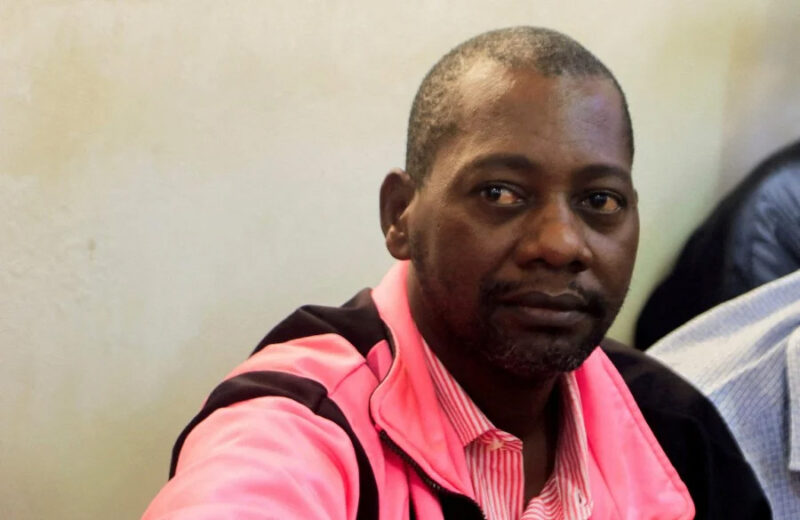
Starvation Cult Preacher Faces Expanded Murder, Terrorism Charges in Kenya
A Kenyan court has expanded charges against self‑proclaimed preacher Paul Nthenge Mackenzie and seven associates over the deaths of 52 more victims linked to the notorious Good News International Church starvation cult. The new charges come as part of ongoing investigations into one of the deadliest cult-related tragedies in Kenya.
Mackenzie, already facing trial in Mombasa for multiple counts of murder, manslaughter, and terrorism, appeared in court Wednesday with the seven co-accused. Prosecutors allege that even after his initial arrest in 2023, Mackenzie continued to influence followers through radical teachings, encouraging them to travel to Kwa Binzaro, where victims died from prolonged starvation.
Authorities say the additional 52 deaths occurred between January and July 2025, in shallow graves near Kwa Binzaro in Kilifi County. Prosecutors describe the group as a structured criminal sect, using extremist ideology to coerce followers into life-threatening practices. The defendants face charges including organized criminal activity, radicalization, and facilitating terrorism.
READ ALSO:
- Lagos Allocates 180 Shops to Displaced Alabarago Market Traders
- Cubana Chief Priest Vows to Oppose Peter Obi in 2027 Presidential Race
- US Lawmakers Introduce Bill to Sanction Kwankwaso, Miyetti Allah
All eight accused pleaded not guilty, and the next hearing is scheduled for March 4, 2026. Legal experts note that the expanded charges reflect the complexity of prosecuting cult-related killings and the ongoing effort to hold both leaders and their network accountable under Kenya’s legal system.
The Shakahola Forest case first drew global attention in 2023, when investigators discovered hundreds of bodies in shallow graves, following claims that Mackenzie had persuaded followers and children to starve themselves to “meet Jesus.” Over 400 victims were recovered from Shakahola, making it one of the worst cult-linked tragedies in modern Kenyan history.
Authorities warn that the expanded prosecution aims to dismantle the deadly network and prevent future tragedies, while sparking national debate about the regulation of fringe religious groups and doomsday cults in Kenya.
Starvation Cult Preacher Faces Expanded Murder, Terrorism Charges in Kenya

-

 News1 day ago
Saudi Arabia Confirms Sighting of Ramadan Crescent, Fasting Begins Wednesday
-

 metro1 day ago
Lagos Woman Shares Ordeal After Alleged Rape, Sparks Nationwide Outcry
-

 metro2 days ago
US Freezes Assets of Eight Nigerians Over Boko Haram, ISIL, Cybercrime Links
-

 News1 day ago
Ramadan Begins in Nigeria as Sultan Confirms Crescent Sighting
-
 Entertainment2 days ago
Mystery in Lekki: Police Probe Death of Two Nollywood Crew Found Lifeless in Parked Car
-
 metro2 days ago
Terror in Lagos Traffic: Cutlass Gang Unleashes Mayhem on Mile 12–Ketu Road
-

 Auto2 days ago
Appeal Court Ruling on VIO Limited to Abuja, Not Lagos — LASG
-
 News2 days ago
Teargas, Chaos at EFCC as El-Rufai’s Supporters Clash with Security Operatives