

News
Salah: Prices of rams shoot up, sell N200,000 to N250,000

Salah: Prices of rams shoot up, sell N200,000 to N250,000
Ahead of the forthcoming Eid-el Kabir celebration, prices of animals used for sacrifice during the annual festival have skyrocketed beyond the reach of many celebrants, Daily Trust Saturday reports.
Every year during the Islamic month of Dhul Hijjah, Muslims around the world who have the means, slaughter animals like sheep, goat, cow or camel – to reflect the Prophet Ibrahim’s willingness to sacrifice his son Ismail, for the sake of God.
While it is not the only livestock acceptable, a narration in Sahih Muslim records that the Prophet Muhammad (pbuh) sought out horned, white rams to sacrifice during the Eid el-Kabir, as the ram of Prophet Ibrahim had been.
At least, one third of the meat from the animal should go to the poor or vulnerable people.
Like that of ram, prices of cow and camel have also hit the roof top, as findings by our correspondents revealed.
The hike in the cost of basic commodities in Nigeria has reflected itself boldly in the livestock sector, a situation that is likely to deny average Muslims the means to partake in the annual sacrifice amidst economic crunch.
Findings by Daily Trust Saturday in Abuja, Kano, Yobe, Jigawa, Katsina, Lagos, and Port Harcourt, among others, showed that the cost of rams currently hover between N150,000 and N1 million, depending on the size and the location one is buying from.
Stakeholders interviewed blamed the situation on the insecurity around some major rearing states in the North West and North East, devaluation of the naira as well as withdrawal of fuel subsidy, which have in addition affected the price of animal feeds and the cost of transportation.
The Sultan of Sokoto, Alhaji Muhammadu Sa’ad Abubakar III, had declared Friday, June 7, 2024, as the First Day of Dhul Hijjah 1445AH and Sunday, June 16th, which will be equivalent to the 10th of Dhul Hijjah will be marked as this year’s Eid-El-Kabir.
Low patronage in Abuja
Few days to the Sallah celebration, sales have yet to pick up as noticed during a visit to the Abuja main livestock market located in the Dei-Dei area in the Federal Capital Territory, FCT.
This is a sharp contrast with the past when the market served as a rallying point for suppliers and off-takers well ahead of the Sallah festivity.
A livestock merchant in the market, Uzairu Dan-Kudalo, said that the insecurity problem bedevilling some major rearing states, like Zamfara, Sokoto, and Katsina, is affecting the sector, sending many stakeholders out of the business.
READ ALSO:
- Why states cannot pay N60,000 new minimum wage – Govs
- Tinubu best presidential candidate in 2023, says Ex-Peter Obi campaign director Doyin Okupe
- Kaduna private varsity to permanently forfeit all assets
“I know a lot of our members from Zamfara State that lost their capital to this problem just in one fell swoop, after their communities were attacked by bandits or run into their trap along the way. You can see how our animals’ stalls look empty, and it is less than 10 days to the Sallah festivity.
“From Zamfara State alone, we used to receive a supply of no less than 30 trailers during this period, with each trailer loading between 200 and 250 rams,” he said.
“This does not include other mini trucks like canter, which used to supply without getting any attention. But as I am talking to you today, we are yet to receive any kind of supply from there. If you are talking about other states, by this time, a single merchant alone from other states like Kano, Jigawa, or Yobe, would supply about 200 rams into the market. However, many of them can no longer afford a capital of 50 rams now, due to the cost of transportation and the naira devaluation”, he said.
He said bulk buyers and individuals were also not forthcoming.
“By now, I would have finished with the supply of rams to all my regular customers who may decide to keep the animals here, or transport them to their agency, for onward distribution among the beneficiaries. But I am yet to witness this gesture so far,” he said.
Another trader, Yahuza Abdullahi, said that some of them that usually travel to the neighbouring countries like Niger, Chad, or Cameroun to supply the animals are now constrained as a result of the naira devaluation, which according to him has given an edge to the traders that come from the Francophone currency nations.
“Their currency (CFA) has greater value compared to the naira, and as such, nothing you can buy from those countries and expect to make any gain out of it there.
“Rather, the traders of those countries stand to gain a lot when they convert their currency to naira and export our commodities,” he said.
The price of ram has either tripled or doubled when compared with how it went last year.
The same thing goes to the animal feed and cost of transportation.
Given the breakdown of ram price, based on their categories, a trader, Abdullahi Adamu, said the smallest animal that attained the level of sacrifice currently sold between N120,000 and N150,000.
He said such categories of rams were sold between N70,000 and N100,000 last year.
According to him, a middle-sized ram, which sold between N150,000 and N180,000 last year now costs between N250,000 and N300,000.
There are also jumbo-sized rams, which cost from N800,000 and N1.4 million.
Same rams were said to be sold last year, at the rate of N500,000, while the biggest of all, sold at N1.1 million last year.
The same scenario is playing out at the animals’ feed commodity.
A breakdown of the commodity in the market indicates that a bag of animals’ feed extracted from raw beans is now sold between N13,000 and N14,000 per bag, depending on product quality and location. This is in contrast to the N7,000 to N8,000 sold last year.
Same goes to the dried groundnut leaves, which are currently sold at between N5,000 and N6,000, compared to previous year, when it was sold at between N3,500 and N4,000.
READ ALSO:
- UniAbuja VC to appear in court over governing council crisis
- Dozens killed near Sudan’s capital as UN warns of soaring displacement
- Police arrest adulterated drink importer in Lagos
For the harvested corn by-product, its bag costs between N6,000 and N7,000, compared to the previous price of N4,000 and N4,500.
A bag of grounded maize by-product, or dusa in Hausa, is sold at between N18,000 and N20,000, compared to its previous price of N9,000 to N10,000 last year.
In the transportation sector, the traders said a canter truck supplying rams from Katsina or Kano that they paid between N200,000 and N250,000 last year, now goes for between N400,000 to N500,000.
Same truck transporting the animals from either Adamawa or Yobe states in the North East costs around N700,000, in contrast to between N400,000 and N500,000 paid in the past.
It was further learnt that transporting rams in trailer trucks from Mubi, in Adamawa State, a town neighbouring Cameroon Republic, now costs up to N1.5 million, as against last year’s N800,000.
They’re beyond our reach
An Abuja resident, Alhaji Shuaib Hassan who went to buy ram at the livestock market on Wednesday, left there disappointed, as according to him, the N200,000 he budgeted for the kind of ram he bought at N150,000 last year could not get him a ram as it now costs N300,000.
He said he was contemplating returning to the market on Saturday when more traders, especially those from the rural areas, are expected to arrive.
Sani Yusuf said he found succour when he bought two rams at his home town of Bichi, in Kano State, two months ago.
“I bought them at the rate of N150,000, and so far, I have sent about N10,000 for their feeding. I am expecting to pay an additional N10,000 for their transportation from the area to Abuja in the company of other animals tomorrow,” he said.
There was the same lamentation from some roadside ram markets visited in the neighbouring Niger State.
A ram trader in Suleja town in the state, Abubakar Kwamba, predicted the likely drop in ram supply, as well as patronage of buyers this year, owing to the present economic reality.
“We are about 20 traders that supplied ram to this makeshift market last year. But as I am speaking to you now, there are only three of us that arrived, and still with lower supply, compared to what we brought last year. I could only afford to buy 12 rams this year, against 20 that I bought last year”, he said.
Sale outlets springing up in Kano
Roadside livestock markets are springing up in Kano, our correspondent reports.
At Kofar Naisa, where the sacrificial animals are available for would-be buyers, a trader, Yusuf Sani said they were bringing the animals from outside the state, in the hope of making little profit.
He said that the economic situation in the country makes everything look bleak at the moment, but he was hopeful that in the next few days, the market will record improved patronage.
READ ALSO:
- Danish PM attacked in Copenhagen, man arrested
- UN adds Israel to list of militaries committing violations against children
- 2026 W’Cup: Super Eagles walk tight rope, play 1-1 with South Africa in Uyo
He said the price of a big ram starts from N400,000, while medium-sized ones go for N300,000. A small-sized ram costs N100,000.
Another ram seller, Aminu Gwagwarmaya from Hauran Makaranta, said with N150,000, one can get a modest ram in the market.
Hajiya Ummah Kulthum Muhammad Lawan was seen at one of the markets.
She said the money she used and bought many rams last year, which she shared with relatives, will not give her half the number this time around.
“The price for each ram has almost tripled and only God can see us through,” she said.
At the Kofar Naisa Market, the price of camels range from N780,000, depending on the size.
It is permissible for three to seven people to contribute money to buy a camel or a cow for sacrifice and share the meat, clerics said.
The situation in Jigawa State is the same as merchants at Dutse temporary animals’ market lament low patronage.
One of them, Shafiu Hamisu, said scarcity of rams in the state has forced them to resort to buying from neighbouring states.
He said the prices of rams have increased significantly, with a big ram now selling for between N200,000 and N250,000, compared to less than N120,000 in 2023.
Sani Muhammad Bashir, a buyer at Dutse temporary ram market, said he will manage to buy the ram, though the price is very costly.
He called on the government to look into the matter and make things easy for the masses by finding ways to tackle inflation and provision of affordable means of transportation.
Yobe traders in a fix
In Yobe State, livestock sellers have decried low patronage of the sacrificial animal ahead of the Eid-el-Kabir.
The sellers said buyers are reluctant to come forward, saying this may not be unconnected with the high cost of the animals at a time people were struggling to buy food for their families.
The few buyers seen were lamenting over the price of ram and cow, which has increased significantly compared with last year.
A buyer at the livestock market in Potiskum, Adamu Umar, told Daily Trust Saturday that “A cow that you can buy at the cost of N400,000 last year, has now been increased to N650,000, while a bull, which we used to buy at N1,000,000 has now skyrocketed to N1,600,000.
“The situation of the market is not encouraging and by the body language of the buyers, you will understand that many people will not slaughter cows this year,” he said.
MD Adechu, a buyer from Lagos told Daily Trust Saturday that cattle are very expensive even though the Potiskum market is one of the largest livestock markets in the North.
“I don’t know what is happening; please, our government should make things easy for the masses and its citizens”, he said.
Abubakar Usman, a dealer said the price of a medium-sized ram starts from N100,000.
Another ram seller, Alhaji Zakari Yau, told Daily Trust Saturday that most of the buyers are from the southern part of the country.
In Lagos, Abduwasiu Ibrahim, a middleman, said rams and cattle are cheaper in the North.
“The ram that you can buy for N120,000 will cost you around N220,000 here; and a cow of N1,000,000 in the North will be sold at around N1,500,000 here,” he said.
READ ALSO:
- Sanwo-Olu opens SDGs multi-storey Sickle Cell Centre at LASUTH
- Chery lights up Lagos Motor Fair with Tiggo 8 Pro launch
- Woman bags 25 years imprisonment for hiring hitmen to kill her husband
He said the situation is the same in Port Harcourt, Enugu and Uyo.
“The reason is the cost of transportation and other challenges on the highway. You have to pay a lot of money to many tax collectors,” he said.
The same thing goes to the animal feed and cost of transportation.
Given the breakdown of ram price, based on their categories, a trader, Abdullahi Adamu, said the smallest animal that attained the level of sacrifice currently sold between N120,000 and N150,000.
He said such categories of rams were sold between N70,000 and N100,000 last year.
According to him, a middle-sized ram, which sold between N150,000 and N180,000 last year now costs between N250,000 and N300,000.
There are also jumbo-sized rams, which cost from N800,000 and N1.4 million.
Same rams were said to be sold last year, at the rate of N500,000, while the biggest of all, sold at N1.1 million last year.
The same scenario is playing out at the animals’ feed commodity.
A breakdown of the commodity in the market indicates that a bag of animals’ feed extracted from raw beans is now sold between N13,000 and N14,000 per bag, depending on product quality and location. This is in contrast to the N7,000 to N8,000 sold last year.
Same goes to the dried groundnut leaves, which are currently sold at between N5,000 and N6,000, compared to previous year, when it was sold at between N3,500 and N4,000.
For the harvested corn by-product, its bag costs between N6,000 and N7,000, compared to the previous price of N4,000 and N4,500.
A bag of grounded maize by-product, or dusa in Hausa, is sold at between N18,000 and N20,000, compared to its previous price of N9,000 to N10,000 last year.
In the transportation sector, the traders said a canter truck supplying rams from Katsina or Kano that they paid between N200,000 and N250,000 last year, now goes for between N400,000 to N500,000.
Same truck transporting the animals from either Adamawa or Yobe states in the North East costs around N700,000, in contrast to between N400,000 and N500,000 paid in the past.
It was further learnt that transporting rams in trailer trucks from Mubi, in Adamawa State, a town neighbouring Cameroon Republic, now costs up to N1.5 million, as against last year’s N800,000.
They’re beyond our reach
An Abuja resident, Alhaji Shuaib Hassan who went to buy ram at the livestock market on Wednesday, left there disappointed, as according to him, the N200,000 he budgeted for the kind of ram he bought at N150,000 last year could not get him a ram as it now costs N300,000.
He said he was contemplating returning to the market on Saturday when more traders, especially those from the rural areas, are expected to arrive.
Sani Yusuf said he found succour when he bought two rams at his home town of Bichi, in Kano State, two months ago.
“I bought them at the rate of N150,000, and so far, I have sent about N10,000 for their feeding. I am expecting to pay an additional N10,000 for their transportation from the area to Abuja in the company of other animals tomorrow,” he said.
There was the same lamentation from some roadside ram markets visited in the neighbouring Niger State.
READ ALSO:
- Police nabs 18-year-old for stealing LED lights on third mainland bridge
- BREAKING: FG increases minimum wage offer to ₦62,000
- MURIC kicks as WAEC supervisor disallows use of hijab
A ram trader in Suleja town in the state, Abubakar Kwamba, predicted the likely drop in ram supply, as well as patronage of buyers this year, owing to the present economic reality.
“We are about 20 traders that supplied ram to this makeshift market last year. But as I am speaking to you now, there are only three of us that arrived, and still with lower supply, compared to what we brought last year. I could only afford to buy 12 rams this year, against 20 that I bought last year”, he said.
Sale outlets springing up in Kano
Roadside livestock markets are springing up in Kano, our correspondent reports.
At Kofar Naisa, where the sacrificial animals are available for would-be buyers, a trader, Yusuf Sani said they were bringing the animals from outside the state, in the hope of making little profit.
He said that the economic situation in the country makes everything look bleak at the moment, but he was hopeful that in the next few days, the market will record improved patronage.
He said the price of a big ram starts from N400,000, while medium-sized ones go for N300,000. A small-sized ram costs N100,000.
Another ram seller, Aminu Gwagwarmaya from Hauran Makaranta, said with N150,000, one can get a modest ram in the market.
Hajiya Ummah Kulthum Muhammad Lawan was seen at one of the markets.
She said the money she used and bought many rams last year, which she shared with relatives, will not give her half the number this time around.
“The price for each ram has almost tripled and only God can see us through,” she said.
At the Kofar Naisa Market, the price of camels range from N780,000, depending on the size.
It is permissible for three to seven people to contribute money to buy a camel or a cow for sacrifice and share the meat, clerics said.
The situation in Jigawa State is the same as merchants at Dutse temporary animals’ market lament low patronage.
One of them, Shafiu Hamisu, said scarcity of rams in the state has forced them to resort to buying from neighbouring states.
He said the prices of rams have increased significantly, with a big ram now selling for between N200,000 and N250,000, compared to less than N120,000 in 2023.
Sani Muhammad Bashir, a buyer at Dutse temporary ram market, said he will manage to buy the ram, though the price is very costly.
He called on the government to look into the matter and make things easy for the masses by finding ways to tackle inflation and provision of affordable means of transportation.
Yobe traders in a fix
In Yobe State, livestock sellers have decried low patronage of the sacrificial animal ahead of the Eid-el-Kabir.
The sellers said buyers are reluctant to come forward, saying this may not be unconnected with the high cost of the animals at a time people were struggling to buy food for their families.
The few buyers seen were lamenting over the price of ram and cow, which has increased significantly compared with last year.
READ ALSO:
- Rainstorm destroys 100 houses in Plateau
- Four suspected terrorists surrender, blame severe hunger
- Enugu monarch, 4 others remanded over murder of policemen
A buyer at the livestock market in Potiskum, Adamu Umar, told Daily Trust Saturday that “A cow that you can buy at the cost of N400,000 last year, has now been increased to N650,000, while a bull, which we used to buy at N1,000,000 has now skyrocketed to N1,600,000.
“The situation of the market is not encouraging and by the body language of the buyers, you will understand that many people will not slaughter cows this year,” he said.
MD Adechu, a buyer from Lagos told Daily Trust Saturday that cattle are very expensive even though the Potiskum market is one of the largest livestock markets in the North.
“I don’t know what is happening; please, our government should make things easy for the masses and its citizens”, he said.
Abubakar Usman, a dealer said the price of a medium-sized ram starts from N100,000.
Another ram seller, Alhaji Zakari Yau, told Daily Trust Saturday that most of the buyers are from the southern part of the country.
In Lagos, Abduwasiu Ibrahim, a middleman, said rams and cattle are cheaper in the North.
“The ram that you can buy for N120,000 will cost you around N220,000 here; and a cow of N1,000,000 in the North will be sold at around N1,500,000 here,” he said.
He said the situation is the same in Port Harcourt, Enugu and Uyo.
“The reason is the cost of transportation and other challenges on the highway. You have to pay a lot of money to many tax collectors,” he said.
Salah: Prices of rams shoot up, sell N200,000 to N250,000
Daily Trust










News
NLC Backs ₦500 Petrol Demand, Workers Propose ₦500,000 Salary
NLC Backs ₦500 Petrol Demand, Workers Propose ₦500,000 Salary
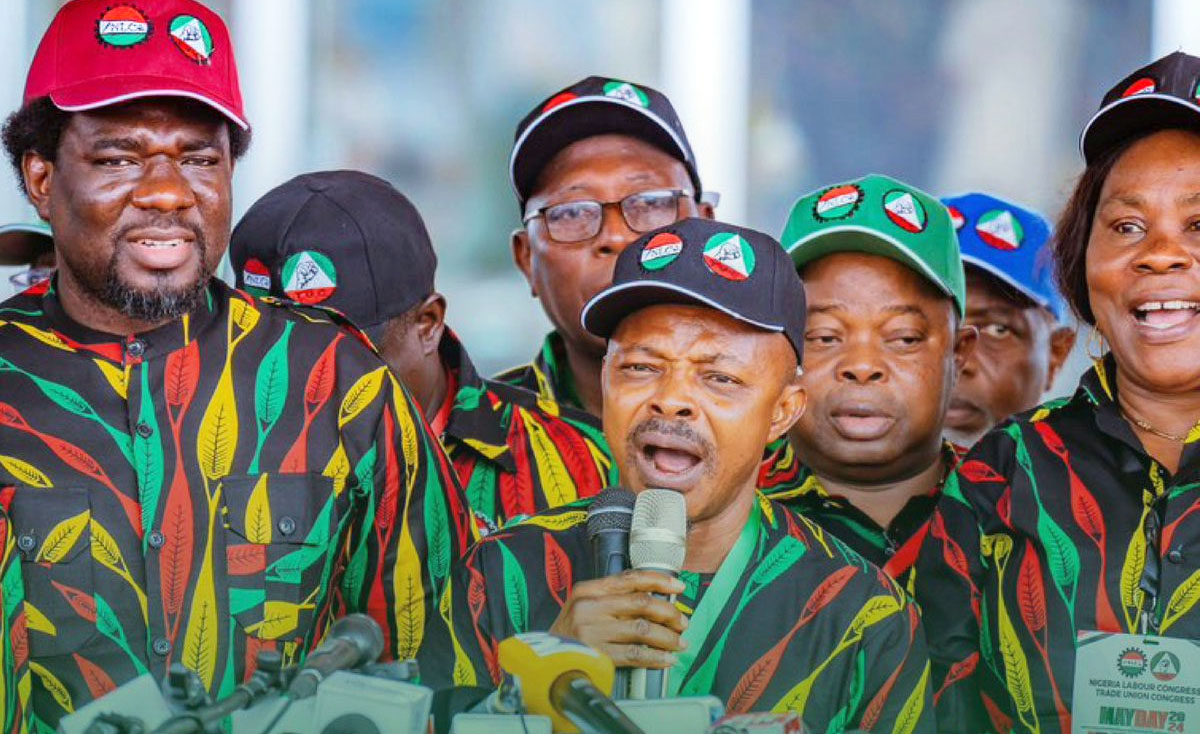
The Nigeria Labour Congress (NLC) has backed demands by public-sector workers for the Federal Government to reduce the price of petrol to ₦500 per litre, while the workers have proposed a minimum monthly salary of ₦500,000 for Grade Level 01, Step 1 officers under a new public-service salary structure.
The demands were contained in a letter by the Trade Union Side of the Joint National Public Service Negotiating Council (JNPSNC) to President Bola Ahmed Tinubu, amid renewed concerns over rising fuel prices and the worsening cost-of-living crisis.
The workers gave the Federal Government until September 30, 2026, to respond to their demands, which cover petrol prices, wage awards, salary reviews and negotiations for a new wage structure.
The JNPSNC called for an intervention capable of bringing the petrol pump price down to ₦500 per litre, arguing that the rising cost of fuel has significantly increased transportation expenses and contributed to higher prices of food and other essential goods and services.
The demand comes amid another increase in petrol prices in Nigeria, with pump prices rising in several parts of the country following higher crude oil prices in the international market.
The labour movement has argued that the impact of rising fuel costs extends beyond motorists, as increased transportation and energy expenses raise the cost of moving agricultural produce, manufacturing goods and other commodities.
The NLC has therefore called for measures to cushion workers and households from the effects of the latest price increases.
On wages, the JNPSNC proposed a new salary structure under which a Grade Level 01, Step 1 public servant would earn ₦500,000 monthly.
The figure is important because it is a proposal by the workers, not an approved national minimum wage.
The proposed ₦500,000 salary is also specifically linked to the public-service salary structure being sought by the JNPSNC ahead of January 2027. It should not be presented as though the Federal Government has agreed to increase Nigeria’s statutory national minimum wage to ₦500,000.
READ ALSO:
- UK Student Visa: 63 Countries Exempt From Proof of Funds, Nigeria Excluded
- Lagos Intensifies Surveillance as Adulterated Palm Oil Raises Food Safety Concerns
- Saudi Arabia Rejects Nigeria’s Request for More 2027 Hajj Slots
Nigeria’s current statutory national minimum wage remains ₦70,000 per month, following the 2024 wage agreement and legislation.
The workers are seeking negotiations for a new wage structure while also asking for an immediate Wage Award for employees at the Federal, State and Local Government levels as a short-term response to current economic pressures.
The proposed wage award is separate from the longer-term salary review and any future agreement on the national minimum wage.
The JNPSNC wants the National Salaries, Incomes and Wages Commission (NSIWC) to begin discussions with labour representatives and other stakeholders on the proposed wage award and salary adjustments.
The workers said rising inflation, transportation costs, food prices, housing expenses, healthcare costs and education fees had reduced the purchasing power of existing salaries.
They also called for salaries and allowances across the public service to be reviewed upward and for future salary adjustments to take inflation into account.
According to the workers, linking periodic salary reviews to inflation would help prevent employees’ earnings from losing substantial purchasing power between major wage negotiations.
The labour side also demanded subsidised transportation and affordable housing for public servants as part of measures to ease the pressure on workers.
On the petroleum sector, the workers backed calls for greater availability of crude oil in naira to local refineries, arguing that increased domestic refining and local crude supply could reduce exposure to international oil-market shocks.
The NLC has previously advocated measures to strengthen local refining and improve domestic energy security as part of efforts to reduce pressure on consumers.
The workers also rejected the idea of relying mainly on food palliatives to address the hardship, arguing that temporary relief does not adequately compensate for the loss of purchasing power caused by higher transportation and living costs.
They instead called for measures that would address the underlying drivers of the rising cost of living.
The latest demands come as the downstream petroleum market faces renewed price pressure despite increased domestic refining capacity.
Higher international crude prices have raised input costs for refiners, contributing to increases in the wholesale and retail prices of petrol.
The development has renewed debate over how much protection Nigeria’s expanding domestic refining capacity can provide against global oil-price movements.
For organised labour, however, the immediate concern is the effect of higher fuel prices on workers and households.
The JNPSNC expects the Federal Government to respond to its demands by September 30, while also looking ahead to negotiations for a new salary and wage framework from January 2027.
The council has indicated that it expects the President’s forthcoming Independence Day address to address some of the concerns raised by workers.
The proposed ₦500,000 salary therefore remains a labour demand awaiting negotiation and possible government consideration. It is not the current national minimum wage and does not mean that all Nigerian workers are automatically entitled to ₦500,000 monthly.
Similarly, the proposed ₦500 petrol price is a demand for government intervention and does not represent the current regulated or prevailing pump price across Nigeria.
The labour demands reflect growing pressure from organised workers for government action as households and businesses contend with higher fuel prices, transportation costs and living expenses.
NLC Backs ₦500 Petrol Demand, Workers Propose ₦500,000 Salary
News
MURIC Warns FG: Any Move Against Atiku Now Lacks Tact
MURIC Warns FG: Any Move Against Atiku Now Lacks Tact
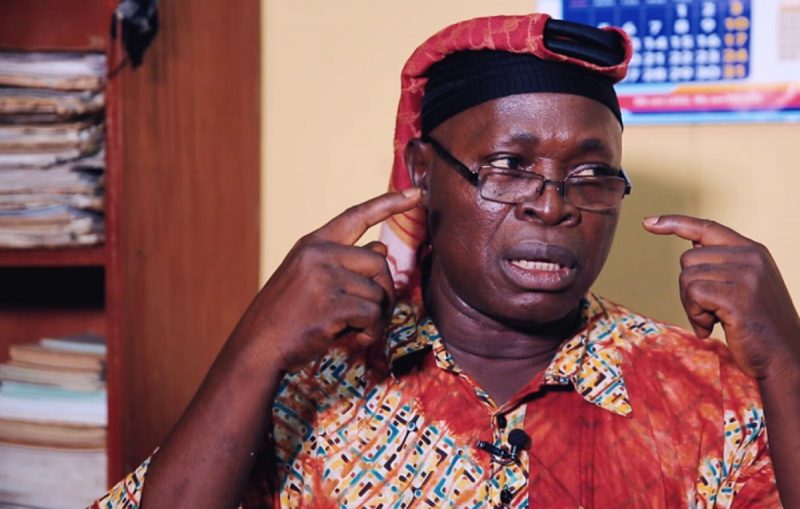
The Muslim Rights Concern (MURIC) has warned the Federal Government against any move to arrest, interrogate or otherwise take action against former Vice-President Atiku Abubakar over a fresh petition before the Economic and Financial Crimes Commission, saying such a step at this time could send the wrong signal to Nigerians.
The warning came as the controversy over a renewed call for the EFCC to investigate allegations dating back to Atiku’s tenure as Vice-President intensified, with opposition figures and the petitioner trading sharply different arguments over the matter.
In a statement issued on Tuesday, September 22, 2026, MURIC Founder and Executive Director, Professor Ishaq Akintola, said the government should exercise caution, particularly with the 2027 general elections approaching.
According to MURIC, the renewed allegations have assumed greater sensitivity because Atiku is now the presidential candidate of the African Democratic Congress and a leading opposition figure.
“We warn that such an attempt at this point in time will send the wrong signal to Nigerians,” the group said, adding that with the 2027 elections “at the doorsteps,” the Federal Government should carefully consider the consequences of any action against the former Vice-President.
MURIC described any such move as lacking tact and “short” of emotional intelligence, while urging the government to avoid conduct that could create the impression that state institutions were being used against political opponents.
The organisation also warned against what it described as a damaging “body language” capable of portraying Nigeria as a “banana republic.”
MURIC said that although the country had already lost some ethical ground, its democratic values and norms remained important safeguards that should not be compromised.
“Our corporate image in the global community is sinking fast,” the group added.
READ ALSO:
- JAMB Allows Candidates to Change Lost SIM, Email Addresses
- How Nigerians Can Get Federal High Court Affidavit Online Without Visiting Court
- Plateau Violence: Several Killed as Fresh Attacks Trigger Mass Exodus
The statement followed renewed controversy over a petition by former House of Representatives member, Ehiozuwa Agbonayinma, asking the EFCC to revisit allegations concerning Atiku’s activities while he was Vice-President.
Reports indicate that the petition relates to allegations investigated by the EFCC between 2005 and 2006. Agbonayinma reportedly gave the anti-graft agency a 14-day ultimatum to act and threatened legal action if the commission failed to respond.
Former Senator Dino Melaye has strongly opposed the renewed petition, describing it as an attempt to “resurrect the dead.” Melaye argued that the matter had previously been dealt with and questioned the basis for bringing it back almost two decades later.
The dispute, however, has escalated beyond the original petition, with Agbonayinma hitting back at Melaye and challenging him to produce documentary evidence for his claim that the allegations had been investigated and dismissed.
In a statement reported on September 20, Agbonayinma insisted that he was asking the EFCC to perform its statutory responsibility and argued that the substance of the allegations should be addressed rather than his personality or political affiliation.
“You cannot defend Atiku Abubakar from an EFCC petition by attacking me,” Agbonayinma was quoted as saying, while urging the anti-graft agency to determine whether the allegations warranted further investigation.
The renewed controversy has also brought attention to the distinction between a petition seeking investigation and a finding of criminal guilt. The existence of a petition does not, by itself, establish that the person named in it committed an offence.
There is also a historical legal dimension to the allegations. Reports on the previous proceedings state that a Lagos State High Court set aside an EFCC administrative indictment against Atiku in December 2006, while no criminal conviction against him resulted from the allegations.
Atiku has continued to deny wrongdoing and has challenged anyone with credible evidence against him to present it through the appropriate legal channels.
Meanwhile, there was no confirmed announcement from the EFCC, as of the latest reports reviewed, that it had arrested Atiku or formally invited him over the fresh petition. A separate and more recent EFCC investigation reported on September 20 concerns individuals connected to allegations surrounding the Mambilla Power Project, which is distinct from the 2005–2006 allegations at the centre of the present political dispute.
The MURIC intervention has therefore added a fresh dimension to an increasingly heated political controversy, with the organisation urging the Federal Government to exercise restraint and protect public confidence in Nigeria’s democratic institutions.
With the 2027 elections approaching, the dispute over the renewed EFCC petition is expected to remain a significant political issue, particularly if the anti-graft agency decides to take further steps.
For MURIC, however, the timing of any action is crucial. The organisation wants the Federal Government to ensure that whatever steps are taken by law-enforcement agencies are grounded in due process and do not create the perception of political persecution.
The group’s central warning is that Nigeria must guard its democratic reputation and avoid actions that could further erode public confidence in its institutions at a particularly sensitive period in the nation’s political calendar.
MURIC Warns FG: Any Move Against Atiku Now Lacks Tact
News
NiMet Predicts Thunderstorms, Rain Across Nigeria Till Wednesday
NiMet Predicts Thunderstorms, Rain Across Nigeria Till Wednesday
The Nigerian Meteorological Agency (NiMet) has predicted thunderstorms and rainfall across several parts of Nigeria from Monday to Wednesday.
The agency, in its weather outlook released on Sunday, also warned that strong winds could occur ahead of thunderstorms in some areas.
For Monday, NiMet expects thunderstorms and light rain over parts of Taraba and Kebbi during the morning. Later in the day, moderate rainfall is expected across several areas in the North-East, Kaduna, Taraba and Kebbi.
In the North-Central region, parts of Niger State could experience thunderstorms and light rain in the morning, while most parts of the region may record thunderstorms with moderate rainfall by afternoon or evening.
The southern states are also expected to experience wet conditions. NiMet forecasts cloudy skies in the morning, with isolated thunderstorms and light rain over parts of Bayelsa, Rivers, Akwa Ibom and Cross River. More thunderstorms and light rain are expected later in the day.
Tuesday and Wednesday Forecast
On Tuesday, the northern region is expected to have patches of cloud in the morning, with thunderstorms and light rain possible in parts of Taraba.
By afternoon or evening, most parts of the region could experience thunderstorms accompanied by moderate rain.
In the North-Central, parts of the Federal Capital Territory, Niger, Nasarawa and Plateau states are expected to receive thunderstorms and moderate rainfall later in the day.
Southern areas, including parts of Ebonyi, Enugu, Abia and the South-South, may also experience thunderstorms and light rain.
NiMet expects more widespread rainfall on Wednesday, particularly across northern and North-Central states. Borno, Bauchi, Gombe, Kaduna, Adamawa and Taraba are among the areas listed for morning thunderstorms and moderate rain.
The agency also forecasts thunderstorms and moderate rainfall across much of the South later on Wednesday.
NiMet advised residents to secure loose objects and take precautions against strong winds. Motorists were urged to avoid driving during heavy rainfall, while residents were advised to disconnect electrical appliances during thunderstorms and stay away from tall trees.
Airline operators were also advised to obtain airport-specific weather information when planning flights.
NiMet Predicts Thunderstorms, Rain Across Nigeria Till Wednesday
-

 International2 days ago
18 Suspects Transferred to US Over 2021 Killing of Haitian President Moïse
-

 News2 days ago
NiMet Predicts Thunderstorms, Rain Across Nigeria Till Wednesday
-

 Politics2 days ago
‘Join the Hunt’ — Soludo Urges Igbos to Strategically Align Ahead of 2027
-

 Sports2 days ago
Messi Fires Stunning 75th Career Free-Kick to Reach 930 Goals in Inter Miami Draw
-

 metro2 days ago
My Heart Has Always Been Home With You — Tinubu’s Powerful Message to Oluremi at 66
-

 News2 days ago
Working People United Celebrates Oluremi Tinubu at 66, Commends Her Humanitarian Efforts
-
 News1 day ago
NLC Backs ₦500 Petrol Demand, Workers Propose ₦500,000 Salary
-

 Auto2 days ago
Jetour T1 Storms Abuja as Automaker Accelerates Nigeria Expansion