

News
Why states cannot pay N60,000 new minimum wage – Govs
Why states cannot pay N60,000 new minimum wage – Govs
Governors of the 36 states of the federation have rejected the N60,000 minimum wage earlier proposed by the federal government.
The Director, Media and Public Affairs of the Nigeria Governors’ Forum (NGF), Hajiya Halimah Salihu Ahmed disclosed this in a statement yesterday.
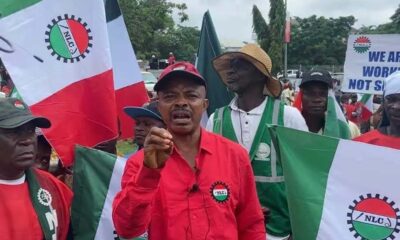
Recall that the Nigeria Labour Congress (NLC) and the Trade Union Congress (TUC) had on Monday embarked on indefinite strike action after rejecting the federal government’s N60,000 offer as minimum wage.
But they later announced that they would relax the strike action for one week to give room for further negotiations with the federal government, which had promised to increase the wage from N60,000.
However, the governors said the N60,000 wage is not realistic and unsustainable, arguing that if implemented, it would force some states in the country to be borrowing to pay workers’ salaries.
The statement reads in part, “The Nigeria Governors’ Forum (NGF) is in agreement that a new minimum wage is due. The Forum also sympathises with labour unions in their push for higher wages.
“However, the Forum urges all parties to consider the fact that the minimum wage negotiations also involve consequential adjustments across all cadres, including pensioners.
“The NGF cautions parties in this important discussion to look beyond just signing a document for the sake of it; any agreement to be signed should be sustainable and realistic.
“All things considered, the NGF holds that the N60,000 minimum wage proposal is not sustainable and cannot fly. It will simply mean that many states will spend all their FAAC allocations on just paying salaries with nothing left for development purposes.
READ ALSO:
- Tinubu best presidential candidate in 2023, says Ex-Peter Obi campaign director Doyin Okupe
- Kaduna private varsity to permanently forfeit all assets
- UniAbuja VC to appear in court over governing council crisis
“In fact, a few states will end up borrowing to pay workers every month. We do not think this will be in the collective interest of the country, including workers.
“We appeal that all parties involved, especially the labour unions, consider all the socioeconomic variables and settle for an agreement that is sustainable, durable, and fair to all other segments of the society who have legitimate claim to public resources.”
Labour pegs demand at N250,000 as govt recommends N62,000
Meanwhile, members of the organised labour have brought their demand to the sum of N250,000 as the new minimum wage for workers while the government also raised its initial amount of N60,000 by N2,000 making N62,000 in total.
President of TUC, Festus Osifo, disclosed this to journalists in Abuja Friday night at Nicon Luxury Hotel, venue of the National Minimum Wage Tripartite committee meeting after a 4-hour marathon closed door meeting.
Osifo said the two labour centres have not agreed with both the government and the members of the Organised Private Sector on the new offer, arguing that they would continue to push for a wage that would stand the test of time in the country.
“As we are now, the Organised Private Sector and the government side, have recommended N62,000 to be minimum wage but for us, from Labour, we felt that with the current economic hardship and with the difficulty in the land, the sum of N250,000 should be the what should be okay as the minimum wage”, he said.
Also speaking after the meeting, Governor Hope Uzodinma, who was accompanied by his Kwara State counterpart, said there is no longer hostility among members of the committee and that the tension in the country has been eased, insisting that the committee would soon produce a joint report that would be presented to the president.
However, the NLC earlier lambasted the Secretary to the Government of the Federation (SGF), George Akume, for terming Monday’s nationwide strike as “treasonable felony and economic sabotage”
Why states cannot pay N60,000 new minimum wage – Govs






News
2027 Elections: INEC Reveals Why Pantami, Adebutu, Others Were Excluded
2027 Elections: INEC Reveals Why Pantami, Adebutu, Others Were Excluded
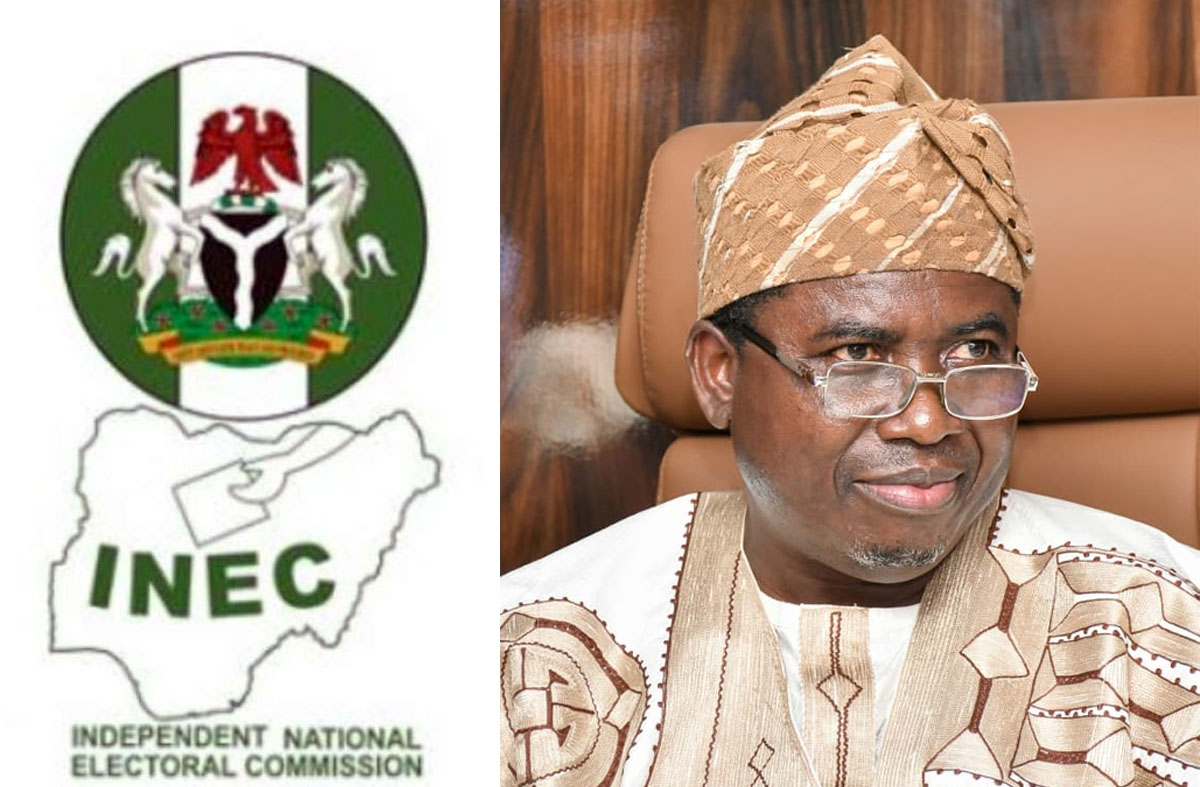
The Independent National Electoral Commission (INEC) has explained why some political parties and their governorship candidates were excluded from the final list for the 2027 elections, citing failure to comply with the statutory requirement to submit membership registers before conducting valid party primaries.
The commission said the decision followed a Supreme Court judgment delivered on September 24, 2026, which upheld the constitutionality of relevant provisions of the Electoral Act, 2026, requiring political parties to submit their membership registers within a prescribed period.
The explanation comes amid complaints from affected political parties and candidates following the publication of INEC’s final list of governorship candidates, which omitted several prominent opposition figures.
Among those affected are Isa Ali Pantami, the Peoples Democratic Party (PDP) governorship candidate in Gombe State, and Ladi Adebutu, the party’s candidate in Ogun State.
Pantami’s name was missing despite his emergence from a court-ordered rerun of the PDP governorship primary in Gombe, while Adebutu and his running mate were also absent from the list.
In a statement issued on Tuesday, October 13, INEC National Commissioner and Chairman of its Information and Voter Education Committee, Mohammed Kudu Haruna, said the commission applied the Supreme Court’s decision when finalising the list.
The judgment arose from an appeal filed by INEC against an earlier Court of Appeal decision that had nullified Sections 77(5)–(7) of the Electoral Act, 2026.
The Supreme Court upheld the provisions, which require political parties to submit their membership registers as a prerequisite for valid party primaries.
READ ALSO:
- IPOB Denies Monday Sit-at-Home Return, Challenges Police to Produce Evidence
- FG Moves to Expand CNG Vehicle Production, Targets Cheaper Transport Fares
- 2027: Adeleke’s Camp Promises 1.5 Million Votes for Tinubu in Osun
It also upheld INEC’s timetable requiring parties to submit their registers between April 21 and May 10, 2026.
According to the commission, the apex court held that parties that failed to comply with the statutory requirements were ineligible to sponsor candidates for the elections.
INEC said it was consequently required to give effect to the judgment in accordance with Section 287(1) of the 1999 Constitution, as amended, which requires compliance with decisions of superior courts.
The commission added that the final lists of presidential and National Assembly candidates had already been published on September 12, 2026, before the Supreme Court delivered its judgment.
The omissions have triggered reactions from affected political parties, with the PDP saying it was engaging INEC over the absence of its candidates in Gombe and Ogun states.
The Nigeria Democratic Congress (NDC) has also raised concerns over the omission of some of its governorship candidates, while other affected political groups have indicated their intention to pursue available remedies.
The development has heightened concerns among opposition parties as preparations continue for the February 6, 2027, governorship elections.
INEC, however, said political parties that believe their candidates were wrongly omitted from the final list have 14 days from the date of publication to notify the commission.
It fixed October 24, 2026, as the deadline for such notifications under Section 32(2) of the Electoral Act, 2026.
The commission reaffirmed its commitment to transparency, adherence to the rule of law and the credibility of the electoral process.
The next steps by affected parties will determine whether the omissions can be resolved through the commission’s notification procedure or other legal avenues available to them.
2027 Elections: INEC Reveals Why Pantami, Adebutu, Others Were Excluded
News
Shell Exits Nigeria’s Gas Distribution Business, Sells Stake to Vaaris Energy

Shell Exits Nigeria’s Gas Distribution Business, Sells Stake to Vaaris Energy
Shell Petroleum B.V. has agreed to sell its entire interest in the Shell Nigeria Gas Group to indigenous energy company Vaaris Energy Limited, marking another major shift in the international oil giant’s business portfolio in Nigeria.
The agreement, announced on Tuesday, October 13, 2026, covers Shell’s domestic gas distribution business in the country. The financial terms of the transaction were not disclosed in the announcement.
The proposed sale will transfer Shell’s interest in the gas distribution group to Vaaris Energy, a Nigerian-owned company seeking to expand its presence in the country’s oil and gas industry.
The transaction represents another adjustment to Shell’s Nigerian operations as the company focuses on selected oil, gas and integrated energy projects.
Shell’s latest move follows its earlier exit from onshore oil production through the sale of its interest in the Shell Petroleum Development Company of Nigeria Limited (SPDC) to the Renaissance consortium. That transaction was completed in March 2025 after receiving the necessary regulatory approvals.
However, the two transactions involve different parts of Shell’s Nigerian business. The earlier deal covered its onshore oil-producing subsidiary, while the latest agreement concerns its domestic gas distribution operations.
READ ALSO:
- Delta Tragedy: Man Allegedly Kills Wife, Dies by Suicide After Land Dispute
- VIDEO: Outrage as Indian National Assaults Nigerian Truck Drivers in Lagos
- Forgery Probe: Police Arrest Ex-Imo Governor Rochas Okorocha in Abuja
Following the SPDC sale, Shell retained other interests in Nigeria, including its deepwater oil and gas operations and its participation in Nigeria LNG Limited. The company also continued operating its domestic gas distribution business, which is now expected to come under Vaaris Energy’s ownership once the latest transaction is completed.
Shell said the proposed divestment aligns with its strategy of simplifying its global portfolio and concentrating investment on projects expected to deliver stronger returns.
Elohor Aiboni, Shell’s country chair in Nigeria, said the company would continue to focus on its strategic deepwater and integrated gas positions in the country.
For Vaaris Energy, the proposed acquisition offers an opportunity to strengthen its position in Nigeria’s natural gas market and expand its participation in the domestic energy value chain.
The company is a privately held Nigerian energy business with interests across the oil and gas sector. However, details of its plans for the acquired business, including any operational changes or investment commitments, were not disclosed in the announcement.
The financial value of the transaction and the precise timeline for completion were also not made public in the information available at the time of reporting.
The deal comes as Nigeria seeks to increase domestic gas utilisation, improve energy supply and attract investment into its gas infrastructure. Gas distribution plays an important role in connecting producers with industrial users and other customers that rely on natural gas for their operations.
The implications of the acquisition for Nigeria’s domestic gas market will depend on the completion of the transaction and how Vaaris Energy manages and develops the business under its ownership.
Shell’s agreement with Vaaris therefore marks another change in the ownership of a significant energy asset in Nigeria, while allowing the international company to maintain its focus on other strategic oil and gas interests in the country.
Shell Exits Nigeria’s Gas Distribution Business, Sells Stake to Vaaris Energy
News
Delta Tragedy: Man Allegedly Kills Wife, Dies by Suicide After Land Dispute
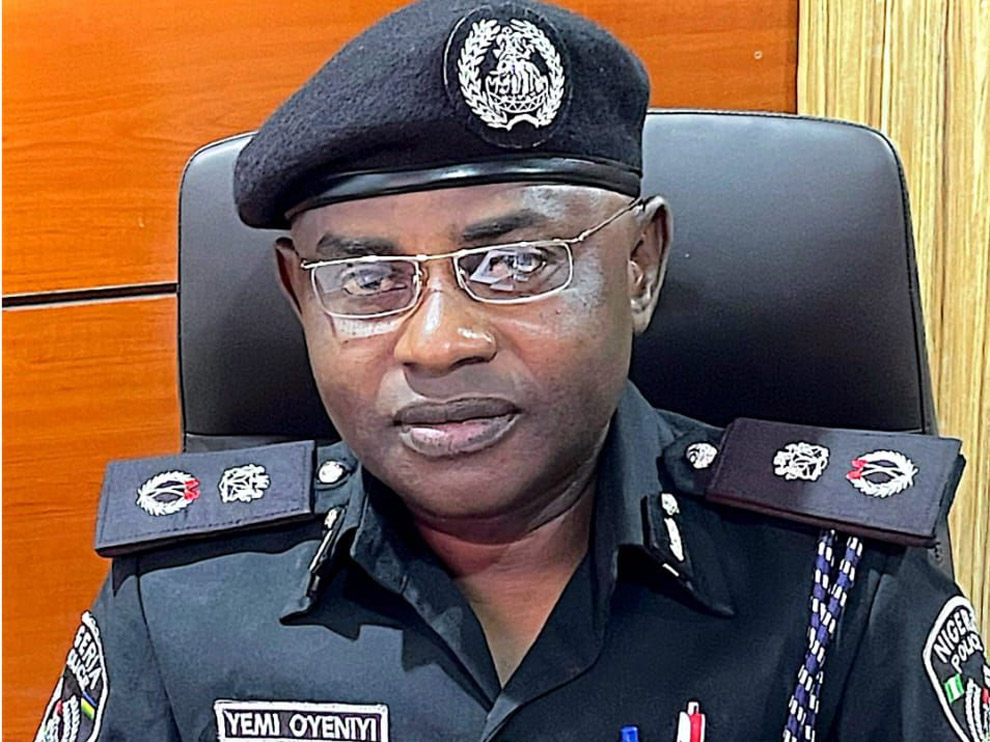
A domestic dispute allegedly involving the sale of landed property and accusations of infidelity has left a couple dead in Agbarho community, Ughelli North Local Government Area of Delta State, leaving their four children without either parent.
The incident reportedly occurred on Owiri Street in Agbarho, where the man allegedly attacked and killed his wife before later dying by suicide after ingesting a poisonous substance.
According to a report published by Vanguard on Tuesday, October 13, 2026, the tragedy followed a disagreement between the couple over landed property and alleged infidelity. However, the full circumstances surrounding the confrontation have not been independently established.
A source quoted in the report said the man was reportedly angered by allegations concerning his wife’s fidelity and the sale of his landed property. The precise sequence of events leading to the couple’s deaths remains unclear.
A neighbour reportedly said the couple had experienced repeated physical confrontations before the incident, suggesting that tensions within the household may have persisted for some time. However, details of the earlier clashes and whether the authorities had previously been alerted have not been confirmed.
READ ALSO:
- VIDEO: Outrage as Indian National Assaults Nigerian Truck Drivers in Lagos
- Forgery Probe: Police Arrest Ex-Imo Governor Rochas Okorocha in Abuja
- INEC Demands Formal Complaints as Missing Candidates Rock 2027 Election List
The deceased man’s elder brother also reportedly expressed shock over the deaths, saying he was not fully aware of what had triggered the fatal confrontation. He confirmed that the couple had four children, with the eldest said to be about 21 years old, but declined to disclose their identities.
A senior police officer at the Agbarho Division reportedly confirmed the incident, saying officers evacuated the bodies to a morgue as investigations began. The officer also indicated that no formal complaint had been lodged by the families as of the time of the report.
Attempts to obtain further comments from the Delta State Police Command’s spokesperson, SP Bright Edafe, were reportedly unsuccessful before the report was published.
The deaths have left the couple’s four children facing the loss of both parents, adding to the devastating consequences of the incident. The circumstances surrounding the reported property dispute, the allegations of infidelity and the events immediately preceding the deaths remain subject to investigation.
The tragedy highlights the potentially devastating consequences of unresolved domestic conflict. Disagreements involving marital relationships, property ownership and land sales should be addressed through peaceful dialogue, appropriate support and lawful channels. Violence is never an acceptable way to resolve such disputes.
Delta Tragedy: Man Allegedly Kills Wife, Dies by Suicide After Land Dispute
-

 metro3 days ago
₦8.7bn Erosion-Control Budget Gap Raises Questions as Anambra Gullies Expand
-
 Politics2 days ago
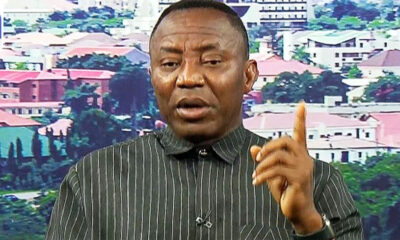
Obi Positioning for SGF Role Under Atiku’s ADC Ticket – Sowore
-
 metro2 days ago
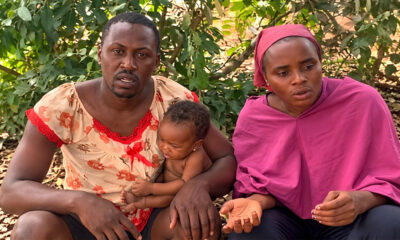
How Bandits Demand ₦300m Ransom for Abducted Kaduna Couple, Baby in Viral Video
-

 metro3 days ago
Child Soldiers, Baby Factories: US Raises Alarm Over Official Complicity in Nigeria
-
 News3 days ago
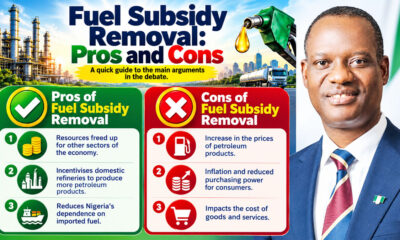
Fuel Subsidy May Ease Hardship Today, But Could Cripple Nigeria’s Economy Tomorrow — FG
-

 Politics2 days ago
Okonkwo Alleges Return of Subsidy, Accuses NNPC of Plotting Trillions in ‘Lost Profit’
-
 metro3 days ago
2027 Elections: Atiku Demands Names of INEC Ballot Printers, Questions Secret Contracts
-

 metro2 days ago
How Military Air Strike Crushed ISWAP Attack Plot, Killed Over 40 Fighters in Borno