

Politics
Appeal Court upholds judgment barring INEC from recognising ADC state congresses

Appeal Court upholds judgment barring INEC from recognising ADC state congresses
The Court of Appeal has upheld a Federal High Court judgment restraining the Independent National Electoral Commission (INEC) from recognising or participating in state congresses conducted by committees appointed by the David Mark-led caretaker leadership of the African Democratic Congress (ADC).
In a 2-1 majority decision delivered in Abuja on Monday, a three-member panel of the appellate court dismissed the appeal challenging the earlier judgment, affirming that the Federal High Court acted within the law when it issued the restraining orders.
The lead judgment, delivered by Justice Okon Abang and supported by Justice Donatus Okorowo, held that the appeal lacked merit and reaffirmed the validity of the lower court’s ruling. However, Justice Abba Mohammed dissented, maintaining that the dispute was an internal affair of the political party and therefore outside the jurisdiction of the court.
The legal battle stemmed from a suit filed by seven aggrieved members of the ADC, including elected state chairmen and officials, who challenged the dissolution of the party’s state executive committees and the appointment of caretaker committees to organise state congresses.
READ ALSO:
- Victor Osimhen reveals plans to earn university degree after football career
- Heavy rains, flash floods kill 51 as over one million affected in Bangladesh
- Bangkok bar fire kills at least 27, leaves 25 critically injured
The plaintiffs argued that the David Mark-led caretaker committee lacked the constitutional authority under the ADC Constitution to dissolve elected state executives or appoint committees to conduct state congresses.
They also contended that the actions of the caretaker leadership violated the party’s constitution and sought an order preventing INEC from recognising any congresses conducted by the appointed committees.
In its judgment, the Court of Appeal agreed that the issues raised went beyond an ordinary internal party disagreement because they involved the constitutional responsibilities of INEC under Nigeria’s electoral framework.
The appellate court ruled that where allegations involve breaches of constitutional provisions and statutory obligations imposed on the electoral commission, the courts have jurisdiction to determine such disputes.
The judgment affirmed the earlier decision of the Federal High Court, which restrained INEC from recognising, monitoring or participating in any ADC state congresses organised by committees appointed by the caretaker leadership pending the resolution of the substantive issues.
The court also upheld the lower court’s order preserving the tenure of the party’s elected state executive committees, declaring that their four-year mandate remains valid until lawfully terminated in accordance with the party’s constitution.
Additionally, the appellate court restrained the caretaker leadership from interfering with the functions of the elected state executives pending the determination of the substantive suit.
In the minority judgment, Justice Abba Mohammed argued that the matter was purely an internal affair of the political party and should not have been entertained by the Federal High Court.
However, the majority judgment prevailed, meaning the orders of the trial court remain binding unless overturned by the Supreme Court.
The Court of Appeal also awarded ₦10 million in costs against the appellant in favour of the respondents.
The ruling represents another significant development in the leadership crisis within the African Democratic Congress, a party that has recently attracted national attention following the emergence of a coalition of opposition politicians ahead of the 2027 general elections.
Legal experts say the judgment reinforces the principle that while political parties enjoy internal autonomy, their activities remain subject to judicial scrutiny whenever constitutional provisions, electoral laws or the statutory responsibilities of INEC are involved.
The decision also means that INEC cannot lawfully recognise or act on the outcome of any disputed ADC state congresses conducted by committees appointed by the David Mark-led caretaker leadership until the legal issues are finally resolved.
Observers believe the judgment could influence the party’s preparations for future congresses, conventions and candidate selection processes as political realignments continue ahead of the next general elections.
Appeal Court upholds judgment barring INEC from recognising ADC state congresses






Politics
2027: Adeleke’s Camp Promises 1.5 Million Votes for Tinubu in Osun
2027: Adeleke’s Camp Promises 1.5 Million Votes for Tinubu in Osun
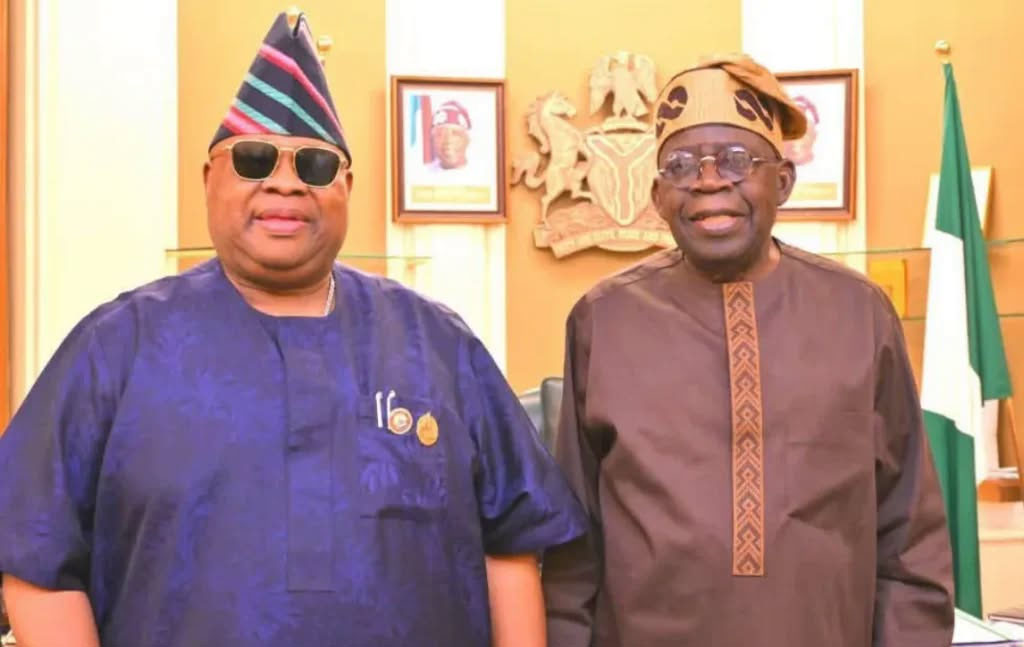
The Imole Campaign Council of Osun State Governor Ademola Adeleke has pledged to mobilise 1.5 million votes for President Bola Ahmed Tinubu in the 2027 presidential election, following the governor’s appointment as the state coordinator of the president’s re-election campaign.
The council, through its Director-General, Senator Olalere Oyewumi, announced the pledge on Tuesday, October 13, while welcoming Adeleke’s inclusion in the revised All Progressives Congress (APC) Presidential Campaign Council.
Oyewumi said the political structure of the Accord Party in Osun State would work towards securing Tinubu’s victory, expressing confidence that Adeleke would justify the confidence placed in him by the president.
“The Imole Campaign Council welcomes the appointment of Governor Adeleke as State Coordinator of the PBAT Presidential Campaign Council in Osun,” Oyewumi said.
He described the appointment as well deserved and assured Tinubu that the governor would work towards delivering the state for the president in the forthcoming election.
“We promise the President, just like Governor Adeleke said some time ago, that we will deliver 1.5 million votes to ensure his victory in the coming presidential election,” the council’s director-general said.
READ ALSO:
- APC Expands Tinubu’s Campaign Council, Names Wike, Adeleke, Soludo
- 2027: Tompolo Unveils 57 Tinubu Campaign Vehicles, Warns Lagosians Against 2023 Repeat
- Shell Exits Nigeria’s Gas Distribution Business, Sells Stake to Vaaris Energy
The council also urged Osun residents to continue supporting Adeleke, linking the governor’s administration to Tinubu’s re-election bid.
“Our message to the people of Osun State is to keep trusting and supporting Governor Adeleke as he continues to deliver on his campaign promises. A vote for President Tinubu is a support for Governor Adeleke,” the statement added.
Adeleke’s appointment places him at the centre of Tinubu’s campaign mobilisation in Osun, even though the governor belongs to the Accord Party rather than the ruling APC.
The revised campaign council also names prominent political figures, including Federal Capital Territory Minister Nyesom Wike, Delta State Governor Sheriff Oborevwori and Anambra State Governor Chukwuma Soludo, in key campaign roles.
The appointments indicate an effort to build support for Tinubu beyond the APC’s formal membership as political parties and influential figures position themselves ahead of the 2027 general election.
In a separate development, the All Progressives Grand Alliance (APGA) has also expressed support for Soludo’s appointment as Anambra coordinator of Tinubu’s presidential campaign.
APGA’s National Publicity Secretary, Ejimofor Opera, said the party had adopted Tinubu as its consensus presidential candidate for the 2027 election, citing its commitment to cooperation with the Federal Government.
The latest political alignments come as parties and campaign organisations begin strengthening their structures ahead of the next presidential contest.
However, the 1.5 million votes promised by Adeleke’s camp remain a campaign target. The actual number of votes Tinubu receives in Osun will depend on voter participation and the choices made by eligible voters on election day.
2027: Adeleke’s Camp Promises 1.5 Million Votes for Tinubu in Osun
Politics
APC Expands Tinubu’s Campaign Council, Names Wike, Adeleke, Soludo
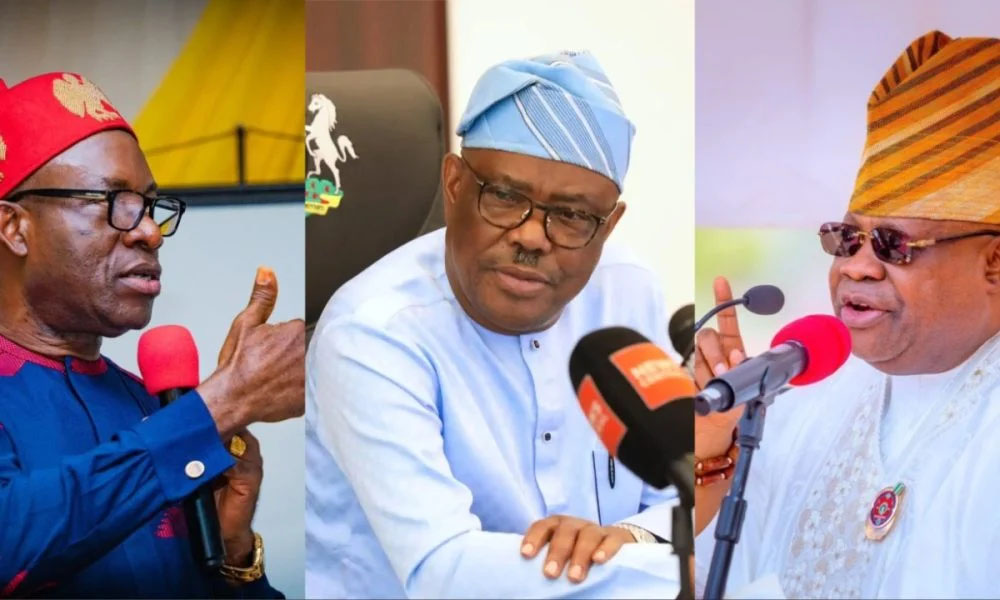
The All Progressives Congress (APC) has expanded its presidential campaign council for the 2027 general election, naming Federal Capital Territory Minister Nyesom Wike, Osun State Governor Ademola Adeleke, Anambra State Governor Chukwuma Soludo and several other prominent political figures to key positions.
The revised list, released on Tuesday, October 13, reflects the ruling party’s efforts to broaden its political support base ahead of President Bola Ahmed Tinubu’s re-election campaign.
The appointments have attracted attention because Wike belongs to the Peoples Democratic Party (PDP), Soludo is a member of the All Progressives Grand Alliance (APGA), while Adeleke belongs to the Accord Party.
Under the new arrangement, Wike will coordinate the APC’s presidential campaign in Rivers State and the Federal Capital Territory. Soludo has been assigned responsibility for Anambra State, while Adeleke will coordinate campaign activities in Osun State.
Delta State Governor Sheriff Oborevwori, former Lagos State Governor Babatunde Fashola, Aviation Minister Festus Keyamo and Marine and Blue Economy Minister Adegboyega Oyetola are also among the prominent figures featured in the expanded campaign structure.
Oyetola was appointed Deputy National Coordinator I for Stakeholders’ Mobilisation in the South-West.
President Tinubu will serve as chairman of the campaign council, with Vice-President Kashim Shettima and APC National Chairman Nentawe Yilwatda as vice-chairmen.
READ ALSO:
- 2027: Tompolo Unveils 57 Tinubu Campaign Vehicles, Warns Lagosians Against 2023 Repeat
- Shell Exits Nigeria’s Gas Distribution Business, Sells Stake to Vaaris Energy
- Delta Tragedy: Man Allegedly Kills Wife, Dies by Suicide After Land Dispute
Senate President Godswill Akpabio, Speaker of the House of Representatives Tajudeen Abbas and Kwara State Governor AbdulRahman AbdulRazaq have been named deputy vice-chairmen.
Senator Abdulaziz Yari, a former governor of Zamfara State, retains his position as Director-General of the campaign council.
Other deputy directors-general include Yobe State Governor Mai Mala Buni, Senate Leader Opeyemi Bamidele, Deputy Senate President Barau Jibrin and Deputy Speaker of the House of Representatives Benjamin Kalu.
Senator Adams Oshiomhole will oversee mobilisation, while Femi Gbajabiamila will handle administration. Works Minister David Umahi has been assigned responsibility for infrastructure mobilisation and sensitisation.
Imo State Governor Hope Uzodimma will serve as secretary of the council, with APC National Secretary Ajibola Basiru as deputy secretary and Hadiza Bala Usman as assistant secretary.
The revised structure also provides for campaign coordinators across the six geopolitical zones and at state level, including arrangements for states where the APC does not control the governorship.
The list includes 14 advisers, among them former Osun State Governor Bisi Akande, former Ogun State Governor Segun Osoba, Secretary to the Government of the Federation George Akume, former Ogun State Governor Ibikunle Amosun and former APC National Secretary Iyiola Omisore. Former Coordinating Minister of the Economy Wale Edun is also among the advisers.
The expanded council follows the initial list released in August, which generated questions about the campaign structure and the distribution of responsibilities. The latest revision introduces additional appointments and adjusts several positions within the council.
The inclusion of Wike, Adeleke and Soludo also highlights the importance of political alliances beyond the APC’s formal membership as the party prepares for the 2027 presidential election.
On Wednesday, October 14, reports indicated that the PDP, APGA and Accord had expressed support for the participation of their respective political figures in Tinubu’s campaign council.
The APC is expected to use the expanded structure to coordinate nationwide mobilisation, engage political stakeholders and strengthen its campaign organisation ahead of the election.
APC Expands Tinubu’s Campaign Council, Names Wike, Adeleke, Soludo
Politics
2027: Tompolo Unveils 57 Tinubu Campaign Vehicles, Warns Lagosians Against 2023 Repeat
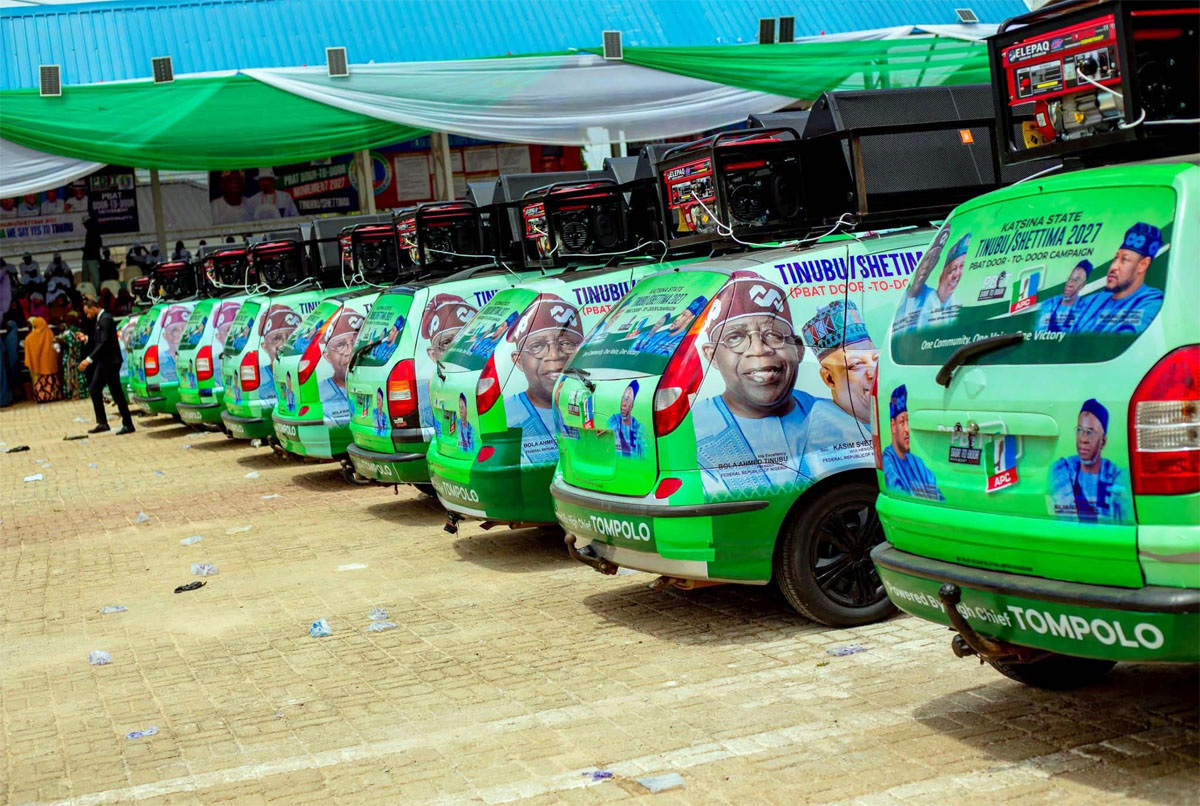
2027: Tompolo Unveils 57 Tinubu Campaign Vehicles, Warns Lagosians Against 2023 Repeat
High Chief Government Ekpemupolo, popularly known as Tompolo, has urged Lagos residents to prevent a repeat of the 2023 presidential election outcome in the state, as his political support group unveiled 57 campaign vehicles for President Bola Ahmed Tinubu’s 2027 re-election bid.
Tompolo, grand patron of the PBAT Door-to-Door Movement, made the call on Tuesday, October 13, 2026, during a campaign event in Lagos. He was represented by Kestin Pondi, who presented the vehicles to the movement’s state coordinators for grassroots mobilisation.
Tompolo urged supporters to intensify efforts ahead of the 2027 presidential election, stressing the need for a stronger campaign structure across Lagos communities.
“What happened in 2023 must not repeat. He must win convincingly in 2027,” he said through his representative.
He also encouraged eligible residents to take advantage of the Independent National Electoral Commission (INEC) Continuous Voter Registration exercise and obtain their Permanent Voter Cards (PVCs) to participate in the election.
Tompolo argued that Tinubu’s experience as governor of Lagos State from 1999 to 2007 should inform residents’ assessment of his leadership. He urged voters to support the president’s re-election, describing the administration’s policies as reforms that require more time to consolidate.
READ ALSO:
- Shell Exits Nigeria’s Gas Distribution Business, Sells Stake to Vaaris Energy
- Delta Tragedy: Man Allegedly Kills Wife, Dies by Suicide After Land Dispute
- VIDEO: Outrage as Indian National Assaults Nigerian Truck Drivers in Lagos
The position reflects the campaign group’s support for Tinubu, although the effects of the administration’s economic and other policies remain subjects of public debate.
The unveiling of the 57 campaign vehicles is part of the movement’s strategy to expand its grassroots presence and take its message directly to households and communities ahead of the election.
The group has also organised campaign activities in other states. In Kano, it unveiled 50 vehicles in September, while its activities in Katsina and Taraba included the presentation of vehicles and the inauguration of state coordinators.
Lagos State Governor Babajide Sanwo-Olu, who spoke at the event, expressed support for the administration, saying Nigeria was moving towards economic stability under Tinubu’s leadership.
The campaign mobilisation comes as political parties and support groups begin strengthening their structures ahead of the 2027 general election.
In the 2023 presidential election, Peter Obi, then the Labour Party candidate, defeated Tinubu of the All Progressives Congress (APC) in Lagos State. Tinubu, however, won the national election and was declared president by INEC.
The PBAT Door-to-Door Movement’s latest initiative signals an effort by Tinubu’s supporters to strengthen their organisation in Lagos and secure a different result in the state in 2027. The vehicles are intended to support campaign activities and grassroots outreach as the political contest approaches.
2027: Tompolo Unveils 57 Tinubu Campaign Vehicles, Warns Lagosians Against 2023 Repeat
-

 metro2 days ago
₦8.7bn Erosion-Control Budget Gap Raises Questions as Anambra Gullies Expand
-
 Politics2 days ago
Obi Positioning for SGF Role Under Atiku’s ADC Ticket – Sowore
-
 International3 days ago
US Names 24 More Nigerians in Fresh Fraud, Money Laundering Crackdown
-
 metro2 days ago
Child Soldiers, Baby Factories: US Raises Alarm Over Official Complicity in Nigeria
-

 Politics2 days ago
Okonkwo Alleges Return of Subsidy, Accuses NNPC of Plotting Trillions in ‘Lost Profit’
-

 metro2 days ago
How Bandits Demand ₦300m Ransom for Abducted Kaduna Couple, Baby in Viral Video
-
 metro2 days ago
2027 Elections: Atiku Demands Names of INEC Ballot Printers, Questions Secret Contracts
-
 Africa3 days ago
Djibouti Boat Disaster: 139 Migrants Dead, Dozens Missing