
Business
Sanity returning to Apapa-Lagos as electronic call-up system begins
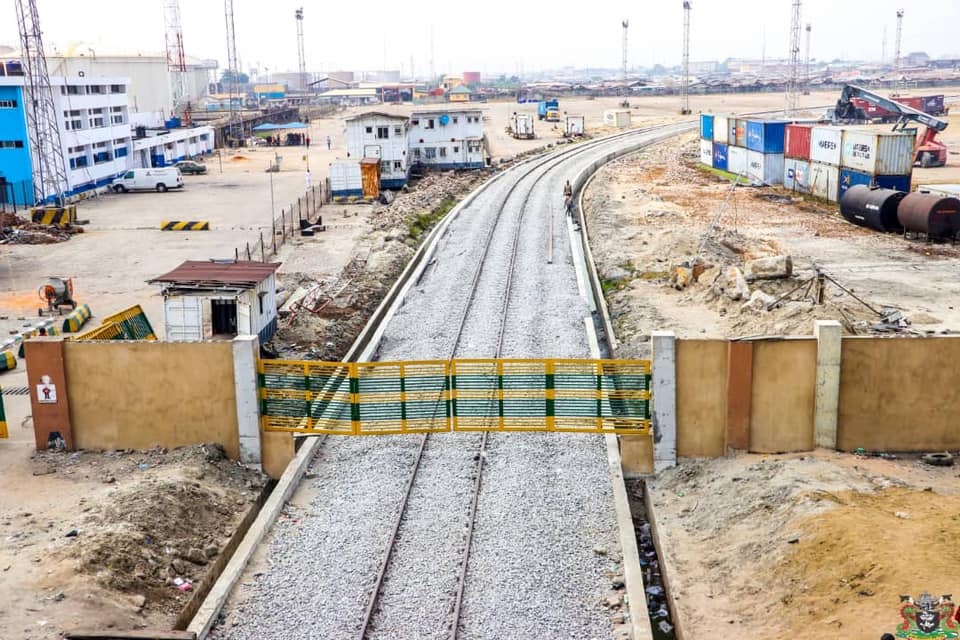
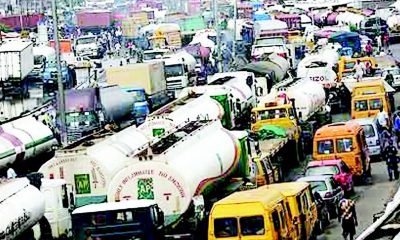
Sanity is finally returning to Apapa-Lagos area, where Nigeria’s largest and most thriving ports are located, which was brought to its knees by protracted gridlock.
The gridlock seemed to have defiled several solutions as it had persisted and frustrated many business activities, some of which were forced to relocate out of the area. Many residents have had to abandon their homes too.
The gridlock began to disappear on Saturday following the commencement of the electronic call-up system introduced by the Nigerian Ports Authority.
Apapa had in the past several years defied effort to solve its traffic problem; the efforts, including a presidential task team, were blighted by corruption, THISDAY reported.
However, normalcy returned to Apapa following the removal of trucks that littered the port access roads – Apapa Oshodi Express Way and Western Avenue leading to Ijora.
When THISDAY visited both ends of the port access roads yesterday, officials of the Lagos State government and NPA taskforce teams were seen with tow vehicles well positioned to remove erring trucks.
This is the first time that electronic call-up would be deployed to direct truck movement into ports in Lagos.
This automated process, known as Eto App, is expected to permanently restore sanity within the Apapa port corridor by removing the daily traffic congestion, if properly managed.
Meanwhile, port users, operators and Apapa residents were elated by the development. They called on NPA to ensure that the effort was sustained.
A resident, Mr Chukwuma Vincent, said, “If you have been to Apapa in the past you will know what I am talking about. Our businesses went down, property lost value and people were dying.
“We call on NPA to sustain this. I drove through to my house for the first time in many years and I cried. I thought we had no government in Nigeria again. This is worth celebrating and I can only hope it lasts.”
Importers, clearing agents and truck owners also expressed optimism as the electronic call-up system began yesterday. They called for a functional holding bay by shipping companies for return of empty containers.
The NPA had late last year announced the launch of Eto, an Electronic Truck call-up system designed for the management of truck movement and access to and from the Lagos Ports Complex and the Tin Can Island Ports, Apapa, Lagos. The authority said all trucks doing business at the ports would be required to park at the approved truck parks until they were called up into the port through the Eto app. NPA explained that the Eto app will be responsible for the scheduling, entry and exit of all trucks from the ports with effect from February 27. It also stated that about 7,000 trucks had been certified fit for the digitalised call up system, revealing that effective February 27, trucks must approach the ports from a holding bay or truck parks with a bar code to access the ports.
Stakeholders were optimistic that the electronic call-up system would end corruption in the port access management system.
Vice Chairman, National Association of Road Transport Owners (NARTO), Dry Cargo section, Alhaji Abdullahi Inuwa, said the call-up system would end artificial bottlenecks on the port access roads. However, National Vice President, Association of Nigerian Licensed Customs Agents (ANLCA), Kayode Farinto, said unless the port access roads were fixed it might not yet be uhuru.
Inuwa said, “I call on all stakeholders to cooperate and allow it work. If that happens, then we will get good result. Actually, if it takes off successfully, it will eradicate corruption, no human contact and other artificial bottleneck. NARTO wishes the authority a successful take-off.
“The motive is to take trucks off the roads, but NPA should involve other garages where trucks are parked in order to successfully decongest the roads.”
Farinto urged the NPA management to be steadfast in enforcing the call-up system. He said the on-going construction of the Oshodi-Apapa expressway must also be completed in good time because there cannot be an effective call-up system without a good road.
“The road should be put in adequate place because there is nothing the call-up can achieve without a proper port access road, ” he said.
Farinto, a former chairman, Tin-Can Island chapter of ANLCA, said shipping companies must be compelled to have functional holding bay for return of empty containers.
According to him, “Shipping companies should put up a holding bay for empty containers because without an efficient holding bay, is there a way the policy can be achieved?
“NPA should also decisively take over the system and prevent the security agencies from hijacking it. They must totally remove human contact but how to achieve that I still don’t know because Terminal Delivery Order (TDO) will still be generated manually.
“Also, there is nothing on ground to show that it will be electronic. Human contact must be completely eliminated because what is happening on the port access roads is an eyesore that is giving stakeholders sleepless nights.”










Auto
Hyundai unveils flagship SUV Palisade, rolls out strong line-up in Lagos showcase

Hyundai unveils flagship SUV Palisade, rolls out strong line-up in Lagos showcase
Hyundai Nigeria has unveiled the all-new Hyundai Palisade in Lagos, headlining a media showcase that also featured the Hyundai Accent, Hyundai Creta, Hyundai Tucson and Hyundai Santa Fe, as the automaker intensifies its push across key segments of the Nigerian market.
The event, held at the company’s Victoria Island showroom, offered journalists a first-hand view of Hyundai’s expanding portfolio, ranging from entry-level sedans to premium three-row SUVs.
Taking centre stage was the debut of the Palisade, Hyundai’s flagship SUV, positioned to strengthen the brand’s foothold in the premium segment.
With its bold exterior styling, spacious three-row layout, upscale interior and advanced safety and convenience features, the model is targeted at families and executive buyers seeking comfort, space and strong road presence.
Across the line-up, Hyundai showcased a broad spectrum of offerings. The Santa Fe reinforces its appeal as a refined, family-oriented SUV with generous cabin space and premium detailing, while the Tucson stands out for its blend of modern design, practicality and everyday versatility.
In the compact SUV category, the Creta was highlighted for its mix of style, efficiency and urban functionality, while the Accent sedan retains its positioning as a practical and cost-effective option for young professionals, fleet operators and first-time buyers.
Speaking at the event, Brand Head, Hyundai Nigeria, Gaurav Vashisht, said the launch underscores the company’s commitment to deepening its footprint in Nigeria with globally competitive products adapted to local needs.
“This introduction of the all-new Palisade strengthens our premium SUV offering while complementing a well-rounded line-up that delivers on design, safety, innovation and everyday usability,” he said.
The showcase also provided an avenue for media interaction with Hyundai executives and product specialists, alongside detailed vehicle walkarounds covering design, technology and safety features.
Hyundai Nigeria reaffirmed its focus on delivering globally benchmarked vehicles with strong local relevance, even as competition intensifies in Nigeria’s evolving passenger vehicle market.
The event also marked the launch of Hyundai’s Easter campaign, offering customers value-added benefits such as complimentary delivery, accessories, registration and service packages.
Business
Relief in Sight as Dangote Refinery Lowers Petrol Price

Relief in Sight as Dangote Refinery Lowers Petrol Price
Dangote Petroleum Refinery & Petrochemicals has announced a fresh reduction in the price of Premium Motor Spirit (PMS), popularly known as petrol, lowering its gantry price to N1,200 per litre and its coastal price to N1,153 per litre.
The latest adjustment represents a notable downward review in the refinery’s pricing structure and comes at a time of heightened geopolitical tensions in the Middle East, a development that continues to influence global crude oil markets and supply expectations.
Industry analysts say the price cut could have far-reaching implications across Nigeria’s downstream petroleum sector, particularly in easing supply costs for marketers who rely on the refinery for bulk purchases. The gantry price applies to fuel loaded directly at the refinery by distributors, while the coastal price is relevant for product lifted through marine channels.
The reduction is expected to gradually impact depot prices and, ultimately, retail pump prices at filling stations, although experts caution that the speed and extent of the trickle-down effect will depend on several factors, including transportation costs, existing stock levels, and foreign exchange dynamics.
“This is a significant development for the domestic market,” a petroleum industry analyst said. “Given the scale of the Dangote refinery, any adjustment in its pricing is bound to influence market trends, especially as marketers seek competitive pricing advantages.”
The move comes amid persistent volatility in international oil prices, driven largely by uncertainty in the Middle East—home to some of the world’s largest crude oil producers. Rising tensions in the region have historically led to fluctuations in global supply chains, often forcing refiners and traders to review their pricing strategies.
Despite the global uncertainty, the decision by the refinery to lower prices may be aimed at strengthening its position in Nigeria’s fuel supply chain, while also offering some measure of relief to consumers who have grappled with high fuel costs in recent months.
Marketers are expected to respond to the new pricing regime in the coming days, with competition likely to play a role in determining how much of the reduction is passed on to end-users. Some depot owners may also adjust their ex-depot prices to align with the refinery’s new rates.
However, stakeholders note that while the reduction is a positive signal, broader economic factors—such as exchange rate fluctuations, logistics, and regulatory policies—will continue to shape fuel pricing in the country.
As Nigeria continues its transition toward greater reliance on local refining, developments at the Dangote refinery are increasingly becoming a key determinant of market direction. Observers say sustained price moderation could help stabilise the sector and reduce the country’s dependence on imported petroleum products.
For now, consumers and industry players alike will be watching closely to see how the latest price cut translates into real savings at the pump in the days ahead.
Relief in Sight as Dangote Refinery Lowers Petrol Price
Business
Nigeria Liberalises Forex Market as CBN Ends Repatriation Limits for Oil Firms

Nigeria Liberalises Forex Market as CBN Ends Repatriation Limits for Oil Firms
The Central Bank of Nigeria (CBN) has approved the full repatriation of export proceeds by International Oil Companies (IOCs), granting them unrestricted access to 100 per cent of their foreign exchange earnings through authorised dealer banks.
The directive, issued via a circular by the apex bank’s Trade and Exchange Department and signed by its Director, Musa Nakorji, marks a significant step in Nigeria’s ongoing foreign exchange (FX) market liberalisation.
According to the CBN, the policy forms part of broader reforms aimed at boosting FX liquidity, enhancing market transparency, and stabilising the naira amid persistent volatility.
The new framework replaces the 2024 arrangement, which allowed authorised dealer banks to pool 50 per cent of repatriated export proceeds on behalf of oil companies, while the remaining 50 per cent was held for 90 days before it could be accessed or repatriated.
Under the updated policy, IOCs now have unfettered access to their forex inflows, enabling them to repatriate the full value of their export proceeds without delays. Authorised dealer banks have been directed to ensure proper documentation and submit monthly compliance reports to the CBN.
READ ALSO:
- Fuel Marketers Warn Rising Petrol Prices Worsening Nigeria’s Cost-of-Living Crisis
- Akpabio Backs Anioma State Creation, Proposes Asaba as Capital
- Man Arrested After Shouting ‘No Water, No Light’ During Bago’s Suleja Visit
The apex bank stated that the decision overrides all previous guidelines on cash pooling and phased repatriation, effectively dismantling restrictions introduced in 2024 as part of earlier FX control measures.
The move is widely seen as a response to sustained pressure from investors and multinational oil firms seeking greater flexibility in managing their earnings. Analysts note that previous restrictions had created liquidity bottlenecks and discouraged foreign investment inflows into Nigeria’s oil and gas sector.
By restoring full access to export proceeds, the CBN aims to improve investor confidence, encourage capital inflows, and deepen participation in Nigeria’s FX market. The policy is also expected to ease operational constraints for IOCs, many of which rely on timely access to foreign exchange for offshore obligations and reinvestment decisions.
The development aligns with a series of recent reforms by the CBN to transition toward a more market-driven exchange rate system, reduce FX backlogs, and unify multiple exchange windows. These reforms have included clearing outstanding FX obligations, tightening documentation requirements, and enhancing transparency in FX transactions.
Economic experts say the decision could help attract fresh investment into Nigeria’s energy sector, particularly at a time when the country is seeking to boost crude oil production and maximise foreign exchange earnings. However, they caution that sustained impact will depend on broader macroeconomic stability, consistent policy implementation, and improved oil output levels.
In addition, stakeholders emphasise that strengthening domestic refining capacity—particularly through facilities like the Nigerian National Petroleum Company Limited refineries and private sector investments—remains critical to reducing long-term FX demand linked to fuel imports.
Overall, the policy signals a clear shift by the CBN toward greater FX liberalisation, with the potential to reshape how multinational oil companies operate within Nigeria’s financial system while supporting efforts to stabilise the economy.
Nigeria Liberalises Forex Market as CBN Ends Repatriation Limits for Oil Firms

-

 metro3 days ago
“We Pay Men to Sleep With Us in Germany” — Nigerian Woman Laments Loneliness Abroad
-

 metro1 day ago
Tragedy in Aramoko: Trailer Rams Residential Building, Kills 300‑Level Student
-

 Entertainment2 days ago
Tragedy in Music Industry as ‘Show Your Style’ Singer Sabinus Dies
-

 News1 day ago
Final Notice: FG Orders Civil Servants to Complete PASGA Verification by March 31
-

 metro2 days ago
El-Rufai’s Mother, Hajiya Umma, Dies Amid Son’s Legal Battle
-

 Entertainment1 day ago
Nollywood Actress Declares Love for Ibrahim Chatta, Offers to Pay Her Own Dowry
-

 Business3 days ago
Relief in Sight as Dangote Refinery Lowers Petrol Price
-

 Entertainment2 days ago
Gospel Singer Onos Brisibi Dies at 55 After Prolonged Illness
You must be logged in to post a comment Login