
Business
Senate asks NPA to refund $37.6m, N67.51bn ‘unremitted’ revenues

The Senate has asked the Nigerian Ports Authority to refund the sum of $37.67 million to the Federal Government coffers having discovered lack of diligence in the review of the agency’s charges on a contract of towage services.
The upper chamber said the non-remittance of N67.51 billion for 2013 and 2014 into the consolidated revenue fund (CRF), being 25 percent of its internally generated revenue (IGR) contravened the Fiscal Responsibility Act 2007.
It added that the failure to remit capitalised interest to the CRF, “totalling” N99.71 million, between 2013 and 2014 contravened Rule 236 of the Financial Regulations.
In May 2021, the senate committee on finance had invited heads of 60 government-owned firms, including the ports authority, to explain the failure to remit various funds running into about N3 trillion to the federal government’s account.
In a statement signed by the Special Assistant (Press) to the Senate President, Ezrel Tabiowo, on Wednesday, the upper chamber mandated the Economic and Financial Crimes Commission (EFCC) to investigate the accounting officer under Rule 3112 (I and II) of the Financial Regulations.
The Senate demanded that the director-general who authorised the disbursement of contingency provision on the contract for the rehabilitation of Lagos Habour moles to the tune of N417,099,309.06 without federal executive council approval to be reported to President Muhammadu Buhari under Rule 3103 of the Financial Regulations.
It also directed the NPA to refund diverted funds of N1.08 billion, $2.30 million (N946.35 million), and €196,257.42 (N94.90 million) meant for the presidential implementation committee on marine safety and security (PICOMSS) to the account of the National Security Adviser (NIA) to the president.
The Senate said the funds were diverted contrary to a directive approved by FEC on February 21, 2007.
These are part of the 59 recommendations adopted by the Senate on the annual report of the auditor-general for the year ended 31st December 2015.
On unretired advances involving 39 ministries, departments and agencies (MDAs) to the tune of N2,296,567,084.37 billion, the upper chamber demanded the sanctioning of accounting officers of MDAs in accordance with the provision of rule 3124 of financial regulations.
It also called on the accountant-general of the federation, Ahmed Idris, a deadline of 90 days to identify and sanction officers responsible for the mismanagement of public funds to the tune of N54,151,360,000 billion ($274,280,000.00) as exchange loss on external loans.
The accountant-general is expected to report back to the senate committee on public accounts within ninety days.
In addition, the Senate gave another 90 days timeline for the office of the accountant-general of the federation to set in motion the process of recovery of internal loans made from other funds, which stands at N390,288,085,668.92 billion and to be paid back into the special funds accounts.
The source of the loans is from the Development of Natural Resources Account, Stabilization Fund Account, 25 percent Husked Brown Rice Levy, one per cent Comprehensive Supervision Scheme (CISS) Pool Levy, 15 percent Wheat Grain Levy, and 10 percent Rice Levy.
The upper also chamber directed the accountant-general of the federation to recover the sum of N378,879,674.99 tax revenue from Webb Fontaine Ltd and remit same to the Federal Inland Revenue Service within six months.
It also called for a review of all companies that were paid from the out-flow of one per cent CISS Account, which amounted to N39,557,671,843.97.




Business
Nigerian Equities Post World’s Second-Best Dollar Returns in 2026, Recover $21bn

Nigerian Equities Post World’s Second-Best Dollar Returns in 2026, Recover $21bn
Nigerian equities have emerged as one of the best-performing stock markets globally in 2026, delivering the world’s second-best dollar returns after years of currency-driven losses and weak investor sentiment. The local market has risen 31 percent in dollar terms this year, helping investors recoup about $21 billion in market value lost following the sharp naira devaluation in 2024.
Market capitalisation on the Nigerian Exchange Group has climbed to approximately $84 billion, representing a 58 percent increase from levels recorded before the currency collapse. According to Bloomberg, Nigeria’s benchmark equity index has surged 31 percent year-to-date, significantly outperforming global peers. The rally far outpaces the 11 percent gain in the broader emerging-market index and the 6.4 percent advance recorded by frontier-market stocks.
Analysts attribute the sharp rebound to a combination of stronger corporate earnings, exchange-rate stability, and renewed investor confidence following wide-ranging economic reforms. Olabode Williams, an analyst at SBG Securities Ltd, said companies hardest hit by the naira’s earlier collapse have now stabilised their balance sheets and returned to profitability. He noted that investors are increasingly pricing in growth as corporate fundamentals improve, adding that Nigerian equities are becoming more attractive to both local and foreign investors after years of underperformance.
READ ALSO:
- Ramadan Begins in Nigeria as Sultan Confirms Crescent Sighting
- Deadlock at National Assembly as House Snubs Electoral Act Bill Meeting on E-Transmission Clause
- Maikori Accuses Ex‑Governor El‑Rufai of Persecution Over 2017 Tweet
The rally has also been supported by a firmer naira, which has appreciated by more than seven percent against the dollar in 2026, ranking as the world’s second-best performing currency among those tracked by Bloomberg. The currency rebound has strengthened dollar-based equity returns and helped reverse losses triggered by earlier exchange-rate volatility.
Foreign participation has increased sharply alongside the rally. Data from the Nigerian Exchange Group shows that non-Nigerian trading in local equities reached a 19-year high in 2025. Transactions by foreign investors tripled to ₦2.65 trillion ($1.97 billion) from ₦852 billion in the previous year, reflecting renewed global appetite for Nigerian risk assets.
Market analysts believe the rally could extend further if major listings materialise. Gloria Fadipe, an analyst at CSL Stockbrokers Ltd, a unit of FCMB Group Plc, said the market could exceed $100 billion in valuation this year if large-scale listings proceed. She noted that potential listings of Dangote Refinery and Dangote Fertiliser could deliver capital gains of up to 34 percent while deepening market liquidity.
The rebound comes amid broader macroeconomic reforms introduced by Bola Tinubu, including the unification and liberalisation of the foreign-exchange market. While the reforms initially triggered volatility and inflationary pressure, economists say they are restoring policy credibility, improving capital inflows, and repositioning Nigerian assets for sustained long-term growth.
Nigerian Equities Post World’s Second-Best Dollar Returns in 2026, Recover $21bn
Business
Naira Maintains Stability Against Dollar as CBN FX Measures Keep Markets Calm
Naira Maintains Stability Against Dollar as CBN FX Measures Keep Markets Calm
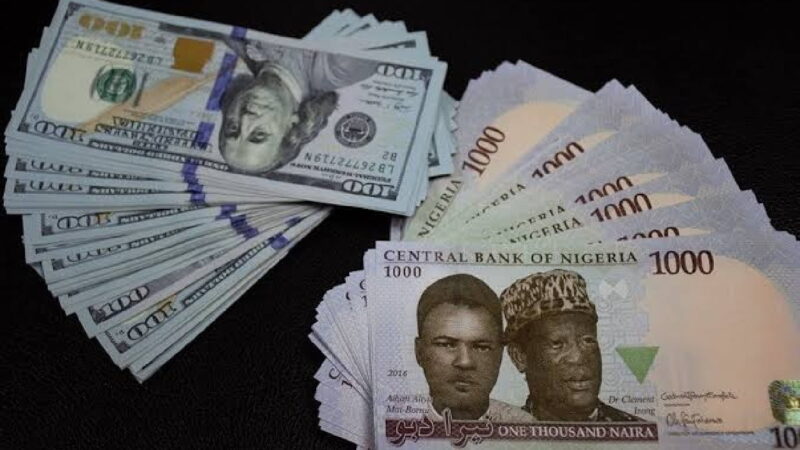
The Nigerian Naira showed relative stability against the United States Dollar during Tuesday, February 17, 2026, trading sessions in both official and parallel foreign exchange markets. After a weekend of consolidation, the local currency continued to hover around the ₦1,350 band, reflecting the effectiveness of the Central Bank of Nigeria’s (CBN) liquidity management policies.
In the official Nigerian Foreign Exchange Market (NFEM), the Naira opened at ₦1,351.18 per dollar and adjusted slightly by mid-morning to ₦1,354.86, a movement attributed to early-week corporate demand. Analysts say the Electronic Foreign Exchange Matching System (EFEMS) and the Monetary Policy Rate (MPR) have helped anchor the official exchange rate below the ₦1,400 mark for over two weeks, providing a predictable environment for businesses and investors.
READ ALSO:
- 28 Wedding Guests Die in Separate Road, Boat Accidents in Enugu, Kebbi
- FG, Progressive Governors Forum Pledge ₦8bn Relief for Singer Market Fire Victims
- Former INEC REC Warns of “Chaos” in 2027 Over E-Transmission of Election Results
Meanwhile, in the parallel market, the Naira traded at a traditional premium, ranging from ₦1,380 to ₦1,440 per dollar in commercial hubs like Lagos, Abuja, and Kano. Traders reported sufficient dollar supply for personal travel and small-scale business transactions, noting that the narrowing gap between official and parallel rates has discouraged speculative hoarding and improved market efficiency.
Recent CBN interventions, including expanding access to licensed Bureau De Change operators and enforcing regulatory compliance, have strengthened FX liquidity, allowing for more transparent price discovery. Combined with Nigeria’s moderating inflation rates and robust external reserves of around $49 billion, these measures have bolstered confidence in the Naira and helped limit excessive volatility.
Market watchers, however, caution that challenges remain, including uneven foreign exchange inflows and persistent demand pressures in the informal sector. Sustaining the Naira’s stability in the coming weeks will depend on continued policy consistency, enhanced liquidity provision, and investor participation across sectors.
Summary of Rates on February 17, 2026:
- Official NFEM Opening: ₦1,351.18 per $1
- Official NFEM Mid-Morning: ₦1,354.86 per $1
- Parallel Market Range: ₦1,380 – ₦1,440 per $1
Analysts remain cautiously optimistic that the Naira can maintain its stability and momentum for the remainder of February, provided that external reserves and FX supply measures continue to support the market.
Naira Maintains Stability Against Dollar as CBN FX Measures Keep Markets Calm
Business
Dokpesi Jr, Ex-GMD Akiotu Clash Over DAAR Communications Mgt Restructuring
Dokpesi Jr, Ex-GMD Akiotu Clash Over DAAR Communications Mgt Restructuring
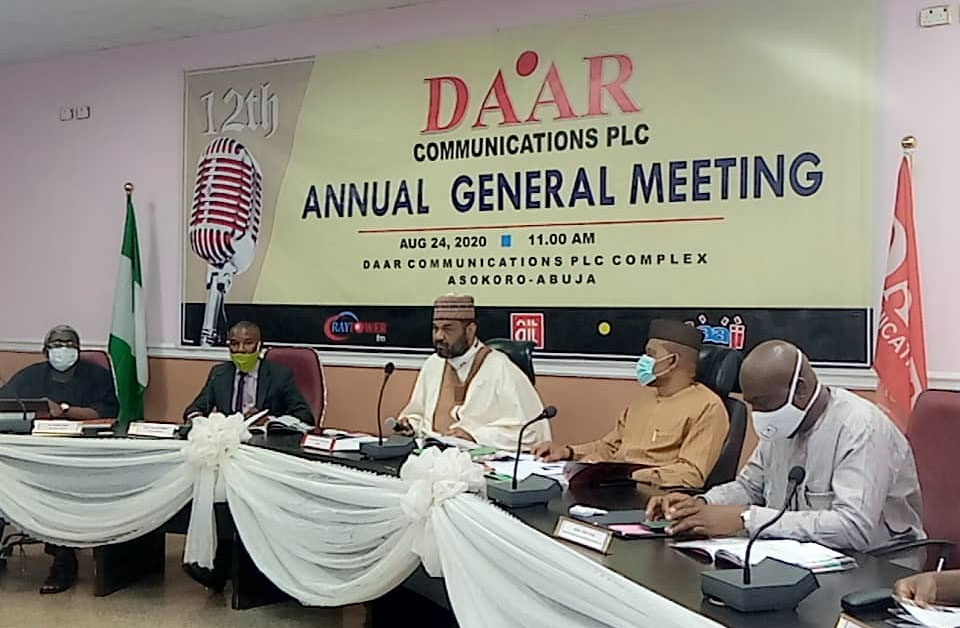
A public dispute has erupted at DAAR Communications Plc as Chairman Raymond Dokpesi Jr and former Group Managing Director, High Chief Tony Akiotu, publicly clashed over the company’s recent management restructuring, raising questions about corporate governance and the legacy of Nigeria’s pioneering media organisation.
Speaking in Abuja, Dokpesi Jr defended the executive shake-up, stating he has “no regrets” about the decisions made following the sudden death of the company’s founder, Raymond Aleogho Dokpesi Sr. He described the departure of long-serving executives as a difficult but necessary step to ensure stability, investor confidence, and future growth. The chairman noted that the company faced challenges after his father’s passing, including declining share value and reduced investor confidence, and emphasised that the transition process was carefully managed to minimise tension.
READ ALSO:
- EFCC Holds El-Rufai Overnight Over ₦423bn Kaduna Corruption Allegations
- Troops Intercept ₦37m Terror Funds, Phones, ISWAP Logistics in Borno Operations
- X Restored After Global Outage Disrupts Millions Worldwide
Dokpesi Jr acknowledged that the exiting executives were owed salary arrears and other entitlements, which the organisation has been settling, amounting to billions of naira accumulated over their 15-year tenure. He explained that the restructuring allowed the company to prioritise outstanding obligations and improve operational efficiency, with most business units now financially independent and others expected to achieve autonomy before the end of the year. “I will continue to apologise to Mr Tony Akiotu and the affected management staff for any hurt feelings,” he said, “but I have no regrets — the results validate the decision.”
In response, Akiotu criticised Dokpesi Jr’s statement as unfair and misleading. He argued that it was inappropriate for a chairman who presided over board meetings and approved management memos to later accuse the same leadership team of mismanagement. Akiotu highlighted that all major operational and financial decisions during his tenure were subject to board approval, and that the team had contributed significantly to the company’s growth into a national and international media brand, with operations spanning Nigeria, the United Kingdom, and the United States.
Akiotu also noted that while executive retirements may be permissible under corporate regulations, the public portrayal of their tenure overlooked the sacrifices made to build one of Nigeria’s pioneering broadcast institutions. “If Raymond Dokpesi Jr believes we played no part in the growth of the company, we leave it to Nigerians and history to make that judgment,” he said.
Industry observers say the dispute underscores ongoing debates about corporate governance, leadership succession, and strategic reform within DAAR Communications, which continues to be a major player in Nigeria’s broadcast media sector. Both parties have called for dialogue, but the public nature of the clash has drawn attention across the media and business community, with speculation over potential boardroom changes and the company’s future direction.
Dokpesi Jr, Ex-GMD Akiotu Clash Over DAAR Communications Mgt Restructuring

-

 News2 days ago
Saudi Arabia Confirms Sighting of Ramadan Crescent, Fasting Begins Wednesday
-

 metro1 day ago
Lagos Woman Shares Ordeal After Alleged Rape, Sparks Nationwide Outcry
-
 metro3 days ago
US Freezes Assets of Eight Nigerians Over Boko Haram, ISIL, Cybercrime Links
-

 News1 day ago
Ramadan Begins in Nigeria as Sultan Confirms Crescent Sighting
-
 Entertainment3 days ago
Mystery in Lekki: Police Probe Death of Two Nollywood Crew Found Lifeless in Parked Car
-
 metro3 days ago
Terror in Lagos Traffic: Cutlass Gang Unleashes Mayhem on Mile 12–Ketu Road
-

 Auto3 days ago
Appeal Court Ruling on VIO Limited to Abuja, Not Lagos — LASG
-

 metro1 day ago
Seven Killed in Horrific Crash at Ota Toll Gate