

News
Senate moves to include Kogi, Bauchi, others amongst Niger Delta Commission
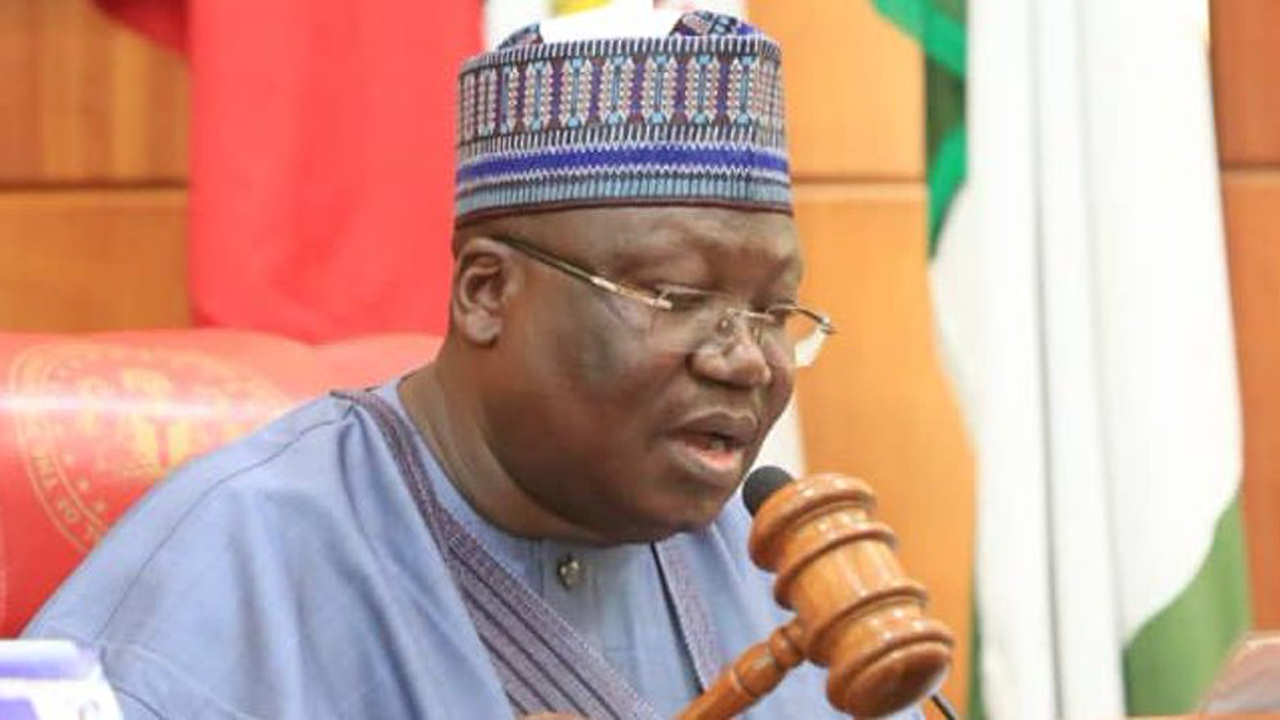
The Amendment of a bill to include Kogi, Lagos, Anambra, Gombe and others among the Niger Delta Development Commission (NDDC) scaled second reading at the Senate on Wednesday.
The bill titled: “A bill for an Act to amend the Niger Delta Development Commission (NDDC), Act No 6, 2000 and for other related matters connected therewith, 2021”, was sponsored by Senator Adeola Solomon Olamilekan representing Lagos West Senatorial district.
Olamilekan in his lead debate submitted that the NDDC Act was activated over 21 years ago and since then, oil and gas have been discovered in Lagos, Kogi, Anambra, Gombe, Bauchi and other States, hence, the amendment would offer an opportunity for the Act to capture peculiarities of the new oil states.
In his contribution, Senator Ahmad Baba Kaita representing Katsina North Senatorial district, having supported the amendment proposal, recalled how a former GMD of NNPC told Senators previously that Nigeria would become one of the largest oil producers in the world if oil discoveries in the country are harnessed.
He said: “Thank you Mr President I remain Senator Ahmad Baba Kaita, Katsina North Senatorial district. Regarding the motion on the oil-producing States, I think what is good for the goose is good for the gander. In a state like Borno, where oil has been discovered, I remember the former Group Managing Director of NNPC arguing here that with such states coming on board, Nigeria will be one of the largest oil producers if we harness our resources.
READ ALSO:
- Delta drunk man sleeps off after raping 24-year-old lady at gunpoint, arrested
- KWASU lecturer arrested arranging ‘resit’ for female student in bedroom
- Senate okays Buhari’s $16bn, €1bn loan requests
- Bandits kill 13, abduct many in Katsina
- Anambra: Where are Andy Uba’s 230,000 APC primary votes – Nigerians drag Gov Abiodun
- ‘Five’ shot dead as Imo boils again
“In this case, it is only fair for us to consider those states that produce oil because the exploration is going to affect the environment. The idea behind that motion is consequences of oil exploration.”
However, Senator George Thompson Sekibo urged Senators to treat the amendment with caution.
He advised lawmakers to find out if those states have started contributing to the Federation account through their oil, adding that exploration of oil in commercial quantity was precedent since the derivation sharing was based on the quantity of oil produced
“Mr President, I congratulate these States where they said they have discovered oil. What I want to know is whether they are of commercial quantity and whether there are being drilled out now and the money is going into the Federal government Account.
“We have not confirmed that one yet but as oil has been discovered there, we want the oil to come out of every soil in Nigeria. Are they exploring the oil? Are they refining oil there and has oil caused devastation in those States.
“Mr President, the purpose of the Niger Delta Development Commission Act is not because they found oil there but because the oil has caused so much devastation and there was a need to remedy the place.”
Senator Mathew Uroghide representing Edo North Senatorial district disagreed with the proposed amendment completely, stating that the NDDC Act was specifically meant to address environmental degradation of the Niger Delta region.
According to him, the inclusion of some northern oil states in the Act will defeat the original intention of the Act.
He said: “Thank you Mr. President. I am Senator Mathew Uroghide representing Edo South Senatorial district. I consider it a privilege to contribute to a bill being sponsored by Senator Solomon Adeola Olamilekan. I am not particularly against the sponsor of the bill, but I feel the bill must be properly presented.
“Let’s start with the name, “Niger Delta Development Commission”, NDDC. Today the area that is referred to as Niger Delta is very clear. The States that make up the Niger Delta region that the Commission is serving is very clear.
“Senator George Thompson Sekibo just mentioned the 13% derivation which each oil-producing States get which is a function of oil production.
“Oil production in Gombe and Bauchi and other northern States are already coming to a reality, but to take these States as the Niger Delta States is not right.
“But if there is any percentage for States that produce oil, be it Sokoto, be in Borno, of course, they should benefit, but that does not make them part of Niger Delta. To say other Sates are part of the Niger Delta makes a mockery of the original idea of the NDDC Act.
“The NDDC was created as an interventionist to media mediate in degradation of the environment due to oil exploration.”
After further contributions by lawmakers, Senate President, Dr Ahmad Ibrahim Lawan put the bill to voice votes and it scaled second reading.
A public hearing was expected to be conducted for a wider consultation preparatory for its final passage into law.
Daily Post












News
Missing Billions: Lawmakers Summon NNPCL and 146 Marketers Over ₦432bn Downstream Debt
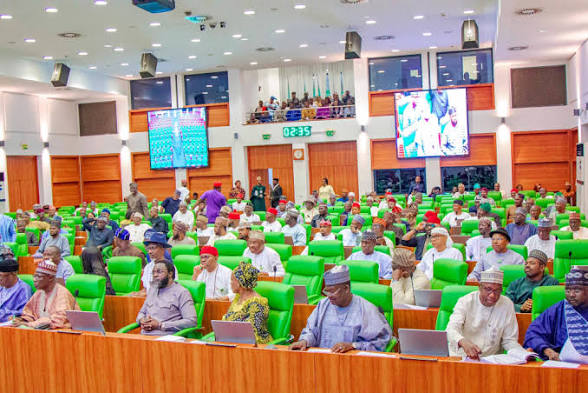
Nigeria’s federal lawmakers are putting the downstream energy sector under the microscope after audit records revealed that state oil firm NNPCL and private fuel marketers have piled up at least ₦432 billion in unpaid regulatory obligations.
The House of Representatives Public Accounts Committee (PAC) confirmed the formal probe this week, following persistent warnings raised in the Auditor-General’s 2023 and 2024 annual reports.
Regulatory Levies Left Unpaid
The mountain of debt has accumulated over a six-year period from 2017 to 2023, remaining largely uncollected despite the country’s tight fiscal squeeze.
READ ALSO:
Cheap Alcohol Fuels Banditry NAFDAC Chief Stands Firm on Sachet Ban
Fresh Blackout Hits Abuja as Apo Substation Transformer Trips
More Than 1,000 Migrants Rescued Off West Africa in One Week
The liabilities consist of statutory fees meant to fund national energy infrastructure, including the 1% Midstream and Downstream Gas Infrastructure Fund, National Transport Average fees, Balancing Allowances, and lingering credit balances from import and coastal operations.
Audit records track a steep rise in default:
- The 2023 audit initially captured ₦392 billion in total arrears, with NNPCL carrying over ₦162 billion and commercial marketers responsible for ₦230 billion.
- The 2024 report revealed that private marketer debt alone had swelled to ₦432 billion, separate from state-owned NNPCL liabilities.
- Regulatory data from the NMDPRA confirms that 146 companies affiliated with DAPPMAN and MEMAN owed ₦327 billion by 2025.
No Hiding Place for Defaulters
PAC Chairman, Rep. Bamidele Salam, made it clear that parliament expects compliance from corporate leaders, issuing a firm directive against corporate stonewalling.
Salam emphasized that the committee will scrutinize why statutory revenues were permitted to sit idle without vigorous enforcement from the NMDPRA. Defaulters will be forced to present audit trails detailing every transaction, outstanding balances, and proof of any remittances made to date.
For lawmakers, the objective is unambiguous: plug commercial leakages, enforce fiscal discipline, and recover every outstanding naira owed to the federation.
News
Fresh Blackout Hits Abuja as Apo Substation Transformer Trips
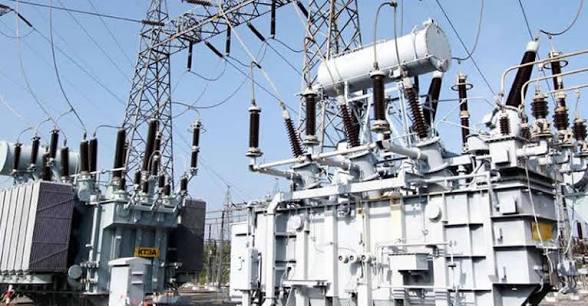
Parts of the nation’s capital have once again been plunged into darkness following an early-morning equipment failure at the Apo Transmission Substation on Wednesday.
The Transmission Company of Nigeria (TCN) confirmed the outage, attributing the disruption to the tripping of a 100MVA TR4 power transformer at its 132kV/33kV facility. Preliminary findings trace the failure to an oil spillage on the transformer’s red-phase High Voltage (HV) bushing, which forced four critical 33kV feeders, H31, H33, H35, and H37 offline.
READ ALSO:
Cheap Alcohol Fuels Banditry NAFDAC Chief Stands Firm on Sachet Ban
Missing Billions: Lawmakers Summon NNPCL and 146 Marketers Over ₦432bn Downstream Debt
More Than 1,000 Migrants Rescued Off West Africa in One Week
In an official public notice, the transmission utility stated that technical teams are already mobilized on-site:
“The Transmission Company of Nigeria, TCN, hereby informs the public that the 100MVA TR4 transformer at the 132/33kV Apo Transmission Substation tripped in the early hours of today. Our maintenance crew are already carrying out a detailed investigation on the transformer to ascertain the exact cause of the tripping, to enable us effect repairs and restore the transformer.”
Following the grid disruption, the Abuja Electricity Distribution Company (AEDC) confirmed power losses across several major districts, including the Apo Legislative Quarters, Lokogoma, and Apo Resettlement.
The latest breakdown adds to a pattern of recurring supply interruptions across Abuja, coming just days after scheduled maintenance works left residents grappling with low generation and prolonged blackouts.
News
Yamal Fires Back at Mbappé: “I’m Not Going to Beg” for Ballon d’Or
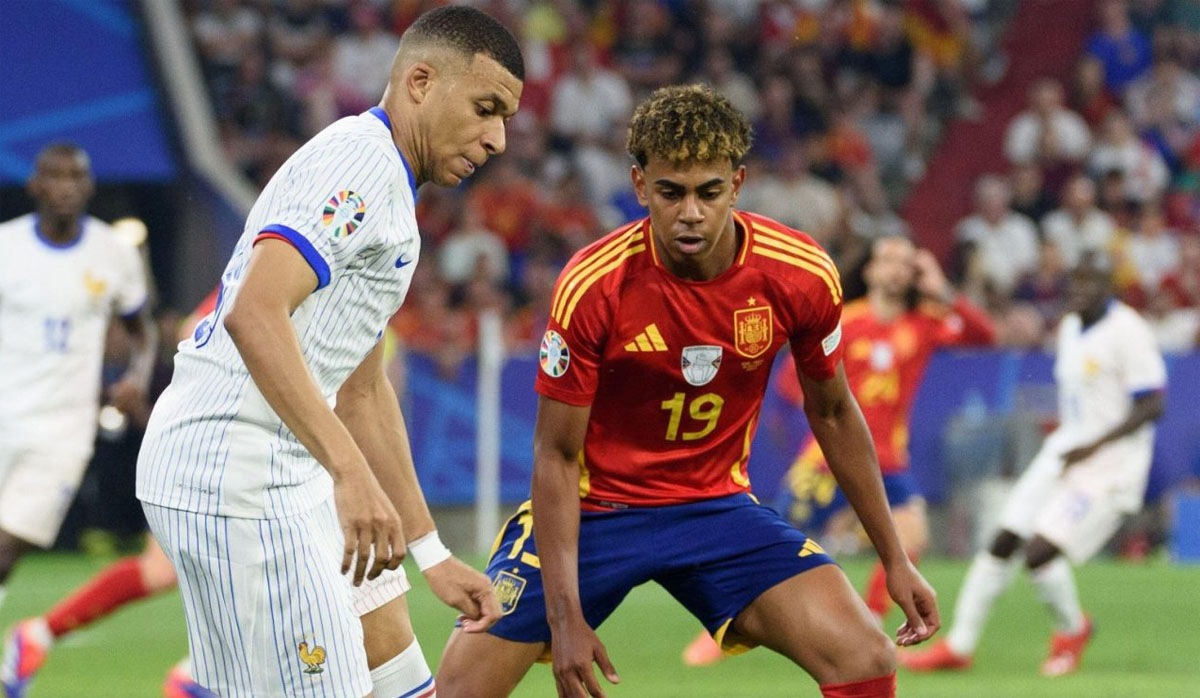
Yamal Fires Back at Mbappé: “I’m Not Going to Beg” for Ballon d’Or
The 19-year-old Spain international insists his World Cup and La Liga triumphs speak for themselves, while also being named one of Barcelona’s vice-captains ahead of the October 26 ceremony.
Barcelona forward Lamine Yamal has made it clear that he will not campaign or “beg” for the 2026 Ballon d’Or, stating that his achievements on the pitch for club and country should speak for themselves. Speaking ahead of Barcelona’s Champions League opener against Feyenoord, the 19-year-old responded to comments from rival Kylian Mbappé, who had previously made his case for the award by highlighting his World Cup Golden Boot win, which also saw him become the competition’s all-time top goalscorer.
“I don’t think I need to campaign for the Ballon d’Or. I’m not thinking about what I deserve, everyone can think what they like,” Yamal told reporters. “I’m proud of everything I’ve done this year with my club and with the national team. We’ve become world champions, we’ve won the league again. I can’t ask for anything more. I think I’ve shown an incredible level, it’s your job and I will not beg for anything.”
The Spanish international, who finished second in last year’s voting behind PSG’s Ousmane Dembélé, is among the leading contenders for the prize alongside Mbappé, Harry Kane, Dembélé, and Khvicha Kvaratskhelia. The ceremony is scheduled for October 26 in London. Yamal was officially named among the 30 nominees for the 2026 men’s Ballon d’Or when France Football unveiled the list on Tuesday, marking his third nomination.
When asked about Dembélé’s recent comments naming Kvaratskhelia, Kane, and Mbappé as his top three, Yamal joked: “He’s a friend of Kylian, right? Honestly, I don’t care. I’m very happy with the year I had. Whenever I’ve faced both of them, I’ve won. They must have taken a dislike to me for some reason.” Spain knocked France out of the World Cup semi-finals with a convincing 2-0 victory.
READ ALSO:
- Osun Police Arrest Woman After Vigilante Member Dies During Sexual Encounter in Ile-Ife
- Igbo Group Rejects Tinubu Endorsement, Pledges Grassroots Support for Peter Obi in 2027
- Lagos arraigns over 100 suspects after 130 arrested in Lekki, Ajah raid
Yamal, who suffered a hamstring injury in April, has returned to form with two goals in his last two outings against Rayo Vallecano and Valencia, and appeared far more cheerful after a difficult start to the season. “In the end, I’m 19, coming off winning a World Cup, having had the best holidays of my life. I’ve never been happier at any point in my life than I am now,” he said.
Beyond individual honours, Yamal emphasised that Barcelona’s primary target this season is the Champions League trophy, a title that has eluded the Catalan giants since 2015. “There’s no greater motivation than the Champions League, which is the one I still have to win. We will give our all to win it,” Yamal said ahead of Wednesday’s opener against Feyenoord. “Good players have arrived, like Anthony Gordon, Karim Adeyemi, Rodri.”
Barcelona coach Hansi Flick praised the young star, saying: “Lamine is a player who can decide games on his own, fantastic quality. It’s great, you can see it every day how he is enjoying playing football. For me the best thing is that he enjoys this game and then he’s on a top level.”
Yamal is also the favourite to win a third consecutive best young player award at the Ballon d’Or ceremony, having been one of 10 players nominated on Tuesday, including Johan Manzambi, Yan Diomande, and Ayyoub Bouaddi, who all impressed at the World Cup and were then the subject of big-money summer transfers.
Interestingly, during the press conference, neither Yamal nor Flick mentioned Feyenoord by name, instead focusing entirely on Barcelona’s mission to win the Champions League. Yamal was recently elected one of three vice-captains by his teammates, alongside Eric Garcia and Frenkie de Jong, with coach Hansi Flick selecting Raphinha and Pedri as the other members of the five-man captaincy group. “It’s something to be proud of at 19 years old. I’m very grateful to my teammates. It’s a position that comes with responsibilities, even if I’m only 19, but I’m very happy,” he said.
Yamal Fires Back at Mbappé: “I’m Not Going to Beg” for Ballon d’Or
-
 Politics3 days ago
Peter Obi, Others Challenging Tinubu Cannot Transform Nigeria — Datti Baba-Ahmed
-
 Auto2 days ago
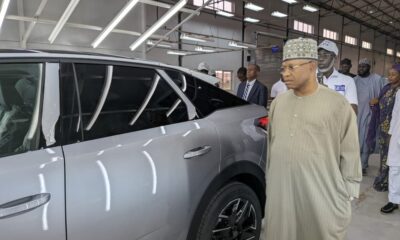
Kaduna to Lead Govt Patronage of Local Vehicles as Sani Unveils Peugeot 5008
-
 metro1 day ago
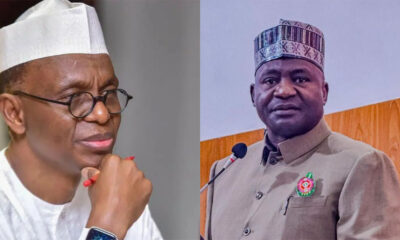
El-Rufai Demands ₦10bn from Defence Minister Over Southern Kaduna Killings Allegation
-

 metro2 days ago
Socialite Igho ‘Tiny’ Ubiribo Dies After Penis Enlargement Surgery
-

 metro1 day ago
Catholic priest leaves priesthood, weds Kenyan woman after 12 years in Kenya
-
 Politics3 days ago
Demystifying the Political Monolith: Wike’s ‘See Finish’ Doctrine and Nigeria’s New Political Calculus
-
 metro1 day ago
No US Case Against Tinubu, Family Enjoy Unimpeded Transit for UNGA — Ambassador Ibrahim
-

 metro2 days ago
Three Women Killed, 10 Injured in Multiple Crash on Lagos-Ibadan Expressway Bridge