

News
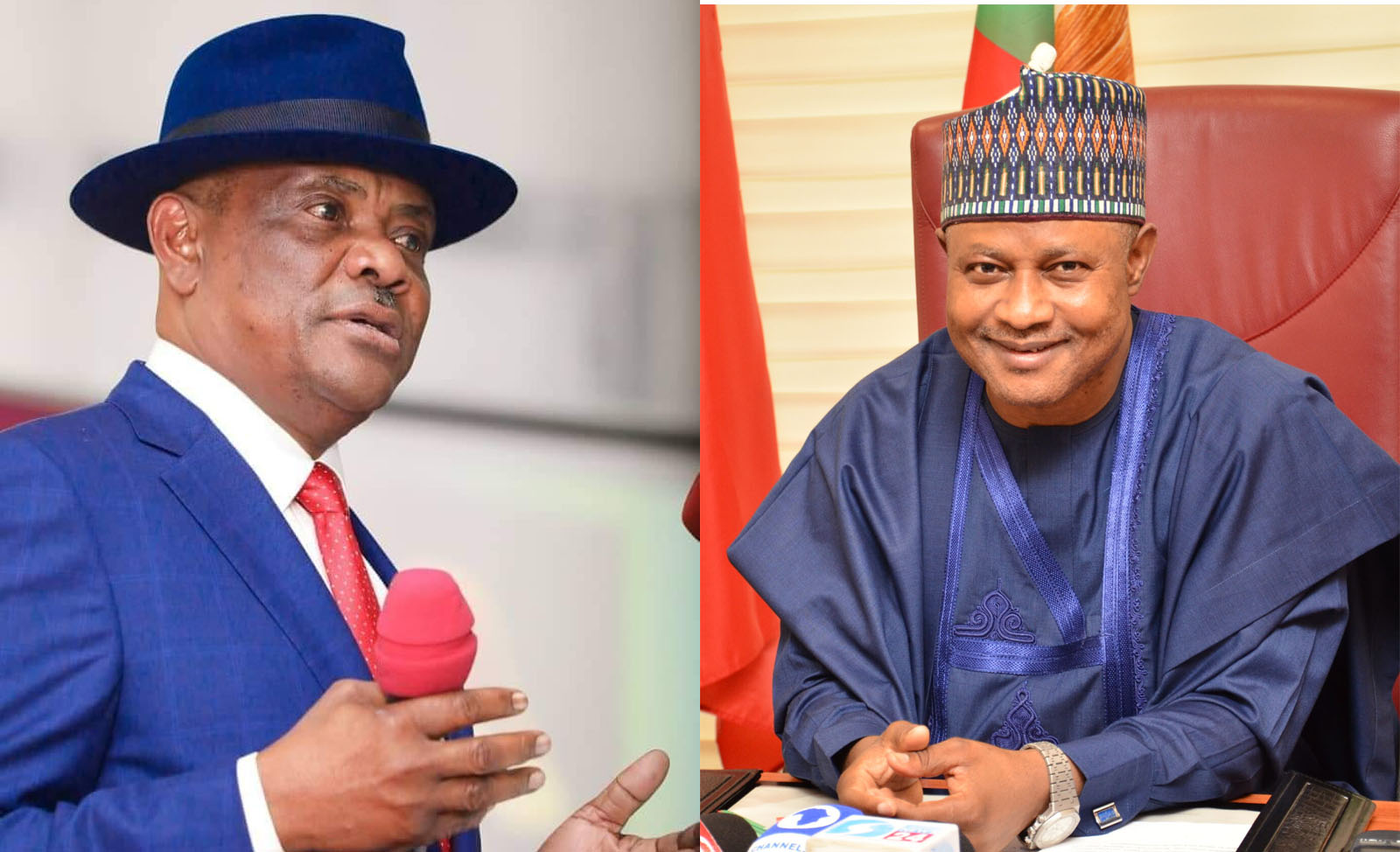
SERAP gives Sani, Wike, others seven days to account for N5.9trn, $4.6bn loans
SERAP gives Sani, Wike, others seven days to account for N5.9trn, $4.6bn loans
Socio-Economic Rights and Accountability Project (SERAP) has urged Nigeria’s 36 state governors and the Minister of the Federal Capital Territory, Abuja, Mr Nyesom Wike to “widely publish copies of the loan agreements and spending details of some N5.9 trillion and $4.6 billion loans obtained by their states and the FCT, including details and locations of projects executed with the loans.”
SERAP also urged them to “promptly invite the Independent Corrupt Practices and Other Related Offences Commission (ICPC) and Economic and Financial Crimes Commission (EFCC) to investigate the spending of the domestic and external loans obtained by your state and the FCT.”
SERAP’s request followed the disclosure last week by Governor Uba Sani of Kaduna State that the immediate past administration of Nasir El-Rufai left $587m, N85bn debt and 115 contractual labilities, making it impossible for the state to pay salaries.
In the Freedom of Information requests dated 30 March 2024 and signed by SERAP deputy director Kolawole Oluwadare, the organisation said: “It is in the public interest to publish copies of the loan agreements and details of how the loans obtained are spent.”
SERAP said, “Nigerians have the right to know how their states are spending the domestic and external loans obtained by the governors.”
SERAP said, “Widely publishing copies of the loan agreements and spending details of the loans obtained would ensure that persons with public responsibilities are answerable to the people for the performance of their duties in the management of public funds.”
READ ALSO:
- JUST IN: Three children killed, four injured as explosion rocks Taraba
- Bashir el-Rufai tackles Uba Sani over ‘huge debt inherited’ claim
- Police arrest ‘cleric with human body parts’ in Ondo
The FoI requests, read in part: “We would be grateful if the recommended measures are taken within seven days of the receipt and/or publication of this letter. If we have not heard from you by then, SERAP shall take all appropriate legal actions to compel you and your state to comply with our request in the public interest.”
“SERAP is seriously concerned that many of the country’s 36 states and FCT are allegedly mismanaging public funds which may include domestic and external loans obtained from bilateral and multilateral institutions and agencies.”
“Transparency in the spending of the loans obtained by your state is fundamental to increase accountability, prevent corruption, and build trust in democratic institutions with the ultimate aim of strengthening the rule of law.”
“According to Nigeria’s Debt Management Office, the total public domestic debt portfolio for the country’s 36 states and the Federal Capital Territory is N5.9 trillion. The total public external debt portfolio is $4.6 billion.”
“Many states and the FCT reportedly owe civil servants’ salaries and pensions. Several states are borrowing to pay salaries. Millions of Nigerians resident in your state and the FCT continue to be denied access to basic public goods and services such as quality education and healthcare.”
“Several states including your state are also reportedly spending public funds which may include the domestic and external loans to fund unnecessary travels, buy exotic and bulletproof cars and generally fund the lavish lifestyles of politicians.”
“SERAP is seriously concerned that the domestic and external loans obtained by your state and the FCT are vulnerable to corruption and mismanagement. Your government has a responsibility to ensure transparency and accountability in how any loans obtained by your state are spent, to reduce vulnerability to corruption and mismanagement.”
“Publishing copies of the loan agreements obtained by your state and the FCT would allow Nigerians to scrutinise them, and promote transparency and accountability on the spending of public funds including the loans obtained.”
“SERAP believes that providing and widely publishing the details of the spending of the domestic and external loans obtained by your state and the FCT would enable Nigerians to effectively and meaningfully engage in the management of the loans.”
“SERAP believes that the constitutional principle of democracy also provides a foundation for Nigerians’ right to know the details of loan agreements and how the loans obtained are spent. Citizens’ right to know promotes openness, transparency, and accountability that is in turn crucial for the country’s democratic order.”
“The effective operation of representative democracy depends on the people being able to scrutinize, discuss and contribute to government decision making, including on the spending of loans obtained by your state and the FCT.”
“To do this, they need information to enable them to participate more effectively in the management of public funds by their state government and the FCT.”
READ ALSO:
- New $20 minimum wage for fast food workers in California set to start Monday
- Iran TV journalist stabbed in ‘murder plot’
- Newcastle beat West Ham in seven-goal thriller
“The public interest in obtaining information about expenditures relating to the loans obtained by your state outweighs any privacy or other interest. Moreover, the oversight afforded by public access to such details would serve as an important check on the activities of your state and help to prevent abuses of the public trust.”
“SERAP is concerned that there is a significant risk of mismanagement or diversion of funds linked to loans obtained by state governments including your state. The accounts of Nigeria’s 36 states and the FCT are generally not open to public scrutiny.”
“Your state has obligations under international anticorruption and human rights law, including a responsibility to promote transparency and accountability in the management of public funds, prevent mismanagement or diversion of public funds, and redress any abuse of public trust.”
“The Nigerian Constitution, human rights and anticorruption treaties to which Nigeria is a state party also impose obligations on your state to prevent mismanagement or diversion of public funds including the loans obtained.”
“SERAP is seriously concerned that years of allegations of corruption and mismanagement of public funds including the loans obtained by states have contributed to widespread poverty, underdevelopment and lack of access to public goods and services.”
“Opacity in the spending of loans obtained by states has continued to have negative impacts on the fundamental interests of the citizens and the public interest.”
“Transparency would ensure that these loans are not diverted into private pockets, and increase public trust that these loans are used and any future loans would be used to benefit Nigerians resident in your state.
“The Freedom of Information Act, Section 39 of the Nigerian Constitution, article 9 of the African Charter on Human and Peoples’ Rights and article 19 of the International Covenant on Civil and Political Rights guarantee to everyone the right to information, including about the loan agreements and how the loans obtained are spent.”
SERAP added “Your state cannot hide under the excuse that the Freedom of Information Act does not apply to your state to refuse to provide the details being sought, as your state also has clear legal obligations to provide the information as prescribed by provisions of the Nigerian Constitution 1999 [as amended], and the African Charter on Human and Peoples’ Rights (Ratification and. Enforcement) Act.
SERAP gives Sani, Wike, others seven days to account for N5.9trn, $4.6bn loans






News
Federal Workers Call on Finance Ministry to Release Delayed Allowances and Promotion Arrears
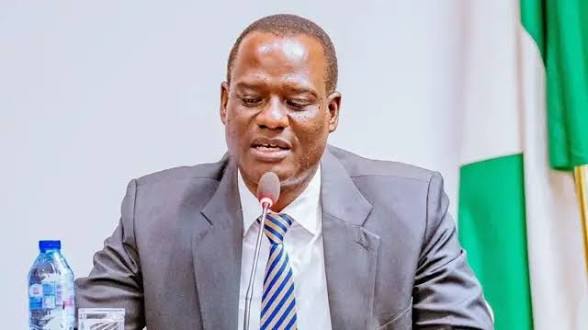
Federal Workers Call on Finance Ministry to Release Delayed Allowances and Promotion Arrears
Union representatives encourage quick dialogue and timely payments to ensure fair compensation and workplace peace across public agencies.
Civil service representatives across Nigeria have reached out to the Federal Ministry of Finance, requesting the swift release of delayed workplace benefits and overdue promotion pay.
Writing on behalf of public servants, Joint National Public Service Negotiating Council Secretary Olowoyo Gbenga reminded government officials that honoring pay agreements on time preserves mutual trust and maintains stable public offices.
Earlier this year, authorities successfully released two months of wage awards following collaborative discussions in August. Nevertheless, two vital financial issues remain unresolved. First, workers are waiting for the full rollout of an approved 40 percent allowance that reflects the national ₦70,000 minimum wage standard.
Second, many employees who earned career promotions in Batches 7 and 9 have yet to receive their back pay due to administrative payment delays.
Because workplace morale directly affects public services that support all communities, union leaders urged the government to remove bureaucratic roadblocks quickly. They explained that fair, timely payments help staff members manage living costs and support their families.
By resolving these outstanding payments without delay, officials and employees can continue working together constructively to deliver reliable public services for everyone.
Federal Workers Call on Finance Ministry to Release Delayed Allowances and Promotion Arrears
News
ECOWAS Biometric Card Expands as Seven Countries Begin Rollout
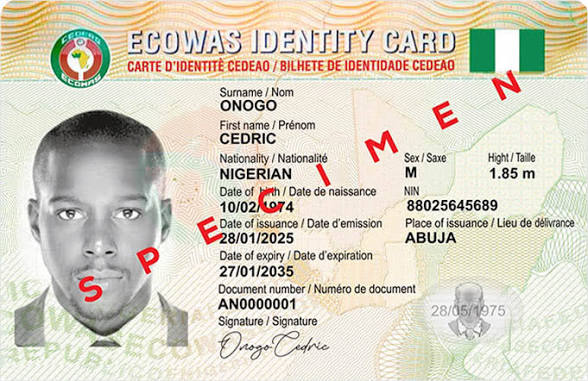
ECOWAS Biometric Card Expands as Seven Countries Begin Rollout
Cross-border travel within West Africa could become quicker and more secure with the growing rollout of the ECOWAS National Biometric Identity Card (ENBIC).
The card allows immigration officials to electronically verify a traveller’s identity through a biometric chip, reducing some of the delays associated with checking paper documents.
According to ECOWAS and migration officials, the system will also improve cooperation between immigration authorities across member states.
Nigeria joined six other ECOWAS countries already deploying the card: Senegal, Guinea-Bissau, Ghana, Benin, The Gambia and Sierra Leone.
Nigeria began its rollout through the Nigeria Immigration Service (NIS) in November 2025.
90-Day Rule Still Applies
Despite the new travel document, the ENBIC does not automatically give holders the right to live indefinitely in another ECOWAS country.
Citizens of member states can enter another country without a visa and stay for up to 90 days under the ECOWAS free-movement protocol.
Travellers who want to stay beyond that period must meet the host country’s residence requirements.
NIS official Bennett Chiagoro said the card also contains security features that can expose attempts to alter its data.
Application Process
Nigerians can apply through the NIS online portal. The process includes verification, biometric enrolment, validation, production and issuance.
The portal also provides services for tracking applications, checking payment information, correcting certain application details and reporting misplaced cards.
Meanwhile, officials urged travellers to rely on accurate information about the card as implementation continues, particularly regarding eligibility, requirements and fees.
ECOWAS Biometric Card Expands as Seven Countries Begin Rollout
International
Ninth Body Discovered in South Africa: Nigeria Issues Urgent Safety Alert to Nationals
Ninth Body Discovered in South Africa: Nigeria Issues Urgent Safety Alert to Nationals
Police cordon off Kempton Park and post a $56,000 combined bounty as the Nigerian Consulate warns citizens to exercise heightened vigilance.
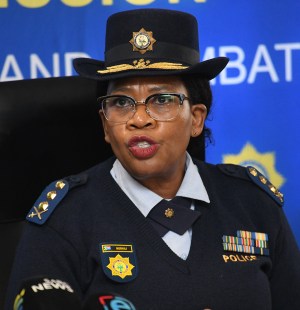
South African police recovered the body of a ninth woman on Thursday along a roadside in Dawn Park, intensifying public alarm and prompting the Nigerian Consulate-General in Johannesburg to issue an emergency safety advisory to its citizens.
In response to the discoveries, law enforcement teams placed Kempton Park in the Ekurhuleni municipality under lockdown and established roadblocks to inspect vehicles and restrict suspect movement.
Deputy Police Chief Tebello Mosikili declared during a press conference that authorities will deploy specialized investigative units to track down those responsible.
To accelerate breakthroughs, police offered a 400,000 rand ($25,000) reward for credible tips, while South Africa’s Democratic Alliance provided an additional $31,000, establishing a combined bounty of $56,000.
Detectives are now evaluating forensic evidence to determine whether one perpetrator committed the murders or whether independent offenders copied earlier attacks.
Meanwhile, the Nigerian Consulate-General urged Nigerian residents, especially women and young people who commute, exercise, or study around Ekurhuleni, to take deliberate personal precautions.
The mission advised community members to travel in groups, stay clear of isolated trails, and share real-time travel details with trusted family members.
Furthermore, diplomatic officials emphasized that safety precautions must not shift the burden of crime prevention onto women, calling on South African authorities to ensure thorough investigations and justice for every victim.
Ninth Body Discovered in South Africa: Nigeria Issues Urgent Safety Alert to Nationals
-

 metro3 days ago
Lagos Power Outage: Ikeja Electric Blames TCN as Businesses, Homes Groan
-

 International2 days ago
Islamic Council Condemns Attempted Attack on Holy City of Mecca
-
 Politics3 days ago
2027: APC Governors Reject Wike’s Rainbow Coalition, Insist on Party Loyalty
-
 News2 days ago
Keep Politics Out of My Office — Ogbomoso Grand Chief Imam Warns Politicians, Bloggers
-

 metro1 day ago
Niger Mosque Abductions: Terrorists Execute 30 of 500 Captive Muslim Worshippers
-

 International3 days ago
US Court Blocks Trump Visa Rule Limiting Stay of Foreign Students, Journalists
-

 metro3 days ago
A Son Wouldn’t Have Done Better — Dangote Speaks on Daughters, Succession
-

 Entertainment2 days ago
BREAKING: Olu Jacobs Dies at 84, Atiku Mourns Cultural Icon