
News
Sokoto Operation: FG Reassures Investors, Says Nigeria’s Economy Remain Stable
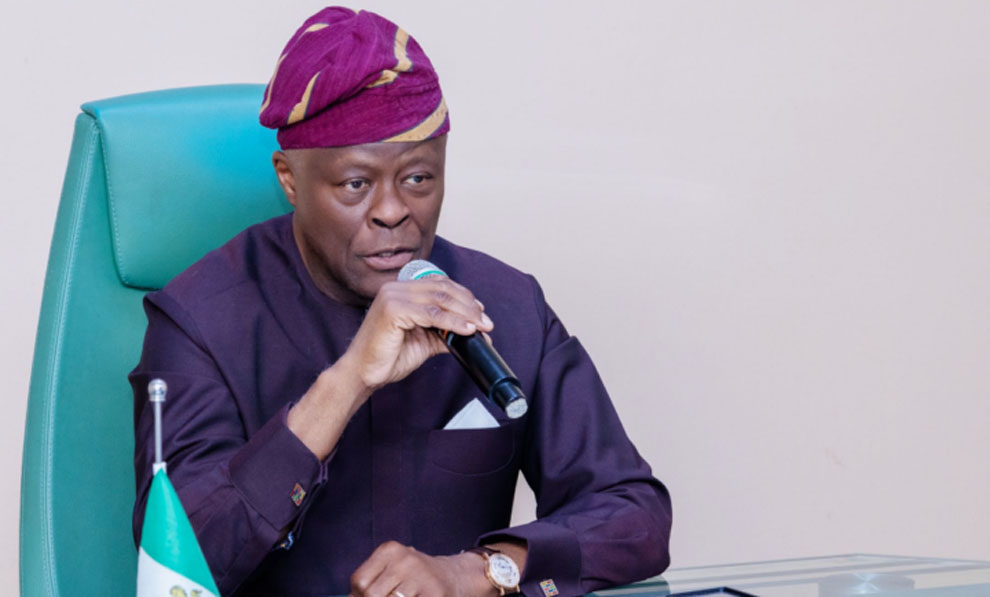
Sokoto Operation: FG Reassures Investors, Says Nigeria’s Economy Remain Stable
The Federal Government has reassured investors, financial analysts, and international development partners that Nigeria remains peaceful, stable, and economically resilient despite concerns following a joint security operation in Sokoto carried out on Christmas Day.
The Minister of Finance and Coordinating Minister of the Economy, Wale Edun, gave the assurance in a statement issued on Sunday in Abuja, explaining that the operation—conducted in collaboration with the United States—was a targeted, intelligence-led action aimed solely at terrorist elements threatening national security and economic activities.
“What Nigeria is decisively confronting—alongside trusted international partners—is terrorism,” Edun said, stressing that the context of the operation was essential to understanding its broader economic implications.
He described the Sokoto operation as “precise, intelligence-led, and focused exclusively on terrorist elements that threaten innocent lives, national stability, and economic activity,” adding that the action was designed to strengthen security rather than unsettle financial markets or undermine investor confidence.
“Far from destabilising markets or weakening confidence, such actions strengthen the foundations of peace, protect productive communities, and reinforce the conditions required for sustainable economic growth. Security and economic stability are inseparable; every effort to safeguard Nigerians is, by definition, pro-growth and pro-investment,” the minister said.
READ ALSO:
- Ibadan Explosion: Fayose Releases Documents, Claims Makinde Got ₦50bn from FG
- Italy Arrests Nine Over €7M Hamas Funding Network, Seizes €8M in Assets
- Kennedy Center Sues Musician for $1M Over Trump Name Cancellation
Edun noted that under the leadership of President Bola Ahmed Tinubu, Nigeria has recorded measurable progress in security improvements and economic reforms, reflected in key macroeconomic indicators.
According to him, Nigeria’s GDP grew by 3.98 per cent in Q3 2025, following a strong 4.23 per cent growth in Q2, with expectations of an even stronger performance in Q4 2025. He added that inflation has slowed for the seventh consecutive period and now stands below 15 per cent, attributing the improvement to coordinated fiscal and monetary policies.
The minister said Nigeria’s financial markets remain stable, with both domestic and international debt markets functioning efficiently under prudent fiscal management. He recalled that the country recently secured credit rating upgrades from Moody’s, Fitch, and Standard & Poor’s, describing them as independent validation of the government’s reform agenda.
“We have maintained fiscal discipline, prioritised efficiency, and protected macroeconomic stability, demonstrating resilience in the face of external shocks,” Edun said.
Referring to President Tinubu’s recent national address, Edun stated that the administration’s focus for 2026 is to consolidate gains made in 2025, strengthen economic resilience, and sustain momentum toward inclusive and durable growth.
Assuring local and foreign investors ahead of market reopening on Monday, December 29, 2025, Edun said confidence in Nigeria’s economic direction remains justified.
“As markets reopen, investors can be confident that Nigeria remains reform-driven, stable, and focused on growth. The fundamentals are strengthening, the policy direction is clear, and this administration’s resolve to protect lives and secure prosperity is unwavering,” he said.
He concluded by reaffirming the country’s investment outlook: “Nigeria remains open for business, anchored in peace, and firmly focused on the future.”
Sokoto Operation: FG Reassures Investors, Says Nigeria’s Economy Remain Stable








News
Aso Rock Goes Solar as Tinubu Orders National Grid Disconnection

Aso Rock Goes Solar as Tinubu Orders National Grid Disconnection
President Bola Tinubu will fully disconnect the Aso Rock Presidential Villa from the national grid by March 2026 following allegations of electricity overbilling for power not supplied, the State House has confirmed.
The State House Permanent Secretary, Temitope Fashedemi, made the disclosure while defending the 2026 State House budget before the Senate Committee on Special Duties. He revealed that the solar mini-grid project at the Presidential Villa was completed in December 2025 and is currently undergoing technical testing ahead of a full transition to solar power.
Fashedemi explained that during the testing phase of the new solar installation, officials discovered what he described as significant overbilling by the electricity distribution company. According to him, the State House observed instances where it was billed for electricity that was not supplied and has begun reconciliation discussions to address what he termed “legacy liability.”
READ ALSO:
- 2026 Electoral Bill: Senate Explains Limits of IReV in Real-Time Transmission
- El-Rufai to Appear Before EFCC After Alleged Airport Arrest Attempt
- Four Sentenced to Death for Murder of Ahoada DPO in Rivers
The Villa is serviced by the Abuja Electricity Distribution Company (AEDC), which in February 2024 publicly listed several government agencies as debtors. At the time, AEDC said the Presidential Villa owed N923.87 million in unpaid electricity bills. Other major debtors included the Federal Capital Territory Administration (FCTA) and some federal ministries.
The Tinubu administration had earlier allocated N10 billion in the 2025 budget for the solarisation of the Presidential Villa through a solar mini-grid system. An additional N7 billion has been earmarked for the same project in the 2026 Appropriation Bill, bringing total allocations to N17 billion over two years.
Fashedemi noted that a similar transition to solar power at the State House Medical Centre in May 2025 has already demonstrated cost savings and reliability. He said the facility has operated almost entirely on solar energy and battery storage since then, with minimal reliance on grid electricity and no generator use.
He expressed optimism that by March 2026, the Presidential Villa would complete its transition and fully exit the national grid, relying primarily on renewable energy for its electricity needs.
The development aligns with broader efforts to promote renewable energy adoption in Nigeria, reduce public sector energy costs, and address concerns over electricity billing transparency. If fully implemented, Aso Villa will operate largely on solar power supported by battery storage systems, significantly reducing dependence on grid supply and diesel generators.
Aso Rock Goes Solar as Tinubu Orders National Grid Disconnection
News
2026 Electoral Bill: Senate Explains Limits of IReV in Real-Time Transmission

2026 Electoral Bill: Senate Explains Limits of IReV in Real-Time Transmission
The Nigerian Senate has declared that genuine real-time transmission of election results can only be achieved if the Independent National Electoral Commission (INEC) adopts a full e-voting system, clarifying ongoing debates surrounding the review of the 2026 Electoral Bill.
Chairman of the Senate Ad-hoc Committee on the Review of the 2026 Electoral Bill, Adeniyi Adegbonmire, made the clarification during an interview on Arise News Channel on Thursday.
According to him, the INEC Result Viewing Portal (IReV) was never designed to function as an electronic voting platform and cannot deliver instant transmission of votes under Nigeria’s current manual voting structure.
IReV Is Not an E-Voting Platform
Adegbonmire explained that IReV is strictly a results publication portal. He stressed that ballot papers are thumb-printed and counted manually at polling units before results are entered into Form EC8A by the presiding officer.
“It is the Form EC8A that has been filled manually and will be transmitted to IReV,” he said, adding that changing the terminology in the Electoral Bill from “transmit” to “upload” would not alter the process.
READ ALSO:
- El-Rufai to Appear Before EFCC After Alleged Airport Arrest Attempt
- Four Sentenced to Death for Murder of Ahoada DPO in Rivers
- Nigerian Army Rescues Eight Kidnapped Wedding Guests in Kano
The senator dismissed claims that the Senate intends to stop INEC from using IReV in the 2027 general elections, describing such reports as misinformation.
“The Senate never said INEC should not use IReV for the 2027 elections. IReV is software developed by INEC to publicise results already declared at polling units. It is not an e-voting platform,” he stated.
Manual Voting Still Determines Results
Under Nigeria’s current electoral framework, voters cast ballots manually, and votes are counted by hand at polling units. The presiding officer then records the figures in Form EC8A, which must be signed and countersigned by party agents before being uploaded to IReV.
Adegbonmire emphasised that electronic transmission begins only after manual collation is completed.
“When you have not complied with the proper filling of Form EC8A, you cannot transfer, transmit or upload it,” he said.
He further clarified that electronic transmission does not affect the sanctity of voting, since vote casting and counting remain manual.
Why E-Voting Is Key to Real-Time Results
The senator argued that for true real-time election result transmission, Nigeria would need a system where votes are cast, counted, and automatically transmitted electronically from polling units to a central server — a process only achievable through a legally backed electronic voting system.
Although INEC introduced technology such as the Bimodal Voter Accreditation System (BVAS) and IReV during the 2023 general elections, vote counting is still conducted manually under the Electoral Act 2022.
The ongoing review of the 2026 Electoral Bill has therefore reignited national debate over broader electoral reforms, digital infrastructure upgrades, and the possibility of transitioning to e-voting in Nigeria ahead of future elections.
Lawmakers say adopting e-voting would require substantial legal amendments, investment in secure digital infrastructure, cybersecurity protections, and extensive voter education.
Until then, the Senate maintains that real-time transmission, in the strictest sense, remains unattainable under the present manual voting system.
2026 Electoral Bill: Senate Explains Limits of IReV in Real-Time Transmission
News
MPAC Hails Supreme Court Verdict Affirming Muslim Students’ Right to Worship at RSU
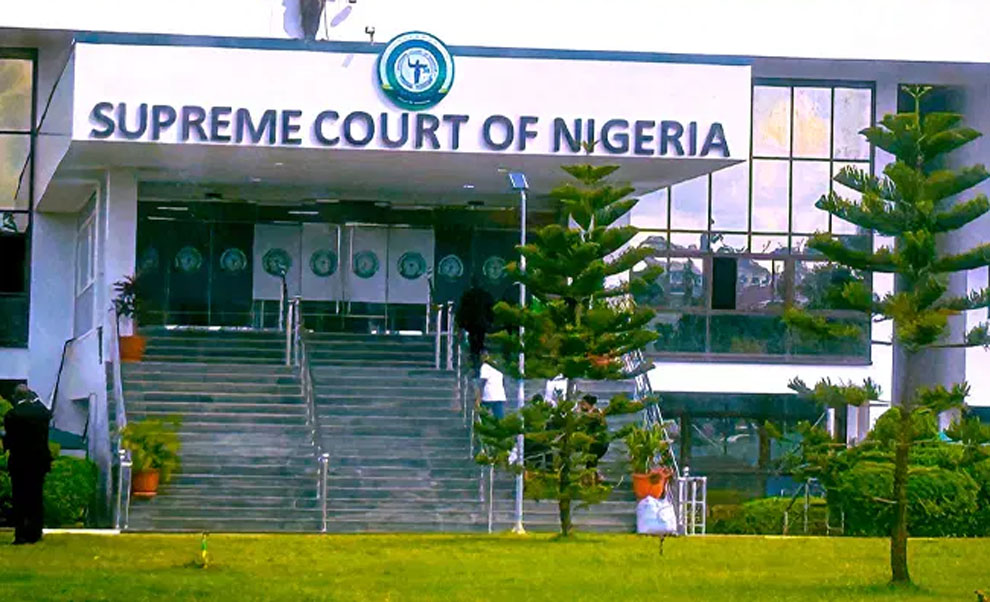
MPAC Hails Supreme Court Verdict Affirming Muslim Students’ Right to Worship at RSU
Lagos, February 12, 2026 — The Muslim Public Affairs Centre (MPAC), Nigeria, has welcomed the Supreme Court judgment affirming the constitutional right of Muslim students at Rivers State University (RSU) to worship freely on campus, describing the ruling as a landmark victory for justice and religious freedom.
In a statement issued on Wednesday, MPAC said the apex court’s decision, which dismissed RSU’s appeal, goes beyond a legal triumph for the affected students and represents “a victory for the Constitution, conscience, and justice.”
“For over a decade, Muslim students at Rivers State University were denied a right that should never have been contested — the right to pray,” the organisation said. “Rather than resort to disorder, the students chose the path of law, patience, and principled resistance.”
MPAC commended the students for pursuing redress through constitutional means and praised the judiciary at all levels for upholding fundamental rights guaranteed under Nigerian law. The group said the judgment sends a clear message that no institution or authority can override citizens’ constitutional freedoms.
READ ALSO:
- El-Rufai to Appear Before EFCC After Alleged Airport Arrest Attempt
- Four Sentenced to Death for Murder of Ahoada DPO in Rivers
- Nigerian Army Rescues Eight Kidnapped Wedding Guests in Kano
The organisation called on RSU authorities to comply fully and immediately with the Supreme Court ruling. It warned that any delay or refusal to implement the judgment would amount to contempt for the rule of law and an affront to constitutional order.
MPAC further urged the university to end what it described as “persecution, exclusion, and hostility” toward Muslim students, attributing such actions to institutional bias and Islamophobic attitudes.
“A university must be a sanctuary of knowledge, not a theatre of discrimination,” the statement read.
Beyond Rivers State, MPAC said the ruling carries wider implications for Muslim minority communities in the South-East and South-South regions, where it claimed some students and workers continue to face restrictions on their religious practices. The group expressed hope that the judgment would usher in a new era of respect for religious rights across the country.
“Religious freedom is not a concession or a favour. It is a constitutional right,” MPAC stated, adding that Nigeria cannot build unity or democracy while permitting discrimination based on faith.
The statement was signed by Disu Kamor, Executive Chairman of MPAC, who reaffirmed the organisation’s commitment to defending constitutional values and protecting the dignity of all Nigerians regardless of religion.
MPAC Hails Supreme Court Verdict Affirming Muslim Students’ Right to Worship at RSU

-

 metro3 days ago
Leadership Crisis at NAHCON as Chairman Abdullahi Saleh Usman Resigns
-

 News3 days ago
Oyo Muslims Reaffirm Loyalty to Sultan on Islamic Matters — Grand Chief Imam
-
 News3 days ago
US Judge Orders FBI, DEA to Release Tinubu’s Criminal Records, Faults Delays
-
metro2 days ago
Former NAHCON Chief Explains Why He Stepped Down, Denies Conflicts
-

 International3 days ago
US to Deport 18 More Nigerians on ‘Worst-of-the-Worst’ Criminal List (Full Names)
-

 Education14 hours ago
Supreme Court Affirms Muslim Students’ Right to Worship at Rivers State University
-

 Business3 days ago
Naira Posts Strong Comeback, Breaking Two‑Year High Against Dollar
-

 metro13 hours ago
IKEDC Sets Feb 20 Deadline for Customers to Submit Valid IDs or Face Disconnection