
News
Special status: Lagos seeks one percent Consolidated Revenue Fund allocation
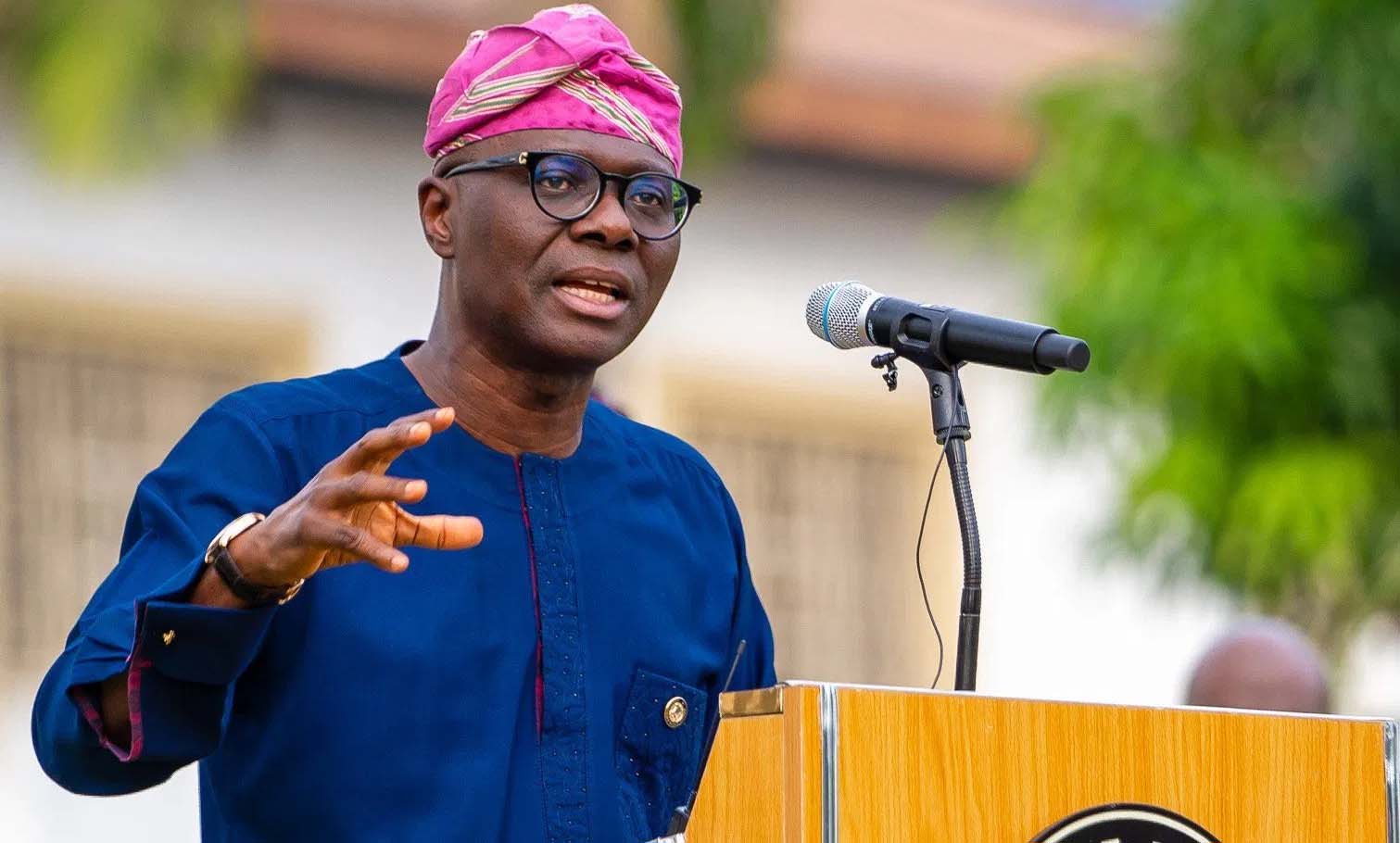
Should Lagos State’s demand for special status, being Nigeria’s business hub, sailed through, it will get one per cent allocation from the federation account.
Justifying its special status demand, Governor Babajide Sanwo-Olu said the state has multiplying effects on the Southwest region and the country.
The governor made the request at the opening of a two-day Southwest zonal public hearing on the review of revenue allocation formula organised by the Revenue Mobilisation Allocation and Fiscal Commission (RMAFC) at Lagos Continental Hotel, Victoria Island.
According to Sanwo-Olu, the revenue sharing formula should be 34 per cent for Federal Government, including one perc ent for Federal Capital Territory (FCT); 42 per cent for states; 23 per cent for local government areas and one per cent for Lagos State (Special Status).
He said the proposal should replace the prevailing revenue allocation formula of 52.68 per cent (Federal Government), 26.72 per cent (36 state governments) and 20.60 per cent (774 local government areas).
In a memorandum on the Review of Revenue Allocation Formula he submitted to the RMAFC, Sanwo-Olu declared that “allocating one per cent (Special Status) for the state and allowing the three tiers of government to share 99 per cent in a new revenue sharing formula is very straightforward, self-justifying and in no way controversial”.
The governor argued the review of the revenue allocation formula was long overdue, stating the best way to guarantee national progress and development is by paying attention to sub-national development because the national is a summation and a reflection of the sub-national.
Besides, Sanwo-Olu said the call for special status was recognition of its huge financial commitments to infrastructure and provision of basic amenities for the increasing population of its residents, as well as its preeminent contribution to the national coffers.
He said the call, which has been re-echoed at different fora and at various levels and tiers of government, cannot be over emphasised, especially against the backdrop of the current economic situation of the country, the aftermath of the last year’s #EndSARS protests and the devastating effects of the COVID-19 pandemic, for which Lagos has been the national epicenter.
He said: “Our demand is a sharing formula that is just, fair and equitable; reflecting the contribution of stakeholders to the common purse; and also one that enhances the capacity of state and local governments to deliver high-quality services and the full dividends of democracy to the greatest number of our people.
“Lagos State is no doubt the nation’s commercial capital, and population center. The level of funding required to service the State’s social and public infrastructure is so significant that it will be difficult for the State to bear the burden for much longer under the present arrangement.
“I should say that it will actually be unfair to expect the state to bear this heavy burden on its own. It is therefore necessary to give due consideration to all the variables that support our advocacy for a special status.
“The call for a special status for Lagos is not a selfish proposition; it is in the best interest of the country and all Nigerians, for Lagos which accounts for about 20 per cent of the national GDP and about 10 per cent of the nation’s population to continue to prosper.
“Lagos is more than just another state in the Nigerian federation. There is no tribe in the country that has no significant stake in Lagos State.
”As the former capital of the country for 77 years (compared to the 30 years that Abuja has been the Federal Capital Territory), Nigeria’s largest metropolis still bears the heavy brunt of being home to all Nigerians; irrespective of age, class, gender, religious affiliation or tribe.
“There are several statistics that shows the number of people that comes into Lagos every day, however, there are clear indications that most of these people migrate with the intention to make Lagos their new home and in pursuit of personal dreams due to the opportunities the city-state seemingly possesses, and this portends additional responsibilities on the government.
“Additionally, Lagos still harbors a huge number of federal establishments which could not be moved to Abuja.
“These include military cantonments and barracks, police, customs, immigration, civil defence, prisons, road safety and security/intelligence establishments.
“There are several reasons to justify the call for a special status for Lagos apart from the aforementioned factors, and by extension, a review of the revenue allocation sharing formula.”
Governor Sanwo-Olu also said that it would be unfair to leave the state to bear the burden of the massive destruction it experienced by the State during the #EndSARS protests hijacked by hoodlums and the COVID-19 pandemic without assistance from the centre.
“This month marks one year after the massive destruction experienced by the State in the violence that accompanied the hijacking of the EndSARS protests. Public buildings were burnt down, and historical infrastructure destroyed.
“Although we have put that experience behind us and forged ahead, the reality of this unfortunate incident remains with us; resources that should be committed to other areas of need are now being used for the restoration of these public facilities. It will be totally unfair for Lagos State to be left alone to bear these huge expenses without assistance from the centre.
“COVID-19 pandemic is another issue that has once again, supported the justification for Lagos to be accorded the privilege of a special status. As much as this affects the entire country, it is a fact that the degree of havoc caused by this virus differs from state to state.
“Lagos was the epicentre for this virus, the same way it was for the Ebola virus some years ago. The management of these unforeseen occurrences comes with huge responsibilities and financial commitments on the part of the state government.”
The governor commended the Chairman and members of RMAFC for taking a bold step, which he believed will “result in a fundamental alteration of the current revenue sharing formula, in favour of one that is truly fair and equitable, and that takes into full consideration the specific and more pragmatic fiscal contexts of the sub-national governments of the federation.”
RMAFC chairman Elias Mbam said a review of revenue allocation formula was necessary for fairness, equity, justice.
He said that the commission had started the process of reviewing the subsisting vertical revenue allocation formula in line with changing realities.
Mbia said: “The last review of the revenue allocation formula was in 1992. Since then, a lot of socio-economic changes have occurred, hence, necessitated the need for a review to reflect changing realities.
“RMAFC by virtue of paragraph 32(b) ,part 1 of the third schedule to the 1999 constitution of the Federal Republic of Nigeria (as amended) is empowered ‘ to review from time to time the revenue allocation formula and principles in operation.
“This is to ensure conformity with changing realities, provided that any revenue formula which had been accepted by an Act of the National Assembly shall remain in force for a period of not less than five years from the date of commencement of the Act.”
He said the commission had called for memoranda from stakeholders, including Civil Society Organisations (CSO’s), academia and the general public.
The RMAFC boss lauded Sanwo-Olu for accepting to host the hearing and commended the governors of Ogun , Osun , Oyo, Ondo and Ekiti for their active participation.
The Nation











News
Tinubu Aide Defends Early INEC Statement Release on Amupitan Controversy
Tinubu Aide Defends Early INEC Statement Release on Amupitan Controversy
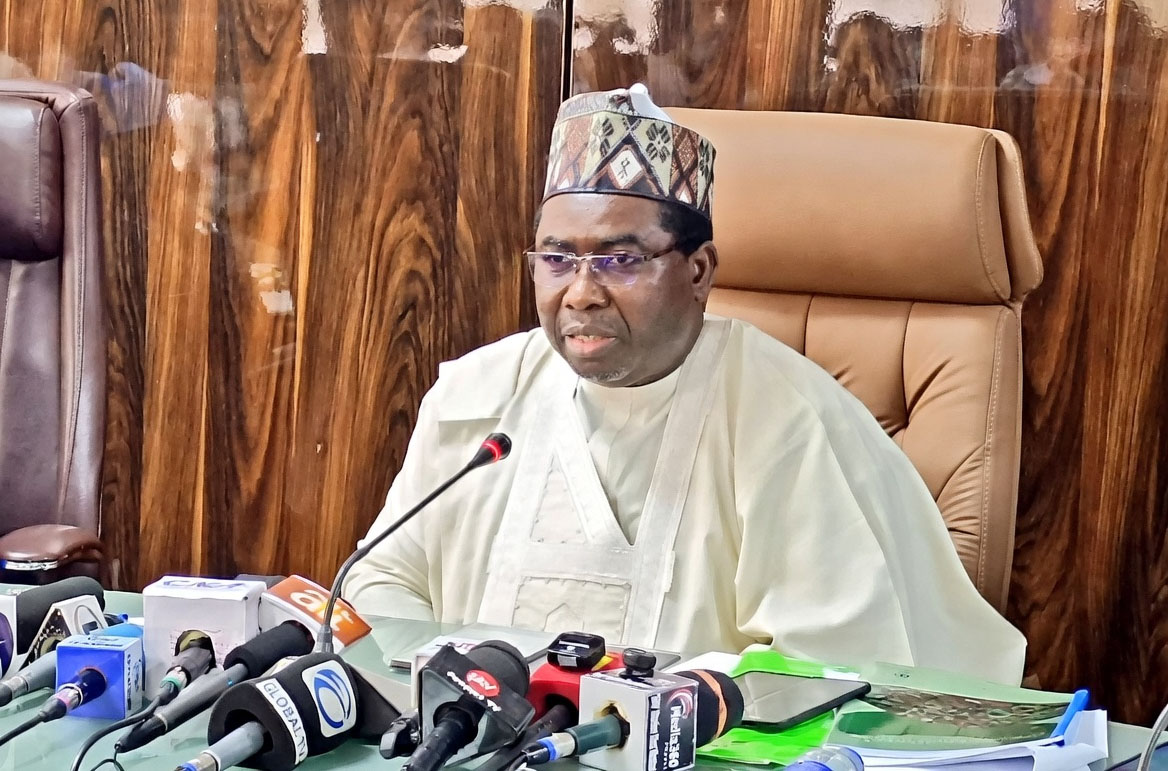
A presidential media aide, Dada Olusegun, has defended his decision to circulate a statement clearing the embattled Chairman of the Independent National Electoral Commission (INEC), Prof. Joash Amupitan, hours before it was officially released by the commission, saying his action falls within his responsibility to communicate government activities.
The controversy began after Olusegun posted on X (formerly Twitter) at about 8:12 pm on April 10, sharing a statement denying allegations that Amupitan had links to pro-government or pro-APC political activity during the 2023 general elections.
However, INEC reportedly published the same statement on its official platform the following day at about 6:16 pm on April 11, a timing gap that triggered public debate and questions about coordination between the presidency and the electoral body.
The development immediately sparked concerns online, with critics questioning why a presidential aide would publish a statement involving an independent institution before the commission itself, raising renewed discussions about the independence of INEC and institutional communication protocols.
Reacting to the backlash, Olusegun dismissed suggestions of wrongdoing, insisting that there was no conspiracy and that the similarity in messaging should not be misinterpreted.
READ ALSO:
- Nigeria-Kenya Comparison Won’t Solve Economic Crisis — Peter Obi Replies Tinubu
- Trump Sparks Global Outrage After Calling Pope Leo XIV “Weak, Terrible”
- INEC Chairman Under Pressure Over Alleged Pro-Tinubu X Account Link
“It is important to separate coincidence in messaging from conspiracy,” he wrote on X, adding that public institutions often respond to issues already in the public domain and that his post did not influence INEC’s official communication.
He further clarified that he did not author the statement and has no authority over INEC’s internal processes, stressing that his role is limited to communicating and defending the policies and image of President Bola Ahmed Tinubu’s administration.
“My role remains what it has always been: to communicate, clarify, and propagate the good works of President Tinubu’s administration responsibly,” he said.
Despite his explanation, the incident triggered widespread reactions on social media, with users questioning the timing of the publications and alleging possible coordination between the presidency and the electoral body.
Some commenters argued that the early release of the statement by a presidential aide could create public perception issues regarding electoral credibility in Nigeria, while others insisted it reflected deeper concerns about institutional independence.
The Independent National Electoral Commission has not issued any further clarification beyond its earlier denial of allegations linking its chairman to partisan political activity during the 2023 elections.
INEC has consistently maintained that its leadership remains neutral and that claims suggesting political bias are false and capable of undermining public trust in the electoral process.
The controversy has further fueled national debate over the boundaries between government communication, political messaging, and the independence of key democratic institutions in Nigeria, particularly ahead of future elections.
Observers say the incident highlights the increasing sensitivity of official communication in the digital era, where timing and perception can significantly shape public trust in institutions.
Tinubu Aide Defends Early INEC Statement Release on Amupitan Controversy
News
Nigeria-Kenya Comparison Won’t Solve Economic Crisis — Peter Obi Replies Tinubu
Nigeria-Kenya Comparison Won’t Solve Economic Crisis — Peter Obi Replies Tinubu
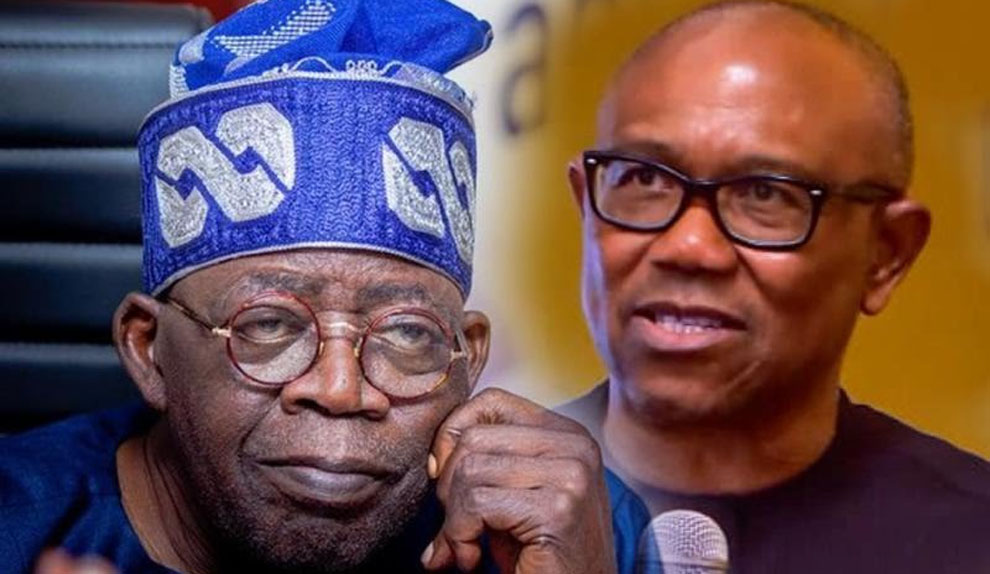
Former presidential candidate of the Labour Party, Peter Obi, has criticised President Bola Tinubu’s comments comparing Nigeria’s economic situation with Kenya and other African countries, insisting that such comparisons do not address Nigeria’s deepening economic challenges.
Obi said the focus should be on solving domestic problems rather than engaging in Nigeria-Kenya economic comparisons, especially at a time when Nigerians are grappling with rising inflation, unemployment, fuel costs, and declining living standards.
He made the remarks while reacting to President Tinubu’s statement in Yenagoa, where the President suggested that Nigeria remains relatively better positioned than some African countries despite its current economic difficulties.
According to Obi, what Nigeria urgently needs is economic reform driven by measurable data, not comparisons that attempt to offer comfort instead of solutions.
“Comparing Nigeria to Kenya or any other country will not fix our problems,” Obi said. “What Nigerians need are concrete solutions driven by measurable data, not statements that attempt to console rather than confront reality.”
Obi Cites Development Indicators to Support Position
Obi backed his argument with development statistics, claiming that Kenya performs better than Nigeria in several key human development indicators, including income levels, education, and healthcare outcomes.
READ ALSO:
- Trump Sparks Global Outrage After Calling Pope Leo XIV “Weak, Terrible”
- INEC Chairman Under Pressure Over Alleged Pro-Tinubu X Account Link
- 2027: Tinubu Knows Opposition Playbook, Always Ahead — Festus Keyamo
He stated that Kenya has a Human Development Index (HDI) score of about 0.630 compared to Nigeria’s 0.530, indicating a wider development gap between both countries.
He also noted that Kenya’s GDP per capita is estimated at about $2,200–$2,300, while Nigeria’s remains below $900, reflecting weaker income distribution and productivity levels.
On poverty levels, Obi said about 43% of Kenyans live below the poverty line, compared to around 63% of Nigerians, translating to a significantly larger number of people affected in Nigeria.
He further highlighted education challenges, stating that Nigeria has about 20 million out-of-school children compared to Kenya’s 3.5 million, alongside weaker infrastructure and electricity access.
In health outcomes, he added that life expectancy in Kenya stands at about 67 years, while Nigeria’s is approximately 54 years, showing significant gaps in healthcare delivery and social welfare systems.
“Statistics Are Not Optional in Governance” — Obi
Obi also criticised earlier remarks attributed to President Tinubu during the campaign trail, including the phrase “Na statistics we go shop?”, insisting that data-driven governance is essential for national development.
“Statistics are not optional; they are the language of development,” he said. “No country can plan effectively or measure progress without credible data and meaningful comparisons.”
He added that while international comparisons can be useful for policy evaluation, they must be applied honestly and not used to downplay domestic economic hardship.
Calls for Focus on Reform, Not Rhetoric
The former Anambra State governor urged the Federal Government to shift focus toward economic restructuring, job creation, productivity growth, and human capital development, rather than political narratives.
Obi said Nigeria must confront its realities with honesty and avoid what he described as “self-consolation politics,” warning that failure to do so would delay meaningful progress.
He maintained that while Kenya also faces its own challenges, Nigeria’s development indicators show deeper structural issues that require urgent policy attention.
“If we are serious about progress, we must face the truth and take responsibility,” he said.
Political analysts say Obi’s comments reflect growing public debate over Nigeria’s economic direction, governance performance, and the use of statistics in national policymaking amid rising cost-of-living pressures.
Nigeria-Kenya Comparison Won’t Solve Economic Crisis — Peter Obi Replies Tinubu
News
INEC Chairman Under Pressure Over Alleged Pro-Tinubu X Account Link
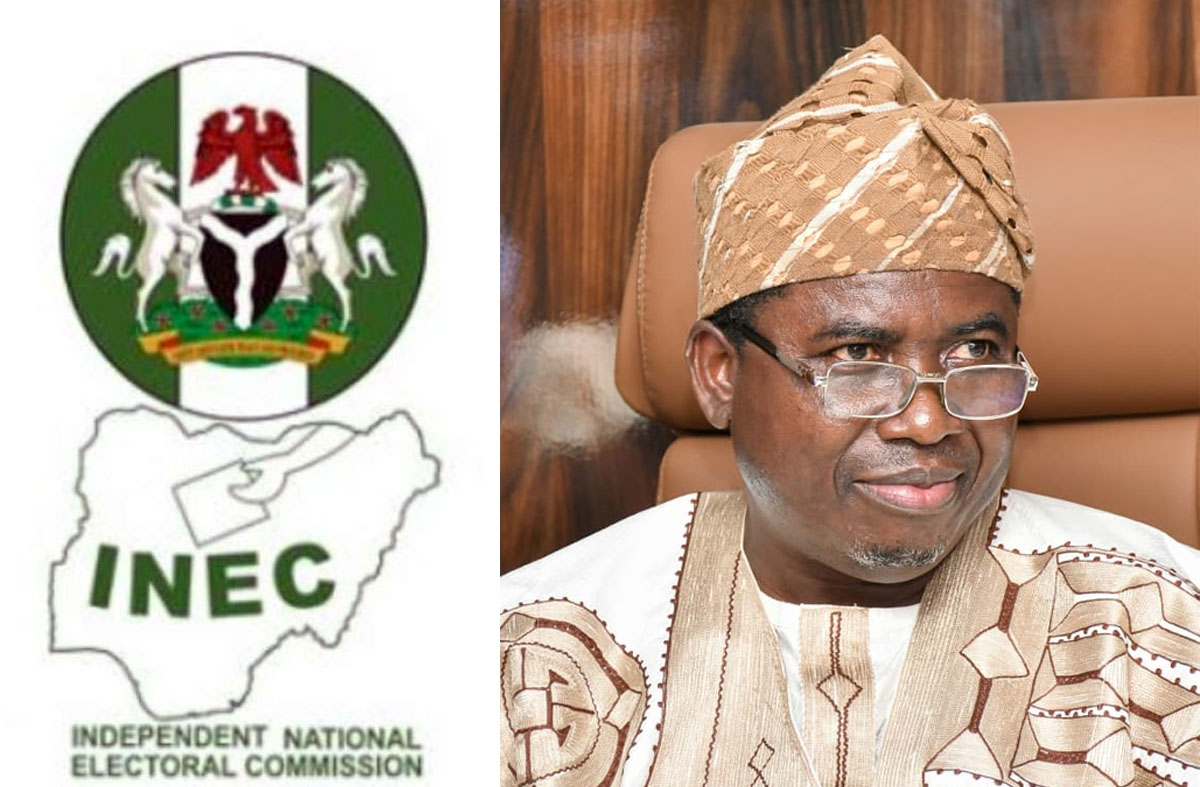
INEC Chairman Under Pressure Over Alleged Pro-Tinubu X Account Link
Pressure is mounting on the Chairman of the Independent National Electoral Commission (INEC), Prof. Joash Amupitan, following allegations linking him to a controversial social media account on X (formerly Twitter) accused of posting partisan content during the 2023 general elections.
The development has triggered renewed calls for resignation from opposition figures and civic groups, who argue that the controversy raises concerns about the neutrality of INEC, especially ahead of future elections.
The allegations gained traction following a report by Daily Trust, which examined an X account allegedly connected to the INEC chairman and its online activity during the 2023 electoral cycle.
According to the report, the account reportedly made posts interpreted as sympathetic to the All Progressives Congress (APC) and its presidential candidate, Bola Ahmed Tinubu, raising questions about possible political bias.
Some of the resurfaced posts include a March 17, 2023, comment describing supporters of Labour Party candidate Peter Obi as “evil in the 24th century,” as well as another post responding to APC National Youth Leader Dayo Israel with the phrase “Victory is sure.” A later post on April 25, 2023, reportedly used the word “Asiwaju” in reaction to Tinubu’s airport reception.
READ ALSO:
- 2027: Tinubu Knows Opposition Playbook, Always Ahead — Festus Keyamo
- Official, Black Market Rates Diverge as Naira Starts Week on Stable Note
- Kwankwaso Reveals Details of Kwankwasiyya’s ADC Power-Sharing Formula
The account is said to be linked to user ID 1567086242164101120, which investigators claim was created on September 6, 2022, and initially operated under the handle @joashamupitan before undergoing changes in display name and status in 2026.
Reports further indicate that the account was later renamed @Sundayvibe00, locked, and labeled a “parody account,” while a separate account with a similar handle later emerged—raising concerns about possible impersonation or identity duplication on the platform.
Digital analysts note that while usernames on X can be changed, user IDs remain permanent, allowing historical activity tracking. However, they caution that this does not automatically constitute proof of ownership or direct control.
Investigations also explored claims that the account may have been linked to a phone number allegedly associated with two-factor authentication tied to the INEC chairman. However, no publicly available forensic evidence has confirmed this link.
Reacting to the allegations, Prof. Amupitan, through his media aide, denied any connection to the account, insisting that he does not operate any social media account on X and has never engaged in partisan political commentary.
INEC also dismissed the claims, describing the account as fake and cautioning against misinformation capable of undermining public trust in the electoral process.
Despite these denials, the controversy has continued to generate public debate, with opposition parties—including the African Democratic Congress (ADC)—and civil society organisations calling for a transparent investigation and, in some cases, resignation.
Fact-check findings cited in reports suggest that while there is historical linkage between the account and the handle @joashamupitan, the absence of conclusive forensic proof makes the claims unverified. The report ultimately rated the allegation as “mostly true,” further fueling political tension.
Observers say the controversy highlights growing concerns over electoral integrity in Nigeria, the influence of digital footprints on public office holders, and rising scrutiny of the independence of electoral institutions ahead of future elections.
INEC Chairman Under Pressure Over Alleged Pro-Tinubu X Account Link

-
 metro2 days ago
JUST IN: FG Publishes List of 48 Individuals, Groups Linked to Terrorism Financing in Nigeria
-

 metro14 hours ago
BREAKING: Troops Arrest 15-Year-Old Linked to Killing of Gen Braimah in Borno
-

 metro2 days ago
42-Year-Old Married Woman Declared Missing Found in Hotel with Man
-
 Politics2 days ago
Did Faleke Just Reveal Lagos’ Next Governor? Party Moves Begin
-

 Education3 days ago
Germany Opens Fully Funded Scholarships for Nigerians, Africans
-
 Politics2 days ago
2027: Oyo APC Governorship Aspirant Saheed Oladele Resigns From Party
-
 metro2 days ago
ADC Threatens Civil Disobedience To Force INEC Chairman To Resign
-

 metro15 hours ago
Fayose Warns Makinde May Query Olubadan Over Absence at Ibadan Coronation Event