
metro
Supremacy clashes: Cultists kill undergraduate, tiler in Lagos

Supremacy clashes: Cultists kill undergraduate, tiler in Lagos
Supremacy clashes involving members of the Aiye and the Eiye confraternities at Ijanikin, in the Ojo Local Government Area of Lagos State, have led to the deaths of two persons including an undergraduate of the Lagos State University, Kamoru Lasisi, and a tiler, Lateef Atanda.
PUNCH Metro gathered that members of the cult groups had been engaging one another in a series of clashes for over two months, a situation that had been creating tension in the community.
During the clashes, our correspondent learnt that the cultists usually engaged themselves with weapons including guns, cutlasses, and machetes, among others, and had created strongholds that had been threatening the lives and property of residents and business owners plying their trades in the community.
Speaking with our correspondent, a resident in the area, who refused to mention his name for security reasons, said aside from the cultists killing one another, the threats induced by their activities had degenerated to the point of them killing innocent members of the community.
The resident said, “The cultists’ attacks in my area are a major concern; initially, they usually go after one another, but now, what they do is go after people that are not cultists in the community. The clashes involve members of the Aiye and Eiye cult groups and each of the groups has a territory in the community that they control.
READ ALSO:
- Putin spokesman’s son, Nikolai Peskov ‘joined Wagner in Ukraine’
- 7 burnt to death, 14 sustained injuries along Lagos-Ibadan expressway
- Hotelier, other accused arrested over car theft in Ogun
“In Ijanikin, Aiye cultists are in charge of Alasia down to Adio, Ayetoro, and Ketu areas, but Oto, Cele and Ile Oba Bus Stops, and some parts of Adio are controlled by the Eiye cult groups. Two weeks ago, Aiye cultists stormed the Cele Bus Stop area and shot a 400-level undergraduate of LASU, Kamoru Lasisi. He was shot dead in front of his father’s house despite not being a cultist.
“About two months ago, around 7.50pm, Aiye cultists came to the territory of Eiye cultists to attack a rival and did not meet their target. What they did next was to attack and kill an innocent boy, Lateef Atanda, who just finished writing his WAEC and does tiling business.
“The boy was shot dead on Ago-Idosa Street, Vespa Bus Stop, in the presence of his father, who was pleading with the cultists not to kill him. He was not a cultist and people in the area testified to it. There is always a reprisal for these attacks and it causes unconfirmed killings in the community.”
Another resident in the community who spoke anonymously to our correspondent for security reasons, while lamenting over the development, said the cultists usually assume that anyone found around their targets were cultists and go after them when they could not get their main targets.
The resident said, “The Aiye and Eiye cultists are hunting one another in the community, and when they are doing so, whoever they see with their targets, they don’t bother to do any fact findings to know if the person is a cultist or not, they just attack and kill the person.
“They operate with guns and other weapons. People are afraid in the Ijanikin community. The painful thing is that we know these cultists in the community as they are not strangers. So, whenever people see them appear in the community, they start running for their lives because they know that an attack can happen at any time.
READ ALSO:
- Withdraw your petition, join Tinubu for new Nigeria, Nnamani urges Obi
- BREAKING : Another three-storey building collapses in Lagos
- Zamfara gov reinstates Emir who conferred traditional title on bandit kingpin
“Initially, we usually face the cultists to chase them away but we stopped as we don’t have the necessary support. The cultists know the policemen at Ijanikin Police Station and get the information whenever they are coming for a raid and flee the community. We want the police command to bring in external policemen to work with us to do an underground operation to arrest these cultists as we are willing to lead them to their hideouts in Ijanikin.”
Contacted, the state Police Public Relations Officer, Benjamin Hundeyin, said, “The Commissioner of Police, upon assumption of duty in Lagos State, identified cultism as a major problem in the state and that informed his decision to decentralise our tactical unit by deploying the unit out of the state command and stationed at different parts of the state including Badagry which covers Ijankin and they have started work.
“We are aware that cultism is on the high side in Ijanikin but in the coming days or weeks, there should be a sharp decline in the activities of cultists in that area.”
Meanwhile, unrest and killings occasioned by the activities of cultists had been sending shivers down the spines of residents and business owners in the state.
On Wednesday, the state Commissioner of Police, Idowu Owohunwa, during a parade of 42 suspected cultists at the command headquarters in the Ikeja area of the state, said he created a special unit to frontally address the emerging threats posed by cultists in the state.
Noting that the 42 suspects were arrested during intelligence-led operations in Ijora, Orile, Ebute Meta, and Ikorodu areas, Owohunwa said the preliminary investigations revealed that the cultists’ supporters or networks had developed the capacity to locally fabricate semi-automatic and automatic shotguns.
“Our investigations are not only focused on identifying other members of these networks but to also get to the root of the fabricators of these dangerous weapons,” he added.







metro
Tragic Tree Collapse in Enugu Kills 18 Passengers on Commercial Bus
Tragic Tree Collapse in Enugu Kills 18 Passengers on Commercial Bus
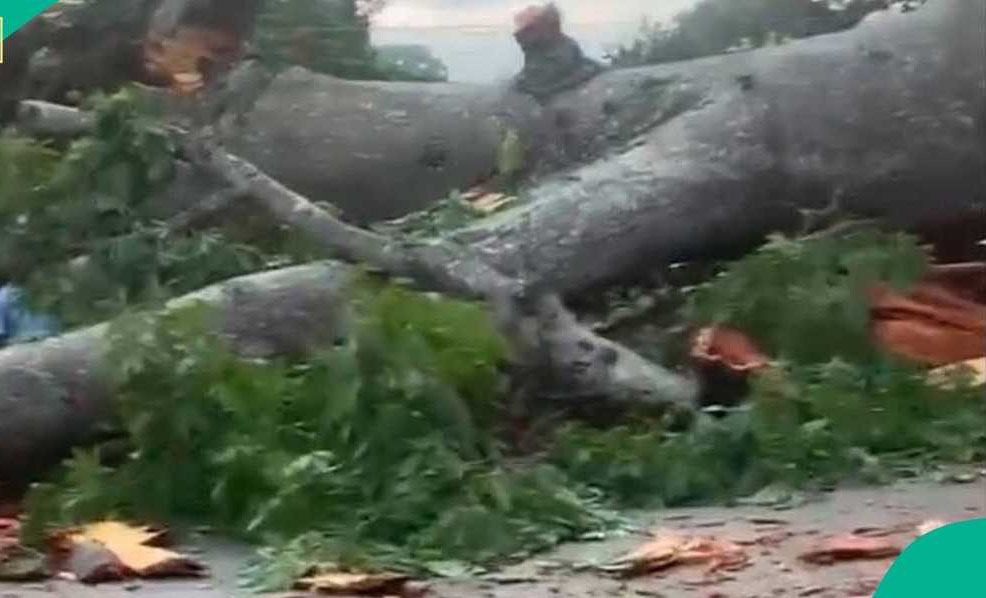
Awhum, Udi LGA, Enugu State — At least 18 passengers were killed after a massive ancestral tree, locally known as “Ukwu Akpu Awhum,” collapsed onto a commercial 18‑seater bus on Tuesday, during a heavy thunderstorm and rainfall. The bus was en route from Ukehe in Igbo‑Etiti LGA to Enugu metropolis when the tragedy occurred.
Eyewitnesses said the ancient tree fell without warning, crushing the bus and its occupants instantly. “The rain was very heavy, the wind was strong, and we heard a loud crash,” one resident recalled. All passengers were reportedly killed on impact.
READ ALSO:
- Carbon Monoxide Leak Kills 37 Miners in Plateau
- BREAKING: Tinubu Assents to 2026 Electoral Act, Sets Stage for 2027 Elections
- Korope Drivers Shut Down Lekki–Epe Expressway Over Lagos Ban (Video)
Local resident Charly Okeke suggested that recent human activity, including tying red and white cloths around the tree trunk for spiritual purposes, may have weakened the tree, contributing to the collapse. The community has been thrown into mourning, as families grapple with the sudden loss.
Emergency responders and local volunteers rushed to the scene, pulling survivors from the wreckage and transporting the injured to nearby hospitals. Authorities are expected to investigate the cause of the collapse, though no official statement has been released by Enugu State authorities as of now.
The tragedy highlights the dangers posed by aged trees along busy roads, especially during periods of torrential rain and strong winds, and underscores the need for public safety measures and regular assessments of roadside trees to prevent similar disasters.
Tragic Tree Collapse in Enugu Kills 18 Passengers on Commercial Bus
metro
Carbon Monoxide Leak Kills 37 Miners in Plateau
Carbon Monoxide Leak Kills 37 Miners in Plateau
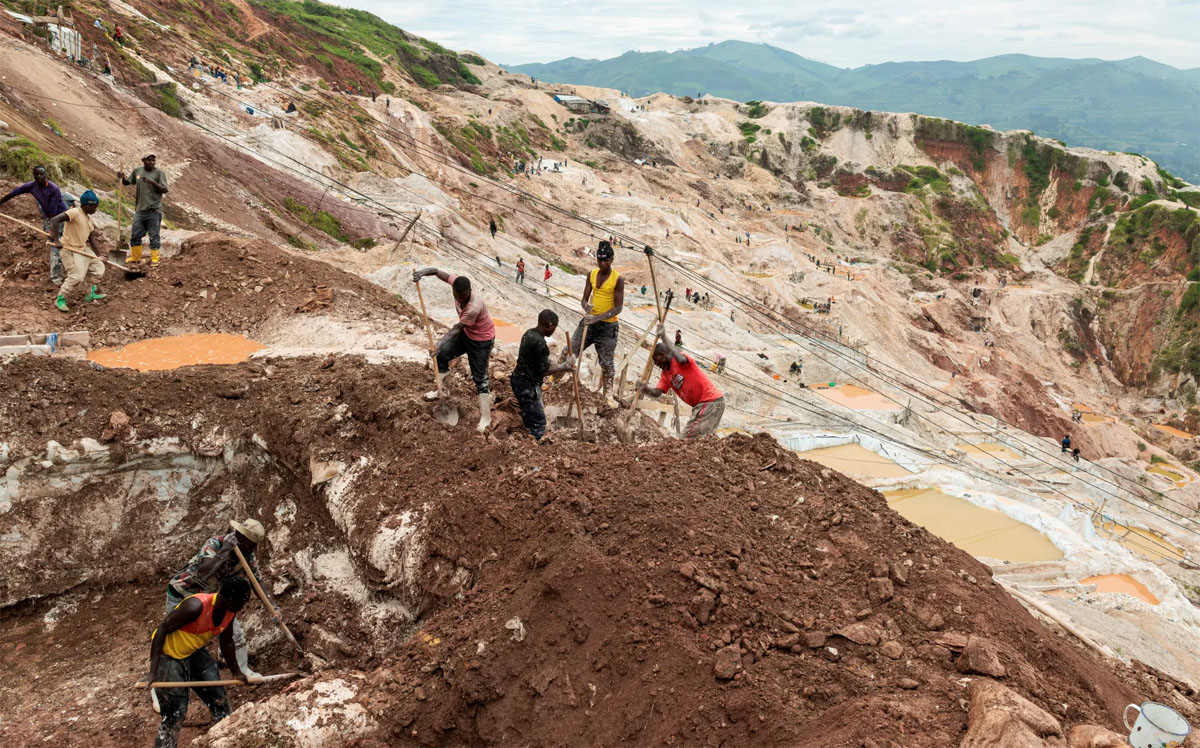
Kampani Zurak, Wase LGA, Plateau State — Tragedy struck early Wednesday morning as a carbon monoxide gas leak at an underground mining site claimed the lives of at least 37 miners and injured more than 20 others. The incident occurred around 6:30 a.m., shortly after workers returned from morning prayers.
According to eyewitness Safiyanu Haruna, survivors and local residents discovered miners unconscious inside the poorly ventilated tunnels. “It’s heartbreaking to wake up to the news that 37 miners, who had been struggling to make ends meet, have died,” he said.
READ ALSO:
- Korope Drivers Shut Down Lekki–Epe Expressway Over Lagos Ban (Video)
- Kano Closes Entertainment Centres Ahead of Ramadan
- Asari Dokubo Warns Igbo Groups Against Sparking Religious Conflict in Rivers
The injured miners were immediately transported to a hospital in Wase town for treatment. Authorities and emergency response teams had not yet arrived at the site when the leak occurred, highlighting the dangers of underground mining in poorly regulated areas.
Funeral prayers for the deceased are currently being held in the community, with the Local Government Area chairman reported to have attended. Security forces have sealed off the mining site to prevent further casualties and aid ongoing investigations.
The tragedy underscores the critical need for improved mining safety regulations, particularly in remote areas where miners often work under hazardous conditions with limited safety protocols. Experts warn that carbon monoxide exposure in mines can be deadly within minutes if ventilation and gas detection measures are inadequate.
Carbon Monoxide Leak Kills 37 Miners in Plateau
metro
Kano Closes Entertainment Centres Ahead of Ramadan

Kano Closes Entertainment Centres Ahead of Ramadan
The Kano State Government has ordered the immediate closure of all entertainment centres across the state as part of measures to ensure a peaceful and spiritually focused observance of Ramadan. The directive, issued by the Kano State Censorship Board, affects entertainment venues popularly known as gala houses, as well as disc jockey (DJ) operators and related entertainment outlets under the board’s regulatory jurisdiction.
Abdullahi Sulaiman, the board’s Public Relations Officer, announced that the closure will take effect from 10:00 p.m. on Wednesday, 18 February 2026, and will remain in force throughout the holy month. He explained that the action aims to create a calm and morally conducive environment for Muslim residents to observe fasting, prayers, and other religious activities without distractions.
READ ALSO:
- Asari Dokubo Warns Igbo Groups Against Sparking Religious Conflict in Rivers
- Bauchi Reduces Working Hours for Civil Servants During Ramadan
- E‑Transmission Alone Cannot Guarantee Free, Fair Elections – Shehu Sani
The board emphasised that reopening dates, particularly for Eid‑el‑Fitr celebrations, will be communicated at the appropriate time. Enforcement teams have been mobilised to ensure compliance, with sanctions for violations under the board’s regulatory mandate.
Officials clarified that the closure does not apply to event centres used for weddings, conferences, or political gatherings, which fall outside the board’s jurisdiction. Board director Usman Dankwano reiterated that only entertainment outlets such as gala houses are affected by the directive.
The government said the decision aligns with efforts to promote social harmony, maintain public order, and respect religious observances during Ramadan. Residents and business operators are urged to comply fully to avoid penalties.
The move reflects a broader pattern in northern Nigeria, where authorities adjust entertainment and public activities during Ramadan to respect cultural and religious practices while maintaining community peace.
Kano Closes Entertainment Centres Ahead of Ramadan

-

 News1 day ago
Saudi Arabia Confirms Sighting of Ramadan Crescent, Fasting Begins Wednesday
-

 metro1 day ago
Lagos Woman Shares Ordeal After Alleged Rape, Sparks Nationwide Outcry
-

 metro2 days ago
US Freezes Assets of Eight Nigerians Over Boko Haram, ISIL, Cybercrime Links
-

 News1 day ago
Ramadan Begins in Nigeria as Sultan Confirms Crescent Sighting
-

 Entertainment2 days ago
Mystery in Lekki: Police Probe Death of Two Nollywood Crew Found Lifeless in Parked Car
-
 metro2 days ago
Terror in Lagos Traffic: Cutlass Gang Unleashes Mayhem on Mile 12–Ketu Road
-
 Auto2 days ago
Appeal Court Ruling on VIO Limited to Abuja, Not Lagos — LASG
-
 News2 days ago
Teargas, Chaos at EFCC as El-Rufai’s Supporters Clash with Security Operatives