

International
Supreme Court ruling expands Trump’s power
Supreme Court ruling expands Trump’s power
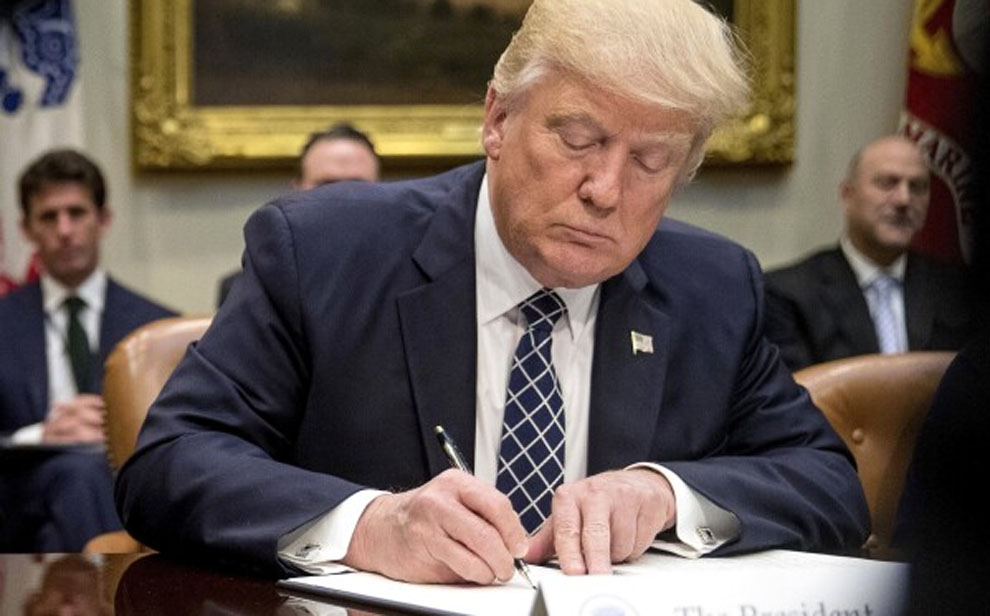
The Supreme Court on Friday handed a significant victory to Donald Trump – and future American presidents – when curbing lower courts’ power to block executive orders.
President Trump was beaming as he addressed reporters at the White House briefing room podium, calling it a “big, amazing decision” which the administration is “very happy about”.
He said it was a “monumental victory for the constitution, the separation of powers and the rule of law”.
The court’s decision not only impacts Trump’s birthright citizenship order, but also emboldens him to enact many of his other policy actions that have been temporarily thwarted by similar injunctions.
Impact on birthright citizenship
The Supreme Court has opened the door for the Trump administration to no longer grant automatic citizenship to everyone born on American soil – at least for the moment. Now the White House will have to implement its plan, which will be no easy task.
On Friday, the nation’s highest court allowed Donald Trump’s executive order to end birthright citizenship to go into effect in a month’s time, while leaving room for lower courts to curb the impact on those who have standing to sue.
States traditionally handle processing birth certificates, and many do not record the citizenship of the parents. Democratic-run state governments will be in no rush to do so, no matter what the Trump administration may desire.
And Justice Amy Coney Barrett, writing for the majority, left the door open for states to make the case that a more broad block on Trump’s birthright citizenship action is necessary.
READ ALSO:
- Those earning N250,000 won’t pay tax – FG
- Rivers: Wike, Fubara reconciliation tears supporters apart
- EFCC urged to resume Ganduje corruption case immediately
That sets up big legal battles to come.
“As the States see it, their harms — financial injuries and the administrative burdens flowing from citizen-dependent benefits programs — cannot be remedied without a blanket ban on the enforcement of the Executive Order,” Barrett wrote.
“The lower courts should determine whether a narrower injunction is appropriate, so we leave it to them to consider these and any related arguments.”
President Trump described the court’s decision on Friday as a “giant win”.
He added that the “birthright citizenship hoax” has been “indirectly, hit hard” and that the decision would prevent “scamming of our immigration process”.
Trump’s Attorney General Pam Bondi said on Friday that the Supreme Court will decide whether the US will end birthright citizenship in October during its next session.
Broadening presidential power
The court’s decision to limit the power of lower court federal judges to issue nationwide injunctions will have immediate, wide-ranging consequences.
Both Democratic and Republican presidents have often criticised what they say are ideological jurists in federal district courts who have been able to singlehandedly block executive actions and even legislation passed by Congress.
READ ALSO:
- Dalori sworn-in as new APC national chairman
- Nightmares triple risk of early death, says new study
- Tinubu woos Kwankwaso after Ganduje resignation as APC chairman
While doing away automatic citizenship for the children of undocumented migrants born on US soil is at the centre of this high profile case, there are a number of other actions taken by Trump in recent months that have also been held up by lower-level judges.
From Trump’s inauguration to April 29, the Congressional Research Service counts 25 such instances.
Following the court’s decision on Friday, Trump told journalists, “We can now properly file to proceed with policies that have been wrongly enjoined.”
Lower courts have blocked the president’s cuts to foreign assistance, diversity programmes and other government agencies, limited his ability to terminate government employees, put other immigration reforms on hold and suspended White House issued changes to election processes.
With the Supreme Court’s decision in this case, the administration is in a much stronger position to ask courts to allow it to push forward on many of these efforts.
During the Biden presidency, conservative judges prevented Democrats from enacting new environmental regulations, offering student loan forgiveness, modifying immigration rules. Courts blocked changes to normalised immigration status for some undocumented migrants during Barack Obama’s presidency, as well, and prevented him from making more white collar employees eligible for overtime pay.
In all these types of cases, courts will ultimately be able to step in and halt presidential actions that they deem illegal or unconstitutional.
The Supreme Court in its opinion said, ” The lower courts shall move expeditiously to ensure that, with respect to each plaintiff, the injunctions comport with this rule and otherwise comply with principles of equity.”
But that will come further along in the judicial process, at the appellate and Supreme Court level. In the meantime, presidents – Donald Trump and his successors, whether they are Republicans or Democrats – will have more time and space to act.
Supreme Court ruling expands Trump’s power
BBC





International
Operation Blackout: FBI Arrests Nine in Nigeria, Seizes 53 Devices
Operation Blackout: FBI Arrests Nine in Nigeria, Seizes 53 Devices
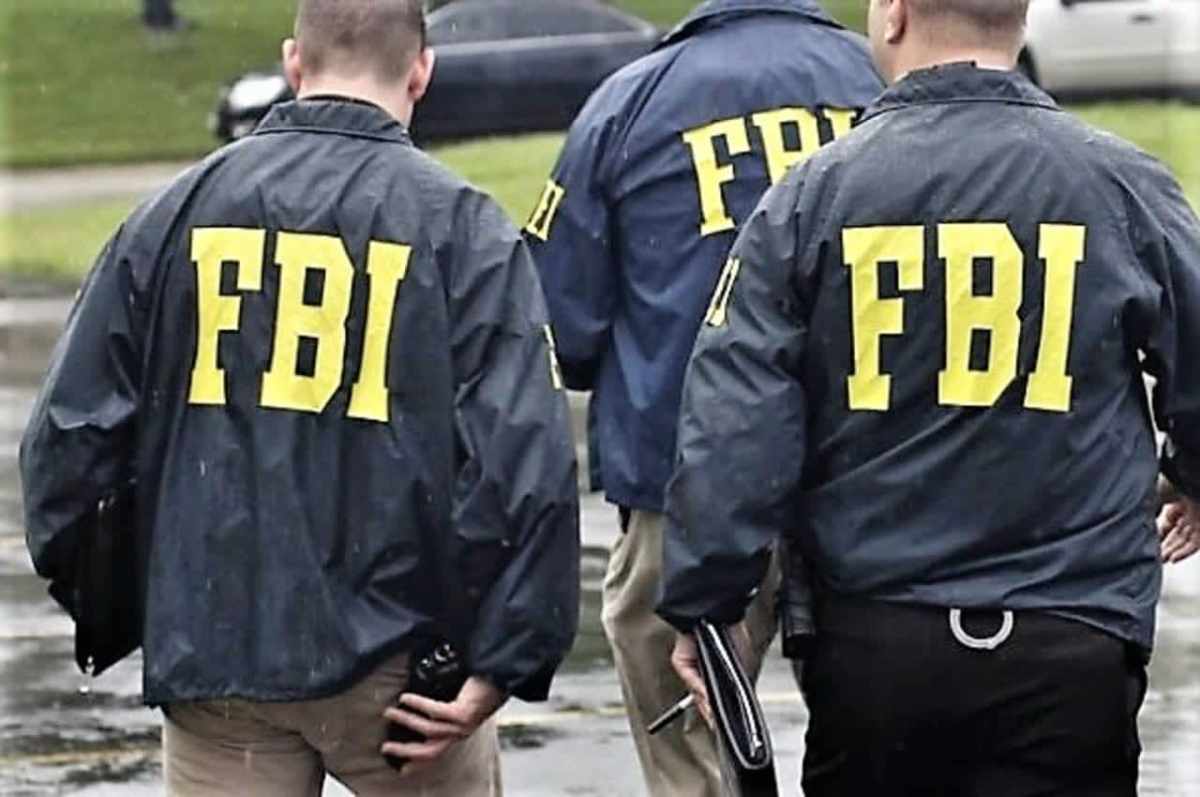
The United States Federal Bureau of Investigation (FBI) has arrested nine suspects in Nigeria and seized 53 electronic devices in an international operation targeting cybercrime networks accused of defrauding victims, particularly in the United States.
The operation, code-named Operation Blackout, also led to the identification of approximately $11 million in funds across multiple countries that could potentially be frozen, according to FBI Director Kash Patel.
Patel disclosed the development in a statement published on his official X account on Sunday, October 25, describing the operation as part of efforts to dismantle international criminal networks accused of stealing billions of dollars from unsuspecting victims.
“Operation Blackout is taking the fight directly to the international cybercriminal networks stealing billions from Americans,” Patel said.
He added that the networks operated across national borders, exploiting victims and depriving them of their life savings.
“These scam centres exploit innocent victims, steal life savings, and operate across international borders believing they are beyond the reach of law enforcement. They’re wrong,” the FBI director stated.
Patel commended Nigerian law enforcement agencies and their partners in London for their cooperation, warning that suspects operating from overseas would not escape prosecution simply because they were outside the United States.
READ ALSO:
- Osimhen Brace Sinks Fenerbahce as Galatasaray Win Istanbul Derby
- Certificate Scandal: UNN, NYSC Disown Uche Nnaji’s Certificates, ICPC Witness Tells Court
- Man, Teenage Girl Found Dead in Toyota Corolla as Police Begin Investigation
The FBI has not publicly identified the nine suspects arrested in Nigeria or disclosed the specific locations where they were apprehended. Details of the individual allegations against them have also not been made public.
The arrests formed part of a broader international law enforcement campaign targeting online fraud networks operating across West Africa.
According to the US Department of Justice, the coordinated enforcement exercise involved agencies from Nigeria, Ghana, the United States, the United Kingdom and other countries, alongside private-sector technology and financial companies.
The wider operation resulted in 28 arrests, comprising nine in Nigeria and 19 in Ghana. Authorities in Ghana also seized 303 electronic devices, while the Nigerian operation accounted for the 53 devices seized.
Investigators and participating companies additionally helped identify more than 3.7 million fraudulent online accounts, pages and groups, which were subsequently removed or disrupted.
The US Department of Justice said the targeted schemes included law enforcement impersonation scams, digital arrest extortion, cryptocurrency investment fraud, commonly known as “pig butchering”, and other online fraud operations targeting victims across different countries.
The operation also uncovered human trafficking linked to scam activities in Ghana. Authorities there identified 117 people described as victims of trafficking who were awaiting repatriation to Nigeria.
Officials also identified 89 fraud victims in Ghana who suffered estimated losses of approximately $8.3 million, according to the US Justice Department.
The trafficking victims and fraud victims were identified as separate groups in the department’s account of the operation.
Although the FBI director announced that $11 million in potentially freezable funds had been identified across several countries, authorities have not confirmed that the entire amount has been frozen, seized or returned to victims.
The distinction is important because identifying funds that may be frozen does not mean that the money has already been recovered.
The crackdown highlights growing international cooperation against cyber-enabled fraud, with investigators increasingly working with technology companies and financial institutions to identify suspicious accounts, trace funds and disrupt the digital infrastructure used by criminal networks.
Nigeria’s law enforcement agencies have participated in several international investigations involving alleged online fraud. The latest operation adds to efforts to pursue suspects accused of targeting victims across national borders.
The FBI has not disclosed when the nine suspects arrested in Nigeria will appear in court or whether formal charges have been filed against each of them.
The allegations against the suspects remain subject to investigation and due process.
Operation Blackout: FBI Arrests Nine in Nigeria, Seizes 53 Devices
International
France Deploys 70,000 Police as Cost-of-Living Protests Intensify
France Deploys 70,000 Police as Cost-of-Living Protests Intensify
France has deployed 70,000 police officers and gendarmes across the country to prevent further looting, vandalism and violent clashes as nationwide protests over rising living costs, school conditions and public services continue to challenge President Emmanuel Macron’s government.
The security deployment took place on Saturday, October 24, 2026, following some of the worst street violence France has witnessed in years during demonstrations the previous weekend.
Interior Minister Laurent Nuñez announced the mobilisation, warning that authorities would take a firm approach against individuals involved in violence, looting and attacks on public buildings.
The deployment included an additional 10,000 security personnel compared with the previous week. Specialised police units, helicopters, drones, armoured vehicles, mounted officers and water cannon were also deployed to monitor demonstrations and respond to outbreaks of violence.
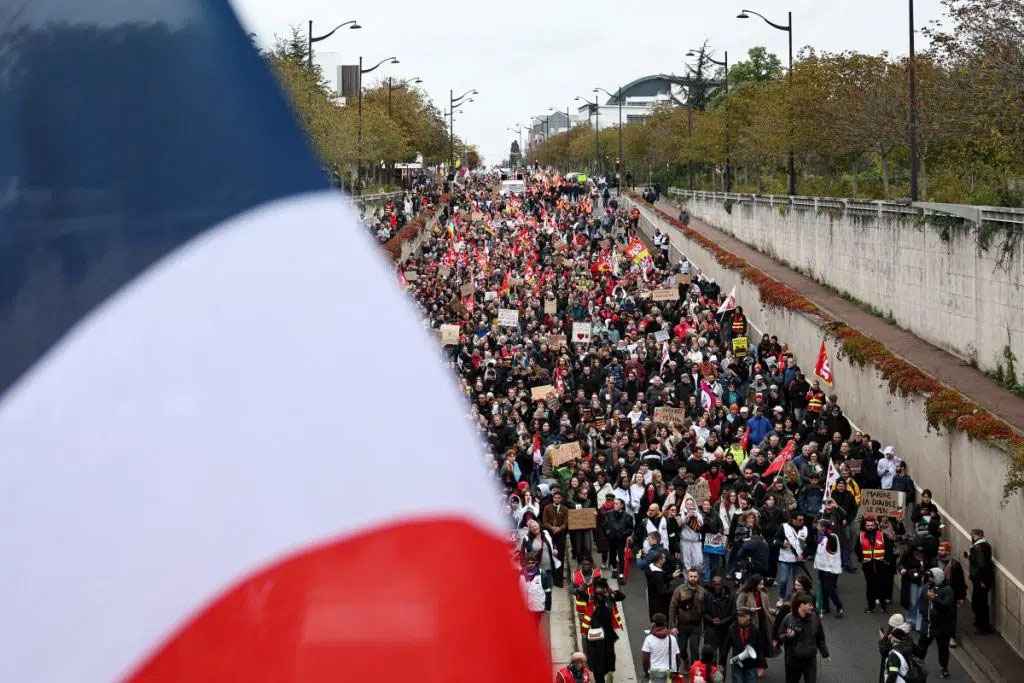
The heightened security measures came as hundreds of thousands of demonstrators returned to the streets in Paris, Marseille, Lyon and other cities to protest against economic hardship, government spending decisions and deteriorating public services.
According to France’s Interior Ministry, approximately 410,000 people participated in demonstrations nationwide on Saturday. However, the CGT trade union estimated the turnout at nearly 800,000, highlighting the difference between official figures and those provided by organisers.
In Paris, about 110,000 people took part in demonstrations, according to official estimates.
Although many marches proceeded peacefully, confrontations broke out in several locations as police attempted to contain disturbances. Officers used tear gas in Paris and other cities, while water cannon were deployed in some areas to disperse protesters.
Clashes were also reported in Marseille and Lyon, where groups of hooded youths confronted security personnel.
READ ALSO:
- Bill Clinton condemns anti-Muslim prejudice, cites Qur’an’s message of coexistence
- MURIC Applauds Army as Mogadishu Cantonment Mosque Reopens After Week-Long Closure
- Atiku Condemns Attack on Edo Comedian Over Refusal to Support Tinubu
Authorities reported nearly 1,000 arrests in connection with Saturday’s demonstrations, although the figure was still being updated as operations continued.
The latest protests followed widespread disorder on October 17, when demonstrations escalated into violence, leaving shops damaged or looted, vehicles burned and public property vandalised.
Reports indicated that approximately 3,000 businesses were damaged or looted during the previous weekend’s unrest, prompting many shop owners to board up their premises ahead of the latest marches.
Several cultural institutions in Paris, including the Louvre and Musée d’Orsay, closed on Saturday as a precaution against possible disturbances. Some cities also imposed restrictions on demonstrations, while authorities adjusted protest routes to reduce the risk of confrontations in central areas.
The protest movement initially gathered momentum over complaints about conditions in schools, including staff shortages, overcrowded classrooms and demands for improved educational facilities.
It has since expanded into a broader expression of public frustration over the rising cost of living, inflation, inequality and concerns about the quality of public services.
Students and trade unions have called for better funding for schools, improved working conditions, higher wages and stronger measures to ease pressure on household budgets.
The demonstrations have placed additional pressure on Macron’s government, which is facing growing criticism over its handling of economic and social concerns.
Macron met representatives of secondary school students on Friday in an attempt to address some of their grievances. However, student representatives said they remained dissatisfied and wanted concrete proposals from the government before considering an end to the protests.
They subsequently urged students to continue mobilising while awaiting further discussions with Prime Minister Sébastien Lecornu’s administration.
The security situation has also heightened political tensions ahead of France’s next presidential election, expected in 2027.
The far-right National Rally party, led by Marine Le Pen, has sought to capitalise on public dissatisfaction, while opposition groups and trade unions have criticised the government’s handling of the demonstrations.
Authorities were also concerned about possible clashes in Orléans, where the National Rally held its party congress alongside planned counter-demonstrations.
The government’s response has attracted criticism from some unions and student groups, which argue that restrictions on protests could deepen public frustration rather than address the underlying causes of the unrest.
Despite the heavy police presence, the demonstrations continued across the country, reflecting the persistence of economic and social grievances.
The CGT union has also called for a nationwide strike on November 5 to protest against the cost of living and planned budget cuts, raising the prospect of further industrial action.
With public anger continuing and security agencies maintaining heightened vigilance, the coming weeks are expected to test the government’s ability to restore calm while responding to demands for improvements in education, living standards and public services.
France Deploys 70,000 Police as Cost-of-Living Protests Intensify
International
Tibet in Mourning: 7.0 Quake Kills 16, Injures 76 as Rescue Teams Race Against Time in Nagqu
Tibet in Mourning: 7.0 Quake Kills 16, Injures 76 as Rescue Teams Race Against Time in Nagqu
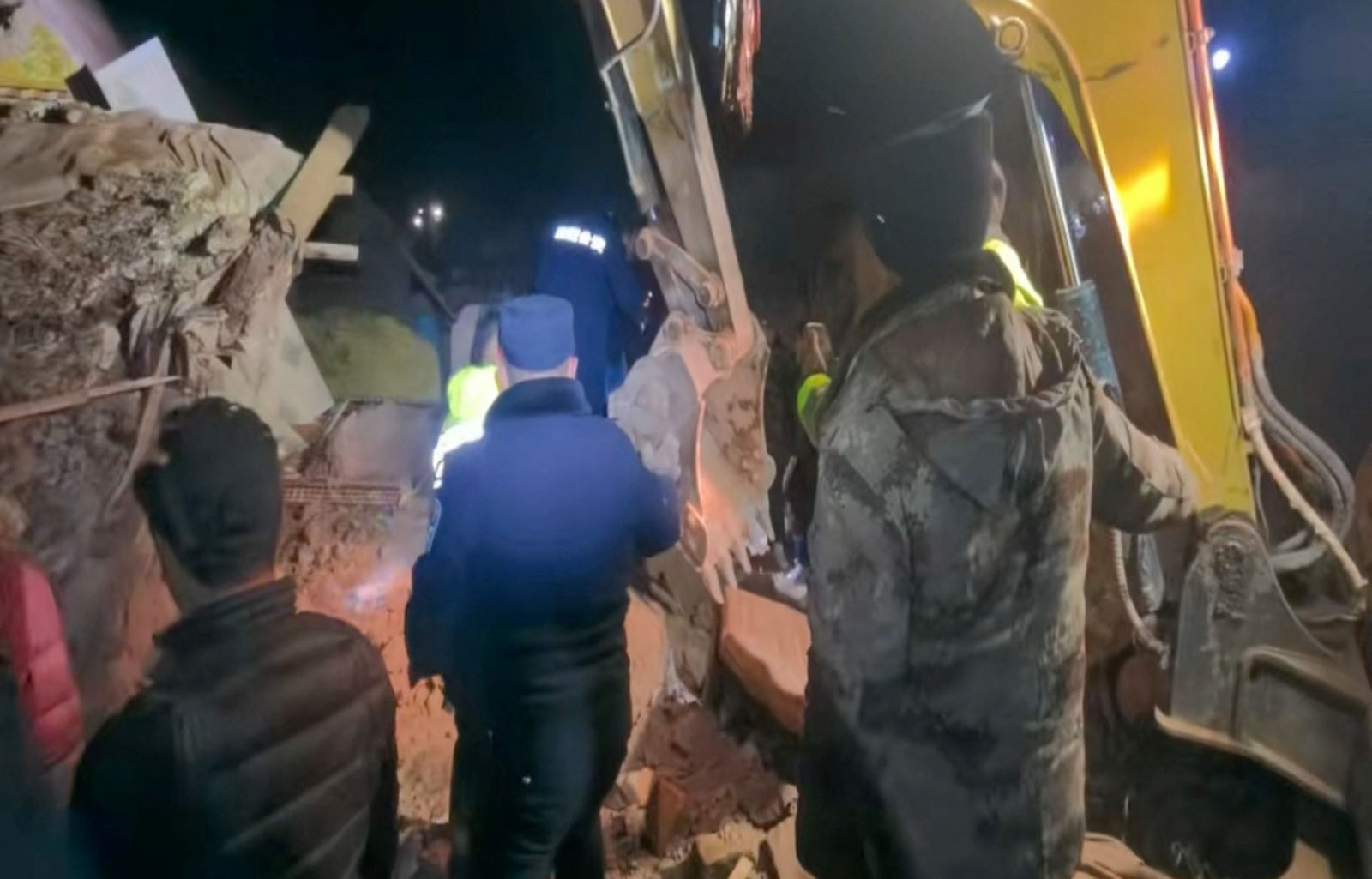
NAGQU, Tibet — A devastating 7.0-magnitude earthquake has struck Baqing County in Nagqu City, Tibet, leaving at least 16 people dead and 76 injured, according to the latest official figures released by the frontline emergency command. The quake, which hit at 22:33 Beijing time on October 22, 2026, at a shallow depth of 10 kilometers, has also caused significant structural damage, with 339 households reporting collapsed or damaged homes and 20 livestock sheds destroyed.
The initial hours after the Tibet earthquake saw a frantic scramble for information, with early preliminary counts reporting 32 injuries and 300 collapsed houses. However, as rescue teams conducted three rounds of door-to-door searches, the casualty toll was revised upward and the damage assessment refined. Authorities have confirmed that no missing persons remain unaccounted for, a rare piece of positive news amid the tragedy.
READ ALSO:
- Tope Alabi Threatens Pastor With Lawsuit Over Toluwanisings’ Death Claims
- Borno: Troops Kill 15 Terrorists in Midnight Air Strike
- 2027: APGA Chairman Says South-East Must Back Tinubu to Secure Igbo Presidency
Inclusive language note: The story uses person-first and community-focused language, referring to “households” and “livestock sheds” rather than abstract “units,” and avoids sensationalizing the death toll while prioritizing the safety and dignity of those affected.
Rescue operations are ongoing in the remote, high-altitude region, where temperatures can plummet overnight. Emergency crews are working to provide shelter, medical aid, and supplies to survivors. The China Earthquake Administration and local authorities are coordinating the response, with mainstream media such as CCTV News providing real-time updates.
The Baqing County earthquake has highlighted the vulnerability of rural communities in seismic zones, where traditional homes may not withstand powerful tremors. As the region begins to mourn and rebuild, officials are urging residents to follow safety protocols and remain alert for aftershocks.
Tibet in Mourning: 7.0 Quake Kills 16, Injures 76 as Rescue Teams Race Against Time in Nagqu
-

 Politics2 days ago
2027: APGA Chairman Says South-East Must Back Tinubu to Secure Igbo Presidency
-

 metro10 hours ago
Cancelled Wedding: Man Sues Ex-Fiancée’s Father Over Unpaid ₦70,000 Dowry
-
 International2 days ago
France Deploys 70,000 Police as Cost-of-Living Protests Intensify
-

 Entertainment2 days ago
Tope Alabi Threatens Pastor With Lawsuit Over Toluwanisings’ Death Claims
-

 metro2 days ago
Borno: Troops Kill 15 Terrorists in Midnight Air Strike
-

 Auto10 hours ago
Car of the Year, other top honours up for grabs as NAJA Awards race begins
-

 Politics2 days ago
Atiku Condemns Attack on Edo Comedian Over Refusal to Support Tinubu
-
 News2 days ago
Bill Clinton condemns anti-Muslim prejudice, cites Qur’an’s message of coexistence