
International
Syrian president warns against Israeli attacks in landmark UN address
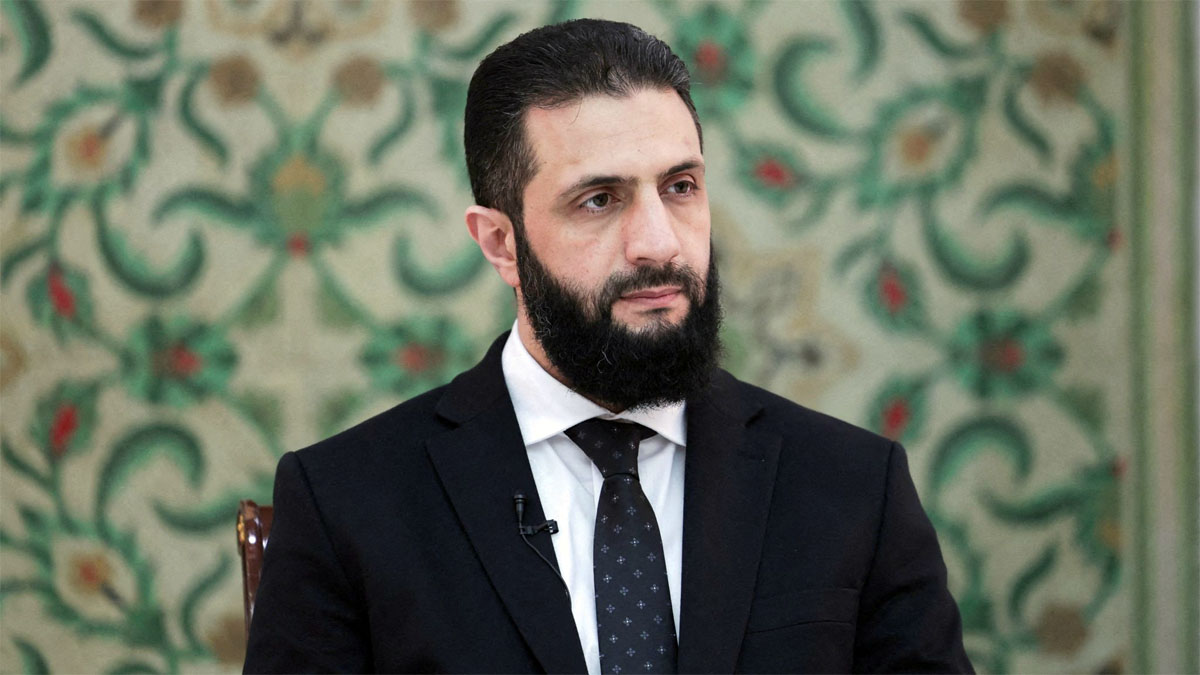
Syrian president warns against Israeli attacks in landmark UN address
LONDON: Israel’s attacks against Syria threaten to unleash “new crises” in the region, President Ahmad Al-Sharaa told the UN General Assembly on Wednesday.
Al-Sharaa, who led opposition forces in a lightning offensive to overthrow Bashar Assad late last year, became the first Syrian leader to address the UNGA in nearly 60 years.
He outlined the progress made since he came to power, and the many challenges still facing his country after more than a decade of civil war. Chief among those has been Israel’s airstrikes and military operations in Syria.
“Israeli strikes and attacks against my country continue, and Israeli policies contradict the international supporting position for Syria,” the former commander said, adding that Israel’s attacks threaten “new crises and struggles in our region.”
But despite the aggression, Syria is committed to dialogue, he said, adding: “We call on the international community to stand beside us in the face of these attacks.”
Al-Sharaa said Syria is also committed to the 1974 agreement to separate Syrian and Israeli forces through a UN-patrolled buffer zone in the Israeli-occupied Golan Heights.
As opposition fighters led by Al-Sharaa took control of Damascus in December, Israel took advantage of the tumult and seized the buffer zone, with Prime Minister Benjamin Netanyahu declaring that the disengagement pact was “over.”
READ ALSO:
- FG renews call for permanent seat at UN security council
- JSS 3 student hacks man to death in Cross River
- ADC’s one-term presidency prediction for Tinubu, idle talk – APC
Since then, Israel has carried out hundreds of airstrikes and ground operations inside Syria, including in the center of the capital.
Tensions also flared over sectarian violence in June in Syria’s Suwayda province. Israel said it carried out airstrikes to protect the Druze minority in the region.
The US has been pushing for calm between the two countries, and this week Special Envoy for Syria Tom Barrack said they are getting closer to a new de-escalation agreement.
The deal aims to stop Israel’s attacks on Syria, which in return would agree not to move any heavy equipment near the border.
Speaking at an event in New York on Tuesday, Al-Sharaa said he is hopeful that the deal will materialize, but said it is Syria that is “scared of Israel, not the other way around.”
The US has been among major international powers that have offered cautious support to Al-Sharaa’s administration, lifting some sanctions on Syria in the hope of offering an economic lifeline to drag the country out of years of chaos and bloodshed.
He used his UNGA speech to call for the complete lifting of all international sanctions “so that they no longer shackle the Syrian people.”
He also reeled off a list of achievements since he took power, guided by an approach based on diplomacy, security and economic development.
READ ALSO:
- Dino Melaye threatens Kogi gov over attacks on ADC offices
- Singer Paul Okoye vows to go after X user who accused him of rape
- Police drag ex-AIG, 2 CPs, 2 others to court over age falsification
Al-Sharaa said he has put in place a political roadmap that is proceeding toward elections next month for a new parliament, and his government has overhauled civil and military institutions.
He added that he has acted against outbreaks of sectarian violence, set up fact-finding commissions and allowed access to investigative UN teams.
“I guarantee to bring to justice everyone accountable and responsible for bloodshed,” he said. “Syria has transformed from an exporter of crisis to an opportunity for peace for Syria and the region.”
Al-Sharaa’s appearance at the UN marks a remarkable political ascent from leader of an Islamist rebel group to international statesman within 10 months.
Since arriving in New York on Sunday, he has packed in high-level meetings and events, including talks with US Secretary of State Mark Rubio and French President Emmanuel Macron.
Perhaps the event that most summed up his elevation from militant to political leader was an interview on stage on Tuesday with Gen. David Petraeus, who commanded US forces during the 2003 Iraq invasion.
Petraeus’s troops detained Al-Sharaa in Iraq between 2006 and 2011 while he was fighting the American occupation there.
“His trajectory from insurgent leader to head of state has been one of the most dramatic political transformations in recent Middle Eastern history,” Petraeus told the audience, adding that he is a fan of Al-Sharaa.
Syrian president warns against Israeli attacks in landmark UN address
ARAB NEWS








International
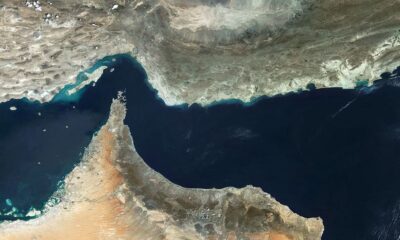
Iran Declares Strait of Hormuz Fully Open
Iran Declares Strait of Hormuz Fully Open
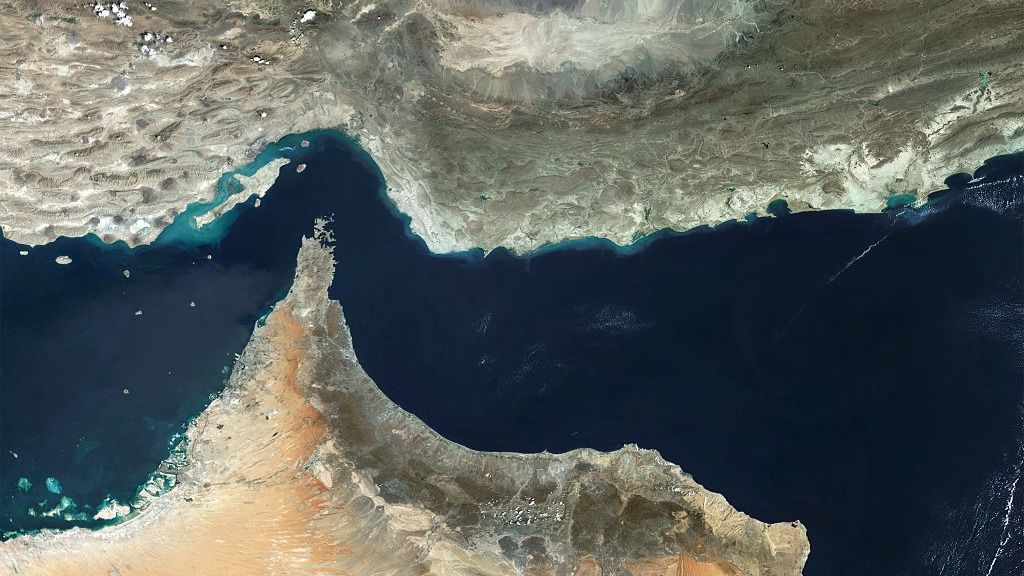
Iran has announced that the Strait of Hormuz is now “completely open” to commercial shipping, marking a significant de-escalation in regional tensions and easing fears of global energy supply disruption.
Iran’s Foreign Minister, Abbas Araghchi, confirmed that the vital waterway would remain accessible to all vessels for the duration of the ongoing ceasefire linked to the conflict involving Lebanon.
The development follows weeks of heightened tensions and partial restrictions on maritime traffic through the strait, which had raised concerns about a potential global oil supply shock.
Global oil markets reacted swiftly to the announcement, with Brent crude and West Texas Intermediate (WTI) prices dropping by as much as 10 percent as investor confidence improved. The reopening is expected to ease pressure on supply chains, reduce shipping risks, and lower insurance costs for oil tankers navigating the region. Analysts say the move could provide short-term relief to energy-importing and oil-dependent economies, including Nigeria, which has been affected by price volatility in recent weeks.
READ ALSO:
- Troops Arrest Bandit Kingpin’s Deputy, Wife in Gombe
- Power Supply Drops in Lagos as Transmission Faults Trigger Load Shedding
- Nigeria Rejects Fresh IMF Loans Amid Push for Economic Reforms
The reopening is tied to a fragile 10-day ceasefire following intense hostilities between Israel and Lebanon, which reportedly resulted in over 2,000 deaths and more than 7,000 injuries, according to official figures from Lebanese authorities. While the truce has created room for de-escalation, Iran has indicated that the long-term status of the Strait may depend on broader progress toward a comprehensive regional peace agreement.
Tehran has consistently linked maritime access to geopolitical developments, reinforcing the strategic importance of the waterway in ongoing diplomatic negotiations.
U.S. President Donald Trump reacted to the announcement, describing it as a positive development and suggesting that a wider agreement with Iran could be imminent. Trump has recently indicated that negotiations between Washington and Tehran are advancing, particularly on issues related to nuclear activities and regional stability.
Despite the positive signals, analysts warn that the situation remains uncertain. Shipping operators are expected to proceed cautiously until security conditions are fully stabilised. The key concern remains whether commercial traffic can resume smoothly and whether the ceasefire will hold beyond its initial timeframe.
For now, the reopening of the Strait of Hormuz is seen as a critical but tentative step toward regional stability, with global markets closely monitoring further developments.
Iran Declares Strait of Hormuz Fully Open
International
Eight Killed as Helicopter Crashes in Remote Indonesian Forest
Eight Killed as Helicopter Crashes in Remote Indonesian Forest
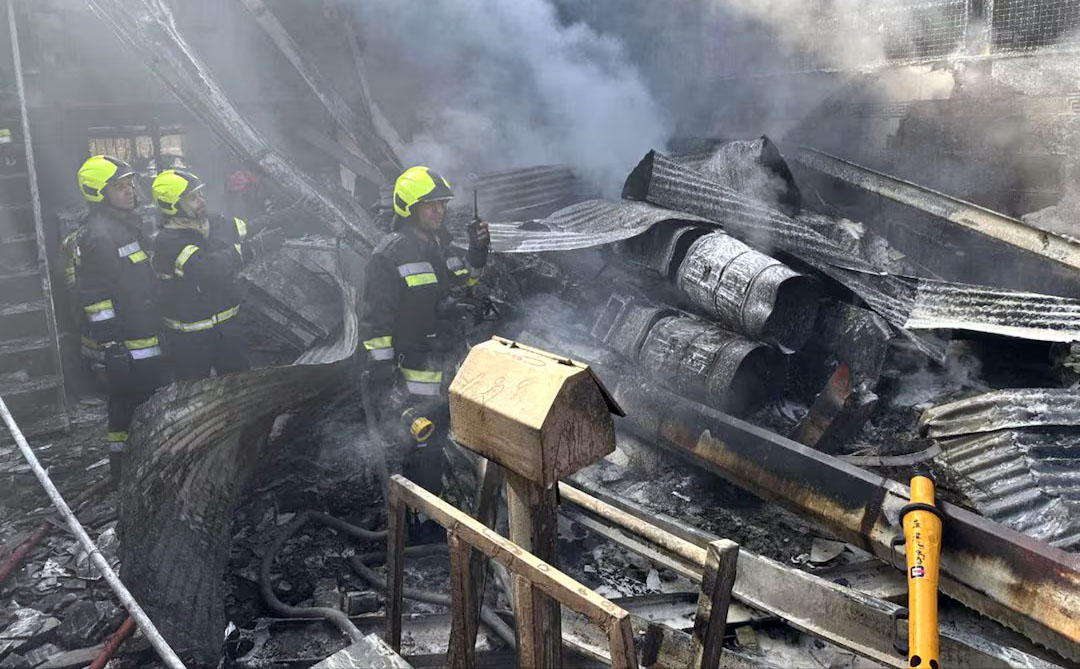
At least eight people have been confirmed dead after a helicopter operated by Matthew Air Nusantara crashed in a remote forested area of West Kalimantan, Indonesian authorities have said.
The ill-fated aircraft, identified as an Airbus H130, lost contact shortly after takeoff on Thursday morning, triggering an intensive search and rescue operation in one of the country’s most difficult terrains.
According to Indonesia’s national search and rescue agency, the helicopter departed from a plantation site in Melawi but disappeared from radar approximately five minutes into the flight. Officials said all six passengers and two crew members on board perished in the crash.
Head of the rescue agency, Mohammad Syafii, confirmed that the aircraft went down in a densely forested region marked by steep, hilly terrain, significantly hampering rescue efforts.
“The location of the crash is in a densely forested area with steep hills, making access extremely challenging,” Syafii said.
Search teams comprising military personnel, police, and emergency responders had to rely on overland routes to reach the site, slowing down recovery operations. Early findings revealed debris believed to be part of the helicopter’s tail located about three kilometres from the aircraft’s last known position.
Authorities have yet to release the identities of the victims, pending formal identification and notification of next of kin.
The helicopter had reportedly taken off from a plantation owned by Citra Mahkota, though officials have not disclosed the purpose of the flight.
Investigators are expected to begin a full probe into the cause of the crash once the wreckage is fully accessed. No immediate indication has been given as to whether weather, technical failure, or human error may have played a role.
The tragedy adds to growing concerns over aviation safety in Indonesia, where air transport remains vital for connecting remote and isolated regions spread across thousands of islands.
In recent years, the country has recorded several fatal aviation incidents. In January, a turboprop aircraft chartered by the fisheries ministry crashed into a mountain in Sulawesi, killing all 10 people onboard. Similarly, a helicopter crash in South Kalimantan last September claimed eight lives, while another crash in Ilaga shortly afterward left four people dead.
Authorities say efforts are ongoing to recover all bodies and secure the crash site, as the nation once again grapples with the human toll of air travel accidents in its challenging geography.
Eight Killed as Helicopter Crashes in Remote Indonesian Forest
International
Trump Says Iran Agrees to Hand Over Enriched Uranium in Nuclear Deal Talks
Trump Says Iran Agrees to Hand Over Enriched Uranium in Nuclear Deal Talks
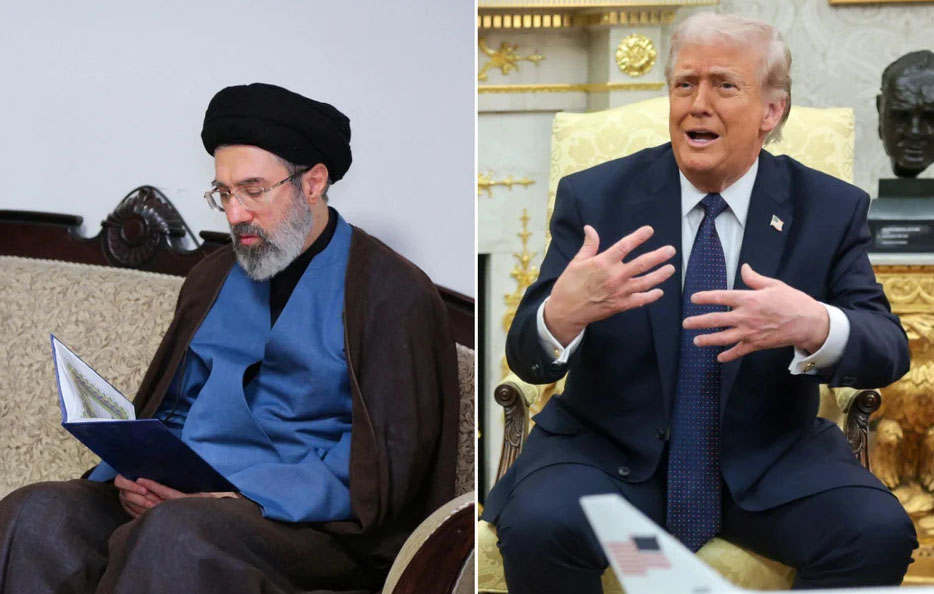
United States President Donald Trump has claimed that Iran has agreed to surrender its remaining stockpile of enriched uranium and abandon any ambition of developing nuclear weapons, saying negotiations between both countries are “very close” to a breakthrough.
Speaking to reporters at the White House before departing for Las Vegas, Trump said ongoing diplomatic talks had reached an advanced stage, insisting Iran had agreed “to almost everything” in the proposed framework.
“We’re very close to making a deal with Iran. They’ve totally agreed that they will not have a nuclear weapon,” Trump said.
He further claimed that Iran had agreed to return what he repeatedly referred to as “nuclear dust,” a term he used to describe enriched uranium stockpiles believed to be stored in heavily fortified underground facilities.
“They’ve agreed to give us back the nuclear dust,” he added.
Trump also suggested that a fresh round of negotiations could take place over the weekend, while acknowledging uncertainty over the durability of the current ceasefire arrangement linked to wider tensions in the Middle East.
READ ALSO:
- OPM Founder Suspends Marriage Plan for Autistic Daughter After 1,000 Applications
- MTN Nigeria Suspends Airtime Loan Service
- Money Laundering: Court Orders Arrest of Ex-Minister Sadiya Umar Farouq
The comments come amid heightened diplomatic and military tensions in the region, following weeks of conflict that have disrupted global energy markets and raised concerns over the security of the Strait of Hormuz, a critical oil shipping route.
However, Iranian authorities have not confirmed Trump’s claims. Officials in Tehran have previously rejected similar statements, insisting that no final agreement has been reached on key issues, including uranium enrichment levels and sanctions relief.
Recent diplomatic engagements involving intermediaries have reportedly focused on narrowing differences over Iran’s nuclear programme, but major sticking points remain unresolved. These include verification mechanisms for uranium stockpiles and the scope of any restrictions on enrichment activities.
Analysts say any potential agreement would require strict international monitoring to ensure compliance, particularly given the complexity of tracking enriched material stored in secure facilities.
The situation also carries broader geopolitical implications, with energy markets reacting sharply to tensions in the region. A sustained de-escalation could ease pressure on global oil prices and improve stability across major supply routes.
While the White House has signalled optimism about progress, no formal agreement has been announced, and diplomatic channels remain active as both sides continue discussions.
Trump Says Iran Agrees to Hand Over Enriched Uranium in Nuclear Deal Talks

-

 metro2 days ago
UNILAG Lecturer Sexual Assault Trial: Student Testifies in Lagos Court
-

 metro2 days ago
Grandfather in police net for impregnating granddaughter
-

 International2 days ago
US Senate Rejects Measure to Limit Trump’s Iran Military Powers
-

 Education1 day ago
FG Ends Physical Certificate Verification as Process Goes Fully Digital
-

 metro1 day ago
Power Supply Drops in Lagos as Transmission Faults Trigger Load Shedding
-

 News2 days ago
Atiku, Obi, Kwankwaso Camps Clash as ADC Grapples with Leadership Dispute
-
 International1 day ago
Trump Says Iran Agrees to Hand Over Enriched Uranium in Nuclear Deal Talks
-
 International24 hours ago
Iran Declares Strait of Hormuz Fully Open