
International
Teacher stabs 8-year-old student to death

Teacher stabs 8-year-old student to death
A female teacher in her 40s on Tuesday stabbed an eight-year-old student to death at an elementary school in the central city of Daejeon.
Authorities also that after the teacher stabbed the minor she inflicted wounds on herself.
Earlier, police found the two with stab wounds on the second floor of an elementary school building in Daejeon, 160 kilometers south of Seoul, at around 6 p.m. after the student’s parent reported her missing from an after-school art class.
READ ALSO:
- Another PDP Rep member joins APC over party internal crisis
- Kenneth Okonkwo resigns from Labour Party
- JUST IN: CBN announces new ATM transaction fees effective March 1
Rescuers transported the girl to a hospital in an unconscious state, but she later died. The teacher, who sustained stab wounds to the neck and arm, reportedly remained conscious.
Police later said the teacher admitted to the crime during a subsequent investigation, with officials determining that she might have inflicted the injuries on herself afterward.
The student was staying at the school at the time of the crime for its after-class child care session before heading to a private art class.
Police found that the teacher had taken a leave of absence due to depression and returned to the school late last year.
The teacher underwent surgery for her stab wounds, and the police said they will resume questioning her as soon as the operation is concluded and she regains her health.
Yonhap/NAN
Teacher stabs 8-year-old student to death








International
Iranian Strike on Saudi Base Damages US Spy Plane, Injures 12 Troops
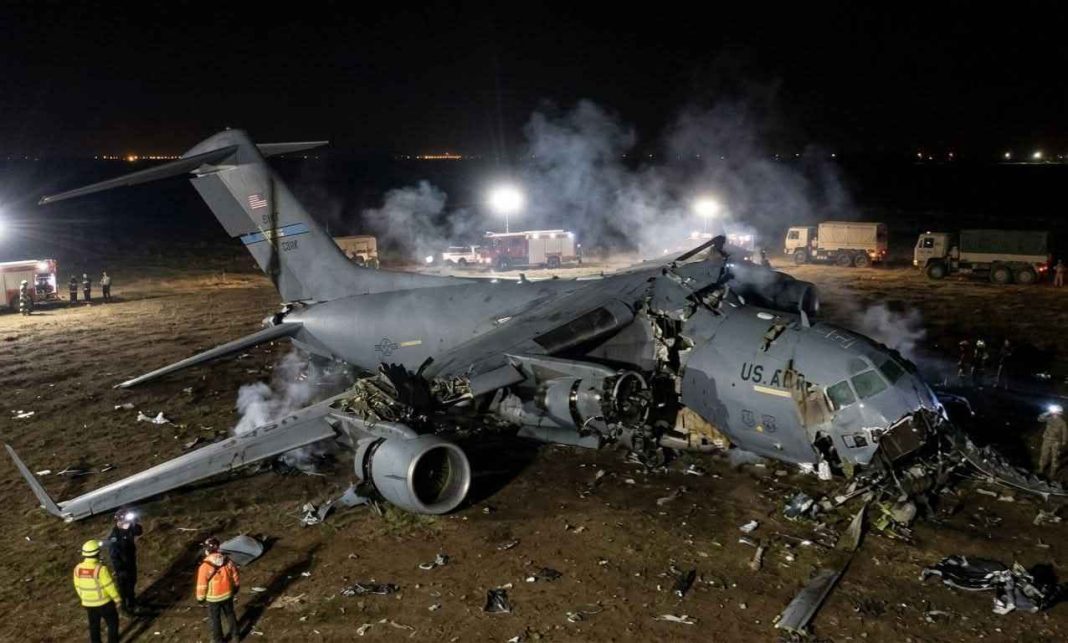
Iranian Strike on Saudi Base Damages US Spy Plane, Injures 12 Troops
Tensions in the Middle East have intensified following a major strike by Iranian forces on a United States military installation in Saudi Arabia, leaving several American personnel injured and damaging high-value military assets.
Iran reportedly launched a coordinated attack involving ballistic missiles and drones on the Prince Sultan Air Base on Saturday, targeting U.S. Air Force equipment stationed at the facility.
Initial reports from outlets including Daily Post Nigeria and Fox News indicated that a U.S. E-3 Airborne Warning and Control System (AWACS) aircraft—estimated to be worth about $700 million—was destroyed in the strike. The aircraft serves as a critical airborne radar and command center, capable of detecting threats and coordinating air operations over vast distances.
However, more recent and verified accounts suggest that the aircraft, identified as the Boeing E-3 Sentry, was damaged but not confirmed destroyed, raising questions about the accuracy of early claims surrounding the extent of the losses.
In addition to the AWACS aircraft, at least one KC-135 Stratotanker was reportedly struck during the ആക്രമation and caught fire, further compounding the scale of the incident.
U.S. officials confirmed that 12 American service members were injured in the attack. According to Fox News, two of the wounded personnel were listed in serious condition, while the remaining casualties sustained lighter injuries.
Military analysts note that the strike demonstrates Iran’s growing capability to conduct coordinated long-range attacks using a combination of drones and precision-guided missiles, posing a significant threat to U.S. assets in the region.
The latest escalation comes amid an ongoing conflict between the United States and Iran, which has persisted for approximately one month. The war has already led to significant casualties and heightened geopolitical tensions across the Middle East, particularly following reports of high-profile killings involving senior Iranian figures.
As of press time, there has been no official confirmation from the U.S. Department of Defense regarding the total extent of damage to the aircraft or whether any assets were completely destroyed.
Security experts warn that the attack could trigger further retaliation, raising fears of a broader regional confrontation involving key global powers and strategic allies in the Gulf.
Iranian Strike on Saudi Base Damages US Spy Plane, Injures 12 Troops
International
Iran Crisis: German Chancellor Advocates Dialogue, Questions Long-Term Military Strategy

Iran Crisis: German Chancellor Advocates Dialogue, Questions Long-Term Military Strategy
German Chancellor Friedrich Merz has called for a swift political resolution to the ongoing conflict involving Iran, cautioning against further military escalation and expressing doubts over the effectiveness of a purely military approach.
In remarks that reflect growing concern among European leaders, Merz emphasized that the crisis cannot be resolved through force alone, urging all parties to prioritize diplomacy. He warned that prolonged hostilities risk deepening instability in the region and could lead to unintended consequences beyond the Middle East.
The German leader also questioned the viability of regime change strategies, referencing past international interventions that failed to deliver lasting stability. His comments underscore a broader European position advocating restraint and dialogue rather than extended military engagement.
Merz, however, stopped short of directly labeling the conflict as illegal, maintaining a more measured stance while highlighting the urgent need for de-escalation.
Meanwhile, former U.S. President Donald Trump has continued to defend the military campaign, projecting confidence in its success and insisting it aligns with American interests. His position has sparked mixed reactions within his political base, with some supporters backing the action while others question its consistency with earlier pledges to avoid new foreign wars.
Analysts note that the divergence in tone between European leaders and segments of the U.S. political establishment reflects a widening transatlantic debate over how best to address the Iran crisis.
As tensions persist, international observers warn that the path forward will likely depend on renewed diplomatic efforts aimed at preventing further escalation and securing a sustainable resolution.
Iran Crisis: German Chancellor Advocates Dialogue, Questions Long-Term Military Strategy
International
Iranian Missiles, Drones Strike US Air Base in Saudi Arabia
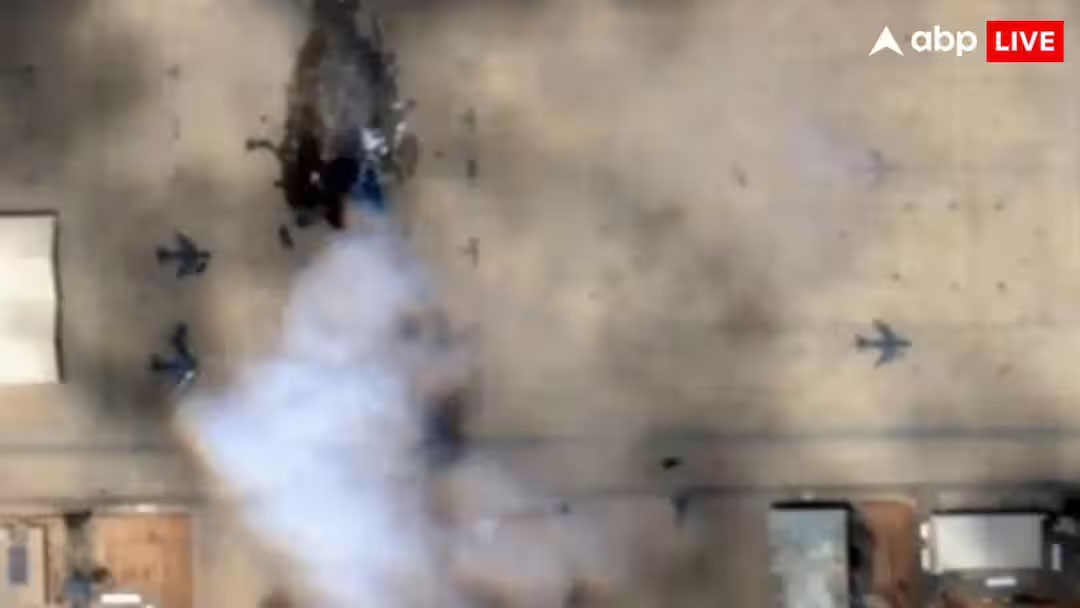
Iranian Missiles, Drones Strike US Air Base in Saudi Arabia
On Friday, Iranian missiles and drones targeted the Prince Sultan Air Base in Saudi Arabia escalation in the ongoing Middle East conflict, as tensions rise between Iran, the United States, and their regional allies.
According to U.S. and Saudi officials cited by The Wall Street Journal, the attack involved a combination of ballistic missiles and unmanned aerial vehicles. Open-source imagery and data circulating online verified the strike. At least 12 U.S. troops were wounded, with two reported in critical condition, while others suffered minor injuries. The assault also damaged several U.S. Air Force refueling aircraft, essential to regional operations. This is the latest in a series of attacks on Prince Sultan Air Base, which has previously sustained damage from Iranian strikes. The Pentagon has not publicly commented on the incident, but the attack underscores the growing vulnerability of U.S. military assets in the Gulf region.
READ ALSO:
- Millions to March Across US in Largest Anti-Trump Demonstrations
- Israel Intercepts Missile From Yemen, Raising Fears of Wider Middle East Conflict
- Oil Jumps, Stocks Waver as Iran-US Tensions Keep Investors on Edge
The conflict is widening across the Gulf. The United Arab Emirates reported intercepting ballistic missiles and drones, although debris from interceptions caused fires in Abu Dhabi, prompting authorities to warn civilians to stay clear of affected areas. In Bahrain, a missile strike ignited a facility, demonstrating that Iranian strikes are not limited to Saudi Arabia. The Islamic Revolutionary Guard Corps issued a warning urging civilians to avoid areas where U.S. forces are stationed, accusing American troops of using locals as “human shields.” This statement frames Iran’s attacks as part of a broader campaign against U.S. presence in the Gulf.
The strikes highlight both the growing reach of Iranian ballistic and drone capabilities and the challenges faced by U.S. and allied air defenses. Military officials are reviewing force protection measures to safeguard personnel and critical infrastructure. The attacks raise concerns about regional stability, the safety of U.S. forces, and potential disruptions to global energy markets. With the conflict showing signs of escalation, analysts warn that ongoing attacks could intensify hostilities and draw in additional regional actors. The situation remains fluid, and U.S. military and allied authorities continue to monitor threats across the Gulf.
Iranian Missiles, Drones Strike US Air Base in Saudi Arabia

-

 metro3 days ago
“We Pay Men to Sleep With Us in Germany” — Nigerian Woman Laments Loneliness Abroad
-

 metro1 day ago
Tragedy in Aramoko: Trailer Rams Residential Building, Kills 300‑Level Student
-

 Entertainment3 days ago
Tragedy in Music Industry as ‘Show Your Style’ Singer Sabinus Dies
-

 News1 day ago
Final Notice: FG Orders Civil Servants to Complete PASGA Verification by March 31
-

 metro2 days ago
El-Rufai’s Mother, Hajiya Umma, Dies Amid Son’s Legal Battle
-

 Entertainment1 day ago
Nollywood Actress Declares Love for Ibrahim Chatta, Offers to Pay Her Own Dowry
-

 Business3 days ago
Relief in Sight as Dangote Refinery Lowers Petrol Price
-

 Entertainment2 days ago
Gospel Singer Onos Brisibi Dies at 55 After Prolonged Illness