

metro
Tension in Ogba-Lagos over killing of okada rider

One person has been reportedly shot dead in a clash between the police and commercial motorcycle operators in the Ogba area of Lagos State on Thursday night
This has caused panic and heightened the tension among the people in the community.
The shooting was said to have occurred when the motorcycle operators popularly called okada riders were trying to resist attempts by security operatives of the state task force to arrest them.
The task force personnel were trying to enforce the okada ban imposed by the Lagos State Government.
One of the three persons reportedly shot during the Thursday encounter was said to have died Friday morning, prompting other riders to embark on a protest, but they were subsequently dispatched by security agencies.
As at the time of filing this report, the state police command had deployed a detachment of mobile policemen and plain clothed officers to maintain law and order.
Daily Trust reported that two buses loaded with security agents in mufti were also mobilised to the area to restore peace.
Roads leading to Excellence Roundabout, Ogba Market and WAEC were blocked with vans of the Rapid Response Squad (RRS) unit of the police.
All the shops in the major market were closed when a Daily Trust correspondent visited the place.
One of the shop owners, who identified himself as Olamide, told our correspondent that the clash occurred when policemen attempted to arrest an Okada rider.
He said the arrest was being carried out at a time the union leaders and other Okada riders had left the area.
He said in the ensuing confrontation, the policeman shot one Okada rider in the chest while another one was hit by stray bullet.
The eyewitness said, “Seriously I wasn’t there when it happened. I only got here this money and saw policemen everywhere.
“I later got to know that the policemen wanted to arrest the Okada riders, but they challenged them the time was not proper to seize their bike and that this is not a proper time.
“Then they said the policemen fired some shots. One has reportedly been killed while two others are in the hospital.”
He added that shooting still continued this morning.





metro
FG Targets 2 Million Creative Jobs by 2030
FG Targets 2 Million Creative Jobs by 2030
The Federal Government has set a target of creating two million jobs in Nigeria’s creative industry by 2030, as it intensifies efforts to position the creative economy as a major driver of employment, investment and economic diversification.
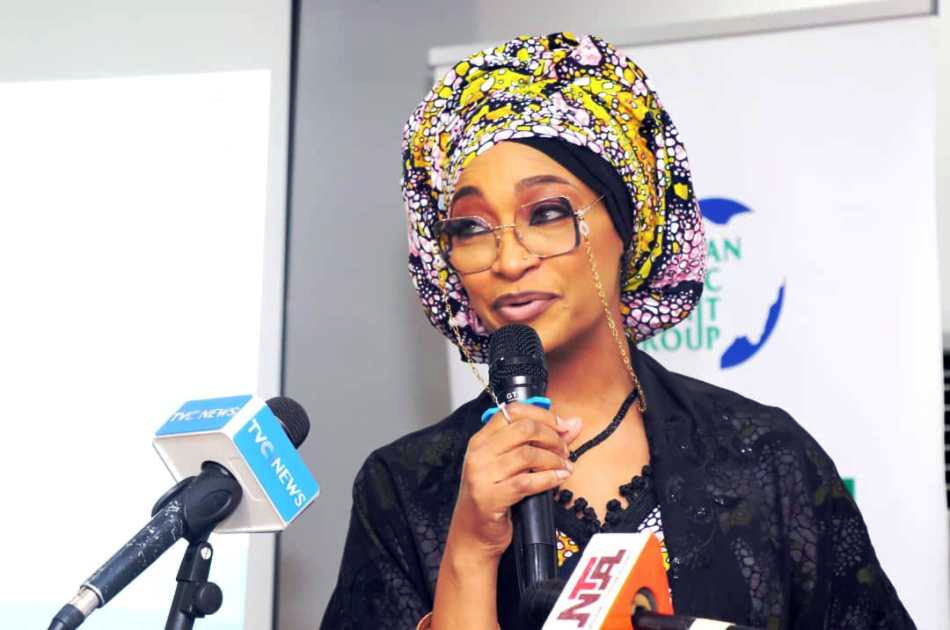
The Minister of Art, Culture, Tourism and Creative Economy, Hannatu Musa-Musawa, disclosed this at the closing of the 2026 Kano Creative Summit, organised by the National Theatre to strengthen Nigeria’s creative economy and equip practitioners with skills needed to build sustainable creative businesses.
Musa-Musawa said the government was integrating the creative sector into its broader economic development strategy through President Bola Ahmed Tinubu’s Renewed Hope Agenda and the Destination Nigeria initiative.
“The Federal Government is integrating the creative sector into its economic framework through the Renewed Hope Agenda and ‘Destination Nigeria’ initiative, with a target of creating two million jobs in the creative industry by 2030,” she said.
The minister said the target reflected the government’s recognition of the capacity of Nigeria’s creative industry to generate employment, attract investment and create new opportunities, particularly for young people.
She also highlighted the economic potential of Kano State, describing its rich cultural heritage and long-standing creative traditions as important assets that could contribute to job creation and economic growth.
According to her, Kano’s centuries-old traditions in Kofar Mata indigo dyeing, leatherwork, weaving, blacksmithing, embroidery and Kannywood represent important components of Nigeria’s wider creative economy.
She said the international recognition of Kano’s traditional indigo dyeing further demonstrated the global value of the state’s cultural heritage.
The Kofar Mata indigo dyeing tradition was inscribed on the UNESCO Representative List of the Intangible Cultural Heritage of Humanity in December 2024, giving the centuries-old practice greater international recognition.
Musa-Musawa urged creative practitioners to take a more professional approach to their work by developing sustainable business structures around their creative activities.
READ ALSO:
- Donnarumma: Two Jailed Over Violent Paris Burglary of Man City Goalkeeper, Wife
- Police Clarify IGP Disu’s Position on Recording Officers
- Abia Police Arrest Father, Three Others Over Alleged Attempt to Sell 16-Month-Old Daughter
She advised practitioners to register their businesses, protect intellectual property, separate personal and business finances, understand project costs and strengthen collective bargaining through professional associations.
The minister also called for the revival of dormant cultural sites, including Kofar Mata, and the introduction of community-based training programmes that would enable older practitioners to transfer traditional skills and knowledge to younger generations.
She said preserving Nigeria’s cultural heritage should be linked to efforts to create viable economic opportunities for communities and practitioners who depend on the creative sector.
The Kano summit also featured a panel discussion on the future of Northern Nigerian creativity, bringing together senior figures from the creative and academic sectors.
The panel was anchored by Kaltume Bulama-Gana, Chief Executive Officer of the National Troupe; Abdulkareem Mohammed, founder of the Kano Indigenous Languages of Africa Film Festival (KILAF); and Rukayat Banjo, Head of the Department of Theatre Arts at Bayero University, Kano.
Bulama-Gana stressed the need for Northern creatives to repackage their works and make greater use of digital platforms to showcase the region’s cultural identity to Nigerian and international audiences.
Mohammed called for sustained professional training and stronger collaboration between universities and the creative industry to help young practitioners acquire the skills required to build successful careers.
Banjo identified language barriers and inadequate indigenous storytelling as some of the challenges limiting the region’s creative potential.
She urged creatives to produce stories that reflect Northern Nigeria’s history, personalities and cultural identity, while maintaining the quality required to compete for audiences on global platforms.
The panellists also called for stronger government intervention in skills development, grants, affordable financing and institutional support for practitioners across the region.
READ ALSO:
- Dangote: ₦525 Refinery Shares Could Rise to ₦10,000
- Police Uncover List of 125 Lagos Traders Marked for Fraud, Kidnapping by Syndicates
- How I Conspired with My Son’s Teacher to Stage His Kidnap for N15m Ransom
They proposed the establishment of a National Troupe zonal office in Kano as part of efforts to strengthen cultural and creative activities in Northern Nigeria.
The summit further identified intellectual property protection, access to funding, digital technology, financial management and professional networking as critical areas requiring greater attention if Nigerian creatives are to compete effectively in the global market.
Participants said the practical sessions provided useful insights into how creative practitioners could improve their approach to creative production, business management and emerging opportunities within the industry.
The event brought together creative practitioners, policymakers, investors and industry experts to examine practical ways of transforming Nigeria’s cultural assets and creative talent into sustainable businesses and employment opportunities.
The National Theatre said the summit was designed to expose young creatives to industry leaders, policymakers and experts while providing practical knowledge on how to build sustainable careers in the creative economy.
The focus on Kano also reflects efforts to broaden access to creative-sector opportunities beyond Lagos and other established creative centres.
The Federal Government’s latest employment target is linked to a broader strategy to expand the contribution of the creative economy to Nigeria’s GDP.
In recent remarks, Musa-Musawa said the creative sector currently contributes about 2.3 per cent of Nigeria’s GDP, while the government is working to substantially increase its contribution by 2030.
The ministry has also relied on findings from Nigeria’s Creative Economy Mapping Report, which estimated that the sector could create up to 2.58 million new jobs and contribute about $100 billion to GDP by 2030 under an ideal scenario.
Under a more conservative scenario, the report projected more than 769,000 jobs, highlighting both the potential of the sector and the scale of investment and reforms required to unlock it.
The government has identified challenges including inadequate infrastructure, limited access to finance, skills gaps, piracy and weak intellectual-property enforcement as issues that must be addressed for the industry to achieve its full potential.
The ministry has consequently been pursuing measures aimed at improving financing, creative infrastructure, skills development and intellectual-property protection while attracting greater private-sector investment into the industry.
The creative economy covers a wide range of activities, including film, music, fashion, theatre, visual arts, literature, crafts, cultural heritage, digital content and other intellectual-property-driven businesses.
Government officials believe the sector can provide significant employment opportunities for Nigeria’s large young population while creating new avenues for international investment and export earnings.
The two-million-job target therefore places greater emphasis on converting Nigeria’s considerable creative talent and cultural resources into sustainable businesses capable of generating income and employment.
Achieving the target by 2030, however, will require sustained investment in skills training, financing, infrastructure, digital technology, intellectual-property protection and access to domestic and international markets.
The Kano Creative Summit reinforced the government’s position that Nigeria’s cultural heritage should not only be preserved but also developed into commercially viable opportunities capable of supporting livelihoods and contributing to national economic growth.
FG Targets 2 Million Creative Jobs by 2030
metro
Police Clarify IGP Disu’s Position on Recording Officers
Police Clarify IGP Disu’s Position on Recording Officers
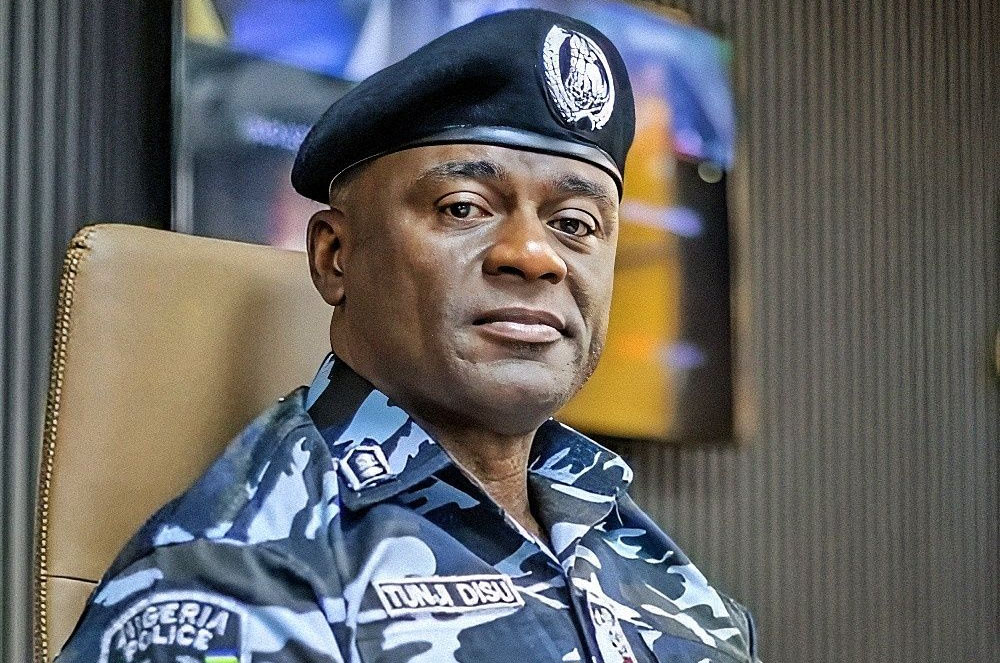
The Nigeria Police Force (NPF) has clarified that Inspector-General of Police Olatunji Disu has not banned Nigerians from recording police officers while they perform their duties in public.
The Force said the IGP’s concern is instead the misuse of police recordings, particularly when footage is deliberately created to ridicule, provoke or turn police encounters into social media skits and entertainment.
The Force New Media Officer, Aliyu Giwa, made the clarification in a series of posts on X on Saturday following public criticism of Disu’s recent comments on citizens filming police officers.
Giwa said the IGP’s position had been misunderstood, stressing that the police were not seeking to shield officers from accountability or prevent citizens from exercising their rights.
“The IGP’s concern is not to shield Police officers from accountability or deny citizens their rights,” Giwa said.
He explained that Disu was specifically concerned about the misuse of recordings, including situations where officers are allegedly provoked, ridiculed, filmed for entertainment or subjected to unnecessary intrusion while carrying out their duties.
Giwa urged Nigerians to distinguish between responsible documentation of police activities and deliberately exploiting encounters with officers for social media content.
According to him, legitimate recordings can serve both citizens and police officers by providing evidence when misconduct is alleged and helping to protect officers against false accusations.
“As a public institution, the Police must remain open to legitimate scrutiny. Evidence is essential when an officer acts improperly. Similarly, responsible recording can protect officers from false allegations and support investigations,” he said.
The police spokesman, however, maintained that being in uniform does not completely remove an officer’s right to dignity and privacy.
“However, wearing the uniform does not remove an officer’s right to dignity or privacy,” Giwa said.
The controversy followed comments by Disu during a recent engagement with the leadership of the Nigerian Bar Association (NBA) at the Force Headquarters in Abuja.
The IGP had expressed concern about the increasing practice of Nigerians recording police officers, particularly when such encounters are subsequently used to create social media skits.
READ ALSO:
- Abia Police Arrest Father, Three Others Over Alleged Attempt to Sell 16-Month-Old Daughter
- Dangote: ₦525 Refinery Shares Could Rise to ₦10,000
- Police Uncover List of 125 Lagos Traders Marked for Fraud, Kidnapping by Syndicates
Disu described the practice as “very, very demoralising” for police officers but acknowledged that citizens have the right to record officers performing their duties in public.
The IGP urged Nigerians to exercise restraint and avoid turning police officers into entertainment content.
“We are not saying they cannot exercise their rights of recording officers in the public places while doing their jobs,” Disu said.
“But they should put restraints and not turn our police officers to content for their skits or anything,” he added.
His comments generated debate among lawyers, human rights advocates and other Nigerians, with some arguing that recording police activities in public is an important tool for police accountability and transparency.
Giwa subsequently rejected the interpretation that the police were opposed to recording officers generally.
Responding to an X user who suggested that police officers should instead be equipped with body cameras, Giwa said the IGP’s comments were about misuse rather than a blanket restriction on recording.
“While you are allowed to interpret it as you see fit, the message from the IGP was concerning the misuse of recordings, not a general rejection of legitimate documentation or accountability,” he said.
Giwa also disclosed that body cameras were part of discussions around modern and accountable policing, noting that the technology could protect both officers and members of the public.
“Body cameras are, in fact, part of the broader conversation about modern, accountable policing, and they can protect both citizens and officers,” he said.
The debate has also been linked to a recent Federal High Court judgment affirming Nigerians’ right to record police officers while they perform their duties in public.
The court, sitting in Warri, Delta State, ruled on March 17, 2026, in a fundamental rights case involving lawyer Maxwell Nosakhare Uwaifo.
The judgment affirmed the right of citizens to record, photograph and document police officers carrying out their duties in public spaces.
The court also addressed the conduct of police officers towards citizens who record them, reinforcing the importance of protecting constitutional rights while police officers carry out law-enforcement functions.
The judgment has since become an important reference point in the debate over citizens’ right to film police officers and the limits of that right.
The NBA has similarly maintained that citizens should be able to document police activities in public, while recognising that officers are also entitled to protection from unnecessary intrusion into their private lives.
NBA President Oyinkansola Badejo-Okusanya recently backed the principle of recording police officers while they are performing public duties and called for clearer rules defining the boundaries between legitimate documentation and inappropriate intrusion.
Giwa said the issue should not be framed as a confrontation between the police and citizens or as a dispute between the IGP and the NBA.
“Therefore, the conversation should not be framed as Police versus the public or the IGP versus the NBA,” he said.
He said the focus should instead be on finding a balance between accountability and responsibility, transparency and privacy, and citizens’ rights and the professional discharge of police duties.
The Force New Media Officer also urged Nigerians to discuss the issue without resorting to insults or inflammatory language.
He said both citizens and the police ultimately had a shared interest in building a more professional police institution and creating a safer Nigeria.
Giwa further argued that technology should be used responsibly rather than treated as a threat to law enforcement.
“In the digital age, the solution is not to fear the camera. Instead, we should use technology responsibly, uphold professionalism, and let truth, rather than social media narratives, define the conversation,” he said.
“The camera should not weaken the institution. Also, institutions should not fear legitimate scrutiny. Both must ultimately serve the truth, justice, and the Nigerian people,” he added.
The latest clarification means that the Nigeria Police Force is not imposing a general ban on recording police officers. Instead, the Force is seeking to discourage recordings that allegedly provoke, ridicule or exploit officers for entertainment while maintaining that legitimate documentation can support accountability, investigations and the protection of both citizens and police personnel.
The debate is likely to continue as the police, legal practitioners and civil society groups consider clearer guidelines for balancing the right to record police officers with privacy, dignity and the need to avoid obstructing police operations.
Police Clarify IGP Disu’s Position on Recording Officers
metro
Abia Police Arrest Father, Three Others Over Alleged Attempt to Sell 16-Month-Old Daughter
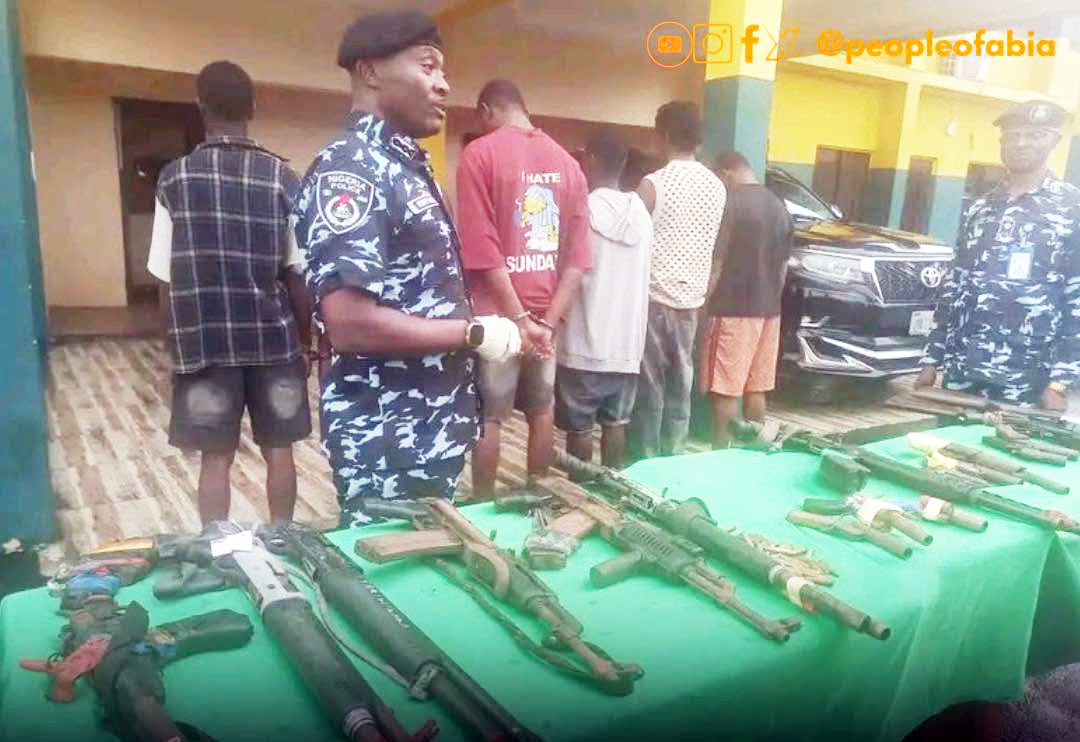
Abia Police Arrest Father, Three Others Over Alleged Attempt to Sell 16-Month-Old Daughter
The Abia State Police Command has arrested a man and three others over an alleged attempt to sell and traffic a 16-month-old girl, who was identified during preliminary investigation as the biological daughter of one of the suspects.
The four suspects were arrested on September 7, 2026, by operatives of the State Criminal Investigation Department (SCID), Gender Unit, at a hotel in Obi, Obingwa Local Government Area of Abia State.
The Commissioner of Police, Wilfred Afolabi, disclosed the arrest on Friday while briefing journalists on the achievements of the command since he assumed office on August 10.
Afolabi said the suspects had been transferred from the Central Police Station, Umuahia, in connection with allegations of conspiracy and child trafficking.
He explained that preliminary investigation established that the child was the biological daughter of one of the four suspects.
The commissioner said further investigation indicated that the alleged plan to traffic the child was driven by the desire to make money.
The police rescued the child during the operation and handed her over to the Abia State Ministry of Women Affairs, where she was placed in protective custody.
The four suspects, meanwhile, remained in police custody as investigators continued to establish the circumstances surrounding the alleged attempted trafficking and identify any other persons who may have been connected to the case.
The police have not publicly disclosed the identities of the suspects or details of any alleged financial transaction connected with the case.
The arrest comes as law enforcement agencies continue to intensify efforts against child trafficking and the exploitation of vulnerable children in Nigeria. Child trafficking cases can involve complex networks and may require investigations beyond those initially arrested to determine whether other individuals facilitated, financed or benefited from the alleged offence.
READ ALSO:
- Dangote: ₦525 Refinery Shares Could Rise to ₦10,000
- Police Uncover List of 125 Lagos Traders Marked for Fraud, Kidnapping by Syndicates
- How I Conspired with My Son’s Teacher to Stage His Kidnap for N15m Ransom
Giving an account of his command’s activities since taking over, Afolabi said the Abia Police Command had recorded more than 152 criminal cases and arrested over 220 suspects.
He said several of the cases had been investigated and charged to court, while police operations had also resulted in the rescue of kidnapped victims and the recovery of weapons and stolen property.
According to the commissioner, the command rescued nine kidnapped victims during the period under review.
Police operatives also recovered 101 rounds of ammunition and cartridges, as well as six stolen vehicles, including tricycles and motorcycles.
Afolabi further disclosed that the command had dismantled two criminal networks as part of its efforts to reduce kidnapping, armed robbery and other forms of violent crime across the state.
One of the major operations highlighted by the commissioner involved the rescue of a medical doctor allegedly abducted by armed men on August 19.
According to Afolabi, the victim was forced into his vehicle during the incident before the abductors fled towards Imo State.
The police commissioner said vehicle-tracking technology, combined with intelligence gathering and coordinated operations by the Abia and Imo State police commands, enabled security operatives to locate the vehicle and rescue the victim in the early hours of August 20.
Several persons allegedly connected to the kidnapping have been arrested, including individuals suspected of assisting with the movement or distribution of ransom money.
Afolabi said police efforts were continuing to apprehend other members of the alleged kidnapping network.
In another operation, the command arrested a suspect allegedly linked to an armed robbery and kidnapping incident along the Enugu-Port Harcourt Expressway in Aba.
The suspect was allegedly apprehended following an incident in which a female victim was robbed of a Toyota Highlander, mobile phones, a handbag and other personal belongings.
The police said investigations into the case were ongoing, with efforts focused on identifying and arresting other suspects allegedly involved in the criminal operation.
Afolabi assured residents that the command would sustain intelligence-led operations and collaboration with other security agencies to tackle kidnapping, armed robbery, child trafficking and other crimes in Abia State.
He also urged residents to provide credible information to the police and other relevant authorities to assist in preventing crime and protecting vulnerable members of the community, particularly children.
The four suspects arrested over the alleged trafficking of the 16-month-old girl remain in police custody while investigation continues. The allegations against them have not been proved in court.
Abia Police Arrest Father, Three Others Over Alleged Attempt to Sell 16-Month-Old Daughter
-

 metro2 days ago
Police Arrest Woman Over Fake OPay Shutdown Notice
-

 Politics2 days ago
Amaechi will be caged politically, Wike shouldn’t bother about Ikwerre votes — Wihioka
-
 Politics2 days ago
Remi Tinubu Appeals To South-East Voters, Says She Wants To ‘Enjoy Nigeria’ In Old Age
-
 News3 days ago
Missing Billions: Lawmakers Summon NNPCL and 146 Marketers Over ₦432bn Downstream Debt
-
 metro2 days ago
Residents Cry Out Over Poorly Constructed Entrance of Ademola Abiola Street, Demand Urgent Intervention
-
 Politics2 days ago
Breaking the Cycle of Collective Guilt: When a Ruling Party Voice Backs Peter Obi
-

 metro16 hours ago
Woman disguises as Muslim woman in Niqab to steal in Ado-Ekiti market, video sparks outrage
-
 Health2 days ago
Ahead of Dry Season Surge, NCDC Urges Proactive Measures Against Lassa Fever