
metro
Terrorism: Court Sentences Four Boko Haram Convicts to Life Imprisonment
Terrorism: Court Sentences Four Boko Haram Convicts to Life Imprisonment
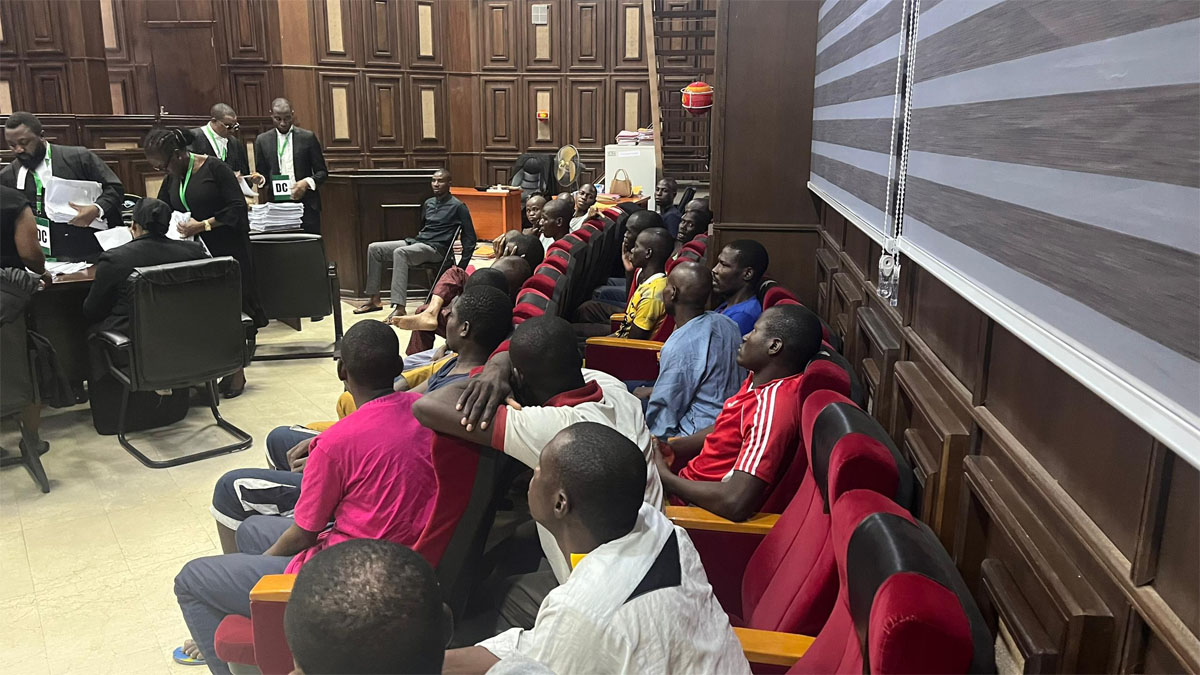
Justice James Omotosho of the Federal High Court, Abuja, has sentenced four men to life imprisonment for their involvement in Boko Haram activities across parts of Borno State between 2021 and 2024. The ruling followed a prolonged trial in which all four defendants pleaded guilty to terrorism-related charges.
The convicts — Ali Abiso, Bakura Abah Kabiru, Ado (also known as Luka Garba), and Babagoni Masawai — were tried separately on multiple counts bordering on terrorism, participation in insurgent attacks, and support for a banned terrorist organisation, contrary to the Terrorism (Prevention and Prohibition) Act, 2022.
According to court records, Ali Abiso, a 30-year-old from Bama Local Government Area, was arraigned on a four-count charge. He was found to have participated in Boko Haram attacks in communities including Bama, Gwoza, Konduga, Bita, Baza, and Aulari. After pleading guilty, the court held that his admission corroborated his earlier confessional statement.
Justice Omotosho ruled that the prosecution had proven its case beyond reasonable doubt, sentencing Abiso to life imprisonment on counts two and four, and 25 years each on counts one and three, with all sentences to run concurrently.
READ ALSO:
- APC Chairman Nentawe Meets Shekarau in Kano, Pushes for Defection
- Police Raid Church-Disguised Criminal Hideout, Arrest Seven Suspects
- Saheed Osupa Defends Juju Use Amid Backlash From Islamic Clerics
In separate proceedings, Bakura Abah Kabiru — arraigned on a three-count charge — also pleaded guilty and was sentenced to life imprisonment on count two, alongside 25 years each on counts one and three.
Similarly, Ado (Luka Garba) received life imprisonment on count two and 25 years on count one, while Babagoni Masawai, who faced a seven-count charge, was handed life sentences on counts six and seven, 20 years each on counts one and two, and 10 years each on counts three, four, and five.
The court also convicted 14 other terrorism suspects, including Ali Mustapha, who was sentenced to 20 years on one count and 10 years each on six additional counts, with sentences running concurrently after pleas for leniency. Others — such as Danbawa Salisu, Modu Ali, Sanda Bello, Mustapha Fali, Modu Musa, Bidal Modu, Mohammed Abdullahi, Umar Garba, Usman Ahmadu, Hussaini Bukar, Baba Manye, Musa Mai Modu, and Ali Musa — received varying prison terms based on their level of involvement.
The prosecutions are part of a broader effort led by the Office of the Attorney General of the Federation, which is currently handling over 500 terrorism-related cases before the Federal High Court in Abuja. The trials are being conducted under Nigeria’s strengthened legal framework aimed at tackling terrorism financing, recruitment, and participation in insurgent activities.
Legal experts say the convictions underscore the judiciary’s commitment to holding terrorism suspects accountable and reinforcing national security. Security analysts also note that such rulings send a strong deterrent message to insurgent groups operating in the North-East and other regions.
The Federal Government has continued to intensify efforts to prosecute terrorism suspects, dismantle insurgent networks, and restore stability, particularly in areas heavily affected by Boko Haram insurgency. Authorities have reiterated the importance of public cooperation and intelligence sharing in sustaining progress against terrorism.
Terrorism: Court Sentences Four Boko Haram Convicts to Life Imprisonment










metro
EFCC Arrests Maiduguri Woman for Cleaning Nose With N500 Note

EFCC Arrests Maiduguri Woman for Cleaning Nose With N500 Note
The Economic and Financial Crimes Commission (EFCC) has arrested a woman in Maiduguri, Borno State, following a viral video showing her cleaning mucus from her nose using a ₦500 naira note, an act considered naira mutilation under Nigerian law.
The suspect, identified as Fatima Muhammed, was apprehended on Tuesday, April 7, 2026, after the video circulated widely on TikTok. EFCC operatives tracked and arrested her within the Maiduguri metropolis, highlighting the commission’s vigilance against misuse of Nigeria’s legal tender.
In a statement, EFCC confirmed the arrest and said Fatima Muhammed is being detained at the Maiduguri Zonal Directorate of the commission as investigations continue. She will be charged to court once sufficient evidence is gathered.
READ ALSO:
- Court Stops ADC Congress, Orders Status Quo in Leadership Row
- US Evacuates Embassy Staff in Nigeria, Lists 23 States as ‘Do Not Travel’
- #OccupyINEC: ADC Protests in Abuja, Demands INEC Chairman’s Resignation
“The Maiduguri Zonal Directorate of the EFCC arrested one Fatima Muhammed for an alleged Naira mutilation. This followed the circulation of a viral video where the suspect was seen cleaning her nose with a ₦500 note,” the statement read.
The commission reiterated that currency abuse is a punishable offence, and such acts undermine the integrity and value of the Nigerian naira. EFCC has in recent months intensified enforcement against naira mutilation, especially incidents recorded on social media platforms.
The arrest has drawn mixed reactions online, with some Nigerians questioning the focus on naira mutilation amid broader economic challenges, while others support the EFCC’s efforts to protect the national currency.
EFCC Arrests Maiduguri Woman for Cleaning Nose With N500 Note
metro
US Evacuates Embassy Staff in Nigeria, Lists 23 States as ‘Do Not Travel’

US Evacuates Embassy Staff in Nigeria, Lists 23 States as ‘Do Not Travel’
The United States government on Wednesday, April 8, 2026, ordered the immediate evacuation of staff and eligible family members from its embassy and diplomatic facilities in Abuja due to a deteriorating security situation in Nigeria. The move follows a comprehensive travel advisory issued by the U.S. Department of State, warning citizens against travel to multiple Nigerian states over rising crime, terrorism, kidnapping, and civil unrest.
The advisory specifically named 23 Nigerian states where travel is strongly discouraged. In the northern and central regions, states such as Plateau, Jigawa, Kwara, Niger, Taraba, Borno, Kogi, Yobe, Bauchi, Gombe, Kaduna, Kano, Katsina, Sokoto, and Zamfara were highlighted for high levels of violent crime and terrorist activity. In the southern and southeastern regions, states including Abia, Anambra, Bayelsa, Delta, Enugu, Imo, and Rivers (except Port Harcourt) were flagged due to kidnapping, unrest, and criminal activity.
READ ALSO:
- #OccupyINEC: ADC Protests in Abuja, Demands INEC Chairman’s Resignation
- South African Protesters Force Closure of Nigerian-Owned Nightclub
- Lookman Stars as Atletico Madrid Beat 10-Man Barcelona 2-0
The advisory stated, “Violent crime is common throughout Nigeria. This includes armed robbery, assault, carjacking, kidnapping, hostage-taking, roadside banditry, and rape. Kidnappings primarily target dual nationals and Americans, who are often perceived as wealthy.” It added that terrorist groups have collaborated with local gangs, carrying out attacks in soft targets such as markets, malls, hotels, places of worship, schools, and government facilities.
Alongside security concerns, the advisory noted that healthcare services in Nigeria are inconsistent and may not meet U.S. or European standards. Travelers were warned that emergency medical care, specialised treatment, and medicines may be limited, making medical emergencies riskier for foreigners.
The U.S. government urged its citizens in Nigeria to enrol in the Smart Traveler Enrollment Program (STEP) to receive real-time updates and safety information. Citizens were also advised to avoid large gatherings and protests, stay vigilant, and maintain situational awareness at all times.
Experts suggest that the evacuation reflects deepening concerns over Nigeria’s security challenges, including ongoing insurgency in the northeast, rising gang activity, and kidnappings across multiple regions, which pose significant threats to foreign nationals and residents.
The U.S. embassy and the Department of State continue to monitor developments closely and have committed to keeping citizens informed about evolving security conditions in Nigeria.
US Evacuates Embassy Staff in Nigeria, Lists 23 States as ‘Do Not Travel’
metro
South African Protesters Force Closure of Nigerian-Owned Nightclub

South African Protesters Force Closure of Nigerian-Owned Nightclub
Hundreds of protesters in KuGompo City, South Africa, marched on Wednesday demanding the closure of California Tavern, a nightclub linked to Nigerians. Demonstrators accused the nightclub of drug-related activities, sparking concerns about community safety and illegal operations.
The protest comes after unrest last week, triggered by the controversial crowning of a Nigerian “king” in Buffalo City, which led to looting of Somali-owned shops and burning of vehicles. Many immigrant-owned businesses in KuGompo city centre shut down amid fears of potential attacks.
Organisers, including anti-immigrant group Operation Dudula, attempted to deliver a memorandum to the nightclub’s management. Police prevented entry to the Belgrave Hotel, where California Tavern operates, to avert clashes and maintain public order.
READ ALSO:
- Lookman Stars as Atletico Madrid Beat 10-Man Barcelona 2-0
- Imported Petrol 12% Cheaper Than Dangote Fuel – World Bank
- Terrorism: Court Sentences Four Boko Haram Convicts to Life Imprisonment
Law enforcement maintained a strong presence throughout the demonstration. Captain Hazel Mqala, spokesperson for the KuGompo City Police, said officers were deployed to protect residents and property, noting that drugs had been previously confiscated during patrols.
Later, Brigadier Nobuntu Gantana of the South African Police Service (SAPS) confirmed that some criminal elements were dispersed using stun grenades and rubber bullets. One suspect was arrested for assaulting a police officer, and authorities have opened 11 criminal cases after last week’s protests, with two arrests already made.
In response to public pressure, the Belgrave Hotel owners announced the closure of California Tavern, citing community safety concerns. The move aims to ease tensions and prevent further protests in the city.
This incident highlights ongoing anti-immigrant sentiment in South Africa and underscores the need for strong law enforcement and community vigilance. Authorities continue to urge residents and business owners to report illegal activities to prevent escalation.
South African Protesters Force Closure of Nigerian-Owned Nightclub

-

 metro2 days ago
FG Deports US Missionary Alex Barbir Over Alleged Role in Nigeria Insecurity
-

 Entertainment2 days ago
Veteran Nollywood Actor Davis Ofor ‘Clarus’ of New Masquerade Dies at 85
-

 metro3 days ago
MURIC Backs Egba Imams’ Call for Inclusive Leadership in Ogun 2027 Governorship Race
-

 metro2 days ago
Lagos Announces Partial Road Closures for Project Commissioning
-

 metro19 hours ago
2026 NYSC Batch A Stream II: Registration, Swearing-In Dates Announced
-

 News2 days ago
Iran Lists Tough Conditions for Peace Talks with US
-

 International3 days ago
Trump Claims US Sent Weapons to Iranian Protesters but Diverted
-

 International2 days ago
Iran Suspends Direct Diplomatic Contact with US