
Opinion
Tinubu must address rising mass massacres now, By Farooq Kperogi

Tinubu must address rising mass massacres now, By Farooq Kperogi
Recent events show a widening pattern of killings, abductions and reprisals stretching from Borno to Zamfara, Kebbi, Niger, Kwara and elsewhere. The scale of fatalities alone demands sustained national attention. But the Bola Ahmed Tinubu government’s muted presence in the public response raises troubling questions about its priorities and its appreciation of the fierce urgency of the moment.
Start with Borno State, long regarded as the epicenter of Boko Haram’s insurgency. International media outlets reported last Friday that Boko Haram militants attacked a Nigerian military formation, killing at least eight soldiers and leaving dozens wounded. Casualty figures varied across accounts, but the deaths of eight soldiers were consistently reported.
Incidents of this nature once triggered nationwide debate and highly visible federal reaction. They now pass with limited public engagement outside specialist security coverage. That shift in attention probably reflects outrage fatigue, but it does not reduce the severity of the threat.
In the northwest and north central zones, mass casualty attacks have become distressingly frequent. Reports from Kebbi and Zamfara States describe repeated bandit raids, civilian deaths and abductions.
Again, an Associated Press dispatch from last Friday documented coordinated assaults in Kebbi resulting in at least 33 fatalities. That number alone represents a catastrophic loss for rural communities, yet the federal government hasn’t even acknowledged these tragedies much less comfort victims. This is increasingly becoming a pattern.
The Borgu region, where I am from, illustrates how violence transcends state boundaries while policy responses remain fragmented. Borgu’s communities span Kebbi, Niger and Kwara States. They share historical and cultural ties but operate under different administrative authorities.
READ ALSO:
- Armed Bandits Kill 30, Kidnap Villagers in Zamfara Attack
- Agege Council Announces Free 3kg Cooking Gas Refill for 4,000 Residents
- Tinubu Summons Aiyedatiwa Over APC Congress Violence, Monarch’s Murder
Armed groups exploit this fragmentation. Attacks in one area of the region reverberate across others and reshape daily behavior far beyond the immediate site of violence.
In Tungan Makeri, Konkoso and Pissa in Borgu Local Government Area of Niger State, news reports and police statements from this week confirmed deadly pre-dawn raids by gunmen. Initial figures indicated about 32 civilians killed across the affected settlements.
Specific breakdowns varied, with six deaths reported in Tungan Makeri and as many as 26 in Konkoso, according to local accounts cited in early coverage. These numbers represent entire families extinguished within hours. They also underscore the persistent vulnerability of communities repeatedly targeted by armed groups.
Earlier in the year, Borgu recorded another mass casualty episode at Kasuwan Daji market. Credible reporting placed the death toll at 30 or more people killed, with several others abducted. Shops were burned. Civilians were shot. Survivors described chaos, devastation and disorientation.
The recurrence of large-scale lethal attacks within the same geographic zone should have triggered an unmistakable escalation in federal visibility. That response has not been evident at the level many residents consider commensurate with the losses.
Across the Kwara axis of Borgu, the psychological impact of nearby massacres is now frighteningly noticeable. In Baruten, formerly part of the historical Borgu configuration, fear recently overwhelmed a weekly market day.
A vehicle passed through town. Someone suspected it might be transporting terrorists. The reaction was immediate and visceral. Traders and buyers fled. Goods were abandoned. People ran without coordination, and injuries followed. Some residents reportedly broke limbs in the stampede. Elderly individuals fell and required hospitalization. Many retreated indoors, remaining inside overheated rooms for hours. Goods abandoned in the market were stolen.
But no attack occurred. The vehicle posed no danger. It was the panic itself that inflicted the harm. This happened in my hometown on a Wednesday, a bustling market day that serves as both an economic outlet and a space of interaction, exchange and communal vitality.
Such reactions are not irrational. They reflect what psychologists call learned responses in environments where credible violence repeatedly erupts nearby.
In adjacent Kaiama Local Government Area of Kwara State, residents recount continual episodes of extreme brutality in the hands of bloodthirsty terrorists, the recent mass slaughters in Woro and Nuku that captured the national and international attention being the latest.
Residents across Borgu consistently describe a sense of exposure and disabling siege. In the Niger State sector, communities report repeated attacks on the same settlements. In Konkoso, for example, locals say after militants killed large numbers of villagers, the assailants returned on February 17 to burn the remaining homes. Whether every detail withstands subsequent verification, the pattern of repeated raids across the region is corroborated by multiple independent reports of killings and abductions.
READ ALSO:
- FCT Polls: S’Court, A’Court Defy Wike’s Public Holiday, Continue Judicial Activities
- Lassa Fever Deaths in Nigeria Rise to 51 After 15 Killed in Early February – NCDC
- Mob Kills Injured Motorcycle Rider After AK‑47 Rifles, Ammunition Found in Crash Scene
Governmental reaction shapes how citizens interpret both tragedy and state legitimacy. In Kwara State, the governor’s visit to sites of violence in Kaiama was widely noted by affected residents. Such gestures cannot reverse fatalities, but they acknowledge suffering and communicate presence. Insecurity is not only a military problem. It is also a political and psychological one.
In contrast, many inhabitants of Niger State’s Borgu communities express dissatisfaction with the state government’s posture following major incidents. Residents recount episodes in which official statements emphasized blame.
After the Papiri abductions, villagers say responsibility was publicly shifted toward school authorities without a gubernatorial visit to the affected location. Following reports that more than 70 people were killed in Kasuwan Daji, locals similarly describe narratives of fault attribution unaccompanied by direct engagement with survivors. These perceptions may not capture every administrative constraint, but they significantly influence public trust.
The more pressing concern, however, lies at the federal level. The cumulative death toll across Borno, Kebbi, Niger and Kwara States in just these few cited incidents exceeds any threshold that should trigger unmistakable national urgency.
Eight soldiers killed in Borno. Thirty-three civilians killed in Kebbi. Thirty-two civilians killed across Tungan Makeri, Konkoso and Pissa. Thirty or more killed in Kasuwan Daji market, with local claims of even higher figures, including over 70 fatalities. Locally reported deaths approaching 300 in Woro and Nuku. These are not sporadic disturbances. They are large-scale lethal events distributed across multiple states.
Yet the federal government’s public posture has lacked the intensity typically associated with crises of this magnitude. There has been no sustained national address centered on these specific killings. No widely visible mobilization signaling exceptional concern for Borgu’s repeated devastation. No consistent federal narrative that conveys to affected populations that their losses command the same urgency as tragedies elsewhere.
I agree that security challenges in Nigeria are undeniably complex. Intelligence failures, logistical limits and political coordination problems complicate rapid response. None of these constraints, however, justify the normalization of mass fatalities or the attenuation of federal visibility. When killings of dozens or hundreds struggle to command durable national attention, citizens inevitably question whether their suffering is fully recognized within the national hierarchy of concern.
Persistent violence also produces cumulative secondary effects. Economic activity contracts. Mobility declines. Educational continuity suffers. Residents alter movement patterns, avoid gatherings and recalibrate routine decisions around perception of threat. Fear becomes a structural condition rather than an irregular reaction.
Operation Savannah Shield, recently launched to address insecurity across parts of the north, offers an opportunity for recalibration. Its effectiveness will depend not only on tactical operations but on geographic scope. Borgu’s border communities, repeatedly affected by lethal raids and abductions, require explicit incorporation into security planning. Fragmented jurisdiction has long benefited attackers. Coordinated federal presence could begin reversing that asymmetry.
The number of people who have died unjustly in the hands of nihilistic terrorists this week alone is already staggering. A repetition of this number would signal deeper systemic failure. Preventing that outcome requires more than periodic, contingent deployments. It demands sustained federal attention, interstate coordination and a public posture that communicates unmistakable commitment to civilian safety.
It is worth recalling that even at the height of insecurity during President Goodluck Jonathan’s administration, the scale and frequency of mass killings did not approach what many communities now experience, yet Bola Tinubu, then an opposition figure, publicly urged Jonathan to resign.
Invoking resignation today, however, feels like an exercise in futility because no Nigerian elected official has ever relinquished office solely on account of failure, incompetence or public dissatisfaction. Rather than dissipate intellectual energy on an outcome with no historical precedent, a more pragmatic appeal is necessary.
The president should address the nation directly, acknowledge the severity of the crisis, and demonstrate a visibly intensified commitment to protecting lives. If the state proves unable or unwilling to guarantee basic security across vulnerable regions, then a serious national conversation must also consider whether citizens should be legally empowered to defend themselves, including through responsible firearm ownership, instead of remaining defenseless sitting ducks in the face of unremitting terrorist and bandit violence.
Tinubu must address rising mass massacres now, By Farooq Kperogi
Kperogi is a renowned Nigerian columnist and United States-based Professor of Journalism.





Opinion
How opposition Tinubu would treat President Tinubu, By Farooq Kperogi
How opposition Tinubu would treat President Tinubu, By Farooq Kperogi
How opposition Tinubu would treat President Tinubu, By Farooq Kperogi
Opinion
Adelabu’s Power Lines as Laundry Lines
Adelabu’s Power Lines as Laundry Lines
Azu Ishiekwene
In many parts of the country, the rains poured down earlier in the week, bringing much physical and psychological relief from the searing heat.
The absence of electricity from public supply channels made it worse. Average daytime temperatures throughout March ranged from 33 degrees to 38 degrees centigrade in Lagos and Abuja, respectively.
Nigeria’s public electricity grid must rank among the most intractable problems any developing country could face. There is hardly anything more constant than the announcement of grid collapse, which leaves businesses and homes seeking alternatives and incurring unplanned expenses while paying for electricity not supplied.
What Candidate Tinubu promised
During his 2023 campaign, President Bola Ahmed Tinubu said that if he didn’t fix the problem, he shouldn’t be voted in for a second term. He must be regretting that statement now. Since the beginning of his administration in May 2023, there have been multiple grid collapses, with the highest number recorded in 2024 at 12. Even when incidents were fewer, sporadic outages have continued. The failure, on face value, is attributed to a mix of technical, structural and administrative weaknesses in the system. But there is more to it in the sense in which it is said: “The more you see, the less you understand.”
So unreliable is the public electricity supply that the Presidential villa appropriated N10 billion in 2025, and an additional N7 billion in 2026 for the installation of a solar mini grid that will effectively disconnect Nigeria’s seat of power from the national grid, bedevilled by ageing transmission lines which collapse repeatedly from sabotage, poor maintenance, and frequency imbalances.
The joke is on us
Nigerians, ever ready to make a jest of their tragic maladies and long suffering, are beaten when it comes to power outages. They are shocked beyond humour. If the high-tension cables were not too high overhead, people in communities through which they run would not hesitate to hang their laundry on them – knowing from experience that the lines are just part of the landscape and are very likely to be without electricity.
READ ALSO:
- Ondo PDP Rejects Wike Faction, Affirms Loyalty to Turaki‑Led NWC
- Bandits Abduct Seven Family Members, Three Neighbors in Kaduna
- Festus Keyamo Urges ADC to Thank INEC Over Derecognition of Rival Factions
I have seen a video of a masquerade performing on a streetlight pole. Of course, the crowd applauded its invincibility; yet, both the crowd and the masquerade knew better. The lines had not been electrified for months and were unlikely to be for the spell of the circus.
Hope was rekindled at the beginning of the Tinubu administration when news filtered through that the currently embattled former governor of Kaduna State, Nasir El-Rufai, had not only produced a blueprint, but was going to be given the assignment of sorting out Nigeria’s notorious electricity sector. I learnt reliably that, as part of his plan, El-Rufai was discussing a $10 billion investment agreement with the Saudis before he ran into rough weather.
The coming of Adebayo
That was how Adebayo Adelabu took the job – a job at which he has performed so disastrously, saying he failed would be an honour. But it’s not his fault – it’s the fault of the President who appointed him and the Senate that cleared him for a job that he was clearly incompetent to perform, either based on his record or based on any hope of redemption. He is brilliant, but the power sector is littered with the remains of brilliant people, among whom he is now a fossil.
His better years were when he worked as an auditor at PWC. He was also the Executive Director/CFO at First Bank, and later a deputy governor at the Central Bank. He may not have been directly responsible for the misfortunes of these institutions at the time, but he doesn’t exactly smell of roses.
In the normal course of things, his banking career should have been a yellow flag. Still, Nigeria being Nigeria, the quota system and political connections ensured that he defied gravity.
Then, in 2023, Tinubu offered him the position of Minister of Power, after his failed attempt to become governor of Oyo State on the platform of the Accord Party. That only worsened our misery. Adelabu will be best remembered for splitting electricity consumers into parallel payment bands that do not necessarily reflect improved services.
The thing is not that Adelabu failed at his job. It’s the lack of evidence that he tried. Mr Dan Kunle, an energy expert familiar with the history of that sector, told me that, “No one is saying a power minister should provide the resources to fix the sector from thin air. It’s for him to provide a solid framework that would create the right environment and attract sovereign intervention.”
Adelabu, like many of his predecessors, is running the power ministry in 2026 with the 1950 operational manual of the Electricity Corporation of Nigeria (ECN). Yet, even then, when the country had a population of about 50 million, the British knew that electricity was an economic good. To provide meaningful and sustainable service, they had to prioritise not just the key administrative centres but also areas that could pay. That was why, for example, coal was shipped from Enugu to the Ijora Power Station in Lagos.
No roadmap
Adelabu has no roadmap, or if he has one for a population four times what it was under ECN, it’s a roadmap to nowhere. The same old problems persist: gas shortages, moribund plants, infrastructure deficits, massive debts, and frequent grid collapses, limiting supply to about 4,000 MW despite a capacity of 13,000 MW.
READ ALSO:
- INEC Warns ADC Against Holding Convention Without Supervision
- APC Rejects ADC Claims, Says Tinubu Not Responsible for Party’s Legal Troubles
- Fani‑Kayode Fires Back at Peter Obi, Defends NADECO’s Legacy
While Adelabu may wring his hands alongside Nigerians when the lights trip off, the sector has been drowning under the yoke of N6 trillion in debt as of late 2025, fuelled by non-cost-reflective tariffs and unpaid bills to both generating and distribution companies. Some of the problems predate Adelabu, but his incompetence has worsened them.
Yet, he still has ambition. Not to redeem himself after his disastrous three years as minister, but to become the governor of Oyo State. Obviously, he believes the reward for poor performance is a higher office. He is so shameless, it means nothing to him that he holds the Olympic record for national grid collapse. It means nothing to him that Nigerian businesses are powered by Indian generators and their homes by Chinese solar panels.
Examples from Africa
Egypt, with a population of 110 million, has 100 percent universal electricity access, supported by a heavy reliance on gas (81 percent) and growing low-carbon sources like hydropower. This ensures a stable supply amid population pressures.
South Africa serves 85-90 percent of its 62 million residents but faces severe shortages. Frequent load shedding persists due to Eskom’s debt, ageing infrastructure, and maintenance issues, despite high per-capita generation.
Ghana reaches 88-89 percent coverage for 34 million people, with hydro and thermal power dominating. Urban areas enjoy near-99 percent access, while rural areas still have gaps and occasional outages.
Kenya hits 76 percent for 56 million, excelling in urban (97 percent) and geothermal power. Rural expansion lags, though targets aim for full access by 2030.
Compared to the countries above, only 57 percent of Nigerians are grid-connected, with outages occurring 85 percent of the time, and poor metering and corruption that sustain estimated billing and inefficiencies.
After watching Adelabu perform so poorly over the last two years on the national stage, I was hoping he would go away quietly, under the shadow of the darkness he has fostered. But since he insists that he won’t leave quietly – or appears determined to stay on – I’m considering a self-appointed mission to drag him to Oyo State to see how he will turn their night into day.
Adelabu’s Power Lines as Laundry Lines
Ishiekwene is the Editor-In-Chief of LEADERSHIP and author of the book, Writing for Media and Monetising It.
Opinion
Super Bowl: Can Africa Spring Up anew?
Super Bowl: Can Africa Spring Up anew?
With a landmass of approximately 9.83 million km² and a population of 334–336 million as of 2025—making it the third-largest country in the world—the United States is massive. It is four times the size of Algeria, Africa’s largest country, and dwarfs Nigeria, the continent’s most populous nation.
The United States is a titan among nations. Who knows—perhaps neologists will coin a new term if the U.S. eventually purchases or forcefully takes Greenland from Denmark, further surging its landmass and population. When this massive scale fuses with unparalleled infrastructure, world-class venues, and a vast market, the USA becomes an ideal host for international sporting events with strong returns on investment.
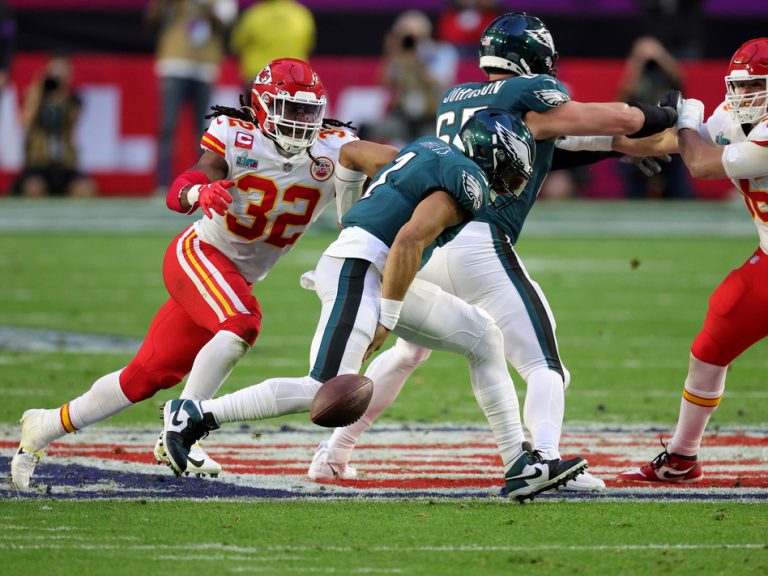
Between 1904 and 2025, the USA hosted one FIFA World Cup (with another to be co-hosted in 2026 with Mexico and Canada), four Summer Olympics, four Winter Olympics, and one FIBA Basketball World Cup. Unlike soccer, which is still finding its footing in the United States—even with Major League Soccer (MLS) having existed for 30 years—American football is the undisputed number-one sport. The Super Bowl—born from Lamar Hunt’s “light-bulb moment”—is the crown jewel. The Super Bowl has become what sociologists call a secular ritual, binding the social fabric of Americans together.
Beyond the Vince Lombardi Trophy, the Super Bowl has evolved into a global marketing masterpiece. From the famous 1984 Apple commercial introducing the Macintosh, which is studied in MBA classes worldwide, to the 1979 Mean Joe Greene Coca-Cola commercial that showed genteel human warmth winning over fearsomeness, the intentionality of brands going head-to-head with rivals has been a recurring feature of every Super Bowl.
While the USA is always attractive for hosting events, the Super Bowl’s success pivots on intellection that results in ingenious marketing. For the recent Super Bowl LX on February 8, 2026, two brands mirrored David Ben-Gurion’s principle of “taking the fight to the enemy.” Pepsi and Anthropic’s Claude entered with an offensive strategy: Claude’s AI ad—“Ads are coming to AI. But not to Claude.”—was a calculated strike in the competitive AI market, while Pepsi’s polar bear blind test revived the sulphurous rivalry with Coca-Cola. Many companies use their ad slots to build brand identity and equity or announce arrival in the business world.
Where does Africa stand in this Super Bowl business and sports calculus? While developed nations are making groundbreaking launches with chutzpah and creativity from creative shops—all resulting in a participatory economy—Africa’s involvement is largely an on-the-field display of Négritude spirit and ravenous passion.
For Africa, the Super Bowl has become a “badge of honor” through representation. Mohammed Elewonibi, a Nigerian raised in Canada, was the first player of African origin to win a Super Bowl (XXVI, 1992, with the Washington Redskins). Since then, nearly 41 players of Nigerian origin or heritage have won—the most of any African country—including six who tasted victory with the recent Seattle Seahawks: Uchenna Nwosu, Nick Emmanwori, Boye Mafe, Jaxon Smith-Njigba (of Nigerian and Sierra Leonean roots), Jalen Milroe, and Olu Oluwatimi.
Yet, as impressive as African athletes are in making the continent proud, we have blatantly failed to translate that audience engagement into commercial windfalls like the Super Bowl on home soil. It is appalling that most of Africa’s sporting events—the Durban July Handicap, Senegalese wrestling (Laamb), or the Safari Rally—have not fully harnessed the intersection of sports and marketing. Even the Africa Cup of Nations (AFCON), despite its 3.45 billion cumulative viewers (far surpassing the Super Bowl’s ~125–127 million), lacks comparable marketing prestige. Why are there no global product launches during our matches? Why aren’t AI giants capitalizing on Africa’s tech startup boom?
Africa is being fed celery when it deserves the whole salad. This asymmetry stems from structural economic factors, but the genie is out of the bottle—we must be forward-looking. To turn African sporting events into “goldmines,” we must reinvent the industry, much as Cirque du Soleil did for the circus. Facing declining audiences, rising costs, and fierce competition, it lost its grip on the circus business. Cirque, however, escaped the dying circus business by reinventing it.
By viewing competition through a new lens, Africa can transform massive viewership into unparalleled economic advantage and value. Just as Cirque du Soleil created uncontested market space, African sports must adopt what W. Chan Kim and Renée Mauborgne called a “Blue Ocean Strategy”—creating uncontested market space and making competition irrelevant. Much as we can not compete toe to toe with advanced economies , we should not follow them like zombies.
In their book Blue Ocean Strategy: How to Create Uncontested Market Space and Make the Competition Irrelevant, the authors highlight how companies in “red oceans” fight for shrinking profits in crowded, defined markets. African sports events currently sit in those crowded red oceans. To elevate them, we need disruptive leaders willing to venture into untapped markets, create new demand, and unlock unlimited growth opportunities.
Joseph Pine and James Gilmore, in their book The Experience Economy, wrote about the need to transform commodities into experiences. As Africans, we have been able to move our sporting events from the commodity stage to the third stage—service delivery—but the experience stage is the North Star we should aspire to reach.
Our cultures, as varied as they are, define us. Despite dilution by Western civilization, our culture stands uneroded, like the mountains that litter our landscape and serve as a canopy to preserve our common heritage. This means our forefathers took culture into the realm of experience—something we are still grappling with in our sporting spectacles today. For us to make headway, our cultures—already bubbling with experience—must mix seamlessly with our sporting spectacles.
Now is the time to merge cultural events like the Eyo Festival, Argungu Festival, Gnaoua World Music Festival, Osun Osogbo Festival, Meskel Festival, and others with our sporting spectacles—that is the Blue Ocean Strategy. This can only be achieved through close collaboration between leaders in sports administration and marketing professionals selling experiences, and the time is now. As this is done, a line from David Diop’s poem Africa—“That is your Africa springing up anew”—would fill our lips.
The experience stage is the nirvana!
Toluwalope Shodunke
Can be reached via tolushodunke@yahoo.com
Super Bowl: Can Africa Spring Up anew?

-
 metro7 hours ago
FG Deports US Missionary Alex Barbir Over Alleged Role in Nigeria Insecurity
-
 metro1 day ago
MURIC Backs Egba Imams’ Call for Inclusive Leadership in Ogun 2027 Governorship Race
-

 International2 days ago
Netanyahu Condemns ‘Christian Persecution’ in Nigeria in Easter Message
-
 metro9 hours ago
Lagos Announces Partial Road Closures for Project Commissioning
-
 Politics3 days ago
ADC Crisis Halts Makinde, Bala, Lawmakers’ Defections
-

 metro2 days ago
Hajiya Hadiza Attahiru Jega, Wife of Former INEC Chairman, Dies in Abuja
-

 Politics2 days ago
2027: Atiku Signs $1.2m US Lobbying Deal to Engage Trump
-

 Business1 day ago
Tax Evasion: Lagos Government Sues Bi-Courtney, DAAR, 33 Others