

Politics
Festus Keyamo Urges ADC to Thank INEC Over Derecognition of Rival Factions
Festus Keyamo Urges ADC to Thank INEC Over Derecognition of Rival Factions
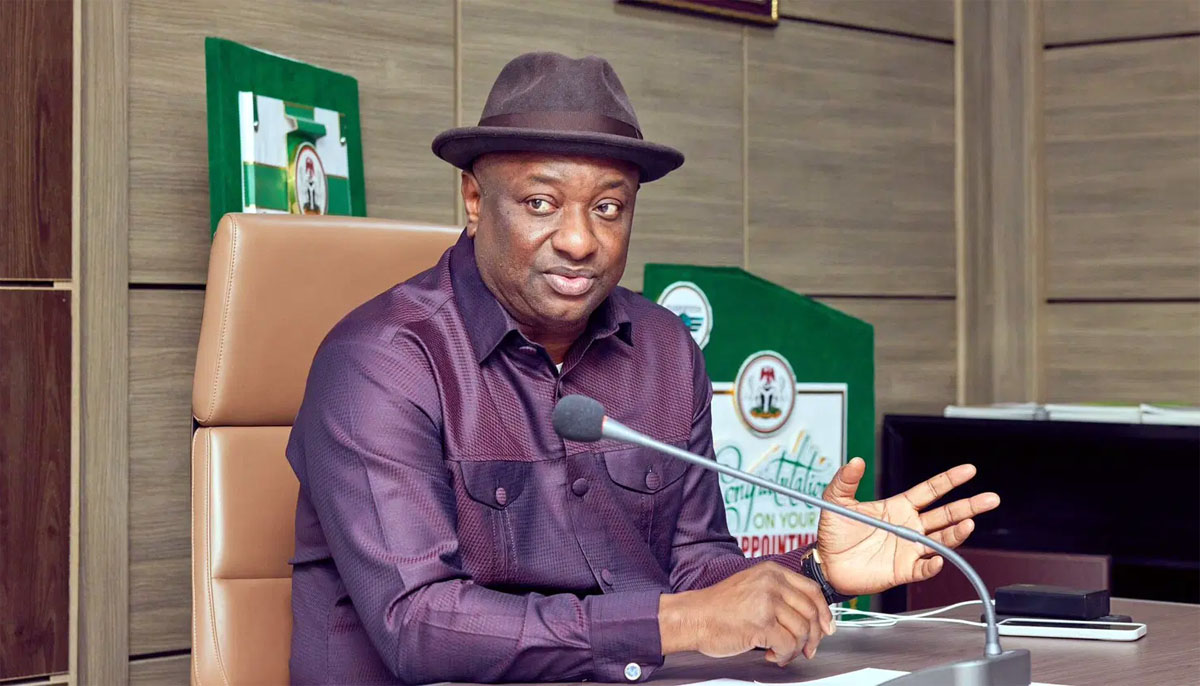
The Festus Keyamo has called on the African Democratic Congress (ADC) to appreciate the Independent National Electoral Commission (INEC) for its recent decision to derecognise rival factions of the party’s leadership linked to David Mark and Rauf Aregbesola.
In a statement posted on X, Keyamo said the leadership dispute in the ADC is primarily a legal issue, not a political one, stressing that the faction led by David Mark had created the problem themselves. “Law does not admit of sentiment. Decisions are based on facts, evidence, and interpretation of laws, rather than on sympathy, emotion or political considerations,” he said.
Keyamo dismissed arguments about maintaining the status quo ante bellum, highlighting that what matters is a pending court case brought by a duly elected Deputy National Chairman. He warned that until the legal matter is resolved, any actions by either faction could be declared invalid, potentially leaving the ADC without candidates for upcoming elections.
READ ALSO:
- INEC Warns ADC Against Holding Convention Without Supervision
- APC Rejects ADC Claims, Says Tinubu Not Responsible for Party’s Legal Troubles
- Fani‑Kayode Fires Back at Peter Obi, Defends NADECO’s Legacy
Rather than vilifying INEC, the minister suggested that the party view the derecognition as a timely warning, stating, “Instead of vilifying INEC, the ADC should thank them for this timely action, which forewarns the party of the danger ahead.” He also advised the ADC to resolve its internal crisis, seek accelerated court hearings, or explore alternative political options.
Keyamo rejected claims that the government or the All Progressives Congress (APC) orchestrated the ADC’s crisis, emphasising that the leadership dispute arose from internal mismanagement and poor legal planning. He added that continuing with planned congresses and conventions in defiance of court orders would compound the party’s problems.
The minister’s statement follows INEC’s derecognition of the David Mark-led faction, which was guided by a Court of Appeal ruling and ongoing litigation over the party’s legitimate leadership. INEC has also indicated that it will not recognise any faction until the court delivers a final judgment.
Keyamo’s remarks come amid rising tensions within Nigeria’s political landscape, highlighting the importance of legal compliance in party leadership disputes and the implications for 2027 general elections preparations.
Festus Keyamo Urges ADC to Thank INEC Over Derecognition of Rival Factions




Politics
Peter Obi: Release My UNN Academic Records, I Have Nothing to Hide
Peter Obi: Release My UNN Academic Records, I Have Nothing to Hide
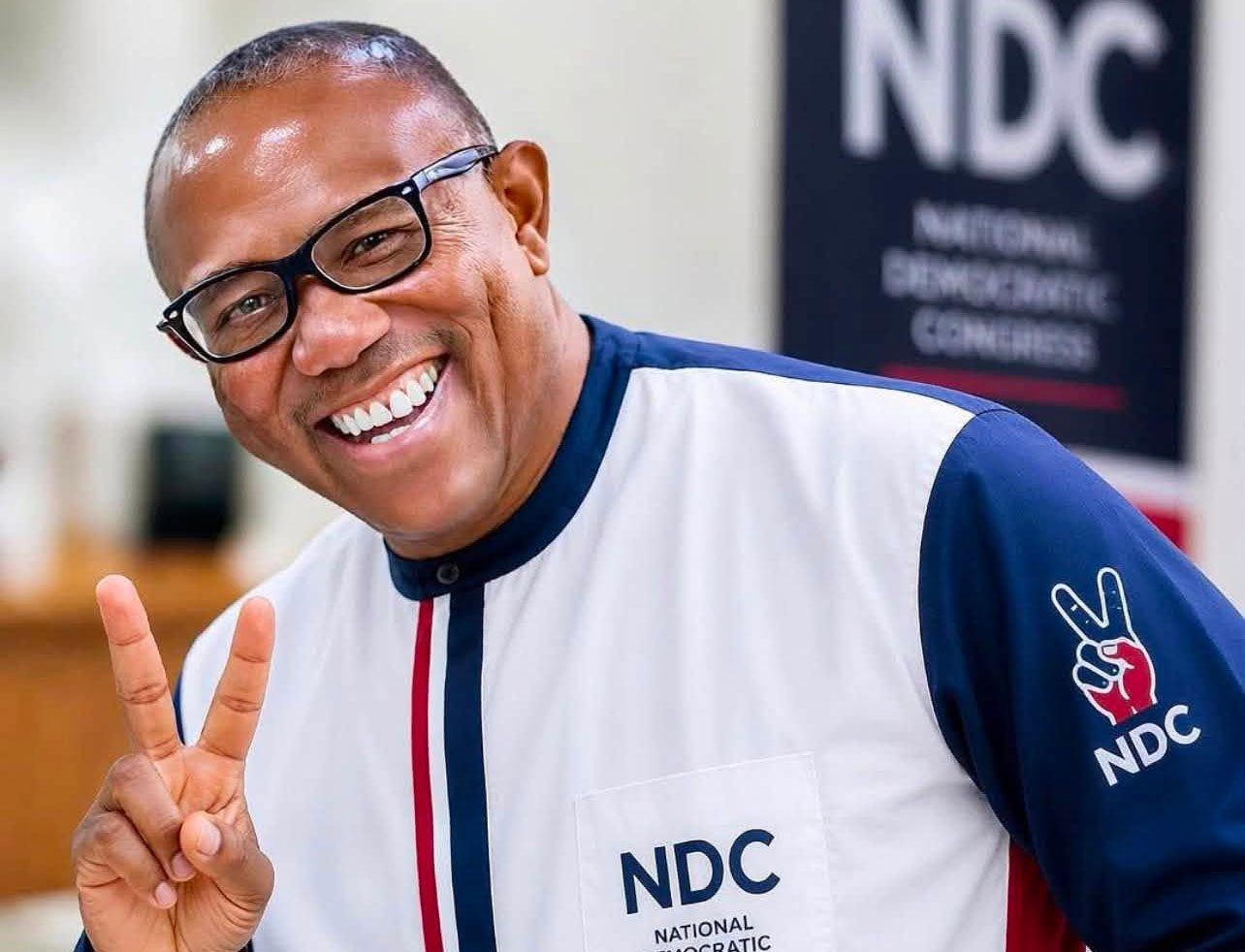
Former Anambra State Governor and 2027 presidential candidate Peter Obi has urged the University of Nigeria, Nsukka (UNN) to release his academic records, saying he has no objection to legitimate scrutiny of his educational history.
Obi’s position comes amid a fresh controversy over his academic credentials, following separate suits filed at the Federal High Court in Abuja seeking access to records relating to his education and National Youth Service.
The cases were instituted by Abayomi Arabambi, a former Labour Party chieftain, who is asking the courts to compel the relevant institutions to release records concerning Obi’s WAEC, UNN and NYSC credentials.
Obi, however, has said the institutions should simply make the records available rather than allow the issue to generate unnecessary controversy.
The former governor’s call followed a request by a journalist during an event at the University of Nigeria, where he was asked about the controversy surrounding his educational records.
Obi reportedly said there was nothing wrong with the university releasing his records, stressing that he had attended the institution and that the relevant information should be available through official channels.
The development comes against the background of three separate Federal High Court suits filed by Arabambi.
The first two cases were filed on September 1, 2026, against the West African Examinations Council (WAEC) and the National Youth Service Corps (NYSC), while a third case was filed against UNN on September 9.
The cases seek access to existing official records concerning certificates attributed to Obi.
READ ALSO:
- A Son Wouldn’t Have Done Better — Dangote Speaks on Daughters, Succession
- 2027: APC Governors Reject Wike’s Rainbow Coalition, Insist on Party Loyalty
- Sanwo-Olu Joins Dangote as Historic N2.15tn Refinery IPO Opens on Nigerian Exchange
According to court documents cited in reports, the WAEC case is registered as FHC/ABJ/CS/2064/2026, while the NYSC case is FHC/ABJ/CS/2063/2026. The UNN case is registered as FHC/ABJ/CS/2144/2026.
Arabambi has maintained that he is not asking the court to determine whether Obi’s certificates are genuine or forged.
Instead, he wants the institutions to release records that could establish the details surrounding the certificates and the educational history attributed to the former Anambra governor.
The documents reportedly include WAEC Certificate No. SC042560, said to have been issued in June 1978; UNN Certificate No. D000198, relating to a Bachelor of Arts degree in Philosophy reportedly awarded in 1984; and NYSC Certificate No. 203495, reportedly issued on May 1, 1986.
Arabambi’s legal action followed attempts to obtain the records directly from the institutions.
He reportedly said WAEC rejected his request on August 11, citing provisions of the Freedom of Information Act, while he alleged that UNN and NYSC did not provide the requested records or explanations for their positions.
The legal action has consequently shifted the controversy from political statements to the courts, where the institutions may be required to respond to the requests for access to their records.
However, the existence of the lawsuits does not establish that Obi’s certificates are forged, invalid or fraudulent.
The cases are requests for access to records, and the court has yet to make any finding that the former governor committed wrongdoing in relation to his educational qualifications.
The controversy has also created a political dispute within the Labour Party.
The Labour Party has disowned Arabambi, saying he no longer represents the party and should not be regarded as acting on its behalf in the credential cases.
The party said Arabambi was among members suspended by its National Executive Council in March over alleged anti-party activities and was subsequently expelled.
The LP therefore distanced itself from the legal action and indicated that it could take steps against Arabambi if he continued to present himself as a representative of the party.
The development is significant because Obi contested the 2023 presidential election on the Labour Party platform and is now preparing for the 2027 presidential election under the Nigerian Democratic Congress (NDC).
Obi’s political opponents and supporters have consequently interpreted the credential controversy through the lens of the emerging 2027 political contest.
The NDC has defended Obi’s academic record, while maintaining that the former governor has nothing to hide.
The party has also criticised what it described as attempts to use credential-related questions to distract from Obi’s political campaign.
Obi himself has adopted a more open position, urging institutions that hold records relating to him to make them available.
His call for UNN to release the records could therefore provide an opportunity for the university to address questions surrounding his academic history through its official records rather than allowing the matter to remain subject to political claims and counterclaims.
The issue is particularly sensitive because educational qualifications are an important component of eligibility for elective office in Nigeria, and questions about candidates’ credentials have previously resulted in legal disputes.
Nevertheless, any determination about the authenticity or status of Obi’s academic qualifications will ultimately depend on the official records and, where necessary, judicial findings rather than political allegations.
As of the latest development, no hearing date has been fixed for the three suits, and there has been no court ruling declaring any of Obi’s certificates forged or invalid.
The UNN case is therefore being closely watched because the university’s response could provide important documentary information about Obi’s academic history.
For now, Obi’s position is that there should be transparency and that the relevant institutions should release whatever legitimate records they hold.
The controversy is expected to remain part of the political conversation as the 2027 elections approach, particularly because Obi remains one of the major opposition figures seeking to challenge the ruling political establishment.
Whether the legal proceedings will produce information that materially affects the political contest remains to be seen, but the immediate issue before the courts is the release and verification of official records — not a judicial finding that Peter Obi’s credentials are fraudulent.
Peter Obi: Release My UNN Academic Records, I Have Nothing to Hide
Politics
2027: APC Governors Reject Wike’s Rainbow Coalition, Insist on Party Loyalty
APC Governors Reject Wike’s Rainbow Coalition, Insist on Party Loyalty
The All Progressives Congress (APC) Governors’ Forum has rejected political alliances capable of weakening the ruling party or creating divided loyalty among its members ahead of the 2027 general elections, in an apparent response to the Rainbow Coalition being promoted by Minister of the Federal Capital Territory, Nyesom Wike.
The governors, after a closed-door meeting in Abuja, resolved that they would not participate in, support or endorse any political arrangement capable of undermining President Bola Ahmed Tinubu’s 2027 re-election bid, weakening the APC or adversely affecting candidates contesting under the party’s platform.
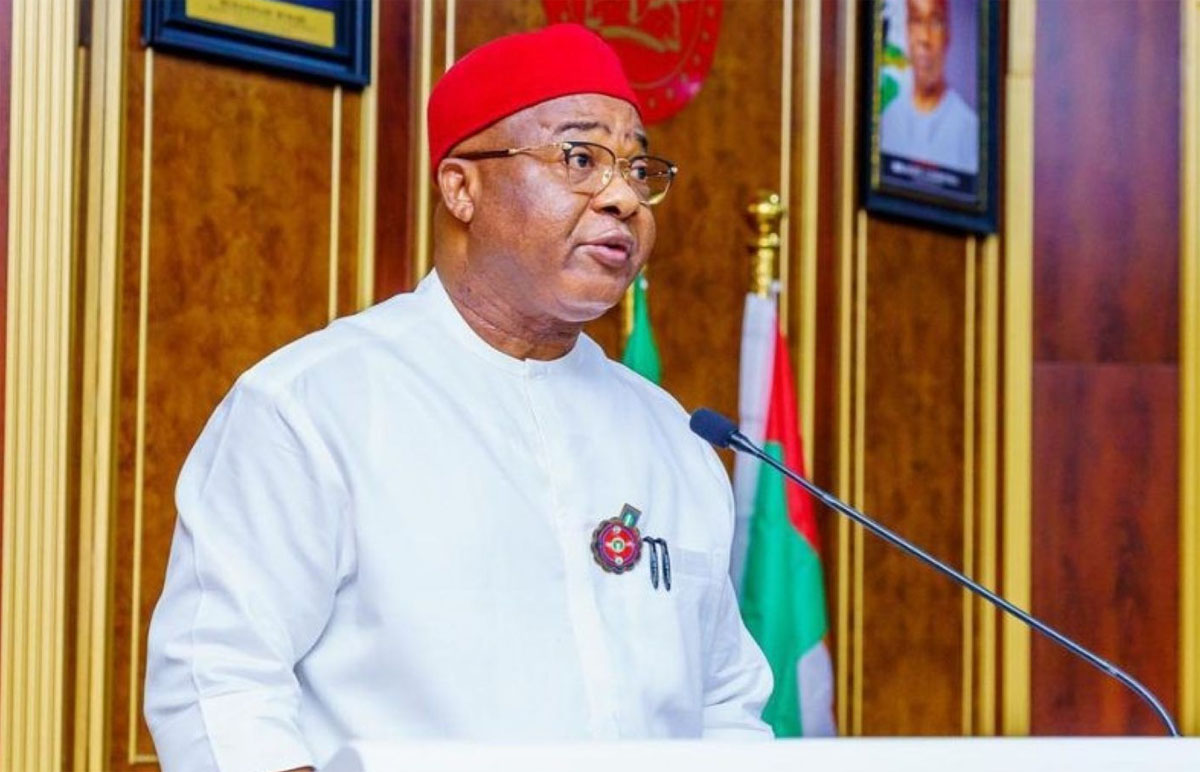
The position was announced by Imo State Governor and Chairman of the Progressive Governors Forum (PGF), Hope Uzodimma, amid growing political tension over competing strategies for the 2027 elections.
Uzodimma said the governors were committed to strengthening the APC and protecting the interests of its candidates at all levels.
He said the forum had unanimously resolved that its members would not support arrangements capable of creating “confusion, divided loyalty or competing interests” within the party.
The declaration places the APC governors on a different political footing from Wike, whose Rainbow Coalition brings together politicians across party lines while seeking to mobilise support for Tinubu’s re-election.
Wike, a former Rivers State governor and serving FCT minister, has consistently maintained that his cross-party political activities are aimed at securing victory for Tinubu in 2027. He has also argued that supporting the President does not prevent him or members of the coalition from backing candidates from other political parties in governorship, National Assembly and other elections.
That position has become a major source of concern within sections of the APC, which fear that a political arrangement could produce a situation in which politicians support Tinubu for president but campaign against APC candidates in other contests.
The governors’ latest declaration therefore draws a clear line between supporting Tinubu’s presidential bid and supporting a broader political structure that could operate independently of the APC.
READ ALSO:
- Sanwo-Olu Joins Dangote as Historic N2.15tn Refinery IPO Opens on Nigerian Exchange
- Shehu Buba Submits Himself To DSS Over Banditry Allegations
- No Lives Lost as Responders Contain Dual Fire Outbreaks Across Lagos
Recent reports indicate that some influential APC blocs have become increasingly uncomfortable with Wike’s political activities, particularly where the coalition could affect the party’s candidates in states and constituencies.
The disagreement has also brought Wike into direct confrontation with Uzodimma and Kwara State Governor AbdulRahman AbdulRazaq, who is chairman of the Nigeria Governors’ Forum.
Wike had accused the two governors of working against his political activities ahead of the 2027 elections. The FCT minister has nevertheless continued to insist that his objective is to help Tinubu retain the presidency.
The latest development is significant because the 2027 presidential election will be held alongside other elections, meaning political organisations seeking to influence the presidential contest will also have to contend with governorship and legislative races.
APC stakeholders are particularly concerned about the possibility of split-ticket voting, where voters could support Tinubu for president while choosing candidates from other parties for the Senate, House of Representatives or state-level positions.
The governors’ position suggests that they want the APC’s campaign machinery to operate as a unified structure, with support for Tinubu accompanied by support for the party’s candidates across the ballot.
Vanguard reported that the governors’ warning against “parallel political structures” came as tensions over the Rainbow Coalition intensified. The report said some APC blocs feared that the coalition could split votes and affect the party’s electoral prospects.
Punch also reported that APC governors had distanced themselves from any alliance with individuals or groups outside the party ahead of the 2027 elections, reaffirming their commitment to the APC’s political structure.
Wike’s political strategy has attracted particular attention because he remains a member of the Peoples Democratic Party (PDP) while serving in the Federal Government led by Tinubu and has continued to operate across party lines.
His supporters have presented the Rainbow Coalition as a broad political platform capable of attracting support for Tinubu beyond the APC’s traditional membership base.
The coalition’s critics, however, argue that the strategy could become problematic if members support Tinubu for president while backing non-APC candidates in other contests.
The issue has assumed greater importance as politicians across Nigeria reposition ahead of the 2027 elections, with the APC seeking to consolidate its control of the Federal Government and expand its influence at state and legislative levels.
Wike has also remained active in Rivers State politics, where his influence continues to shape alignments ahead of the next election cycle. His disagreements with political figures in the state and with some APC governors have increasingly become part of the wider debate over the structure of the Tinubu campaign.
The dispute is therefore not simply a disagreement between Wike and individual governors. It reflects a wider struggle over political structures, party loyalty and control of electoral machinery ahead of 2027.
For the APC governors, the priority is to ensure that support for Tinubu is not separated from the interests of APC candidates seeking election to other offices.
For Wike and his allies, the argument is that a broader coalition involving politicians from different parties could strengthen Tinubu’s presidential support base and improve his chances of securing re-election.
The competing approaches could become more pronounced as the 2027 election timetable progresses and political parties finalise candidates, campaign structures and alliances.
The APC governors’ latest resolution could consequently increase pressure on Wike and other supporters of the Rainbow Coalition to clarify how their cross-party activities will operate alongside the interests of APC candidates.
For now, however, the governors have made their position clear: they intend to support Tinubu’s re-election while maintaining loyalty to the APC and its candidates at all levels, rejecting political arrangements they believe could create competing interests within the ruling party.
APC Governors Reject Wike’s Rainbow Coalition, Insist on Party Loyalty
Politics
2027: Northern Lecturers Back Tinubu, ASUU Disowns Endorsement
2027: Northern Lecturers Back Tinubu, ASUU Disowns Endorsement
More than 600 senior academics from public universities across Northern Nigeria have endorsed President Bola Ahmed Tinubu for a second term in the 2027 presidential election, triggering an immediate reaction from the Academic Staff Union of Universities, ASUU.
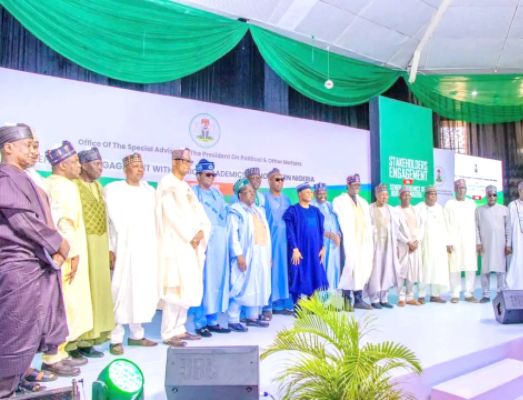
The lecturers announced their support at a stakeholders’ engagement convened by the Special Adviser to the President on Political Matters, Ibrahim Masari, in Kaduna State.
The meeting, held behind closed doors at the Umaru Musa Yar’Adua Centre, brought together senior academics and political leaders to assess the performance of the Tinubu administration and discuss the political road to 2027.
The gathering was attended by several prominent political figures, including Kaduna State Governor, Uba Sani; Zamfara State Governor, Dauda Lawal; Yobe State Governor, Mai Mala Buni; Borno State Governor, Babagana Zulum; and Gombe State Governor, Inuwa Yahaya.
Also present were the Minister of Defence, Bello Matawalle; Minister of Housing, Muttaqha Rabe Darma; and former Katsina State Governor, Aminu Bello Masari.
Although journalists were initially barred from the meeting, they were later allowed to witness the presentation of the communiqué issued at the end of the deliberations.
Lecturers declare support for Tinubu
Reading the communiqué, the Vice Chancellor of Kaduna State University, Prof Abdullahi Ibrahim Musa, said the academics had critically examined the performance of the Tinubu administration since its assumption of office in May 2023.
They assessed the economy, security, education, infrastructure and social conditions, with particular attention to the challenges confronting Northern Nigeria.
According to the academics, Tinubu inherited an economy suffering from fiscal, monetary and structural challenges, alongside insecurity, infrastructure deficits and gaps in human capital development.
READ ALSO:
- Police Arrest Mother Over Alleged Brutal Abuse of 7-Year-Old Girl in Anambra
- King’s College Concession: 115 Unity Colleges Shut as Education Workers Defy FG
- Petrol Price Hits N1,450/Litre as Middle East Crisis Pushes Oil Above $108
They also acknowledged that some of the Federal Government’s economic reforms had imposed significant hardship on Nigerians through increased living and transportation costs and inflationary pressures.
However, they argued that the reforms had also improved government revenue and public finance.
The academics listed education financing, agriculture, infrastructure, business support, compressed natural gas, investment and the digital economy among areas where they believed the administration had recorded progress.
After their deliberations, the lecturers declared their support for Tinubu’s re-election.
“We resolved to express our support for the re-election of President Bola Ahmed Tinubu, GCFR, in the 2027 presidential election,” they stated.
‘Our support is not a blank cheque’
Despite endorsing the President, the academics warned that their support should not be interpreted as unconditional.
The lecturers urged the Federal Government to listen to Nigerians, respond to legitimate criticism and urgently address the rising cost of food and transportation, unemployment and insecurity.
“Our support should not be interpreted as a blank check,” they said.
They also called for a more comprehensive approach to tackling insecurity, combining military operations with intelligence gathering, effective policing, community engagement and the creation of economic opportunities.
The academics further demanded increased government investment in agriculture, education, healthcare, roads, electricity, irrigation and other critical infrastructure across Northern Nigeria.
ASUU distances itself
But the endorsement quickly ran into opposition from ASUU, which distanced itself from the declaration and reaffirmed its long-standing position as an apolitical union.
ASUU President, Prof Chris Piwuna, said individual members of the union were free to belong to political parties and participate in politics in their personal capacities, but stressed that such activities must not be presented as the position of ASUU.
Piwuna maintained that the union had never endorsed a political party or presidential candidate and would not do so.
He warned members against dragging the union into the controversy, insisting that ASUU remained committed to its apolitical status.
The ASUU president also described it as misleading to automatically associate political activities undertaken by lecturers, vice-chancellors or other academics with the union.
According to him, individual academics can exercise their constitutional rights, but ASUU cannot be presented as having endorsed any candidate.
‘The meeting was for mobilisation’
The controversy has been heightened by the stated objective of the Kaduna meeting.
An invitation letter for the event described it as an interactive session involving senior academics from Northern Nigeria and selected government officials.
The theme was “Consolidating the Renewed Hope Agenda: Three Years of President Bola Ahmed Tinubu’s Achievements and the Road to 2027.”
The letter said the meeting was designed not only to assess the administration’s performance in the economy, security, education, infrastructure and social welfare, but also to secure the endorsement and active support of academics for Tinubu’s re-election bid.
It reportedly stated that the purpose of the gathering was “not open-ended debate but mobilisation.”
Attendance was said to be voluntary, with the organisers encouraging academics who were favourably disposed towards the objective of the gathering to participate.
Reports also indicated that logistics and transportation arrangements were made for participants, although claims about reimbursement and the amount allegedly received by individual participants could not be independently verified.
Northern universities represented
Sources at the meeting said most public universities across the 19 northern states were represented.
Academics from the three northern geopolitical zones were reportedly given opportunities to address the gathering.
Prof Musa spoke on behalf of academics from the North-West, while the Chief Librarian of the Federal University Lafia, Prof Abdulrazaq Baba Abdulrahman, represented the North-Central zone.
A representative of the Federal College of Agriculture, Gwoza, spoke for the North-East.
Professor Mohammed Umar Sanda of the Federal University Dutsinma was also said to have attended.
However, Prof Mainasara Yakubu Kurfi of Bayero University, Kano, whose name was mentioned as one of those present, reportedly denied attending the meeting, saying he was not even aware of the gathering.
Masari urges academics to join politics
Speaking at the event, Masari urged academics to become more involved in determining the country’s political direction rather than remaining on the sidelines and merely criticising government policies.
He argued that the Tinubu administration’s achievements in the education sector should encourage academics to participate actively in the political process.
The engagement is part of wider political consultations as the Tinubu camp intensifies efforts to consolidate support ahead of the 2027 presidential election.
The latest development also comes amid a series of endorsements and political consultations involving groups across the country.
2027 battle gathers momentum
With the 2027 presidential election drawing closer, political activities are increasingly taking centre stage, with the Tinubu camp targeting influential groups and constituencies for support.
The Northern lecturers’ endorsement is therefore likely to generate further political debate, particularly because of the high-profile academic figures reportedly involved and ASUU’s swift rejection of any attempt to associate the union with the declaration.
While the academics say their endorsement followed an assessment of Tinubu’s performance, ASUU’s position makes it clear that the declaration cannot be treated as an endorsement by the union itself.
The development has opened yet another front in the emerging 2027 political battle, with Tinubu’s supporters pushing for continuity and opponents expected to scrutinise both the administration’s record and the growing campaign for his second term.
2027: Northern Lecturers Back Tinubu, ASUU Disowns Endorsement
-
 News2 days ago
SERAP Threatens Legal Action Over ₦126bn INEC Electoral Funds
-

 metro3 days ago
MURIC fires back at Peter Obi: Forget Sallah ceremony, free Nigerian Muslims
-
 International3 days ago
Trump Tells Supporters to ‘Cheat Like Hell’ Ahead of US Election
-

 metro3 days ago
Abia Police Arrest Father, Three Others Over Alleged Attempt to Sell 16-Month-Old Daughter
-
 Politics2 days ago
Five Islamic Clerics Abducted After Tinubu Re-Election Prayer At Yari’s Zamfara Residence
-
 metro3 days ago
FG Targets 2 Million Creative Jobs by 2030
-

 Auto3 days ago
Jetour Takes Award-Winning Dashing, Other SUVs to Abuja
-

 Business3 days ago
Dangote raises petrol price 6.7% to N1,350/litre