
Opinion
Tinubu, Nigeria is sinking and streets are full of tears – Farooq Kperogi
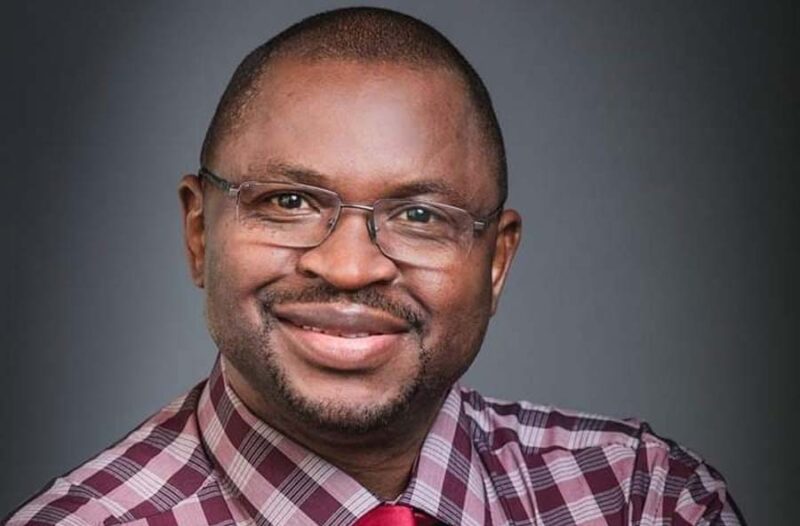
Tinubu, Nigeria is sinking and streets are full of tears – Farooq Kperogi
The searing torment that everyday folks are going through in Nigeria right now is so dire, so unbearably extreme, and so unexampled in its rawness that even diasporan Nigerians like me who live tens of thousands of miles away from home can feel it not just vicariously but also experientially.
The unending streams of requests for help to meet the most basic obligations of life that we get from previously proud, resourceful, and self-sufficient family members, friends, acquaintances, and even strangers are the conduits through which we have experiential encounters with the ongoing cost-of-living turmoil in the country.
The lower classes are sinking deeper into soul-depressing depths of poverty, despair, and hopelessness, and the middle class is so hobbled by the economic crunch that it is disappearing faster than soap bubbles. The lower and the middle classes are now united by a common sensation of emptiness, agony, and anxiety for the future.
Every day is worse, less hopeful, and more precarious than the previous day for most Nigerians. Even hope, which French philosopher François de La Rochefoucauld assured us is the last thing that dies in humans, is desperately going into a death spiral. That’s an ominous signal President Bola Ahmed Tinubu would do well to not take lightly.
Nigeria is famous for its superabundant supply of self-regenerating hope even in the midst of the most nerve-racking existential strain. You know you’re dealing with a potentially explosive social rupture when hope is grasping for breath among people who are famed for feasting on hope.
The current state of affairs isn’t unavoidable. It’s the predictable consequence of the pigheaded pursuit of a ruinous policy of subsidy removal from petrol, the lifeblood of Nigeria. I sounded an early warning about this a month before Tinubu was inaugurated.
READ ALSO:
- Big trouble as wife catches husband sleeping with mum
- Expectant mother of nine in police net for murder over bunch of plantain
- Offa bank robbery: Drama as police arrest suspect’s sister
In my April 29, 2023 column titled “Six Agenda Items for Tinubu’s Success,” I specifically warned Tinubu to resist the neoliberal anti-subsidy seduction of Western financial institutions, which they have successfully brainwashed Nigerian economists and civil society members into not just accepting but also aggressively evangelizing.
I wrote: “I know that there is now an artfully manufactured consent, particularly among the gilded classes in Nigeria, about the undesirability of ‘fuel subsidy.’ I don’t care what it’s called, but any policy (call it deregulation, subsidy removal, appropriate pricing, etc.) that results in an arbitrary and unbearable hike in the price of petrol without a corresponding increase in the salaries of workers and an improvement in the living conditions of everyday people will sink Tinubu.”
I concluded: “I can assure Tinubu that if petrol price hikes deepen people’s misery, he’ll have a tough time governing.”
The dramatic spikes we have seen in abductions for ransom all over the country are attributable to the rising tide of unheard-of deprivation that the removal of petrol subsidies has activated. And that’s just one auxiliary after-effect of the removal of petrol subsidies without a cushion or an alternative.
Other after-effects are the total collapse of the informal sector and what remained of Nigeria’s manufacturing sector. It also instigated the unprecedentedly hyper-inflationary pressures that are being exerted on the economy. Prices of basic goods and services and even of medications for common illnesses are now beyond the reach of people. That’s an unsustainable magnitude of agony.
But it was always obvious to anyone with even a halfway functioning brain that removing petrol subsidies in a weak, oil-producing economy that is organically petrol dependent, that has no well-developed public transportation system, that has weak infrastructures, and that is the poverty capital of the world would trigger infernal anguish on the vast majority of the people and tank the economy to the ground.
These are not birth pangs. They are not the pains before the gains. There is no light at the end of the tunnel. The tunnel is condemned to unrelieved darkness. The blight Nigerians are contending with now is the certain and inevitable result of a conscienceless implementation of disconnected and irrelevant economic policies inspired from outside Nigeria.
I came of age during General Ibrahim Babangida’s regime. IBB started the so-called structural adjustment programs (removal of subsidies, devaluation of the naira, mass retrenchment, etc.), which inaugurated Nigeria’s descent into the abyss. I heard the exact same things the current government is spouting during IBB’s time: that it would get worse before it got better, that after the birth pangs a big bouncing baby would be born, that there was delayed gratification awaiting us if only we could be a little more patient.
None of the promises materialized. Instead, suffering was elevated to crushing heights. Advanced fee fraud (also called 419) blossomed. Corruption was fertilized. Brain drain to the West got wings. This period also unleashed the naira’s irrecoverable slide into the deep hole of worthlessness.
Decades after, the same SAP about which hundreds of books and articles have been written and whose irreversible damage we continually lament, has been artfully repackaged, disguised, deodorized, and huckstered by a well-oiled gang of soulless apes who deployed all manner of clever rhetorical trickery to coax Nigerians into consenting to their own self-incineration.
The idea that petrol subsidies had to go because they were riddled with corruption and that they consumed a disproportionate share of our national budget is a mere propagandistic cop-out. If petrol subsidy administration is rid of corruption (that is perpetrated in cahoots with the government, which explains why no “subsidy thief” has ever been apprehended much less brought to justice), it would consume no greater share of our national budget than any governmental obligation.
READ ALSO:
- BREAKING: Nigeria qualify for AFCON semi-final, beat Angola 1-0
- I sold my two cars to save dying wife from cancer – Actor Lekan Olatunji
- Police hunt for mother of newborn baby abandoned in Lagos
It certainly won’t be anywhere near the colossal venality that is perpetuated at the Federal Ministry of Humanitarian Affairs, Disaster Management and Social Development under the guise of giving money to the poor.
The truth is that we have no original, independent thinkers among people who make or influence economic policies in Nigeria. They are all hopelessly mindless parrots of ill-comprehended economic prescriptions of the Bretton Woods institutions. They do not have the cognitive and intellectual sophistication to transcend what I call derivative or regurgitative knowledge.
There is not a single example of a country in the world that has developed on the basis of the prescriptions of the World Bank and the IMF. On the contrary, the only countries that have achieved inclusive growth and development outside the West are precisely the countries that have bucked the World Bank and the IMF. And every country that uncritically adopts the recommendations of these institutions has been wracked by utter devastation.
Unfortunately, if either Atiku Abubakar or Peter Obi were president today, Nigeria would experience exactly what it is going through now. Like Tinubu, Atiku and Obi said they would remove petrol subsidies “on day one.” When you remove petrol subsidies “on day one” in a desperately poor, inordinately petrol-supported economy with no public transportation, you get what Nigerians are going through now. It’s not rocket science.
Similarly, both Atiku and Obi said they would float the naira and let its fate be determined by the vagaries of demand and supply. When you do that in an import-dependent economy, you can’t escape what the naira is going through now.
Atiku tweeted in March 2021—and in several policy documents—that “Nigeria must move towards a single exchange rate to be determined by market forces.”
On April 9, 2022, Obi also tweeted: “The truth is that for long market forces have not determined the exchange rate of the Naira…. It has to end. Let the exchange rate be determined by the forces of demand and supply. It’s that simple.”
In other words, Tinubu is doing exactly what Atiku and Obi had proposed they would do, and the results would have been the same. The hyperinflation and hurt Nigerians are going through now won’t have been evaded because it is Atiku or Obi who removed petrol subsidies “from day one.” The naira’s glide to the bottom wouldn’t have been avoided because Atiku or Obi “floated” the naira.
That is why Atiku- or Obi-supporting critics of Tinubu come across as ignorant partisans who have drunk the Kool-Aid of their cult leaders. Atiku and Obi supporters should be grateful that their idols are not president today. They would have been bearing the reputational brunt of the boneheaded, discredited rightwing economic policies they also advocated, which have thrown Nigeria into the current mess.
Interestingly, in response to Obi’s 2022 tweet rhapsodizing over the imperative of subjecting the naira to the “forces of demand and supply,” a supporter of his by the name of Abel (with the handle @governance9ja) wrote a riposte, which has turned out to be prescient. He wrote: “So @PeterObi will float the currency for a country where most factor inputs into local manufacturing is imported? We already have cost push inflation reducing real income of many Nigerians. Floating naira will ruin many households. @PeterObi and @OfficialABAT are two of a kind.”
Obi supporters who have wet dreams of a Nirvana if Obi were president should wake up. His economic policies are exactly like Tinubu’s. Personalities aren’t the issue; policies are.
Tinubu and his team need to face the reality confronting them and change course. I know that Nigeria has been so polluted by neoliberal propaganda that even news that the government was paying subsidies through the backdoor to stop petrol prices from getting to N1,000 per liter was seized upon by the opposition to poohpooh the government, which compelled the government to deny paying any subsidies.
I’ve never seen this level of self-crushing inanity in my life. Assistance to the needy (which is what subsidy literally means) is now a dirty word that everyone avoids like the plague.
But the government should know that even hope is dying in Nigeria. When a usually hopeful nation spawns armies of hopeless and angry people through thoughtless economic policies dictated by outsiders, it sows and nurtures the seeds of its self-destruction.
Tinubu, Nigeria is sinking and streets are full of tears – Farooq Kperogi
Farooq Kperogi is a renowned Nigerian newspaper columnist and United States-based Professor of Journalism.









Opinion
El Rufai’s Arise News mind game with Ribadu, By Farooq Kperogi

El Rufai’s Arise News mind game with Ribadu, By Farooq Kperogi
El Rufai’s Arise News mind game with Ribadu, By Farooq Kperogi
Opinion
Oshiomhole: Behold the 13th disciple of Christ
Oshiomhole: Behold the 13th disciple of Christ
Opinion
AFCON 2025: Flipping Content Creation From Coverage to Strategy

AFCON 2025: Flipping Content Creation From Coverage to Strategy
By Toluwalope Shodunke
The beautiful and enchanting butterfly called the Africa Cup of Nations (AFCON) emerged from its chrysalis in Khartoum, Sudan, under the presidency of Abdelaziz Abdallah Salem, an Egyptian, with three countries—Egypt, Sudan, and Ethiopia—participating, and Egypt emerging as the eventual winner.
The reason for this limited participation is not far-fetched. At the time, only nine African countries were independent. The remaining 45 countries that now make up CAF’s 54 member nations were either pushing Queen Elizabeth’s dogsled made unique with the Union Jack, making supplications at the Eiffel Tower, or knocking at the doors of the Palácio de Belém, the Quirinal Palace, and the Royal Palace of Brussels—seeking the mercies of their colonial masters who, without regard for cultures, sub-cultures, or primordial affinities, divided Africa among the colonial gods.
From then until now, CAF has had seven presidents, including Patrice Motsepe, who was elected as the seventh president in 2021. With more countries gaining independence and under various CAF leaderships, AFCON has undergone several reforms—transforming from a “backyard event” involving only three nations into competitions featuring 8, 16, and now 24 teams. It has evolved into a global spectacle consumed by millions worldwide.
Looking back, I can trace my personal connection to AFCON to table soccer, which I played alone on concrete in our balcony at Olafimihan Street—between Mushin and Ilasamaja—adjacent to Alafia Oluwa Primary School, close to Alfa Nda and Akanro Street, all in Lagos State.
Zygmunt Bauman, the Polish-British sociologist who developed the concept of “liquid modernity,” argues that the world is in constant flux rather than static, among other themes in his revelatory works.
For the benefit of Millennials (Generation Y) and Generation Z—who are accustomed to high-tech pads, iPhones, AI technologies, and chat boxes—table soccer is a replica of football played with bottle corks (often from carbonated drinks or beer) as players, cassette hubs as the ball, and “Bic” biro covers for engagement. The game can be played by two people, each controlling eleven players.
I, however, enjoyed playing alone in a secluded area, running my own commentary like the great Ernest Okonkwo, Yinka Craig, and Fabio Lanipekun, who are all late. At the time, I knew next to nothing about the Africa Cup of Nations. Yet, I named my cork players after Nigerian legends such as Segun Odegbami, Godwin Odiye, Aloysius Atuegbu, Tunji Banjo, Muda Lawal, Felix Owolabi, and Adokiye Amiesimaka, among others, as I must have taken to heart their names from commentary and utterances of my uncles resulting from sporadic and wild celebrations of Nigeria winning the Cup of Nations on home soil for the first time.
While my connection to AFCON remained somewhat ephemeral until Libya 1982, my AFCON anecdotes became deeply rooted in Abidjan 1984, where Cameroon defeated Nigeria 3–1. The name Théophile Abéga was etched into my youthful memory.
Even as I write this, I remember the silence that enveloped our compound after the final whistle.
It felt similar to how Ukrainians experienced the Battle of Mariupol against Russia—where resolute resistance eventually succumbed to overwhelming force.
The Indomitable Lions were better and superior in every aspect. The lion not only caged the Eagles, they cooked pepper soup with the Green Eagles.
In Maroc ’88, I again tasted defeat with the Green Eagles (now Super Eagles), coached by the German Manfred Höner. Players like Henry Nwosu, Stephen Keshi, Sunday Eboigbe, Bright Omolara, Rashidi Yekini, Austin Eguavoen, Peter Rufai, Folorunsho Okenla, Ademola Adeshina, Yisa Sofoluwe, and others featured prominently. A beautiful goal by Henry Nwosu—then a diminutive ACB Lagos player—was controversially disallowed.
This sparked outrage among Nigerians, many of whom believed the referee acted under the influence of Issa Hayatou, the Cameroonian who served as CAF president from 1988 to 2017.
This stroll down memory lane illustrates that controversy and allegations of biased officiating have long been part of AFCON’s history.
The 2025 Africa Cup of Nations in Morocco, held from December 21, 2025, to January 18, 2026, will be discussed for a long time by football historians, raconteurs, and aficionados—for both positive and negative reasons.
These include Morocco’s world-class facilities, the ravenous hunger of ball boys and players (superstars included) for the towels of opposing goalkeepers—popularly dubbed TowelGate—allegations of biased officiating, strained relations among Arab African nations (Egypt, Algeria, Tunisia, and Morocco), CAF President Patrice Motsepe’s curt “keep quiet” response to veteran journalist Osasu Obayiuwana regarding the proposed four-year AFCON cycle post-2028, and the “Oga Patapata” incident, where Senegalese players walked off the pitch after a legitimate goal was chalked off and a penalty awarded against them by DR Congo referee Jean-Jacques Ndala.
While these narratives dominated global discourse, another critical issue—less prominent but equally important—emerged within Nigeria’s media and content-creation landscape.
Following Nigeria’s qualification from the group stage, the Super Eagles were scheduled to face Mozambique in the Round of 16. Between January 1 and January 3, Coach Eric Chelle instituted closed-door training sessions, denying journalists and content creators access, with media interaction limited to pre-match press conferences.
According to Chelle, the knockout stage demanded “maximum concentration,” and privacy was necessary to protect players from distractions.
This decision sparked mixed reactions on social media.
Twitter user @QualityQuadry wrote:
“What Eric Chelle is doing to journalists is bad.
Journalists were subjected to a media parley under cold weather in an open field for the first time in Super Eagles history.
Journalists were beaten by rain because Chelle doesn’t want journalists around the camp.
Locking down training sessions for three days is unprofessional.
I wish him well against Mozambique.”
Another user, @PoojaMedia, stated:
“Again, Eric Chelle has closed the Super Eagles’ training today.
That means journalists in Morocco won’t have access to the team for three straight days ahead of the Round of 16.
This is serious and sad for journalists who spent millions to get content around the team.
We move.”
Conversely, @sportsdokitor wrote:
“I’m not Eric Chelle’s biggest supporter, but on this issue, I support him 110%.
There’s a time to speak and a time to train.
Let the boys focus on why they’re in Morocco—they’re not here for your content creation.”
From these three tweets, one can see accessibility being clothed in beautiful garments. Two of the tweets suggest that there is only one way to get to the zenith of Mount Kilimanjaro, when indeed there are many routes—if we think within the box, not outside the box as we’ve not exhausted the content inside the box.
In the past, when the economy was buoyant, media organisations sponsored reporters to cover the World Cup, Olympics, Commonwealth Games, and other international competitions.
Today, with financial pressures mounting, many journalists and content creators seek collaborations and sponsorships from corporations and tech startups to cover sporting events, who in turn get awareness, brand visibility, and other intangibles.
As Gary Vaynerchuk famously said, “Every company is a media company.” Yet most creators covering AFCON 2025 followed the same playbook.
At AFCON 2025, most Nigerian journalists and content creators pitched similar offerings: on-the-ground coverage, press conferences, team updates, behind-the-scenes footage, analysis, cuisine, fan interactions, and Moroccan cultural experiences.
If they were not interviewing Victor Osimhen, they were showcasing the stand-up comedy talents of Samuel Chukwueze and other forms of entertainment.
What was missing was differentiation. No clear Unique Selling Proposition (USP). The result was generic, repetitive content with little strategic distinction. Everyone appeared to be deploying the same “Jab, Jab, Jab, Hook” formula—throwing multiple jabs of access-driven content in the hope that one hook would land.
The lesson is simple: when everyone is jabbing the same way, the hook becomes predictable and loses its power.
As J. P. Clark wrote in the poem “The Casualties”, “We are all casualties,” casualties of sameness—content without differentiation. The audience consumes shallow content, sponsors lose return on investment, and creators return home bearing the “weight of paper” from disappointed benefactors.
On November 23, 1963, a shining light was dimmed in America when President John F. Kennedy was assassinated.
As with AFCON today, media organisations sent their best hands to cover the funeral, as the who’s who of the planet—and if possible, the stratosphere—would attend. Unconfirmed reports suggested that over 220 VVIPs were expected.
While every newspaper, radio, and television station covered the spectacle and grandeur of the event, one man, Jimmy Breslin, swam against the tide. He chose instead to interview Clifton Pollard, the foreman of gravediggers at Arlington National Cemetery—the man who dug John F. Kennedy’s grave.
This act of upended thinking differentiated Jimmy Breslin from the odds and sods, and he went on to win the Pulitzer Prize in 1986.
Until journalists and content creators stop following the motley and begin swimming against the tide, access will continue to be treated as king—when in reality, differentiation, aided by strategy, is king.
When every journalist and content creator is using Gary Vaynerchuk’s “Jab, Jab, Jab, Hook” template while covering major sporting events, thinkers among them must learn to replace one jab with a counterpunch—and a bit of head movement—to stay ahead of the herd.
Toluwalope Shodunke can be reached via tolushodunke@yahoo.com

-
 Education8 hours ago
Check Your Name: UNILORIN Releases Updated NELFUND Refund List for 2024/2025 Students
-

 News3 days ago
Aso Rock Goes Solar as Tinubu Orders National Grid Disconnection
-

 metro3 days ago
Lagos Police Launch Manhunt for Suspect in Brutal Ajah Murder
-

 Sports3 days ago
Lookman Shines as Atlético Madrid Hammer Barcelona 4-0
-

 metro1 day ago
Boko Haram Terrorists Release Video of 176 Abducted Kwara Residents
-
 metro2 days ago
Court Orders DIA to Produce Cleric Accused of Coup Plot by February 18
-

 metro1 day ago
Woman Arrested Over Murder of Nigerian E-Hailing Driver in South Africa
-

 News3 days ago
MPAC Hails Supreme Court Verdict Affirming Muslim Students’ Right to Worship at RSU