

News
Tinubu urges editors to uphold truth, fairness in strengthening democracy

Tinubu urges editors to uphold truth, fairness in strengthening democracy
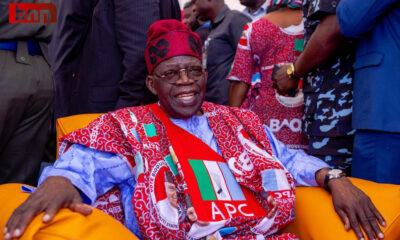
President Bola Ahmed Tinubu has urged Nigerian editors to uphold the highest standards of truth, fairness, and professionalism in their reportage, emphasizing the media’s critical role in strengthening democratic governance and promoting national cohesion.
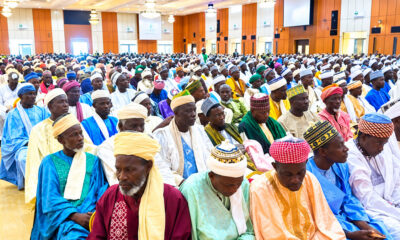
Speaking at the Nigerian Guild of Editors (NGE) Annual Conference held at the State House, Abuja, on Wednesday, President Tinubu commended the leadership of the guild for sustaining a long tradition of professional dialogue and reflection on the nation’s democratic journey.
The conference, themed “Democratic Governance and National Cohesion: The Role of Editors,” brought together senior journalists, media executives, and government officials to discuss the evolving responsibilities of the Nigerian press.
Tinubu described journalism as “more than a profession”, calling it an instrument of national awakening that has played a defining role in Nigeria’s struggle for freedom, justice, and good governance.
“From the early newspapers that challenged colonial injustice to the voices that kept hope alive during the dark days of military dictatorship, the Nigerian press has stood at critical points in our nationhood to defend reason, dignity, and progress,” the President said.
“Many journalists endured intimidation and hardship in defence of the public good. Their sacrifices form part of the foundation upon which our democracy rests today.”
READ ALSO:
- Wike’s aide blasts Buratai over comment on Minister’s clash with Naval officer
- Oyedele dismisses claims linking market sell-off to Trump’s remarks on Nigeria
- Trump urges Israeli President to pardon Netanyahu over corruption trial
The President, however, cautioned that freedom of expression must be exercised responsibly, noting that democracy thrives not only on elections and laws but also on the integrity of public discourse.
“As editors and managers of the national information space, you shape narratives and influence public understanding. The weight of that responsibility is significant. It must be exercised with wisdom, fairness, and a strong sense of national duty,” he stated.
Tinubu acknowledged that healthy debate and criticism are essential to democracy but warned against cynicism that could undermine national unity.
“Criticism, when informed and constructive, is a service to the nation. But cynicism that breeds mistrust and despair can weaken the very foundations of our society,” he said.
Addressing the challenges of misinformation in the digital age, Tinubu urged editors to remain steadfast in verification and balance, describing these as the anchors of credible journalism.
“Social media has made every citizen a potential publisher. While this democratizes information, it also accelerates the spread of falsehood. Verification must be your anchor, balance your principle, and professional judgement your guide,” he said.
Reaffirming his administration’s commitment to stability and reform, the President noted that ongoing economic adjustments are necessary to strengthen Nigeria’s foundations for sustainable growth.
“The reforms we have undertaken have been challenging, but they are designed to place our economy on a strong footing. We are focused on ensuring that growth translates into real improvements in the daily lives of Nigerians,” Tinubu added.
He concluded by calling on editors to continue to “report boldly but truthfully,” urging them to see their work as a collective mission to build a better and more unified nation.
Tinubu urges editors to uphold truth, fairness in strengthening democracy





News
Adunni Ade Reveals Christian Fans Unfollowed Her After Publicly Identifying as Muslim
Adunni Ade Reveals Christian Fans Unfollowed Her After Publicly Identifying as Muslim
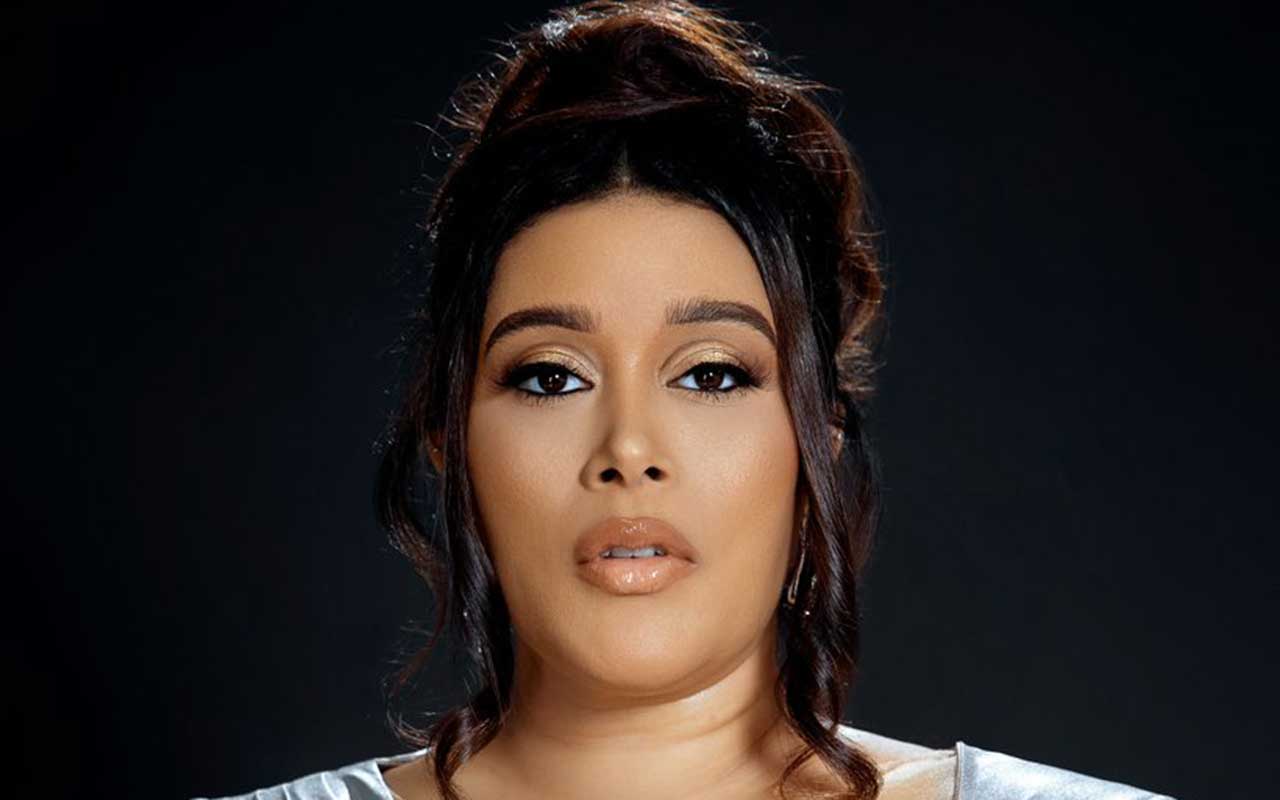
Nollywood actress Adunni Ade has opened up about the reaction she received after publicly identifying as a Muslim, revealing that some of her Christian fans unfollowed her because of her religious identity.
The actress said she initially found it difficult to openly discuss her faith because of what she described as the pressures associated with being a public figure in the Nollywood industry.
According to Ade, publicly identifying as a Muslim within the Nigerian film industry can be difficult, and she described the situation as “almost forbidden” based on her personal experience.
She explained that she eventually became tired of keeping her religious identity private and decided to be open about her faith.
Ade said the decision came with consequences, including losing some followers and receiving messages from people who questioned her choice.
“Some people unfollowed me. I got DMs from people trying to cast out spirits. Some people prayed for me,” she said while discussing her experience.
However, the actress added that she also received considerable support from Muslims, many of whom welcomed her more warmly after she publicly acknowledged her faith.
READ ALSO:
- Raphinha Runs Riot as Barcelona Thrash Racing Santander 7-2
- 2027: Sowore Rejects Utomi’s Coalition Talks, Says AAC Won’t Join Opposition Alliance
- Sani Abacha’s Son Emerges Kano PDP Governorship Candidate for 2027
Ade stressed that her decision to practise Islam should not be interpreted as an attack on Christianity or Christians.
She said she had experienced both Christian and Muslim religious environments and was not suggesting that Christianity was a bad religion. Rather, she explained that Islam was the faith that worked for her personally.
The actress’ comments have renewed attention on her long-standing and publicly discussed religious journey, which has included experiences with both Christianity and Islam.
Ade had previously spoken about her faith in 2020, explaining that she was born and raised Muslim but grew up in a family where different religious traditions were represented.
She said her father allowed his children to choose their preferred religion, while members of her extended family included both Christians and Muslims.
The actress also disclosed that she attended different Christian churches, including Mountain of Fire and Miracles Ministries (MFM), Redeemed Christian Church of God (RCCG), Christ Living Apostolic Ministry (CLAM) and Christ Apostolic Church (CAC).
Ade said she later returned to Islam on December 31, 2016, after reflecting on her religious identity and concerns about how people might react to her decision.
She said at the time that returning to Islam made her feel happier and more fulfilled.
Her religious identity also came under renewed public discussion in 2026 after she was seen attending an event at a Celestial Church of Christ in Lagos.
Following questions from social media users about whether she had returned to Christianity, Ade clarified that she remained a practising Muslim.
She explained that her presence at the church-related event was connected to her professional relationship with the celebrant and was not evidence of a change in her religion.
Ade’s latest comments therefore provide further context to a faith journey she has discussed publicly over several years.
While describing her experience as difficult at times, she maintained that her decision to openly identify as a Muslim was ultimately a personal one.
Her statement that being openly Muslim in Nollywood is “almost forbidden” reflects her personal experience and perception; it should not be taken as evidence of a formal industry-wide rule restricting actors from publicly identifying with a particular religion.
The actress’ disclosure has also highlighted the wider challenges public figures can face when personal beliefs become subjects of public discussion, particularly in an industry where celebrities often maintain diverse fan bases with different religious and cultural backgrounds.
Adunni Ade Reveals Christian Fans Unfollowed Her After Publicly Identifying as Muslim
News
FG Targets 95% NIN Coverage by December 2026
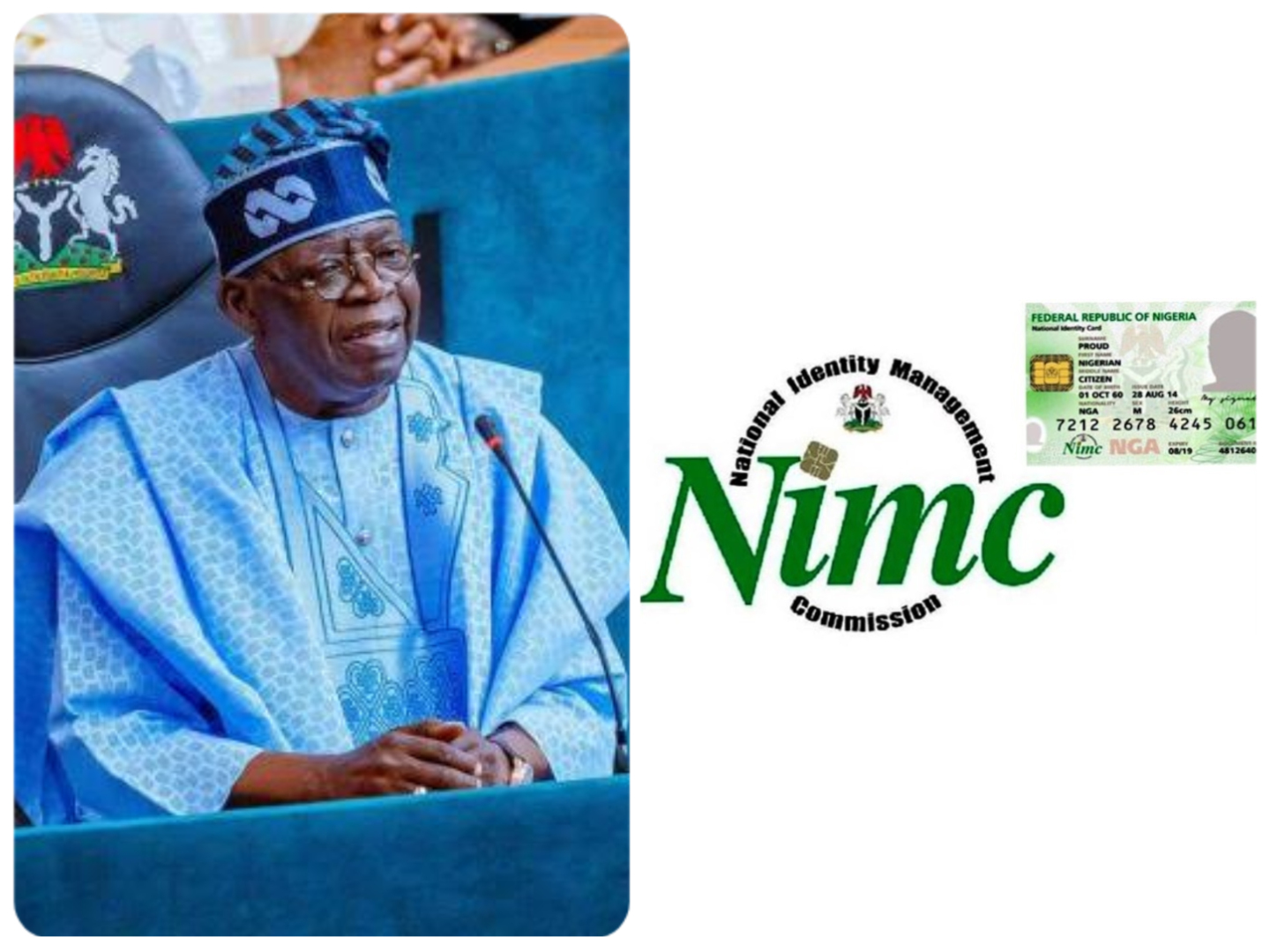
FG Targets 95% NIN Coverage by December 2026
The Federal Government is targeting 95 per cent National Identification Number (NIN) coverage nationwide by December 2026 as it expands Nigeria’s digital identity system.
President Bola Tinubu announced the target during the 2026 National Identity Day celebration in Abuja, where he was represented by Chief of Staff Femi Gbajabiamila.
The President said NIN enrolment had risen to about 142 million, up from more than 80 million recorded when his administration came into office.
To reach the new target, the government plans to expand registration through ward-level enrolment, mobile registration initiatives and licensed agents. Reports from the event said free enrolment is being extended to all 8,809 wards across the country.
Identity System for Digital Economy
Tinubu said the government wants to build an identity infrastructure that can support Nigeria’s growing digital economy.
He said a secure national identity could make it easier to access services while supporting areas such as digital banking, healthcare, transportation and government programmes.
The President also said the expansion must go hand in hand with safeguards for citizens’ privacy and dignity.
Beyond enrolment numbers, he said the government was working towards a more connected digital public system, including electronic health records, e-transport services and a more coordinated national data architecture.
The NIMC’s ongoing expansion therefore aims not only to register more Nigerians and legal residents, but also to make the identity system a key part of how people access digital and public services.
FG Targets 95% NIN Coverage by December 2026
Education
25 Universities, Teaching Hospitals Get Solar Power Under REA Programme

25 Universities, Teaching Hospitals Get Solar Power Under REA Programme
Twenty-five federal tertiary institutions have been connected to solar electricity under the Rural Electrification Agency’s (REA) Energizing Education Programme.
The REA Managing Director, Abba Aliyu, disclosed this during the commissioning of a 3MW captive solar hybrid power project at Yakubu Gowon University, Abuja.
According to Aliyu, the programme covers 22 federal universities and three affiliated teaching hospitals and has deployed more than 100MW of clean energy.
He said the initiative now benefits over 300,000 students and 50,000 academic and administrative staff.
Aliyu added that the new 3MW facility would power key university facilities, including lecture halls, laboratories, ICT systems, administrative buildings and campus lighting.
Meanwhile, Minister of Power Joseph O. Tegbe said reliable electricity was essential to supporting teaching, research, healthcare and digital services in universities.
He stressed that the long-term performance of the solar projects would be more important than their commissioning.
Vice-Chancellor of Yakubu Gowon University, Prof. Hakeem Babatunde Fawehinmi, also said dependable electricity was critical to the institution’s academic and research activities.
25 Universities, Teaching Hospitals Get Solar Power Under REA Programme
-

 Politics3 days ago
2027: Northern Lecturers Back Tinubu, ASUU Disowns Endorsement
-

 metro3 days ago
Police Arrest Mother Over Alleged Brutal Abuse of 7-Year-Old Girl in Anambra
-

 Sports2 days ago
‘I Was Never the Chosen One’ — Dembele Responds to Mbappe
-

 International1 day ago
Islamic Council Condemns Attempted Attack on Holy City of Mecca
-

 metro2 days ago
Lagos Power Outage: Ikeja Electric Blames TCN as Businesses, Homes Groan
-

 Education2 days ago
JAMB Moves 2027 UTME Time — Here’s What Candidates Need To Know
-
 News1 day ago
Keep Politics Out of My Office — Ogbomoso Grand Chief Imam Warns Politicians, Bloggers
-

 Politics2 days ago
2027: APC Governors Reject Wike’s Rainbow Coalition, Insist on Party Loyalty