
metro
Tinubu’s ex-adviser writes him to step aside in 2027

Tinubu’s ex-adviser writes him to step aside in 2027
A former Special Adviser on Political Matters in the Office of the Vice President, Hakeem Baba Ahmed, has written President Bola Tinubu to ask him to “step aside (in 2027) not for your opponents but for a generation of Nigerians who can carry the nation forward with fresh energy and ideas”.
The letter: Your Excellency, Mr. President, I had hoped I would have the opportunity to meet you one-on-one for the first time since you approved my appointment as Special Adviser on Political Matters in the Office of the Vice President about 18 months ago. It would have afforded me an excellent opportunity to offer what might have been the only significant advice I could give you directly in return for the salary you paid me. I had also hoped that an audience with you would provide the chance to explain why I insist on resigning, despite efforts to dissuade me by the Vice President, some Ministers, key officials in your administration, and a host of people I hold in the highest esteem. Well, all that is now history.
Still, please allow me to thank you for approving my appointment and for the privilege of serving my country once again as a public officer. To be honest, for someone at 70 who did not campaign for you, is not a member of your party, and who had gained some reputation for sustained criticism of your APC predecessor’s eight years of deeply damaging governance, your approval that I should come on board gave the impression of a willingness to tolerate inclusiveness and diversity, as well as some regard for merit. I am particularly grateful to the Vice President, who went to great lengths to convince me that staying in place was a better option than resigning.
I must be honest in saying I had many misgivings about accepting the invitation in the first place. Your “Emi Lokan” mantra suggested to me a worrying desire to lead, driven mainly by the urge to satisfy personal ambition. I felt that after the Buhari misadventure—for which the country continues to pay a steep price—the last thing we needed was another leader driven purely by a personal quest for power. Many well-meaning people advised me that I would not fit into your administration for various reasons, the most common being that you might end up as Buhari 2.0—or worse—and I would shift from being a vocal critic to an active or silent collaborator.
READ ALSO:
- Oluwo replies Olubadan over Osun/Oyo boundary claim
- Barrister raised me but didn’t learn Fuji music from him – Wasiu Ayinde
- Police bust human trafficking ring in Oyo, 84 victims rescued
It was tempting to sit it out and wait—either to critique you if you failed to provide the leadership the nation needs or commend you if you succeeded in turning the country around. In the end, I thought it better to help put out the fire than curse those who lit it. I joined your administration as an Adviser with my eyes wide open, at the cost of valuable relationships and under intense hostility from social media ‘politicians’ who assume every political appointee is in it for personal gain (read: lots of money, most of it stolen).
Vision
My long career in the federal public service taught me that the Office of the Presidency has a long-standing tradition of treating the Vice President’s office at best as a constitutional liability, and at worst, as a suspicious appendage constantly scheming to take the number one position. When you pushed the nation into the deep end with your inaugural announcement on subsidy removal, a few of us with experience in policy design and public administration knew the country would need the best hands to manage massive change and transition.
You inherited a badly damaged economy and a severely stressed population. Without a clear and sustained vision, and failing to translate the May 29 momentum into consistent leadership, your administration was bound to face turbulence. The idea of another four or eight years of poor governance after Buhari’s era was too alarming to contemplate. You needed some basic elements to succeed.
First, you needed a clear vision of your goals and the challenges you had to overcome. Unfortunately, it seemed you were too busy chasing political dominance, relying on your old Lagos circle to supplement a vision that was lacking. Your Renewed Hope Agenda is not a vision—it is a set of campaign promises, not a structured governance strategy worthy of your experience, however dated. You needed to appoint men and women who shared a compelling vision—not merely loyal party members and political jobbers. Your initial appointments reflected more politics than quality. Though there was some improvement later, the effort was tepid. As things stand, more than half your cabinet has no business managing an administration tasked with improving security, livelihoods, or public trust.
You needed to embody and uphold personal integrity, good health, and strong commitment to the demands of your office—hard work, fairness, and humility. Yet your closed-door style of leadership, your apparent indifference to complaints of ethnic bias in appointments, and the perception that you frequently run the country from abroad while attending to personal matters, have created the image of an isolated leader heading an insular administration.
READ ALSO:
- Lagos taskforce arrests 52 suspects in Island clean-up operation
- JAMB candidates die in Oyo road crash
- Missing student found safe after disappearing en route to JAMB exam
Your inner and secondary circles do not reflect the discipline or inspiration necessary to transform Nigeria. Pandering to political interests at the expense of good governance has deprived you of the tools to make a greater impact. You needed to act as a democrat in a federal system—something even the best global leaders struggle with. It appears your experience in governing Lagos, playing the kingmaker, and resisting premature power grabs did not prepare you for the complex demands of national leadership—balancing self-interest with the challenges of inclusive governance and statesmanship.
Between you and Buhari
You needed to create a balance between the past you wanted to reform and the future you hoped to shape. Instead, you’ve created a situation where citizens debate whether life under you is worse than under Buhari, or better only in economic jargon that doesn’t reflect their suffering. You needed to build a team driven by urgency, purpose, and a deep understanding of the scale of your mission—not one content with the routine and mediocrity inherited from the past. That team never materialised.
You needed a strong engagement strategy—one capable of building national consensus or at least neutralising hostility. Instead, you’ve appointed a crowd of spokespersons who often confuse rather than clarify your policies. You’ve ignored legitimate dissent, choosing instead to engineer a pliant legislature, thereby robbing the nation of robust democratic discourse. Your record on security and institutional reform is unimpressive.
These are harsh truths, Mr. President—but few will tell you even their diluted versions. Now your administration is being pushed toward prioritising the 2027 elections over governance. But improving governance, revisiting priorities, refining policies, instilling fiscal discipline, addressing grievances, combating insecurity and corruption, and fostering national unity should be your focus.
Two years is a long time—you can still achieve much. But if you shift attention now to electoral ambitions, you risk losing both governance momentum and public goodwill. If you win again without reforming your style and strategy, you may spend four more years preserving failure. If you lose, your legacy could be wiped out in an instant.
You hold what your opposition lacks: the power to reduce the harshness of life for the average Nigerian. Use it well. Watch 2027, yes—but don’t become consumed by it. The North is drifting from your leadership under the weight of economic hardship, insecurity, and alienation. The East remains politically disengaged, while the South-South is fragmented. The South West has been lukewarm, and its privileged position may become a burden. The North East is deeply wounded and can no longer be taken for granted.
Step aside
Mr. President, I urge you to reflect deeply on the legacy you want to leave and how history will remember you. Insisting on running for a second term could be a grave mistake. Your name is already etched in Nigeria’s history. Use the time until 2027 to shape your legacy—not just extend your tenure.
Step aside—not for your opponents, but for a new generation of Nigerians who can carry the nation forward with fresh energy and ideas. Our generation has done its time. It would be a masterstroke if you and your party yielded the field to new voices and new leadership. That way, you could catalyse a peaceful, historic transformation and inspire a new political culture rooted in merit, unity, and progress.
Mr. President, these and a few more thoughts are what I would have offered you in person. You do not have the reputation of being overly conservative. I hope you still possess the fire to challenge the status quo. Perhaps, this is the role destiny has prepared for you.
I offer this advice with sincerity and hope—believing that one leader can change the course of a nation. That leader could be you. Many who’ve worked with you say you mean well for Nigeria. That’s why I ask, respectfully and firmly: Mr. President, please do not run again in 2027.
Tinubu’s ex-adviser writes him to step aside in 2027








metro
Zulum Defends NAF Airstrike, Says Jilli Market Closed Five Years Ago
Zulum Defends NAF Airstrike, Says Jilli Market Closed Five Years Ago
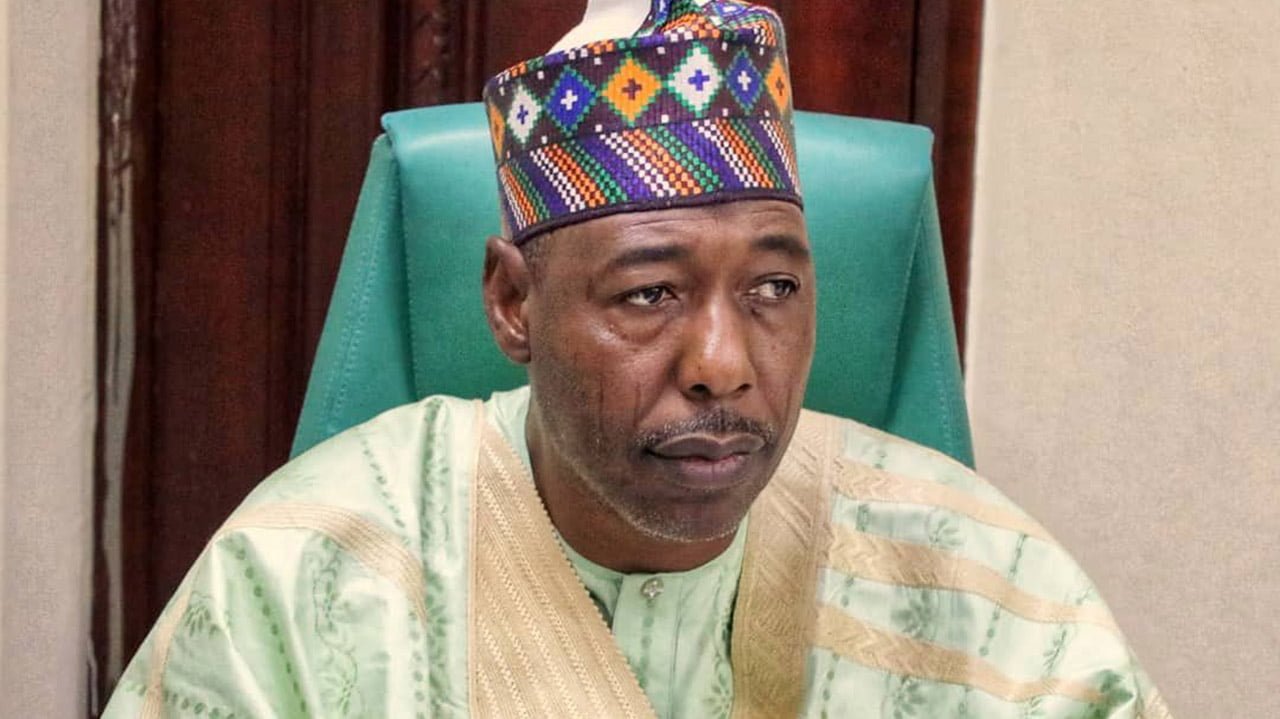
Borno State Governor Babagana Zulum has defended the Nigerian military over a controversial airstrike in Jilli, insisting that the location widely described as a “market” had been shut down for years due to insurgency.
In a statement issued on Sunday by his Special Adviser on Media, Dauda Iliya, the governor said the Jilli market in Gubio Local Government Area—located along the Borno–Yobe border—was officially closed about five years ago as part of security measures to curb terrorist activities.
Zulum described Jilli as a notorious hub allegedly used by insurgents and their logistics networks, stressing that it no longer functioned as a legitimate civilian marketplace.
“I have been properly briefed on the airstrike carried out by the Air Component of Operation Hadin Kai on Jilli market… Let me state categorically that the Borno State Government closed Jilli and Gazabure markets five years ago,” the governor said.
He added that his administration is in active consultation with the Yobe State Government and military authorities to fully assess the situation and ensure proper coordination going forward.
The airstrike, carried out on April 11, 2026, by the Air Component of Operation HADIN KAI in collaboration with the Nigerian Army, reportedly targeted suspected terrorist positions in the area following intelligence reports and earlier operations in the corridor.
READ ALSO:
- Dabiri-Erewa Warns Obidients Could Hurt Peter Obi’s 2027 Ambition
- BREAKING: Troops Arrest 15-Year-Old Linked to Killing of Gen Braimah in Borno
- Fayose Warns Makinde May Query Olubadan Over Absence at Ibadan Coronation Event
However, initial reports indicated that over 50 people were feared killed, sparking concern over possible civilian casualties and raising questions about the nature of the target.
Eyewitness accounts suggested that the strike hit a location believed by locals to be a weekly trading point, triggering panic among residents as explosions rocked the area.
In response, Zulum emphasised that the Borno State Government maintains strict protocols before reopening markets or resettling communities affected by insurgency, noting that such decisions are made in close coordination with security agencies.
He reiterated his administration’s commitment to protecting civilians while supporting military operations aimed at dismantling insurgent networks across the North-East.
The governor also urged residents to remain vigilant and cooperate with security forces by providing credible intelligence that could aid ongoing counterinsurgency efforts.
Military authorities have yet to release a detailed official report confirming casualty figures or clarifying the full circumstances of the strike.
Security analysts say the incident highlights the complex challenges of counterinsurgency warfare, where distinguishing between civilian activity and insurgent logistics hubs remains difficult, particularly in volatile border communities.
Despite the controversy, the Nigerian military has continued intensified operations across key areas in Borno and neighbouring states, targeting supply routes and strongholds used by extremist groups.
Zulum Defends NAF Airstrike, Says Jilli Market Closed Five Years Ago
metro
BREAKING: Troops Arrest 15-Year-Old Linked to Killing of Gen Braimah in Borno
BREAKING: Troops Arrest 15-Year-Old Linked to Killing of Gen Braimah in Borno
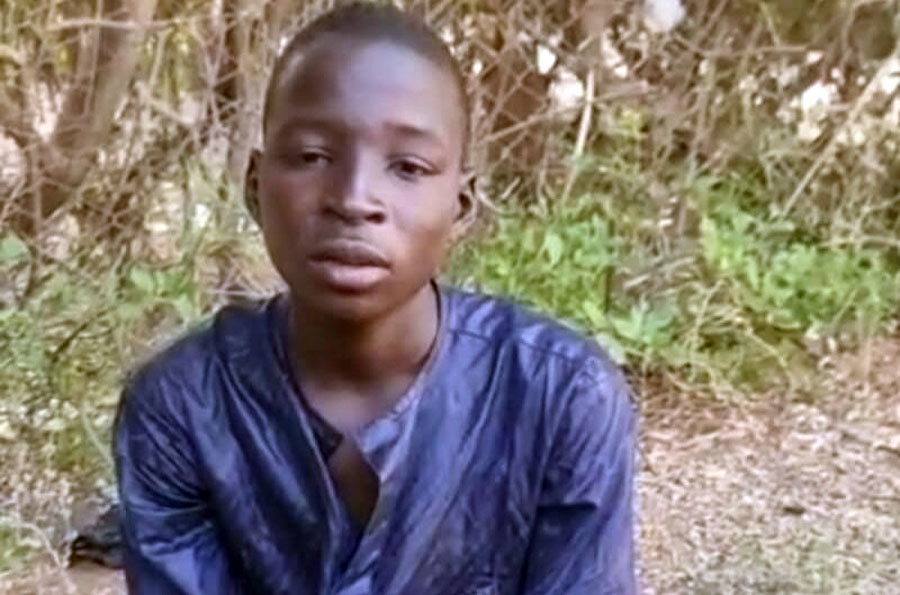
Troops of the Joint Task Force (North East), Operation HADIN KAI (OPHK), have arrested a 15-year-old suspect allegedly involved in the deadly attack that killed Brigadier General Oseni Omoh Braimah, another officer, and two soldiers in Borno State.
The suspect, identified simply as Tijjani, was apprehended on Sunday in Ngamdu while reportedly on an errand to procure food supplies for members of his group.
In a video recorded after his arrest, the teenager confessed to being part of the armed group responsible for coordinated attacks in Benisheik and Ngamdu, areas that have witnessed renewed insurgent activity in recent months.
According to the suspect, the group operated from Jilli, a location described by military sources as a known logistics and movement hub for insurgents in the region. He said they moved from Jilli to carry out the attack and later returned to the same location.
Tijjani further disclosed that he had been sent with about ₦850,000 to collect logistics supplies from Ngamdu before his arrest. He added that he left his colleagues behind at Jilli and was unaware of subsequent developments following the operation.
READ ALSO:
- Fayose Warns Makinde May Query Olubadan Over Absence at Ibadan Coronation Event
- Manchester City Beat Chelsea 3–0 to Close Gap on Arsenal
- Police Arrest Suspect Over Fake Job Interview Robbery in Magodo
The late General Braimah, who commanded the 29 Task Force Brigade under Operation HADIN KAI, was killed on Thursday when suspected Boko Haram fighters launched an assault on a military base in the area. The attack also claimed the lives of another officer and two soldiers, underscoring the persistent threat posed by insurgent groups in the North-East.
Military sources indicate that the arrest of the teenage suspect is part of ongoing intelligence-led operations aimed at dismantling terrorist networks and cutting off their supply chains across Borno State.
Security analysts say the involvement of minors in insurgent activities highlights a disturbing pattern of recruitment by extremist groups, who often deploy young individuals for logistics, surveillance, and operational roles.
The Nigerian military has intensified surveillance and clearance operations across key corridors such as Jilli, Ngamdu, and Benisheik, following recent attacks, with the aim of preventing further assaults and restoring stability in the region.
Authorities have yet to issue a comprehensive official statement on the arrest, but security operations are expected to continue as efforts to track down other members of the group intensify.
The development comes amid renewed commitment by Operation HADIN KAI to sustain pressure on insurgents and disrupt their activities across the North-East.
BREAKING: Troops Arrest 15-Year-Old Linked to Killing of Gen Braimah in Borno
metro
Fayose Warns Makinde May Query Olubadan Over Absence at Ibadan Coronation Event
Fayose Warns Makinde May Query Olubadan Over Absence at Ibadan Coronation Event
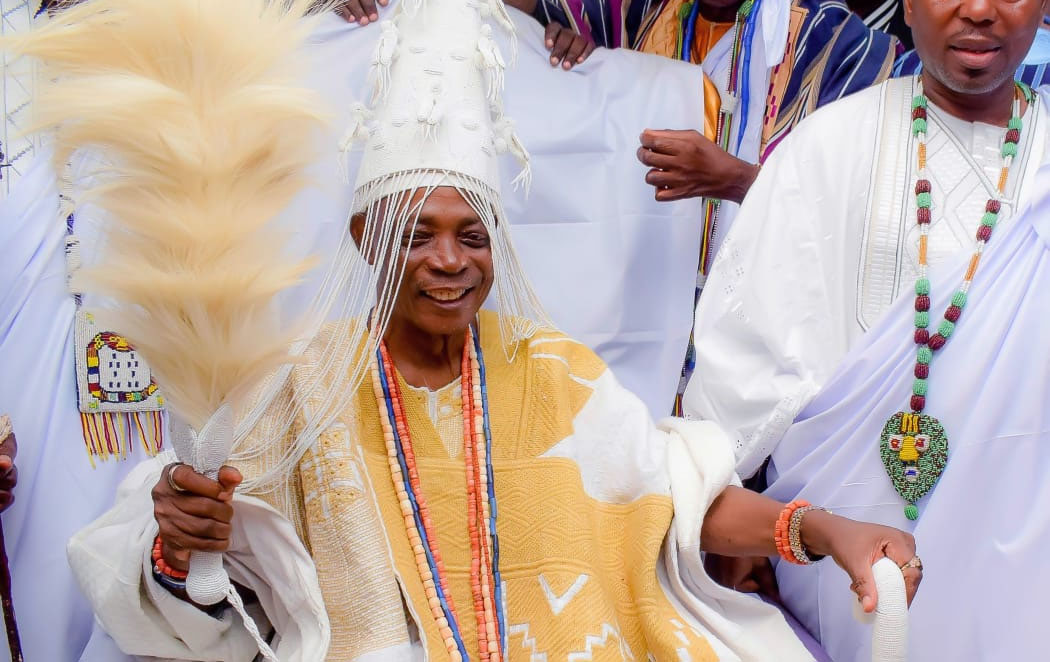
Former Ekiti State Governor Ayodele Fayose has suggested that Oyo State Governor Seyi Makinde may issue an official query to the Olubadan of Ibadan, Oba Rashidi Ladoja, following his absence at a recent high chiefs’ coronation ceremony in Ibadan.
The event, held at Mapo Hall, saw Governor Makinde present beaded crowns to three newly elevated traditional rulers as part of ongoing chieftaincy reforms in Ibadanland. However, the absence of the Olubadan from the April 3 ceremony has sparked public debate and political reactions.
Fayose, speaking on the development, claimed that the monarch’s absence—reportedly due to a prior engagement in Lagos—alongside other alleged concerns, could prompt a formal government query in the coming days. He did not provide official documentation but insisted the situation could escalate into a government–palace dispute if not carefully managed.
The Olubadan’s palace has already clarified that his absence was not due to any disagreement with the state government, dismissing speculation of a rift between the traditional institution and Governor Makinde’s administration.
READ ALSO:
- Manchester City Beat Chelsea 3–0 to Close Gap on Arsenal
- Police Arrest Suspect Over Fake Job Interview Robbery in Magodo
- BREAKING: ADC Names Atiku, Peter Obi, Others for Tuesday Convention Planning
Some critics of the ceremony have also described the event as a “failed coronation,” alleging that the exercise may have cost over ₦1.5 billion, though no official financial breakdown has been released to confirm the claim.
At the time of filing this report, neither the Oyo State Government nor the Olubadan-in-Council had issued an official response to Fayose’s latest comments or the circulating allegations.
The development comes against the backdrop of long-standing sensitivities in Ibadan chieftaincy politics, where traditional authority structures have often intersected with state governance and public debate.
Observers note that Fayose’s intervention adds a new political dimension to an already delicate issue, especially given his history of public disagreements with Governor Makinde during his tenure in Ekiti politics.
For now, the situation remains fluid, with stakeholders calling for restraint and clarification to prevent further escalation between the state government and the traditional institution.
Fayose Warns Makinde May Query Olubadan Over Absence at Ibadan Coronation Event

-
 metro2 days ago
JUST IN: FG Publishes List of 48 Individuals, Groups Linked to Terrorism Financing in Nigeria
-

 metro2 days ago
42-Year-Old Married Woman Declared Missing Found in Hotel with Man
-
 Politics2 days ago
Did Faleke Just Reveal Lagos’ Next Governor? Party Moves Begin
-

 metro10 hours ago
BREAKING: Troops Arrest 15-Year-Old Linked to Killing of Gen Braimah in Borno
-

 Education3 days ago
Germany Opens Fully Funded Scholarships for Nigerians, Africans
-
 Politics2 days ago
2027: Oyo APC Governorship Aspirant Saheed Oladele Resigns From Party
-
 metro2 days ago
ADC Threatens Civil Disobedience To Force INEC Chairman To Resign
-
 Business3 days ago
Nigeria May Face ₦2,000 Petrol Price Without Intervention, TUC Warns FG