
International
Top 10 Strongest Militaries in the World in 2026 – Full Ranking

Top 10 Strongest Militaries in the World in 2026 – Full Ranking
Assessing global military strength goes far beyond counting troop numbers. Analysts evaluate a combination of personnel strength, defence budgets, advanced weapon systems, nuclear capabilities, logistics, and strategic alliances.
According to the Global Firepower Index 2026, military power is measured using more than 60 indicators, including airpower, naval strength, logistics, geography, financial resources, and combat readiness. The ranking also factors in technological innovation, cyber warfare capacity, and the ability to project force globally.
Through sustained defence spending, nuclear deterrence systems, and advanced weapons development, the world’s leading military powers — led by the United States, Russia, and China — continue to maintain a significant edge.
Their military dominance is reinforced by global bases, strategic alliances, sophisticated naval fleets, powerful air superiority platforms, and rapidly expanding cyber and space capabilities. Beyond hardware, highly trained personnel and coordinated defence partnerships also play a crucial role in sustaining global influence and responding quickly to emerging security threats.
Below are the Top 10 strongest militaries in the world in 2026, based on the Global Firepower Index.
1. United States
The United States maintains the most powerful military in the world, backed by the largest defence budget globally and an unmatched global network of bases. Its military strength is driven by advanced technologies such as stealth aircraft, nuclear submarines, cyber warfare systems, and space-based defence capabilities.
The US operates the largest fleet of aircraft carriers, allowing it to project power across multiple regions simultaneously.
PowerIndex: 0.0744
Active Personnel: 1,328,000
Reserve Personnel: 2,127,000
Defence Budget: $895 billion
Capital: Washington, D.C.
READ ALSO:
- Trump Rejects UK Aircraft Carrier Deployment in US-Iran Middle East War
- NRC seeks state backing for railway police, unveils plan to electrify rail lines
- Strait of Hormuz Crisis Threatens Nigeria’s Food Inflation Progress as Oil Prices Surge
2. Russia
Russia’s military strength is built on its massive nuclear arsenal, extensive armoured divisions, and powerful missile systems. It possesses one of the world’s largest inventories of tanks, artillery, and strategic ballistic missiles, making it a formidable land power.
The country also invests heavily in electronic warfare, air defence systems, and cyber capabilities.
PowerIndex: 0.0788
Active Personnel: 1,320,000
Reserve Personnel: 3,570,000
Defence Budget: $126 billion
Capital: Moscow
3. China
China fields the largest standing army in the world and has rapidly expanded its military technology and naval capacity. The country has invested heavily in aircraft carriers, hypersonic missiles, artificial intelligence warfare systems, and space defence programs.
China’s military modernization reflects its ambition to become a global military power capable of operating far beyond Asia.
PowerIndex: 0.0788
Active Personnel: 2,035,000
Reserve Personnel: 3,045,000
Defence Budget: $266.85 billion
Capital: Beijing
4. India
India operates one of the largest armed forces globally, supported by nuclear weapons capability and a massive reserve force. Its military is undergoing rapid modernization, including investments in indigenous fighter jets, missile systems, and naval assets.
India’s strategic location and expanding defence partnerships enhance its influence across South Asia and the Indo-Pacific region.
PowerIndex: 0.1184
Active Personnel: 1,455,550
Reserve Personnel: 5,137,000
Defence Budget: $75 billion
Capital: New Delhi
5. South Korea
South Korea maintains a highly capable military supported by advanced technology, mandatory military service, and a strong alliance with the United States. Its forces are structured to counter the persistent threat posed by North Korea.
The country has also invested heavily in missile defence systems, fighter jets, and advanced naval vessels.
PowerIndex: 0.1656
Active Personnel: 600,000
Reserve Personnel: 3,800,000
Defence Budget: $50 billion
Capital: Seoul
6. United Kingdom
The United Kingdom maintains a technologically advanced military with nuclear deterrence capabilities. Its naval power includes modern aircraft carriers such as HMS Queen Elizabeth and HMS Prince of Wales, enabling long-range deployment.
The UK also plays a major role in NATO missions and international security operations.
PowerIndex: 0.1785
Active Personnel: 144,400
Reserve Personnel: 215,050
Defence Budget: $71.5 billion
Capital: London
7. France
France fields a highly capable and flexible military, supported by nuclear deterrence and advanced aerospace technology. It operates one of Europe’s most powerful armed forces and frequently participates in international peacekeeping and counterterrorism missions.
France also maintains overseas bases that allow global military reach.
PowerIndex: 0.1878
Active Personnel: 270,000
Reserve Personnel: 474,750
Defence Budget: $63.7 billion
Capital: Paris
8. Japan
Japan’s Self-Defense Forces are among the most technologically advanced in the world. The country prioritises missile defence, maritime security, and advanced surveillance systems to safeguard its territory.
Close security cooperation with the United States further strengthens Japan’s military posture.
PowerIndex: 0.1839
Active Personnel: 247,000
Reserve Personnel: 317,600
Defence Budget: $57 billion
Capital: Tokyo
9. Türkiye
Türkiye possesses a large and battle-experienced military, supported by a rapidly expanding domestic defence industry. The country has become a leader in combat drone technology, armored vehicles, and missile systems.
Its strategic location also allows it to influence security developments in Europe, the Middle East, and Central Asia.
PowerIndex: 0.1902
Active Personnel: 355,200
Reserve Personnel: 890,700
Defence Budget: $20 billion
Capital: Ankara
10. Italy
Italy rounds out the top ten with a modern NATO-standard military capable of operating across land, sea, air, and cyber domains. The country maintains aircraft carriers, advanced fighter jets, and naval forces that support NATO missions and international peacekeeping.
Italy also plays a key role in Mediterranean security operations.
PowerIndex: 0.2164
Active Personnel: 165,500
Reserve Personnel: 359,550
Defence Budget: $30 billion
Capital: Rome
Top 10 Strongest Militaries in the World in 2026 – Full Ranking










International
Explosion Rocks Liège Synagogue in Suspected Antisemitic Attack
Explosion Rocks Liège Synagogue in Suspected Antisemitic Attack
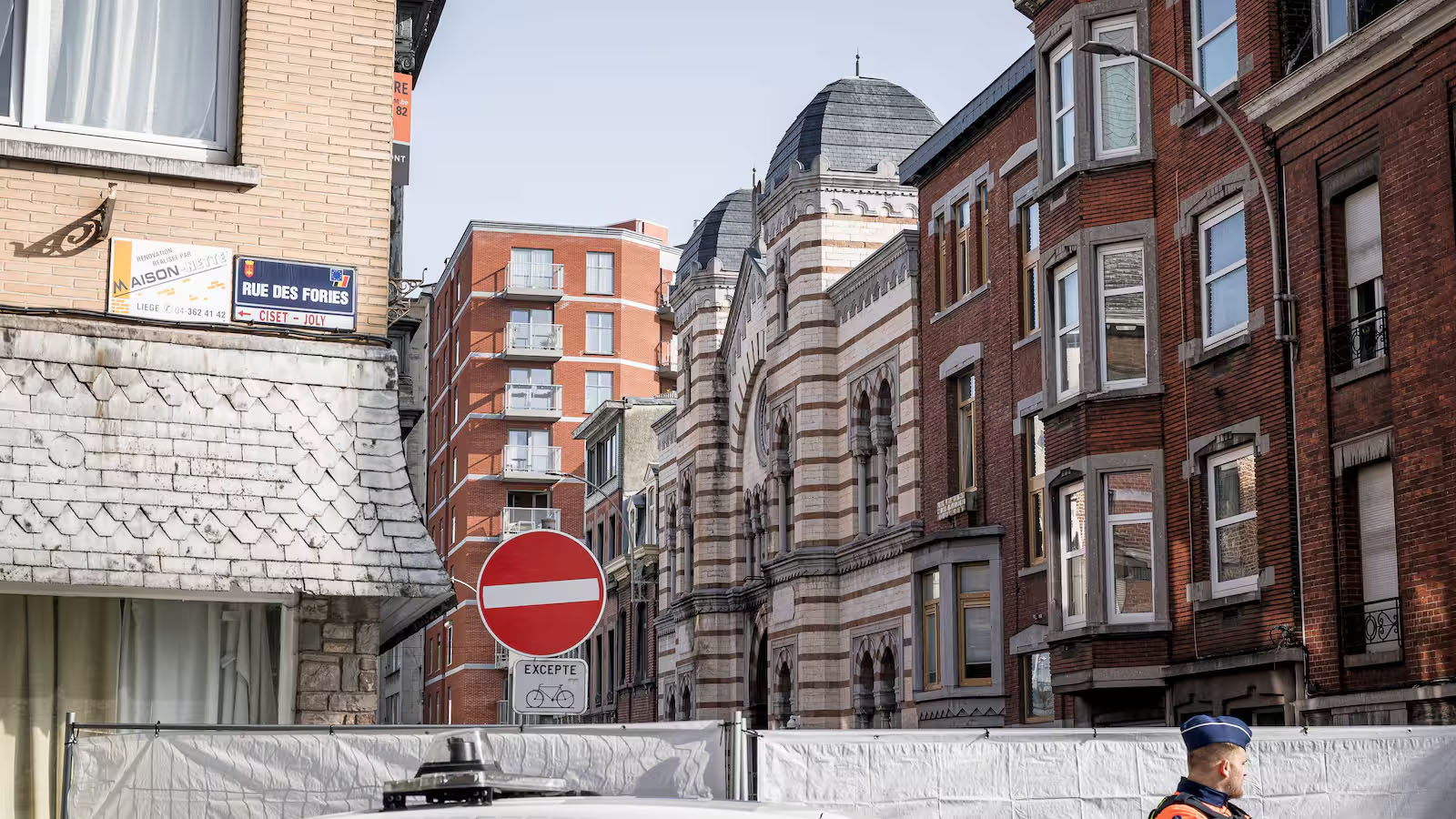
Authorities in Belgium have condemned an early-morning explosion outside a synagogue in Liège, calling it a serious act of antisemitism that underscores growing concerns about security for Jewish communities across Europe.
The blast occurred shortly before 4 a.m. local time outside the Synagogue of the Israeli Community of Liège, a historic site built in 1899. Although no injuries were reported, the explosion shattered windows in the synagogue and nearby buildings, prompting local police to close the street and establish a security perimeter while federal investigators combed the area for evidence.
Liège Mayor Willy Demeyer strongly condemned the incident, describing it as an “extremely violent act of antisemitism” and warning against importing international conflicts, particularly the ongoing tensions involving Israel, United States, and Iran, into the city.
READ ALSO:
- Pastor Says Divine Prayers Helped Nyesom Wike Win Two Terms as Rivers Governor
- Appeal Court Upholds Conviction of Ex-Army General, Orders ₦4bn Refund
- JUST IN: Fire Guts Section of Federal Secretariat in Abuja
Belgian Interior Minister Bernard Quintin echoed the condemnation, calling the blast a “despicable antisemitic act targeting Belgium’s Jewish community.” He confirmed that federal prosecutors and counter-terrorism police are leading the investigation and pledged to strengthen security around Jewish institutions nationwide.
Leaders of the Jewish community also spoke out. Yves Oschinsky, president of the Coordinating Committee of Jewish Organisations in Belgium (CCOJB), described the explosion as “extremely disturbing, serious and worrying”, highlighting the psychological impact on the local Jewish population.
Authorities are still investigating the cause and motive behind the blast, and no group has claimed responsibility. The synagogue remains a significant cultural and religious landmark for Belgium’s Jewish community, making the attack particularly alarming to officials and residents.
The incident comes amid heightened global tensions linked to ongoing Middle East conflicts, prompting European authorities to remain vigilant against potential spillover incidents targeting religious and cultural sites.
Explosion Rocks Liège Synagogue in Suspected Antisemitic Attack
International
Beijing Warns Against Threats to Iran’s New Leader Mojtaba Khamenei
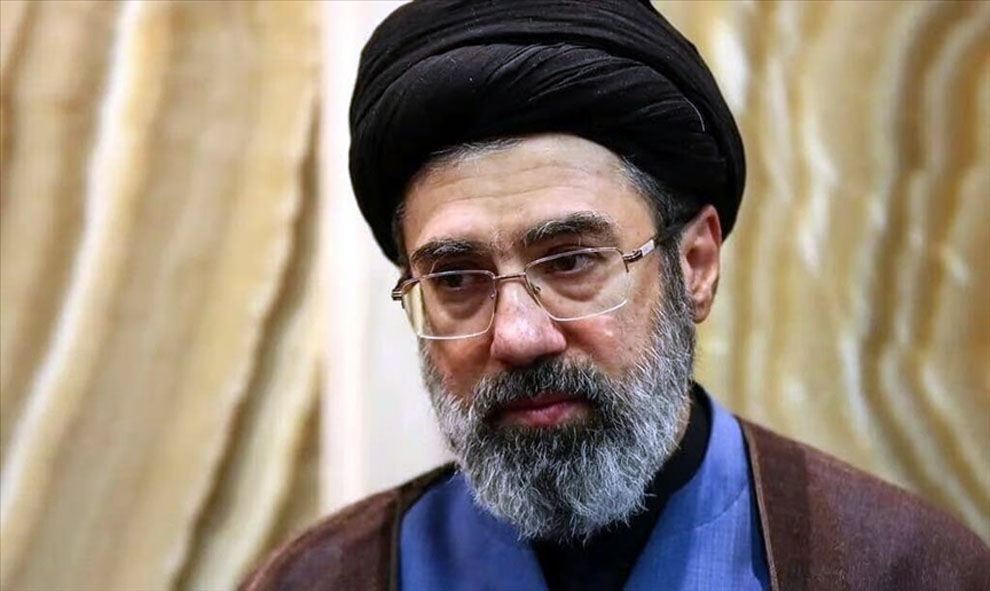
Beijing Warns Against Threats to Iran’s New Leader Mojtaba Khamenei
China has expressed support for the appointment of Mojtaba Khamenei as Iran’s new supreme leader, describing the leadership transition as an internal decision of Iran and warning against threats to the newly appointed leader.
Speaking on Monday, Chinese Foreign Ministry spokesperson Guo Jiakun said Beijing respects Iran’s political process and opposes any form of foreign interference in the country’s domestic affairs.
According to Guo, the decision to appoint Mojtaba Khamenei as the successor to the late Ali Khamenei was carried out in accordance with Iran’s constitution.
“China opposes interference in other countries’ internal affairs under any pretext, and Iran’s sovereignty, security and territorial integrity should be respected,” Guo said while responding to questions about threats reportedly directed at the new leader.
The comments come amid escalating tensions in the Middle East after Israel reportedly vowed to target any successor to the late Iranian leader following his death during a wave of military strikes carried out by Israel and the United States earlier this month.
Iranian state media confirmed that Mojtaba Khamenei, the second son of the late supreme leader, was selected as Iran’s new top authority following a vote by the Assembly of Experts, the influential clerical body responsible for appointing the country’s highest political and religious authority.
READ ALSO:
- Babayaro Salutes Lookman’s Parents for Raising Disciplined Super Eagles Star
- Appeal Court Dismisses Turaki-Led PDP Faction, Bars INEC from Recognising Ibadan Convention
- Osun Youths Storm IBEDC Office Over Prolonged Blackout, Issue 7‑Day Ultimatum
The 56-year-old cleric has long been viewed as an influential figure behind the scenes in Iranian politics. In recent years, he has developed close ties with the powerful Islamic Revolutionary Guard Corps, which plays a central role in Iran’s security and regional military operations.
His appointment came just days after reports emerged that his father, Ali Khamenei, had been killed in coordinated strikes during the opening phase of the intensifying confrontation between Iran, Israel and the United States.
Prior to the official announcement, Assembly of Experts member Hosseinali Eshkevari hinted that the leadership transition had already been concluded. In a video widely circulated by Iranian media, he said the decision had been finalized and would soon be formally announced.
“The name of Khamenei will continue,” he said, adding that the vote to select the new leader had already been cast.
Under Iran’s political system established after the Iranian Revolution, the supreme leader holds the highest authority in the country, exercising ultimate control over the military, judiciary and major national policies while sitting above the president and parliament.
However, Mojtaba Khamenei’s elevation has sparked debate among political analysts and observers, with some critics arguing that the development resembles a hereditary transfer of power similar to the monarchy that ruled Iran before the revolution.
The leadership transition is unfolding at a time of heightened regional conflict. Israel and the United States have continued to strike Iranian targets, while Iran has responded with waves of missile and drone attacks on Israeli territory and Gulf states hosting American forces, raising fears of a broader Middle East war.
Beijing Warns Against Threats to Iran’s New Leader Mojtaba Khamenei
International
Iran Fires Missiles as Mojtaba Khamenei Succeeds Father as Supreme Leader
Iran Fires Missiles as Mojtaba Khamenei Succeeds Father as Supreme Leader
Iran fired a new wave of missiles and drones toward Israel and several Gulf nations early Monday after the Islamic Republic appointed Mojtaba Khamenei as its new Supreme Leader, succeeding his late father Ayatollah Ali Khamenei.
The escalation comes nine days after joint US-Israeli strikes killed Ali Khamenei, plunging the Middle East into a rapidly expanding conflict that has already drawn in multiple regional actors and rattled global markets.
Iranian state television announced the appointment of the 56-year-old cleric following a decision by the 88-member Assembly of Experts, the powerful body responsible for selecting the country’s supreme leader.
Reading the official statement, a presenter said Mojtaba Khamenei “is appointed and introduced as the third leader of the sacred system of the Islamic Republic of Iran, based on the decisive vote of the respected representatives of the Assembly of Experts.”
The clerical body said it “did not hesitate for a minute” in naming a successor despite what it described as “the brutal aggression of criminal America and the evil Zionist regime.”
Shortly after the announcement, Iranian state media broadcast footage of a projectile reportedly launched toward Israel bearing the slogan “At Your Command, Sayyid Mojtaba,” signalling loyalty to the new leader.
The missile barrage targeted Israel and several Gulf states, intensifying fears that the conflict could spiral into a broader regional war. Saudi Arabia said it intercepted drones heading toward an eastern oil field, while the United Arab Emirates and Kuwait reported missile attacks within their territories. Authorities in Bahrain said air raid sirens were activated after an Iranian drone strike wounded 32 people on the island of Sitra, including a 17-year-old girl with severe head and eye injuries and a two-month-old baby.
READ ALSO:
- Oil Prices Will Drop When Destruction of Iran Nuclear Threat Is Over — Trump
- Wike Confirms Appointment of 1,659 FCTA Workers After Years of Delay
- IGP Disu Appoints DCP Anthony Okon Placid as New Nigeria Police Force PRO
Saudi officials also reported that a projectile struck Al-Kharj province, killing two people and injuring 12 others. In Israel, authorities said Iranian missile attacks have killed 10 people, as air defence systems intercepted several incoming projectiles overnight.
In response, Israel launched another wave of air strikes, targeting infrastructure and strategic facilities in central Iran. The Israeli military said the operations were aimed at weakening Iran’s military capabilities and disrupting logistical networks used by the Islamic Revolutionary Guard Corps (IRGC).
Over the weekend, Israeli forces also carried out a strike on a hotel in central Beirut, reportedly targeting five commanders of the IRGC’s Qods Force, the unit responsible for coordinating Iran’s overseas military operations. Lebanon’s health ministry said four people were killed and 10 injured in the Beirut strike.
The conflict has also intensified in Lebanon, where Iran-backed Hezbollah militants said their fighters were engaged in ongoing clashes with Israeli forces. Hezbollah claimed Israeli troops landed in eastern Lebanon using 15 helicopters crossing from Syria, triggering fierce fighting near the town of Nabi Sheet.
Lebanon’s state-run National News Agency reported heavy clashes in the area, while officials said Israeli strikes across the country have killed at least 394 people, including 83 children and 42 women, since the war began. Two Israeli soldiers were also reported killed during operations in Lebanon.
Inside Iran, the health ministry said at least 1,200 civilians have been killed and about 10,000 wounded since the war began, although the figures could not be independently verified. The conflict erupted amid recent nationwide protests in Iran, which security forces had previously crushed with deadly force.
Analysts say the new leader, widely viewed as a hardline cleric closely aligned with the Revolutionary Guard, is expected to maintain his father’s tough stance against dissent and Western influence.
The widening conflict has sent global oil prices soaring, with benchmark crude climbing above $100 per barrel for the first time since Russia’s invasion of Ukraine nearly four years ago. The spike reflects fears that the war could disrupt energy supplies, particularly if fighting spreads to key shipping routes such as the Strait of Hormuz, through which roughly 20 per cent of the world’s oil supply passes daily.
Stock markets across Asia fell sharply on Monday as investors reacted to rising geopolitical risks and higher energy costs. Despite the surge in oil prices, US President Donald Trump dismissed the spike as a “small price to pay” for eliminating what he described as the threat posed by Iran’s nuclear programme.
Trump had earlier dismissed Mojtaba Khamenei as a “lightweight” and suggested that Washington should influence who leads Iran. “If he doesn’t get approval from us, he’s not going to last long,” he said in an interview before the leadership announcement.
Israel’s defence minister had also warned that whoever succeeded Ali Khamenei would become a potential military target, while the Israeli military vowed to pursue Iran’s leadership if necessary.
As the conflict escalates, the US State Department ordered non-emergency staff to leave Saudi Arabia, days after a drone strike hit the US embassy compound in the kingdom. Trump said any decision on how long the war continues would be coordinated with Israeli Prime Minister Benjamin Netanyahu.
“I think it’s mutual… a little bit. We’ve been talking. I’ll make a decision at the right time, but everything’s going to be taken into account,” Trump said.
Meanwhile, Iran’s Islamic Revolutionary Guard Corps pledged full loyalty to the new supreme leader, saying its forces were ready for “complete obedience and self-sacrifice” in carrying out his orders.
Iran’s Foreign Minister Abbas Araghchi said the leadership transition would “guarantee national sovereignty and territorial integrity”, as diplomats declared their allegiance to Mojtaba Khamenei.
With missile exchanges continuing across multiple fronts, analysts warn the crisis could develop into one of the most dangerous Middle East conflicts in decades, with far-reaching consequences for global security and energy markets.
Iran Fires Missiles as Mojtaba Khamenei Succeeds Father as Supreme Leader

-

 metro2 days ago
Daniel Bwala Faces Backlash After Al Jazeera Interview With Mehdi Hasan
-

 Entertainment3 days ago
Davido Loses Close Friend Denisi Amid ₦1bn Legal Dispute
-

 News3 days ago
BREAKING: Tinubu Posts Yakubu, Omokri, Fani-Kayode, 62 Other Ambassadors (Full List)
-
 News1 day ago
Tinubu Approves Salary, Allowance Increase for Nigerian Armed Forces
-
 Business16 hours ago
NNPCL, Marketers Increase Petrol Price Again Within 24 Hours After Dangote Refinery Hike
-

 News3 days ago
US Releases Additional Epstein Files Containing Allegations Against Donald Trump
-

 metro19 hours ago
EFCC Intercepts Wife of Federal High Court Chief Judge With $160,000 Cash
-
 metro3 days ago
Deputy Speaker Kalu Faces 72-Hour Ultimatum Over NYSC, Law School Records