

metro
Troops hoist Nigerian flag in liberated bandits’ enclaves, neutralise 44
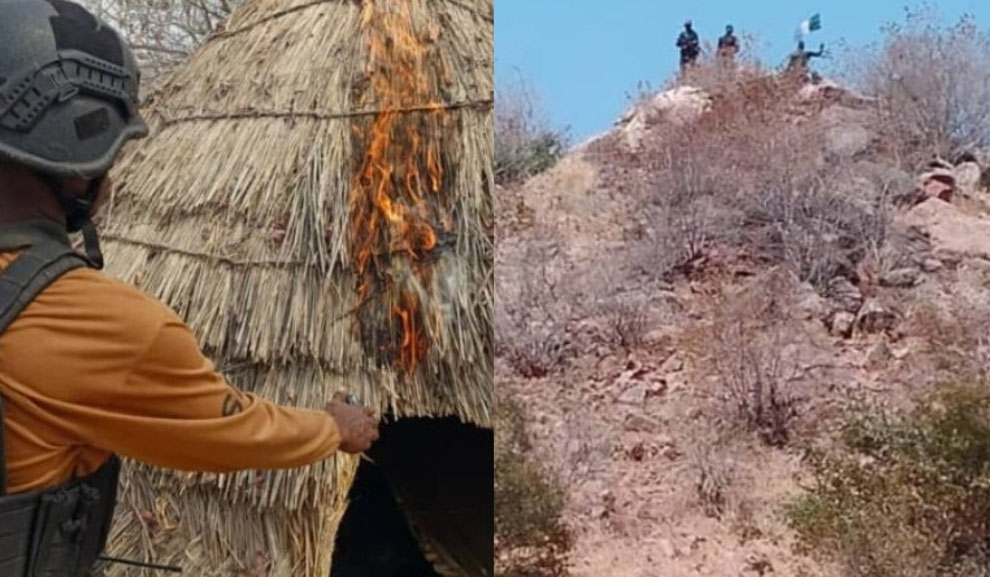
Troops hoist Nigerian flag in liberated bandits’ enclaves, neutralise 44
In a decisive show of strength, Nigerian troops have hoisted the national flag in former bandit strongholds in Zamfara State, marking a significant victory in the ongoing fight against insurgency.
PlatinumPost reports that soldiers from the Nigerian Army’s Operation FANSAN successfully seized control of the notorious Tungan Fulani Hills two days ago. The operation resulted in the death of over 50 terrorists, dealing a severe blow to criminal networks operating in the region.
Among those neutralized were key commanders affiliated with notorious bandit leaders Bello Turji and Sani Mai Nasara, also known as Sani Black.
In a separate major offensive under Operation FANSAN YANMA, part of the TSAFTADAJI III – Phase 2 campaign, Nigerian troops neutralized an additional 44 bandits and wounded more than 25 others in coordinated attacks across multiple locations in Zamfara.
Security analyst and counter-insurgency expert Zagazola Makama reported that the operation, which commenced on February 7, 2025, was a three-pronged assault targeting terrorist hideouts in the Mashema general area—an infamous stronghold for armed bandits and insurgents.
READ ALSO:
- Cristiano Ronaldo statue unveiled in Times Square
- Dozens killed in bus crash in southern Mexico
- Tsunami alerts cancelled after 7.6-magnitude earthquake in Caribbean
The offensive, spearheaded by troops from the 1 Brigade Special Forces with aerial support from the Air Component of Operation FANSAN YANMA (OPFY), began at 0800 hours. Team 1 advanced through several fortified terrorist enclaves, clearing key positions in Kashabawa, Bwarare, and Zaki before reaching Sakarawa Hill.
Upon arrival at Sakarawa Hill, troops faced fierce resistance from insurgents entrenched in defensive positions. Intelligence reports indicated that the terrorists had planted improvised explosive devices (IEDs) along key routes. In response, the troops executed a strategic flanking maneuver to evade the explosives while engaging the enemy.
A combined ground and air assault was launched, with the Air Component of OPFY targeting terrorist positions and inflicting heavy casualties. Despite the successful elimination of numerous insurgents, troops were unable to fully secure the high ground due to extensive landmines at the base of the hill. Aggressor aircraft returned for a second airstrike, neutralizing additional terrorists.
In another phase of the operation, troops advancing toward Badarawa encountered resistance but managed to clear multiple terrorist hideouts along their route.
Among the 44 terrorists killed were key commanders linked to notorious bandit leaders Bello Turji and Sani Black. The high-profile figures eliminated include Sanni Bammuwa, Kachallah Auta (former deputy to Sani Black), Audu Gajere, Kabiru Jangeru, and Dan-Kane, the son of Audu Jabbi.
Troops hoist Nigerian flag in liberated bandits’ enclaves, neutralise 44









metro
Federal Workers Back N500 Petrol Demand, Threaten Three-Day Warning Strike
Federal Workers Back N500 Petrol Demand, Threaten Three-Day Warning Strike
Federal workers have backed the demand by organised labour for a reduction in the pump price of petrol to N500 per litre, warning that they will join a proposed three-day warning strike if the Federal Government fails to address their concerns.
The Federal Workers Forum (FWF) announced its position in a communiqué issued on Tuesday, September 29, 2026, after an online general meeting of federal workers held on Sunday.
The workers said they unanimously supported the call by the Joint National Public Service Negotiating Council (JNPSNC) for the Federal Government to reduce the price of Premium Motor Spirit (PMS), commonly known as petrol, to N500 per litre.
The JNPSNC had given the Federal Government until September 30, 2026, to respond to its demands, which include a reduction in petrol prices, an immediate wage award and a review of salaries and allowances across the public service.
The Federal Workers Forum said its members were prepared to participate in the proposed three-day warning strike if the government failed to act.
The group also called for any reduction in petrol prices to be reflected in the prices of kerosene, diesel and cooking gas, arguing that high energy costs were contributing to the wider cost-of-living crisis.
READ ALSO:
- NNPC Profit Rises to N7.2tn Despite Revenue Decline
- Hamzat Clarifies Lagos Traffic ‘Lifestyle’ Remark After Backlash
- US Judge Blocks Trump From Tying Counterterrorism Grants to Election Rules
The workers said the current price of petrol was placing additional pressure on households through higher transportation, food and other living costs.
They also backed labour’s demand for an immediate Wage Award, which they said should be converted into a reasonable Cost of Living Allowance (COLA) to provide continuing relief to workers.
The forum argued that workers’ incomes had been eroded by rising prices and called for urgent measures to restore their purchasing power.
Beyond the immediate wage relief, organised public-sector workers are seeking the commencement of negotiations for a new National Minimum Wage ahead of January 2027.
The JNPSNC has proposed a minimum monthly salary of N500,000 for an officer on Grade Level 01, Step 1 under the proposed 2027 salary structure.
The council also wants salaries and allowances across federal, state and local government services to be harmonised and periodically reviewed in line with inflation.
The Federal Workers Forum had previously called for an upward review of the current N70,000 minimum wage, saying rising food, fuel, transportation and housing costs had reduced its purchasing power.
The workers also criticised reliance on food palliatives as a response to the economic hardship, arguing that a reduction in petrol prices would have a wider impact because transportation and the cost of moving goods are closely linked to fuel costs.
The forum urged Nigerians to support organised labour’s campaign for lower petrol prices and said federal workers should mobilise for any industrial action approved by labour leadership.
The group further backed proposals for greater use of Nigeria’s domestic refining capacity, including making crude oil available to local refineries in naira and expanding national petroleum storage capacity.
It said such measures could strengthen energy security, create economic value and reduce the country’s exposure to fluctuations in international oil prices.
The latest position by federal workers adds pressure to an already tense labour-government relationship as the September 30 deadline approaches.
However, the workers’ statement does not mean that a nationwide strike has already commenced. Their commitment is to participate in the proposed three-day warning strike if the labour leadership calls the action and the government fails to address the outstanding demands.
The Federal Workers Forum also expressed hope that President Bola Ahmed Tinubu would address the concerns in his forthcoming Independence Day broadcast.
The government’s response to the workers’ demands, particularly on petrol prices, wage relief and negotiations for a new minimum wage, is expected to determine the next steps by organised labour.
Federal Workers Back N500 Petrol Demand, Threaten Three-Day Warning Strike
metro
Hamzat Clarifies Lagos Traffic ‘Lifestyle’ Remark After Backlash

Hamzat Clarifies Lagos Traffic ‘Lifestyle’ Remark After Backlash
Lagos State Deputy Governor Obafemi Hamzat has clarified his controversial description of Lagos traffic as a “lifestyle”, saying the remark was taken out of context and was not intended as an endorsement of persistent gridlock.
Hamzat made the original comment while speaking at Podfest Naija 2026, where he discussed storytelling, the creative industry and how Lagos residents consume digital content during their daily journeys.
Using the experience of commuters on the Third Mainland Bridge as an example, Hamzat said traffic had become part of everyday life in Lagos. He also linked the long hours residents spend commuting to the growing consumption of podcasts, music, films and other digital content.
He specifically referred to journeys between Ojota and Obalende, suggesting that many Lagos residents listen to podcast episodes and consume other creative content while travelling through the city’s heavily congested roads.
The remarks generated criticism on social media, with some people interpreting the “lifestyle” description as an indication that the Lagos State Government considered traffic congestion a normal condition that residents should accept.
READ ALSO:
- US Judge Blocks Trump From Tying Counterterrorism Grants to Election Rules
- School Attack: 13-Year-Old Student Kills Teacher, Injures Two
- Bauchi Woman Arrested After Co-Wife Dies in Alleged Pestle Attack
Hamzat subsequently addressed the controversy, explaining that he was speaking about the relationship between Lagos traffic and the creative industry, rather than discussing the causes of congestion, road design or suggesting that traffic should be regarded as desirable.
He also questioned how his remarks had been connected to separate criticisms of the state’s traffic situation.
Hamzat said he decided to clarify the remarks after seeing how excerpts from his speech were interpreted on social media.
The controversy has nevertheless renewed discussion about the impact of Lagos traffic congestion on commuters, businesses and productivity.
Lagos remains one of Nigeria’s busiest urban centres, with long commuting times forming part of the daily experience for many residents, particularly along major routes during peak periods.
The deputy governor’s remarks also highlighted the opportunities created by the city’s large and diverse audience for podcasters, filmmakers, musicians, writers and other content creators.
His argument was that the time residents spend travelling has contributed to increased consumption of creative content, creating opportunities for the industry to reach audiences during daily commutes.
The Lagos State Government has continued to promote investments in rail transportation, waterways, road construction, junction improvements and intelligent traffic management as part of efforts to improve mobility across the state.
The debate has therefore shifted beyond the wording of Hamzat’s “lifestyle” remark to broader questions about Lagos traffic, urban mobility and the challenges faced by residents who spend significant time commuting.
Hamzat Clarifies Lagos Traffic ‘Lifestyle’ Remark After Backlash
metro
School Attack: 13-Year-Old Student Kills Teacher, Injures Two
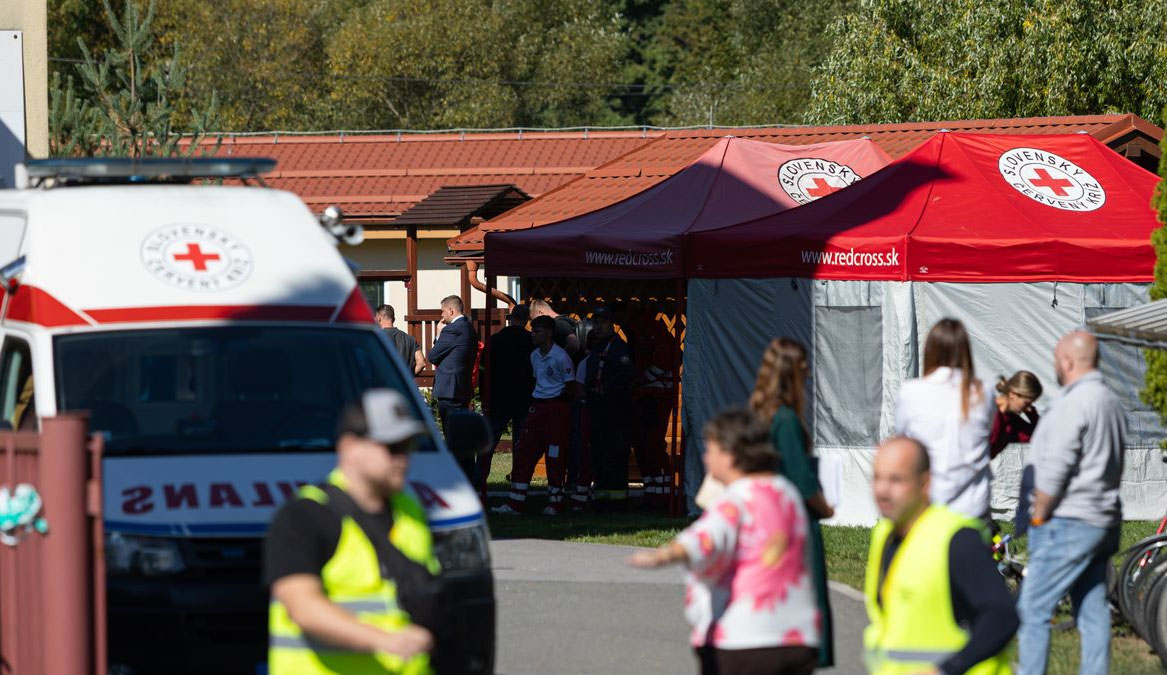
Slovakia School Attack: 13-Year-Old Student Kills Teacher, Injures Two
A 13-year-old student has been detained after a knife attack at an elementary school in Slovakia left a 61-year-old teacher dead and two other people injured.
The attack occurred on Tuesday morning, September 29, 2026, at a school in Staškov, a town in northwestern Slovakia’s Čadca district.
Police said the student attacked teachers and pupils with a sharp object during the school day. The suspect was taken into custody, while authorities said the situation was brought under control and there was no continuing threat to the public.
The teacher who died was identified as a 61-year-old woman. Another female teacher and a pupil were also injured and taken to hospital.
The second teacher suffered a stab wound to the chest and was hospitalised with serious injuries. Officials later said her life was not in danger.
The injured pupil, reported to be a girl, was in critical condition and was transported by helicopter for further treatment.
READ ALSO:
- Bauchi Woman Arrested After Co-Wife Dies in Alleged Pestle Attack
- Breaking: Tinubu Ends Extended European Vacation, Departs Paris for Nigeria
- Troops Rescue 41 Travellers as Bandits Attack Senegal-to-Kano Vehicle in Zamfara
Emergency medical teams, including ambulances and rescue helicopters, were deployed to the school following the attack.
Slovak authorities detained the student and launched an investigation into the incident. Police had not publicly confirmed a motive for the attack at the time of reporting.
Slovakia’s Interior Minister Matúš Šutaj Eštok, Education Minister Tomáš Drucker and Health Minister Kamil Šaško travelled to Staškov following the incident.
Education authorities also offered assistance and professional support to the affected school, while officials appealed for respect for the privacy of the children, their families and school staff.
President Peter Pellegrini and Prime Minister Robert Fico expressed condolences to the victims and their families following the Slovakia school attack.
The incident has renewed attention on school violence in Slovakia, following other serious attacks at schools in recent years.
In January 2025, an 18-year-old student was accused of fatally stabbing a deputy principal and another student at a secondary school in Spišská Stará Ves in eastern Slovakia. A separate school attack in 2020 also left a deputy principal dead and several others injured.
Police continued their investigation into Tuesday’s school stabbing in Staškov, while further details about the circumstances surrounding the attack remained under investigation.
School Attack: 13-Year-Old Student Kills Teacher, Injures Two
-

 International2 days ago
Iran Claims Capture of Second US Underwater Drone in Strait of Hormuz
-

 News2 days ago
Fake Agency Scandal: Gbajabiamila Says He Never Betrayed Tinubu’s Trust
-

 metro2 days ago
Woman Busted With Alleged Alcohol Hidden in Water Pack at Ogun Prison
-

 News2 days ago
Anambra Govt Demands Unreserved Apology From Peter Obi Over Debt Claims
-

 metro11 hours ago
Osogbo Food Bonanza Turns Nightmare as Discount Vendor Vanishes With Customers’ Millions
-

 metro2 days ago
Passenger Dies After Jumping From Moving Bus In Lagos
-

 metro22 hours ago
24 Hours in Darkness: Iju Ishaga Residents, Businesses Count Losses as Ikeja Electric Fails to Restore Power
-

 News1 day ago
Agbede Mourns Baba Alado, Says Mushin Has Lost Pillar of Peace