
International
Trump Warns Iranian Military, Including IRGC, to Surrender or Face “Certain Death”

Trump Warns Iranian Military, Including IRGC, to Surrender or Face “Certain Death”
United States President Donald Trump has issued a stark warning to members of Iran’s military, including the powerful Islamic Revolutionary Guard Corps (IRGC), urging them to surrender while offering “total immunity” to those who lay down their weapons, and threatening “certain death” for those who continue fighting.
Trump made the remarks on March 5, 2026, during an event at the East Room of the White House in Washington, D.C., where he celebrated the 2025 Major League Soccer champions, Inter Miami CF. “I’m once again calling on all members of the Iranian Revolutionary Guard, the military and the police to lay down their arms,” he said. “You will be perfectly safe with total immunity, or you’ll face absolutely guaranteed death.”
The warning comes as the United States and Israel continue airstrikes targeting Iranian military infrastructure, including missile sites, air defense systems, and command centers, in a campaign aimed at weakening Iran’s regional capabilities and nuclear potential.
READ ALSO:
- Trump Rejects Khamenei’s Son, Demands Role in Iran Leadership Selection
- FG Clarifies FEC Decision, Says PhD Not Equivalent to Medical Fellowship in Nigeria
- US Lawmaker Raises Alarm Over ‘Convert or Die’ Threat Against Christians in Nigeria
US Secretary of Defense Pete Hegseth defended the operations during a Pentagon briefing, emphasizing that the campaign is focused on degrading Iran’s military strength. “We are winning decisively,” Hegseth said, rejecting comparisons to prolonged conflicts such as Iraq. He also criticized British Prime Minister Keir Starmer over initial reluctance to allow US use of British bases, including Diego Garcia, for offensive operations.
The conflict, now in its second week, has sparked mixed international reactions. While some US allies express concern over potential civilian casualties and escalation risks, Trump framed the operation as a move to empower the Iranian people, urging them to “take back your country.” Iranian officials, however, have rejected surrender calls and described the strikes as “unjustified aggression,” carrying out retaliatory missile and drone attacks on US-linked and Israeli targets.
Trump’s statement directly challenges the IRGC, a key pillar of Iran’s military and political power. The warning coincides with heightened regional instability following reports that Supreme Leader Ali Khamenei was killed in recent airstrikes, leaving a political vacuum in Tehran and further escalating tensions.
Security analysts warn that continued hostilities could trigger a wider regional conflict, particularly threatening strategic zones such as the Strait of Hormuz, a crucial artery for global oil shipments. Despite the intensity of the campaign, US officials maintain that the primary objective remains degrading Iran’s military capabilities, rather than pursuing outright regime change.
Trump Warns Iranian Military, Including IRGC, to Surrender or Face “Certain Death”





International
Iran Police Authorised to Shoot Looters as US-Israel War Intensifies

Iran Police Authorised to Shoot Looters as US-Israel War Intensifies
Amid the escalating war between Iran, the United States, and Israel, Iran’s police chief, Ahmad Radan, has announced that law enforcement officers are authorised to shoot suspected looters and criminals. Speaking on state television on Friday, Radan said the directive was necessary because the country is in “wartime conditions”, warning that any looters would be “swiftly neutralised.”
Radan also stressed the government’s focus on maintaining order online, warning that authorities would clamp down on disinformation and agitators seeking to destabilise public unity. He said: “We will not allow a group of paid agents to undermine the unity that the people achieved with the blood of thousands of martyrs.”
The announcement comes as the Middle East conflict intensifies following joint U.S. and Israeli airstrikes on Iran, which killed the Islamic Republic’s supreme leader, Ayatollah Ali Khamenei. In retaliation, Iran launched drone and missile attacks against U.S. military bases in Gulf countries and Israeli targets, escalating the crisis.
READ ALSO:
- Oyo Police Free Four Kidnapped Passengers on Igbeti–Kishi Road
- FG Panel Confirms Ex‑Minister Uche Nnaji Forged His UNN Degree Certificate
- Deputy Speaker Kalu Faces 72-Hour Ultimatum Over NYSC, Law School Records
According to Iran’s health ministry, nearly 1,230 people have died in the U.S. and Israeli strikes, which targeted military installations, residential areas, and key infrastructure. Iranian attacks have also resulted in at least 10 deaths in Israel, while the U.S. military reports six personnel fatalities since the outbreak of hostilities. (aljazeera.com)
The police chief’s order highlights the growing internal security challenges Tehran faces as the war disrupts daily life and increases the risk of civil unrest. Analysts warn that authorising lethal force against suspected looters could have serious human rights implications amid the ongoing crisis.
As the conflict continues into its second week, Iran and Israel remain locked in heavy missile and drone exchanges, while U.S. forces in the Gulf region brace for further attacks. International calls for de-escalation and diplomacy have intensified, but no immediate ceasefire has been announced.
Iran Police Authorised to Shoot Looters as US-Israel War Intensifies
International
Air Defence Thwarts Major Aerial Attack Across Saudi Arabia Amid Middle East Conflict
Air Defence Thwarts Major Aerial Attack Across Saudi Arabia Amid Middle East Conflict
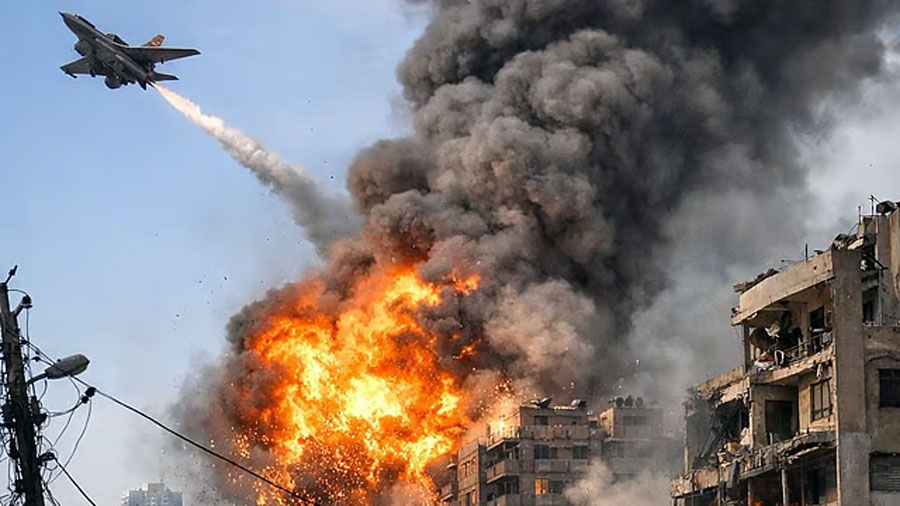
RIYADH — Saudi Arabia’s air defense forces successfully intercepted and destroyed multiple ballistic missiles, cruise missiles, and drones targeted at key regions within the kingdom early Friday, the Saudi Ministry of Defense announced in a series of posts on X. In the first report shortly after midnight, the ministry said three ballistic missiles were launched toward Prince Sultan Air Base in Al‑Kharj Governorate. Later posts confirmed that one drone was downed in the Eastern Province and another in Al‑Kharj. Early on Friday morning, Saudi defenses also intercepted a cruise missile over Al‑Kharj, followed by three drones in the Eastern Riyadh region.
This latest barrage came hours after Saudi forces neutralized three cruise missiles targeting Al‑Kharj and followed a separate attempted drone strike over the Ras Tanura oil refinery in the Eastern Province — one of the most strategically important energy facilities in the Middle East. Al‑Kharj lies about 80 kilometres southeast of Riyadh and hosts major defence and industrial installations.
The attacks follow previous incidents on March 3, when Saudi defense systems shot down eight drones near Riyadh and Al‑Kharj. On the same day, drones struck the US Embassy in Riyadh, causing a limited fire and minor structural damage, although Tehran has denied involvement, according to Iran’s ambassador to Saudi Arabia, Alireza Enayati.
READ ALSO:
- Iran Appreciates Saudi Airspace Assurance, Rejects Embassy Strike Claims
- CSP Aliyu Giwa Set to Become Nigeria Police Force PRO, Replacing Hundeyin
- FG Clarifies FEC Decision, Says PhD Not Equivalent to Medical Fellowship in Nigeria
The recent wave of aerial threats is part of a broader and rapidly escalating regional conflict triggered on February 28, 2026, after a massive air campaign by the United States and Israel against strategic targets inside Iran. The campaign prompted retaliatory strikes by Tehran, involving drones, ballistic and cruise missiles aimed at military, diplomatic, and energy infrastructure throughout the Gulf region. All GCC member states have reported Iranian-linked aggression, with strikes in the region claimed to have killed at least nine people.
The conflict has also severely affected maritime activity. A missile strike on a commercial vessel off Oman contributed to a backlog of around 150 tankers near the Strait of Hormuz, where oil traffic has dropped by approximately 86% due to security concerns. Analysts warn that prolonged instability could jeopardize global energy supply chains and drive further price volatility.
Saudi Arabia and its allies have condemned the attacks and coordinated their defense strategies. In an extraordinary GCC ministerial meeting in Riyadh on March 1, leaders reaffirmed the collective right to defend their territories against “treacherous Iranian aggression.” The meeting stressed shared security commitments among GCC nations to deter further incursions. Following a Saudi Cabinet session chaired by Crown Prince Mohammed bin Salman on March 3, the Kingdom declared that it reserves the full right to respond to ongoing threats and will take “all necessary measures” to protect its territory, citizens, and residents.
Military officials from Saudi Arabia and allied nations are maintaining high alert levels, with air defense systems and early-warning networks deployed across strategic areas to intercept future threats and protect civilian infrastructure. Despite Tehran’s denials of responsibility for some attacks, including the embassy strike and energy site incidents, Saudi and allied governments continue to assert that Iran-linked forces are driving much of the aggression, urging the international community to support collective defense mechanisms.
Air Defence Thwarts Major Aerial Attack Across Saudi Arabia Amid Middle East Conflict
International
Iran Appreciates Saudi Airspace Assurance, Rejects Embassy Strike Claims
Iran Appreciates Saudi Airspace Assurance, Rejects Embassy Strike Claims
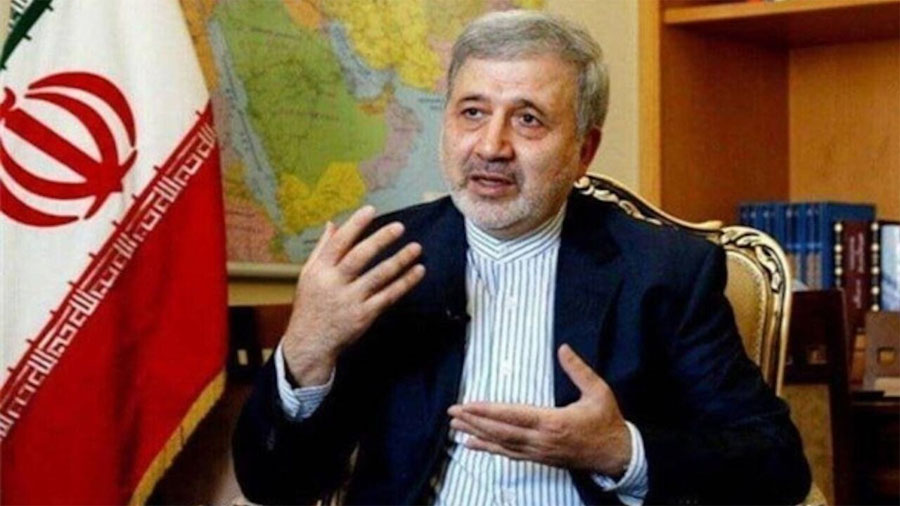
RIYADH — Iran’s ambassador to Saudi Arabia, Alireza Enayati, has categorically denied that Tehran was behind a drone attack on the United States embassy in Riyadh, rejecting Saudi accusations and highlighting Tehran’s appreciation for Saudi Arabia’s commitment not to allow its airspace or territory to be used against Iran amid the ongoing Middle East conflict. Speaking to reporters and AFP at the Iranian embassy in Riyadh on Thursday, Enayati reiterated that Iran had no role in the strike on the US embassy, which Saudi officials said involved drones that caused a small fire at the diplomatic compound earlier this week. “We confirmed that Iran has no role in the attack on the US embassy in Riyadh,” the ambassador said. “If the operations command in Tehran attacks somewhere, it takes responsibility for it.”
The embassy incident came amidst a wave of cross‑border tensions following retaliatory strikes by Iran after a series of United States and Israeli airstrikes targeting Iranian military infrastructure. Allies of Riyadh, including the United States, have accused Iran of launching missile and drone attacks on Saudi territory, including critical facilities such as the Ras Tanura oil refinery — one of the largest in the region — which Tehran has repeatedly denied. Enayati stressed that Iran appreciates Saudi Arabia’s repeated assurance that its airspace, territorial waters, and soil will not be used against Tehran. “We appreciate what we have repeatedly heard from Saudi Arabia — that it does not allow its airspace, waters, or territory to be used against the Islamic Republic of Iran,” he said.
READ ALSO:
- CSP Aliyu Giwa Set to Become Nigeria Police Force PRO, Replacing Hundeyin
- FG Clarifies FEC Decision, Says PhD Not Equivalent to Medical Fellowship in Nigeria
- Trump Warns Iranian Military, Including IRGC, to Surrender or Face “Certain Death”
Saudi authorities have repeatedly condemned missile and drone attacks targeting their territory, warning that Riyadh reserves the right to defend itself and respond to violations of its sovereignty. Prior to the outbreak of hostilities, Saudi Arabia had backed diplomatic efforts aimed at defusing tensions between Tehran and Washington, but recent developments have seen the Gulf kingdom caught up in the wider regional crisis. In response to the Riyadh embassy incident and earlier allegations involving the Ras Tanura oil facility, Saudi officials publicly condemned the attacks as violations of international norms and threats to regional security and economic stability. Tehran, for its part, has rejected all such claims.
The crisis has engulfed the previously stable Gulf region, with Iran stepping up strikes after joint US‑Israeli operations reportedly killed Iranian Supreme Leader Ayatollah Ali Khamenei and damaged strategic sites inside Iran. Tehran’s retaliation has included missile and drone strikes against Israeli and US‑linked targets across the broader Middle East. At least 13 people have been killed in the Gulf region, including seven civilians, since Iran began its offensive, according to regional reports. The cross‑border strikes and counter-strikes have alarmed global markets and heightened fears of a broader conflict.
Despite the escalation, Enayati denied that Iran considers the situation a regional war borne of its own design. “This is not a regional war and it is not our war. It was imposed on the region,” he said, echoing Iran’s longstanding narrative that external pressures and actions have forced Tehran into a defensive posture. International leaders and organisations have expressed deep concern over the rapid escalation of hostilities in the Middle East, with calls for calm and restraint growing louder as civilian casualties mount and tensions rise. Observers warn that continued conflict could further destabilise key global energy arteries, particularly the Strait of Hormuz, through which a significant portion of the world’s oil supplies transit. As diplomatic efforts intensify alongside military developments, Riyadh, Tehran and Washington remain under global scrutiny to manage the crisis and avert a wider conflagration that could draw in multiple regional and international actors.
Iran Appreciates Saudi Airspace Assurance, Rejects Embassy Strike Claims

-

 Education10 hours ago
NERD Registration Now Mandatory for NYSC Participation, FG Confirms
-
 News1 day ago
FG Approves Medical Fellowships as PhD Equivalent in Nigerian Universities
-

 metro1 day ago
Police Announce Dates, Requirements for 2026 Constable Recruitment Screening
-

 metro1 day ago
Family Prepares Funeral for Abducted NYSC Member After ₦10m Ransom Fails
-

 metro1 day ago
Leadership Reshuffle: IGP Tunji Disu Removes Hundeyin as Nigeria Police Force PRO
-

 News4 hours ago
BREAKING: Tinubu Posts Yakubu, Omokri, Fani-Kayode, 62 Other Ambassadors (Full List)
-

 metro1 day ago
Islamic Scholar Barred From Ramadan Tafseer After Criticising Tinubu, Governors
-

 Education12 hours ago
FG Clarifies FEC Decision, Says PhD Not Equivalent to Medical Fellowship in Nigeria