

Auto
UNILAG to mass-produce solar-powered vehicles, gets FG’s second charging station


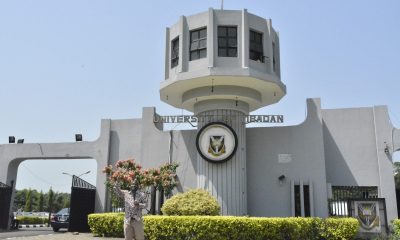
Nigeria is on the verge of mass-producing solar-powered vehicles through the University of Lagos, following the inauguration on Tuesday of the Federal Government’s second solar-powered vehicle charging station on the campus.
Minister of Minister of Industry, Trade and Investment, Otunba Niyi Adebayo, Director General of the National Automobile Design and Development Council, Jelani Aliyu, and UNILAG Vice Chancellor, Prof Oluwatoyin Ogundipe, gave the hint on Tuesday at the unveiling of the charging station built by NADDC with deep cycle batteries of up to 95Kwh storage capacity.
It was the second solar-powered vehicle charging station to be constructed in the country by the NADDC. The first was launched about three months ago at the Usmanu Danfodio University, Sokoto.
The minister, who unveiled the charging station along with the NADDC electric vehicle pilot programme at UNILAG, said, “very soon we will launch and mass-produce renewable energy-powered vehicles of which innovative Nigerian youth are an integral part of their conceptualisation, design and development.”
He expressed delight at being part of the historic event that would launch the nation into the world of advanced automobile technology, knowledge transfer and continues youth empowerment.
He said, “This programme is another of the Federal Government’s initiatives (under the leadership of President Muhammadu Buhari, GCFR), designed to promote advanced technology transfer and the development of sophisticated human capital.
“For my ministry (the Federal Ministry of Industry, Trade and Investment), programmes such as this are the lifeblood of everything we are trying to achieve. It is, after all, a proven fact among advanced nations, that the key to successful industrialization is strategic human capital and capacity development in state-of-the-art technologies.
“So, what does this mean for you? It means giving you the tools to build a future that is uniquely yours; to inspire in you the light of innovation and creativity that will enable you to write a new chapter.”
He added, “This charging station has been developed by the NADDC in its efforts to promote applicable local solutions for vehicle electrification in Nigeria. It will offer students firsthand experience with the latest innovations in mobility and renewable power technology. It is strategized to be an effective platform for focused Research and Development into even more applicable vehicle electrification solutions for Nigeria and Africa.”
The minister pledged the continued support of the FG through his ministry for the project to ensure its success and sustainability.
“The Federal Government, through its agencies such as the National Automotive Design & Development Council, will continue to support you, your dreams and ambitions for the good and prosperity of this great nation.”
Also speaking on the issue, the NADDC DG, Aliyu, said the solar-powered EV charging station would provide UNILAG an effective platform for advanced innovation in the EVs and related renewable energy solutions.
He also spoke on how to ensure sustainability and quality of the extensive project expected to be undertaken at the university.
“The monitoring and evaluation team shall consist of experts from NADDC, University, Hyundai and relevant stakeholders,”Aliyu said.
According to him, the development of the solar-powered EV charging stations has included Nigeria among “the league of nations actively committed to the protection of the environment through zero emissions vehicles.”
He noted, “The world is in a race on the backs of eagles, and Nigeria cannot afford to be in that race on the backs of anything less, neither a falcon nor a hawk, but on the backs of eagles.”
He described the push towards greener energy as important, stressing, “the world can no longer afford to continue polluting the environment through the use of fossil fuel and its attendant emission of carbon dioxide, carbon monoxide and methane.”
Aliyu also said, “This EV charging station to be commissioned today is 100 per cent solar-powered. The installation consists of 60 PV monocrystalline solar arrays (panels), which have a capacity of 86.4 kilowatts per hour, there are three online-offline 5KVA Hybrid inverters synchronized together to give 15KVA/48 watts, and we have 36 units of deep cycle gel batteries with an output of 48 volts/19 and 0.
“The power bank consists of 36 units of dry cell, deep cycle batteries of up to 95Kwh storage capacity. The system provides ordinary 13A and 15A sockets that can support all types normal chargers. The station also provides a 7.4kw CCS fast charger and can support up to 11kw types.
He attributed the success of the project thus far to the support received from the Federal Ministry of Industry, Trade and Investment, promoting the adoption, development, manufacturing and usage of advanced technology in the Nigerian automotive sector.
He recalled that “early this year, on the 5th of February, the Honourable Minister of Industry, Trade and Investment unveiled the first Nigerian assembled Electric Vehicle, the Hyundai Kona EV, and today he is commissioning the NADDC.
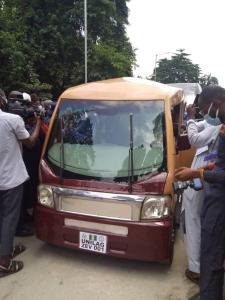
The UNILAG VC agreed that locating the facility at the university would facilitate further research on the concept of electric and solar-powered vehicles as well as greener energy sources.
Ogundipe, who lamented that the varsity paid over N1bn as electricity bill between January 2020 and May this year, said it was deliberate that the solar-powered station was sited near the Energy Centre to complement each other in the area of alternative energy sources.
He said the university authorities had accepted the project with “both hands” and promised to make maximum use of it.
The event was attended by dignitaries such as the board chairman of the NADDC, Senator Osita Izunaso, board members and directors of NADDC, Senate members of the university, and managing directors of Stallion group and Briscoe Motors Plc, Anant Badjatya and Seyi Onajide, respectively.






Auto
X90 Plus Leads Jetour’s Abuja Drive for Bigger SUV Market Share
X90 Plus Leads Jetour’s Abuja Drive for Bigger SUV Market Share
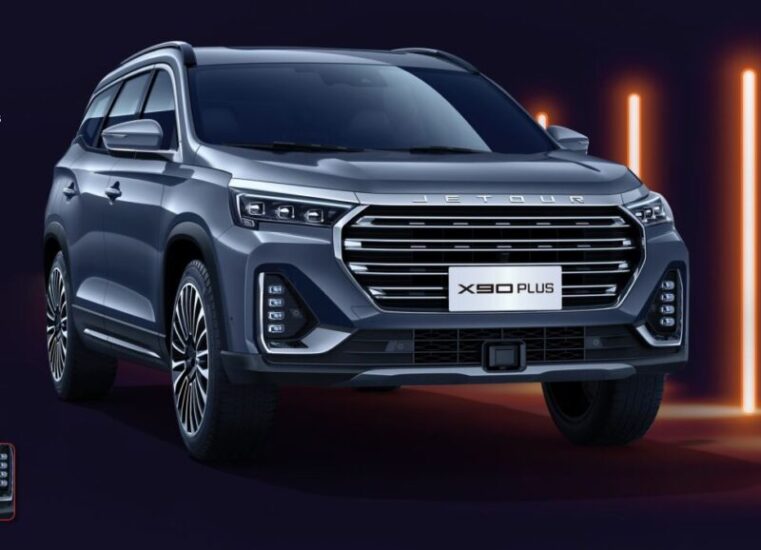
Jetour Nigeria is taking its premium SUV battle to Abuja, with the seven-seater X90 Plus set to headline the Jetour Experience Abuja from September 22 to 24, as the automaker moves to capture a larger share of Nigeria’s fast-growing high-end family SUV market.
The three-day motoring showcase will give prospective buyers, families and auto enthusiasts in the Federal Capital Territory and neighbouring states an opportunity to experience the X90 Plus and other models in the Jetour range through test drives and hands-on demonstrations.
The Abuja showcase follows the success of the brand’s earlier Jetour Experience in Lagos, where strong customer interest, inquiries and sales momentum reportedly encouraged the company to take the initiative to the Federal Capital Territory.
Jetour Nigeria said growing demand from customers in Abuja and neighbouring states was a major factor behind the decision to expand the experience to the northern market.
Positioned as a full-sized family SUV, the X90 Plus is designed for executives and families seeking a combination of space, technology, performance and comfort without the price tag associated with some luxury SUVs.
The model is offered with 1.6-litre and 2.0-litre turbocharged engines paired with a seven-speed dual-clutch transmission. The powertrain produces up to 254 horsepower and 390Nm of torque.
Inside the cabin, the X90 Plus features a 12.3-inch LCD touchscreen infotainment system, panoramic sunroof, Sony premium audio system and wireless charging.
Its safety and driver-assistance features include a 360-degree panoramic camera, Forward Collision Warning, Lane Departure Warning and electronic stability systems.
Jetour’s growing profile in Nigeria has also earned the brand recognition from the Nigeria Auto Journalists Association (NAJA), which named it Fastest Growing Auto Brand, while it was also recognised as Auto Brand of the Year at the Nigeria Transport Lecture.
To support its expanding customer base, Jetour Nigeria, the sole authorised distributor, operates through seven accredited dealer partners across the country: Elizade Nigeria Limited, Mandilas Autos, R.T. Briscoe Motors, Germaine Auto Centre, Kojo Motors, Tab Autos Limited and New Era Auto Vehicle Services Limited.
The Abuja Experience is expected to provide Jetour with another platform to engage potential customers and reinforce its position in Nigeria’s increasingly competitive SUV market.
Auto
Jetour Takes Award-Winning Dashing, Other SUVs to Abuja
Jetour Takes Award-Winning Dashing, Other SUVs to Abuja
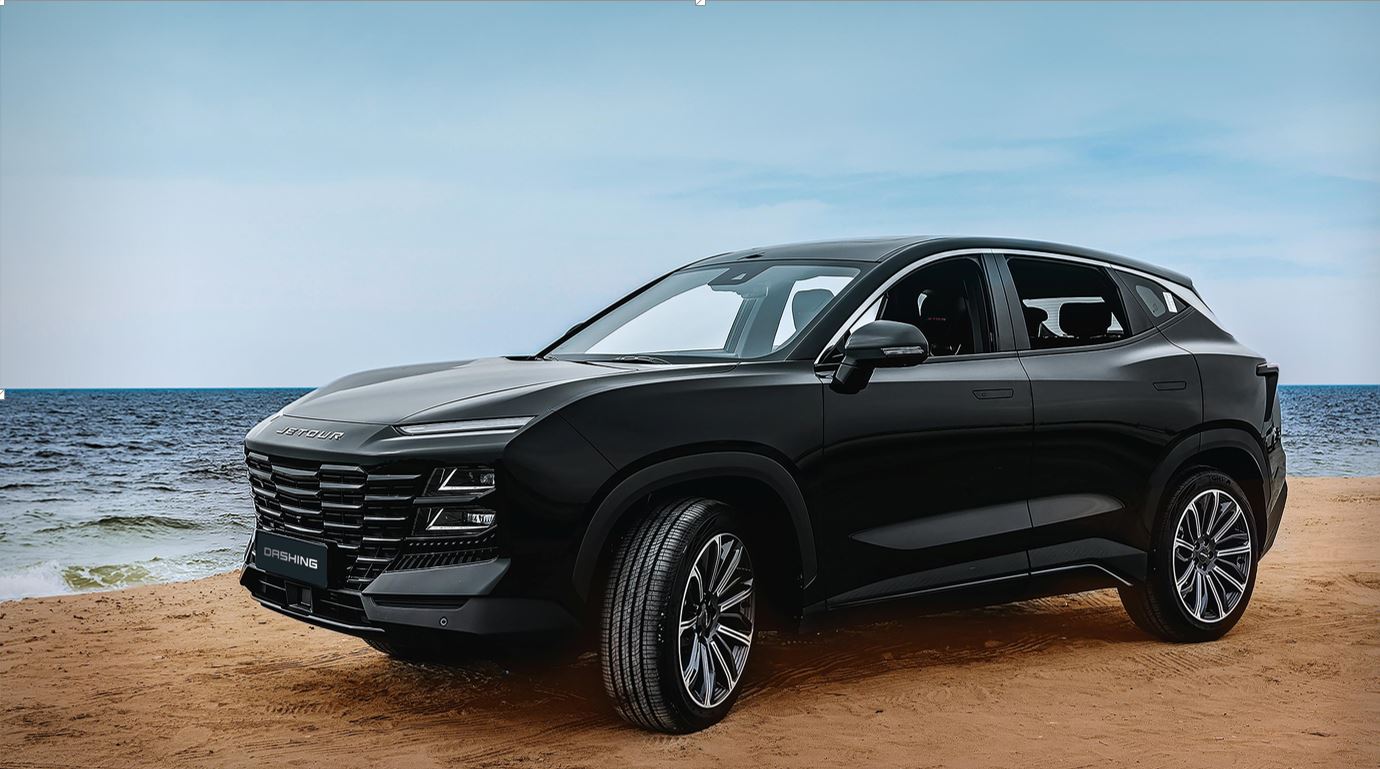
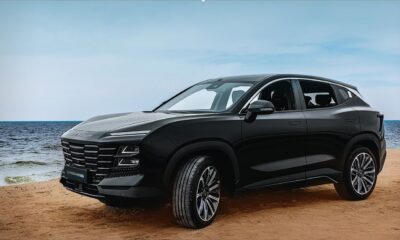
Motorists in Abuja are set for a close encounter with Jetour’s award-winning Dashing and other models as Jetour Nigeria moves to deepen its foothold in the nation’s capital with the Jetour Experience Abuja, beginning September 22.
The three-day motoring event, which runs until September 24, is expected to draw prospective buyers and automobile enthusiasts to a hands-on experience featuring test drives, product demonstrations and direct engagement with Jetour’s seven authorised dealers and product specialists.
The participating dealer network comprises Elizade Nigeria Limited, Kojo Motors, Mandilas Autos, Germaine Auto Centre, R.T. Briscoe, Tab Autos and New Era Auto Vehicle Services Limited.
READ ALSO:
- Police Arrest Woman Over Alleged Drug Trafficking in Delta
- Dangote raises petrol price 6.7% to N1,350/litre
- Anambra Police Arrest Woman Over Alleged Sexual Abuse of Child, Rescue Four
The Abuja Experience follows the success of the Lagos edition, which attracted thousands of visitors for test drives and direct engagement with product specialists. According to the organisers, strong demand and inquiries from motorists in Abuja and neighbouring states prompted the expansion of the event to the Federal Capital Territory.
The Dashing has gained attention in Nigeria’s competitive compact SUV segment for its combination of modern styling, technology, performance and competitive pricing.
The SUV is available with 1.5-litre and 1.6-litre turbocharged engines, producing up to 145kW of power and 290Nm of torque, paired with six- or seven-speed dual-clutch transmissions.
Its features include a 15.6-inch central touchscreen infotainment system, panoramic sunroof, wireless charging and smartphone integration.
For safety, the vehicle comes with a 360-degree surround-view camera, automatic emergency braking, lane departure warning, blind-spot detection and multiple airbags.
Beyond vehicle sales, the authorised dealers provide warranty, genuine spare parts and after-sales support to Jetour customers across their respective locations.
The Abuja Experience is expected to strengthen customer engagement and give motorists in the FCT a closer look at Jetour’s growing range of vehicles, while further expanding the brand’s footprint in the northern market.
Jetour Takes Award-Winning Dashing, Other SUVs to Abuja
Auto
Jetour T2 PHEV Storms Abuja as Jetour Steps Up Nigeria Expansion

Jetour T2 PHEV Storms Abuja as Jetour Steps Up Nigeria Expansion
Abuja is set for a major dose of electrified motoring as Jetour Nigeria takes its technologically advanced T2 Plug-in Hybrid Electric Vehicle (PHEV) to the nation’s capital for an experiential showcase aimed at deepening the brand’s growing footprint in Nigeria.
The Jetour T2 PHEV will headline the Jetour Experience Abuja, scheduled for September 22 to 24, 2026, following the strong reception recorded at the brand’s Lagos edition earlier this year, where customer participation, test drives and sales enquiries reportedly surged.
The move to Abuja, according to Jetour Nigeria, was largely driven by growing demand from motorists in the Federal Capital Territory who have been seeking an opportunity to experience the brand’s latest vehicles, particularly the T2 PHEV.
The Abuja activation will feature test drives, product demonstrations and interactions with Jetour’s technical and sales teams, giving prospective buyers first-hand access to the SUV and its plug-in hybrid technology.
Jetour Nigeria, the sole authorised distributor of the brand in the country, is also leveraging an expanding nationwide dealer network comprising Elizade Nigeria Limited, New Era AutoVehicle Services Limited, Kojo Motors, Germaine Auto Centre, TAB Autos Limited, R.T. Briscoe Motors and Mandilas Autos to strengthen sales and after-sales support across key markets.
READ ALSO:
- Obi Explains Why He Won’t Step Down for Atiku in 2027
- ASUU Threatens Nationwide Strike Over Unpaid Salaries, Unimplemented Agreement
- FG to Give Students 100MB Free Data Daily From October 1
The company said the decision to stage the Abuja experience was also driven by requests from patrons and prospective customers in the capital who want an opportunity to experience Jetour’s latest products, including the technologically advanced T2 PHEV.
The Jetour T2 PHEV combines rugged SUV capability with hybrid efficiency, advanced technology and comprehensive safety features, positioning it as an attractive option for Nigerian motorists seeking performance, comfort and improved fuel economy.
Since its entry into the Nigerian market, Jetour has recorded growing acceptance, with its SUV range gaining popularity among families, professionals and adventure enthusiasts.
The brand’s expanding customer base has been supported by competitive pricing, after-sales service and vehicles engineered to cope with diverse road and driving conditions across Nigeria.
Jetour’s growing reputation has also been reinforced by a number of local and international recognitions spanning product quality, design, innovation and customer satisfaction.
Its vehicles have also earned strong global safety ratings, with the T2 achieving a 5-Star NCAP safety rating, placing it among vehicles meeting high benchmarks for occupant safety.
The Abuja event is expected to feature test drives, product demonstrations and direct interactions with Jetour’s technical and sales teams, giving visitors an opportunity to experience the brand’s products and understand the technology behind the T2 PHEV.
Beyond showcasing its expanding SUV lineup, Jetour said the Abuja activation reflects its commitment to bringing the brand’s ownership and customer experience closer to motorists across Nigeria.
With the Federal Capital Territory as its next destination, Jetour is looking to build on the momentum generated in Lagos while deepening its footprint in one of Nigeria’s most important automotive markets.
Jetour T2 PHEV Storms Abuja as Jetour Steps Up Nigeria Expansion
-
 Business3 days ago
Dangote: ₦525 Refinery Shares Could Rise to ₦10,000
-
 News2 days ago
SERAP Threatens Legal Action Over ₦126bn INEC Electoral Funds
-

 metro3 days ago
MURIC fires back at Peter Obi: Forget Sallah ceremony, free Nigerian Muslims
-

 metro3 days ago
Abia Police Arrest Father, Three Others Over Alleged Attempt to Sell 16-Month-Old Daughter
-

 International3 days ago
Trump Tells Supporters to ‘Cheat Like Hell’ Ahead of US Election
-
 Politics2 days ago
Five Islamic Clerics Abducted After Tinubu Re-Election Prayer At Yari’s Zamfara Residence
-
 metro3 days ago
FG Targets 2 Million Creative Jobs by 2030
-
 Auto3 days ago
Jetour Takes Award-Winning Dashing, Other SUVs to Abuja