
International
US criticises Israeli PM’s ‘maximalist’ ceasefire stance
US criticises Israeli PM’s ‘maximalist’ ceasefire stance
A senior US administration official has pushed back at reported comments by Benjamin Netanyahu, accusing the Israeli prime minister of making “maximalist statements” that are “not constructive to getting a ceasefire deal across the finish line”.
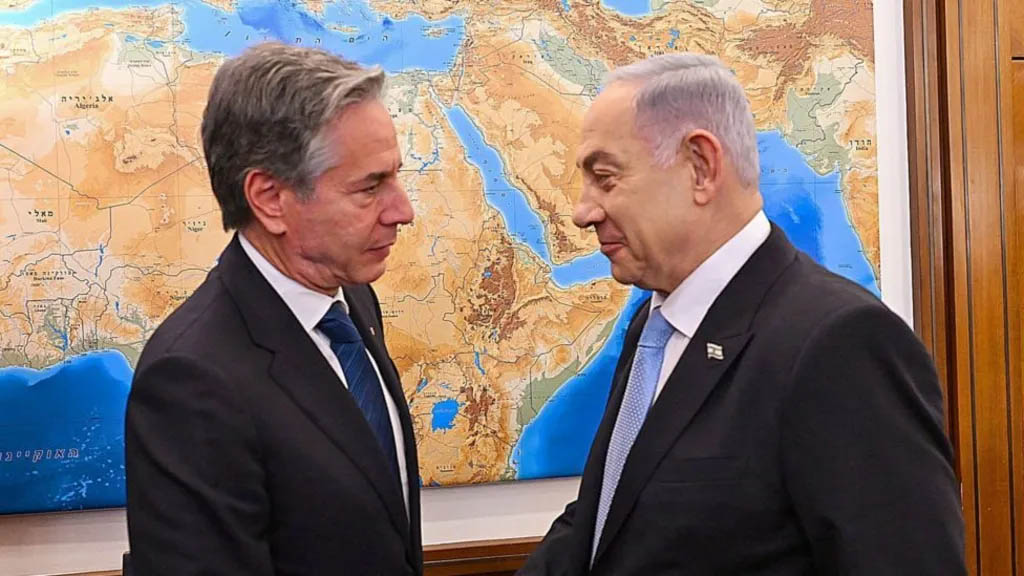
It comes in the midst of an intense round of regional diplomacy by US Secretary of State Antony Blinken, as Washington tries to drive forward progress on a ceasefire and hostage release deal.
On Monday, Mr Blinken had talks lasting three hours with the Israeli leader in Jerusalem.
He later said Mr Netanyahu had accepted Washington’s so-called “bridging proposal” aimed at trying to solve sticking points and bring Israel and Hamas closer to a deal.
According to an Israeli media report, Mr Netanyahu later told a meeting of hostage families that he “convinced” Mr Blinken that the deal must see Israeli troops remaining in areas of Gaza he described as “strategic military and political assets”, including along the southern border with Egypt.
The reported comments appear to have irritated the US administration.
“We saw the prime minister’s comments, specifically on some of these items,” said the senior official who spoke on condition of anonymity.
“We’re certainly not going to negotiate in public but what I can say is that the only thing Secretary Blinken and the United States are convinced of is the need for getting a ceasefire proposal across the finish line.”
“We fully expect that… if Hamas were also to also accept this bridging proposal, discussions will continue on some of the more technical… details.
READ ALSO:
- It’s not NNPC responsibility to pay subsidy – Ex-NEITI head
- Israel: Waiting for Iran retaliation ‘could be long’, says Revolutionary Guards
- We’ve not received supply for N75bn fuel paid for since June – IPMAN
“I would also just add that maximalist statements like this are not constructive to getting a ceasefire deal across the finish line and they certainly risk the ability of implementing level, working level and technical talks to be able to move forward when both parties agree to a bridging proposal.”
The senior official’s remarks followed Tuesday’s round of talks between Mr Blinken and Egyptian President Abdel Fattah al-Sisi in the coastal city of El-Alamein.
Egyptian officials are said to be strongly opposed to the idea of Israeli troops remaining along Egypt’s border in Gaza.
Following his stop in Egypt, Mr Blinken travelled on to Qatar for further talks in Doha – the last stop on his Middle East tour.
The BBC has been travelling with the secretary of state and asked him about the conversation shortly before he left Doha.
He revealed for the first time that the American bridging proposal included a “detailed plan” about Israeli withdrawal from Gaza.
“The agreement is very clear on the schedule and locations of IDF [Israel Defense Forces] withdrawals from Gaza and Israel has agreed to that,” said Mr Blinken.
Asked by the BBC whether Mr Netanyahu’s reported claim that the Israeli leader had “convinced” Mr Blinken to keep troops in Gaza, he said: “I can’t speak to what he’s quoted as saying, I can just speak to what I heard from him directly yesterday [Monday] when we spent three hours together,” he said.
“[That included] Israel’s endorsement of the bridging proposal and thus the detailed plan. And that plan among other things includes a very clear schedule and locations for withdrawals.”
Asked whether the proposal was for a “full withdrawal”, Mr Blinken said he would not comment on the details of the plan.
Hamas said the latest ceasefire proposals constituted “a coup” against what had been agreed upon in earlier negotiations, and reiterated its wish that a ceasefire plan for Gaza be based on where talks were in July rather than any new rounds of negotiations.
US criticises Israeli PM’s ‘maximalist’ ceasefire stance
BBC







International
UAE Air Defences Intercept Iranian Missiles, Drones as Gulf Tensions Escalate
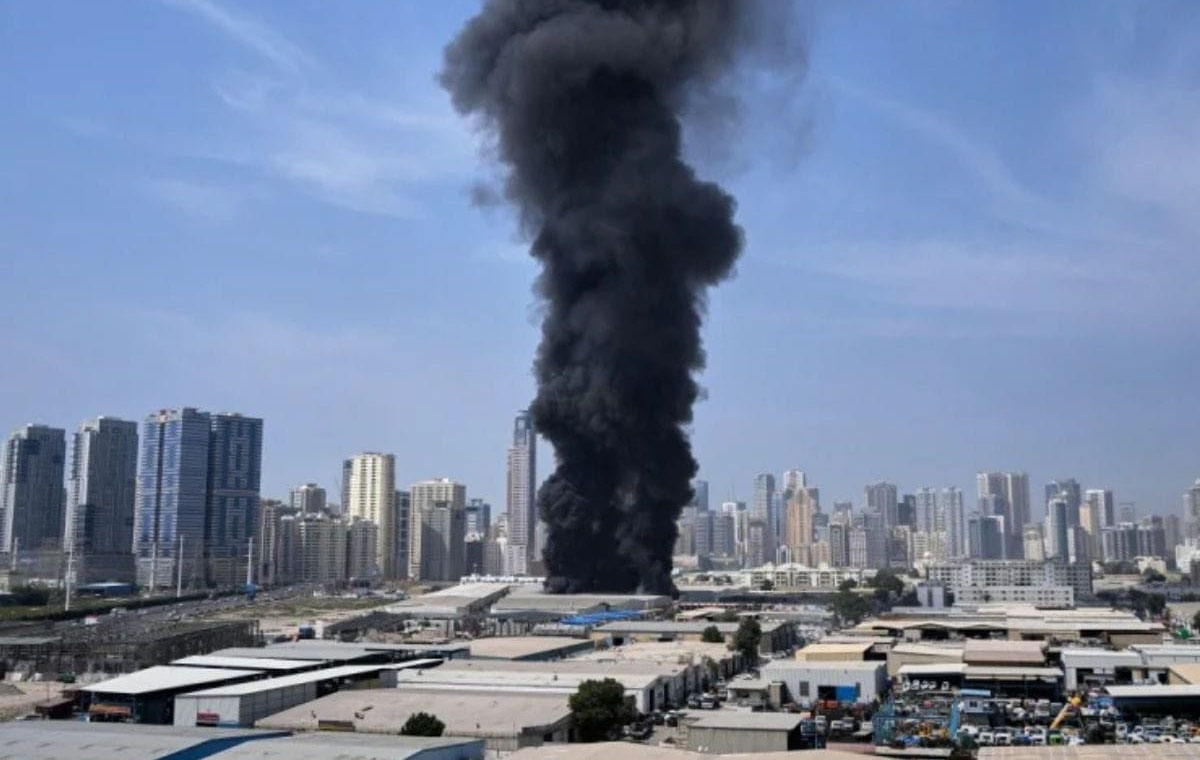
UAE Air Defences Intercept Iranian Missiles, Drones as Gulf Tensions Escalate
The United Arab Emirates (UAE) has confirmed that its air defence systems intercepted multiple missiles and drones launched from Iran, as fresh attacks heightened tensions across the Gulf region.
In a statement issued on Thursday, the UAE Ministry of Defence said its forces detected several aerial threats approaching the country’s airspace and swiftly activated defensive systems to neutralise them.
According to the ministry, UAE air defence units successfully intercepted a number of incoming missiles and unmanned aerial vehicles (UAVs) before they could reach their intended targets. Authorities, however, did not immediately disclose the specific locations that may have been targeted.
READ ALSO:
- Fuel Costs Remain Elevated at ₦1,300 per Litre Despite Dangote Price Adjustment
- Iran Threatens Strikes on US, Israeli Banks, Tech Giants
- BREAKING: Tambuwal Quits PDP, Defects to ADC Amid Internal Party Crisis
The latest incident comes amid escalating Middle East tensions, with increasing reports of missile and drone launches from Iranian territory toward Gulf states.
Security officials said the UAE military response forms part of a broader heightened defence posture across the region, following intelligence reports indicating potential attacks on key strategic locations.
While details of damage or casualties have not been released, the UAE government reassured residents that the country’s armed forces remain fully prepared to defend national airspace and protect civilians as well as critical infrastructure.
Officials also said the situation is being closely monitored by regional and international partners, as concerns grow over the possibility of a wider conflict in the Middle East.
Authorities are expected to provide further updates as military and security agencies assess the scale of the attempted attacks and the effectiveness of the interceptions.
UAE Air Defences Intercept Iranian Missiles, Drones as Gulf Tensions Escalate
International
Iran Threatens Strikes on US, Israeli Banks, Tech Giants
Iran Threatens Strikes on US, Israeli Banks, Tech Giants
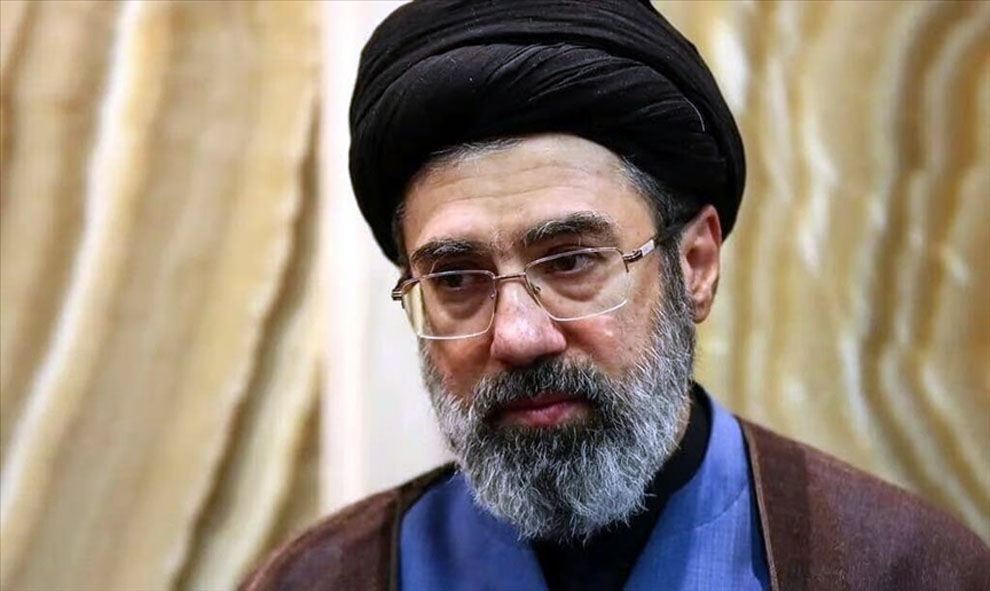
Iran has vowed to launch strikes against economic and banking targets linked to the United States and Israel, while also identifying major technology companies as potential future targets, in a sharp escalation of the ongoing Middle East conflict. The warnings follow a reported strike on an Iranian bank in Tehran, which Iranian officials say was hit by US and Israeli forces, killing an unspecified number of employees.
According to Iran’s Khatam al‑Anbiya military command, the attacks give the country “free rein to target economic centres and banks belonging to the United States and the Zionist regime.” The military urged civilians in the region to avoid going within one kilometre of bank buildings, warning of the heightened risk of strikes.
READ ALSO:
- BREAKING: Tambuwal Quits PDP, Defects to ADC Amid Internal Party Crisis
- UN Condemns Iran’s Attacks on Gulf States, Jordan as Russia, China Abstain
- Iran Warns Oil Could Hit $200, Threatens Strait of Hormuz Blockade
Iranian Foreign Minister Abbas Araghchi stated that the bank strike was a serious provocation, adding, “Our powerful armed forces will exact retribution for this crime.” Iranian state media, including the Tasnim News Agency, also published a list of potential future targets in the Gulf and Israel, naming offices and data centres of tech giants such as Amazon, Google, Microsoft, Nvidia, IBM, Oracle, and Palantir.
The escalation comes after Amazon Web Services data centres in the UAE were reportedly struck by Iranian drones last week, disrupting cloud services across the region. Tasnim described the situation as an “infrastructure war”, signalling Iran’s intent to expand the conflict beyond conventional military targets to economic and technological infrastructure.
Analysts say this development could have far-reaching consequences for regional security, global financial stability, and digital networks, though the current threats remain largely warnings rather than confirmed attacks on US or Israeli economic interests. The situation highlights the increasing vulnerability of critical economic and tech infrastructure amid escalating tensions in the Middle East.
Iran Threatens Strikes on US, Israeli Banks, Tech Giants
International
UN Condemns Iran’s Attacks on Gulf States, Jordan as Russia, China Abstain
UN Condemns Iran’s Attacks on Gulf States, Jordan as Russia, China Abstain
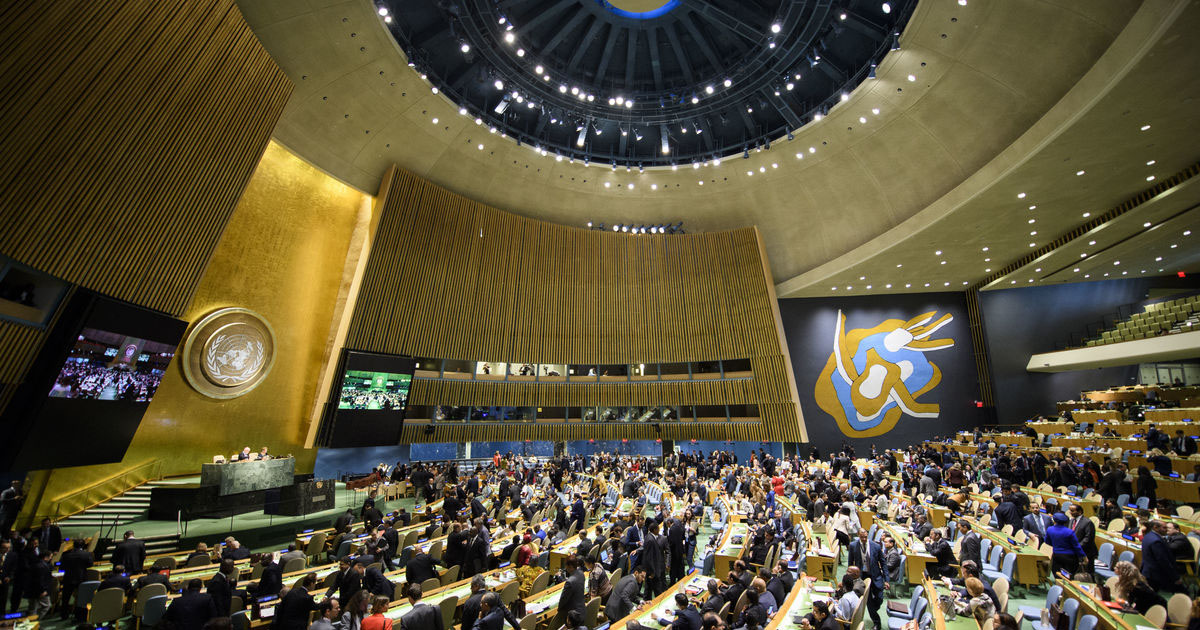
The United Nations Security Council (UNSC) on Wednesday adopted a resolution condemning Iran’s missile and drone attacks on Gulf Cooperation Council (GCC) states and Jordan, amid growing international concern over escalating tensions in the Middle East. The resolution, presented by Bahrain and co‑sponsored by 135 UN member countries, passed with 13 votes in favor, while Russia and China abstained, allowing the measure to move forward without a veto.
The resolution emphasises “strong support for the territorial integrity, sovereignty and political independence” of the GCC states and Jordan. It declares that Iran’s attacks “constitute a breach of international law and a serious threat to international peace and security.” It also specifically condemns attacks on civilian infrastructure, noting that these strikes resulted in civilian casualties and damage to civilian buildings, highlighting the humanitarian consequences of the conflict.
Bahrain’s UN envoy, Jamal Fares Alrowaiei, welcomed the resolution, saying it demonstrates the Security Council’s commitment to maintaining international peace and security. “It proved that the Council is committed to maintaining international peace and security. We express our deep gratitude to all member states of the United Nations that co‑sponsored this resolution. Their number amounted to 135 countries,” he said. He noted that the overwhelming international support reflects a collective recognition of the threat posed by Iran’s attacks against the Gulf states and Jordan.
READ ALSO:
- Iran Warns Oil Could Hit $200, Threatens Strait of Hormuz Blockade
- US Warns Russia, China: ‘You’re Playing With Fire’ Over Iran Support
- ADC Urges FG to Cap Petrol Prices as Global Oil Market Volatility Bites
While the resolution received broad backing, both Russia and China abstained. Analysts suggest their decision reflects geopolitical caution, balancing diplomatic ties with Tehran against the need to avoid appearing to endorse actions condemned by the international community. Neither country formally opposed the resolution, allowing it to pass without exercising veto power.
The UNSC action follows a surge of Iranian missile and drone attacks on GCC states, including Saudi Arabia, UAE, Kuwait, Qatar, and Oman, as well as Jordan, targeting military and civilian infrastructure. These attacks have raised global security concerns, disrupted critical services, and affected energy markets, particularly with threats to shipping through the Strait of Hormuz, a strategic oil transit route. The escalating situation has prompted calls for diplomatic engagement from leaders in the European Union, the G7, and other international bodies to prevent further conflict and stabilise the region.
Experts warn that continued hostilities could further destabilise the Middle East, disrupt global oil exports, and threaten maritime security in one of the world’s most vital energy corridors. The resolution reflects strong international condemnation of Iran’s actions and underscores the importance of coordinated diplomatic efforts to reduce tensions while ensuring compliance with international law.
UN Condemns Iran’s Attacks on Gulf States, Jordan as Russia, China Abstain

-

 metro21 hours ago
Ikeja Electric Apologises to Customers Over Power Disruptions
-

 Business2 days ago
JUST IN: Dangote Refinery Cuts Petrol, Diesel Ex-Depot Prices Amid Market Relief
-

 News1 day ago
India, Other Countries Reject Tinubu’s Ambassadorial Nominees
-

 Politics3 days ago
BREAKING: Zamfara Governor Dauda Lawal Defects from PDP to APC
-

 News3 days ago
OYOSUBEB Chairman Adeniran Joins 2027 Oyo Governorship Race
-

 Business2 days ago
Middle East Crisis Pushes Petrol Price to N1,300 Per Litre in Nigeria
-

 News20 hours ago
Iran Rules Out Participation in 2026 FIFA World Cup
-

 International1 day ago
Iran Rejects Ceasefire as Explosions Rock Tehran