

International
Israeli strikes kill 50 in Gaza amid ceasefire tensions

Israeli strikes kill 50 in Gaza amid ceasefire tensions
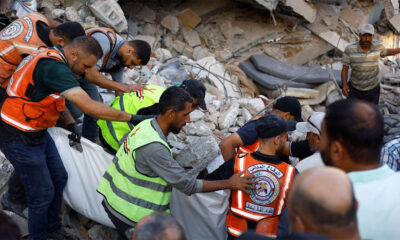
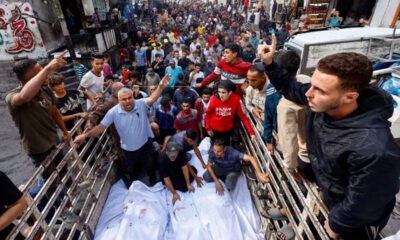
At least 50 Palestinians were killed and hundreds injured in a wave of Israeli airstrikes across Gaza on Tuesday night, according to the Hamas-run Civil Defence agency and local hospitals. The strikes targeted residential areas in Gaza City, Beit Lahia, Bureij, Nuseirat, and Khan Younis.
Israel said the strikes were in response to violations of the US-brokered ceasefire agreement by Hamas, including an attack in Rafah that killed an Israeli soldier and the alleged mishandling of deceased hostages’ remains.
Defence Minister Israel Katz accused Hamas of crossing a “bright red line” and vowed that the group would “pay many times over” for the attack and for breaching the ceasefire terms. Prime Minister Benjamin Netanyahu ordered “forceful strikes” but did not elaborate.
The Israeli military confirmed the death of Master Sergeant Yona Efraim Feldbaum, who was killed when his engineering team came under fire while dismantling a tunnel route in Rafah. Hamas denied involvement in the attack and reaffirmed its commitment to the ceasefire.
READ ALSO:
- Cameroon opposition leader faces trial over post-election unrest
- Zamfara lawmaker, over 1,000 PDP members defect to APC
- Osun APC supporters rally behind Oyebamiji ahead of 2026 governorship race
The Civil Defence agency reported that 22 children were among the dead and warned that the toll could rise as rescue teams continued to search through rubble under difficult conditions.
The strikes have drawn international concern, with the UN, African Union, and European Union urging restraint. The US, which brokered the ceasefire alongside Egypt, Qatar, and Turkey, downplayed fears of renewed hostilities.
President Donald Trump, speaking aboard Air Force One, said Israel had the right to respond to attacks but insisted the ceasefire remained intact. “Nothing is going to jeopardise” the agreement, he said.
Tensions escalated further after Hamas handed over a coffin containing remains that Israeli authorities said did not belong to any of the 13 deceased hostages still held in Gaza. Israel accused Hamas of staging a “fake recovery” and released drone footage purportedly showing operatives burying remains before summoning Red Cross officials.
The International Committee of the Red Cross (ICRC) condemned the incident, saying its team was unaware of any prior burial and had acted in good faith.
Hamas rejected the allegations and accused Israel of fabricating pretexts for further aggression. The group’s military wing said it would delay the return of another hostage’s body due to Israeli “violations.”
Under the ceasefire deal, Hamas was to return 48 hostages—both living and deceased—within 72 hours of the truce taking effect on October 10. So far, 20 living hostages have been released in exchange for over 1,900 Palestinian prisoners and detainees. The bodies of 13 Israeli and two foreign hostages have also been returned.
Hamas negotiator Khalil al-Hayya said efforts to locate remaining bodies were hampered by Israeli military operations and the deaths of those who buried them. Israel maintains that Hamas knows the locations of all the deceased.
The conflict began with a Hamas-led attack on southern Israel on October 7, 2023, which left 1,200 dead and 251 taken hostage. Israel’s military response has since claimed over 68,000 lives in Gaza, according to the Hamas-run health ministry.
Israeli strikes kill 50 in Gaza amid ceasefire tensions
BBC






International
Ninth Body Discovered in South Africa: Nigeria Issues Urgent Safety Alert to Nationals
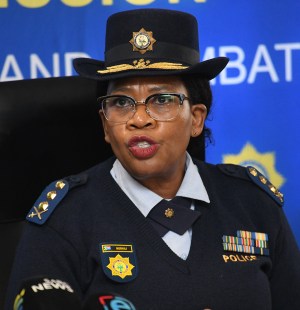
Ninth Body Discovered in South Africa: Nigeria Issues Urgent Safety Alert to Nationals
Police cordon off Kempton Park and post a $56,000 combined bounty as the Nigerian Consulate warns citizens to exercise heightened vigilance.
South African police recovered the body of a ninth woman on Thursday along a roadside in Dawn Park, intensifying public alarm and prompting the Nigerian Consulate-General in Johannesburg to issue an emergency safety advisory to its citizens.
In response to the discoveries, law enforcement teams placed Kempton Park in the Ekurhuleni municipality under lockdown and established roadblocks to inspect vehicles and restrict suspect movement.
Deputy Police Chief Tebello Mosikili declared during a press conference that authorities will deploy specialized investigative units to track down those responsible.
To accelerate breakthroughs, police offered a 400,000 rand ($25,000) reward for credible tips, while South Africa’s Democratic Alliance provided an additional $31,000, establishing a combined bounty of $56,000.
Detectives are now evaluating forensic evidence to determine whether one perpetrator committed the murders or whether independent offenders copied earlier attacks.
Meanwhile, the Nigerian Consulate-General urged Nigerian residents, especially women and young people who commute, exercise, or study around Ekurhuleni, to take deliberate personal precautions.
The mission advised community members to travel in groups, stay clear of isolated trails, and share real-time travel details with trusted family members.
Furthermore, diplomatic officials emphasized that safety precautions must not shift the burden of crime prevention onto women, calling on South African authorities to ensure thorough investigations and justice for every victim.
Ninth Body Discovered in South Africa: Nigeria Issues Urgent Safety Alert to Nationals
Health
Fiji Declares National HIV Emergency as Diagnoses Surge Sixteenfold
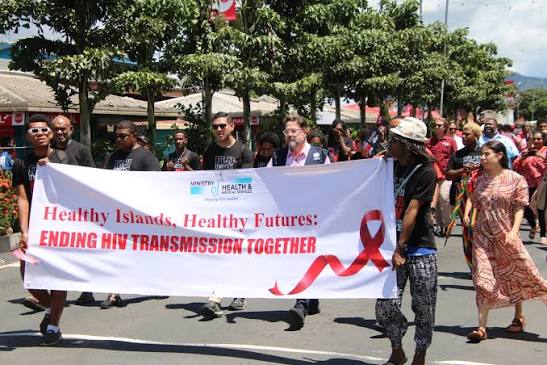
Fiji Declares National HIV Emergency as Diagnoses Surge Sixteenfold
Authorities launch a multi-agency public health campaign to expand free testing, treatment, and harm-reduction services
Fiji has announced a nationwide health response to address a significant rise in HIV cases and ensure that all residents can access essential medical care.
On Wednesday, Health Minister Dr. Atonio Lalabalavu shared the emergency declaration, explaining that national agencies are joining forces to provide rapid medical support, expand testing, and protect community well-being across the islands.
Official reports indicate that about one in every 60 adults in Fiji currently lives with HIV, following an increase in new infections over recent years. Health specialists explain that the virus spreads primarily through intimate sexual contact and shared needles among individuals using illicit substances.
Additionally, routine screenings revealed that two out of every 100 expecting mothers carry the virus, highlighting an urgent need for early maternal healthcare to protect newborns from infection.
To safeguard public health, authorities are delivering free daily treatments, distributing protective preventive medications, and setting up clean needle programs to stop infections before they start.
Furthermore, global partners, including Australia, New Zealand, India, and United Nations health bodies are providing financial resources and medical supplies to back the local effort.
By encouraging open community conversations and delivering accessible healthcare without judgment, health workers aim to ensure that everyone receives the care and dignity they deserve.
Fiji Declares National HIV Emergency as Diagnoses Surge Sixteenfold
International
Kim Yo-jong: Only ‘Idiots’ Think North Korea Will Give Up Nuclear Weapons

-

 International2 days ago
Islamic Council Condemns Attempted Attack on Holy City of Mecca
-

 metro3 days ago
Lagos Power Outage: Ikeja Electric Blames TCN as Businesses, Homes Groan
-
 Politics3 days ago
2027: APC Governors Reject Wike’s Rainbow Coalition, Insist on Party Loyalty
-
 News2 days ago
Keep Politics Out of My Office — Ogbomoso Grand Chief Imam Warns Politicians, Bloggers
-
 metro1 day ago
Niger Mosque Abductions: Terrorists Execute 30 of 500 Captive Muslim Worshippers
-

 International3 days ago
US Court Blocks Trump Visa Rule Limiting Stay of Foreign Students, Journalists
-

 metro3 days ago
A Son Wouldn’t Have Done Better — Dangote Speaks on Daughters, Succession
-

 Entertainment2 days ago
BREAKING: Olu Jacobs Dies at 84, Atiku Mourns Cultural Icon