
Business
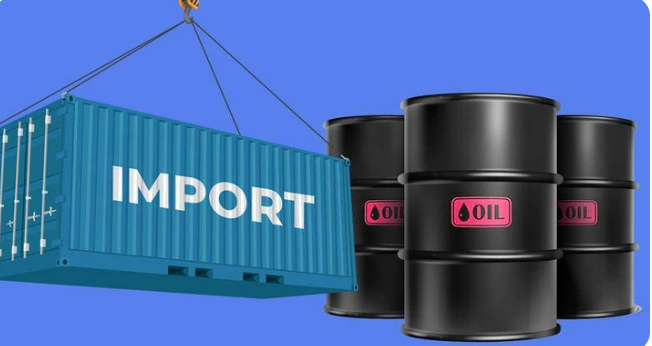
US crude floods Nigeria as imports soar by over 100%— EIA
US crude floods Nigeria as imports soar by over 100%— EIA
Nigeria’s crude oil imports from the United States skyrocketed in 2025, surging by 101 per cent in just eight months, new data from the US Energy Information Administration (EIA) has revealed.
Between February and August 2025, Nigeria imported 31.69 million barrels of US crude—more than double the 15.79 million barrels recorded during the same period in 2024. The additional 15.9 million barrels underscores a major shift in the country’s crude sourcing strategy as it struggles to stabilise domestic refining output.
Available records show no import activity in January of either year, but month-by-month figures indicate sharp fluctuations and an overall upward trend.
In February, US crude imports dipped slightly to 3.11 million barrels, below the 3.61 million barrels brought in during February 2024—a 13.8 per cent decline. But from March onward, the numbers accelerated rapidly.
March: Imports jumped to 5.25 million barrels, up from 3.42 million barrels—a 53.5% rise.
April: Deliveries hit 2.04 million barrels, up 32.3% year-on-year.
May: A stronger increase saw imports reach 3.79 million barrels, an 82.4% surge from the previous year.
June: A dramatic spike pushed volumes to 9.16 million barrels, compared to just 1.04 million barrels in June 2024—an eye-watering 782% increase, the highest in the period.
July: Imports inched up to 4.17 million barrels, marginally higher than the 4.10 million barrels recorded the year before.
August: Nigeria imported 4.17 million barrels, although the EIA did not publish comparable August data for 2024.
The surge reflects Nigeria’s deepening dependence on foreign crude, even as the country ramps up local refining. Analysts say US light sweet crude—favoured for its high yield and compatibility with complex refineries—has become increasingly crucial as the Dangote Refinery intensifies operations.
But the trend also exposes a persistent irony: despite being Africa’s largest oil producer and a long-standing OPEC member, Nigeria continues to rely heavily on imported crude to keep its refining sector running.
The Federal Government recently disclosed that 67.6 million barrels of crude were allocated to local refiners between January and August 2025. Yet industry regulators acknowledge an ongoing shortfall in supply to domestic plants, even as national production gradually improves.
With the Dangote Refinery still balancing its crude supply mix and state-owned refineries yet to return to full operation, Nigeria’s reliance on US barrels appears set to remain a defining feature of its oil market in the near term.









Railway
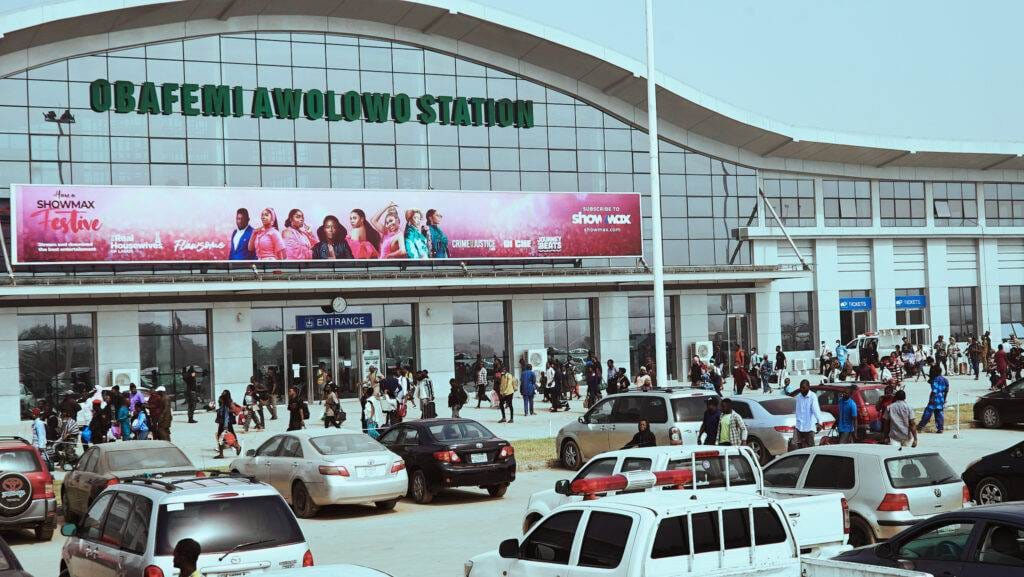
NRC Investigates Assault Allegation Against UI Lecturer at Moniya Station
NRC Investigates Assault Allegation Against UI Lecturer at Moniya Station
The Nigerian Railway Corporation (NRC) has launched an investigation into an **alleged assault on a lecturer from the University of Ibadan (UI) at the Moniya train station in Oyo State, according to sources familiar with the matter.
The incident reportedly occurred on [specific date if available], when the academic was reportedly involved in a confrontation with NRC staff and/or security personnel at the Moniya rail station. Details remain sketchy, but eye‑witness accounts suggest that the lecturer sustained physical injuries during the altercation before other commuters intervened and security operatives were called to the scene.
Following complaints from the lecturer and concerned passengers, the NRC’s management announced that it has set up a panel to investigate the circumstances surrounding the alleged assault, including reviewing available footage from station cameras, interviewing witnesses and questioning staff members who were on duty at the time.
In a brief statement, the NRC said it “takes the safety and dignity of passengers and members of the public very seriously” and pledged to ensure a thorough, impartial probe into the matter. The corporation added that appropriate disciplinary or legal action would be taken against any staff found culpable.
READ ALSO:
- Nigerian Army Suffers Loss as Senior Officer Dies in ISWAP Attack
- Qatar Arrests Over 300 for Sharing Misleading Iran Attack Images
- US Issues Terror Alert Over Possible Attacks on Embassy, Schools in Nigeria
The alleged assault has sparked reactions on social media, with many users calling for transparency in the investigation and respectful treatment of passengers by transportation officials. Some commenters urged the NRC to release statements and evidence as the probe progresses to reassure the public.
Sources also indicate that the affected lecturer received medical attention following the incident, though the extent of the injuries has not been officially disclosed.
The NRC has advised commuters who witnessed the incident to cooperate with investigators and provide any information that may assist in clarifying what happened.
As the probe continues, the outcome is expected to determine whether any NRC personnel will face sanctions or criminal charges, and whether changes to staff conduct policies at train stations will be implemented.
This development comes amid ongoing efforts by the NRC to improve rail safety and customer service standards as part of broader reforms within Nigeria’s railway sector.
NRC Investigates Assault Allegation Against UI Lecturer at Moniya Station
Business
Middle East Crisis Pushes Petrol Price to N1,300 Per Litre in Nigeria

Middle East Crisis Pushes Petrol Price to N1,300 Per Litre in Nigeria
Economic hardship is deepening across Nigeria as oil marketers have increased the pump price of Premium Motor Spirit (PMS), popularly known as petrol, to about N1,300 per litre, up from N1,050 per litre in many parts of the country.
The latest increase represents a 24 per cent rise in petrol price, triggered largely by the surge in global crude oil prices, which climbed to about $110 per barrel amid the escalating Middle East war.
The development has intensified the cost-of-living crisis in Nigeria, as higher fuel prices continue to drive increases in transport fares, food prices and the cost of goods and services nationwide.
Diesel price also surges
The price hike has also affected Automotive Gas Oil (AGO), commonly known as diesel.
At some filling stations operated by major marketers, diesel is now sold at around N1,380 per litre, up from about N1,100 per litre, while outlets of NNPC Limited sell the product at about N1,680 per litre in Lagos and surrounding areas.
Similarly, the pump price of petrol in Ibadan and neighbouring communities in Oyo State has risen sharply to between N1,200 and N1,300 per litre, compared with the previous range of N1,020 to N1,080 per litre.
A member of the Independent Petroleum Marketers Association of Nigeria (IPMAN) attributed the increase to the rising landing cost of imported fuel.
According to the marketer, the cost of lifting petrol from Lagos depots has increased to about N1,175 per litre, forcing marketers to adjust pump prices upward.
“The pump price varies depending on the destination. While petrol sells between N1,200 and N1,300 per litre in Ibadan, the price could be higher in areas such as Ogbomoso and Oke-Ogun due to transportation costs,” the marketer said.
READ ALSO:
- OYOSUBEB Chairman Adeniran Joins 2027 Oyo Governorship Race
- BREAKING: Zamfara Governor Dauda Lawal Defects from PDP to APC
- Tragedy in Ibadan as Woman, 26, Dies at Boyfriend’s Residence
Dangote refinery raises petrol gantry price
The increase in retail price followed a fresh adjustment by the Dangote Petroleum Refinery, which raised its gantry price of petrol to N1,175 per litre from N995 per litre.
The refinery also increased the gantry price of diesel to N1,620 per litre, up from N1,430 per litre.
The company attributed the development to prolonged volatility in the international crude oil market, which has pushed prices upward due to ongoing geopolitical tensions in the Middle East.
Industry sources noted that filling stations in Abuja have adjusted prices several times in the past week, reflecting the rising cost of supply.
Petrol price jumps in Abuja
In the Federal Capital Territory (FCT), petrol prices have jumped dramatically from about N880 per litre seven days ago to over N1,300 per litre at many retail outlets.
Within the last week, the price rose successively from N880 to N960, then N1,080, before climbing to N1,103 and eventually exceeding N1,300 per litre at several stations.
The sudden increase has triggered concern among motorists, transport operators and small business owners who rely heavily on fuel for daily operations.
Transport fares rise sharply
The increase in petrol price in Nigeria has already translated into higher transportation costs in many cities.
Checks at major bus stops in Area 8, Garki and the Central Area of Abuja showed that transport fares have increased by over 100 per cent on some routes.
For instance, a trip that previously cost N800 now costs about N1,500, while the fare from Area 8 to Nyanya has risen from N500 to around N1,000.
Similarly, in Ibadan, commercial drivers have increased fares due to the fuel price hike.
Trips from Sango to the University of Ibadan (UI) now cost between N250 and N300, up from N200, while the fare from Dugbe to Ojoo has increased from N600 to N900.
Logistics and transportation determine pump price — IPMAN
The Public Relations Officer of IPMAN, Chinedu Ukadike, confirmed the increase in petrol prices, noting that marketers now purchase the product from private depot operators at about N1,200 per litre.
According to him, the final retail price of petrol is influenced by logistics costs, transportation expenses and marketers’ margins.
“In Lagos, petrol may sell between N1,250 and N1,300 per litre, but outside Lagos the price could reach N1,350 per litre or more,” he explained.
Petrol could hit N2,000 per litre — PETROAN
Meanwhile, the Petroleum Products Retail Outlets Owners Association of Nigeria (PETROAN) has warned that the pump price of petrol could rise to N2,000 per litre if the Middle East war persists.
According to Billy Gillis-Harry, National President of PETROAN, the price of diesel could also climb to about N3,000 per litre if the global crisis continues.
He warned that continued instability in the international oil market could push fuel prices in Nigeria even higher in the coming weeks.
Calls for revival of local refineries
PETROAN has called on the Group Chief Executive Officer of NNPC Limited, Bayo Ojulari, to accelerate the full operation of Nigeria’s government-owned refineries.
The association specifically urged authorities to ensure the effective operation of the Port Harcourt refinery and the Warri refinery to boost domestic fuel production.
According to industry stakeholders, expanding local refining capacity would help reduce Nigeria’s dependence on imported petroleum products and cushion the impact of global oil price shocks.
Energy experts also stressed the need for policies that encourage private refinery investments, improve crude supply arrangements and strengthen Nigeria’s petroleum distribution infrastructure.
They noted that although domestic refining may not completely eliminate the effects of global oil price volatility, it would significantly improve energy security, foreign exchange stability and economic resilience.
Middle East Crisis Pushes Petrol Price to N1,300 Per Litre in Nigeria
Business
NNPCL, Marketers Increase Petrol Price Again Within 24 Hours After Dangote Refinery Hike
NNPCL, Marketers Increase Petrol Price Again Within 24 Hours After Dangote Refinery Hike
The Nigerian National Petroleum Company Limited and several independent filling stations across Nigeria have increased the pump price of Premium Motor Spirit (PMS) for the second time in less than 24 hours, following a fresh hike in the gantry price by Dangote Petroleum Refinery.
The development has led to another round of adjustments at retail outlets nationwide, with petrol prices now exceeding ₦1,040 per litre in some parts of the country, particularly in major cities.
Dangote refinery gantry price triggers increase
Industry sources said the latest increase was triggered after Dangote Refinery raised its ex-gantry price of petrol to about ₦995 per litre, up from around ₦874 per litre, forcing marketers and distributors to adjust their retail prices.
The gantry price refers to the amount marketers pay to lift products directly from the refinery before adding transportation, distribution and retail margins.
Following the adjustment, many filling stations immediately reviewed their pump prices upward.
READ ALSO:
- Police Arrest More Suspects Over Killing of Ajiran of Agungi’s Son in Lagos
- Iran Fires Missiles as Mojtaba Khamenei Succeeds Father as Supreme Leader
- Oil Prices Will Drop When Destruction of Iran Nuclear Threat Is Over — Trump
New pump prices across stations
Checks at filling stations in Lagos, Abuja and other cities showed that:
- Some NNPCL retail outlets now sell petrol at about ₦1,040 per litre.
- Independent marketers are selling between ₦1,050 and ₦1,057 per litre, depending on location and logistics costs.
- A few stations are already approaching ₦1,080 per litre in high-cost distribution areas.
The adjustment represents the second increase within 24 hours, reflecting the rapid reaction of marketers to rising depot prices.
Rising crude prices and market pressures
Energy analysts attribute the price hike to several factors, including:
- Rising global crude oil prices
- Increased operational and logistics costs
- Market-driven pricing under Nigeria’s petrol deregulation policy
Since the removal of fuel subsidy by the Federal Government in 2023, petrol prices have largely been determined by market forces rather than government-controlled pricing.
Public reaction
The latest increase has sparked concerns among motorists, transport operators and small businesses, many of whom say the rising cost of petrol will further increase transportation fares and the general cost of living.
Transport unions in some cities have already hinted that fares may be reviewed if the price trend continues.
Economic analysts warn that persistent increases in petrol prices could worsen inflationary pressures, given the heavy dependence of Nigeria’s economy on petrol-powered transportation and generators.
NNPCL, Marketers Increase Petrol Price Again Within 24 Hours After Dangote Refinery Hike

-

 metro3 days ago
Daniel Bwala Faces Backlash After Al Jazeera Interview With Mehdi Hasan
-

 News2 days ago
Tinubu Approves Salary, Allowance Increase for Nigerian Armed Forces
-
 Business2 days ago
NNPCL, Marketers Increase Petrol Price Again Within 24 Hours After Dangote Refinery Hike
-

 International2 days ago
Top 10 Strongest Militaries in the World in 2026 – Full Ranking
-

 metro1 day ago
Viral Video Shows Man Disarming Robbers After Minna Bank Heist, ₦10m Stolen
-
 metro2 days ago
EFCC Intercepts Wife of Federal High Court Chief Judge With $160,000 Cash
-
 metro3 days ago
Nigeria’s Mall Retail Falters as Shoprite Completes Shutdown After 20 Years
-

 metro20 hours ago
Tragedy in Ibadan as Woman, 26, Dies at Boyfriend’s Residence